New Book | Let the Oppressed Go Free
From Penn Press:
Nicholas Wood, Let the Oppressed Go Free: Abolitionism in Colonial and Revolutionary America (Philadelphia: University of Pennsylvania Press, 2025), 384 pages, ISBN: 978-1512828320, $45.
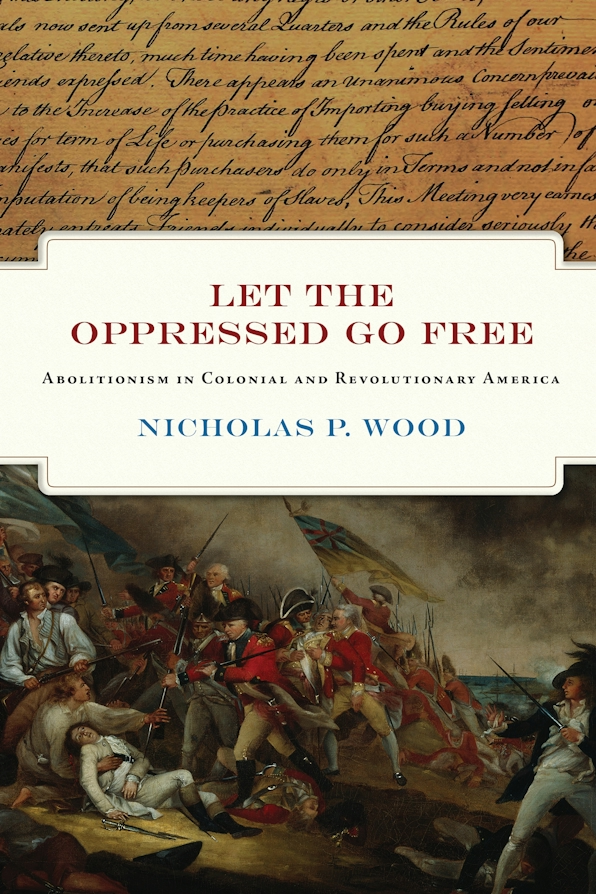 Tenacious activism by Quakers, African Americans, and antislavery evangelicals made antislavery central to the American Revolution.
In Let the Oppressed Go Free, Nicholas P. Wood presents the opponents of slavery who sustained and expanded the antislavery movement during the American Revolution in the face of widespread hostility. These early abolitionists were inspired by antislavery theology: the view that slavery was a sinful form of oppression that would provoke God’s wrath against slaveholding societies. These principles were first advanced by a handful of Quakers and Puritans as early as the 1600s, but they did not become widespread until the second half of the eighteenth century. Quakers embraced antislavery theology during the French and Indian War, which they interpreted as divine chastisement for the sin of colonial slavery. Citing the prophet Isaiah, they pledged to please the Lord by letting the oppressed go free.
Antislavery theology became even more prominent during the American Revolution. When Parliament provoked an imperial crisis in the 1760s, abolitionists argued it was further evidence of God’s anger over slavery. The outbreak of war in 1775 made these arguments increasingly persuasive. Let the Oppressed Go Free demonstrates that antislavery activism during the Revolution by Quakers, African Americans, and evangelical patriots was more sophisticated and influential than historians have recognized. The northern states that began abolishing slavery during the Revolution did so in response to tenacious agitation and generally described their actions as designed to earn God’s blessing.
Let the Oppressed Go Free challenges many common assumptions about abolitionism and the American Revolution. Wood demonstrates that religion remained central to abolitionism rather than being displaced by ‘secular’ arguments about natural rights. And whereas some have argued that the Revolutionary War hindered antislavery progress and fueled racism, Wood shows that the war accelerated reform.
Nicholas P. Wood is Associate Professor of History at Spring Hill College.
New Book | The Centrality of Slavery
From Penn Press:
John Craig Hammond, The Centrality of Slavery: Empire and Enslavement in Colonial Illinois and Missouri (Philadelphia: University of Pennsylvania Press, 2025), 288 pages, ISBN: 978-1512828429, $45. Early American Studies Series.
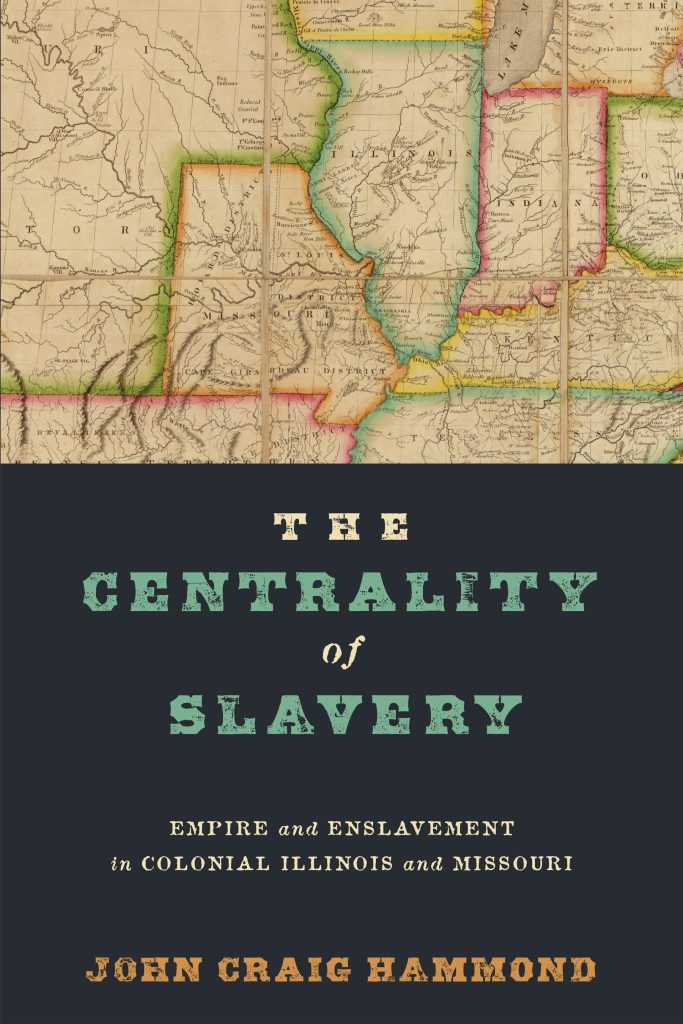 How French and American colonizers created systems of enslavement in the Middle Mississippi Valley.
The Centrality of Slavery examines how French and American colonizers used the powers of various imperial regimes to create slave societies in present-day Missouri and Illinois from the 1720s through the 1820s. The first book-length study of slavery and empire in both Illinois and Missouri, it begins with the origins of Native American and African American enslavement in the region. It then traces how successive French, Spanish, British, and American regimes shaped the development of slavery over the course of a century, examines the significance of the Northwest Ordinance’s ban on slavery in Illinois, and then analyzes the diverging histories of slavery in Illinois and Missouri in the early 1800s. The book concludes with an analysis of the Missouri Crisis and the compromise of 1820, along with the Middle Mississippi Valley’s significance in the road towards disunion and civil war in the late 1850s. More broadly, The Centrality of Slavery argues that the Middle Mississippi Valley sat astride the crossroads of imperial North America. The practices of empire and enslavement forged and fought over there exerted an outsized influence on the history of slavery in North America and the United States. Rather than treating the region’s eighteenth-century past as a prologue to the rise of the United States, John Craig Hammond analyzes the colonial history of the region on its own terms, through the European colonizers, American settlers, and enslaved people of Indigenous and African descent who shaped the development of slavery in the Middle Mississippi Valley.
John Craig Hammond is Associate Professor of History at Penn State University, New Kensington.
New Book | The Household War
From Penn Press:
John Blanton, The Household War: Property, Personhood, and the Domestication of Anglo-American Slavery, 1547–1729 (Philadelphia: University of Pennsylvania Press, 2025), 400 pages, ISBN: 978-1512828306, $55.
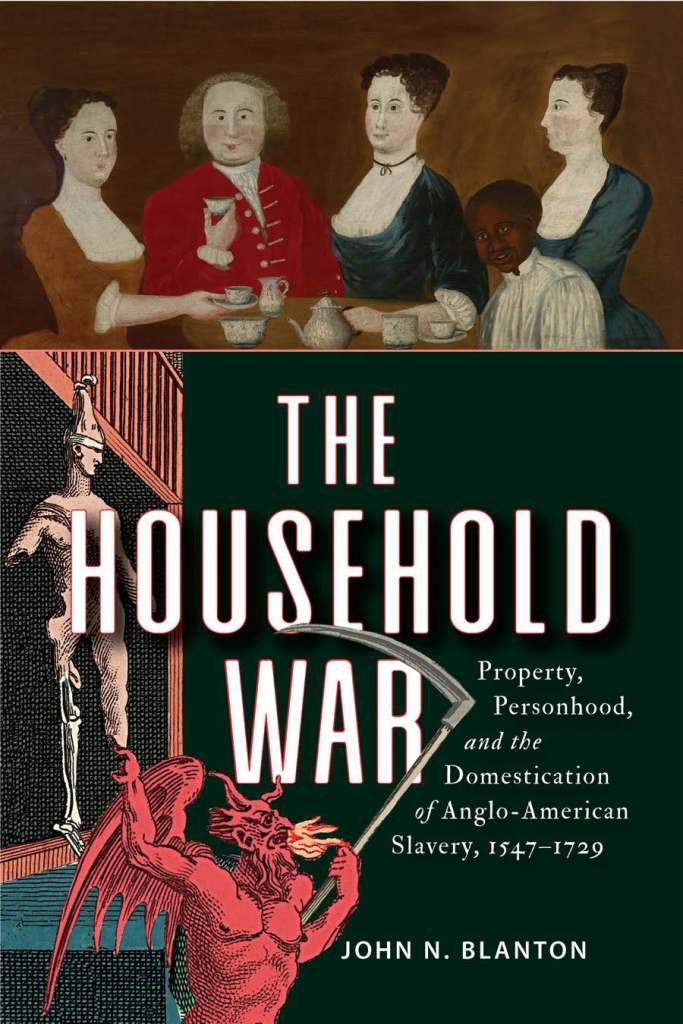 A bold reinterpretation of perennial debates over the origins and development of slavery in colonial English North America.
The Household War offers a bold reinterpretation of perennial debates over the origins and development of slavery in colonial English North America. John N. Blanton argues that the law and practice of slavery in the empire’s earliest American colonies were shaped by a tension between two competing definitions of the institution. One strand of thought, war-slavery ideology, claimed that the power of life and death transformed war captives into chattel slaves. The power to kill defined both war and slavery. But bringing war captives into enslavers’ private households was a dangerous proposition, and so a parallel ‘domestication’ ideology emerged calling for limitations on the power of enslavers and the recognition of the enslaved as persons held to labor in a variant of English servitude.
The Household War examines how the tensions between war-slavery and domestication ideologies, along with crucial political, economic, and cultural differences, shaped the development of slavery in Virginia and Massachusetts from their founding through 1729, creating distinct systems of bondage in England’s flagship mainland colonies. In Massachusetts, where a diversified and dynamic commercial economy afforded opportunities for mobility and access to material resources, the dominance of domestication ideology enabled enslaved people to negotiate their bondage, attain free status, and build free Black households and communities. Virginia, however, committed itself to war-slavery early in its development, with enslaved people defined as articles of property subject to enslavers’ power of life and death while the extreme inequality of plantation society made free Black household formation nearly impossible. Long before American independence highlighted their differences, then, Massachusetts and Virginia were already on distinct trajectories, laying the foundation for a future house divided on the question of slavery.
John N. Blanton is Assistant Professor of History at City College of New York.










 Enfilade
leave a comment