Exhibition | Painters, Ports, and Profits
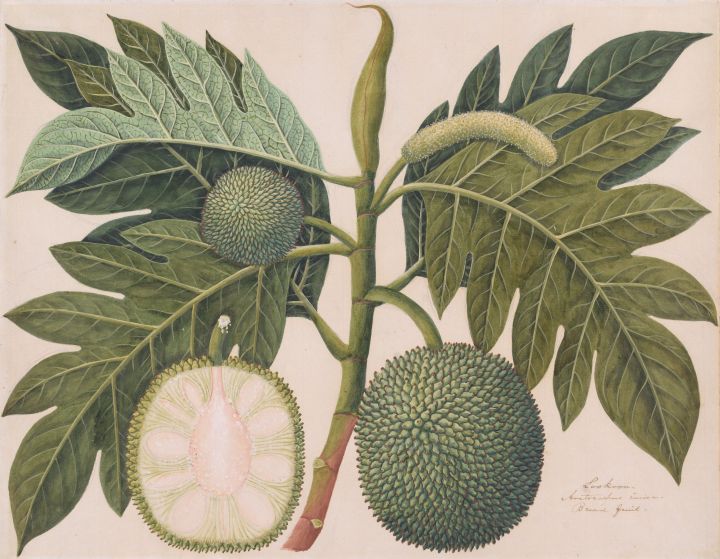
Unknown artist (Company style), Breadnut (Artocarpus camansi), ca. 1825, watercolor, gouache, and graphite on medium, slightly textured, cream laid paper, sheet: 15 × 19 1/4 inches (New Haven: Yale Center for British Art, Paul Mellon Fund, B2022.5).
◊ ◊ ◊ ◊ ◊
From the press release for the exhibition, which opens today:
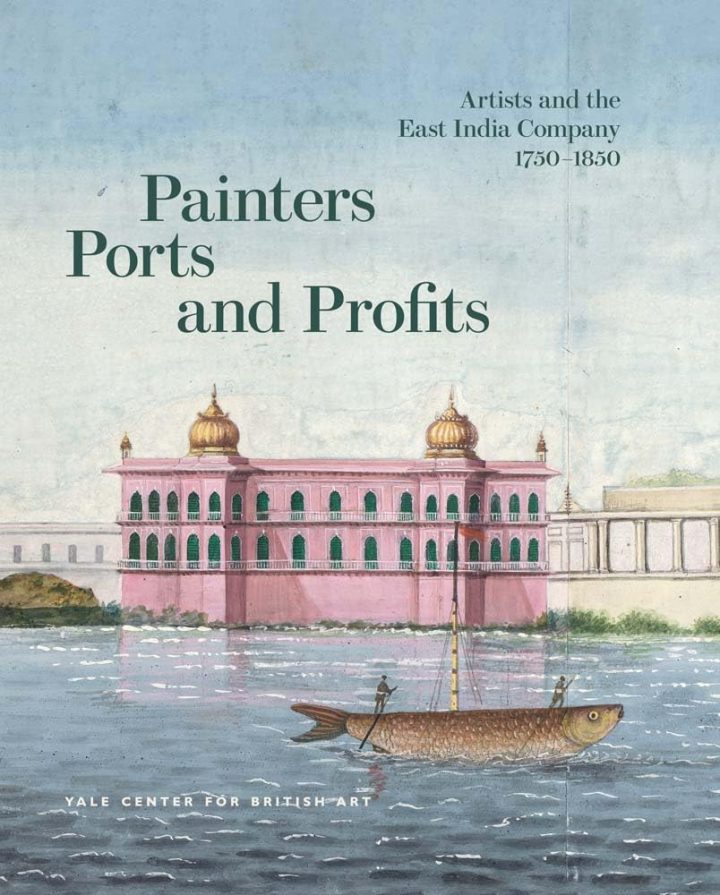
Painters, Ports, and Profits: Artists and the East India Company, 1750–1850
Yale Center for British Art, New Haven, 8 January — 21 June 2026
Curated by Laurel Peterson and Holly Shaffer
The Yale Center for British Art presents Painters, Ports, and Profits: Artists and the East India Company, 1750–1850 from January 8 through June 21, 2026. Spanning a century of artistic production, the exhibition reveals the material and technical innovations of the Indian, Chinese, and British artists whose work and lives were shaped by the British East India Company’s global reach. Featuring more than one hundred objects, Painters, Ports, and Profits highlights the beauty and range of the extraordinary artwork produced within the context of one of the most powerful and ruthless corporations in history.
 “This exhibition brings to light an astonishing chapter of global art history, when artistic innovation and exchange flourished under the shadow of empire,” said Martina Droth, Paul Mellon Director of the Yale Center for British Art. “It tells the story of direct encounters between artists from different continents and traditions, who responded to one another by experimenting with new materials and methods. We are thrilled to share these important, and rarely seen, works from our collection and to invite new reflection on their artistic legacy.”
Between 1750 and 1850, the Company’s growing commercial, military, and political operations linked an incredibly varied group of artists—amateurs, soldiers, and professionals—into a vast network that stretched from London to Calcutta (Kolkata) to Canton (Guangzhou). As goods, people, and ideas circulated through the Company’s networks, artists experimented with papers, pigments, and methods, adapting techniques from different traditions to develop a striking visual language that connected art to the expanding global economy.
“We are excited to take visitors on a journey to ports and trading cities across India and China where artists produced captivating and innovative works of art,” said exhibition curators Laurel O. Peterson and Holly Shaffer. “The period of the East India Company is one in which art and business intersected. There is a profound tension between the ventures of a global corporation and the works of beauty created by the artists in its orbit. With technical brilliance, these artists ingeniously fused traditions and materials together to develop new ways of making, picturing, and selling.”
Years in development, the preparations for Painters, Ports and Profits included extensive original research and careful technical study by curators and conservators at the YCBA in collaboration with conservation scientists at Yale’s Institute for the Preservation of Cultural Heritage. The resulting exhibition illuminates the museum’s deep holdings of Asian art, showcasing many exceptional works that have hardly ever or never been displayed. Highlights of the exhibition include stunning small- and large-scale portraits, such as the monumental Woman Holding a Hookah at Faizabad, India (1772) by Tilly Kettle and the intimate Portrait of a Woman (ca. 1850) by an artist from the circle of eminent painter Lam Qua. Watercolor drawings of a great Indian fruit bat by Bhawani Das (1778–82) and breadnut by an artist once known (ca. 1825), among others, record the flora and fauna of the Company’s domain with striking naturalism. A spectacular thirty-seven-foot-long scroll uses delicate watercolor to depict the city of Lucknow, India, in panoramic detail, which recent technical analysis has revealed was completed by multiple artists working in collaboration.
Painters, Ports, and Profits: Artists and the East India Company, 1750–1850 is organized by the Yale Center for British Art. The exhibition is curated by Laurel O. Peterson, Assistant Curator of Prints and Drawings at the YCBA, and Holly Shaffer, Associate Professor in the Department of the History of Art and Architecture at Brown University.
r e l a t e d p r o g r a m m i n g
First Look | Painters, Ports, and Profits: Artists and the East India Company, 1750–1850
Thursday, 15 January, 4pm, Lecture Hall and Livestream
Spring Exhibitions Openings
Thursday, 26 February, 4pm, Lecture Hall and Livestream
Curator Tours
Thursdays, 22 January, 26 March, 16 April, 21 May, and 18 June, 4pm
Docent Tours
Saturdays, 3pm
The catalogue is published by YCBA and distributed by Yale UP:
Laurel O. Peterson and Holly Shaffer, eds., Painters, Ports, and Profits: Artists and the East India Company, 1750–1850 (New Haven: Yale Center for British Art, 2026), 280 pages, ISBN: 978-0300286540, $65. With contributions by Mark Aronson, Tim Barringer, Swati Chattopadhyay, Soyeon Choi, Anita Dey, Gillian Forrester, Navina Najat Haidar, Richard R. Hark, Emma Hartman, Brooke Krancer, Margaret Masselli, Kaylani Madhura Ramachandran, Romita Ray, Yuthika Sharma, Marcie Wiggins, Winnie Wong, and Tom Young.
Featuring more than one hundred objects drawn primarily from the YCBA’s collection, including architectural drawings, watercolors, and hand-colored aquatints, the catalog critically reconsiders the vibrant creative exchanges between artists in India, China, and Britain during a period driven by ruthless commercial and colonial expansion.
New Book | The Royal Pavilion, Brighton
From Yale UP:
Alexandra Loske, The Royal Pavilion, Brighton: A Regency Palace of Colour and Sensation (New Haven: Yale University Press, 2025), 272 pages, ISBN: 978-0300266665, $50.
 The first in-depth study since the 1980s of the Royal Pavilion in Brighton, a building that is often considered the most impressive architectural expression of the Romantic imagination and that has become a hallmark of Regency style
Created between 1787 and 1823 by George IV, the Royal Pavilion in Brighton is perhaps the most daring and enchanting example of a building that expresses the European fascination with what in the early nineteenth century was considered the ‘Orient’, in particular China and India. The building, with its Indian-inspired exterior, was the work of the renowned architect John Nash, who with the contributions of several other gifted and inventive architects, artists, and designers, created a building that draws you in, takes you on a journey, and plays with your senses. Featuring new photography, this lavishly illustrated book will provide a fresh look at the sumptuous Chinoiserie interiors of the Royal Pavilion and their enduring appeal. Drawing on recent research, conservation projects, and the unprecedented loan exhibition A Prince’s Treasure: From Buckingham Palace to the Royal Pavilion (2019–22), this book celebrates the colours and sensual beauty of these interiors while situating the Royal Pavilion in the context of the time of its creation and development under royal ownership, from its beginning in the wake of the French Revolution, through its transformation and extension during and just after the Napoleonic Wars, to its fate and legacy in the early Victorian era.
Alexandra Loske is a British-German art historian, writer, and curator with a particular interest in late-eighteenth and early nineteenth-century European art and architecture, specialising in the history of colour. She has been working at the University of Sussex since 1999, where she also studied art history and completed an AHRC-funded DPhil in 2014. The subject of her doctoral thesis was the use of colour and the application of colour theory in the Royal Pavilion, Brighton. Since 2014 Alexandra has been a curator at the Royal Pavilion. Since 2022, she has been the curator of the Royal Pavilion and Historic Properties at Brighton & Hove Museums.
◊ ◊ ◊ ◊ ◊
Note added (21 January 2026) — Alexandra Loske gave an online talk related to the book on 22 October 2025. The event was hosted by Cooper Hewitt and moderated by Jamie Kwan, the museum’s Assistant Curator of Drawings, Prints, and Graphic Design. A recording of the talk is available here.
New Book | A Guide to Regency Dress
From Yale UP:
Hilary Davidson, A Guide to Regency Dress: From Corsets and Breeches to Bonnets and Muslins (New Haven: Yale University Press, 2025), 248 pages, ISBN: 978-0300282412, $25.
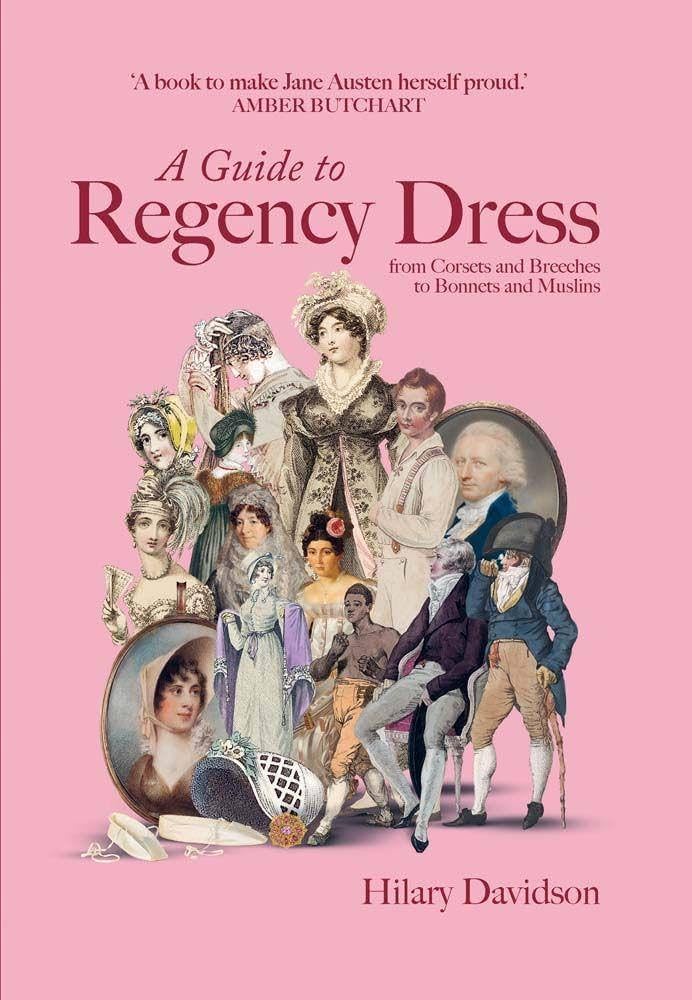 An accessible, fun, yet authoritative guide to male and female Regency fashions.
Celebrated dress historian Hilary Davidson brings together nearly 20 years of research on Regency fashion in an illustrated guide for the first time. All the elements of the Regency wardrobe of both men and women—from coats, gowns and undergarments to shoes, accessories, beauty, hair and jewellery—are assembled, along with their textiles and trimmings. A Guide to Regency Dress is an essential companion to navigate the fashion world of Jane Austen or re-create the Regency look.
Hilary Davidson is associate professor and chair of MA Fashion and Textile Studies at the Fashion Institute of Technology, New York. She has curated, lectured, broadcast, and published extensively in her field and is author of Dress in the Age of Jane Austen: Regency Fashion and Jane Austen’s Wardrobe.
Exhibition | Gainsborough: The Fashion of Portraiture
Aimee Ng, the exhibition’s curator, is the subject of a recent feature by Alexandra Starr in The New York Times (20 December 2025). From the press release (3 November 2025) for the exhibition:
Gainsborough: The Fashion of Portraiture
The Frick Collection, New York, 12 February — 11 May 2026
Curated by Aimee Ng
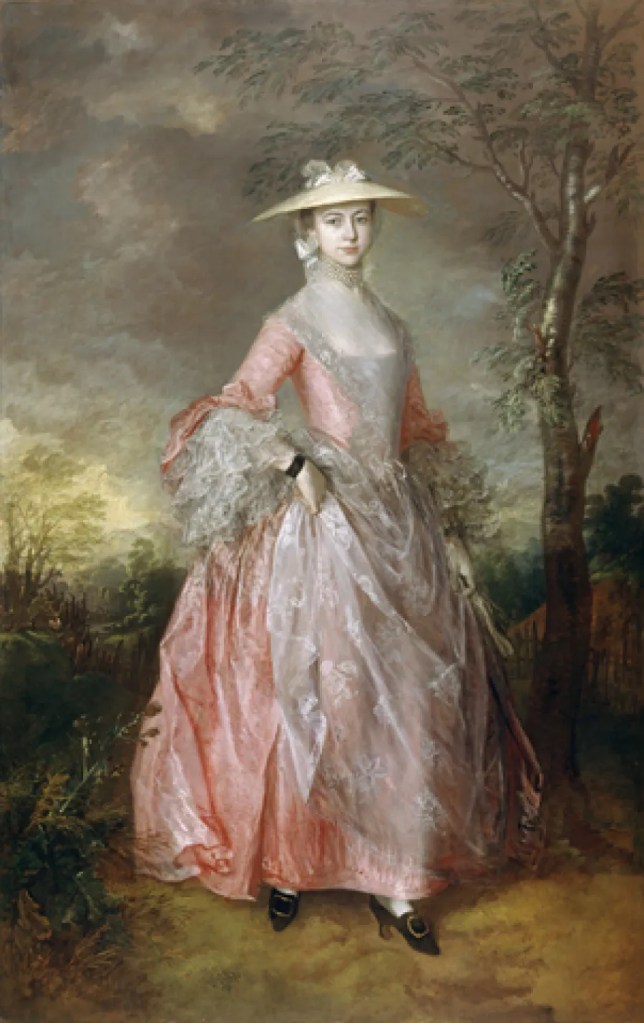
Thomas Gainsborough, Mary, Countess Howe, 1763–64, oil on canvas, 243 × 154 cm (English Heritage, Kenwood House, London).
Beginning 12 February 2026, The Frick Collection will present its first special exhibition dedicated to the English artist Thomas Gainsborough, and the first devoted to his portraiture ever held in New York. Displaying more than two dozen paintings, the show will explore the richly interwoven relationship between Gainsborough’s portraits and fashion in the eighteenth century. The works included represent some of the greatest achievements from every stage of this period-defining artist’s career, drawn from the Frick’s holdings and from collections across North America and the United Kingdom.
The trappings and trade of fashion filled the artist’s world—in magazines and tailor shops, at the opera and on promenades—and his portraits were at the heart of it all. This exhibition invites visitors to consider not only the actual clothing the painter depicted, but also the role of his canvases as both records of and players in the larger conception of fashion: encompassing everything from class, wealth, labor, and craft to formality, intimacy, and time. Recent technical investigations also shed light on Gainsborough’s artistic process, including connections to materials that fueled the fashion industry.
Gainsborough: The Fashion of Portraiture is organized by Aimee Ng, the museum’s Peter Jay Sharp Chief Curator. She states: “The spectacular and at times, to modern eyes, absurd fashions in portraits by Thomas Gainsborough and his contemporaries continue to fascinate viewers today. The appeal of these demonstrations of taste, status, and wealth persists in tension with increased recognition, over the last few decades, of the injustices that often made such extravagance possible. This exhibition necessarily deals with clothing and personal attire, while exploring how fashion was understood in Gainsborough’s time, how it touched every level of society, and how portraiture itself was as much a construction and invention as a sitter’s style.”
Aimee Ng, Gainsborough: The Fashion of Portraiture (New York: Rizzoli Electa, 2026), 200 pages, ISBN: 978-0847876235, $50. With an additional essay by Kari Rayner.
The exhibition is complemented by a richly illustrated catalogue authored by Aimee Ng, with an additional essay by Kari Rayner, Associate Conservator of Paintings at the J. Paul Getty Museum. Along with entries for each work in the show, the catalogue features essays on portraiture and self-fashioning in Gainsborough’s era, on materials and techniques that linked clothing and paintings, and on the roles of class and time in eighteenth-century style. The volume considers how and why Gainsborough and his sitters—from dukes and duchesses to the artist’s family members to the once-enslaved writer and composer Ignatius Sancho—shaped how they would be immortalized in paint. The book also touches on the longstanding appeal of Gainsborough’s art, particularly its renewed popularity a century after the painter’s death among American collectors such as the Fricks, Vanderbilts, and Huntingtons.
Major support for Gainsborough: The Fashion of Portraiture is provided by an anonymous donor in honor of Ian Wardropper. Additional funding is provided by Barbara and Bradford Evans, Kathleen Feldstein, Michael and Jane Horvitz, Dr. Arlene P. McKay, The Helen Clay Frick Foundation, James K. Kloppenburg, David and Kate Bradford, Katie von Strasser – InspiratumColligere, the Dr. Lee MacCormick Edwards Charitable Foundation, Edward Lee Cave, Mr. and Mrs. Hubert L. Goldschmidt, Jennifer Schnabl, the Malcolm Hewitt Wiener Foundation, Bradley Isham Collins and Amy Fine Collins, Siri and Bob Marshall, Bailey Foote, Alexander Mason Hankin, Brittany Beyer Harwin and Zachary Harwin, and Otto Naumann and Heidi D. Shafranek. The exhibition catalogue is funded by Dr. Tai-Heng Cheng.
Lecture | Frédéric Ogée on Hogarth and the English Enlightenment
Presented by the Lewis Walpole Library:
Frédéric Ogée | Art and Truth: William Hogarth and the English Enlightenment
28th Lewis Walpole Library Lecture
Yale University Art Gallery, New Haven, 12 February 2026
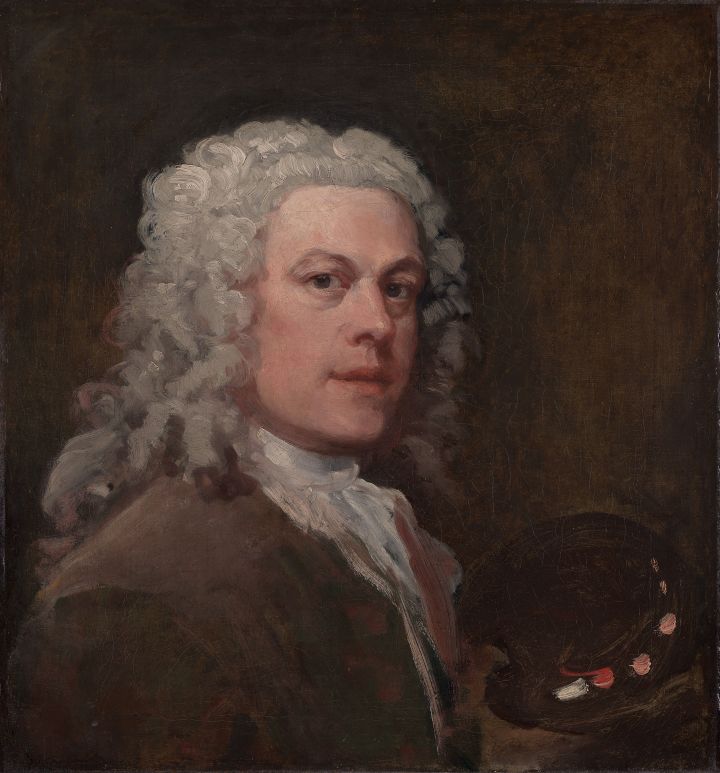
William Hogarth, Self-Portrait, ca. 1735, oil on canvas (New Haven: Yale Center for British Art, Paul Mellon Collection, B1981.25.360).
William Hogarth was a pioneering painter and engraver of 18th-century Britain and is often considered as one of the most important figures in the rise of an English school of art. His art engaged in an unprecedented manner with the ideas, debates, and values of the English Enlightenment, translating them into accessible visual narratives, encouraging the development of active critical thinking. As such his art reflected and nourished the English Enlightenment’s empiricist agenda—the idea that knowledge comes from observation and experience—to which he gave accessible visibility by bringing art into the realm of popular culture and public discourse, and putting the distinctions between ‘high’ and ‘low’ art under serious stress. His major contribution to the promotion of a ‘modern’ (and English) conception of art is the unflinching priority he always gave to truth over beauty in his representations, a feature, remarkably, that has remained characteristic of British art ever since.
Frédéric Ogée is Emeritus Professor of British Literature and Art History at Université Paris Cité and École du Louvre. His main period of research is the long eighteenth century, and his publications include two collections of essays on William Hogarth, as well as ‘Better in France?’ The Circulation of Ideas across the Channel in the Eighteenth Century (Lewisburg, 2005), Diderot and European Culture (Oxford, 2006; repr.2009), and J.M.W. Turner, Les paysages absolus (Paris, 2010). He also co-edited Jardins et civilisations (Valenciennes, 2019) following a conference at the European Institute for Gardens and Landscapes in Caen. In 2006–07, he curated the first-ever exhibition of Hogarth for the Louvre Museum. He is currently working on a series of four large monographs in French on eighteenth- and nineteenth-century British artists. The first one, Thomas Lawrence: Le génie du portrait anglais was published in December 2022. The second one, on the landscape artist J.M.W. Turner, will be published early in 2026.
Thursday, 12 February 2026, 5.30pm
Yale University Art Gallery Auditorium
Exhibition | Gardens of Enlightenment, 1750–1800
Opening in May at Versailles:
Gardens of Enlightenment, 1750–1800 / Jardins des Lumières, 1750–1800
Grand Trianon and English Garden of the Petit Trianon, Château de Versailles, 5 May — 27 September 2026
Curated by Elisabeth Maisonnier
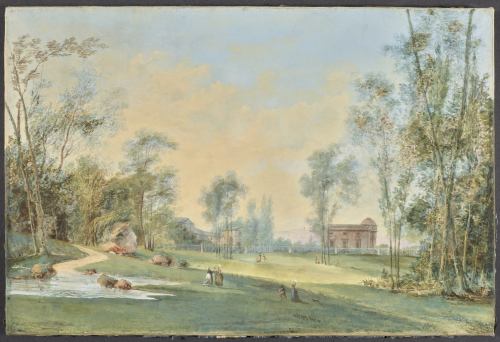
Louis Belanger, The Borders of the Bagatelle Pavilion, 1785, gouache on vellum (Château de Versailles, Dist. RMN).
In spring 2026, Gardens of Enlightenment (1750–1800) will open, bringing together nearly 150 works—paintings, drawings, furniture, architectural projects and costumes—to reveal the originality and diversity of landscaped gardens designed in the second half of the eighteenth century. Inspired by a model that emerged in Great Britain in the 1730s, this new style freed itself from the rules of the French formal garden, breaking with symmetry and geometric layouts in favour of irregularity, the picturesque, and a poetic evocation of nature. From the middle of the century onwards, this aesthetic spread across northern Europe in a wave of Anglomania that combined eccentric garden follies, philosophical reverie, a taste for exoticism and the search for an intimate refuge.
The exhibition explores its many sources—from Antiquity to China—as well as the new ways of life it accompanied, oscillating between rural pleasures, festivities, and contemplation. The exhibition route will engage in close dialogue with the historic gardens of the Trianon estate, offering a new perspective on the elements of its English garden: the Belvedere, the Temple of Love, and the Queen’s Hamlet.
Jardins des Lumières, 1750–1800 is curated by Elisabeth Maisonnier, Chief Curator of Heritage, Château de Versailles.
New Book | Portrait Miniatures
As noted by Adam Busiakiewicz, at Art History News; from Michael Imhof:
Bernd Pappe and Juliane Schmieglitz-Otten, eds., Portrait Miniatures: Artists, Functions, Manufacturing Aspects, and Collections (Petersberg: Michael Imhof Verlag, 2025), 288 pages, ISBN: 978-3731915096, €40.
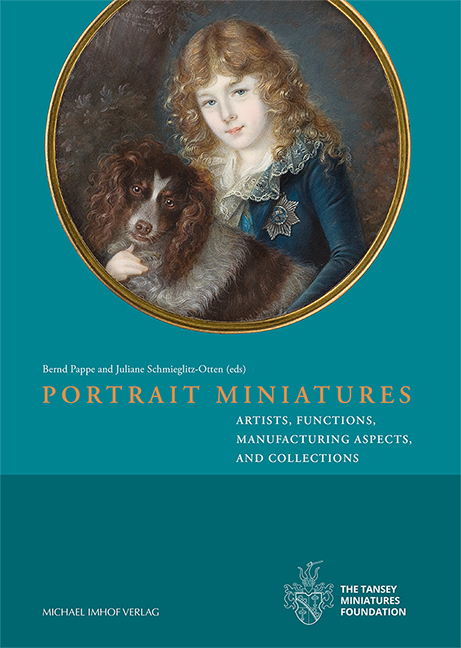 Twenty-two renowned experts from nine countries present the miniature portrait from different perspectives, discussing the private use of miniatures, special depictions, and messages conveyed by miniatures. Significant but little-known museum collections are introduced alongside insightful information about the living conditions of the artists active at the time. Lastly, aspects regarding the production techniques for miniatures are examined.
This fourth volume publishes the presentations given at the 2024 conference held by the Tansey Miniatures Foundation. Interested individuals from all over the world come together in Celle every two to three years at these conventions on the portrait miniature to discuss this special genre of portrait painting.
The table of contents can be seen here»
Exhibition | Hercules: Hero and Anti-Hero
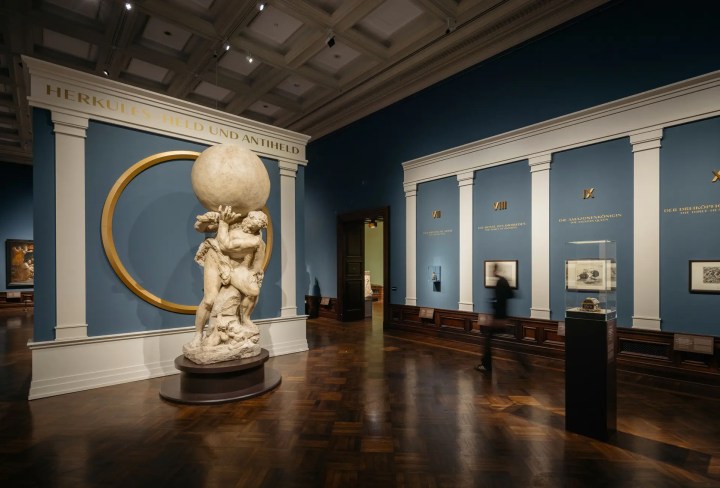
Exhibition photo with a mid-19th-century plaster cast after Balthasar Permoser’s ‘Saxon Hercules’. As noted on the SKD’s Instagram account, “The original crowned the Wall Pavilion of the Dresden Zwinger from 1718 to 1945, symbolising its patron, Augustus the Strong, with his astonishing physical strength and the Herculean efforts he undertook every day as the Saxon-Polish ruler. Where Hercules dwells with the vault of heaven, the Garden of the Hesperides cannot be far away. And so Permoser’s Hercules gazed upon the orange trees in the Zwinger courtyard, which bore the apples of the Hesperides, as it were, and promised Saxony a golden age.”
◊ ◊ ◊ ◊ ◊
From the press release for the exhibition:
Hercules: Hero and Anti-Hero
Gemäldegalerie Alte Meister, Zwinger, Dresden, 22 November 2025 — 28 June 2026
Hercules (‘Heracles’ in Greek), the best-known hero of classical antiquity, is one of the most enduring and popular mythical figures anywhere in the world. His name is universally known, and the phrase ‘a Herculean task’ is an everyday expression for anything requiring extraordinary strength and effort.
The Staatliche Kunstsammlungen Dresden (Dresden State Art Collections, SKD) is dedicating an exhibition to this demigod in the Winckelmann Forum of the Semper Gallery of the Zwinger. With Hercules: Hero and Anti-Hero, the Skulpturensammlung bis 1800 (Sculpture Collection up to 1800) and the Gemäldegalerie Alte Meister (Old Masters Picture Gallery) present a wide range of depictions of this mythological character. Featuring 135 objects, including top-quality sculptures, paintings, prints, coins, armour, and works of the goldsmith’s art, the exhibition explores the question of why Hercules has been such a fascinating figure for millennia and continues to be so today—one need only think, for example, of some of the major films of recent years.
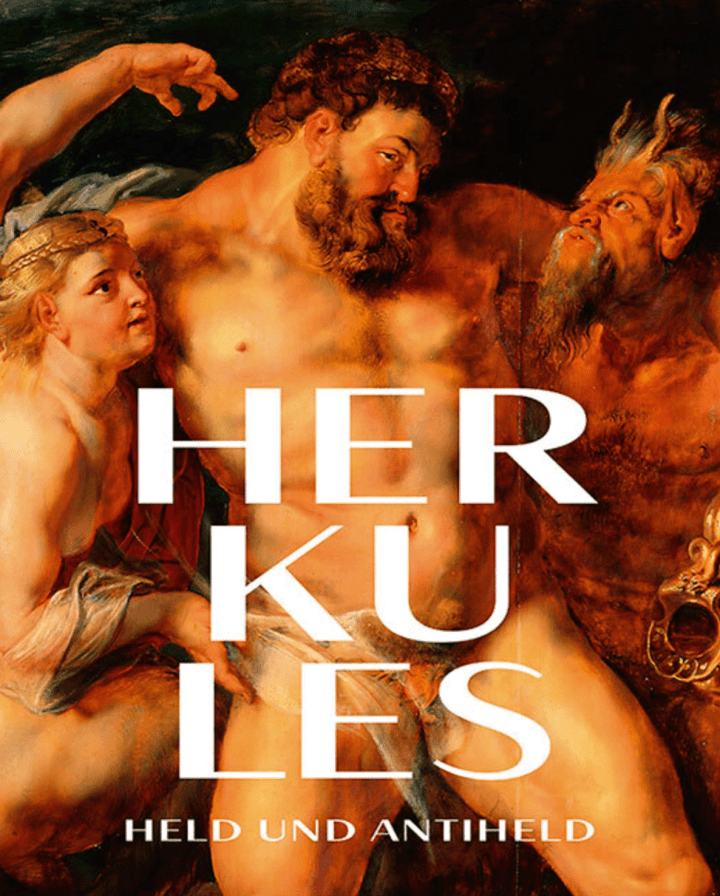 As the son of the supreme deity Zeus and the Theban queen Alcmene, Hercules was a demigod—with superhuman strength and human flaws. His popularity was revived during the Renaissance. In Rome, dozens of large-scale Hercules statues were already known in the sixteenth century, and these had a huge influence on early modern art. The exhibition showcases works of art from classical antiquity to the neoclassical period, with some glimpses into the present day. Alongside objects from the rich holdings of the Staatliche Kunstsammlungen Dresden, there are prestigious loans from such eminent institutions as the Vatican Museums in Rome, the Prado in Madrid, the Louvre in Paris, and the Ny Carlsberg Glyptotek in Copenhagen.
In a prologue and five chapters, the exhibition explores the famous ‘Labours of Hercules’, his relationships with women, his anti-heroic escapades, and his role as a model of virtue for rulers such as Alexander the Great and August the Strong. Balthasar Permoser’s colossal Saxon Hercules, created for the Rampart Pavilion of the Dresden Zwinger, bears witness to this.
Hercules was evidently not only strong and virtuous. In some situations, he behaved dishonourably, succumbed to vice, or committed cruel injustices, even against his own children. He often fought against evil for the good of humanity, but he was also a murderer, rapist, drunkard, and thief. Through significant works of art and an extensive accompanying programme, the exhibition encourages reflection on the role of heroism in history and its relevance in our society today. Particular attention is paid to the extraordinary narrative richness of the myth.
Videos telling eight of the stories about Hercules have been created specially for the exhibition. Dresden-born actor Martin Brambach—known for his role as Chief Inspector Peter Michael Schnabel in the television series Tatort—relates important and amusing episodes from the life of the hero and anti-hero. A multimedia guide is available free of charge.
Holger Jacob-Friesen, ed., Herkules: Held und Antiheld (Dresden: Sandstein Kultur, 2025), 200 pages, ISBN: 978-3954988945, €38.
Exhibition | French Enlightenment: From the Court of Versailles to Agen
Now on view at the Musée des Beaux Arts in Agen:
Lumières françaises, de la cour de Versailles à Agen
Église des Jacobins, Musée des Beaux Arts d’Agen, 5 December 2025 — 8 March 2026
Curated by Adrien Enfedaque
Six ans après l’exposition Goya, génie d’avant-garde. Le maître et son école, la Ville d’Agen s’engage dans une nouvelle exposition d’envergure, du 5 décembre 2025 au 8 mars 2026. L’église des Jacobins, espace du musée des Beaux-Arts, offrira le récit du bouillonnement qui accompagna la diffusion des idées des Lumières dans l’Agenais. Labellisée « Exposition d’intérêt national », cette nouvelle exposition est un atout pour l’attractivité et le rayonnement du territoire agenais. L’objectif de fréquentation est fixé à 30,000 visiteurs.
Le récit du siècle des Lumières en Agenais
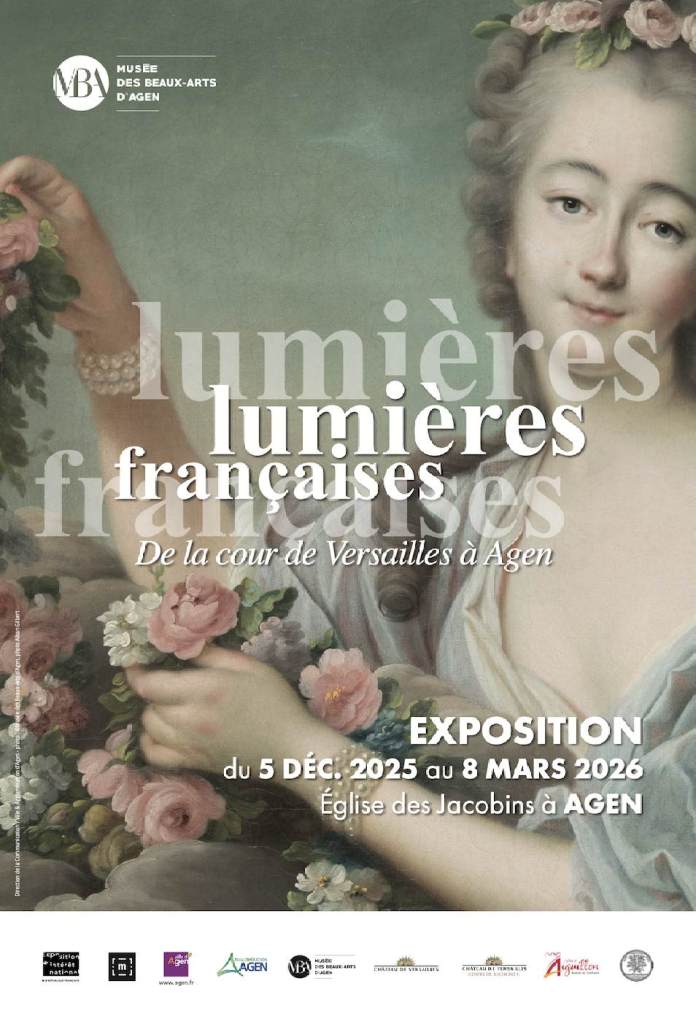 Agen et sa région connaissent au XVIIIe siècle une période de prospérité économique et culturelle. L’exil agenais du duc d’Aiguillon, ministre des Affaires étrangères du roi Louis XV et ami de Madame de Pompadour et de Madame Du Barry, joue un rôle prépondérant. L’exposition mettra tout particulièrement en valeur sa collection de peintures, conservée au musée, et notamment le Portrait de Madame Du Barry en Flore, peint par François Hubert Drouais en 1773–74, icône du portrait féminin du XVIIIe siècle publiée dans de nombreuses biographies consacrées à la favorite.
L’exposition abordera plusieurs grandes thématiques:
• Le pouvoir au XVIIIe siècle : politique, religieux et économique.
• L’art de vivre de la cour de Versailles à Aiguillon.
• Le mécénat artistique au XVIIIe siècle à travers les figures de Madame Du Barry et du duc d’Aiguillon.
• Les constructions du XVIIIe siècle et leur rôle dans l’identité du bâti de l’Agenais.
• Les idées des Lumières et l’influence des élites d’Agen, avec des coups de projecteur sur Montesquieu et la Société académique d’Agen, créée en 1776.
Des prêts prestigieux en provenance de grandes institutions telles que le château de Versailles, le musée du Louvre ou encore la Bibliothèque nationale de France viendront compléter le fonds du musée d’Agen et seront réunis dans l’écrin agenais que constitue l’église des Jacobins. Plus de 250 œuvres seront présentées au sein d’une scénographie immersive qui permettra de se plonger dans la vie à la cour et le siècle des Lumières. Ambitieuse et accessible, l’exposition déploiera un parcours adapté aux familles. Un riche programme d’animations sera également proposé.
The Louvre Opens Renovated Galleries of Italian and Spanish Paintings
From the press release, via Art Daily and the American Friends of the Louvre:
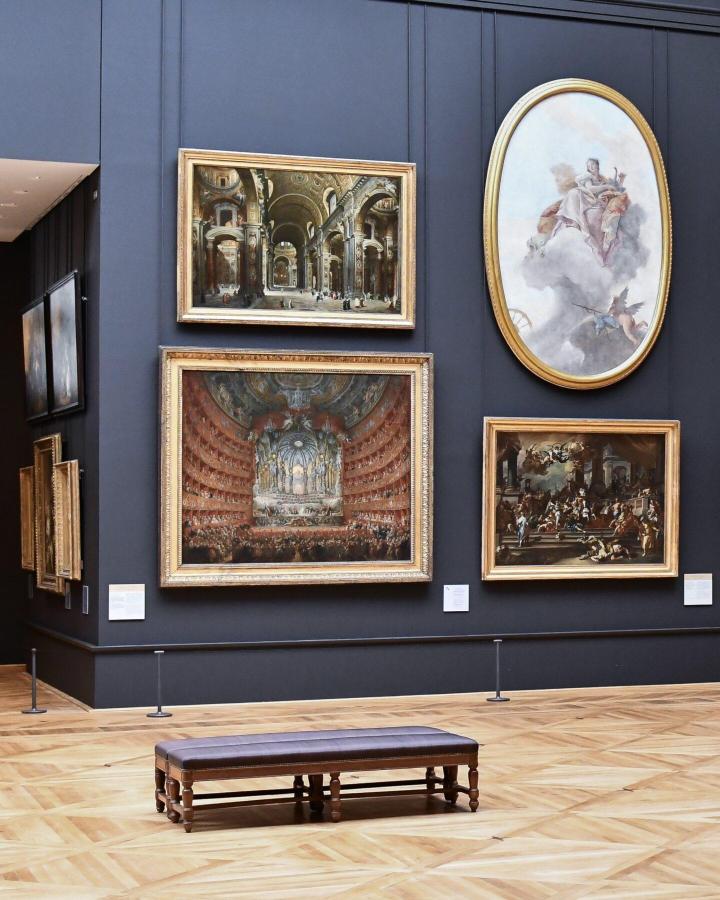 The Louvre has reopened its renovated galleries of Italian and Spanish painting from the 17th and 18th centuries, offering visitors a refreshed way to experience some of the museum’s most important works. After a year-long renovation, the galleries—located on the first floor of the Denon Wing—now feature a redesigned layout, updated lighting, newly painted walls, and improved interpretive materials that bring renewed clarity and depth to the collection.
The reopening marks more than a cosmetic update. It also reflects a major behind-the-scenes effort to reassess, conserve, and, in some cases, restore the paintings themselves. Many works had remained hung high on the walls since the galleries were first installed in 1999, limiting close inspection. During the renovation, each painting was examined, cleaned, and carefully evaluated for conservation needs. Several works benefited from substantial restoration campaigns, while frames and gilded surfaces were also treated by the Louvre’s specialist workshops. A new configuration of the Porte des Lions now provides faster access to these galleries, creating a more fluid connection between the Grande Galerie and the newly opened Gallery of the Five Continents on the ground floor.
Italian Painting: From Rome to Venice
In the Italian painting galleries, visitors can once again encounter works produced in Rome during the later 17th century, alongside paintings from Naples, Genoa, Florence, Milan, and Venice. Three canvases by Salvator Rosa introduce the Neapolitan school and lead into works by artists such as Luca Giordano, while the diversity of regional styles underscores the richness of Italian painting during this period.
The adjoining gallery dedicated to large-scale 18th-century works places Giambattista Piazzetta’s Assumption of the Virgin in dialogue with Giambattista Tiepolo’s Juno Amid the Clouds, acquired by the Louvre in 2020. Monumental canvases by Giovanni Paolo Panini complete the display, evoking the fascination that Rome exerted over artists and travelers across Europe.
Spanish Painting: From Devotion to Modernity
The first phase of the renovation of the Spanish painting galleries has also been completed, with a renewed focus on both conservation and interpretation. In the Murillo Gallery, restored monumental works from the 17th century return to view, including powerful scenes from the life of Saint Bonaventure by Francisco de Herrera the Elder and Francisco de Zurbarán. Their renewed color and scale reassert the dramatic impact these works once had in their original religious settings.
Beyond this space, the gallery devoted to Spanish painting from 1750 to 1850 highlights one of the Louvre’s greatest strengths: its collection of works by Francisco de Goya. Full-length portraits of Spanish aristocrats sit alongside more intimate images of figures close to the artist. The centerpiece remains Goya’s striking portrait of Ferdinand Guillemardet, painted in 1798 during the turbulent years of the French Republic. For the first time in this gallery, visitors can also encounter Goya’s engraved Disparates, whose unsettling imagery reveals a darker, more experimental side of the artist. These works offer a sharp contrast to his luminous portraits and expand the understanding of his technical and thematic range.
Looking Ahead
Not all works have yet returned to the walls. Murillo’s The Angels’ Kitchen, a monumental canvas currently undergoing major restoration, is expected to rejoin the galleries in autumn 2026. Further renovations are also planned: beginning in 2026, adjacent rooms will be refurbished to present Spanish and Portuguese paintings in smaller formats, spanning the 14th to the 19th centuries. With these renewed galleries, the Louvre offers visitors not only a refreshed visual experience, but also a deeper engagement with the history, materiality, and ongoing care of its collections—reminding audiences that museums are living institutions, constantly revisiting and rethinking the works they preserve.
The renovation was made possible through the generous support of the American Friends of the Louvre and the Sada Melo Family, in memory of Federico Sada González. Additional support was provided by Lionel and Ariane Sauvage and Naoma Tate.










 Enfilade
leave a comment