Exhibition | The Myth of Rembrandt in the Century of Fragonard
Now on view at the MBA Draguignan:
Le Phare Rembrandt: Le Mythe d’un Peintre au Siècle de Fragonard
Musée des Beaux-Arts de Draguignan, 15 November 2025 — 15 March 2026
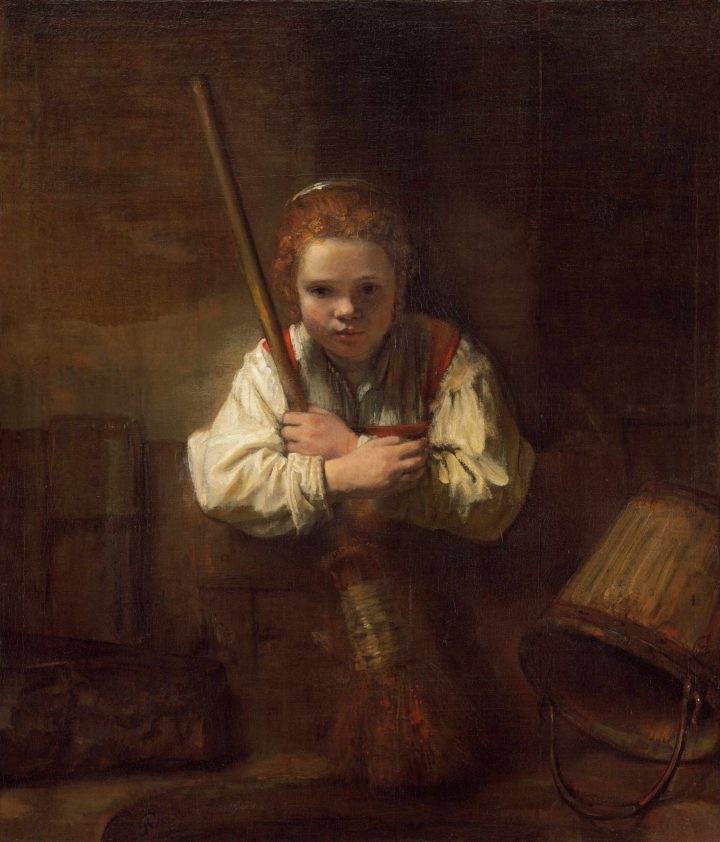
Rembrandt Workshop (possibly Carel Fabritius), A Girl with a Broom, 1646–51 (Washington DC: National Gallery of Art, 1937.1.74).
Le Phare Rembrandt invite le public à plonger dans l’univers de Rembrandt à un moment crucial : un demi-siècle après sa mort (en 1669), son nom devient un véritable mythe en Europe, et particulièrement à Paris, devenue capitale du marché de l’art. De plus en plus de tableaux du maître hollandais y sont importés, pour ensuite être exportés vers l’Allemagne, l’Angleterre ou la Russie.
L’originalité de l’exposition réside dans sa volonté de faire découvrir comment l’art de Rembrandt a été perçu au XVIIIe siècle en France, où ses œuvres influencent profondément les artistes et collectionneurs. À travers une sélection de cinquante œuvres visibles à l’époque, dont des peintures attribuées à Rembrandt ou réalisées par des artistes ayant étudié ou collectionné son travail tels que Chardin ou Fragonard, l’exposition explore les thèmes de l’imitation et de l’appropriation de son art.
Le Phare Rembrandt: Le Mythe d’un Peintre au Siècle de Fragonard (Paris: In Fine éditions d’art, 2025), 304 pages, ISBN: 978-2382032343, €35. With contributions by Jaco Rutgers, Jacqueline Carroy, Isabelle Arnulf, Jean-Pierre Maranci, Ivan Alexandre, Dominique Païni, Érick Desmazières, Gaëtane Maës, Anna Tummers, Jan Blanc, Quentin Buvelot, Dominique Brême, Ariane James-Sarazin, Yohan Rimaud, Laura Bossi.
From the CODART announcement:
This ambitious exhibition explores the undiminished aura of the Dutch master, focusing on two fascinating portraits seized during revolutionary confiscations and attributed to Rembrandt in the eighteenth century. . . .
Exhibition | Undressed: The Nude in Dutch Art, 1550–1800
Opening in March at Syracuse University:
Undressed: The Nude in Dutch Art, 1550–1800
Syracuse University Art Galleries, 17 March — 9 May 2026
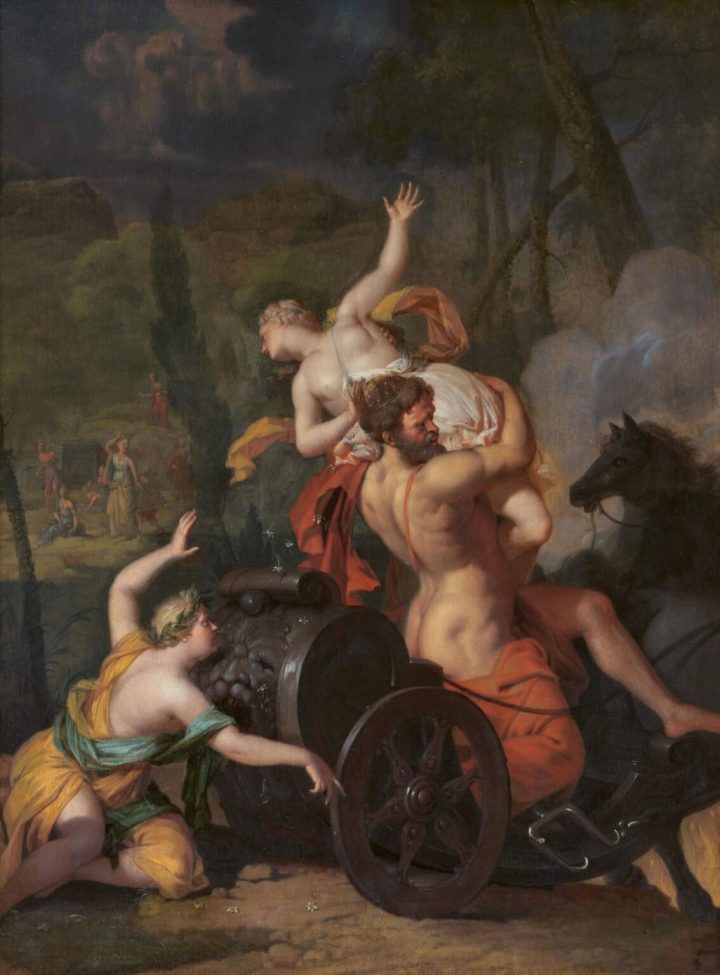
Pieter van Veen (1667–1736), The Rape of Proserpina, oil on canvas.
This exhibition, encompassing twenty-one works in various media, surveys the portrayal of nudity and semi-nudity in a variety of subjects rendered by Dutch artists over several centuries. It will explore how the nude has been articulated, both artistically and contextually, to disrupt traditional ideas of nudity in art, which were primarily argued by Sir Kenneth Clark in The Nude: A Study in Ideal Form (1956). In this influential text, Clark posited that the presence of the nude in art, existed above and beyond cultural circumstances, as a timeless, almost abstract ideal. He advanced a distinction between ‘naked’ and ‘nude’, with the latter explained as an idealization, or an evocation of timeless ideals. To the contrary, this exhibition presents nudity in art as a phenomenon that is time-bound and culturally determined.
This exhibition is curated by Wayne Franits (Distinguished Professor and Department Chair, Art and Music Histories) and the eight senior art history majors enrolled in the fall 2025 course HOA 498: Senior Seminar, Research and Professional Practice.










 Enfilade
leave a comment