Exhibition | Johan Tobias Sergel: Fantasy and Reality
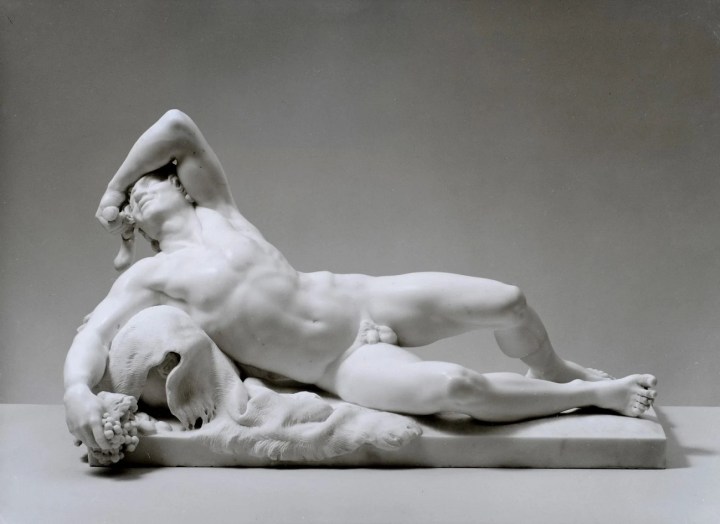
Johan Tobias Sergel, The Faun, 1774, marble, 46 × 46 × 84 cm
(Nationalmuseum, NMSk 357; photo by Viktor Fordell)
◊ ◊ ◊ ◊ ◊
From the Swedish Nationalmuseum in Stockholm, as noted at ArtNet:
Johan Tobias Sergel: Fantasy and Reality / Fantasi och Verklighet
Nationalmuseum Stockholm, 19 February — 9 August 2026
The Morgan Library & Museum, New York, 30 October 2026 — 31 January 2027
Curated by Daniel Prytz
In spring and summer 2026, Nationalmuseum will present a major exhibition on sculptor and draughtsman Johan Tobias Sergel (1740–1814) Sergel was a central figure in Swedish art during the late 18th century and is also considered one of the most important sculptors of his time on an international scale.
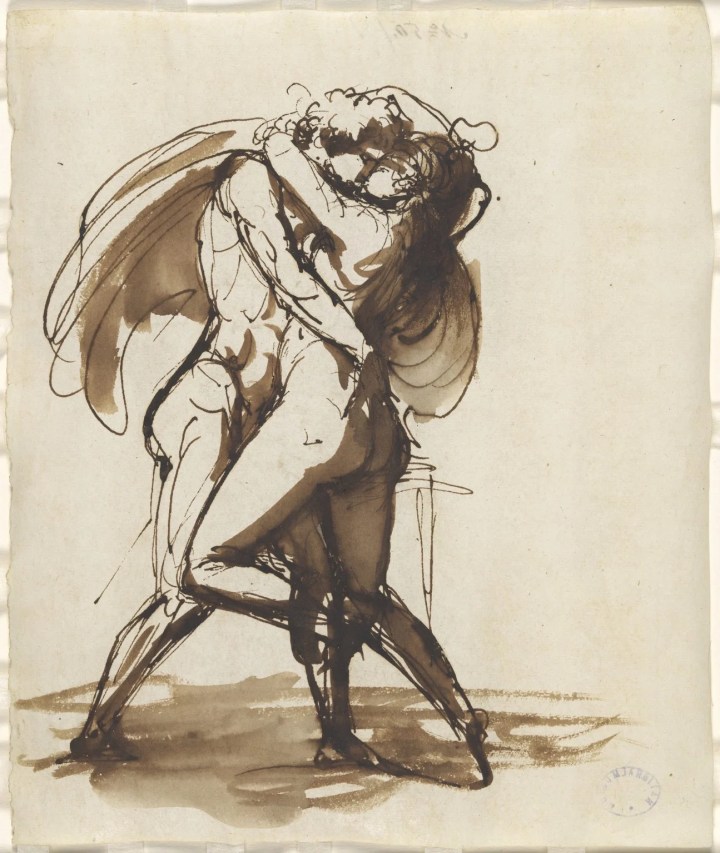
Johan Tobias Sergel, Passionate Lovers (Hetsigt kärlekspar), pen and brown ink with brown wash on paper, 21 × 18 cm (Stockholm: Nationalmuseum, NMH A 45/1970; photo by Cecilia Heisser).
The exhibition offers a comprehensive view of Sergel’s life and art—from his early years in Stockholm in the 1760s, through his extended study trips to France and Italy, to his commissions for King Gustav III upon his return to Stockholm. One of the goals of the exhibition is to place Sergel’s life and work in a broader cultural and historical context. His relationships with leading Swedish cultural personalities and political authorities of the time are given significant attention, and his career is portrayed against the backdrop of life in 18th-century Stockholm, Paris, and Rome. Sergel maintained an extensive international network, and the exhibition highlights how important these connections were to his artistic development. In addition to his close friend, the Danish painter Nicolai Abraham Abildgaard, his circle of friends included renowned artists from the British Isles such as Henry Fuseli, Thomas Banks, Alexander Runciman, and James Barry.
A major focus is placed on Sergel’s more personal and private drawings. He left behind a large number of works depicting everyday life, family, friends, and erotic scenes—images that reveal the man behind the monumental sculptures: an artist who viewed his contemporaries with both sharp insight and warmth. Nationalmuseum holds an extensive collection of works by Sergel, which forms the foundation of the exhibition.
Johan Tobias Sergel: Fantasy and Reality is curated by Daniel Prytz. A smaller version of the exhibition, organized by John Marciari, will be shown in autumn 2026 at The Morgan Library & Museum in New York.
From The Morgan:
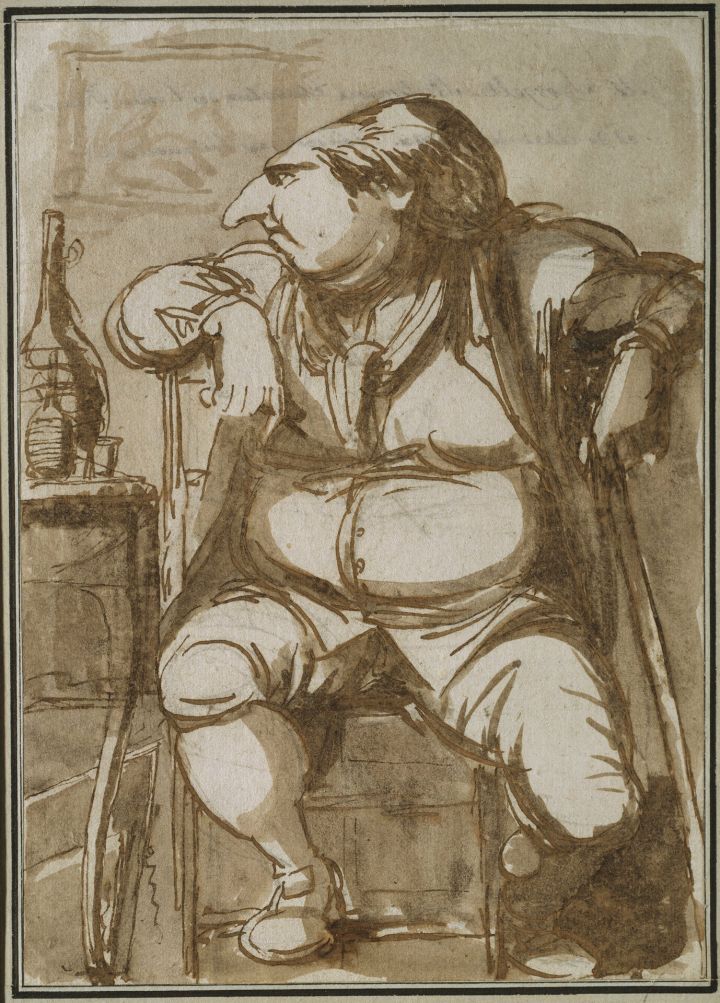
Johan Tobias Sergel, Self Portrait with a Bottle of Wine in Rome (Självporträtt vid en flaska vin i Rom), ink and graphite drawing, 22 × 16 cm (Stockholm: Nationalmuseum, NMH 280/1891).
This exhibition—the first dedicated to Sergel outside Europe—will feature a selection of the artist’s drawings alongside sculptural works in terracotta, marble, and plaster. Trained initially in Stockholm, Sergel spent time in Paris and, more importantly, over a decade in Rome, where his associates included a dazzling international circle of artists and patrons. Sergel’s sculpture was an important model for a generation of Neoclassical artists, but the artist’s personality is most evident in the drawings that constitute a virtual diary of his life, often in caricature. An extensive corpus of self-portraits will be joined by scores of surviving sheets that explore his artistic friendships, his relationship with King Gustav III and other figures at the court in Stockholm, and his common-law marriage to Anna Rella Hellström. Sergel’s late drawings, made when he was in poor health and in a state of depression, have been compared to those of Francisco Goya. Although Sergel’s career spanned artistic movements from Rococo to Neoclassicism to Romanticism, he also seems at times a modern figure, one whose life can offer a rich story to contemporary audiences.
Exhibition | Badin: Beyond Surface and Mask
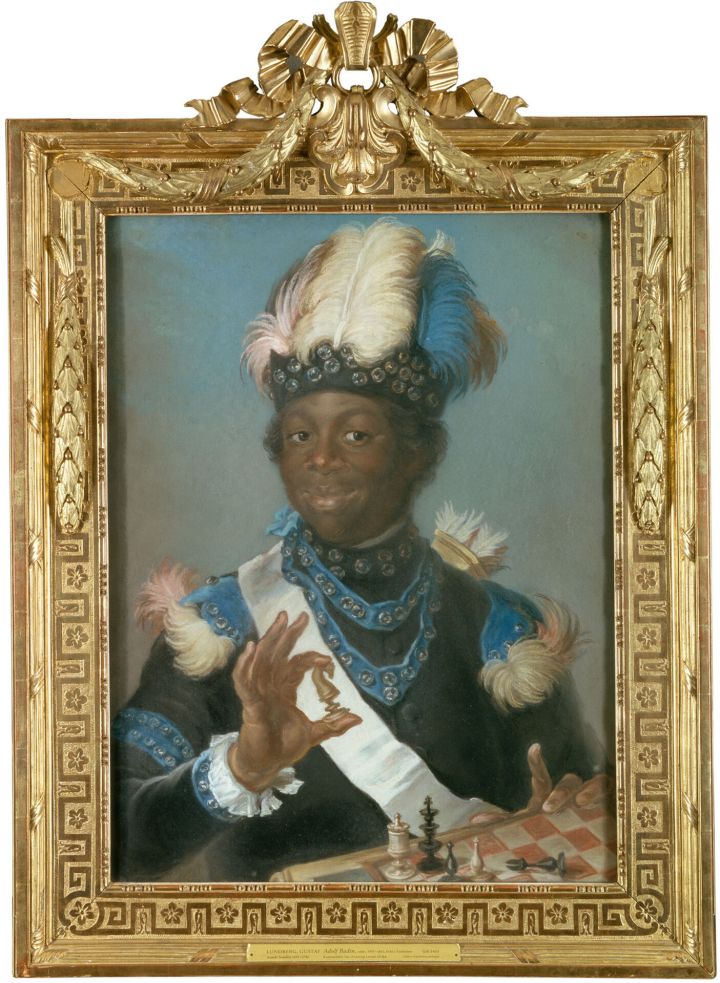
Gustaf Lundberg, Portrait of Adolph Ludvig Gustav Fredrik Albert Couschi, known as Badin, First Footman, Court Secretary, and Titular Assessor, 1775, pastel (Stockholm, Nationalmuseum, NMGrh 1455).
From the Swedish Nationalmuseum in Stockholm:
Badin: Beyond Surface and Mask
Nationalmuseum, 19 February – 9 August 2026
Running alongside and partially integrated with the exhibition on artist Johan Tobias Sergel, Nationalmuseum presents a smaller-scale exhibition about Adolf Ludvig Gustav Fredrik Albrecht Couschi, also known as Badin (ca.1747–1822).
Badin is thought to have been born in 1747, seven years after Sergel, as a slave on the island of Saint Croix, a Danish colony in the Caribbean. He was later taken to Europe, where he was eventually presented as a ‘gift’ to Sweden’s Queen Lovisa Ulrika. The exhibition seeks to create a nuanced and multifaceted understanding of how a person of African descent rose to become a significant figure in Swedish society of the time.
Nationalmuseum has commissioned a new film about Badin by artist Salad Hilowle that will appear in the exhibition.










 Enfilade
leave a comment