Exhibition | Rome and Milan as Capitals of Neoclassicism
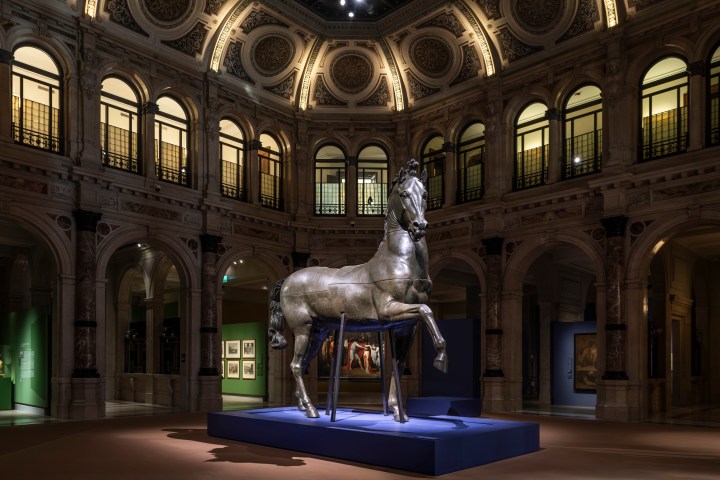
Installation view of the exhibition Eterno e Visione: Roma e Milano Capitali del Neoclassicismo
(Milan, Gallerie d’Italia, 2025)
◊ ◊ ◊ ◊ ◊
Now on view at the Gallerie d’Italia in Milan:
Eterno e Visione: Roma e Milano Capitali del Neoclassicismo
Gallerie d’Italia, Milan, 28 November 2025 — 6 April 2026
Curated by Francesco Leone, Elena Lissoni, and Fernando Mazzocca
From 1796, the year of Napoleon’s descent into Italy, until 1815, marked by the defeat at Waterloo and the Congress of Vienna, a radical political, economic, and social change took place on the peninsula. The momentous turning point of the Napoleonic Age also significantly involved the artistic scene. Only Rome and Milan escaped the decadence of major artistic centres like Florence, Venice, Genoa, and Naples. The Eternal City persisted as the universal capital of the arts due to the abundance of its heritage, from both antiquity and the Renaissance of Raphael and Michelangelo. Artists from all over the world continued to flock to Rome to learn their trade, and the city’s economy profited greatly from the presence of their studios and the activity of various workshops, which produced internationally appreciated bronzes and mosaics. The exhibition aims to evoke this exceptional creative season, comparing the highest level of artistic production of these two ‘capitals’, projected towards modern Europe while remaining firmly attached to the greatness of the past.
The leading artists in the exhibition are two brilliant men who were close friends: Antonio Canova, one of the most important artists of all time, and Giuseppe Bossi, an extraordinary painter, great connoisseur of Leonardo, and a sophisticated collector, as well as founder of the Pinactoca di Brera. Visitors can admire Antonio Canova’s masterpiece—previously thought to have been lost—the large model of a horse currently undergoing exceptional restoration. Other masterpieces by Bossi, Canova, and Andrea Appiani illustrate the creation of the image of Italy, in its well-known and then more popular iconography, due precisely to their genius.
The exhibition also highlights of one of history’s most ambitious architectural projects, conceived by the Bolognese architect Giovanni Antonio Antolini: the famous Foro Bonaparte, which, although never realised, had a major influence on the transformation of Napoleonic Milan into a modern city inspired by the magnificence of antiquity. With this utopian and visionary undertaking, Milan aspired to become the new Rome, pursuing the great ideal dream of classicism. Equally fascinating will be the re-enactment of Napoleon’s coronation as King of Italy in Milan Cathedral, through the exhibition of the so-called Italian Honours: the cape, crown, sceptre, and other splendid objects used during the ceremony, all of which underwent major restoration by Intesa Sanpaolo for the 19th edition of “Restituzioni” in 2022.
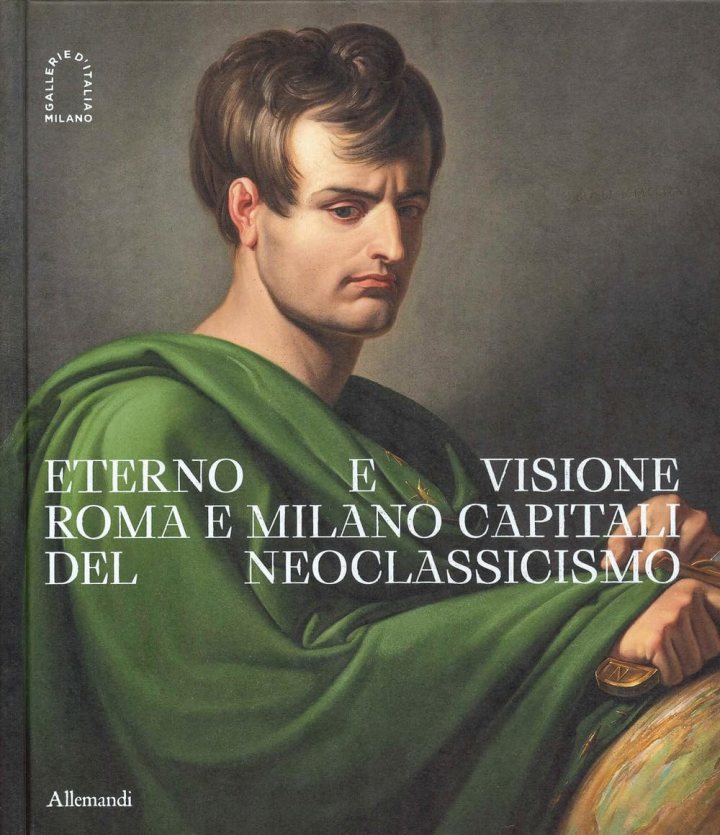
Roberto Bizzocchi, Elisa Baccini, Fernando Mazzocca, Francesco Leone, Elena Lissoni, Charles-Eloi Vial, et al., Eterno e Visione: Roma e Milano Capitali del Neoclassicismo (Turin: Allemandi, 2025), 368 pages, ISBN: 978-8842227137, €39.










 Enfilade
leave a comment