Clay Stories: A Ceramics Symposium
From Colonial Williamsburg:
Clay Stories: A Ceramics Symposium
Online and in-person, Colonial Williamsburg, 4–6 June 2026
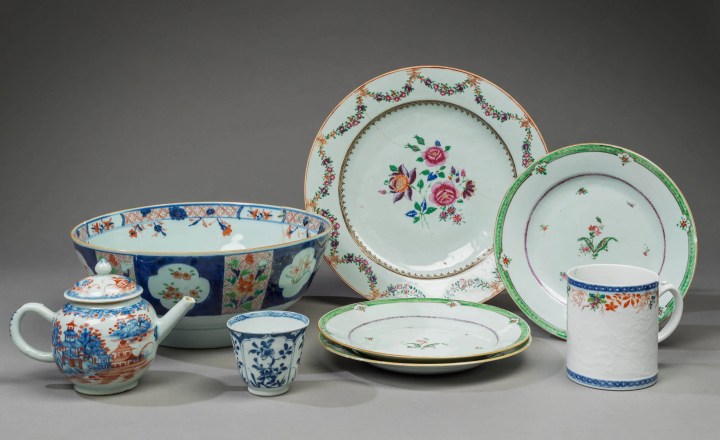
Colonial Williamsburg is pleased to host the 2026 bi-annual ceramics conference, in collaboration with the Museum of Early Southern Decorative Arts (MESDA), for this year’s symposium entitled Clay Stories. Every object has multiple stories layered through time as it passes from raw materials in the hands of makers, to finished vessel, to single owner or multiple stewards, and from useful utilitarian piece to archaeological fragment or prized possession mounted in a collector’s curio cabinet or in a museum’s case. Clay Stories weaves together history and research shared by curators, scholars, archaeologists, and potters.
All lecture presentations will be available on the conference streaming platform for both virtual and in-person registrants through 31 August 2026. Virtual attendees have virtual access to all lectures.
t h u r s d a y , 4 j u n e
12.00 Registration
1.00–6.00 Pre-Conference Bus Tour: Following the Dragon
Generously supported by James D. and Pamela J. Penny
f r i d a y , 5 j u n e
9.30–3.30 Pre-Conference Workshops and Tours
Please visit the pre-conference options page for more details.
4.30 Welcome
4.45 Glories and the Unexpected: Remarkable Ceramics in American Collections — Errol Manners (Independent Arts Dealer)
5.30 Treasure in Jars of Clay: Discovering Ceramic Masterworks in Unlikely Settings — Luke Zipp (Curator and Author, Crocker Farm)
6.15 Opening Reception
s a t u r d a y , 6 j u n e
8.30 Announcements and Updates from Colonial Williamsburg and MESDA — Angelika Kuettner (Curator of Ceramics and Glass, Colonial Williamsburg) and Johanna Brown (Chief Curator and Director of Collections, Old Salem)
8.45 Ceramics from England to Jamestown to Williamsburg — Julie Edwards (Archaeological Officer, Cheshire West and Chester Council)
9.30 Coffee Break
10.15 A ‘Magical Mystery Tour’, or the Life and Travels of a Curator —Leslie Grigsby (Emerita Senior Curator of Ceramics and Glass, Winterthur)
10.45 Jack and Acton: Revealing the Contributions and Presence of Enslaved Potters in the 18th-Century Red Earthenware Industry of Charlestown, MA. — Joe Bagley (City Archaeologist and Director of Archaeology, Boston Archaeology Program)
11.15 Bonnin and Morris: New Discoveries in Philadelphia — Melissa and Matt Dumphy (Citizen Archaeologists)
11.45 Philadelphia Slipware in Context — Debbie Miller (Archeologist and Curator, National Park Service)
Lecture Supported by the Chipstone Foundation (Ceramic in America)
12.15 Lunch Break
2.15 From Hubener to Medinger: Redware Potters of Southeastern Pennsylvania — Lisa Minardi (Editor, Americana Insights)
2.45 Midwestern Harvest Jugs: An Expression of Personal Choice — Wes Cowan (Vice Chair Emeritus, Freeman’s Auction House and Founder, Cowan’s Auctions)
3.15 ‘The Prospects of Obtaining Wealth with Ease’: The Ceramic Assemblage of 17th-Century Drayton Hall — Luke Pecoraro (Director of Archaeology and Collections, Drayton Hall Preservation Trust)
3.45 Coffee Break
4.30 RE-coiling and Master Potter David Drake — Michelle Erickson (Independent Artist)
Presentation supported by Jeffrey S. Evans & Associates
5.30 Closing Remarks — Tom Savage (Director of Educational Conferences and Travel, Colonial Williamsburg
6.00 Closing Reception with Live Entertainment at Shields Tavern
Call for Papers | Court Dining and Sensory Data, 1300–1800
From ArtHist.net:
Hungry for Data: Studying Court Dining and Using Sensory Data, 1300–1800
Palace of the Grand Dukes of Lithuania, Vilnius, 29–30 May 2026
Proposals due by 10 April 2026
Interested in how data, the senses, and court dining can be studied together?
The workshop Hungry for Data: Studying Court Dining and Using Sensory Data, 1300–1800 invites contributions for a hands-on, interdisciplinary event in Vilnius, 29–30 May 2026. Topics include sensory and spatial approaches to court dining, measurable proxies such as lighting, acoustics, ventilation, circulation, seating and visibility, as well as AI, modelling, and data visualisation. The call particularly welcomes contributions from researchers in history, art and architectural history, heritage studies, heritage science, digital humanities, computer science, geospatial and sensor data analysis, simulation, and AI. Early career researchers are warmly encouraged to apply. Submit an abstract (max 300 words) and a short CV (max 1 page) by 10 April 2026 to email@stephan-hoppe.de and fabian.persson@lnu.se.










 Enfilade
leave a comment