Call for Papers | Sculpture and Trompe l’œil in European Ceramics
From ArtHist.net:
Sculpture and Trompe l’œil in European Ceramics,
From Bernard Palissy to the Present
Hôtel de la Roche, Mons, Belgium, 10–13 July 2026
Proposals due by 12 December 2025; full papers due by 30 April 2026
Second Edition of the Annual Conference on European Sculpture and Decorative Arts
A combined effort of the Centre de Recherches Historiques sur les Maîtres Ébénistes and the Low Countries Sculpture Society, whose libraries and archives have merged and are housed in the Hôtel de la Roche (1750) at Mons, the Annual International Conference had its inaugural edition in July 2025. This edition, dedicated to European ceramics, aims to address issues relating to figurative sculpture in the round, to relief sculpture and to trompe l’oeil, all in the medium of ceramics. This includes the imitation of other materials, such as wood or precious stones, and the mimetic representation of animals and plants. Sculpture and trompe l’oeil are recurring themes but have been little studied in a comprehensive manner in European ceramic art, not even in Art Deco ceramics, which frequently use sculptural forms, both in tableware and in purely decorative pieces.
The term trompe l’oeil comes from the world of easel painting, and the conference will be an opportunity to define more precisely the use and usefulness of this term in the world of ceramics. Our conference proposes to study cases that can shed light on this practice, from the Renaissance to the present day, in terms of the rendering of forms, colours, and textures. These cases may concern the production, consumption, collecting and display of these types of ceramics throughout Europe and North America, from the Renaissance to the present day. Issues of design history, collaborations between creators and producers, artists and artisans, as well as the relations with any other people involved in the production of these ceramics may be studied. The theme will draw, in particular but not exclusively, on the rich tradition of ceramics in the Low Countries, from Antwerp majolica, via Tournai porcelain and Bouffioulx stoneware, to contemporary productions.
The conference has an international and multidisciplinary orientation. As such, we hope to attract lively participation from junior and senior scholars in the history of ceramics, sculpture, archaeology, ethnography, as well as practitioners of restoration-conservation in the same and other relevant fields. Short papers (maximum 30 minutes) of new research or work in progress may be presented in English or French. A minimal passive knowledge of English and French are highly recommended to enable full participation in the ensuing discussions, which form the core of the seminar. The Society covers accommodation expenses for foreign speakers at the conference, as well as group meals and the optional excursions. On the other hand, travel arrangements to and from Mons are the responsibility of the individual participants and their travel expenses will not be reimbursed.
The conference will take place without audience (apart from the speakers, moderators and a few benefactors), but it will be filmed and broadcast live on YouTube for free, on our dedicated channel, The Low Countries Sculpture Society. The conference proceedings will be published in 2027 in a new academic journal dedicated to European sculpture and decorative arts, based on our annual international conferences.
Please send participation proposals with a 200-word abstract of the intended paper and a 200-word CV by email to info@lcsculpture.art. We prefer to receive your abstract written in your mother tongue. We will then have it professionally translated into English and French for our Scientific Committee. We will inform of the Scientific Committee’s decision in December. Full papers, with their accompanying PowerPoint presentation, will then be due by 30 April for peer review and final paper acceptance.
Scientific Committee
Jean-Dominique Augarde, Centre de Recherches Historiques sur les Maîtres Ebénistes, Paris / Mons
Yves De Leeuw, collector and exhibition curator at the château d’Ecaussinnes-Lalaing, Fondation van der Burch
Bernard Dragesco, Dragesco-Cramoisan Gallery, Paris / Château de Barly
Errol Manners, E & H Manners Gallery, London
Sylvie Milasseau-Wengraf, art historian, Switzerland
Tamara Préaud, formerly Cité de la Céramique, Sèvres, and president, The French Porcelain Society, London
Miriam E. Schefzyk, The J. Paul Getty Museum, Los Angeles
Volker Seiberth, University of Heidelberg / The Low Countries Sculpture Society
Pier Terwen, art historian and conservator of sculpture and ceramics, Leiden
Organizing Committee
Katia Berseneva, Ecole du Louvre, Paris / The Low Countries Sculpture Society
Théodore and Clotilde de Brouwer, château d’Ecaussinnes-Lalaing, Fondation van der Burch
Guillaume Hambye, notary, Mons
Laurence Lenne, Galerie Art & Patrimoine, Ath
Léon Lock, The Low Countries Sculpture Society, Brussels / Mons
Grégory Maugé, Centre de Recherches Historiques sur les Maîtres Ébénistes, Paris / Mons
Thierry Naveaux, The Low Countries Sculpture Society, Brussels / Mons
Sébastien Tercelin de Joigny, Tercelin de Joigny Gallery, Mons / Seneffe
Jenny Tondreau, Collegiate church of Sainte-Waudru, Mons
Attingham Courses in 2026
Attingham offerings for 2026:
The Study Programme | Sweden: Stockholm and Its Hinterland
Led by David Adshead with Beatrice Goddard, 8–14 June 2026
Applications due by 30 January 2026
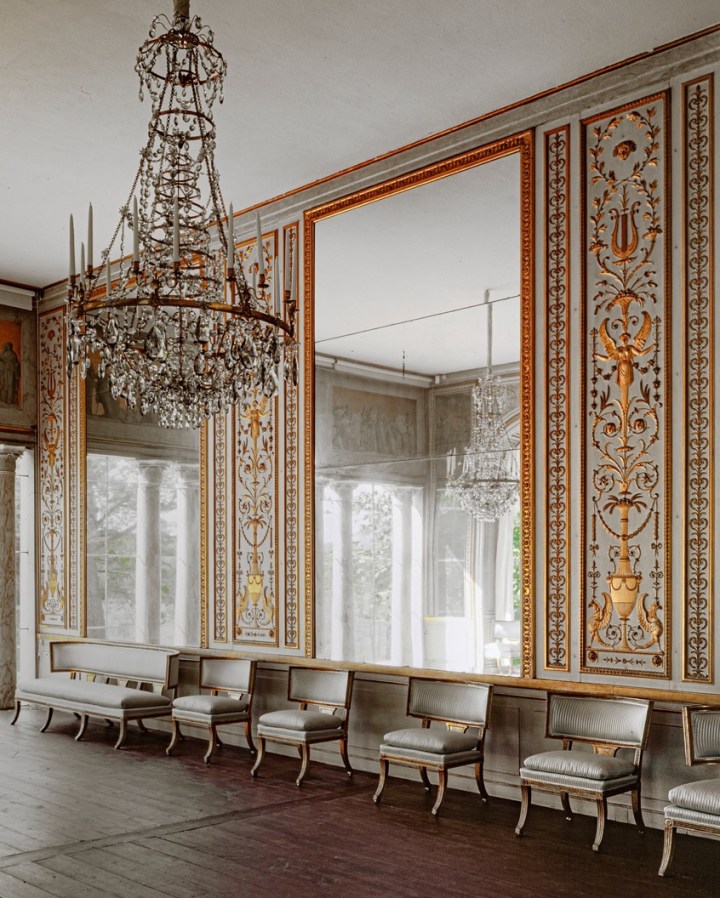
The Hall of Mirrors, Gustav III’s Pavilion at Haga Park. The Royal Palaces, Sweden (Photograph: ©Jens Markus Lindhe).
This intensive seven-day course will study the patronage of successive Swedish royal dynasties and that of the nobility and wealthy merchant class, in Stockholm’s palaces and the castles and country houses of its hinterland—Svealand, the nation’s historic core. With earlier outliers, it will focus on the arts and architecture of the mid 17th to early 19th centuries, encompassing the Baroque, Rococo, neo-Classical and ‘Empire’ styles.
For more than a hundred years, from the accession of Gustavus Adolphus in 1611 to its loss of territory at the end of the Great Northern War in 1721, Sweden was a European military superpower and enjoyed an ‘Age of Greatness’, its fortunes reflected in the richness of buildings, interiors, and collections of fine and decorative arts, particularly those of the monarchy. A new political compact with power-sharing between government and parliament—the so-called ‘Age of Liberty’—subsequently encouraged a flowering of the arts and sciences and the further influence of all things French. During the following ‘Gustavian Age’, led by the energetic but latterly autocratic, Gustav III, Sweden’s elegant interpretation of neo-Classicism reached its apogee.
In Stockholm, visits will be made to the Riddarhuset, Riddarholmskyrkan, the Royal Palace, and Gustav III’s Museum of Antiquities. Outside Stockholm, in addition to a number of private houses, visits will include, Tullgarns Palace, Drottningholm Palace, Svartsjö Palace, the English landscape park at Haga, Rosersberg Palace, Svindersvik a summer residence, Gripsholm Castle, the manor house at Grönsöo, and Skokloster Castle. For the last two nights we will be staying in the town of Mariefred on the south-west tip of Lake Mälaren.
◊ ◊ ◊ ◊ ◊
The 73rd Summer School
Led by David Adshead and Tessa Wild, with Sabrina Silva, 27 June — 12 July 2026
Applications due by 30 January 2026
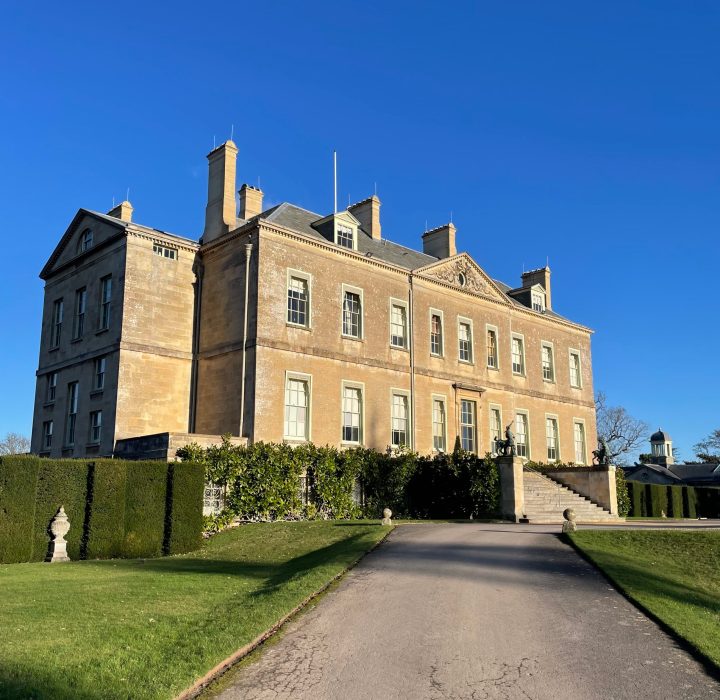
Buscot Park, Faringdon, Oxfordshire, 1780–83.
The 73rd Attingham Summer School, a 16-day residential course will visit country houses in Sussex, Derbyshire, Nottinghamshire, Buckinghamshire, and Oxfordshire. From West Dean, our first base, we will study, amongst other houses and gardens: Petworth House, where the patronage of great British artists such as Turner and Flaxman enrich its Baroque interiors; Parham, a fine Elizabethan house in an unrivalled setting; and Standen, an Arts and Crafts reinterpretation of the country house.
In the Midlands, a series of related houses will be examined: Hardwick Hall, unique amongst Elizabethan houses for its survival of late 16th-century decoration and contents; Bolsover Castle, a Jacobean masque setting frozen in stone; and Chatsworth, where the collections and gardens of the Cavendishes and Dukes of Devonshire span more than four centuries. Other highlights include Robert Adam’s crisp neo-Classical interior and Fishing Pavilion at Kedleston Hall.
The final part of the course will focus on the rich estates and collections of Oxfordshire. Our itinerary will include Broughton Castle, a moated and fortified manor house with a chapel first consecrated for Christian worship in 1331, and Buscot Park, with its superb collection with works by Rembrandt, Botticelli, Rubens, Edward Burne-Jones and Dante Gabriel Rossetti, and furniture by Robert Adam and Thomas Hope. While at Buscot we will have the opportunity to explore one of the country’s finest water gardens, designed by Harold Peto in 1904 and extended from 1911–13, and a surviving country house theatre created in 1936 for the 2nd Lord Faringdon. We will also visit the much more modest 17th-century stone-built, Kelmscott Manor, the beloved country home of William Morris and his family, and the place that he described as ‘Heaven on Earth’.
◊ ◊ ◊ ◊ ◊
Royal Collection Studies
Led by Helen Jacobsen, with Beatrice Goddard, 6–15 September 2026
Applications due by 15 February 2026

James Roberts, The Pavilion Breakfast Room at Buckingham Palace (known by 1873 as the Queen’s Luncheon Room), 1850, watercolour and bodycolour with gum arabic, paper: 26 × 38 cm (RCIN 919918).
The Royal Collection is one of the world’s leading collections of fine and decorative art, with over one million works from six continents, many of them masterpieces. Working in partnership with The Royal Collection Trust, this ten-day residential course offers participants the opportunity to study the magnificent holdings of paintings, furniture, metalwork, porcelain, jewellery, sculpture, arms and armour, books, and works on paper and to examine the architecture and interiors of the palaces which house them. Based near Windsor, the course also examines the history of the collection and the key roles played by monarchs and their consorts over the centuries. Combining a mixture of lectures and tutorials, visits to both the occupied and unoccupied palaces in and around London and close-up object study, Royal Collection Studies aims to give experienced professionals in the heritage sector a deeper understanding of this remarkable collection.
◊ ◊ ◊ ◊ ◊
From College Library to Country House
Led by Andrew Moore, with Rita Grudzien, 7–11 September 2026
Applications due by 15 February 2026
This course is conceived from the perspective of the British aristocracy and gentry whose education centred upon preparing them to run their country estate, including the house and collections, and argues for the importance of the library and the book collection in this process. Too often in country house studies the architecture, interior design, and art collections have held sway; this course aims to foreground the College book collections at the disposal of tutors and the subsequent development of the country house library. Libraries reveal not only the intellectual or recreational interests of past generations, but also how books manifest taste, fashion, and opportunities for display. Book historians and tutors well known in their respective fields will conduct the course, attending to a broad variety of subjects including book binding, the development of the idea of rare books and of book collections, library portraiture, and questions of spatial analysis and mobility—all in the context of the collections housed in some of the oldest and most complete book rooms in Britain.
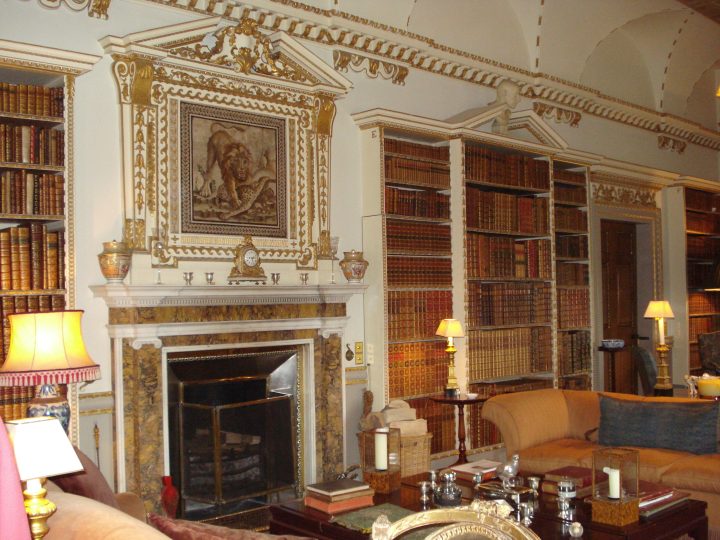
Library at Holkham Hall.
This intensive residential five-day course is based in the exceptional surroundings of St Catharine’s College, a constituent college of the University of Cambridge. Directed by Dr Andrew Moore, the programme plans to visit a series of iconic libraries. These include the historic private library of Houghton Hall, created by Robert Walpole, and Holkham Hall, home to one of the greatest private manuscript and printed book collections in Britain, housed today in three of the country’s most important country house library rooms. The course will also visit the library designed by James Gibbs for Edward Harley, Earl of Oxford at Wimpole Hall in Cambridgeshire, and the Braybrooke library rooms at Audley End, of considerable interest for being reconstituted from dressing rooms into the 3rd Lord Braybrooke’s library, incorporating the inherited Neville family books. The library at Audley End functioned as an informal family sitting room, with the adjacent study (the South Library) still displayed as it looked in the early 19th century.
The course includes the Old Libraries of St John’s College and Queens’ College; the Wren Library, Trinity; the Perne Library at Peterhouse; the Parker Library at Corpus Christi; and the Founder’s Library at the Fitzwilliam Museum. Additional seminars will take place in the context of the historic book collections in the Cambridge University Library designed by Giles Gilbert Scott (1880–1960). St Catharine’s College will host a seminar on the medical book collection of John Addenbrooke (1680–1719), founder of Addenbrooke’s Hospital, Cambridge.
◊ ◊ ◊ ◊ ◊
Note (added 14 January 2026) — From Attingham’s Instagram account (6 January 2026) . . .
We are thrilled to congratulate Annabel Westman on being awarded an MBE in the New Year Honours “for services to heritage, particularly to The Attingham Trust and historic textiles.” Annabel’s time as Director of the Attingham Summer School (1993–2005) and Executive Director of The Attingham Trust (2005–2021) helped shape Attingham into the vibrant, welcoming, and extraordinary community it is today. Alongside this, her distinguished career as a textile historian and consultant has enriched the understanding and restoration of historic interiors worldwide. This honour is richly deserved, and we are so proud to celebrate Annabel and all she continues to give to the field.
New Book | Bluestockings and Landscape in Eighteenth-Century Britain
From Boydell & Brewer:
Markman Ellis and Jack Orchard, eds., Bluestockings and Landscape in Eighteenth-Century Britain: The Prospect of Improvement (London: Boydell Press, 2025), 292 pages, ISBN: 978-1837650507, £85. Available as an ebook for £19. Studies in the Eighteenth Century series, Volume 16.
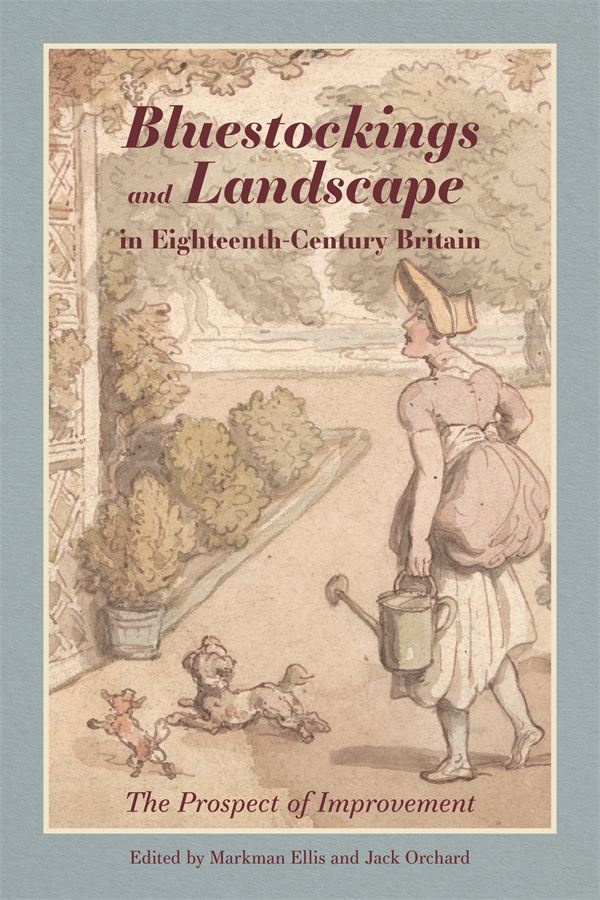 Situated within the broader context of eighteenth-century intellectual and cultural history, this collection redefines the role of the Bluestocking circle in shaping Britain’s landscapes and social ideals. Against the backdrop of Whiggish notions of ‘improvement’—encompassing agricultural innovation, aesthetic refinement, and moral progress—it explores how women such as Elizabeth Montagu, Mary Delany, and Elizabeth Carter navigated the intersections of polite sociability, intellectual production, and estate management. Their contributions reveal a dynamic interplay between cultural critique and practical reform, positioning them as active participants in the period’s debates on land, labour, and national identity.
Drawing on insights from the Elizabeth Montagu’s Correspondence Online (EMCO) project, these essays uncover the creative and social tensions embedded in iconic estates such as Montagu’s Sandleford and Lord Lyttelton’s Hagley Hall. They delve into the poetic and philosophical musings of James Woodhouse, the sociable artistry of Mary Delany, and the symbolic landscapes of Wrest Park. By examining correspondence, poetry, visual arts, and cartography, this volume offers an unprecedented exploration of the ways Bluestocking women engaged with and redefined the designed landscape as a site of intellectual and environmental innovation. This interdisciplinary collection reshapes the historiography of gender, environment, and cultural progress, offering fresh insights into the enduring significance of eighteenth-century landscapes and the intellectual communities that shaped them.
Markman Ellis is Professor of Eighteenth-Century Studies at Queen Mary University of London.
Jack Orchard is Content Editor of the Electronic Enlightenment project based at the Bodleian Libraries, Oxford.
c o n t e n t s
List of Illustrations
Notes on Contributors
Acknowledgements
Foreword: ‘Bringing Elizabeth Montagu to the World’ — Joanna Barker and Nicole Pohl
Introduction: ‘The Prospect of Improvement: Bluestockings and Landscape in Eighteenth-Century Britain’ — Markman Ellis and Jack Orchard
Section One
1 Idioms of Improvement: Gender and Social Relations on the Montagu Estates, 1730–1800 — Steve Hindle
2 Religious Faith, Class Politics, and Equitable Progress: James Woodhouse and Elizabeth Montagu’s Contending Visions of Improvement — Adam Bridgen and Steve Van Hagen
3 Cultivating Wilderness — Ve-Yin Tee
Section Two
4 ‘Another Little Excursion’: On Tour with Mrs Montagu and Lord Lyttelton — Michael Cousins
5 Cultivating Land, Literature, Letters: Textualities of Improvement in Elizabeth Montagu’s Travels in Scotland — Millie Schurch
6 ‘She had no eyes nor understanding to see that it was not a common vulgar garden’: Mary Delany’s Landscapes of Improvement — Kristina Decker
7 Ladies of Landscape: The Discovery of Lady Harriett Garnier’s ferme ornée at Rookesbury, Hampshire — Rosemary Baird Andreae
Section Three
8 ‘The Genius of Rest … those Happy Groves Inspired’: Literary Composition, Coterie Sociability, and the Gardens at Wrest Park — Jemima Hubberstey
9 ‘Fate Led Me from my Lov’d Retreat’: The City and the Country in Elizabeth Harcourt’s Writings — Mary Chadwick
10 ‘Death’s Refreshing Shade’: Elizabeth Carter, ‘Church-yard Poetry’ and Contemplative Retirement in the Gardens of the Dead — James Metcalf
Afterword: Bluestocking Landscapes — Stephen Bending
Bibliography
Thematic Route | Queen Isabel de Farnesio (1692–1766)
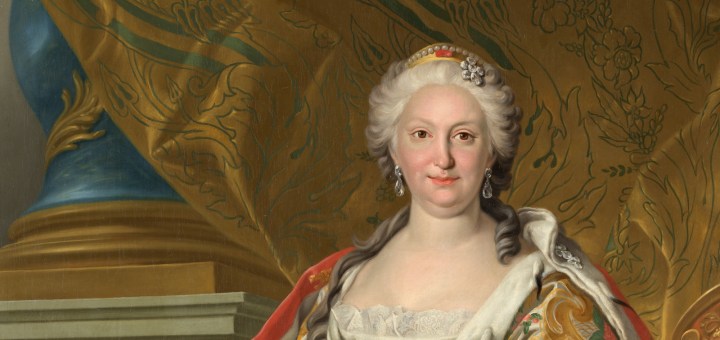
Louis-Michel van Loo, Queen Elisabetta Farnese, detail, ca. 1739, oil on canvas, 152 × 110 cm
(Madrid: Museo Nacional del Prado, P002397)
◊ ◊ ◊ ◊ ◊
From the press release for the new edition of the Prado’s Female Perspective initiative:
El Prado en femenino III: Queen Isabel de Farnesio (1692–1766)
Museo Nacional del Prado, Madrid, 1 December 2025 — 26 May 2026
Curated by Noelia García Pérez
The Museo Nacional del Prado shines a long-overdue spotlight on one of the most influential yet often overlooked women in European art history: Queen Isabel de Farnesio. With the third edition of its acclaimed initiative El Prado en femenino, the museum invites visitors to rediscover the 18th-century monarch whose passion for collecting helped shape what is now one of the world’s great art museums. Running until 26 May 2026, the new itinerary, created in collaboration with Spain’s Women’s Institute and supported by Iryo, moves the focus into the 18th century, following earlier editions devoted to Renaissance and Baroque royal women. This time, the star is a queen whose impact on the arts remains quietly yet unmistakably present throughout the Prado: Isabel de Farnesio (1692–1766), wife of King Philip V and one of the most active artistic patrons of her era.
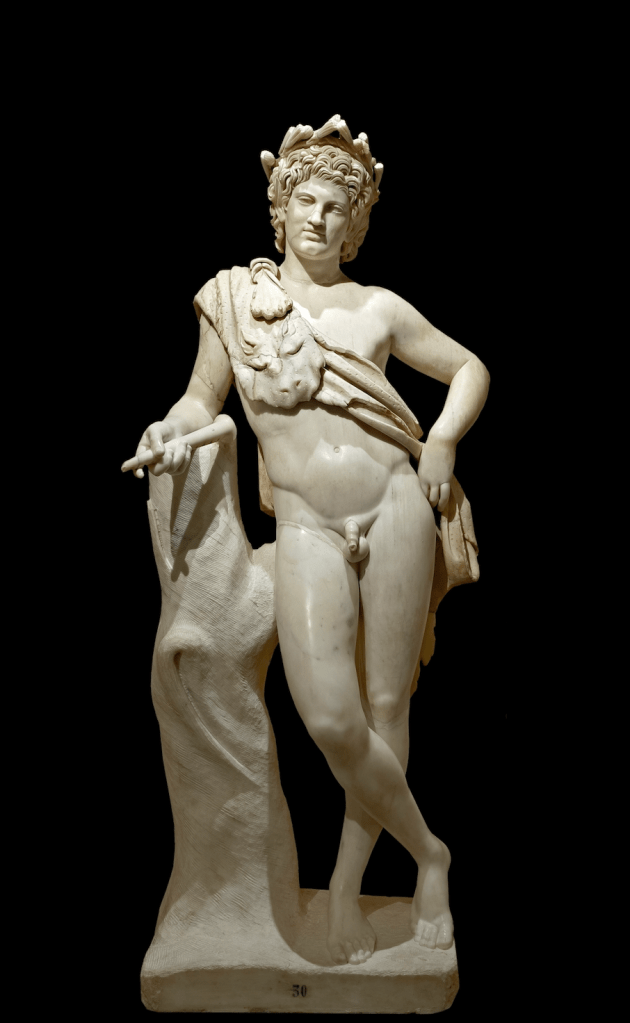
Resting Satyr, an ancient Roman copy of a work by Praxiteles, ca. 150–75 CE, Carrara marble (Madrid: Museo Nacional del Prado, E000030). The work was restored in the 17th century by Bernini’s workshop.
Few visitors realize that nearly 500 works in today’s Prado once belonged to her—paintings, drawings, and sculptures that now hang in almost half the museum’s galleries. The itinerary traces her unmistakable imprint, marked historically by a tiny fleur-de-lis stamped on the back of the works she owned. These include masterpieces like Rubens’s Apostolate, Ribera’s Jacob’s Dream, Velázquez’s Sibyl, Guido Reni’s Saint Sebastian, Correggio’s Virgin and Child with Saint John, and dozens of luminous works by Murillo, her favorite painter. Her taste was cosmopolitan and bold. Drawing on her Italian upbringing and a sharp eye for quality, Isabel assembled one of the finest painting collections of her time, particularly strong in the Flemish and Italian schools. She relied on a network of diplomats, agents, and noble intermediaries—yet maintained striking independence through her own private funds known as ‘the queen’s purse’.
Isabel’s legacy is not only pictorial. She was also responsible for bringing to Spain one of the most coveted collections of ancient sculpture in Europe: the classical masterpieces once owned by Queen Christina of Sweden. Works such as the Group of San Ildefonso, the Faun with a Kid, the Diadoumenos, and the Resting Satyr—cornerstones of the Prado’s classical sculpture galleries—arrived in Spain because Isabel insisted on acquiring them. She personally selected the pieces, reserved the finest for herself, and ensured they would become part of the Royal Collection.
The 45 works featured in this edition of El Prado en femenino, curated under the academic direction of Professor Noelia García Pérez, span newly rediscovered paintings, long-hidden works pulled from storage, and pieces returned from university and embassy loans. A recently identified Murillo sketch—found in the Musée de Pau during an inventory—appears at the Prado for the first time.
The project extends beyond the walls of the museum with the launch of an ambitious programme of talks, symposia, audiovisual productions, guided tours, family resources, a teacher-training course, concerts, and a new Wikipedia Editathon dedicated to expanding the online presence of women who shaped art history. With El Prado en femenino III, the museum takes another major step in reframing its collection through a gender-aware lens. In giving Isabel de Farnesio the attention she long deserved, the Prado not only revisits its past—it redefines the future of how art history is told.
The brochure for the thematic route is available here»
The website for the broader initiative of The Female Perspective is available here»
Exhibition | Times in Tapestry

Judocus de Vos after the model by Philippe de Hond, La Rencontre des belligérants, tapestry from l’Art de la guerre, ca. 1718–24, Brussels
(Lausanne: Fondation Toms Pauli, donation Mary Toms)
◊ ◊ ◊ ◊ ◊
Now on view at mudac:
Times in Tapestry / Tisser son temps / Am Webstuhl der Zeit
Musée cantonal de design et d’arts appliqués contemporains, Lausanne, 7 November 2025 — 8 March 2026
mudac and Fondation Toms Pauli are proud to present this exhibition dedicated to tapestry as a vector for social and political discourse.
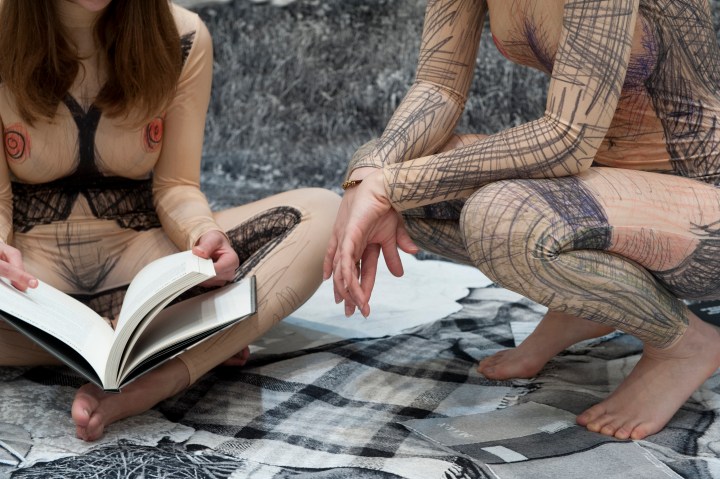
Goshka Macuga, Performance of Death of Marxism, Women of All Lands Unite, 2013, wool tapestry with two women wearing printed lycra suits, 560 × 290 cm, 2013.
Far from being confined to a decorative role, tapestry has always been a powerful tool for storytelling. From medieval times to contemporary creations, it provides a space for dialogue at the crossroads of collective aspirations, historical narratives, and contemporary issues. The exhibition brings together major works from the Toms collection, woven in the prestigious Brussels workshops between 1660 and 1725, alongside contemporary creations by Goshka Macuga and Grayson Perry. Tapestries, such as The History of Scipio Africanus and The Emperors Titus and Vespasian, depict glorious and symbolic episodes from Roman narratives. At this occasion two tapestries will be presented to the public for the first time, highlighting the value and prestige of this collection, owned by the State of Vaud.
These historical masterpieces resonate with the powerful creations of Goshka Macuga and Grayson Perry. Through tapestries such as Perry’s The Vanity of Small Differences and bespoke works by Macuga, the exhibition explores contemporary themes of social struggle, critiques of consumer society, and power dynamics. For this occasion, Macuga will create a unique textile work, specially created in dialogue with the Toms collection, which will enhance the exhibition with a distinctive and contemporary perspective. The confrontation of ancient and contemporary works highlights the timeless power of tapestry, with its visual language capable of conveying complex messages and fostering reflection on universal issues.
The exhibition press kit is available here»
More on the Toms Collection is available from the press release:
The Toms Collection is one of the most significant privately assembled collections of historic tapestry from the second half of the 20th century. Bequeathed to the State of Vaud by Mary Toms in 1993, it comprises over one hundred wall tapestries and decorative pieces from major European workshops, dating from the early 16th to the late 19th centuries. After amassing a fortune in real estate, British developer Reginald Toms (1892–1978) and his wife Mary (1901–1993) settled at Château de Coinsins in French-speaking Switzerland in 1958, where they discovered a passion for historic textiles. During the 1960s, they acquired over a hundred works, including furniture, carpets, and embroidery.
More than fifty tapestries in the collection originate from the leading workshops of Flanders, particularly from the 17th to the 18th centuries. The gold- and silver-threaded masterpieces on show are drawn from the original Toms collection and later acquisitions by the Toms Pauli Foundation, established in 2000. Known for its geographical, chronological and thematic breadth, as well as its outstanding state of preservation, this collection, owned by the State, has been exhibited in venues such as Payerne Abbey, the Metropolitan Museum in New York, the MCBA in Lausanne, the Palacio Real in Madrid, the Cité de la Tapisserie in Aubusson and Musée Rath in Geneva. It now takes pride of place at mudac for this landmark exhibition.
While the name Mary Toms is now recognised worldwide thanks to her prestigious collection, the life of the donor herself remains largely private. Trained as a secretary, Mary Alice Winterton married Reginald Toms in 1933. Reginald had achieved considerable success in finance and real estate, allowing the couple to live an international life between Britain, South Africa, Monte Carlo, and Ireland, before finally settling in French-speaking Switzerland in 1958, where they acquired the Château de Coinsins. In the short span of just ten years (1959–1969), Mary and Reginald Toms assembled, through purchases on the London art market, one of the world’s largest private collections of tapestries from the 16th to the 19th centuries, outside royal or aristocratic holdings.
Until Reginald’s death in 1978, the couple kept their collection relatively private. Yet they were fully aware of its exceptional nature and were concerned with ensuring its preservation. In 1990, Mary Toms drew up a will bequeathing to the Canton of Vaud the Château de Coinsins, its furnishings, art collections and the surrounding vineyard. Upon accepting this legacy, the State undertook to preserve and promote the remarkable collection of tapestries that Mary and Reginald Toms had so passionately assembled during the 1960s.
Based in Lausanne since its founding in 2000, the Toms Pauli Foundation is an active institution on both Swiss and international stages. Its core mission is to research, preserve and promote collections of historic and 20th-century textile art owned by the State of Vaud. The Foundation’s heritage consists of a significant collection of European tapestries and embroidery dating from the 16th to the 19th century, bequeathed by Mary Toms in 1993, as well as textile artworks from 1954 to 2011 that are emblematic of the Nouvelle Tapisserie movement.
Lacking its own exhibition space to showcase its exceptional holdings, the Foundation regularly presented its collections abroad. Since 2020, the Toms Pauli Foundation has been based at Plateforme 10. Its offices, collections, and specialised library are housed within the building of the MCBA. The public can discover the Foundation’s historic and contemporary collections through temporary exhibitions held at Plateforme 10—such as the major 2023 exhibition Magdalena Abakanowicz: Textile Territories, organised in collaboration with Tate—and in other venues in Switzerland and beyond. At the end of 2025, another piece from the Titus and Vespasian series will go on display at the MCBA as a follow-up to the Tisser son temps exhibition.
As the successor to the Centre International de la Tapisserie Ancienne et Moderne (CITAM), the organisation behind the Lausanne Tapestry Biennials from 1962 to 1995, the Foundation also maintains artist archives from these historic events and regularly hosts researchers from around the world.
Colloquium | Textile Conservation Research at The Met
From The Met:
Conferences to Colloquium: Sharing Textile Conservation Research
The Metropolitan Museum of Art, New York, 9 December 2025
Join us for a colloquium featuring a series of talks by The Met’s Textile Conservation Department focusing on innovative conservation efforts that have been presented at leading conferences across the United States and internationally. Listen as speakers share case studies, methodologies, and insights into the preservation of historical and culturally significant textiles. The colloquium offers an opportunity for dialogue among professionals and people with an interest in historic textiles, highlighting recent advancements and practical challenges in the field of textile conservation.
This event is free to attend, though advance registration is required. Please note that space is limited; registration does not guarantee admission once the lecture hall reaches capacity.
s c h e d u l e
11.00 Morning Papers
• Monitoring Deformation of Tapestries by Image Analysis — Kisook Suh (Conservator) and Alejandro Schrott (Consultant, Department of Scientific Research)
• Technical and Scientific Findings of Four Textile Fragments with Shaded Bands from Dura-Europos — Martina Ferrari (Associate Conservator) and Janina Poskrobko (Conservator in Charge)
• Conservation of American Wing Samplers — Alexandra Barlow (Associate Conservator)
12.00 Lunch break
1.00 Afternoon Papers
• X-radiography of Textiles, Evolving Techniques and Approaches —Cristina Balloffet Carr (Conservator and Consulting Conservator for the Antonio Ratti Textile Center)
• The Met’s Contribution to Green Art: Experimentations with Nanogels and Green Consolidants for the Historic Textiles Preservation — Giulia Chiostrini (Conservator), Kristine Kamiya (Conservator), and Janina Poskrobko (Conservator in Charge)
2.00 Closing remarks
Exhibition | Beyond The Medici: The Haukohl Collection
Given that the exhibition has been on tour since 2018, it’s laughable that I’ve missed it for so long. The latest iteration is now on view in Phoenix under the title Florentine Baroque: The Haukohl Collection. –CH
Beyond The Medici: The Haukohl Collection
Kuntsammlungen und Museen Augsburg, 20 October 2018 — 20 January 2019
Arp Museum Bahnhof Rolandseck, Remagen, 10 February — 8 September 2019
Musèe National d’historie et d’art, Luxembourg, 16 October 2020 — 21 February 2021
Palais de Beaux Arts, Brussels, June — September 2021
Rollins Museum of Art, Winter Park, Florida, 23 September — 31 December 2023
David Owsley Museum of Art, Ball State University, Muncie, Indiana, 24 February — 24 August 2024
Georgia Museum of Art, Athens, 1 February — 18 May 2025
Phoenix Art Museum, 28 August 2025 — 26 July 2026
 Florentine Baroque: The Haukohl Collection presents more than 30 examples of painting, sculpture, and decorative arts drawn from the most important Florentine Baroque art collection outside of Italy, assembled over more than 40 years by Houston-based art collector and co-founder of the Medici Archive Project Sir Mark Fehrs Haukohl. Featured artworks by local Florentine artists and artists living across Europe reflect Florence’s flourishing art industry, as well as the cultural and intellectual legacy of the Medici Grand Dukes on the Renaissance and Baroque movements.
The catalogue is available from Distributed Art Publishers (Artbook) . . .
Federico Berti, ed., Beyond the Medici: The Haukohl Family Collection (Milan: Silvana Editoriale, 2019), 288 pages, ISBN: 978-8836641284, $60.
Sir Mark Fehrs Haukohl, a Houston-based art collector and cofounder of the Medici Archive Project, has built America’s largest private collection of Florentine baroque paintings from the 17th to 18th centuries. The paintings, drawings, textiles, and sculpture illustrated in the collection document the Medici patronage and artists of the period. Particular attention is paid to the Dandini Family of painters: Cesare, Vincenzo, Pier and Ottaviano. Essays by Eike Schmidt, James Bradburn, Federico Berti, Fabio Sottili, and Francesco Scasciamacchia address a broad overview of collecting and history of the period.
New Book | Cello: A Journey through Silence to Sound
The four central musicians are not from the eighteenth century, but the instruments are! From Simon & Schuster:
Kate Kennedy, Cello: A Journey through Silence to Sound (New York: Pegasus Books, 2024), 480 pages, ISBN: 978-1639367504, $35.
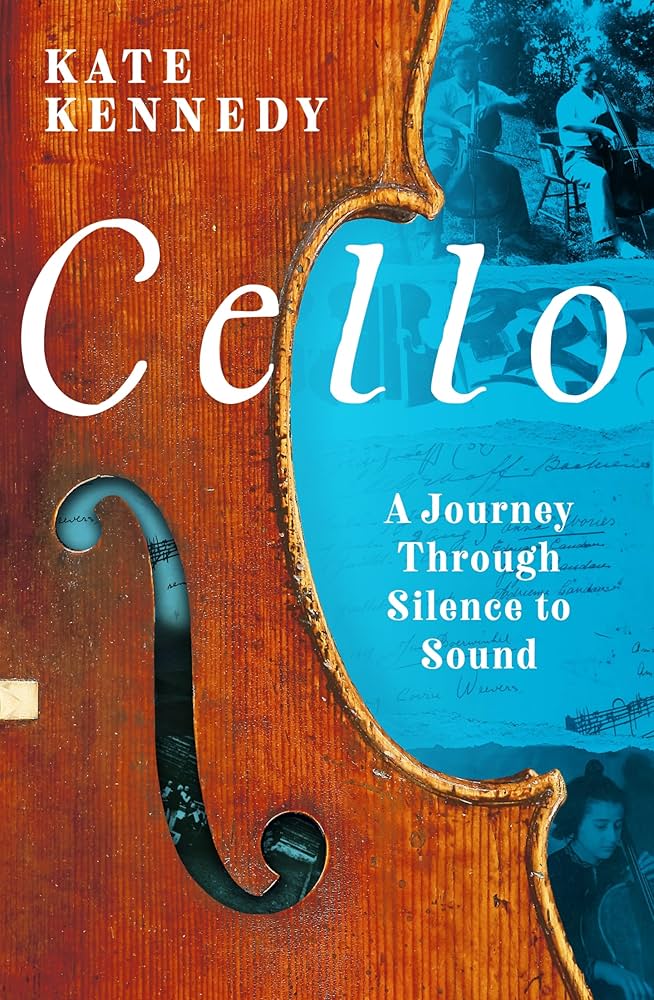 A cello has no language, yet it possesses a vocabulary wide enough to tell, bear witness, and make connections across time and continents—a feat brought to life in this brilliant new book.
In this luminous narrative, Kate Kennedy, a writer and cellist herself, weaves together the story of four cellists who suffered various forms of persecution, injury, and misfortune. The stories are those of the forgotten Jewish cellist Pál Hermann, who is likely to have been murdered by the Nazis in Lithuania during the Holocaust; Lise Cristiani, another forgotten performer, who is considered to be the first female professional cello soloist and who embarked on an epic concert tour of Siberia in the 1850s taking with her a Stradivarius cello that can be seen to this day in a museum in Cremona in northern Italy; Anita Lasker-Wallfisch, who played in the orchestra at Auschwitz and survived spells in both that camp and in Bergen-Belsen; and Amedeo Baldovino of the Trieste piano trio, whose ‘Mara’ Stradivarius was lost in a shipwreck in the River Plate between Buenos Aires and Uruguay but later recovered from the water and repaired.
Kate Kennedy is one of the foremost critics of twentieth-century music of her generation and is frequently heard on Radio 3. She is an Associate of the English Faculty at Oxford, where she lectures on twentieth-century literature and biography. She is the author of Dweller in Shadows: A Life of Ivor Gurney. She is a fellow of the Royal Historical Society, a Supernumerary Fellow of Wolfson College, Oxford, co-director of the Oxford Centre for Life-Writing, and director of the Centre for the Study of Women Composers.
New Fiction | The Hounding
From Macmillan:
Xenobe Purvis, The Hounding: A Novel (New York: Henry Holt and Co., 2025), 240 pages, ISBN: 978-1250366382, $27
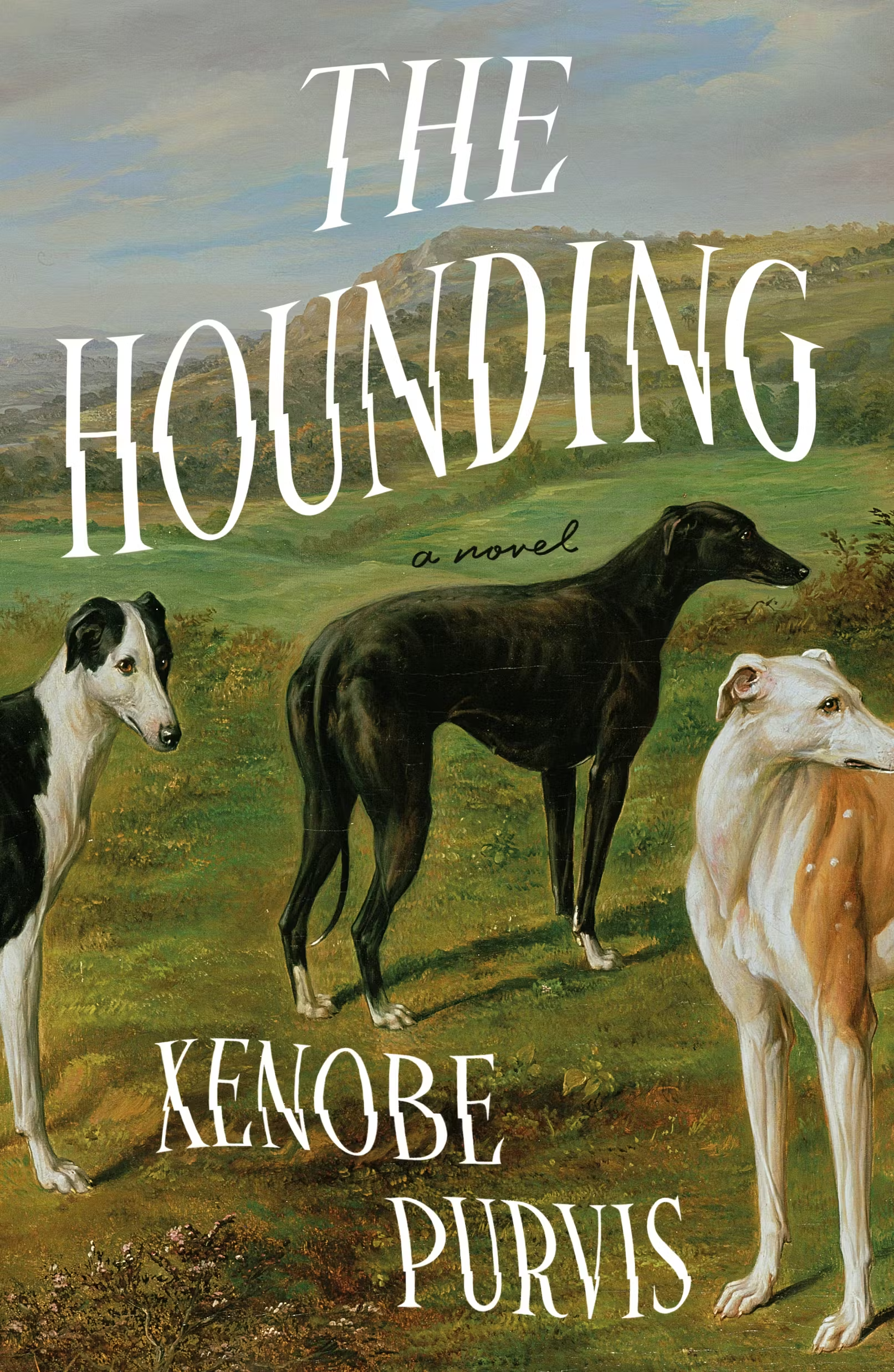 The Crucible meets The Virgin Suicides in this haunting debut about five sisters in a small village in eighteenth-century England whose neighbors are convinced they’re turning into dogs.
Even before the rumors about the Mansfield girls begin, Little Nettlebed is a village steeped in the uncanny, from strange creatures that wash up on the riverbank to portentous ravens gathering on the roofs of people about to die. But when the villagers start to hear barking, and one claims to see the Mansfield sisters transform before his very eyes, the allegations spark fascination and fear like nothing has before.
The truth is that though the inhabitants of Little Nettlebed have never much liked the Mansfield girls—a little odd, think some; a little high on themselves, perhaps—they’ve always had plenty to say about them. As the rotating perspectives of five villagers quickly make clear, now is no exception. Even if local belief in witchcraft is waning, an aversion to difference is as widespread as ever, and these conflicting narratives all point to the same ultimate conclusion: Something isn’t right in Little Nettlebed, and the sisters will be the ones to pay for it. A richly atmospheric parable of the pleasures and perils of female defiance, The Hounding considers whether in any age it might be safer to be a dog than an unusual young girl.
Xenobe Purvis was born in Tokyo in 1990. She studied English Literature at the University of Oxford, has an MA in creative writing from Royal Holloway, and was part of the London Library’s Emerging Writers Programme. She is a writer and literary researcher, with essays published in the Times Literary Supplement, The London Magazine, and elsewhere.
New Fiction | The Art of a Lie
From Simon & Schuster:
Laura Shepherd-Robinson, The Art of a Lie: A Novel (New York: Atria Books, 2025), 304 pages, ISBN: 978-1668083093, $28.
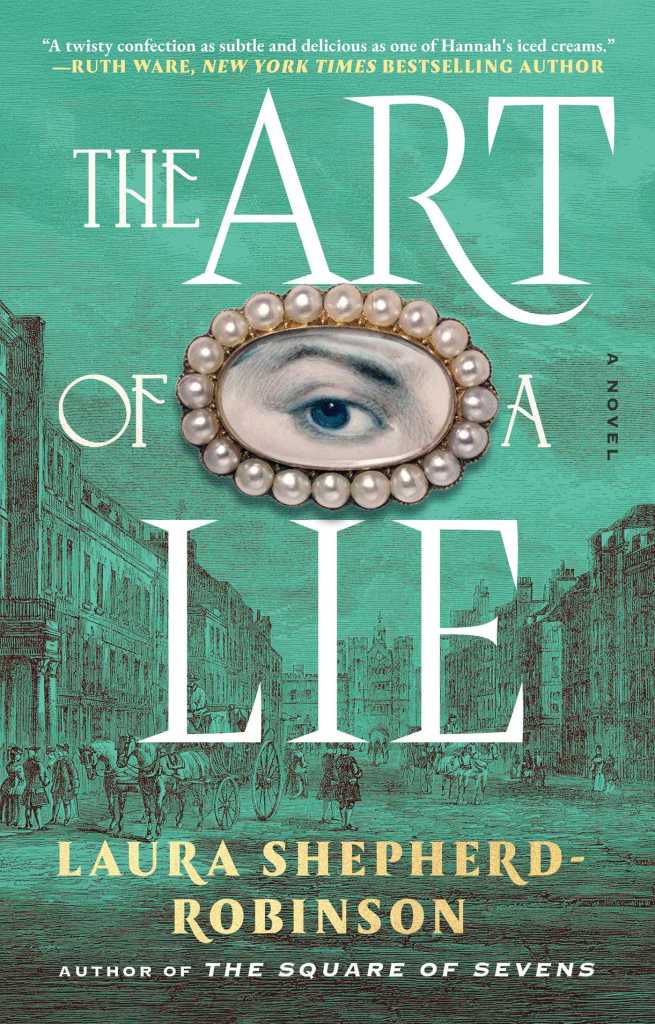 In 18th-century England, a widowed confectioner is drawn into a web of love, betrayal, and intrigue and a battle of wits in this masterful historical novel from the author of the “delicious puzzle-box of a novel” (The New York Times) and USA Today bestseller The Square of Sevens.
Following the murder of her husband in what looks like a violent street robbery, Hannah Cole is struggling to keep her head above water. Her confectionary shop on Piccadilly is barely turning a profit, her suppliers conspiring to put her out of business because they don’t like women in trade. Henry Fielding, the famous author-turned-magistrate, is threatening to confiscate the money in her husband’s bank account because he believes it might have been illicitly acquired. And even those who claim to be Hannah’s friends have darker intent. Only William Devereux seems different. A friend of her late husband, Devereux helps Hannah unravel some of the mysteries surrounding his death. He also tells her about an Italian delicacy called iced cream, an innovation she is convinced will transform the fortunes of her shop. But their friendship opens Hannah to speculation and gossip and draws Henry Fielding’s attention her way, locking her into a battle of wits more devastating than anything she can imagine.
Laura Shepherd-Robinson was born in Bristol in 1976. She has a BSc in politics from the University of Bristol, an MSc in political theory from the London School of Economics, and an MA in creative writing from City St. George’s, University of London. She is the author of three other novels, Blood & Sugar, Daughters of Night, and The Square of Sevens. She lives in London with her husband, Adrian.










 Enfilade
leave a comment