New Book | Luca Giordano: Catalogue Raisonné
The English edition of the text is available from Artbooks.com:
Andrés Úbeda de los Cobos, Luca Giordano: Catalogue Raisonné (Madrid: Museo Nacional del Prado, 2018), 400 pages, $65.
 In spite of the huge number of paintings by this artist in the Prado, Luca Giordano (Naples, 1634–1705) is seldom studied and is therefore little known to the public, who often do not see beyond the cliché of his prodigious speed of execution. The present volume sets out to remedy this lack of knowledge. It begins with three introductory essays that set the Prado paintings in the context of Giordano’s life, survey the painter’s critical fortunes from his own time to the present day, and provide information on his Spanish period, which lasted from 1692 to 1702. These initial texts also look into specific issues, among them Giordano’s relationship with his dealers, and more controversial aspects such as the commercial strategies he used to disseminate his work.
The second part of the book—the catalogue raisonné proper—consists of entries for each of the paintings studied, including information on their provenance, condition, restoration history, related literature, iconography, visual sources and critical fortunes. It features a total of 99 paintings executed on different supports and in various media which span all the stages of his production except the period following his return to Naples in 1702.
Andres Ubeda de los Cobos, Deputy Director for Conservation and Research at the Museo del Prado. He is a specialist on Luca Giordano and has published various articles and books on the artist’s oeuvre, such as a study on the fresco of the Apotheosis of the Spanish Monarchy in the Casón del Buen Retiro in 2008—a project which, in a sense, has been brought to a successful completion by this book.
New Expansion Plan for The Frick Unveiled
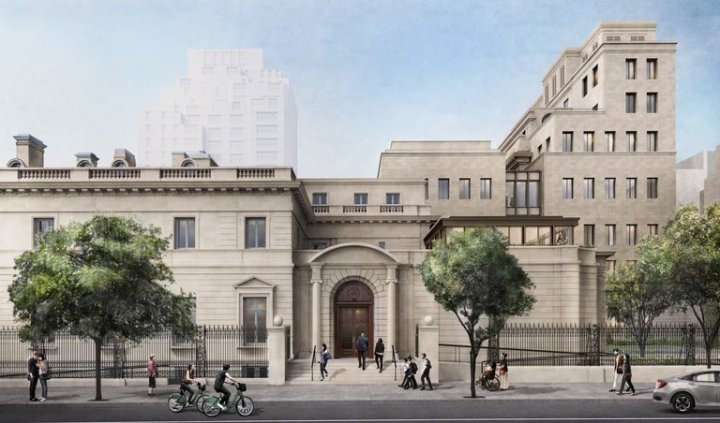
A rendering of The Frick Collection from East 70th Street in New York (Credit: Selldorf Architects). According to the press release from The Frick, the $160million project, scheduled to begin in 2020, “encompasses approximately 60,000 square feet of repurposed space and 27,000 square feet of new construction.”
◊ ◊ ◊ ◊ ◊
From The New York Times:
Robin Pogrebin, “Frick Collection, With Fourth Expansion Plan, Crosses Its Fingers Again,” The New York Times (4 April 2018).
The irony is not lost on Ian Wardropper, the director of the Frick Collection: The very gated garden that upended the museum’s previous attempt to renovate its 1914 Gilded Age mansion is now the centerpiece of its revised design.
In 2015, preservationists, designers, critics and architects successfully opposed the Frick’s plans to remove the garden on East 70th Street, designed by the British landscape architect Russell Page, to make way for a six-story addition, by Davis Brody Bond.
The new plan, by the architect Annabelle Selldorf—which the Frick board approved Wednesday—has situated several new elements precisely so that each provides a tranquil view of the garden: a renovated lobby; a newly created second level above the reception hall; and a new education center, cafe and expanded museum shop.
In addition, the garden will be restored by Lynden B. Miller, a garden designer and preservationist, in keeping with Page’s original vision.
And rather than build over the garden, as previously planned, the Frick will now build beneath it, creating a 220-seat underground auditorium to better accommodate educational and public programs. . .
The full article is available here»
New Book | Orient et ornement
Published by Éditions de la Maison des sciences de l’homme, as noted at GRHAM:
Isabelle Tillerot, Orient et ornement: L’espace à l’œuvre ou le lieu de la peinture (Paris, Éditions de la Maison des sciences de l’homme et DFK Paris, 2018), 370 pages, ISBN: 978 2735124169, 48€.
Tout tableau est un fragment. Mais qui, du cadre ou du mur, construit le lieu de la peinture ? Que s’est-il passé lorsque cette énigme occidentale fut confrontée à l’époque moderne à une autre représentation du monde ? Si l’Europe des Lumières est souvent caractérisée par les chinoiseries et l’ornement rocaille, c’est un nouveau regard sur l’Extrême-Orient qui est analysé ici, celui qui lie l’histoire du tableau à une idée de l’espace transmise par les décors des objets venus d’Asie. Dans quelle mesure la présence réelle ou fantasmée de l’Orient a-t-elle modifié le rapport de la peinture au support qui la donne à voir ? Tel est l’objet de ce livre qui présente le changement de paradigme dans la construction du goût suscité par les notions orientales de paysage, de lointain et de vide, pour que le sort de la peinture se transforme. D’où vient la place particulière qu’elle acquiert au XVIIIe siècle ? De quelle façon fut bouleversée son exposition pour qu’elle devienne le tableau que nous connaissons aujourd’hui ?
 T A B L E D E S M A T I È R E S
Préface
Introduction
1 Les lieux de la peinture
Décorer ou la matérialité des décors
L’usage du décor
Les espaces impartis à la peinture
2 Le temps du décor
Les lointains de la peinture
Tableaux en amont
Le décor comme écrin
3 L’arabesque d’un ornement
L’arabesque peinte
L’arabesque à l’entour du tableau
Le tableau arabesque
4 L’orient des décorations
Rêve de chinoiserie
Rêve de matières
Rêve de couleurs
5 L’idée orientale du goût
De l’objet d’Orient à l’objet de goût
Lieux chinois d’Europe
Le blanc des jardins d’Asie
6 Un autre mode de représentation du monde
Un système non mimétique
Dissoudre le support architectural ou la surface repensée
Le décor reconnu comme oeuvre d’art
Conclusion – Le caprice de l’orient ou faire du tableau une île
Bibliographie
Sources anciennes
Sources anciennes éditées après le XVIIIe siècle
Études modernes
Catalogues d’expositions
New Book | British Women and Cultural Practices of Empire
From Bloomsbury:
Rosie Dias and Kate Smith, eds., British Women and Cultural Practices of Empire, 1770–1940 (London: Bloomsbury Visual Arts, 2018), 256 pages, ISBN: 9781501332173, £90.
 Correspondence, travel writing, diary writing, painting, scrapbooking, curating, collecting, and house interiors allowed British women scope to express their responses to imperial sites and experiences in the 18th, 19th, and 20th centuries. Taking these productions as its archive, British Women and Cultural Practices of Empire, 1775–1930 includes a collection of essays from different disciplines that consider the role of British women’s cultural practices and productions in conceptualising empire. While such productions have started to receive greater scholarly attention, this volume uses a more self-conscious lens of gender to question whether female cultural work demonstrates that colonial women engaged with the spaces and places of empire in distinctive ways. By working across disciplines, centuries and different colonial geographies, the volume makes an important contribution to the field by demonstrating the diverse ways in which European women shaped constructions of empire in the modern period.
Rosie Dias is Associate Professor in the History of Art, University of Warwick. Kate Smith is Senior Lecturer in Eighteenth-Century History, University of Birmingham.
C O N T E N T S
List of Illustrations
Contributors
Acknowledgments
Abbreviations
Introduction — Rosie Dias and Kate Smith
Part I | Travel
1 The Travelling Eye: British Women in Early 19th-Century India — David Arnold
2 Paper Trails of Imperial Trav(a)ils: Janet Schaw’s Journal of a Journey from Scotland to the West Indies, North Carolina, and Portugal, 1774–1776 — Viccy Coltman
3 Sketches from the Gendered Frontier: Colonial Women’s Images of Encounters with Aboriginal People in Australia, 1830s–1860s — Caroline Jordan
Part II | Collecting
4 ‘Of Manly Enterprise, and Female Taste!’: Mina Malcolm’s Cottage as Imperial Exhibition, c. 1790s–1970s — Ellen Filor
5 A Lily of the Murray: Cultivating the Colonial Landscape through Album Assemblage — Molly Duggins
6 Collecting the ‘East’: Women Travellers New on the New ‘Grand Tour’ — Amy Miller
Part III | Identities
7 Agents of Affect: Queen Victoria’s Indian Gifts — Rosie Dias
8 ‘Prime Minister in the Home Department’: Female Gendered Identity in 19th-Century Upper Canada — Rosie Spooner
9 Reconstructing the Lives of Professional Women in 1930s Zanzibar through Image, Object, and Text — Sarah Longair
Bibliography
Index
New Skylights for The Met
As Keith Christiansen, John Pope-Hennessy Chairman of the Department of European Paintings at The Met, explains in a blog posting for The Met from 7 December 2017, the museum has embarked on a four-year-long project to replace the building’s skylights, which were originally constructed in 1939. Coverage by James Barron for The New York Times is available here. From Christiansen’s blog posting:
One of my favorite documents (yes, it is possible to have favorite historical documents!) was only discovered in Rome’s dusty state archives five years ago. It notes how the brilliant young Spanish painter Jusepe de Ribera, having found lodgings in which he could paint, received permission from his landlord to create a window in the ceiling of his apartment. The purpose was, he said, “to facilitate painting.” Caravaggio had done the same in his lodgings in 1605.

Giovanni Battista Tiepolo, Allegory of the Planets and Continents, 1752, oil on canvas, 185 × 139 cm (New York: The Metropolitan Museum of Art, gift of Mr. and Mrs. Charles Wrightsman, 1977.1.3).
You see, artists can’t paint without good light—and not just any light, but sunlight (ideally with a northern orientation). Just try to imagine Jan van Eyck trying to paint the minute details of the distant cityscape and mountains in his phenomenal Crucifixion without adequate lighting—which, believe me, could not be obtained with candles.
In an age dominated by the drama of artificial light, it’s all too easy to forget how important daylight has always been to artists: natural light possessing the full color spectrum; light that falls evenly across the surface of the panel or canvas. A beautiful illustration of this is Vermeer’s famous Allegory of Painting in the collection of the Kunsthistorisches Museum in Vienna, where we see the well-dressed artist sitting on his stool in front of his easel while a woman poses, dressed as Clio, the muse of history. The natural light from an unseen but clearly present window falls across her figure and gives an evenly balanced light to the artist’s canvas.
It follows that you cannot judge a painting without good light either. Not surprisingly, the optimal light in which to view a painting is dispersed and even daylight—which is why The Met is embarking on a four-year-long project to replace the skylights in the European Paintings galleries—originally constructed in 1939—and replace them with an up-to-date system; one that will significantly improve the way visitors experience the collection.
On our new web feature, Met Masterpieces in a New Light, you’ll be able to follow the project’s progress over the next four years and discover new ways to engage with our European paintings collection online while the galleries are closed. Be sure to bookmark the page and check in with us every month.
Call for Papers | Marginal Drawing Techniques
From H-ArtHist:
Marginal Drawing Techniques as an Aesthetic Strategy, 1600–1800
Zentralinstitut für Kunstgeschichte München, Munich, 5 October 2018
Proposals due by 20 April 2018
Cennino Cennini’s metaphorical description of drawing as the “entrance and gateway to painting” provides an important indication of the purpose of drawing around 1400. Beyond its role in the execution of panel paintings, to the present day, drawing serves in the enhancement of motifs as a repository of alternatives and as ‘finger exercise’ for the development of routine manual dexterity—the prerequisite for a “free hand” (Albrecht Dürer).
Beyond the specific appreciation of “freehand drawing,” which reached a particular zenith in the eighteenth century, artists of all periods used different techniques for organising the drawing process, both materially and economically. They traced and pounced, made counter-proofs and impressions, and produced natural imprints and cliché verres. However, it would appear that the characteristics of such processes cannot be adequately explained in terms of the mere simplification of the process of creating a drawing. Instead, the aforementioned techniques or processes also served in the stimulation of the imagination, which was inspired, for example, by more or less random blots and smudges; similarly, cutting and pasting techniques contributed to the flexible arrangement of variations.
In view of the fact that such techniques generally assume a less prominent role in the study of drawing, as they also raise questions of quality for the art trade and collection history, it is intended to explicitly explore the functional and aesthetic importance of these marginal processes in case studies beyond the Alps during the period from around 1600 to around 1800. The aim here is to understand technical skill and versatility as a condition of creative and artistic-intellectual performance and to increase awareness of the correlation between theory and practice with a view, not least, to making the case for a greater focus on artistic-technical processes.
Possible key questions and issues in relation to the proposed sections include:
• Tracing–Verso: Which tracing techniques exist and what functions did they fulfil? What is the role of the reverse side of the drawing here? To what extent does the tracing process become visible in the drawing process? Is it covered during the further execution of the work or visually highlighted in other cases? Where does the upgrading of the tracing process become evident?
• Counter-Proofs–Inversion: The question regarding the different techniques and functions of counter-proofs also arises here. How do the reproductive printing techniques relate to this? Which sensoria and semantizations were developed for the side-inverted image? How can these be embedded in terms of cultural history, also on the basis of documentary sources (workshop treatises, art criticism, literature)?
• Klecksography–Random Processes: As is generally known, Leonardo saw blots and cloud formations as a huge stimulus for the imagination. Artists resorted to processes that were only controlled to a limited extent to incorporate a certain principle of chance into the drawing process. However, these processes often only prove to be random on a superficial level: they were executed with extreme bodily motor skill and were intended to evoke a certain studied facility (sprezzatura).
• Cut and Paste: The value of a treasury of motifs is particularly evident in the repeated use of models and patterns. Individual parts of a drawing could be cut out, stuck on and removed again for editing and checking a new draft. What are the artistic implications of such a procedure? And how can the cut & paste process be related to other techniques?
• Repetition–Palimpsest: Finally, it is planned to examine practices involving the repetition of drawings and the cultural-historical dimensioning of drawings as a palimpsest.
Please send an abstract (max. 500 words) and a short CV for a 20-minute presentation in German or English by 20 April 2018 to marginalia@zikg.eu. Travel costs (economy class) and accommodation in accordance with the provisions of the German Travel Expenses Act will be covered.
Scientific Conception: Iris Brahms (Zentralinstitut für Kunstgeschichte Munich, Wallraf-Richartz-Museum Cologne), Thomas Ketelsen (Wallraf-Richartz-Museum Cologne), Ulrich Pfisterer (Institut für Kunstgeschichte der LMU, Zentralinstitut für Kunstgeschichte Munich)
Lecture | Mark Purcell on the Country House Library
Booking information is available through Eventbrite:
Mark Purcell | The Country House Library
Art Workers’ Guild, London, 10 April 2018
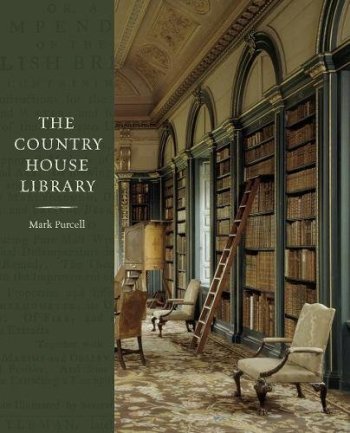 The Society for the History of Collecting are delighted to announce their next event which sees Mark Purcell discusses his new book The Country House Library.
Country Houses are normally studied by art, architectural, and social historians for the prosopography of their ownership, the details of the house, the modifications and motivations thereof, and the chattels (art and furnishings). However, when it comes to the actual contents of the library, often considered the most important room in house, the books themselves are overlooked. This is perhaps due to a general and historic lack of understanding of the history of the book, although the value of the books could equal that of the rest of the chattels in a house. Mark Purcell has remedied this oversight in his majestic survey of country house libraries, those that are and even those that once were but have been dispersed. Mark demonstrates that the country house libraries were not standard appendages, underappreciated and under read by their owners, but that they encompassed a vast range of form and function. His immensely successful book will be a sourcebook for art historians and those interested in the history of collections for decades to come.
Tuesday, 10 April, 6:00pm, Art Workers’ Guild, 6 Queen Square, Bloomsbury, London WC1N 3AT. The lecture will be followed by drinks. Please book as soon as possible as places are limited.
Mark Purcell is Deputy Director, Research Collections, University of Cambridge, University Library. Formerly he was responsible for all the libraries within the National Trust (1999–2015) that comprise much beyond the country house, ranging from vernacular buildings to industrial in England, Wales, and Northern Ireland. Mark has studied the NT collections and has published numerous gems within. Responsible for a thorough cataloging of that vast corpus, he is perhaps the world’s expert on libraries once privately held in the UK.
Journée d’études | Représenter le conflit et le désordre au XVIIIe siècle

Jan van Huchtenburg, La Bataille de Ramilies entre Français et Anglais le 23 mai 1706, 1706–33, 116 × 153 cm
(Amsterdam, Rijksmuseum)
◊ ◊ ◊ ◊ ◊
As noted at Groupe de Recherche en Histoire de l’Art Moderne (GRHAM). . .
Représenter le conflit et le désordre au XVIIIe siècle (1715–1799)
Institut national d’histoire de l’art (INHA), Paris, 13 April 2018
Cette journée d’étude est consacrée au thème du conflit au XVIIIe siècle, et plus particulièrement sur ses représentations, ses significations et les manières de le mettre en scène. La borne chronologique choisie inclut tous les supports visuels (gravure, peinture, sculpture, architecture) afin de voir comment, mises en synergie, les différentes formes d’art expriment, de façon plus ou moins évidente, la notion de conflit, de trouble et de désordre.
Comment figure-t-on le conflit ou l’idée de conflit au XVIIIe siècle ? Quelles sont les ruptures visuelles éventuelles avec le XVIIe siècle ? La Révolution française semble résumer le XVIIIe siècle or, pendant toute la première partie du règne, il existe des conflits religieux, militaires ainsi que des troubles liés à la politique intérieure. C’est aussi l’époque où l’aspect scientifique et les sciences naturelles font l’objet de nombreuses représentations. Ainsi, on s’aperçoit que la nature et ce qui l’environne, peut faire écho à l’idée de désordre (peinture de paysage, grandes fêtes révolutionnaires…). Il serait donc intéressant de mettre en valeur l’aspect technique : existe-t-il une technique propre à la représentation du conflit ? Quels liens entre technique et expression picturale pouvons-nous établir dans ces représentations de conflits ? Enfin, au-delà d’un désordre dans l’espace public, il serait également intéressant de traiter l’aspect conflictuel au sein de l’espace privé, dont l’intimité des familles entre en résonance avec l’essor de la bourgeoisie au XVIIIe siècle.
Comité organisateur: Lucille Calderini (Paris 1/INHA), Bastien Coulon (Paris 1) et Charlot te Rousset (Lille 3).
P R O G R A M M E
9.45 Accueil des participants
10.00 Introduction, Etienne Jollet et Lucille Calderini
10.30 Conflit et Animalité
• Loreline Pelletier (Doctorante, Université Lille 3), Comme chien et chat: Représenter le conflit animal dans la peinture du XVIIIe siècle
• Lydia Vazquez (Professeure, Université du Pays Basque, UPV/EHU) et Juan Manuel Ibeas Altamira (Professeur Adjoint, Université du Pays Basque, UPV/EHU), Le monde à l’envers chez Goya: Pouvoir féminin, puissance animale
• Chloé Perrot (Doctorante, Université Paris 1 Panthéon-Sorbonne), Fouler le joug rompu, représenter des actes d’insurrection dans l’Iconologie par figures (v. 1795)
12.15 Discussion et déjeuner
14.30 Conflit et Royauté
• Clara Auger (Doctorante, Université Rennes 2), Portraits et représentations allégoriques de Philippe V d’Espagne: Une interprétation française du triomphe royal ?
• Charlotte Rousset (Doctorante, Université Lille 3), Les victoires militaires de Louis XV dans ses médailles: Justifier la guerre au nom de la paix
15.30 Pause
15.45 Conflit et Politique
• Camilla Murgia (Professeure, EPSU et Université de Genève), Représenter la guerre, fabriquer la paix: Les éventails de la période révolutionnaire et du Directoire
• Bastien Coulon (Doctorant, Université Paris 1 Panthéon-Sorbonne), Le désordre et la paix: La peinture d’histoire en France à l’épreuve du Traité de Paris (1763)
16.45 Discussions et conclusion de la journée
Exhibition | Black Out: Silhouettes Then and Now
From the National Portrait Gallery:
Black Out: Silhouettes Then and Now
Smithsonian National Portrait Gallery, Washington, D.C., 11 May 2018 — 10 March 2019
Mississippi Museum of Art, Jackson, 27 April — 25 August 2019
Curated by Asma Naeem
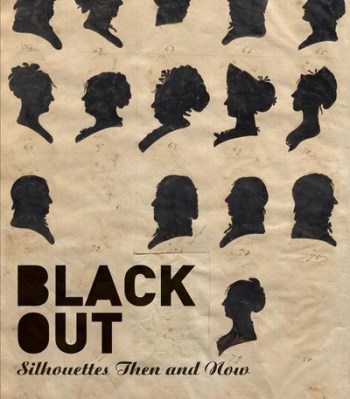 Silhouettes—cut paper profiles—were a hugely popular and democratic form of portraiture in the 19th century, offering virtually instantaneous likenesses of everyone from presidents to those who were enslaved. The exhibition Black Out: Silhouettes Then and Now explores this relatively unstudied art form by examining its rich historical roots and considering its forceful contemporary presence. The show features works from the Portrait Gallery’s extensive collection of silhouettes, such as those by Auguste Edouart, who captured the likenesses of such notable figures as John Quincy Adams and Lydia Maria Child, and at the same time, the exhibition reveals how contemporary artists are reimagining silhouettes in bold and unforgettable ways.
Highlights of the historical objects include a double-silhouette portrait of a same-sex couple and a rarely seen life-size silhouette of a nineteen-year-old enslaved girl, along with the bill of her sale from 1796. The featured contemporary artists are Kara Walker, who makes panoramic silhouettes of plantation life and African American history; Canadian artist Kristi Malakoff, who cuts paper to make life-size sculptures depicting a children’s Maypole dance; MacArthur-prize-winner Camille Utterback, who will present an interactive digital work that reacts to visitors’ shadows and movements; and Kumi Yamashita, who ‘sculpts’ light and shadow with objects to create mixed-media profiles of people who are not there. With both historical and contemporary explorations into the silhouette, Black Out reveals new pathways between our past and present, particularly with regard to how we can reassess notions of race, power, individualism, and even, our digital selves.
This exhibition is curated by Portrait Gallery Curator of Prints, Drawings and Media Arts, Asma Naeem.
Asma Naeem, Black Out: Silhouettes Then and Now (Princeton University Press, 2018), 192 pages, ISBN: 978 0691180588, $45.
◊ ◊ ◊ ◊ ◊
Note (added 27 April 2019) — The posting was updated to include the Mississippi Museum of Art as a second venue.
Artists in Paris: Mapping the 18th-Century Art World

Results for a search for ‘Hubert Robert’; screen shot from Hannah Williams and Chris Sparks, Artists in Paris: Mapping the 18th-Century Art World, www.artistsinparis.org (accessed 2 April 2018). As noted in the FAQs for the site, “there are 10,915 addresses in the database,” with coverage for “a total of 471 artists,” that is, for “every artist admitted to the Academy between 1675 and 1793.” Useful site details are available with the ‘settings’ tab.
◊ ◊ ◊ ◊ ◊
From the ‘About’ page of Artists in Paris:
Artists in Paris: Mapping the 18th-Century Art World
Artists in Paris is an open-access digital art history project funded by The Leverhulme Trust and supported by Queen Mary University of London. The Principal Investigator of the project is Dr Hannah Williams. The website was designed and built by Dr Chris Sparks.
Introduction
Paris is a city renowned for its artistic communities. Neighbourhoods like Montmartre and Montparnasse in the nineteenth and twentieth centuries are familiar spaces of artistic activity and sociability. But when it comes to earlier generations of artists, we know strikingly little about how they inhabited the city.
Where did the artists of eighteenth-century Paris live? Which artists were neighbours? What sub-communities formed within the city? Which neighbourhoods formed the cultural geography of the eighteenth-century art world? And did that geography change over the course of the century?
This website provides answers to these tantalising questions about the geography and demography of the Paris art world in the eighteenth century. Based on original archival research retrieving the addresses of hundreds of artists’ homes and studios, this website uses digital mapping technologies to locate those spaces on georeferenced historical maps, making them available for visitors to explore.
Significance
Artists in Paris is the first project to map comprehensively where artistic communities developed in the eighteenth-century city and offers rich scope for subsequent investigations into how these communities worked and the impact they had on art practice in the period. Yielding crucial new information and harnessing the exciting possibilities of digital humanities for art-historical research, this website is intended as a valuable resource for anyone studying or researching French art, or for anyone with an interest in the history of Paris.
With its two modes—Year and Artist—the website accommodates searches either by date or by person. For instance, visitors can explore where every artist was living at certain moments in time, or they can select individual artists and explore all the addresses lived at across their careers. Designed to be simultaneously inviting and informative, these interactive data-enriched maps answer many questions about the Paris art world. But they are also intended as an empirical base upon which to pose new kinds of inquiries, inspiring continued explorations into networks of artistic sociability, the role of the city in art production, the geography of the art world, and urban experience more generally.
Credits & Acknowledgements
Artists in Paris has been funded through a Leverhulme Trust Early Career Research Fellowship, awarded to Hannah Williams and held at Queen Mary University of London (2015–2018). Additional support for the project has been provided by Queen Mary University of London. Preliminary stages of the research were funded by a grant from the University of Oxford’s John Fell Fund, awarded to Hannah Williams, and undertaken at the University of Oxford (2013–2015).
Thanks are due to the many people who offered advice and suggestions, attended research seminars, workshops, and usability testing sessions, and provided feedback and encouragement throughout the project. Among the many are Laura Auricchio, Robin Carlyle, Craig Clunas, Rebecca Emmett, Noémie Étienne, Keren Hammerschlag, Colin Jones, Meredith Martin, Gay McAuley, Chris Moffatt, David Pullins, Helen Stark, Chloe Ward, Sam Williams, Emma Yates, the community of developers on Stack Overflow, students at Queen Mary University of London and the University of London in Paris, and attendees of presentations at the Institute of Historical Research in London, the Deutsches Forum für Kunstgeschichte in Paris, University of Birmingham, University of St Andrews, and the National Gallery of Art in Canberra.
Special thanks are due to Dr Mia Ridge (British Library) for advice and technical support from the project’s inception and throughout its development.
The website logo and colour-design are by Jason Varone.
This website was built using OpenLayers and Bootstrap. It also makes use of other great libraries including Handelbars. The historical maps were georeferenced using Map Warper. The greyscale contemporary map layer is by Stamen Design, licensed under CC BY 3.0. Map data is by OpenStreetMap under ODbL. The digitized historical maps of Paris have been sourced from Wikimedia Commons.










 Enfilade
2 comments