Symposium | The Room Where It Happens
From Harvard Art Museums:
The Room Where It Happens: On the Agency of Interior Spaces
Harvard Art Museums, Cambridge, 13–14 October 2017

Stephen Sewall, Copy of Inscription on Dighton Rock (detail), 1768, black ink on paper (Peabody Museum of Archaeology and Ethnology, Harvard University, 967-28-10/45474, digital file 99270006).
This symposium explores the spaces of artistic, artisanal, and intellectual production. From the artist’s studio to the alchemist’s lab, from the stateroom to the secret chamber, from the brick and mortar hall to the winding corridors of cyberspace, rooms and their contents have long impacted history, and transformed their inhabitants. Held in conjunction with the Museums’ special exhibition The Philosophy Chamber: Art and Science in Harvard’s Teaching Cabinet, 1766–1820, this symposium brings together artists, architects, and historians to consider the spaces where objects and ideas are generated.
This project is supported in part by major grants from the Terra Foundation for American Art and the Henry Luce Foundation. The exhibition and catalogue were also supported in part by the following endowed funds: the Bolton Fund for American Art, Gift of the Payne Fund; the Henry Luce Foundation Fund for the American Art Department; the William Amory Fund; and the Andrew W. Mellon Publication Funds, including the Henry P. McIlhenny Fund.
All events will take place at Menschel Hall, Lower Level, Harvard Art Museums, 32 Quincy Street, Cambridge, MA. All symposium events are free and open to the public, but registration is required. For details on the programs, including how to register, visit the Harvard Art Museums website.
F R I D A Y , 1 3 O C T O B E R 2 0 1 7
6:00pm Keynote Lecture
• Making Room: Cartography, Collecting, and the Construction of Empire, Louis Nelson (Professor of Architectural History and the Associate Dean, School of Architecture, University of Virginia)
S A T U R D A Y , 1 4 O C T O B E R 2 0 1 7
10:00 Rooms for Looking: Parlor / Museum / Studio
• ‘No One Could Prevent Us Making Good Use of Our Eyes’: Enslaved Spectators and Southern Plantation Spaces, Jennifer Van Horn (Assistant Professor of Art History and History, University of Delaware)
• The Room of Broken Bodies: Civil War Wounds, the Army Medical Museum, and Perceiving Re-Unification, Julia B. Rosenbaum (Associate Professor and Chair, Art History, Bard College; Director of Research and Publications, The Olana Partnership, Olana State Historic Site)
• The Symposium on Habitability: Robert Irwin, NASA, and the Case of the Artist as a Meta-Scholar, Boris Oicherman (Cindy and Jay Ihlenfeld Curator for Creative Collaborations, Weisman Art Museum, University of Minnesota)
11:30 Rooms for Making: Library / Laboratory / Model
• ‘A Scene in a Library’: Inventing and Destroying Enlightenment Photography at Soho House, Matthew Hunter (Associate Professor, Department of Art History & Communication Studies, McGill University)
• Connected Interiors: Learning Architecture and Observation in Meiji Japan, Matthew Mullane (Ph.D. candidate, School of Architecture, Princeton University)
• Interior as Microcosm: The Production of Epistemologies, Ethics, and Identities at Biosphere 2, 1991–94, Meredith Sattler (Assistant Professor of Architecture, California Polytechnic State University, San Luis Obispo)
2:00 Virtual Rooms: Theater / Period Room / Cockpit
• A Machine of Visibility: Paul Nelson’s Surgical Theater at the Cité Hospitalière de Lille, Nicholas Robbins (Ph.D. candidate, Department of the History of Art, Yale University)
• Visiting Mrs. M.—–‘s Cabinet: Period Room as Pedagogy, Sarah Anne Carter (Curator and Director of Research, The Chipstone Foundation)
• Bedroom Aviators—Flight Simulation and the Domestic Realm, Chad Randl (Visiting Lecturer in Architecture, Cornell University)
3:45 Closing Remarks
• Follies and Wonder Rooms, Mark Dion (Conceptual Artist)
Introduced by Ruth Erickson (Mannion Family Curator, The Institute of Contemporary Art, Boston)
Symposium | Fluctuating Alliances: Art, Politics, and Diplomacy
From the programme for the upcoming conference:
Fluctuating Alliances: Art, Politics, and Diplomacy in the Modern Era, 16th–18th Centuries
Technische Universität, Berlin, 21–22 September 2017
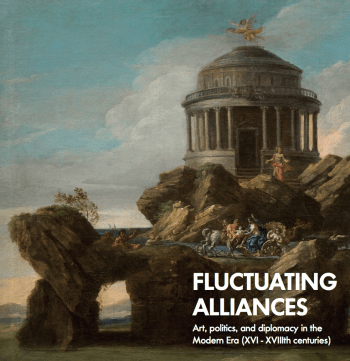
Sebastiano Conca, The Education of Achilles, 1727, oil on canvas, 59 × 74 cm (Madrid, Museo del Prado, inv. P02869).
In January 1722 after a few days of heavy rain in Rome the ephemeral ‘macchina d’arti cio’ built to celebrate the wedding between the Prince of Asturias and Isabel d’Orleans was finally burnt before the Palazzo di Spagna. The machine, designed by Domenico Paradisi, showcased a clear message of unity and power between the former enemies, France and Spain. At the summit, allegories of both countries shook hands before the representation of the Four Continents. This functioned as a gentle reminder to their enemies after the years of turmoil surrounding the War of Spanish Succession, which had deeply affected the balance of power in Europe.
Fluctuating Alliances: Art, Politics, and Diplomacy in the Modern Era (s. XVI–XVIII), the first International Symposium on Transnational Relations and the Arts, seeks to explore the role played by prints, drawings, and others kinds of artistic production, such as music and literature, which represented the changing alliances among kings, rulers, and countries in the fluctuating early modern political environment. Taking as an example the War of Spanish Succession, but not limited to it, we encourage researchers to explore the uses of art for that purpose.
T H U R S D A Y , 2 1 S E P T E M B E R 2 0 1 7
9:15 Welcome by the convenor
9:30 War and Peace
Chair: Guy Rowlands (University of St. Andrews, UK)
• Alberto Rodríguez Martínez (UPO, Sevilla), An Impossible Peace: Views and Representations of the Twelve Years Truce from 1609 to 1621
• Anna Lisa Schwartz (Germanisches Nationalmuseum, Nuremberg), Iunguntur Iupiter et Sol: Picturing Peace between Louis XIV and Charles VI after the Treaty of Rastatt (1714)
• Francisco Zamora Rodríguez (CHAM-Centro de Humanidades, UNL-Lisboa), Microcon ictos e imagen en espacios portuarios ‘neutrales’ durante la Guerra de Sucesión Española
11:20 Coffee break
11:40 Jesuits and Diplomacy
Chair: Pilar Diez del Corral Corredoira (TU, Berlin)
• Lise Puyo (University of Pennsylvania), The 1676 Huron-Wendat Wampum Belt: Indigenous Negotiations with the Divine
• Mar García Arenas (CHAM-Centro de Humanidades, UNL-Lisboa), Las implicaciones diplomáticas de la reconciliación entre Roma y Lisboa a través de la numismática conmemorativa, 1769–70
13:00 Lunch break
14:30 Negotiating with Faith
Chair: Francisco Zamora Rodríguez (CHAM-Centro de Humanidades, UNL-Lisboa)
• Amanda Van der Drift (The University of Queensland, Brisbane), Picturing Politics and Diplomacy in the Early Years of the Franco-Ottoman Alliance (XVI)
• Pierre-Olivier Oullet (Université du Québec à Montréal, Canada), France Bringing Faith to the Hurons of New France: The Regent Anne of Austria and the Taking over of the Colony by Louis XIV
• Iris Haist (Graphischen Sammlung, Kunstsammlungen Chemnitz), Herrschaft aus Marmor und Papier – Die Grabmonumente für Maria Clementina Sobieska und Jacob III. Stuart als Repräsenta- tionsinstrumente der römisch-katholischen Kirche
F R I D A Y , 2 2 S E P T E M B E R 2 0 1 7
9:00 Court and Diplomatic Celebrations
Chair: Nicole Hegener (Humboldt Universität, Berlin)
• Philippa Woodcock (University of Warwick/ Oxford Brookes/ CNAM Paris), L‘ambition de l‘Espagnol: Reworks and Frontiers in Bourbon Paris
• Roland Béhar (École Normale Supérieure, Paris), Le héros qui sauve du monstre marin : les fêtes de 1612 et l’émulation symbolique franco-espagnole
10:10 Coffee break
10:30 Court and Diplomatic Celebrations, continued
Chair: Pilar Diez del Corral Corredoira (TU, Berlin)
• Danièle Lipp (Wien Universität), The Habsburg Emperor Charles VI and the Politics of Recruitment for His Music Chapels
• Luis Méndez Rodríguez and Rocío Orellana (Universidad de Sevilla), Arte y diplomacia en el siglo XVIII: La corte española en el Lustro Real
11:20 Final discussion with closing remarks by Diego Valverde Villena (Director of the Instituto Cervantes)
New Book | Turin and the British in the Age of the Grand Tour
Scheduled for November publication from Cambridge UP:
Paola Bianchi and Karin Wolfe, eds., Turin and the British in the Age of the Grand Tour (Cambridge: Cambridge University Press, 2017), 506 pages, ISBN: 978 110714 7706, $135.
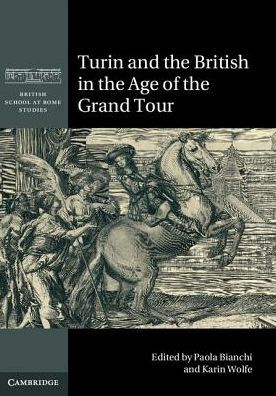 The Duchy of Savoy first claimed royal status in the seventeenth century, but only in 1713 was Victor Amadeus II, Duke of Savoy (1666–1732), crowned King of Sicily. The events of the Peace of Utrecht (1713) sanctioned the decades-long project, the Duchy had pursued through the convoluted maze of political relationships between foreign powers. Of these, the British Kingdom was one of their most assiduous advocates, because of complimentary dynastic, political, cultural and commercial interests.
A notable stream of British diplomats and visitors to the Sabaudian capital engaged in an extraordinary and reciprocal exchange with the Turinese during this fertile period. The flow of travellers, a number of whom were British emissaries and envoys posted to the court, coincided, in part, with the itineraries of the international Grand Tour which transformed the capital into a gateway to Italy, resulting in a conflagration of cultural cosmopolitanism in early modern Europe.
Paola Bianchi teaches Early Modern History at the Università della Valle d’Aosta. She has researched and written on the journeys of various English travellers who came to Italy in the eighteenth century to be presented at the Savoy court and to be part of Piedmont society. Her publications include Onore e mestiere: Le riforme militari nel Piemonte del Settecento (2002); Cuneo in età moderna: Città e stato nel Piemonte d’antico regime (with A. Merlotti) (2002); Sotto diverse bandiere: L’internazionale militare nello stato sabaudo d’antico regime (2012); L’affermarsi della corte sabauda: Dinastie, poteri, élites in Piemonte e Savoia fra tardo Medioevo e prima età moderna (with L.C. Gentile) (2006); Le strategie dell’apparenza: Cerimoniali, politica e società alla corte dei Savoia in età moderna (with A. Merlotti) (2010); and Storia degli Stati sabaudi, 1416–1848 (with A. Merlotti) (2017).
Karin Wolfe is a Research Fellow at the British School at Rome. Her research focuses on topics in seventeenth- and eighteenth-century Italian history, including art, architecture, patronage, and collecting, as well as the history of cardinals and the Grand Tour. Her publications include Roma Britannica: Art Patronage and Cultural Exchange in Eighteenth-Century Rome (edited with D. R. Marshall and S. Russell, 2011). She is presently completing a monograph on Francesco Trevisani, Francesco Trevisani (1656–1746): A Universal Painter, Catalogue Raisonné.
C O N T E N T S
List of figures
Contributors
Preface and Acknowledgements, Christopher J. Smith and Andrea Merlotti
Foreword, Martin Postle
Introduction, Paola Bianchi and Karin Wolfe
Part I | Britain in Turin: Politics and Culture at the Savoy Court
1 England and Savoy: Dynastic Intimacy and Cultural Relations under the Early Stuarts, Toby Osborne
2 Marriage Proposals: Seventeenth-Century Stuart–Savoy Matrimonial Prospects and Politics, Andrea Pennini
3 The Court of Turin and the English Succession, 1712–20, Edward Corp
4 The British Diplomatic Presence in Turin: Diplomatic Culture and British Elite Identity, 1688–1789/98, Christopher Storrs
Part II | Turin: Gateway to Grand Tour Society
5 The British at the Turin Royal Academy: Cosmopolitanism and Religious Pragmatism, Paola Bianchi
6 Thomas Coke in Turin and the Turin Royal Academy, Andrew Moore
7 ‘Never a More Favorable Reception than in the Present Juncture’: British Residents and Travellers in and about Turin, 1747–48, Edoardo Piccoli
8 The British and Freemasonry in Eighteenth-Century Turin, Andrea Merlotti
Part III | Torino Britannica: Diplomacy and Cultural Brokerage
9 John Molesworth: British Envoy and Cultural Intermediary in Turin, Karin Wolfe
10 Silver from London and Turin: Diplomacy by Display and George Hervey, Earl of Bristol, Envoy Extraordinary to the Court of Savoy, 1755–58, James Rothwell
11 The ‘Savoyard’: The painter Domenico Duprà and His British Sitters, Jonathan Yarker
12 The Culture of Confession: The Sardinian Chapel in London in the Eighteenth Century, Paola Cozzo
Part IV | Turin and Britain: Architectural Crossroads
13 Architects and Kings in Grand Tour Europe, Tomasso Manfredi
14 A Homage from Turin: Filippo Juvarra’s Sketches for Lord Burlington, Cristina Ruggero
15 Crossing Borders: The Pioneering Role of the Architect-Engineer Giovanni Battista Borra between Piedmont and Britain, Olga Zoller
Part V | Britain and Turin: Chinoiserie as an International Aesthetic
16 Chinoiserie in Piedmont: An International Language of Diplomacy and Modernity, Christopher M. S. Johns
17 ‘Alla China’: The Reception of International Decorative Models in Piedmont, Cristina Mossetti
18 The British Garden in Piedmont in the Late Eighteenth Century: Variations on the Picturesque, the Anglo-Chinese, and the Landscape Garden, Paolo Cornaglia
Part VI | Turin in Britain: Cultural Exchange in Grand Tour Europe
19 A Plurality of Pluras: The Plura Family of Sculptors between Turin and Britain, Alastair Laing
20 ‘A Memorable Era in the Instrumental Music of This Kingdom’: Piedmontese Musicians in London in the Latter Half of the Eighteenth Century, Annarita Colturato
21 The British Baretti: Didactics and Criticism, Cristina Bracchi
22 Vittorio Alfieri and the ‘English Republic’: Reflections on an Elective Affinity, Francesca Fedi
Appendices
A British Diplomats and Visitors to Turin in the Eighteenth Century, Christopher Storrs
Sabaudian Diplomats to London in the Eighteenth Century, Andrea Merlotti
B British Attendees at the Turin Royal Academy, Paola Bianchi
C Letters from the Molesworth–Galilei Correspondence, 1721–25, Karin Wolfe
References
Index
Exhibition | Making Beauty: The Ginori Porcelain Manufactory
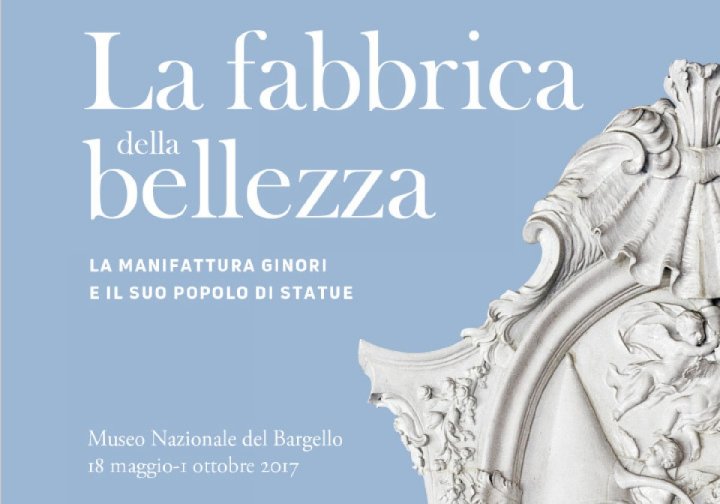
Now on view at the Bargello:
Making Beauty: The Ginori Porcelain Manufactory and Its Progeny of Statues
La Fabbrica della Bellezza: La manifattura Ginori e il suo popolo di statue
Museo Nazionale del Bargello, Florence, 8 May — 1 October 2017
The exhibition is divided into six thematic sections illustrating the transformation of sculptural invention into works of porcelain. The first section opens with an 18th-century life-size bronze Venus, a copy of the celebrated Medici Venus in the Uffizi Tribune. Sculpted by Massimo Soldani Benzi in 1702, the bronze was commissioned by Prince Johann Adam Andreas I of Liechtenstein and still forms part of the present prince’s collection, this exhibition marking its first return to Italy in over 350 years. It stands side by side with a large porcelain Venus made by Gasparo Bruschi in 1747–48, probably using the plaster moulds which Carlo Ginori purchased from Soldani Benzi’s workshop. The two Venuses are, in turn, displayed alongside a monumental porcelain Mercury based on another Classical statue in the Uffizi Tribune. The Mercury, now in the Ginori Lisci Collection, is on display for the very first time in this exhibition, not only with the Venus but also with the monumental Fireplace alongside which it stood in the old Museo di Doccia until 1962, because the Museo Ginori has kindly granted the loan of the two most important works in its entire collection: the Medici Venus reproducing the celebrated statue in the Uffizi Tribune, and the monumental Fireplace specially restored for the exhibition.

Tempietto Ginori, modeled by Gaspero Bruschi, 1750–51; glazed and painted porcelain, heigh 167 cm including ebony base (Museo dell’Academia Etrusca e della Città di Cortona).
The second section is devoted to the superlative Ginori Tempietto Ginori, a masterpiece by Gasparo Bruschi which Carlo Ginori himself donated to the Accademia Etrusca in Cortona. The Tempietto, of exceptional sophistication in terms of its technique and design and unique in terms of its size, summarises in concentrated form not only the artistic aims but also the political aspirations of the manufactory’s founder. Specially restored for the exhibition, it is returning to Florence for the first time since 1757. Alongside it we have Giambologna’s small bronze and wax models of Mercury, from the Bargello Collection and the Museo Ginori respectively, which inspired the Mercury atop Gaspare Bruschi’s Tempietto.
The next room hosts two large, complex bronze and porcelain versions of the Pietà. In 1708, Soldani made the model for the large Lamentation over the Dead Christ, of which numerous versions are known. Carlo Ginori purchased the plaster moulds—some of which are on display in the exhibition—which were used for the porcelain version that the Marchese Ginori gave to the influential Cardinal Neri Corsini around 1745. The group was made in fifty-nine different porcelain parts, individually fired and then assembled by the manufactory’s craftsmen in Sesto Fiorentino.
Somewhat smaller but equally sophisticated in terms of their execution are the groups of Judith with the Head of Holofernes that comprise the exhibition’s fourth thematic section. Gaspare Bruschi’s porcelain version, on loan from the Los Angeles County Museum, is displayed in an unprecedented dialogue with Agostino Cornacchini’s terracotta model, the first sculptural study for this popular group.

Lamentation over the Dead Christ, after Massimo Soldani Benzi, 1745–50, glazed porcelain, height 71.5 cm not including ebony base (Rome: Palazzo Corsini).
This is followed by Soldani’s precious bronze ‘pictorial’ relief depicting the Passing of St. Joseph and the wax model based on the bronze, from the Bargello Collection, which are on display alongside the preparatory study in unfired clay, it too in Italy for the very first time, testifying to the Ginori Manufactory’s plan to produce porcelain versions of it—none of which have, however, survived.
The exhibition’s ‘grand finale’ is the monumental porcelain Fireplace, an absolutely unique work, which may be attributed to Doccia’s chief modeller Gasparo Bruschi and to Domenico Stagi, a stage set designer and painter of quadrature. The piece is a veritable triumph of technical mastery and ornamental sophistication. Its upper part hosts porcelain versions of works by illustrious sculptors, the oval bas-relief with ‘putti distilling flowers’ after a bronze by Massimiliano Soldani Benzi and copies of Dawn and Dusk which Michelangelo carved for the tomb of Lorenzo de’ Medici in the Medici Chapels.
The exhibition is accompanied by a catalogue rich in new research, published by Mandragora in both Italian and English. The catalogue entries explore the manufactory’s artistic and political history, using essays focusing on the works on display to set Ginori’s porcelain sculpture, whether monumental or on a smaller scale, in the broader artistic and political context of the time, and presenting a number of important new attributions. The catalogue also contains fascinating input from experts in the manufacture of porcelain, not only reviewing the manufactory’s history but also illustrating previously unpublished material and highlighting the unique technical nature of Ginori’s inventions.
 La Fabbrica della bellezza has also served as a formative experience for two university students who have taken part in all of the various phases in the development of the exhibition project and drafted the catalogue entries on the basis of an apprenticeship agreement with Florence University’s SAGAS Department. The exhibition and catalogue have been designed and produced with a grant from the Fondazione Cassa di Risparmio di Firenze, with the sponsorship of Richard Ginori and with the collaboration of Firenze Musei; Opera Laboratori Fiorentini and Arteria have also contributed in their capacity as partners for the layout and transport respectively.
In addition to acquainting the general public with an exceptional chapter in the history of Florentine sculpture, the exhibition also sets out to draw the attention of Florentine and international public opinion to the fate of the Museo di Doccia. The generosity of international loans for the exhibition points to the intense interest in the the museum and the manufactory shown by numerous institutions both in Italy and abroad. In that connection, we would like to express our special gratitude to HRH Prince Hans-Adam II von und zu Liechtenstein for granting the exhibition his lofty patronage.
Tomaso Montanari and Dimitrios Zikos, eds., Making Beauty: The Ginori Porcelain Manufactory and Its Progeny of Statues (New York: ACC Publishing, 2017), 160 pages, ISBN: 978 88746 13496, $30. Also available in Italian.
◊ ◊ ◊ ◊ ◊
Note (added 17 September 2017) — Aileen Dawson provides a review of the exhibition in the current issue of The Burlington Magazine (September 2017), pp. 748–49.
Exhibition | Luigi Crespi
Now on view at the Museo Davia Bargellini in Bologna:
Luigi Crespi: Portraitist in the Age of Pope Lambertini
Museo Davia Bargellini, Bologna, 15 September — 3 December 2017
Curated by Mark Gregory d’Apuzzo and Irene Graziani
 The Musei Civici d’Arte Antica dell’Istituzione Bologna Musei, in collaboration with the Department of Arts at the University of Bologna, present Luigi Crespi: Portraitist in the Age of Pope Lambertini, the first exhibition dedicated to the painter and art dealer Luigi Crespi (1708–1779), the son of the famous painter Giuseppe Maria Crespi (1665–1747).
The exhibition is a tribute to this multifaceted figure—among the most interesting of the artistic and literary panorama of eighteenth-century Bologna—in relation to the climate of cultural renewal favored by the enlightened pastoral work of Cardinal Prospero Lambertini, who in 1740 became Pope Benedict XIV. The exhibition presents the most significant core of Crespi’s paintings here, together with other works from the Municipal Art Collections and loans from other important museums and private collectors. The exhibition is organized around seven thematic sections that chart the most important phases of the artist’s career.
◊ ◊ ◊ ◊ ◊
La mostra, a cura di Mark Gregory D’Apuzzo e Irene Graziani, è la prima dedicata al pittore, molte opere del quale sono esposte presso il Museo Davia Bargellini e le Collezioni Comunali d’Arte. Figura poliedrica fra le più interessanti del panorama artistico e letterario di Bologna durante l’episcopato del cardinale Prospero Lambertini (1731–54), e dunque nel periodo di apertura della città alle istanze di rinnovamento culturale sostenute dal vescovo e poi papa Benedetto XIV (1740–58), Luigi Crespi è protagonista della mostra realizzata grazie alla collaborazione di importanti Istituzioni museali cittadine e collezionisti privati.
Luigi, pur essendo soprattutto celebre come letterato e autore del terzo tomo della Felsina Pittrice, edita nel 1769, ha percorso con successo anche la carriera artistica, intrapresa sotto la guida del padre fra la fine degli anni venti e gli inizi degli anni trenta del Settecento. Un’attività che egli stesso, molti anni più tardi, nella biografia del padre (1769), sosterrà di aver svolto «per divertimento», per significare il privilegio accordato al prestigioso ruolo, assunto a partire dagli anni cinquanta, di scrittore e critico d’arte, che gli frutterà infatti l’aggregazione alle Accademie di Firenze (1770), di Parma (1774) e di Venezia (1776).
La sua produzione figurativa tuttavia, in particolar modo quella rappresentata dal più congeniale genere del ritratto, lo rivela sensibile al dialogo con la scienza moderna e con la libera circolazione delle idee dell’Europa cosmopolita. Nonostante l’impegno applicato anche all’ambito dell’arte sacra, cui Luigi si dedica almeno fino agli inizi degli anni sessanta, è soprattutto nella ritrattistica che raggiunge esiti di grande efficacia, molto apprezzati dalla committenza. «Ebbe un particolare dono di ritrarre le fisionomie degli Uomini, e ne fece una serie di Ritratti di Cavaglieri e Damme», scrive infatti Marcello Oretti (1760–80), celebrandone l’abilità nell’adattare la formula del codice ritrattistico alle esigenze della clientela.
Come dimostrano il Ritratto di giovane dama con il cagnolino, o i tre ritratti dei Principi Argonauti in origine nel collegio gesuitico di San Francesco Saverio, la pittura di Crespi junior, già addestrato dal genitore Giuseppe Maria ad un fare schietto, attento al naturale e al «vero», evolve verso un nitore della visione che risalta i dettagli, in un’analitica investigazione della realtà, memore di certi esempi (Balthasar Denner e Martin van Meytens) osservati durante un viaggio di sette mesi fra Austria e Germania, dove visita le Gallerie delle corti di Dresda e Vienna (1752). Così li commenterà infatti Gian Pietro Zanotti in una nota manoscritta: «Bisogna dire il vero che ora fa ritratti bellissimi, e di ottimo gusto, in un certo stile oltramontano».
Dal confronto con il «grande mondo»—per utilizzare un’espressione di Prospero Lambertini, che fu in stretti rapporti con Giuseppe Maria Crespi e fu in gran parte il responsabile della carriera ecclesiastica del figlio, conferendogli la carica di «segretario generale della visita della città e della diocesi», il canonicato di Santa Maria Maggiore (1748) ed ancora nominandolo suo cappellano segreto—Luigi deriva dunque la conferma della validità del codice del ritratto ufficiale, che gli consente di rappresentare i personaggi, qualificandone i gusti sofisticati, le abitudini raffinate, i comportamenti eleganti e disinvolti da assumere nella vita di società, dove si praticano i rituali di quella “civiltà della conversazione” che nella moderna Europa riunisce aristocratici e intellettuali in un dialogo paritario, dettato dalla condivisione di regole e valori comuni. Ma la prossimità con la cultura lambertiniana lo conduce anche a sperimentare, dapprima ancora con il sostegno del padre, poi autonomamente (Ritratto di fanciulla), nuove tipologie di ritratto, in cui lo sguardo incrocia i volti di individui del ceto borghese: talvolta sono gli oggetti a raccontare con la loro perspicuità di definizione la dignità del lavoro (Ritratto di Antonio Cartolari), altre volte sono invece i gesti caratteristici, l’inquadratura priva di infingimenti (Ritratto di fanciulla), la resa confidenziale del modello, quasi al limite della caricatura (Ritratto di Padre Corsini), a fare emergere il valore umano di quella parte della società, cui papa Lambertini riconosceva un ruolo fondamentale nel rinnovamento.
Irene Graziani and Mark Gregory d’Apuzzo, Luigi Crespi: Ritrattista nell’età di Papa Lambertini (Milan: Silvana, 2017), 144 pages, ISBN: 978 88366 37928, $35.
Call for Papers | Hazardous Objects
Hazardous Objects: Function, Materiality, and Context
Winterthur Museum, Garden, and Library, Wilmington, Delaware, 26–28 April 2018
Proposals due by 10 November 2017
The Center for Material Culture Studies at the University of Delaware invites submissions for papers to be given at the Fifteenth Material Culture Symposium for Emerging Scholars. We invite papers that identify and consider the production and use of hazardous material culture. Whether through composition or intended function, objects are hazardous or may become hazardous. Certain materials, organic or artificial, exist as hazards to humans. Additionally, hazards are often embedded in the material environment and affect our experience of domestic, institutional and public space.
What makes an object hazardous? What cultural, social, and transhistorical processes create hazards? How are materials and material culture used in hazardous ways? In concept and in practice, hazards affect the everyday awareness of danger, risk, or contamination. Alternatively, humans create hazards through the use or subversion of objects and materials. What level of complicity should one assume for their creation or maintenance?
This symposium is not bound by any temporal or geographical limits. Possible topics include, but are not limited to:
• Designing Hazards
• Intentional Hazards
• Accidental Hazards
• Social hazards
• Hazards in historical perspective
• Responding to hazards – defining and regulating hazards, handling hazardous objects.
We invite panel submissions in addition to individual submissions.
Finally, we encourage papers that reflect upon and promote an interdisciplinary
approach to hazards and hazardous material culture. Disciplines represented at past symposia have included American studies, anthropology, archaeology, consumer studies, English, gender studies, history, museum studies, and the histories of art, architecture, design, and technology. We welcome proposals from graduate students, postdoctoral scholars, and those beginning their teaching or professional careers.
Proposals should be no more than 300 words and include the focus of your object-based research and the significance of your project. Relevant images are welcome. Programs and paper abstracts from past symposia are posted here. Send your proposal, with a current CV of no more than two pages, to emerging.scholars@gmail.com.
Proposals must be received by 5pm on Friday, 10 November 2017. Speakers will be notified of the committee’s decision in January 2015. Confirmed speakers will be asked to provide digital images for use in publicity and are required to submit their final papers by 15 March 2018. Travel grants will be available.
2018 Emerging Scholars Co-Chairs
Erica Lome (History of American Civilization)
Kiersten E. Mounce (Art History)
Allison Robinson (Winterthur Program in American Material Culture)
Victoria Sunnergren (Art History)
University of Delaware
New Book | Robert Adam and Diocletian’s Palace in Split
From the ‘Grand Tour: Dalmatia’ project website:
Joško Belamarić and Ana Šverko, eds., Robert Adam and Diocletian’s Palace in Split (Zagreb: Školska knjiga, 2017), 608 pages, ISBN 978 9537875 381 / 978 9530 609754, $61.
 When, on his Grand Tour, the Scottish architect Robert Adam travelled from Rome to Split in 1757 to study Diocletian’s Palace, he expected to find a monumental Roman villa. Instead, he came across an exceptional late antique structure that, in the Middle Ages, had been transformed into a city. Adam turned his study of this monument into an original architectural theory, and, in London in 1764, it was published in one of the most beautiful books of the eighteenth century: Ruins of the Palace of the Emperor Diocletian at Spalatro in Dalmatia.
The lessons Adam grasped in Split also inspired his own architectural projects in England and Scotland, influencing, in part, the ‘Adam Style’, a specific neoclassical style that had a significant impact on European and American architecture. We find the imprint of Diocletian’s Palace as a design model everywhere in Adam’s projects, from the scale of the ornamentation (a famous example is his interpretation of the capital from Diocletian’s Peristyle) to the application of the specificities of its spatial construction.
In 2014, a group of scholars gathered in Split to mark the 250th anniversary of the publication of Adam’s book, and a series of essays developed out of their discussions. Their texts are illustrated with more than two hundred images, some of which are being published for the first time, from numerous archives and museums, from Sir John Soane’s Museum in London to the State Hermitage Museum in Saint Petersburg.
This book shows that the ancient stratum of Diocletian’s Palace, this extraordinary multi-layered urban fabric, has not changed notably since Adam’s visit to Split. Yet the book is more than just the story of Adam and Diocletian’s Palace; it is also a guide to the Palace’s spaces and monuments, and a witness to its changes and its continuity. All of these we would not have been able to understand, nor experience so well, without Adam’s tireless research. The book can be ordered at: izvoz@skolskaknjiga.hr.
Contributors
Josko Belamaric, Iain Gordon Brown, Stephen Caffey, Amanda Green, Heather Hyde Minor, Angelo Lorenzi, Krasanka Majer Jurišić, Ivan Mirnik, John A. Pinto, Ante Rendić-Miočević, Frances Sands, Valery Shevchenko, Ana Sverko, Colin Thom, Isabelle Warin, Elke Katharina Wittich
Conference | The Art of the Box
From the conference summary:
The Art of the Box
15th Annual National Trust / Waddesdon Manor Conference
Waddesdon Manor, Buckinghamshire, 3 October 2017

Late 19th-Century Box, for Seated Nymph, attributed to Étienne Maurice Falconet (Waddesdon / National Trust; acc. no. 5615; photo by Mike Fear © National Trust, Waddesdon Manor).
This year the National Trust/Waddesdon Manor conference explores boxes made for storing, packing, and transporting works of art. Speakers will consider what these boxes tell us about the perception, protection, and mobility of works of art (in times of peace and war), about the categorization, use, and sensory appreciation of the objects they were designed to contain.
The conference will begin with registration and coffee at 10.00 and end with a glass of wine at 6.00. Lunch and tea will be provided, and there will be an opportunity to look round Waddesdon Manor and the current exhibitions. To book a place, please email diane.bellis@nationaltrust.org.uk. There is a charge of £25, which covers all catering costs (please indicate any specific dietary requirements). This can be paid with a debit or credit card by telephoning the Waddesdon Booking Office 01296 820414.
P R O G R A M M E
10.00 Registration and coffee
10.30 Welcome and introduction by Pippa Shirley and Christopher Rowell
10.45 Juliet Carey (Senior Curator, Waddesdon Manor/The Rothschild Collection), Storing and Staging: Edmond de Rothschild’s Boxes for Porcelain and Sculpture
11.30 Olivia Fryman (Exhibition Assistant Curator, Royal Collection), Trunks, Cases, and Cabinets for Royal Furnishings and Household Goods, 1660–1714
12.15 James Rothwell (National Trust Adviser on Silver), Fit for the Cart, the Battleship, and the Palace: Boxes for Silver in Stuart and Georgian Britain
1.00 Lunch and opportunity to see Manor and exhibitions
2.30 Tessa Murdoch (Deputy Keeper, Victoria and Albert Museum, Department of Sculpture, Metalwork, Ceramics and Glass), Framing Time: Cases for English and French Clocks, 1660–1760
3.15 Laura Langelüddecke (Assistant Curator, Wallace Collection), Mobile Make-up: Travelling Toilette Services in the Eighteenth Century
4.00 Tea
4.30 Anita Bools (National Trust Adviser on Photographic Materials), An Open and Shut Case: Cased 19th-Century Photographs from the National Trust
5.15 A display of boxes from the collection at Waddesdon, introduced by Mia Jackson (Curator of Decorative Arts, Waddesdon Manor/The Rothschild Collection), followed by closing discussion
6.00 Drinks
◊ ◊ ◊ ◊ ◊
Note (added 13 September 2017) — In the original posting, I misidentified the box as being for the Nymph Entering the Water. In fact, as indicated in the the French, it was created to hold the Seated Nymph. The updated posting also includes a full schedule with times. –CH
Exhibition | African Servants at Court in The Hague

From the press release for the upcoming exhibition:
African Servants at Court in The Hague / Afrikaanse Bedienden aan het Haagse hof
Haags Historisch Museum, Den Haag, 21 September 2017 — 28 January 2018
Curated by Esther Schreuder
With the exhibition African Servants at Court in The Hague, the Haags Historisch Museum will showcase the lives of two black men, Cupido and Sideron. Originally from Curaçao and Guinea, the two were, as enslaved boys, presented to Stadholder William V as gifts in the 1760s. They went on to spend much of their lives as well-paid servants at the court in The Hague. Whereas exhibitions about court life generally omit references to servants with a non-European background, this exhibition specifically focuses on servants of African descent to highlight an aspect of Dutch history that remains relatively unknown.

Hendrik Pothoven, William V Visiting the Fair at the Buitenhof in The Hague, 1781 (The Hague: Historisch Museum Den Haag).
The Museum places the story of Cupido and Sideron within the long tradition of African servants in European Royal courts and includes the story of Jean Rabo (ca. 1715–1769), valet to Stadholder William IV. Paintings, drawing, prints, and textual documents are used to relate the story of Cupido and Sideron. What do we know about these two African men? What role did they play as servants? Were there any other black servants? The exhibition features major loans from the British Royal Collection, Amsterdam’s Rijksmuseum, and the Cultural Heritage Agency (Rijksdienst Cultureel Erfgoed). Writer and art historian Esther Schreuder is the guest curator, a role she previously held for the exhibition Black is Beautiful: Rubens to Dumas in the Nieuwe Kerk, Amsterdam (2008).
In the words of Director Marco van Baalen, “The Netherlands’ history of slavery has featured increasingly in the news in recent years, but there has so far been little attention paid to black people in the Netherlands in the 17th and 18th centuries. Our aim with this exhibition is to highlight that shared history from a new perspective.”
In the exhibition and additional programming, the Museum explicitly intends to broach contemporary discussions about the history of slavery and racism. Especially for the exhibition, artist Tirzo Martha (b. 1965) from Curaçao will create an installation in which he gives his personal interpretation of the story of Cupido and Sideron. Also in connection with the exhibition, Balans Publishing House will issue the publication Cupido en Sideron: Twee Moren aan het hof van Oranje (Two Moors at the Court of Orange) by Esther Schreuder.

Hendrik Pothoven, William V Visiting the Fair at the Buitenhof in The Hague (detail showing Cupido and Sideron), 1781
(The Hague: Haags Historisch Museum)
Exhibition | The Challenge of White: Goya and Esteve
Press release for the exhibition now on view at the Prado:
The Challenge of White: Goya and Esteve, Portraitists to the Osuna Family
El desafío del blanco: Goya y Esteve, retratistas de la Casa de Osuna
Museo Nacional del Prado, Madrid, 20 June — 1 October 2017
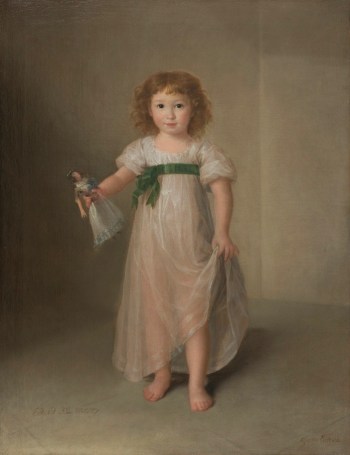
Augustín Esteve y Marqués, Portrait of Manuela Isidra Téllez-Girón, future Duchess of Abrantes, 1797 (Madrid: Prado).
The recent addition to the Prado’s collection of Portrait of Manuela Isidra Téllez-Girón, future Duchess of Abrantes by Augustín Esteve y Marqués, acquired with funds from the Óscar Alzaga Villaamil donation, will allow for greater knowledge of this interesting painter who was in his day considered the finest court portraitist after Francisco de Goya. This work completes the Alzaga donation, which was accepted last March and comprises six important paintings plus funding for the acquisition of a seventh.
For the first time, the current exhibition brings together Esteve’s portraits of the Duke and Duchess of Osuna’s children, including outstanding works loaned by the Fundación Casa Ducal de Medinaceli, the Duque del Infantado collection, and the Masaveu and Martínez Lanzas-de las Heras collections, with the aim of providing a context for the portrait of Manuela Isidra. Furthermore, with this exhibition the Prado is the first museum to focus on Esteve with the aim of rescuing him from the secondary role unjustifiably assigned to him by art history.
In addition, Esteve’s works are accompanied by various portraits of the Duke and Duchess and their children by other artists, including the miniaturist Guillermo Ducker (doc. between 1795 and 1830) and Francisco de Goya, whose outstanding portraits of the family dating from the same period demonstrate the influence of his work on Esteve’s. The treatment of light and the skillful depiction of the transparent materials of the sitters’ clothes are the focus of attention of this exhibition, revealing Esteve and Goya’s ability to meet the difficult artistic challenge of representing the colour white.
The number of portraits housed in the Museo del Prado of the Duke and Duchess of Osuna and their children, from their infancy to adulthood, means that the Museum offers the best representation of this prominent family.
The portrait of Manuela Isidra Téllez-Girón (1794–1838), future Duchess of Abrantes, has been acquired for the Museo del Prado’s collection with funds from the Óscar Alzaga Villaamil donation. Painted in 1797 by Agustín Esteve y Marqués (1753–after 1820), it is undoubtedly the best known work by the artist due to its skillful technique, refined elegance, and evident charm. Its presence in the Museum will firstly allow for greater knowledge of this interesting painter, considered in his day the finest court portraitist after Francisco de Goya (1746–1828) and on occasions confused with him. Secondly, Esteve’s portrait clearly relates to 17th-century Spanish painting, particularly works by Velázquez and Murillo, and adds a new dimension to the Prado’s 18th-century collections. Esteve had previously worked for the 9th Duke of Osuna and his wife, but with this portrait, he became a type of official painter to the family, sharing this role for almost four decades with Goya, whose influence would be fundamental for his approach to painting.
The marriage of Pedro de Alcántara Téllez-Girón (1755–1807), future 9th Duke of Osuna, to his cousin María Josefa de la Soledad Alonso Pimentel (1752–1834), Duchess of Benavente, produced a union between two of the oldest, largest and wealthiest noble houses in Spain and gave rise to a family unparalleled at the time in terms of social prestige and intellectual and artistic interests. The Duchess, known for her wit, decided character and distinction, was considered by contemporaries to be the true head and heart of the Osunas given the Duke’s frequent lengthy absences on military campaigns. A mother at a late age, proud of her five children and accustomed to luxury and ostentation, the Duchess commissioned successive portraits of them in order to record their growth, progress and abilities, largely deriving from the privileged and innovative education they received and a reflection of the Enlightenment ideal of producing individuals of use to their country. The result was a true iconographic gallery of the family, in which Goya and Esteve played a fundamental role.
The acquisition of Portrait of Manuela Isidra Téllez-Girón, future Duchess of Abrantes, completes the Alzaga donation and joins the six paintings that entered the Museum’s collection last March through that donation. They encompass a broad chronological span from the late 16th to the mid-19th century, painted by artists from Italy (Jacopo Ligozzi), Spain (Sánchez Cotán, Herrera the Elder, Antonio del Castillo, Agustin Esteve and Eugenio Lucas Velázquez), and Bohemia (Anton Raphael Mengs).










 Enfilade
leave a comment