Exhibition | Vices of Life: The Prints of William Hogarth

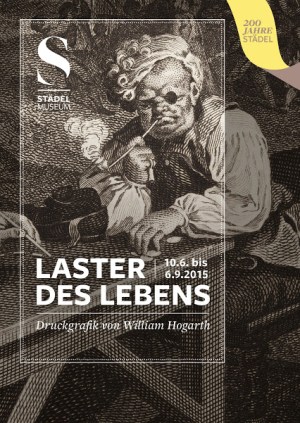
William Hogarth, After (detail), 1736, etching and engraving, 41 x 33 cm
(Städel Museum, Frankfurt am Main)
◊ ◊ ◊ ◊ ◊
Press release for the exhibition now on view at the Städel Museum:
Vices of Life: The Prints of William Hogarth
Laster des Lebens: Druckgrafik von William Hogarth
Frankfurt’s Städel Museum, Frankfurt, 10 June — 6 September 2015
Schloss Neuhardenberg, Brandenburg, TBA
Curated by Annett Gerlach
From 10 June to 6 September 2015—in its bicentennial year ‘200 Years Städel’—Frankfurt’s Städel Museum will be presenting prints by the English painter, engraver and etcher William Hogarth (1697‒1764). Altogether seventy works including the famous printmaking series A Harlot’s Progress (1732), A Rake’s Progress (1735) and Marriage à la Mode (1745) will be on view in the exhibition hall of the Department of Prints and Drawings. These visual novels from the Städel holdings take the fashions, vices and downsides of modern life in the London metropolis as their themes. Hogarth conceived of his artworks as printed theatre of his times and with them he laid the cornerstone for socio-critical caricature in England. The prints owe their special quality to the keen powers of perception and caustic humour of an artist who contributed so greatly to shaping the image of his era that it is still referred to as ‘Hogarth’s England’ today. Executed during Johann Friedrich Städel’s lifetime, the engravings are among the Städel’s oldest holdings and mirror the critical spirit inherent to this institution since its founding.
 William Hogarth was born in London in 1697. In keeping with an early eighteenth-century fashion, his father Richard opened a coffee house at which only Latin was spoken. The business failed, and Richard Hogarth had to serve five years in London’s notorious Fleet Prison for failure to pay his debts. As was usual at the time, his wife and children had to accompany him. In 1713, after his father’s release, William Hogarth began an apprenticeship as a silver engraver where he also learned the rudiments of the complex techniques of intaglio printing—engraving and etching. Following his seven-year training, he went into business for himself as an engraver and attended the privately run St Martin’s Lane Academy, an art school in London, to acquire the art of painting. In 1724 he also became a member of the academy of royal court painter James Thornhill (1675‒1734), whose daughter Jane he married in 1729. It was not with his paintings, however, that Hogarth achieved a breakthrough with the public, but with the prints made after his works on canvas. With the series A Harlot’s Progress, produced in the early 1730s, he founded a new genre he later dubbed modern moral subjects. Hogarth conceived of these subjects as contemporary, moral-didactic history scenes. He thus took a stand against the hierarchization of the visual arts, a firmly entrenched principle of academy doctrine which granted classical history painting pride of place. With his printmaking works, he succeeded in creating a new, up-to-date genre based on the keen observation of reality. In 1755 Hogarth was elected to the Royal Society of Arts, which he quit again just two years later on account of artistic and personal differences. His appointment as royal court painter followed in 1757, but never led to any commissions. The final years of the artist’s life were overshadowed by bitter disputes between himself and his critics. A stroke in 1763 left Hogarth severely handicapped and he died the following year in his home in Leicester Fields, a district of London.
The presentation in the exhibition gallery of the Department of Prints and Drawings focuses primarily on those of William Hogarth’s printmaking series that earned him international fame: A Harlot’s Progress, A Rake’s Progress und Marriage à la Mode. There is a very simple reason for the fact that his works on paper secured him a place in art history: prints can be circulated far better than paintings. It was by these means that the artist reached the enlightened and educated public of his day in large numbers. Already the first edition of A Harlot’s Progress (1732) comprised 1,240 sold copies. In six episodes, this series describes the rise and fall of a young woman who has come from the country to the city to find work. To earn a living she ends up as a prostitute and lands in prison as a result. The final scene shows the wretched funeral of the protagonist, whose life has already come to an end at the age of twenty-three. Hogarth had numerous real and literary models to look to for his creation of this figure. Inspired by his great interest in the social characterization of his time, he directed his critical, ironical gaze to all strata of society, from the highest nobility to the most abject circumstances. The sick and needy of all generations formed the downside of the economic boom enjoyed by the colonial and commercial metropolis and its many profiteers.
In his second series, A Rake’s Progress (1735), consisting of eight prints, Hogarth tells the story of the social decline of Tom Rakewell, who brainlessly squanders his inheritance and is thrown first into debtors’ prison and then the madhouse. Rakewell’s incarceration on grounds of indebtedness is reminiscent of the artist’s own biography. Entirely unlike his father, however, William Hogarth was an excellent businessman and very clever at taking advantage of the London press—which was flourishing in his day—and its public impact for his own purposes. In newspapers such as the London Daily Post, the General Advertiser or the London Journal he published announcements of his prints and advertised them for subscription.
Hogarth borrowed the title of his third major series, published in 1745, from a comedy by John Dryden (1631‒1700). Marriage à la Mode is about an espousal arranged by the two spouses’ fathers. Neither the bride nor the groom is the least bit interested in the other, both amuse themselves on the side, and the situation comes to a dramatic conclusion. Hogarth’s protagonists feign innocence and practise deception, abandon themselves to their passions and founder on their false ideals. Looking to true stories for orientation and integrating well-known persons and recognizable sites, he warned his public of the dangers of modern life—dangers still very real today. In 1751, with his popular prints Beer Street and Gin Lane, he supported a public campaign against the excessive consumption of gin. The former scene presents the enjoyment of beer as healthy and beneficial in contrast to the destructive effects of gin portrayed in the latter.
From mid century onward, in addition to socio-critical themes Hogarth also devoted himself to matters of national and political relevance, which represent a further focus of the exhibition. In several works, the artist addressed the relationship between France and England, which were at war. The Gate of Calais (1748) was his response to his arrest on suspicion of espionage during one of his trips to France. In 1756, in The Invasion, he again caricatured the French as grotesque, haggard figures who are after the tasty beer and luscious roast beef of the English. Some fifteen years later, in the print The Times, Plate 1 (1762), Hogarth made an urgent appeal for the cessation of the Seven Years’ War.
In 1753, Hogarth published his own art-theoretical deliberations in the book The Analysis of Beauty. In it he concerned himself with the foundations of visual-artistic production and particularly the matter of how to achieve beauty and grace. Hogarth considered the study of nature to be the key to beauty. He called upon his readers to perceive the objects of nature with their own eyes and judge them according to rational criteria. The German writer Christlob Mylius (1722–1754) was in London when Hogarth’s Analysis came out, and he translated it into German the very next year. Johann Friedrich Städel had a copy of this translation in his library, and it will be on display in the show.
In conjunction with the exhibition, the Städel Museum is publishing a catalogue by Annett Gerlach with approximately 50 pages, 10€. Following its presentation at the Städel Museum, the show will be on view at Neuhardenberg Castle. The exhibition is being sponsored by the Hessische Kulturstiftung.
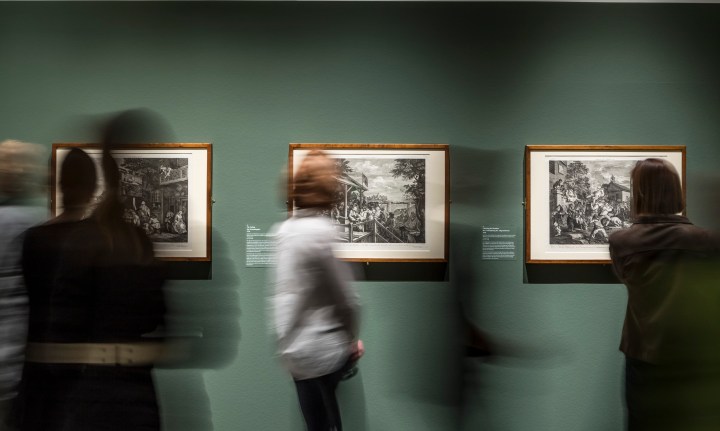
Installation view of the exhibition Vices of Life: The Prints of William Hogarth at Frankfurt’s Städel Museum (June 2015)
Progress Report on the New Berliner Stadtschloss

Belvedere © Berlin Palace–Humboldtforum Foundation /
Franco Stella
◊ ◊ ◊ ◊ ◊
As reported this past weekend by AFP (via ArtDaily). . .
The German capital celebrated a milestone Friday [12 June 2015] in the rebuilding of its Prussian-era royal palace that is set to house a world history museum billed as the country’s top cultural project. From 2019 the ‘Berliner Stadtschloss’ or Berlin City Palace replica will be the home of the Humboldt Forum global collection, to be curated by the British Museum’s outgoing chief Neil MacGregor, dubbed the “pop star of the museum world” by local media. On Friday, government ministers and culture officials met at what is now a raw concrete and steel structure for the so-called topping-out ceremony that marks the end of the major structural work which started two years ago. MacGregor, who was reportedly hand-picked for the job by German Chancellor Angela Merkel, hopes to “tell the story of humanity” with artefacts from Berlin’s many rich collections, ranging from European antiquity to East Asian arts.
The 590-million-euro ($660 million) domed venue is a reconstruction of a historical jewel of Baroque architecture located on the city’s Unter den Linden boulevard, near the Protestant Berlin Cathedral and Humboldt University. The original palace was badly damaged in World War II and its remains blown up by East Germany’s communist regime, which replaced it with its 1970s Palace of the Republic, a giant block with orange tinted windows that housed its assembly and a cultural and recreation centre. After the Berlin Wall fell in 1989 and Germany reunited the following year, bitter debate long raged about whether to keep the communist monument or raze it to rebuild Berlin’s original palace—with the latter option approved by the German parliament in 2007.
The replica, designed by Italian architect Franco Stella, will now be fitted on three sides with baroque sandstone facades recalling the old Hohenzollern palace built between the 15th and 18th centuries, and a fourth modern front facing the Spree River. The Humboldt Forum will house artefacts from Berlin’s Ethnological Museum, Asian Art Museum as well as Humboldt University, libraries and cultural centres. . . .
The full article is available here»
Call for Papers | AAH at the University of Edinburgh, 2016
By my quick count, 9 of the 34 sessions proposed for the Association of Art Historians 2016 conference could include eighteenth-century papers. Be sure to consult the conference website for things I’ve overlooked. –CH
42nd Annual AAH Conference and Bookfair
University of Edinburgh, 7–9 April 2016
Proposals due by 9 November 2015
AAH2016 will highlight the diversity, scope and importance of art-historical research and its application today. AAH2016 will engage with current art historical scholarship in exciting and innovative ways, across a range of periods, locations, and media. Academic Sessions will cross disciplinary boundaries. They will, for instance, explore relationships between the visual and the textual, between fashion and art history, between art and architecture, between art and economics, or between art and science. Other sessions will highlight issues of time and periodisation, exploring revivalism, re-enactment, and extinction. Or highlight advancing technologies and media, including video games and cybernetics. AAH 2016 also presents an opportunity to reflect on nationalism and its conflicts and contradictions in the past and present, as well as opening the discipline of art history up to broader audiences.
If you would like to offer a paper, please email the session convenor(s) direct, providing an abstract of a proposed paper of 30 minutes. Abstracts to be no more than 250 words, and to include your name and institution affiliation (if any). Download a Paper Proposal Guidelines here.
◊ ◊ ◊ ◊ ◊
Session 1 | Air and the Visual
Convenor: Amanda Sciampacone, Birkbeck, University of London, asciampacone@gmail.com
‘The air is unique among the elements in having this affinity with nothingness, in signifying the being of non-being, the matter of the immaterial’ (Steven Connor, The Matter of Air, 31).
The materiality of the air has long been at the forefront of our cultural and visual imaginary. Air has variously been associated with life and death, purity and pollution, circulation and stagnation. It is a thing that moves and flows across space and time. It is also a site of transmission, a force that conveys both the tangible and intangible. From vapours, microbes, and particulates to signals, sounds, and images, the air is heavy with matter and meaning. Air is an element that can produce, elude, and be captured by the visual.
Following Connor, this session seeks to investigate the relationship between air and representation, and to address issues of the visible in the invisible and the material in the immaterial. How has air, or its vacuum, been visualised in art? How do images of the air, and their very dissemination, highlight particular meanings and connections? How do new optical technologies, modes of visual reproduction, and methods of investigation allow people to study and depict the air? This session invites papers from across historical periods and media that engage with the visual, material, and metaphorical forms of air. Papers that explore the theme through a cross-disciplinary approach—for instance, linking art history to environmental studies, the history of science and medicine, or art theory and practice—are especially welcome.
◊ ◊ ◊ ◊ ◊
Session 4 | Art History Matters: Research and Writing as Material Practice
Convenors: Jennifer Walden, University of Portsmouth, jenny.walden@port.ac.uk; Veronica Davies, The Open University and Chair of Freelance & Independents’ Special Interest Group
Following the critique of art history as an ideological project, with the political urgency of the Marxist, feminist and postcolonial interventions in the latter 1970s and 1980s and later philosophical discursive turns, there comes a reawakening of the discipline’s work as itself material, to be understood in terms of its own affective force.
This is evidenced by a desire to foreground, often alongside practitioners, ‘creative’ art history practice, stretching the weave of its texts, expressing and performing encounters with its objects (see Art History Special Issue 34/2/April 2011 Creative Writing and Art History and Courtauld Art History Research Students’ Group: Performing Art History events 2010/11) or to reveal the tension between a discourse of ‘images’ and stubborn/elusive material objects (see Art History Special Issue 36/3/June 2013 The Clever Object) and by a (re) casting of art historical work in the wake of a turn to a new materialism, twisting from an emphasis on (de)constructivist characteristics towards the material emergence of its knowledge and affect. This is also provoked by the insistence coming from the practices of making art that there is an embodied material practice at stake as a form of knowledge which a hitherto preoccupation with signification and representation may not fully grasp.
This session will explore how art historical research and writing has worked and presently works as material practice. Papers are welcome which critically examine examples pushing the discipline’s methodological boundaries with materialist and creative urgencies, as contributions to these understandings of art historical mattering.
◊ ◊ ◊ ◊ ◊
Session 12 | From Antique Craft to Modern Ideology: Mosaics as Public Art
Convenor: Antonio David Fiore, The Open University, antodavidfiore@gmail.com
Mosaic, because of its close relationship with architecture, has always been an ideal vehicle for the symbolically and ideologically charged art to be found on the walls of public and religious buildings. Nevertheless, after the celebrated achievements of Antique masters, neglect seems to follow. Yet, the calling of Giovanni Belloni (1772–1863) to set up a national Mosaic School in post-revolutionary France in 1798, the decoration of Westminster Palace in London (1922; 1926) and Foro Mussolini in Rome (1931–38), Ben Shahn’s Passion of Sacco and Vanzetti (1967, Syracuse, USA) are but a few, deliberately disparate, examples of a modern renaissance.
More than other techniques of architectural decoration, such as fresco and sculpture, mosaic reflected ambiguities and uncertainties of a practice constantly suspended between experimentation and revival. Challenges included: the separation between designer and craftsman, the impact of new materials and semi-industrial practices such as the indirect method, and the relationship with the Antique traditions. For example, late Roman and Byzantine mosaics, with their anti-perspective and anti-naturalistic approach, were often referenced by modern artists when asked to justify their position theoretically. However, the varieties of motives and forms used in practice were often unorthodox.
This panel aims to highlight questions of relationship between artists and artisans, iconography, technique and materials, relationship with the architectural space, patronage, and reception. How do we inscribe mosaics into a socially engaged art history? Papers are invited that situate mosaic of any period as works of art that conjure up dialogue between tradition, revival, and renewal.
◊ ◊ ◊ ◊ ◊
Session 16 | Iteration
Convenor: Robin Schuldenfrei, The Courtauld Institute of Art, Robin.Schuldenfrei@courtauld.ac.uk
This session will consider the ways in which multiple stages, phases, or periods in an artistic or design process have served to arrive at the final artefact, with a focus on the meaning and use of the iteration, over the end result. In examining iteration this session seeks to explore ways of theorising ideas surrounding series of objects, whether the original, the interim object, the design proposal, or the copy, vis-à-vis antecedents and successive exemplars. This session asks how a closer look at iterations of a single object-type—whether art, architecture, book or media-object—might reveal new insight into the production of objects and the production of thought alike.
The palimpsestic qualities of the artistic or architectural sketchbook, as well as practices of urban renewal and urban design, represent one kind of iteration. New, often more numerous editions of earlier works, such as the plaster casts of Louise Bourgeois re-released in bronze, or the multiples of Joseph Beuys, are another example of this phenomenon. The relationship of works in a series to an inaccessible ‘original’ is also germane to discussions of iteration—especially when not executed by the artist’s own hand, such as copies of Renaissance studio painting, or in the use of reproductive media such as Andy Warhol’s silk screens executed by assistants, as well as the copy in its many forms. Iteration can have political implications, especially in the built environment, when a predecessor’s physical manifestations are over-written by that of the successor or a victorious nation. There is the potential to highlight the latent instability of art and architectural objects in instances of a lack of a single, identifiable original artefact or trajectory. Yet, in the case of lost or mysterious objects, what is not known might be as useful as what is known, as it allows successive cultures to ascribe new significance—or speculation—to these works, offering further cultural understanding. And how might a Derridian rethinking of iteration be helpful in contemplating a shift in emphasis from the subject to the object’s own agency in an iterability that is both a repetition and a differing?
From a range of perspectives, this session seeks to look broadly at meaning and insight offered by the iteration, the multiple, and the design process, for historical research and its methods. Particularly desired are papers considering theoretical formulations of iteration, in addition to historical case studies, from any period in art, architecture, and urban planning.
◊ ◊ ◊ ◊ ◊
Session 24 | Sculpture and the Decorative
Convenors: Claire Jones, Independent, jones.claire@gmail.com; and Imogen Hart, University of California, Berkeley, imogenhart@berkeley.edu
The history of sculpture has largely been written with an emphasis on free-standing, monumental, figurative, single-authored works created by named sculptors, primarily in bronze, marble and plaster. Decorative arts scholarship has been predominantly concerned with works created by named manufacturers, and with the impact of industrialisation on craft and related issues around mass production, taste, labour and commerce. Yet cross-fertilisations between sculpture and the decorative have played a vital role in the formal practices and aesthetics of art production, bringing sculptors into contact with diverse makers, materials, techniques, forms, colours, ornament, scales, styles, patrons, audiences and subject matter, to produce composite, multi-material, quasi-functional and multi-authored objects.
This session will explore the decorative as a historically fertile, parallel and contested field of sculptural production. We invite proposals that address affinities between sculpture and the decorative in any culture or period from the Middle Ages to the present day, and which explore the cross-disciplinary connections between the institutional, biographical, conceptual, visual, material and professional histories of the two fields. Topics might include artistic autonomy and creativity; the fragment and the composite work; figuration and relief; the hierarchy of the arts; copyright and authorship; originality and reproduction; and the languages and histories of making and materials. We also welcome papers that examine sculpture and the decorative in relation to the racialization, nationalisation and gendering of the practices of art, craft and manufacturing.
◊ ◊ ◊ ◊ ◊
Session 26 | Style as History: Self-reflective Moments in Drawing
Convenors: Amy Concannon, Tate Britain, amy.concannon@tate.org.uk; and Iris Wien, Institut für Kunstwissenschaften und Historische Urbanistik, Technical University Berlin, iris.wien@tu-berlin.de
Since the Renaissance drawings have been inextricably linked with their authors. Drawings were thought to embody in a seemingly direct and unmediated way the artist’s pictorial thinking. They were understood as both traces of the process of artistic creation and highly idiosyncratic demonstrations of the manipulation of line, form and texture. More recently, increased attention has been paid to drawing as a discipline replete with its own tacit conventions and handed-down formulae that not only guides the learner in the acquisition of a certain facility and skill but also reveals the collective aspect of the art as a system of rule-bound notations. Concurrent with the efforts of academies to promote drawing as a universal visual language, the drawing collections of the 16th and 17th centuries and more particularly the great 18th-century cabinets, along with the ensuing publications by renowned collectors and connoisseurs, fostered an historical understanding of this art.
This session explores how artists across Europe have dealt with these developments. How have they reacted to different conceptions of stylistic formation when developing their own manner of drawing or engaging with drawing styles of the past? What kind of role has the recourse to—or rejection of—past traditions of drawing played in the construction of artists’ identities and their self-positioning within the competitive arena of contemporary draughtsmanship? This session invites papers that examine how the historicity of form is reflected in drawings from the early modern period to the present day.
◊ ◊ ◊ ◊ ◊
Session 27 | The (After) Lives of Things: Deconstructing and Reconstructing Material Culture
Convenors: Sarah Laurenson, University of Edinburgh, sarah.laurenson@ed.ac.uk; and Freya Gowrley, University of Edinburgh, f.l.gowrley@gmail.com
Material things have been used to fashion identities and form social relationships throughout history. This panel seeks to shed light on the intersecting histories of materiality and process in the production and consumption of material culture. It invites papers that examine how physical and intellectual practices such as collecting, repurposing and remaking conveyed materially embedded messages about the subjective experience of their owner-makers, as well as the period in which they were undertaken more broadly. Such practices performed not only physical but semantic changes upon these objects which, due to their revised contexts, reciprocally enacted changes upon their possessors. Examining how these processes allowed individuals to construct identities, spaces, and social bonds, this panel will address issues central to the ‘material turn’ that has characterised recent scholarship within the humanities and, in particular, that of art history.
Papers concerning all geographical areas and time periods—from the beginning of human history to the present day—are welcome. Potential topics could include, but are not limited to
• object biographies
• construction, deconstruction, and reconstruction
• adaptation and alteration
• quotation and pastiche, bricollage and photomontage
• movement: mobility, translation, and geographical transformation
• composite forms of artistic production: quilting, shell/feather/paper-work, collaging
• affective, familial, and emotional objects
• modes of acquisition: collection, found objects, inheritance, and gift exchange
• the relationship between mass production and personal identity
◊ ◊ ◊ ◊ ◊
Session 28 | The Artist as Historian
Convenors: James J Bloom, Centre College, james.bloom@centre.edu; and Amy Reed Frederick, Centre College, amy.frederick@centre.edu
This session seeks to examine the scope and range of artistic activities that can be construed as historical enterprise. Although history is conventionally understood as the product of scholarly discourse, we invite papers that recognise in the historical engagements of artists the possibility of an alternative model of history making. To cite just a few examples, Jan van Scorel, Keeper of the Vatican Antiquities and celebrated 16th-century painter in his own right, was perhaps the first of many artists to have restored the Ghent Altarpiece (though his historicising efforts in both capacities have been broadly ignored); William Morris reportedly pursued extensive research into the production of medieval manuscripts (an historical exercise that has been dismissed as medievalist fantasy); and while it is well known that Pablo Picasso reproduced techniques and motifs won from the study of Rembrandt’s etchings, Picasso’s attentions have not been assessed for their historicist implications. While obviously different from traditional scholarly understandings of historical representation, can we yet discern or distinguish a discrete critical value in such explorations?
We welcome studies that identify instances from any historical moment or cultural geography in which artists and architects explicitly set themselves the task of excavating the past. These might include—but are not limited to—architectural reconstructions, pictorial or sculptural restorations, and explorations of facture (copying, forgery, appropriation) that are self-consciously historicising. Ultimately, we hope to collectively consider how an examination of artists’ conceptions of historical representation might affect our understanding of history itself.
◊ ◊ ◊ ◊ ◊
Session 33 | The Place of Fashion Studies in Academia
Convenors: Alessandro Bucci, The University of Edinburgh, a.g.bucci@sms.ed.ac.uk; and Chiara Faggella, Stockholm University, chiara.faggella@ims.su.se
Fashion Studies is a field of knowledge with deep historical roots within History of Art. However, as apparently disparate approaches flank the traditional historiographies of dress, its placement in scholarly settings is, today more than ever, up for discussion. Still innovating, even if Fashion Studies has been an academic topic for more than 30 years now, academics often feel the need to deconstruct disciplinary boundaries within this wide research area. While understanding fashion as a meaningful system within which the production of the cultural and aesthetic representations of the body is made possible, research in Fashion Studies all over the world is undertaken from different perspectives in diverse university departments, including History of Art, Media Studies, Design, Literature, and Cultural Studies. Thus, university programmes in Fashion Studies enrich their unique profiles alongside academic traditions connected to their own institutions, yet the global amount of graduates in this field undoubtedly shares a mutual ground. We believe that the interdisciplinarity of Fashion Studies is an advantage to all individuals and institutions involved. This panel aims to be an occasion to discuss what we have in common as scholars, our independent goals as researchers and our outlook on the future as educators. Therefore, we welcome contributions that highlight the copious nuances that can be explored within Fashion Studies, including, but not limited to
• collaborations between educational institutions and the fashion industry
• higher-education programs combining Fashion Design and Fashion Studies
• academic journals specialising in Fashion; the predominance of English-speaking contributions within Fashion academia
• pedagogical field research conducted within Fashion Studies programs
• the role of Fashion Studies in museums or heritage institutions
• historical trends in researching Fashion Studies among and across disciplines.
Call for Papers | The Alhambra in a Global Context
From H-ArtHist (which includes the call in German and Spanish). . .
The Power of Symbols: The Alhambra in a Global Context
Zürich, 16–17 September 2016
Proposals due by 1 September 2015
Keynote Speakers: Fernando Valdés Fernández (Universidad Autónoma de Madrid) and Pedro A. Galera Andreu (Universidad de Jaén)
In view of the current international globalisation debate, this two-day conference intends to foster a re-interpretation of the Alhambra. Topics like the positioning of the Nasrid architecture in a global Islamic context, the phenomenon of cultural exchange on the Iberian Peninsula, the controversial debate of Orientalism after Said’s Orientalism (1978) or the political instrumentalisation of architecture will be the centre of attention.
Does the Alhambra—with its decorative motives and building techniques taken from the Islamic East, North Africa and the Christian Castile—not invite us to adopt a global point of view? Did the Alhambra of the 19th and early 20th century, famous through its neo-Nasrid buildings and interiors, not stand at the beginning of a global building tradition, which spread out to the New World? At the same time, the reception of the Alhambra raises conceptual questions. Has the significance of the Nasrid palace-town for the national identity of Christian Spain been perceived outside the Iberian Peninsula? Why did other nations, such as Brazil for instance, choose to represent themselves with neo-Nasrid pavilions at the International World Exhibitions?
The world-wide fame of the Alhambra, that mostly relies upon British and French travellers of the 18th and 19th century, has however also its negative sides. How can the Nasrid palaces be conserved for future generations? Can the increasing pressure of the tourism industry be faced, and how? Which are the actual challenges that Granada, the Patronato and the international research community have to face?
The following four sections are planned:
• The Alhambra in Islamic Times
• The Alhambra and National Identity
• The Alhambra in the World
• The Alhambra in the 21st Century—New Challenges
Conferences will have a duration of 20 minutes. Conference languages will be German, English and French. Abstracts of no more than 300 words, together with a short CV, should be sent to:
conference@transculturalstudies.ch.
New Book | Les Toiles de Jouy: Histoire d’un Art Décoratif, 1760–1821
From Le Comptoir des Presses d’Universités:
Aziza Gril-Mariotte, Les Toiles de Jouy: Histoire d’un Art Décoratif, 1760–1821 (Rennes: Presses Universitaires de Rennes, 2015), 280 pages, ISBN: 978-2753540088, 29€.
 L’ouvrage d’Aziza Gril-Mariotte, abondamment illustré, retrace l’histoire artistique d’une manufacture qui a marqué durablement l’histoire du textile. Toiles de Jouy, jamais dans l’histoire textile un terme n’aura été autant adulé, décrié, transformé car, plus qu’une étoffe, ces mots sont devenus l’expression d’un décor monochrome rouge, perçu comme le symbole d’une époque, le XVIIIe siècle, et l’expression d’un « art de vivre à la française ». L’étude des créations de la manufacture de Jouy et de la politique de son fondateur, Christophe-Philippe Oberkampf, nous emmène dans une aventure industrielle et artistique, bien loin de ces clichés. À partir d’une documentation variée et d’une grande richesse dont les photographies donnent un aperçu, l’auteur renouvelle la connaissance d’une production dont la variété des dessins semble inépuisable. Les archives révèlent les nombreuses collaborations artistiques et l’étude des motifs, les multiples influences, sources iconographiques, idées ou événements à l’origine de ces créations. L’évolution considérable que connaissent ces textiles pendant la durée de fonctionnement de la manufacture, entre 1760 et 1821, reflète les variations du goût et les transformations de la société française entre la seconde moitié du XVIIIe et la première moitié du XIXe siècle. L’histoire de ces toiles imprimées permet de pénétrer au cœur d’une production où art, technique et industrie opèrent de concert, sous l’instigation d’hommes de goût, attentifs aux désirs d’une clientèle diversifiée. Les toiles de Jouy parce qu’elles touchent à des domaines variés, économique, technique, et artistique, s’avèrent un vaste sujet d’étude. Ces dessins continuent aujourd’hui d’inspirer les éditeurs de tissus et les designers, la manufacture de Jouy a marqué durablement, pour ne pas dire éternellement, la création textile.
Aziza Gril-Mariotte est maître de conférences en histoire de l’art à l’université de Haute-Alsace.
◊ ◊ ◊ ◊ ◊
Gril-Mariotte also has this article due out in the fall: “Children and How They Came into Fashion on Printed Textiles between 1770 and 1840,” International Journal of Fashion Studies (October/November 2015). More information about her work is available here.
Exhibition | A Kingdom of Images: French Prints in the Age of Louis XIV

Louis XIV, King of France and Navarre, Robert Nanteuil after Nicolas Mignard, 1661
(Los Angeles: The Getty, 2010.PR.60)
◊ ◊ ◊ ◊ ◊
Press release (27 May 2015) from The Getty:
A Kingdom of Images: French Prints in the Age of Louis XIV, 1660–1715
Getty Research Institute, Getty Center, Los Angeles, 16 June — 6 September 2015
Bibliothèque Nationale de France, Paris, 2 November 2015 — 31 January 2016
Curated by Louis Marchesano, Christina Aube, Peter Fuhring, Vanessa Selbach, and Rémi Mathis
Louis XIV’s imperialist ambitions manifested themselves in every activity under his dominion, which included the production of etchings and engravings. Fully appreciating the beauty and utility of prints, he and his advisors transformed Paris into the single most important printmaking center in Europe, a position the city maintained until the 20th century. Fueled by official policies intended to elevate the arts and glorify the Sun King, printmakers and print publishers produced hundreds of thousands of works on paper to meet a demand for images that was as insatiable then as it is now.
On view at the Getty Research Institute (GRI) at the Getty Center June 16 through September 6, 2015, A Kingdom of Images: French Prints in the Age of Louis XIV, 1660–1715 was organized by the Getty Research Institute in special collaboration with the Bibliothèque nationale de France. This major exhibition surveys printmaking in the era of Louis XIV and commemorates the 300th anniversary of his death.
“In art history, too often certain media are neglected in favor of what is popular, such as painting and sculpture,” said Thomas W. Gaehtgens, director of the Getty Research Institute. “However, the truth is that at a time when France was positioned as the cultural capital of Europe, printmaking asserted itself as a fine art while printmakers successfully inserted themselves into the official art academy that had previously been the stronghold of painters and sculptors. Indeed, our understanding of the history of art and culture in France is a history told in French prints. A Kingdom of Images addresses a significant lacuna in scholarship and shows the rise of French printmaking to be richer and more complex than has been generally recognized.”

Mademoiselle d’Armagnac in a Dressing Gown, Antoine Trouvain, 1695 (Paris: Bibliothèque nationale de France, Département des Estampes et de la Photographie)
A Kingdom of Images features nearly 100 works produced during the golden age of French printmaking—from grand royal portraits to satiric views of everyday life, and from small-scale ornamental designs to unusually large, multi-sheet panoramas of royal buildings. The exhibition was curated by Louis Marchesano, curator of prints and drawings at the GRI; Christina Aube, curatorial assistant at the GRI; prints specialist Peter Fuhring of the Fondation Custodia in Paris; and Vanessa Selbach and Rémi Mathis, curators of seventeenth-century prints at the Bibliothèque nationale de France.
“No other medium served the Crown as well as prints,” said Marchesano. “Through prints, allies and enemies alike bore witness to the refinement of French technical skill, aesthetics, and taste. They not only learned about Louis XIV, they also saw that French fashion, design, and inventiveness had outmatched the rest of Europe. One of the reasons that this period has not been the subject of a large exhibition is that curators and scholars dismissed many of the prints as propaganda, the kind of over-the-top imagery in which the king appears, for example, as a mythological figure or a Roman emperor. While I do not disagree with the ‘propaganda’ label, I would urge viewers to consider the sophistication of both the message and the way that message is delivered. Also, I would argue that we need to think of propaganda in a wider sense. Remember, Louis XIV wanted to demonstrate to the world that France was the new cultural capital and in this respect it was under his reign that prints accomplished two goals. First, as works of art they attained unparalleled artistic sophistication and influence, which we can see for example in the portraits by Robert Nanteuil; and second, they carried a message that the rest of Europe came to envy: France was the center of fashion, design, and elegance.”
The works on display include fashion prints, portraits, religious and moralizing images, maps and views, and works depicting the fine and decorative arts, architecture, and lavish festivals. The first section of the exhibition, ‘Glory of the King’, contains one of the most exquisite portraits of Louis XIV ever created (Nanteuil’s engraving of 1676), along with huge illustrated calendars showing the king in various guises. In one he is a heroic warrior, and in another, an elegant dancer in exquisite garb.
The ‘Fashion’ section contains marvelous works of the greatest rarity, including a pair of figures whose engraved clothing has been replaced with real fabric from the late 1600s. These are commonly referred to as ‘dressed prints’. Images of design and style are not strictly limited to this section, but can be seen throughout the entire exhibition.
The section devoted to architecture highlights Louis XIV’s greatest building programs: the Louvre, the church of the Invalides, and the palace and gardens of Versailles. The megalomaniacal impetus behind the construction of these buildings also informed the unusual monumentality of the prints that represented them; these works were produced by the best printmakers of the day: Etienne Baudet, Antoine Coquart, Pierre Lepautre, and Jean Marot.
For Louis XIV, festivals were one way in which to keep the aristocracy entertained and in line. Festivals had to impress and overwhelm audiences and those organized by the Crown were so costly that they sometimes threatened the budget of the government. The illustrated books designed to record those events, several of which are on display in the ‘Festivals and Events’ section, were made with the highest production values. A notable example is The Pleasures of the Enchanted Island, a publication featuring the etchings of Jean Lepautre, whose work allowed the world to witness the perpetual entertainments of a mythological realm ruled by a benevolent king.
A Kingdom of Images is one four exhibitions across the Getty that mark the 300th anniversary of the death of Louis XIV.
• Coinciding with A Kingdom of Images, the exhibition Louis XIV at the Getty at the J. Paul Getty Museum June 9, 2015 to July 31, 2016 is a special installation in the Museum’s South Pavilion that will focus attention on a variety of extraordinary pieces in the Getty’s collection made during Louis’s lifetime when France became the leading producer of the luxury arts in Europe.
• Louis Style: French Frames, 1610–1792 on view at the Getty Museum September 15, 2015 – January 3, 2016 will draw on the Museum’s large collection of French frames, Louis Style presents a survey of the exquisite carved and gilded frames produced during the reigns of four French kings.
• Woven Gold: Tapestries of Louis XIV, exclusively on view at the Getty Museum December 15, 2015 through May 1, 2016, will be the first major museum exhibition of tapestries in the Western United States in four decades. The exhibition will feature 15 larger-than-life tapestries ranging in date from about 1540 to 1715 and created in weaving workshops across northern Europe. In an exclusive loan from the French nation, most of the tapestries are from the collection of the Mobilier National, which preserves the former royal collection.
Louis XIV Online
Starting May 30, curators and other experts will be blogging regularly about the exhibition and related themes on The Getty Iris under the series title Louis XIV at the Getty. Audiences can join the conversation about the Sun King and his artistic legacy on @thegetty Twitter with the weekly series #SunKingSunday.
◊ ◊ ◊ ◊ ◊
From The Getty Store:
Peter Fuhring, Louis Marchesano, Rémi Mathis, and Vanessa Selbach, eds., A Kingdom of Images: French Prints in the Age of Louis XIV, 1660–1715 (Los Angeles: Getty Publications, 2015), 344 pages, ISBN: 978-1606064504, $80.
 Once considered the golden age of French printmaking, Louis XIV’s reign saw Paris become a powerhouse of print production. During this time, the king aimed to make fine and decorative arts into signs of French taste and skill and, by extension, into markers of his imperialist glory. Prints were ideal for achieving these goals; reproducible and transportable, they fueled the sophisticated propaganda machine circulating images of Louis as both a man of war and a man of culture.
This richly illustrated catalogue features more than one hundred prints from the Getty Research Institute and the Bibliothèque nationale de France in Paris, whose print collection Louis XIV established in 1667. An esteemed international group of contributors investigates the ways that cultural policies affected printmaking; explains what constitutes a print; describes how one became a printmaker; studies how prints were collected; and considers their reception in the ensuing centuries.
A Kingdom of Images is published to coincide with an exhibition on view at the Getty Research Institute from June 18 through September 6, 2015, and at the Bibliothèque nationale de France in Paris from November 2, 2015, through January 31, 2016 (Images du Grand Siècle, l’estampe française au temps de Louis XIV, 1660–1715).
Peter Fuhring works at the Fondation Custodia, Paris, where he is in charge of Frits Lugt’s Marques de collections de dessins & d’estampes. Louis Marchesano is curator of prints and drawings at the Getty Research Institute. Rèmi Mathis and Vanessa Selbach are curators of seventeenth-century prints in the dèpartement des Estampes et de la Photographie at the Bibliothèque nationale de France in Paris, where Vanessa Selbach is also head of the Rèserve and old master prints service.
Exhibition | Fighting History

Gavin Hamilton, Agrippina Landing at Brindisium with the Ashes of Germanicus, 1765–72 (London: Tate)
◊ ◊ ◊ ◊ ◊
Press release (8 June 2015) from Tate Britain:
Fighting History
Tate Britain, London, 9 June — 13 September 2015
Curated by Greg Sullivan with Clare Barlow
Fighting History celebrates the enduring significance and emotional power of British history painting through the ages, from 18th-century history paintings by John Singleton Copley (1738–1815) and Benjamin West (1738–1820) to 20th-century and contemporary pieces by Richard Hamilton (1922–2011) and Jeremy Deller (b.1966). Juxtaposing work from different periods, the exhibition explores how artists have reacted to historical events, and how they capture and interpret the past.
Often vast in scale, history paintings engage with important narratives from the past, from scripture and from current affairs. Some scenes protest against state oppression, while others move the viewer with depictions of heroic acts, tragic deaths and plights of individuals swept up in events beyond their control. Amy Robsart exhibited in 1877 by William Frederick Yeames (1835–1918), which has been newly conserved for this exhibition, casts a spotlight on a historical mystery while John Minton’s (1917–1957) The Death of Nelson 1952 offers a tender perspective on the death of one of England’s greatest naval commanders.
During the 18th century, history painting was deemed the pinnacle of an academic painter’s achievements. These paintings traditionally depicted a serious narrative with moral overtones, seen in John Singleton Copley’s The Collapse of the Earl of Chatham in the House of Lords, 7 July, 1778 1779–80. The way history was presented in these works was not a precise description of events, but aimed more towards the Italian istoria—a narrative that pleased the eye and stimulated the mind.
While some conventional accounts suggest that history painting died off in the 19th century, this exhibition shows the continuing vibrancy of the genre, as new artists have engaged with its traditions to confront modern tragedies and dilemmas. Richard Hamilton’s The citizen 1981–3 offers one illustration of this, highlighting the ‘troubles’ in Northern Ireland in the late 20th century. Jeremy Deller’s The Battle of Orgreave 2001, a re-enactment of the 1984 clash between miners and police in South Yorkshire, is also featured. Comprising a film, map, miner’s jacket and shield amongst other things, the room immerses visitors in a pivotal moment in the history of the miners’ strike. In addition, Malcom Morley’s triptych Trafalgar-Waterloo 2013 venerates Admiral Lord Nelson and the Duke of Wellington, who are separated by a cannon based on one from the HMS Victory protruding from the canvas in the central panel.
The exhibition also compares traditional and contemporary renderings of historical events from scripture, literature and the classical world. There is a room dedicated to interpretations of the Deluge—the biblical flood that symbolises both the end and the beginning of history—including J.M.W. Turner’s (1775–1851) The Deluge 1805 and Winifred Knights’ (1899–1947) The Deluge 1920, which contains unmistakeable references to the former. There is also a section focusing on depictions of antiquity, seen in works such as Sir Edward Poynter’s (1836–1919) A Visit to Aesculapis 1880 and James Barry’s (1741–1806) King Lear Weeping over the Dead Body of Cordelia 1786–8, which frames the Shakespearian tragedy in a scene of ancient Britain.
From Ancient Rome to the Poll Tax Riots, Fighting History looks at how artists have transformed significant events into paintings that encourage us to reflect on our own place in history. It is curated by Greg Sullivan, Curator British Art 1750–1830, Tate Britain with assistance from Assistant Curator Clare Barlow.
◊ ◊ ◊ ◊ ◊
Clare Barlow, Mark Salber Phillips, Dexter Dalwood, and M. G. Sullivan, Fighting History (London: Tate Publishing, 2015), 64 pages, ISBN: 978-1849763585, £13.
Fighting History is the first book to engage with the story of British history painting and its survival into contemporary practice today. Beautifully illustrated with works from the Tate collection, as well as a number of paintings from other institutions and from practicing artists, the book traces the tradition of history painting from the baroque allegory of the seventeenth-century court to contemporary works by Dexter Dalwood, Jeremy Deller, Michael Fullerton, and others. Three short essays address themes in history painting, from the question of the shifting meanings of ‘history painting’ to an account of the great radical artists in the genre. In an interview with Dexter Dalwood, one of Britain’s most celebrated contemporary painters, the artist explains the enduring significance of history painting in twentieth-century art and in his own practice.
Conference | Ways of Seeing
2015 Queen’s House Conference | Ways of Seeing
Royal Museums Greenwich, 17 July 2015
‘The relation between what we see and what we know is never settled’
John Berger, Ways of Seeing (1972)
Greenwich has long been a site intimately connected with processes of looking. From court pageantry to astronomical observation, perfection of a maritime art genre to the training of boys for naval duties, its buildings have developed around concerns for presentation and representation, seeing and being seen.
For the 2015 Queen’s House conference, we take our current contemporary art exhibition as inspiration to think about processes of looking and recording. Unseen: The Lives of Looking by Dryden Goodwin (on view from 5 March to 26 July 2015) considers seven modern and historic lives that have had a particular relationship with looking: an eye surgeon, planetary explorer, human rights lawyer, contemporary artist, astronomer royal, marine draughtsman, and astronomy assistant. Their lives emerge through Dryden Goodwin’s intense drawn and filmed portraits, the tools and papers of their trades, and objects from the museum’s collection. Building on the themes and characters of the exhibition, this one-day conference aims to bring an interdisciplinary perspective to bear on ways of seeing.
Conference fee: £35, concessions £25 (available to students and people over 60). The booking form is available here, or call 020 8312 6716.
◊ ◊ ◊ ◊ ◊
F R I D A Y , 1 7 J U N E 2 0 1 5
9.00 Registration, coffee, and viewing the exhibition Unseen: The Lives of Looking
10.00 Welcome and introduction by Katy Barrett (Royal Museums Greenwich)
10.10 Keynote Lecture by Dryden Goodwin
11.00 Coffee and tea
11.30 Session 1 | Seeing from Afar
• Luci Eldridge (Royal College of Art, London), A Glimpse of Mars through Fractured Illusion: The Materiality of the Stereo Image
• Emily Casey (University of Delaware), Seeing Empire in J.F.W. des Barres’s Atlantic Neptune (1777)
• William Nelson (University of Toronto), Learning to See from Above: Eye-witnessing, Disorientation, and the Aerial View
13.00 Lunch and time to visit exhibition
14.00 Session 2 | Seeing with the Body
• Angela Breidbach (Hochschule für bildende Künste, Hamburg), Cut and Connect: Some Parallels between Anatomical Section, Image Montage, and the Theatre of Memory
• Maria Hayes (visual artist), Cubist Ways of Seeing
• Quoc Vuong, Gabriele Jordan, Michael Cox, and Yoav Tadmore (Newcastle University), Are Sketches Good Visual Representations of the World?
15.30 Coffee and tea
16.00 Session 3 | Seeing at the Surface
• Sarah Chapman (University of Plymouth), ‘The Body which throbs’: Photography and Graphic Intervention
• Rahma Khazam (art critic and independent scholar), ‘Eluding the All-Seeing Eye’
• Jacqui Knight (University of Plymouth), The Contact Sheet in Close Up
17.30 Wrap up and discussion led by Damian Smith, RMIT University, Melbourne
18.00 Drinks reception
Symposium | Céramiques sans Frontières
From the symposium programme (which includes complete abstracts and speaker biographies). . .
The French Porcelain Society Symposium | Céramiques sans Frontières
The Wallace Collection, London, 19–20 June 2015
Organized by Sebastian Kuhn
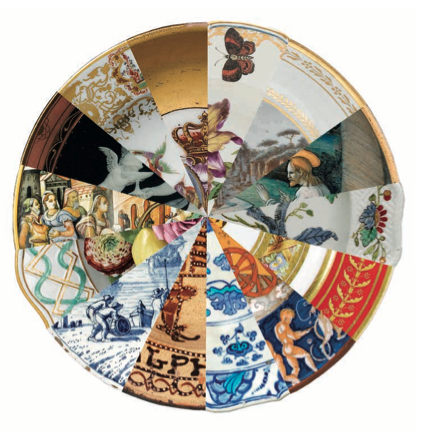 The 2015 French Porcelain Society Symposium examines the transfer of ceramic technologies and designs over the shifting borders of Europe. It represents something of a departure for the Society in that it explores the wider ceramic traditions of pottery and porcelain across the continent. We are thrilled to be able to present so many distinguished speakers, and to welcome members of the French Porcelain Society from around the world to London.
John Mallet will be giving the Sir Geoffrey de Bellaigue Lecture following the Annual General Meeting of the Society on Saturday 20th June. His subject, ‘The Travels of von Tschirnhaus’, will provide a fitting climax to two days of céramiques sans frontiers!
◊ ◊ ◊ ◊ ◊
F R I D A Y , 1 9 J U N E 2 0 1 5
9.45 Registration
10.15 Welcome
10.20 Antoinette Fay-Hallé, The influence of Japanese porcelain on the decoration of French ceramics
10.45 Rita Balleri, Copying, reworking and invention of the sculpture models at the Ginori Doccia factory in the 18th and 19th centuries
11.10 Tea and coffee
11.30 Monica Ferrero, The Royal porcelain manufactory of Vinovo: artists and sources
11.55 Angela Caròla-Perrotti, Naples porcelain in the time of Caroline Murat
12.20 Antoine d’Albis, Bartolomeo Ginori’s visit to Paris in 1771
12.45 Lunch
14.00 Jan Daniël van Dam, The three designers employed at the first porcelain factory in Weesp
14.30 Justin Raccanello, The transfer of the Istoriato maiolica tradition to France, part I (Italy)
14.55 Camille Le Prince, The transfer of the Istoriato maiolica tradition to France, part II (France)
15.20 Tea and coffee
15.50 Reino Liefkes, The Brühl Fountain
16.15 Martin Eberle, The porcelain cabinet of Luise Dorothea Saxe-Gotha Altenburg (1710–68)
16.40 Questions
17.00 Close of Day One
S A T U R D A Y , 2 0 J U N E 2 0 1 5
10.15 Welcome
10.20 Julia Weber, Boundless rivalry: Meissen and its competitors
10.50 María Ángeles Granados Ortega, Alcora’s French designs: a new approach to their source of inspiration and their influence in the Spanish ceramic of the 18th century
11.15 Tea and coffee
11.35 Maria Casanovas, Spanish porcelain and its international context
12.00 Rebecca Klarner, ‘Wedgwoodarbeit’: The influence of Wedgwood’s Jasperware on the German manufactories KPM and Meissen, 1750–1850
12.25 Rebecca Wallis, The French Connection: Minton and Sèvres in the 19th century
12.50 Lunch
14.00 Timothy Wilson, Antwerp and the tin-glaze diaspora in the 16th century
14.30 Tamara Préaud, Technical international exchanges to and from Sèvres, 18th and 19th centuries
14.55 Alfred Ziffer, The French influence on Nymphenburg porcelain in the early 19th century
15.20 Tea and coffee
15.50 Matthew Martin, Franco-Flemish models, English figures and Catholic consumers? The case of the Chelsea Virgin and Child and Pietà groups
16.15 Suzanne Lambooy, Dutch Delftware garden pots. A 17th-century royal fashion influenced by the formal French garden?
16.40 Questions and discussion
18.30 French Porcelain Society Annual General Meeting
19.00 The Sir Geoffrey de Bellaigue Lecture by J.V.G. Mallet, The Travels of von Tschirnhaus
John Mallet plans to discuss some of the places visited, and the people there who stimulated the Saxon nobleman, philosopher and mathematician Ehrenfried Walter von Tschirnhaus (1651–1708) and directed his attention to porcelain- making during the travels he undertook to European centres of learning such as Leiden, London, Paris and Milan. By the time Tschirnhaus involved Johann Friedrich Böttger in the researches that resulted in the invention of Meissen porcelain he had been in touch with many of the finest minds in Europe at a time when The Royal Society in London was only one of a number of academies stimulating scientific discovery, without regard to national frontiers.
20.00 The French Porcelain Society Annual Dinner at The Wallace Restaurant, The Wallace Collection (ticket only)
Call for Papers | Retail Realms in Eighteenth-Century Britain
◊ ◊ ◊ ◊ ◊
From the call for papers:
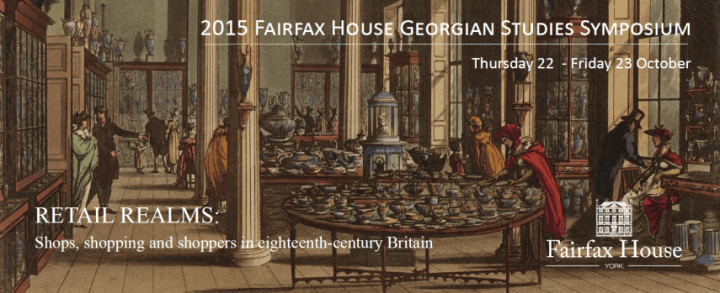
2015 Fairfax House Georgian Studies Symposium
Retail Realms: Shops, Shoppers and Shopping in Eighteenth-Century Britain, c.1680–1830
York Hilton Hotel and Fairfax House, York, 22–23 October 2015
Proposals due by 31 July 2015
The eighteenth century was a transformative age for shops and shopping in Britain. Between the late seventeenth and the early nineteenth centuries far-reaching changes took place in the ways people shopped, the things they bought, the shops themselves and the ways in which they were run, and the systems of distribution and marketing which made possible the shopping experience.
For an increasing portion of Georgian ‘polite society’, shopping, from being primarily a matter of obtaining the necessities of life, became a pleasurable leisure activity in its own right, associated with sociability, sensory experience, the fashioning of selfhood and the expression of individual and collective identities. Many historians who have explored the social and cultural dynamics of shopping in the eighteenth century have argued that this period saw a ‘consumer revolution’.
Theorisations of eighteenth-century consumerism, however, tend to overlook or disregard the materiality and spatiality of the shopping experience: the Georgian retail realm was not just a social or economic process but a place, located in shops, showrooms, markets and high streets, and extending into the assembly rooms and drawing rooms, and indeed the bedrooms and dressing rooms, of polite society. From the packaging of goods and the display of signs and labels, print advertising and the design of shops, to the increasing prominence of shops in towns and cities and the refashioning of the urban environment around the shopping experience, the retail realm was an increasingly important factor in the physical reshaping of eighteenth-century British life.
This symposium, the third Fairfax House Symposium in Georgian Studies, aims to bring together interested parties from curatorial, conservation, academic and other backgrounds with an interest in the history of shops and shopping to explore the nature and significance of the retail realm in the long eighteenth century. The symposium, which is taking place over two days, will be organised around five broad themes:
• A consumer revolution? — the development and transformation of the retail realm in the long eighteenth century
• Shopping outside the shop — publicity, marketing, the retail realm interacting with the urban, rural and domestic realms
• Shopping inside the shop — the design, layout and furnishing of shops, the display of goods, the management of the shopping experience
• The shopper’s realm — shopping as a fashionable/leisure pursuit and a social activity, the sensory/haptic dimensions of shopping
• The retailer’s realm — how retailers perceived shopping and shoppers, new retail arenas and models, the materiality of the retail business
Proposals are invited for symposium contributions not exceeding 20 minutes in length addressing one or more of the themes identified above. Please send outlines of around 200 words, accompanied by a brief one-paragraph biography, to fairfaxhousesymposium@gmail.com by Friday 31 July 2015. Any queries about the symposium should be sent to the same email address.










 Enfilade
leave a comment