New Book | Performance Costume in 18th-Century
From Bloomsbury:
Petra Zeller Dotlacilová, Performance Costume in 18th-Century France: Louis-René Boquet between Tradition and Reform (London: Bloomsbury, 2026), 240 pages, ISBN: 978-1350531000, $120.
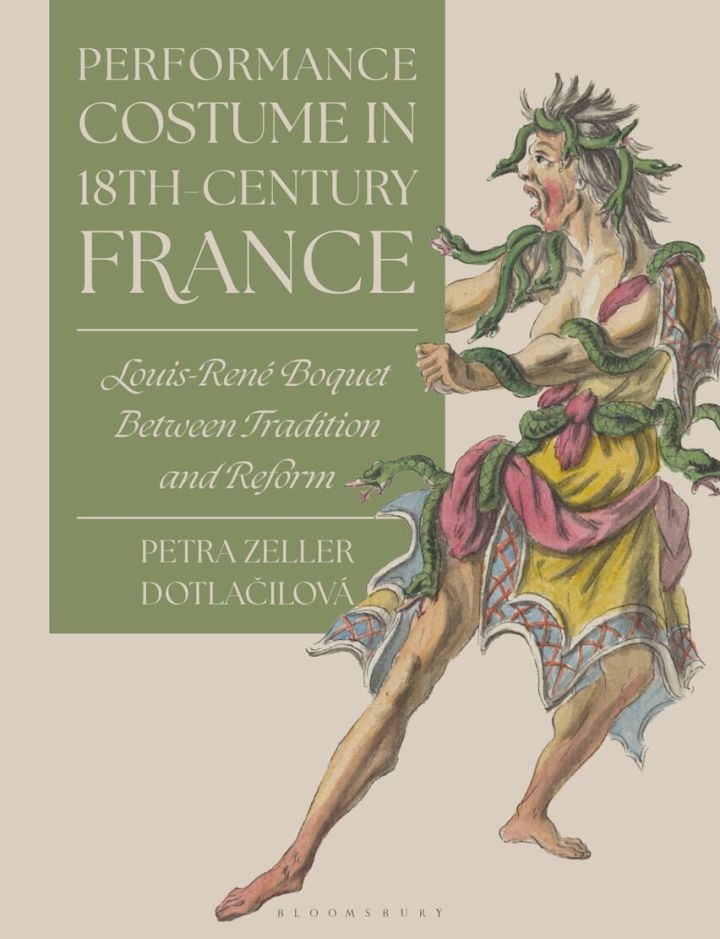 Petra Zeller Dotlacilová’s study examines the development of theatrical costumes in France during the long 18th century, including the abandonment of long-established traditions, the need to negotiate with the dictates of fashion, and the translation of new ideas into material practice. Using Louis-René Boquet (1717–1814)—the leading costume designer of the French court and the Paris Opera—as its lens, the book traces the development of costume reform from an aesthetics of propriety, defined by strict conventions, to an aesthetics of truthfulness, more open to ideas and inspiration from the visual arts and from real life. Full of rich primary source material in the form of newspaper articles, letters, plays, librettos, drawings and images of garments, and illustrated in full colour throughout, the author shows how playwrights, theatre managers, designers, tailors and performers all contributed to the changes in the design and conception of costume during the 18th century.
Petra Dotlacilová holds a PhD in Dance Studies from the Academy of Performing Arts in Prague, Czech Republic, as well as a PhD in Theatre Studies from Stockholm University, Sweden. In her research, she specializes on European dance history and theatrical costume of 16th to 18th century. In particular, she explores aesthetic and material properties of costumes, international transfers in design and relations between garments and movement practices.
c o n t e n t s
Acknowledgements
Note on Translation
List of Abbreviations
Introduction
Studying historical costume in performance
Boquet: between tradition and reform
Chapter 1 | Making of Costume for Performing Arts
Design Process at the French Court and the Opéra
Costumes at Comédie-Française, Comédie-Italienne and Opéra Comique
Self-fashioning at the Opéra: Designer vs the Soloists
Shaping Costumes According to Performing Arts and Gender
Chapter 2 | The Tradition, or the Aesthetics of Propriety
To Dress Properly: Social Norms of Clothing
‘Something rich and yet true to nature’: verisimilitude and the merveilleux
The Artistic Genres: Rules and Principles
Dressing the genres: French costumes for opera and ballet before Boquet
Breaking point: Expanding genres and fashions
The freedom of the fairground theatre and the Comédie-Italienne
Chapter 3 | The First Wave of Reform, or Towards the Aesthetics of Truthfulness
What is a ‘truthful costume’?
Les philosophes on costume and dress
The Reform in Practice: The problem of genre
Chapter 4 | Reform at the Opéra and the Court
Between the court and the fairground theatre: shepherds, peasants and Le Devin du village
Le Devin du village: a play with the appearances
First Greeks ‘correctly costumed in ancient style’ at the Opéra
Old Alceste in new clothes
‘Costumes of all ages and countries’
Chapter 5 | How to Dress Dance?
Development and diversity of dance techniques
Habit sérieux
Habit demi-caractère
Habit comique
Chapter 6 | Towards the Second Wave of the Reform, and Beyond
New fashions, new costumes: the triumph of simplicity
Boquet and Neoclassicism
Stage costume between nature and art
Glossary
Bibliography
List of Illustrations
Index
New Book | Bicentennial: A Revolutionary History of the 1970s
From The University of Chicago Press:
Marc Stein, Bicentennial: A Revolutionary History of the 1970s (Chicago: The University of Chicago Press, 2026), 416 pages, ISBN: 978-0226847412, $30.
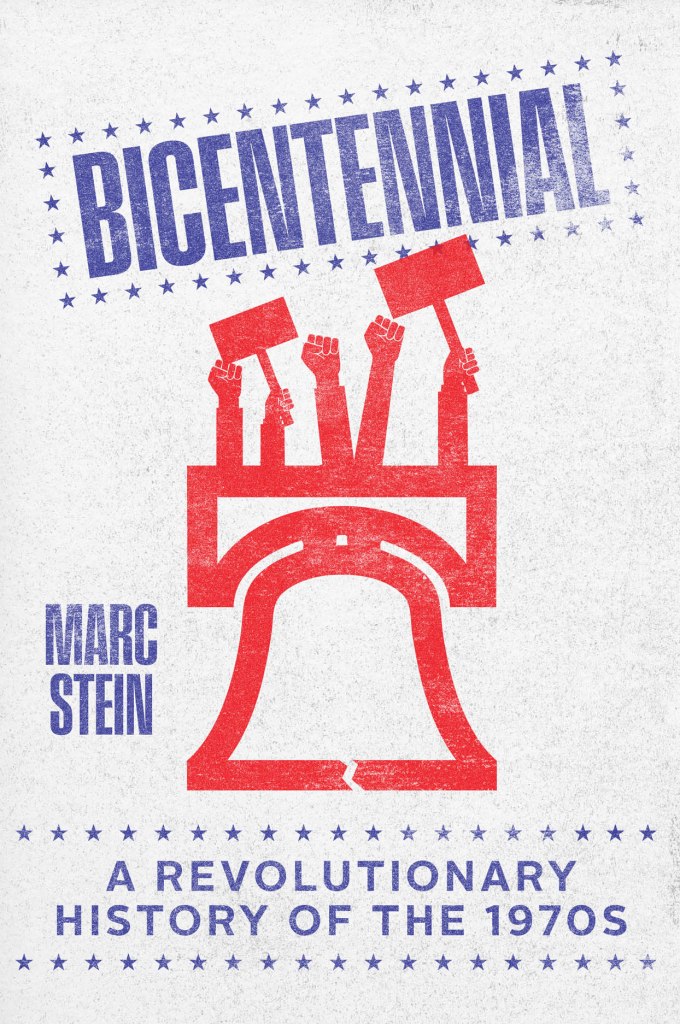 As the United States marks its semiquincentennial in 2026, renowned historian Marc Stein looks back at the politics of another landmark celebration during a time of striking similarities and surprising differences: the US bicentennial in 1976. In the aftermath of Vietnam and Watergate, the bicentennial sparked an extraordinary national conversation about the country’s past, present, and future. As patriots, planners, profiteers, and protesters argued about how to commemorate the national birthday, they collectively reimagined the promises and perils of democracy during a transformational decade.
From award-winning historian Marc Stein, Bicentennial: A Revolutionary History of the 1970s is an original, illuminating, and insightful study of that era. While focusing on festivities and fights in Philadelphia, the nation’s birthplace, the book also explores the many proposed and abandoned celebrations that percolated up around the country. It tells a broadly democratic story of both the ‘official’ bicentennial and counter-bicentennial activism, offering revolutionary perspectives on national politics, social movements, and popular culture. From the queer courtship of President Richard Nixon and Philadelphia Mayor Frank Rizzo to parades and protests with millions of participants, and from a deadly outbreak of Legionnaires’ disease at Philadelphia’s most prestigious hotel to the establishment of groundbreaking African American, ethnic, and Jewish museums, the bicentennial reveals a kaleidoscope of American peculiarities, problems, and possibilities. The lasting influence of 1976 on one of the nation’s great urban centers and the United States as a whole is undeniable. As the nation—once again enmeshed in political and social upheaval—marks its two-hundred-fiftieth birthday in 2026, there is no better time to look back at its two-hundredth and marvel at what has changed, and what has not.
Marc Stein is the Jamie and Phyllis Pasker Professor of US History and Constitutional Law at San Francisco State University. He is the 2026–27 president of the Organization of American Historians and director of the OutHistory website. His previous books include City of Sisterly and Brotherly Loves, Sexual Injustice, Rethinking the Gay and Lesbian Movement, The Stonewall Riots, and Queer Public History.
c o n t e n t s
Introduction
1 The Queer Courtship of Richard Nixon and Frank Rizzo
2 The Rise and Fall of Five Bicentennial Plans
3 The ‘Do-It-Yourself’ Bicentennial
4 Ford to Bicentennial City: Drop Dead
5 ‘We Are the Bicentennial’
6 ‘Freedom’s Way—U.S.A.’
7 Philadelphia Renaissance
8 Happy Birthday, USA
9 Let Freedom Ring
Conclusion
Acknowledgments
Notes
Index
Exhibition | Revealing the Feminine: Fashion and Appearances
Opening soon at the Cognacq-Jay:
Révéler le Féminin: Mode et Apparences au XVIIIe Siècle
Musée Cognacq-Jay, Paris, 25 March — 20 September 2026
Curated by Pascale Gorguet Ballesteros, Adeline Collange-Perugi, and Saskia Ooms
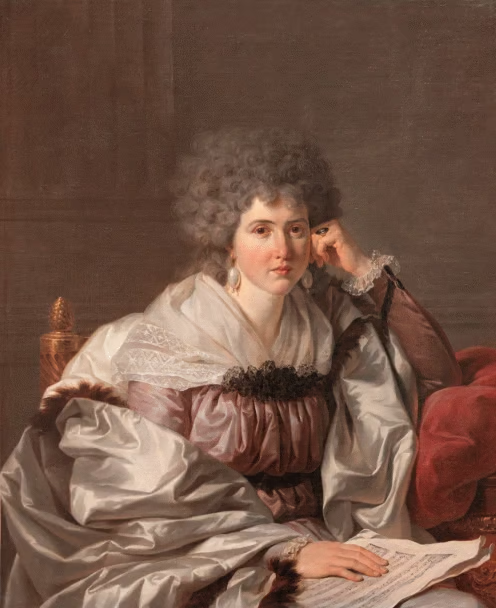
Jean-Charles Nicaise Perrin, Portait of Madame Perrin, 1791 (Musée des Arts et de l’Archéologie de Valenciennes; photo by Thomas Douvry).
Présentée au musée Cognacq-Jay en collaboration avec le Palais Galliera, l’exposition Révéler le féminin: Mode et Apparences au XVIIIe siècle propose une immersion dans l’univers fascinant des féminités au siècle des Lumières.
Portraits, scènes galantes et pièces textiles historiques dialoguent pour explorer la diversité des représentations de la féminité telles qu’elles se déploient dans les mises en scène du XVIIIe siècle. L’exposition souligne l’essor d’un style français dont l’élégance séduit alors les cours et l’aristocratie européennes, révélant une histoire du costume à la fois ancrée dans une réalité matérielle et nourrie par l’imaginaire.
Au cœur de cette époque, la France s’impose comme le théâtre incontournable du raffinement et du prestige. Les artistes tels que Maurice Quentin de La Tour, Jean-Marc Nattier, Adélaïde Labille-Guiard, ou encore Élisabeth Vigée Le Brun excellent à traduire l’éclat des étoffes comme la profondeur des âmes, offrant à leurs modèles une aura de grâce et de pouvoir. Le parcours de l’exposition, qui met en lumière ces œuvres virtuoses, s’enrichit de portraits marqués par une dimension psychologique nouvelle, où l’intimité et le naturel prennent une place centrale, sous l’influence anglaise. En parallèle, les pastorales de François Boucher et les fêtes galantes d’Antoine Watteau façonnent une féminité idéalisée et poétique.
Enfin, des photographies contemporaines de Steven Meisel, Esther Ségal, ou encore Valérie Belin, ainsi qu’une création Chanel par Karl Lagerfeld, suggèrent en contrepoint une réflexion sur la persistance des codes et l’héritage du XVIIIe siècle dans la mode actuelle, entre exigence sociale et imaginaire de la beauté.
Commissariat
• Pascale Gorguet Ballesteros, conservateur général du patrimoine, responsable des départements mode XVIIIe et Poupées au Palais Galliera
• Adeline Collange-Perugi, conservatrice du patrimoine et responsable de la collection art ancien, Musée d’arts de Nantes
• Saskia Ooms, attachée de conservation au musée Cognacq-Jay
Révéler le Féminin: Mode et Apparences au XVIIIe Siècle (Paris: Paris Musées, 2026), 112 pages, ISBN: 978-2759606382, €25.
New Book | Classical Taste, Architecture, and Thomas Jefferson
From Bloomsbury:
Alley Marie Jordan, Classical Taste in the Architectural World of Thomas Jefferson (London: Bloomsbury Publishing, 2025), 224 pages, ISBN: 978-1350428508, $115.
 Reaching beyond politics and law, this book focuses on Thomas Jefferson as an aesthetic classicist.
Jefferson embraced the influence of antiquity through his adoption of classical architecture in his Virginia residences, in order to establish Rome as an ancestor to America. In a time of significant political and cultural change, he aligned himself with a Greco-Romano legacy that represented knowledge, power and art. Alley Marie Jordan studies the architectural and landscape spaces of Jefferson’s classical taste, which include the villas of Monticello and Poplar Forest, as well as the University of Virginia. An examination of these places exposes his deeply entrenched views of the importance of classics in Virginia, and reveals them as expressions of admiration of classical antiquity.
Seeking to uncover an underexplored side of his character, Jordan deconstructs his identity through a classical lens and illustrates his influence on American culture, as well as his desire to reform it via the classics. By dislodging Jefferson from American politics, this study redefines his worldview and motivations for inventing an American virtue based on Horace’s utile dulci. Although his participation in acquiring classical taste was not unique for his time, he did accomplish a unique aim with classicism: the blending of the American landscape with classical culture to create a ‘new’ American virtue.
Alley Marie Jordan is a garden historian with a PhD in Classics from the University of Edinburgh.
c o n t e n t s
List of Illustrations
‘A Sublime Luxury’: An Introduction to Eighteenth-Century Classical Taste, Aesthetics, and Architecture
1 Jefferson in Context
2 Thomas Jefferson the Epicurean: Exploring Jefferson’s Classical Philosophy
3 The Genius Loci at Thomas Jefferson’s Classical Villas: Monticello and Poplar Forest
4 The Politician in a Landscape
5 ‘The Land of Dreams’: Thomas Jefferson’s Classical University
6 Classical Curiosities, a Conclusion
Notes
Bibliography
Index
New Book | Women and Transnational Cultural Exchange, 1550–1850
From Bloomsbury:
Brianna Robertson-Kirkland and Louise Duckling, eds., Women and Transnational Cultural Exchange, 1550–1850 (London: Bloomsbury Academic, 2026), 256 pages, ISBN: 978-1350512283, $115.
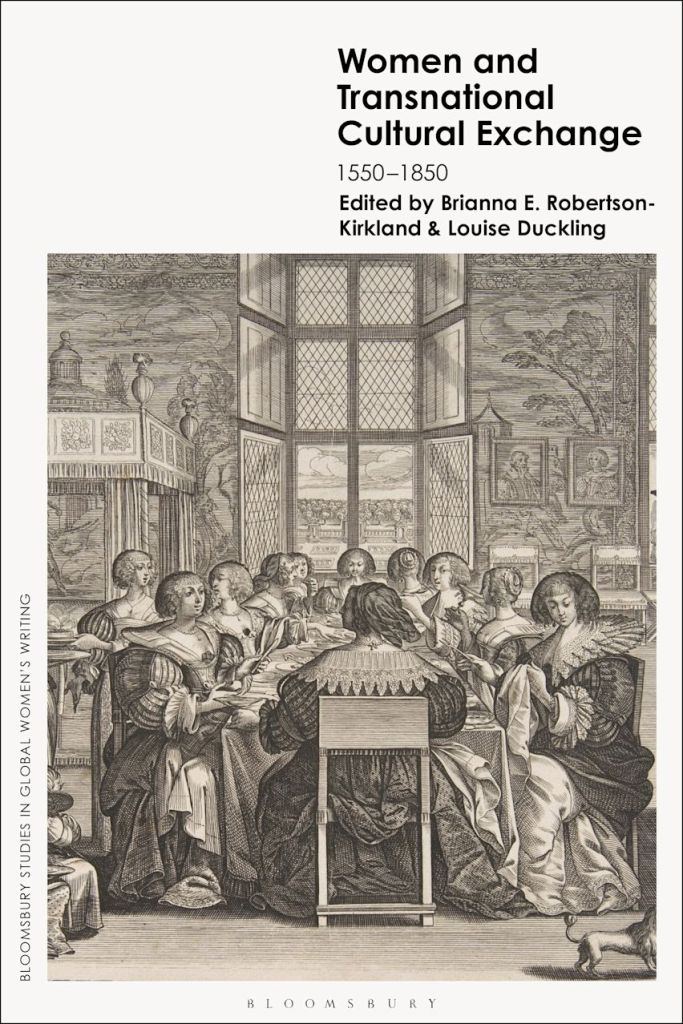 Focusing on the international circulation of culture and ideas by women in the early modern period through the long eighteenth century, this book amplifies their presence in history, finding new ways to explore their transnational encounters and exchanges. Providing a rich introduction to the topic of women’s transnational interactions, the essays build a diverse picture of female engagement with the wider world and consider how women interpreted, influenced, or transferred culture and ideas around the globe. Examining figures such as Aphra Behn, Charlotte Bonaparte, and Marie-Catherine d’Aulnoy, this book looks at novels, memoirs, poetry, translations, travel writing, and plays, as well as considering the ways in which women’s public lives have been ‘written’ in music, portraits, and printed images, and their roles in the international exchange of art and material culture.
Brianna E. Robertson-Kirkland is a Lecturer in Historical Musicology at the Royal Conservatoire of Scotland. Louise Duckling is an independent scholar based in the UK.
c o n t e n t s
List of Illustrations
Acknowledgements
Introduction — Brianna Robertson-Kirkland and Louise Duckling
Prologue | Power
Postcard 1 Queen Mary I and La Peregrina — Valerie Schutte
1 Maria Theresa and Catherine II: Women Rulers Transmitting Unexpected Gender Notions far beyond Their Realms — Ruth Dawson
Part 1 | Culture
Postcard 2 The 188-Page Letter-Memoir: Mary Anne Canning’s Life Writing as a Defense of Her Motherhood — Rachel Bynoth
2 Imagining England: Recovering Marie-Catherine d’Aulnoy’s Memoirs of the Court of England (1707) — Daisy Winter
3 The Racial Politics of the Chilean Family in Maria Graham’s Journal of a Residence in Chile (1824) — Valentina Aparicio
4 ‘Today, Two Vent’rous Females Spread the Sail’: The Presence of Female Travelers in the Works of Mariana Starke — Eva Lippold
Part 2 | Knowledge
Postcard 3 ‘A New World of Ideas’: Knowledge Exchange in Helen Maria Williams’s Translation of Alexander von Humboldt’s Personal Narrative (1814–29) — Louise Duckling
5 Madeleine de Scudéry, Aphra Behn, and Translation: Using the ‘Carte de Tendre’ for Cross-Channel Communication of Women’s Ideas — Amelia Mills
6 ‘Suns, wich to Some other Worlds Give Light’: Transnational Philosophies of the Universe in Margaret Cavendish’s Poems and Letters — Masuda Qureshi
7 Science, Art, and Knowledge: Nancy Anne Kingsbury Wollstonecraft and the Illustration of Cuban Flora — Elisa Garrido
Part 3 | Art
Postcard 4 Collecting Travel Memories: Charlotte Bonaparte’s Family Album — Arlene Leis
8 Aletheia Talbot and the Art of Italy: England’s First Female Collector — Breeze Barrington
9 Back through Time and beyond Britain: Revealing Polytheistic Imagination and British Imperial Resolve in Eleanor Coade’s Artificial Stone Products, 1769–1821 — Miriam al Jamil
Part 4 | Music
Postcard 5 Mrs Macglashan of Jamaica — Andrew Bull
10 ‘Quite Different from What It Is Abroad’: Elizabeth Wynne’s Musical Exchanges — Penelope Cave
11 The Murrays of Warrawang: Scots in Australia — Brianna Robertson-Kirkland
Epilogue
Postcard 6 Felicia Hemans, the Monument of Zalongo, and the ‘Dance’ of a Moment in History — Trijit Acharyya
Selected Bibliography
List of Contributors
Index
New Book | The China Question
From Cambridge UP:
Ho-fung Hung, The China Question: Eight Centuries of Fantasy and Fear (Cambridge: Cambridge University Press, 2026), 336 pages, ISBN: 978-1009559775, £30 / $40.
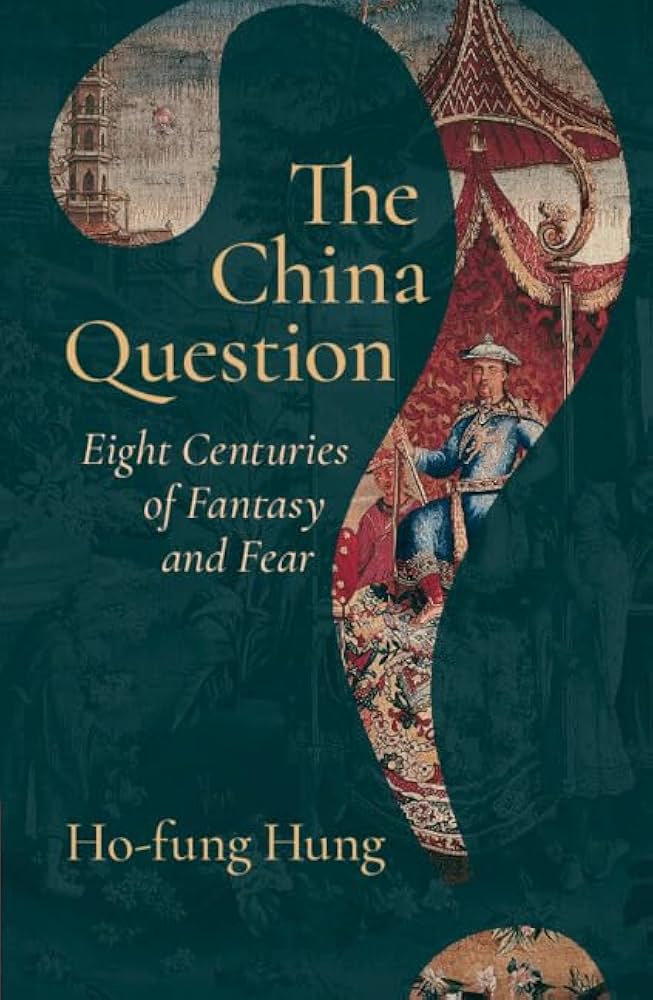 For centuries, Western scholars portrayed China either as a land of superior morality, economy, and governance or as a formidable country of pagans that posed a global threat to Western values. Idealized images of China were used to shame rulers for their incompetence, while China was demonized as an external threat to cover up domestic political failures. In the twentieth century, the geopolitics of global capitalism have facilitated more nuanced perspectives, but the diversifying of knowledge about China is far from complete. In this thought-provoking study, Ho-fung Hung finds that both Western elites and China’s authoritarian regime today continue to promote many Orientalist stereotypes to advance their economic interests and political projects. He shows how big-picture historical, social, and economic changes are inextricably linked to fluctuations in the realm of ideas. Only open debate can overcome extremes of fantasy and fear.
Ho-fung Hung is Henry M. and Elizabeth P. Wiesenfeld Professor in Political Economy in the Department of Sociology and Nitze School of Advanced International Studies, Johns Hopkins University.
c o n t e n t s
Figures
Preface
Introduction: Orientalism in the Longue Durée
I | Catholic Scholarship
1 From Pax Mongolica to the Long Sixteenth Century
2 The Seventeenth-Century Crisis and the Rise of Sinophilia
II | Enlightenment Philosophy
3 Early Enlightenment Sinophilia
4 Late Enlightenment Sinophobia
III | Institutionalized Orientalism
5 Romantic Sinology after the French Revolution
6 Scientific-Racist Sinology in the Age of Empire
IV | Cold War Area Studies
7 From Sinology to China Studies
8 The ‘Asiatic Mode of Production’ Myth
V | Self-Orientalism
9 Self-Orientalizing Nation Building
10 Contested Confucianism
Conclusion: De-Orientalizing Triumph, Re-Orientalizing Perils
References
Index
New Book | The Atlas of World Embroidery
From Princeton UP:
Gillian Vogelsang-Eastwood, The Atlas of World Embroidery: A Global Exploration of Heritage and Styles (Princeton: Princeton University Press, 2026), 400 pages, ISBN: 978-0691261911, £50 / $60.
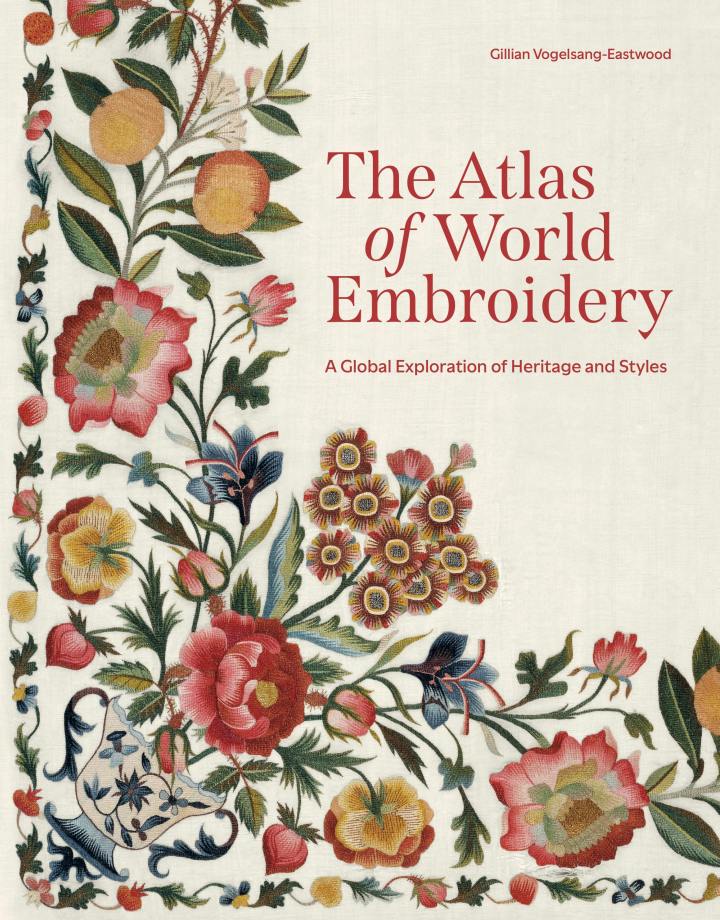 A richly illustrated history of embroidery and needlework, showcasing the glorious range of styles, motifs, and materials used around the world.
Embroidery is one of the world’s most widely shared forms of creative expression—and one of its most varied and diverse. It can be found in every region, yet its visual languages, themes, and techniques vary greatly: some are marked by unique styles and others show influences from neighboring cultures. The Atlas of World Embroidery examines many distinctive embroidery styles and traditions found across the Americas, Europe, Africa, Asia, and Australasia. From the quillwork and birch boxes of Indigenous North America to the decorative matyo style of Hungary, the zardozi embroiderers of India, and the satin stitches of Han Dynasty China, Gillian Vogelsang-Eastwood provides a comprehensive history of embroidery, describing its materials and tools, its designs and symbols, and its uses and makers. Emphasizing the visual aspects of embroidery across cultures, the atlas features an unprecedented array of color images celebrating the art form. Organized geographically by region and country, and focusing on hand needlework with relevant examples of machine forms, The Atlas of World Embroidery is a beautiful and authoritative exploration of this ancient craft.
• Lavishly illustrated throughout in full color with more than 300 images.
• Features full and close-up images of embroidered fabrics, including household items and clothing, along with insightful analysis.
• Includes sections on the Americas; Europe; Sub-Saharan Africa; the Arabic World; Turkey, the Iranian Plateau, and Central Asia; the Indian Subcontinent; East Asia; and Southeast Asia and Australasia—with subsections on individual countries, cultures, and kinds of embroidery.
• Contains a directory of design motifs depicting patterns from around the world.
Gillian Vogelsang-Eastwood is a design historian and textile archaeologist. She is director of the Textile Research Centre in Leiden, the Netherlands, and chief editor of the multivolume Bloomsbury World Encyclopedia of Embroidery. She is the coauthor of Dressed with Distinction: Garments from Ottoman Syria and Covering the Moon: An Introduction to Middle Eastern Face Veils.
Exhibition | French Drawings in Portuguese Collections
Now on view at Portugal’s National Museum Soares dos Reis, with an English summary from the Instagram account of Trois Crayons:
The presence of many French artists in Portugal from the beginning of the 18th century to the beginning of the 20th century—and their impact on the development of Portuguese art, especially the decorative arts—is the great revelation of this selection of works.
◊ ◊ ◊ ◊ ◊
Drawings by European Masters in Portuguese Collections III: France
Desenhos de Mestres Europeus em Coleções Portuguesas III: França
Museu Nacional Soares dos Reis, Porto, 13 December 2025 — 26 April 2026
Curated by Nicholas Turner
Com mecenato do BPI | Fundação La Caixa e apoio das Tintas CIN, esta é a primeira exposição dedicada a desenhos franceses de coleções públicas e privadas portuguesas, e a terceira e última de uma série de exposições organizadas com o intuito de divulgar o pouco conhecido acervo de desenhos de antigos mestres conservado no nosso país.
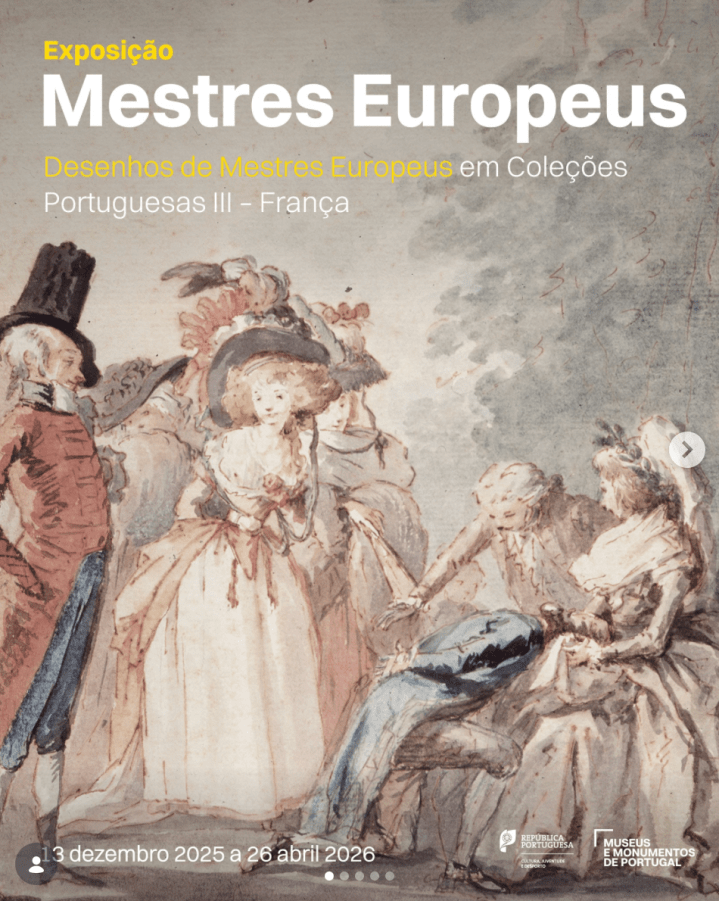 A primeira exposição, Desenhos de Mestres Europeus em Coleções Portuguesas (2000–01), apresentou aos visitantes obras de referência de todas as escolas, enquanto a segunda, Desenhos de Mestres Europeus em Coleções Portuguesas II: Itália e Portugal (2021), se centrou na influência da arte italiana no desenvolvimento da arte portuguesa desde o século XVI até ao início do XIX.
Com a exposição Desenhos de Mestres Europeus em Coleções Portuguesas III: França pretende-se mostrar que a história da influência do desenho francês em Portugal é diferente, apesar de acidentada e sujeita a flutuações políticas. De facto, a presença de muitos artistas franceses em solo nacional desde o início do século XVIII até ao início do século XX—e o seu impacto no desenvolvimento da arte portuguesa, especialmente das artes decorativas—é a grande revelação da presente seleção de obras.
Quer fugindo de ambientes políticos difíceis ou evitando a forte concorrência na corte francesa, pelo menos meia dúzia de émigrés franceses, como Pierre-Antoine Quillard, Pierre Massart de Rochefort ou Jean-Baptiste Pillement, representados nesta exposição, deixaram a sua marca—e os seus desenhos—em Portugal. Este legado torna-se claro a partir de uma grande variedade de pinturas, desenhos e obras ilustradas que foram executadas no nosso país.
Com curadoria de Nicholas Turner, um dos mais prestigiados especialistas internacionais na área do desenho, a exposição Desenhos de Mestres Europeus em Coleções Portuguesas III: França, inclui 88 obras, quatro das quais em formato de livro, ficando patente ao público até 26 abril 2026.
Nicholas Turner, Desenhos de Mestres Europeus em Coleções Portuguesas III: França (Porto: Blue Book, 2026), 216 pages, ISBN: 978-9899223318, €40.
Call for Essays | History of Emotions in Visual Culture
From the Call for Contributions, via ArtHistory.net:
Edited Volume | The History of Emotions Seen through Visual Culture
Proposals due by 30 March 2026
Today, emotions are present in every aspect of daily life: think of how joy, sadness, loneliness, and compassion, to name just a few, are emotional axes that underpin the experiences of the 21st century. This premise not only marks the contemporary, but also colours all cultural production created throughout time. To speak of a history of emotions linked to visual culture is to understand that images not only shape or produce emotions and feelings in a viewer, but also act as an active instrument that represents them. See how paintings, engravings, sculptures, films, and digital images themselves participate in the configuration of an emotional language, illustrating what should be felt, how it should be done, and how it is expressed.
From this framework, the image must be understood as a located affective element, that is, its emotionality is linked to specific practices, modes of circulation, and reception that mark the entire history. Thus, proposing an examination of visual culture from the history of emotions allows us to establish a dialogue focused on tracing how all these feelings are translated through gestures, attitudes, poses, in short, any visual message, and how these, in turn, operate in processes of power, identity, memory and individual or collective experience.
This collective volume aims to explore how emotions are produced, questioned, circulated, and perpetuated through visual practices in any historical context. The resulting book is intended to form a dialogue between the history of emotions and visual culture.
The suggested thematic areas are as follows—they are not exclusive:
1 Iconography of feeling: gestures, expressions, bodies, pain, grief, fear, desire, shame, pride, tenderness, etc. All those emotions that can be gleaned from the iconographic and iconological study of a work.
2 Emotions and the politics of images: propaganda, iconoclasm, censorship, mobilisation, memory.
3 Tactics of reception: gaze, empathy, identification, and interpretive communities.
4 The materiality of affections: image objects, relics, and transmission in museums.
5 Technologies of affections: visual technologies and affections: photography, cinema, TV, social networks, AI, digital archives.
This volume seeks relevant chapters that deal with specific and broad visual corpora (painting, engraving, illustrated press, photography, cinema, memes, video games, family archives, museography, etc.), open to any period. The interest lies in proposing an argument focused not only on representations, but also on how they were used, circulated, or in which practices they were inscribed. Proposals are accepted in Spanish and English.
To be considered, please submit a proposal with a title, an abstract (300–400 words), a brief CV (100–150 words), and five keywords by 30 April 2026 to emocionesyculturavisual@hotmail.com with the subject: “CFP — Emotions and visual culture — Surname.” Notification of acceptance will be sent by 15 May 2026. Complete chapters will be due by 30 September 2026 (extendable).
Exhibition | Rome and Milan as Capitals of Neoclassicism
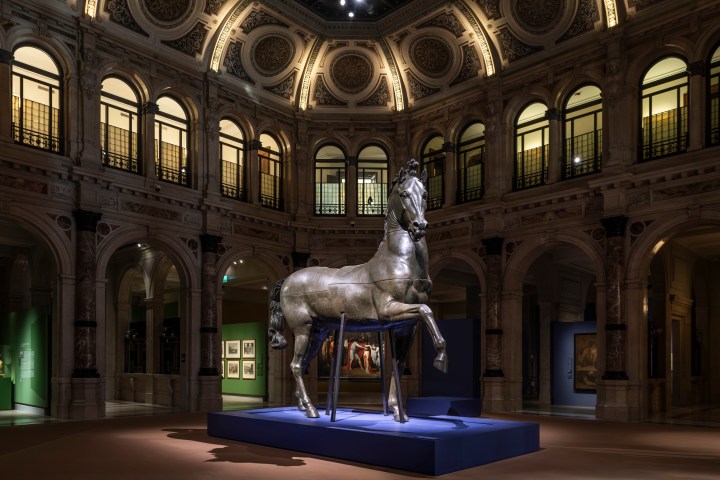
Installation view of the exhibition Eterno e Visione: Roma e Milano Capitali del Neoclassicismo
(Milan, Gallerie d’Italia, 2025)
◊ ◊ ◊ ◊ ◊
Now on view at the Gallerie d’Italia in Milan:
Eterno e Visione: Roma e Milano Capitali del Neoclassicismo
Gallerie d’Italia, Milan, 28 November 2025 — 6 April 2026
Curated by Francesco Leone, Elena Lissoni, and Fernando Mazzocca
From 1796, the year of Napoleon’s descent into Italy, until 1815, marked by the defeat at Waterloo and the Congress of Vienna, a radical political, economic, and social change took place on the peninsula. The momentous turning point of the Napoleonic Age also significantly involved the artistic scene. Only Rome and Milan escaped the decadence of major artistic centres like Florence, Venice, Genoa, and Naples. The Eternal City persisted as the universal capital of the arts due to the abundance of its heritage, from both antiquity and the Renaissance of Raphael and Michelangelo. Artists from all over the world continued to flock to Rome to learn their trade, and the city’s economy profited greatly from the presence of their studios and the activity of various workshops, which produced internationally appreciated bronzes and mosaics. The exhibition aims to evoke this exceptional creative season, comparing the highest level of artistic production of these two ‘capitals’, projected towards modern Europe while remaining firmly attached to the greatness of the past.
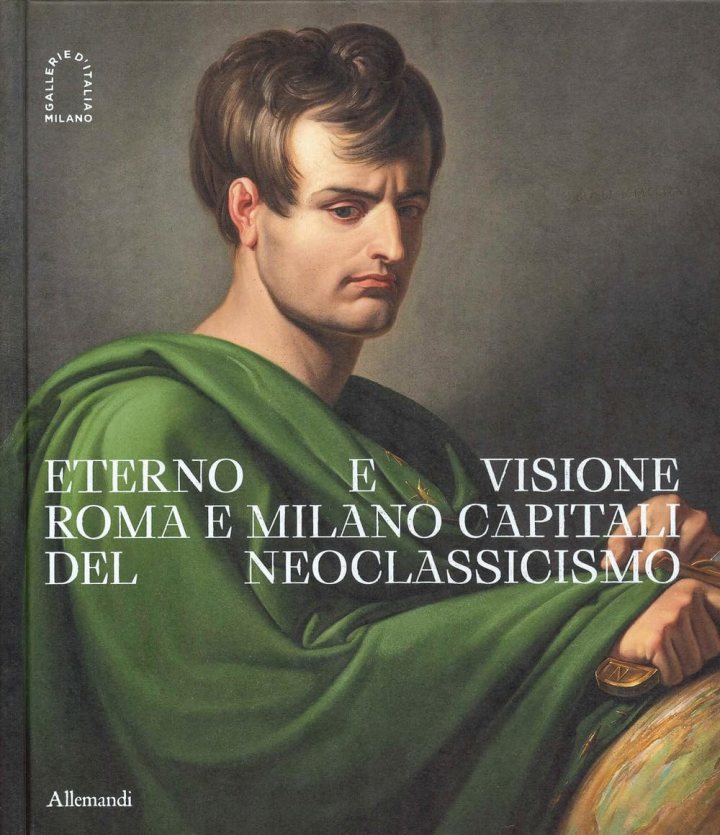
The leading artists in the exhibition are two brilliant men who were close friends: Antonio Canova, one of the most important artists of all time, and Giuseppe Bossi, an extraordinary painter, great connoisseur of Leonardo, and a sophisticated collector, as well as founder of the Pinactoca di Brera. Visitors can admire Antonio Canova’s masterpiece—previously thought to have been lost—the large model of a horse currently undergoing exceptional restoration. Other masterpieces by Bossi, Canova, and Andrea Appiani illustrate the creation of the image of Italy, in its well-known and then more popular iconography, due precisely to their genius.
The exhibition also highlights of one of history’s most ambitious architectural projects, conceived by the Bolognese architect Giovanni Antonio Antolini: the famous Foro Bonaparte, which, although never realised, had a major influence on the transformation of Napoleonic Milan into a modern city inspired by the magnificence of antiquity. With this utopian and visionary undertaking, Milan aspired to become the new Rome, pursuing the great ideal dream of classicism. Equally fascinating will be the re-enactment of Napoleon’s coronation as King of Italy in Milan Cathedral, through the exhibition of the so-called Italian Honours: the cape, crown, sceptre, and other splendid objects used during the ceremony, all of which underwent major restoration by Intesa Sanpaolo for the 19th edition of “Restituzioni” in 2022.
Roberto Bizzocchi, Elisa Baccini, Fernando Mazzocca, Francesco Leone, Elena Lissoni, Charles-Eloi Vial, et al., Eterno e Visione: Roma e Milano Capitali del Neoclassicismo (Turin: Allemandi, 2025), 368 pages, ISBN: 978-8842227137, €39.










 Enfilade
leave a comment