The Decorative Arts Trust Announces 2025 Publishing Grants
From the press release:
The Decorative Arts Trust is thrilled to announce the five recipients of our 2025 Publishing Grants. The Birmingham Museum of Art in Birmingham, Alabama; the Florence Griswold Museum in Old Lyme, Connecticut; The Preservation Society of Newport County in Newport, Rhode Island; and Victoria Mansion in Portland, Maine, received Publishing Grants under the ‘Collections and Exhibitions’ category. Dr. Mariah Kupfner received a Publishing Grant for ‘First-Time Authors’.
In August 2026, the publication of Roll Call: 200 Years of Black American Art will be an integral part of the 75th anniversary celebration of the Birmingham Museum of Art. Planned alongside a companion exhibition, the publication will also serve as a comprehensive survey of the Museum’s collection of works by African American and Black American artists who live(d) and work(ed) in America, including its superb holdings of Southern quilts and ceramics.
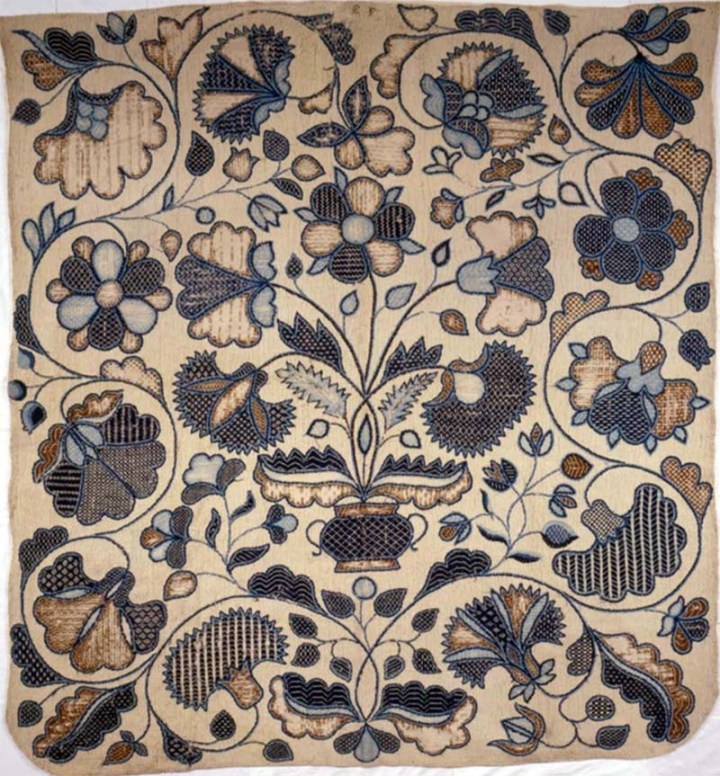
Elizabeth Foote, Bed rug, ca. 1778, Colchester, CT, hand-embroidered wool on plain woven wool ground (Courtesy of the Connecticut Historical Society, Gift of Mrs. J.H.K. Davis).
In 2022, the Florence Griswold Museum presented the exhibition New London County Quilts & Bed Covers, 1750–1825, which showcased exquisite, rarely-seen quilted petticoats, appliqued bed covers, bed rugs, and stuffed whitework quilts hand-crafted by women and girls of this region of Connecticut. The accompanying publication, set to be completed by April 2027, shares the scholarship generated for the exhibition, addressing an understudied and continuously evolving area of material culture that will open emerging areas of study for rising scholars.
Treasures of the Newport Mansions, the first ever collections catalogue for The Preservation Society of Newport County (PSNC), will span centuries and highlight the organization’s distinctive material content. Among the most significant in the United States, PSNC’s holdings uniquely encompass extraordinary objects within their original historical contexts. Presenting approximately 100 objects, the catalogue, which will be published by February 2027, will highlight advanced research made by experts and early-career scholars across multiple disciplines.
Victoria Mansion’s ‘Bold, Designing Fellows’: Italian Decorative Painters and Scenic Artists in the United States, 1820–1880 is inspired by many years of research on the Bolognese artist Giuseppe Guidicini. Previously unknown, Guidicini was responsible for the 1860 design and decoration of the wall and ceiling paintings that fill Victoria Mansion. The publication is set to be completed by May 2026 and will chronicle Guidicini’s history from his training in Bologna to his accomplishments in New York, Cincinnati, and Richmond.
Publishing Grant recipient Dr. Mariah Kupfner is an Assistant Professor of American Studies and Public Heritage at Penn State Harrisburg and earned her PhD from Boston University. She will publish Crafting Womanhood: Needlework, Gender, and Politics in the United States, 1810–1920 with the University of Delaware Press in August 2026. This publication looks closely at gendered textiles, reading them as essential sources of historical meaning and self-making.
Visit the Decorative Arts Trust’s website to learn more about the Publishing Grants program. Applications for the next round of grants are due by 31 March 2026.
New Book | America, América
As someone long unsettled by the ambiguity around the word ‘American’ (I recall being confused by it as a kid), I found Greg Grandin’s July 4 opinion piece for The New York Times immensely satisfying. His latest book appeared in April from Penguin. –CH
Greg Grandin, America, América: A New History of the New World (Penguin Press, 2025), 768 pages, ISBN: 978-0593831250, $35.
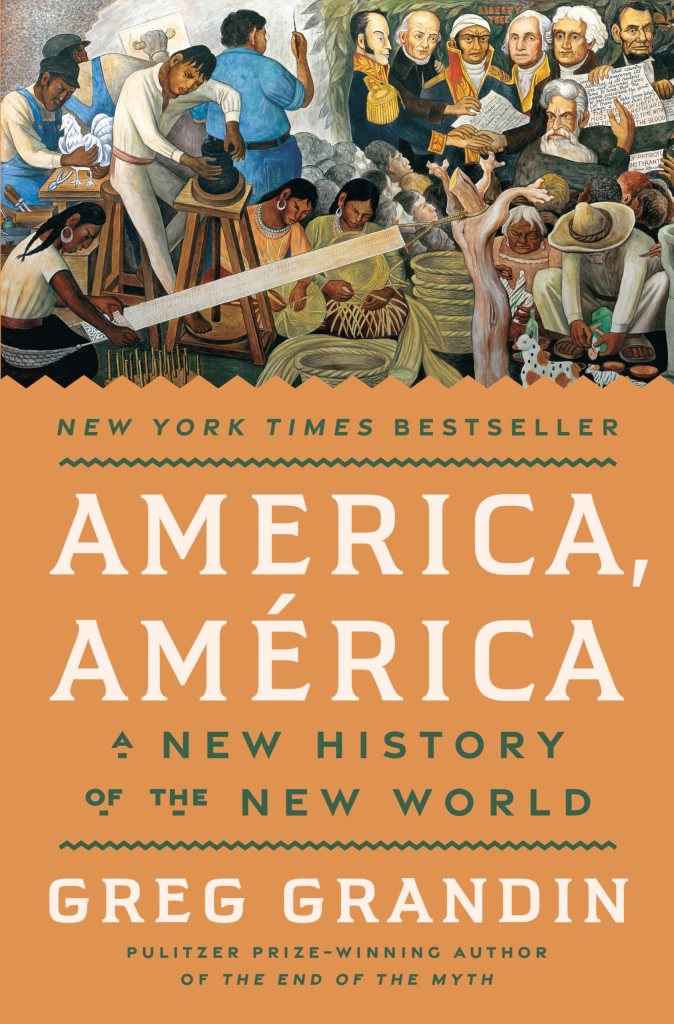 From the Pulitzer Prize–winning historian, the first comprehensive history of the Western Hemisphere, a sweeping five-century narrative of North and South America that redefines our understanding of both.
The story of how the United States’ identity was formed is almost invariably told by looking east to Europe. But as Greg Grandin vividly demonstrates, the nation’s unique sense of itself was in fact forged facing south toward Latin America. In turn, Latin America developed its own identity in struggle with the looming colossus to the north. In this stunningly original reinterpretation of the New World, Grandin reveals how North and South emerged from a constant, turbulent engagement with each other.
America, América traverses half a millennium, from the Spanish Conquest—the greatest mortality event in human history—through the eighteenth-century wars for independence, the Monroe Doctrine, the coups and revolutions of the twentieth century, and beyond. Grandin shows, among other things, how in response to U.S. interventions, Latin Americans remade the rules, leading directly to the founding of the United Nations; and how the Good Neighbor Policy allowed FDR to assume the moral authority to lead the fight against world fascism.
Grandin’s book sheds new light on well-known historical figures like Bartolomé de las Casas, Simón Bolívar, and Woodrow Wilson, as well as lesser-known actors such as the Venezuelan Francisco de Miranda, who almost lost his head in the French Revolution and conspired with Alexander Hamilton to free America from Spain; the Colombian Jorge Gaitán, whose unsolved murder inaugurated the rise of Cold War political terror, death squads, and disappearances; and the radical journalist Ernest Gruening, who, in championing non-interventionism in Latin America, helped broker the most spectacularly successful policy reversal in United States history. This is a monumental work of scholarship that will fundamentally change the way we think of Spanish and English colonialism, slavery and racism, and the rise of universal humanism. At once comprehensive and accessible, America, América shows that centuries of bloodshed and diplomacy not only helped shape the political identities of the United States and Latin America but also the laws, institutions, and ideals that govern the modern world. In so doing, Grandin argues that Latin America’s deeply held culture of social democracy can be an effective counterweight to today’s spreading rightwing authoritarianism.
A culmination of a decades-long engagement with hemispheric history, drawing on a vast array of sources, and told with authority and flair, this is a genuinely new history of the New World.
Greg Grandin is the author of The End of the Myth, which won the Pulitzer Prize; The Empire of Necessity, which won both the Bancroft and Beveridge prizes in American history; Fordlandia, which was a finalist for the Pulitzer Prize, the National Book Award, and the National Book Critics Circle Award; and a number of other widely acclaimed books. He is the Peter V. and C. Vann Woodward Professor of History at Yale University.
Exhibition | Philadelphia, The Revolutionary City
From the APS:
Philadelphia, The Revolutionary City
American Philosophical Society Museum, Philadelphia, 11 April — 28 December 2025
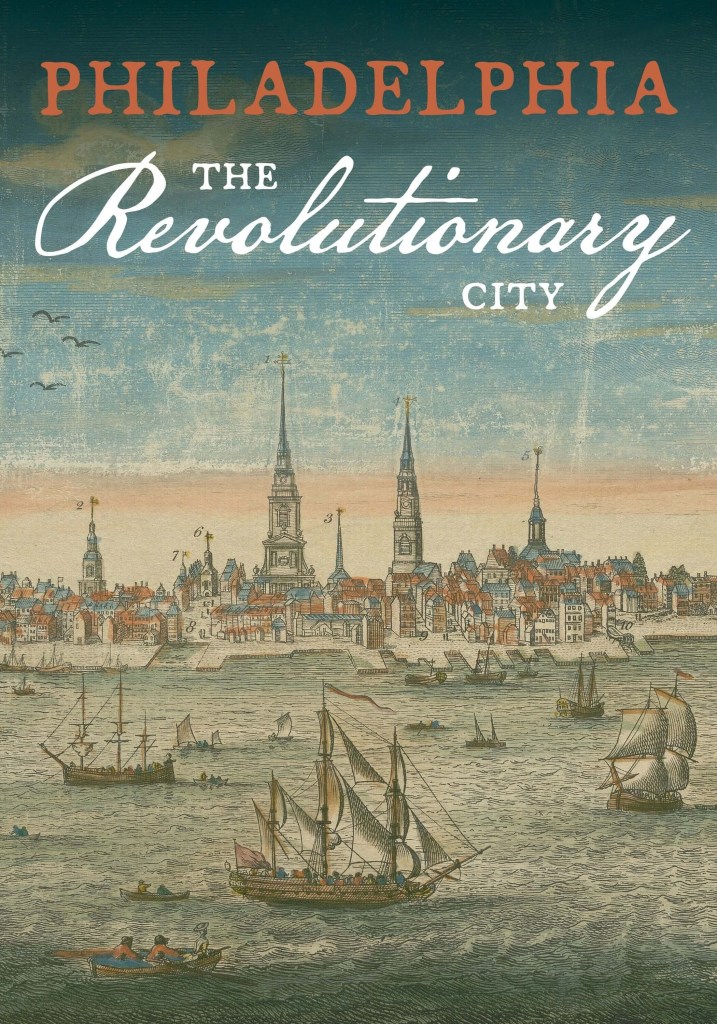 Philadelphia, The Revolutionary City illuminates the lived experiences of Philadelphians leading up to, during, and after the fight for independence. It showcases historic documents and material culture, ranging from diaries and newspapers to political cartoons and household objects. Beginning with the Stamp Act in 1765, the exhibition traces key events through the late 1780s and the impacts they had on communities living within and around the city. The exhibition features a range of voices and stories, offering windows into this turbulent period of change and presenting Revolution-era Philadelphia as a vibrant and growing city.
This exhibition is inspired by the innovative digital archive The Revolutionary City: A Portal to the Nation’s Founding, recently launched by the American Philosophical Society, the Historical Society of Pennsylvania, and the Library Company of Philadelphia, in partnership with the Kislak Center for Special Collections, Rare Books and Manuscripts and the Museum of the American Revolution. Philadelphia, The Revolutionary City brings together rare manuscript material and objects from the APS’s Library and Museum holdings, and the collections of these partners, as well as loans from regional institutions, and nearby historic houses and museums.
The related publication is distributed by the University of Pennsylvania Press:
Philadelphia, the Revolutionary City (Philadelphia: The American Philosophical Society Press, 2025), 110 pages, ISBN: 978-1606181225, $30. With contributions by Patrick Spero, Michelle Craig McDonald, John Van Horne, David R. Brigham, Caroline O’Connell, and Bayard Miller.
The book includes a fully-illustrated object checklist with information for each item as well as a curatorial statement about the project’s development. Additionally, it features three essays, one from each of the directors of the special collection libraries, focusing on key objects within each collection, plus an essay on the origins of the digital project and its ongoing work. Each essay offers a unique perspective on Philadelphia’s revolutionary history and a range of stories that can be found in these archives and on the digital portal.
New Book | Nobody Men
From Yale UP:
Travis Glasson, Nobody Men: Neutrality, Loyalties, and Family in the American Revolution (New Haven: Yale University Press, 2025), 368 pages, ISBN: 978-0300258899, $38.
 The story of colonists who were neither loyalists nor patriots during the American Revolution, told through the experiences of one transatlantic family
At least one‑third of the colonial population were neutrals during the American Revolution, yet they have rarely featured in narratives that shape our ideas about the conflict. By following a single transatlantic family, the Crugers, historian Travis Glasson puts neutrals—the ‘nobody men’—at the center of this tumultuous period’s history.
Like most neutrals, the Crugers prioritized peace above any specific constitutional arrangement and sought ways out of the military struggle. The Crugers were prominent among prewar defenders of colonial rights, and their experiences once the shooting started, in places including New York, the island of St. Croix, and London, reveal the complex dilemmas that confronted those in the middle during the violent upheaval. The Crugers’ dealings with each other—and with a cast of boldfaced names including Alexander Hamilton, John Jay, Edmund Burke, John Wilkes, Lord North, and George Washington—illuminate how some people looked to chart alternate courses through perilous waters. Based on extensive research in the United States and Britain, Nobody Men humanizes what it meant to live through revolutionary civil war and recovers little‑known but essential histories of how new nations formed as an older empire broke apart.
Travis Glasson is associate professor of history at Temple University. He is the author of Mastering Christianity: Missionary Anglicanism and Slavery in the Atlantic World.
c o n t e n t s
Introduction
Part One | ‘Cruger and Liberty!: 1760–1775
1 The Crugers’ World
2 Stamps and People
3 Transatlantic Patriots
4 The Center Fails
Part Two | ‘Some Middle Way Should be Found Out’, 1775–1783
5 Whigs Killing for the King
6 The Price of Neutrality
7 The Search for Peace
8 Friend of Washington?
Part Three | ‘My Heart Still Cleaves to New York’, 1783–1800
9 Subjects and Citizens
10 Oblivion and Conciliation
Conclusion
Notes
Acknowledgments
Index
The Burlington Magazine, June 2025
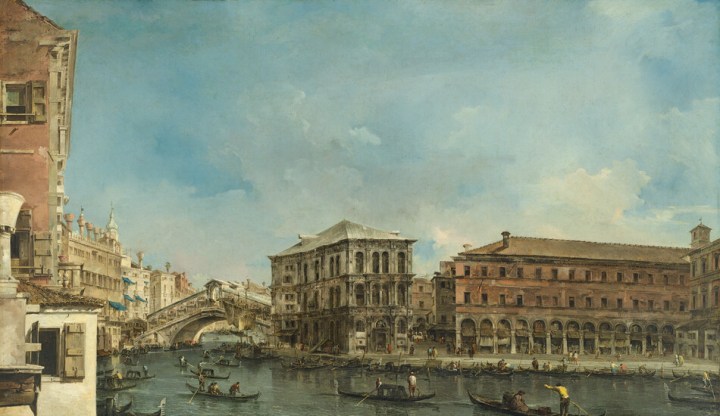
Francesco Guardi, Venice: The Rialto Bridge with the Palazzo dei Camerlenghi, ca.1764, oil on canvas, 120 × 204 cm
(Private collection)
◊ ◊ ◊ ◊ ◊
The long 18th century in the June issue of The Burlington:
The Burlington Magazine 167 (June 2025)
e d i t o r i a l
• “American Gothic,” p. 531.
There are many excoriating ways in which the current administration in Washington might be described; a number of them are perhaps too impolite to appear in a decorous journal such as this. The necessity of restraint does not, however, mean we should refrain from expressing a view on the provocative actions of the new United States government. They are not merely a matter of political theatre that feeds the news cycles, but also a corrosive force that is undermining many valued cultural institutions and having a direct and negative impact on the lives of tens of millions of people.
l e t t e r
• David Wilson, “More on Lorenzo Bartolini’s The Campbell Sisters Dancing a Waltz,” pp. 532–34.
Response to the article in the February issue by Lucy Wood and Timothy Stevens, “The Elder Sisters of The Campbell Sisters: William Gordon Cumming’s Patronage of Lorenzo Bartolini.”
a r t i c l e s
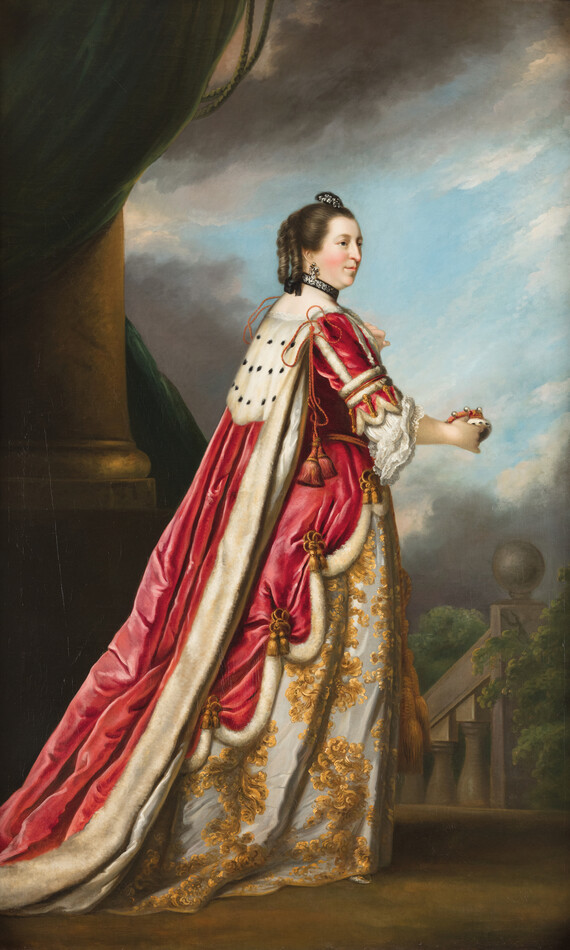
Joshua Reynolds, Elizabeth Percy, Countess (later Duchess) of Northumberland, 1757, oil on canvas, 240 × 148.6 cm. (Collection of the Duke of Northumberland, Syon House, London).
• Justus Lange and Martin Spies, “Two Royal Portraits by Reynolds Rediscovered in Kassel,” pp. 564–71.
Two paintings in the Gemäldegalerie Alte Meister, Kassel, are here identified as portraits by Joshua Reynolds of Princess Amelia, second daughter of George II, and her brother William Augustus, Duke of Cumberland. Both were gifts from the sitters to their sister Mary, Landgravine of Hesse-Kassel, a provenance that sheds new light on the cultural links between England and the landgraviate in the mid-eighteenth century.
• Giovanna Perini Folesani, “An Unpublished Letter by Sir Joshua Reynolds,” pp. 575–78.
in the historical archive of the Accademia di Belle Arti, Florence, there is an autograph letter by Sir Joshua Reynolds dated 20th May 1785 that was sent from London. . . . The text is in impeccable Italian, suggesting that Reynolds copied a translation made by a native speaker. . . .
• Francis Russell, “Guardi and the English Tourist: A Postscript,” pp. 578–83.
Some three decades ago this writer sought to demonstrate in this Magazine that the early evolution of Francesco Guardi (1712–93) as a vedutista could be followed in a number of pictures supplied to English patrons who were in Venice from the late 1750s. Other pieces of the jigsaw now fall into place. . . .
r e v i e w s
• Christoph Martin Vogtherr, Review of Schönbrunn: Die Kaiserliche Sommerresidenz, edited by Elfriede Iby and Anna Mader-Kratky (Kral Verlag, 2023), pp. 614–16.
• Steven Brindle, Review of Christopher Tadgell, Architecture in the Indian Subcontinent: From the Mauryas to the Mughals (Routledge, 2024), pp. 620–21.
• Stephen Lloyd, Review of ‘What Would You Like?’ Collecting Art for the Nation: An Account by a Director of Collections, edited by Magnus Olausson and Eva-Lena Karlsson (Nationalmuseum Stockholm, 2024), pp. 627–28.
New Book | Old Age in Art
From Reaktion Books, with distribution by The University of Chicago Press:
Larry Silver, Old Age in Art (London: Reaktion, 2025), 208 pages, ISBN: 978-1836390527, £20 / $30.
 Old Age in Art shows how elders have been depicted from ancient Greece and Rome to the present century. The book explores portraits, including self-portraits, and stories of older figures in religion, myth, and history, focusing on the theme of wisdom versus folly. Larry Silver also discusses the concept of old age within the Middle Ages and early modern periods. The final chapter examines how renowned artists like Michelangelo, Titian, and Monet turned to experimental forms and new subjects in their later years. This book provides a comprehensive overview of old age in European art history.
Larry Silver is the Farquhar Professor Emeritus of History of Art at the University of Pennsylvania and a specialist in Dutch and Flemish paintings. He has published numerous monographs and exhibition catalogues, including Rembrandt’s Holland (Reaktion, 2018).
c o n t e n t s
Preface: Ars longa, vita brevis
1 Old Age Is Relative: Age and Stage as Concepts from Antiquity to the Renaissance
2 Wisdom and Folly
3 Old Age Stories
4 Portraits – Self and Others
5 Old-Age Style
References
Bibliography
Acknowledgements
Photo Acknowledgements
Index
Print Quarterly, June 2025
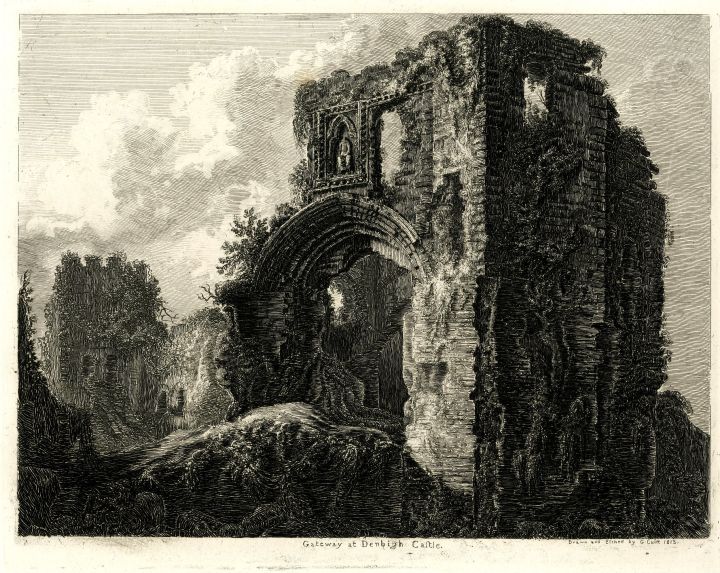
George Cuitt, Gateway at Denbigh Castle, 1813, etching, 252 × 315 mm
(London, British Museum), reproduced on p. 200.
◊ ◊ ◊ ◊ ◊
The long eighteenth century in the latest issue of Print Quarterly:
Print Quarterly 42.2 (June 2025)
a r t i c l e s
• Jane Eade, “A Mezzotint by Jacob Christoff Le Blon (1667–1741) at Oxburgh Hall,” pp. 143–53. This article examines a newly discovered impression of Jacob Christoff Le Blon’s colour mezzotint after Sir Anthony van Dyck’s (1599–1641) portrait of The Three Eldest Children of Charles I at Windsor Castle. The author discusses Le Blon’s invention of his revolutionary printing technique, the print’s distribution history, the operations of Le Blon’s workshop known as the ‘Picture Office’, as well as the circumstances surrounding the Oxburgh Hall impression, including its recent conservation treatment.
• Stephen Bann, “Abraham Raimbach and the Reception of Prints after Sir David Wilkie in France,” pp. 154–67. This article establishes the premise that Sir David Wilkie (1785–1841) introduced a new style of narrative painting in England that would prove influential for painting throughout Europe. It was previously thought that Paul Delaroche (1797–1856) popularized this new narrative style a couple of decades later in France. Since the French public had no local access to Wilkie’s paintings, it is here shown that it was the reproductive engravings of Abraham Raimbach that brought Wilkie to their attention. In doing so, this idea challenges the centrality of Delaroche’s sole influence on European painting.
• Paul Joannides, “John Linnell, Leonardo Cungi and the Vault of the Sistine Chapel,” pp. 168–84. This article discusses John Linnell’s (1792–1882) mezzotints after the Sistine Chapel ceiling and the recently discovered drawings on which the prints were based. The drawings, once a single sheet, are here attributed to Leonardo Cungi (1500/25–69); in its entirety, it is the earliest known copy to show the complete ceiling in full detail.
n o t e s a n d r e v i e w s
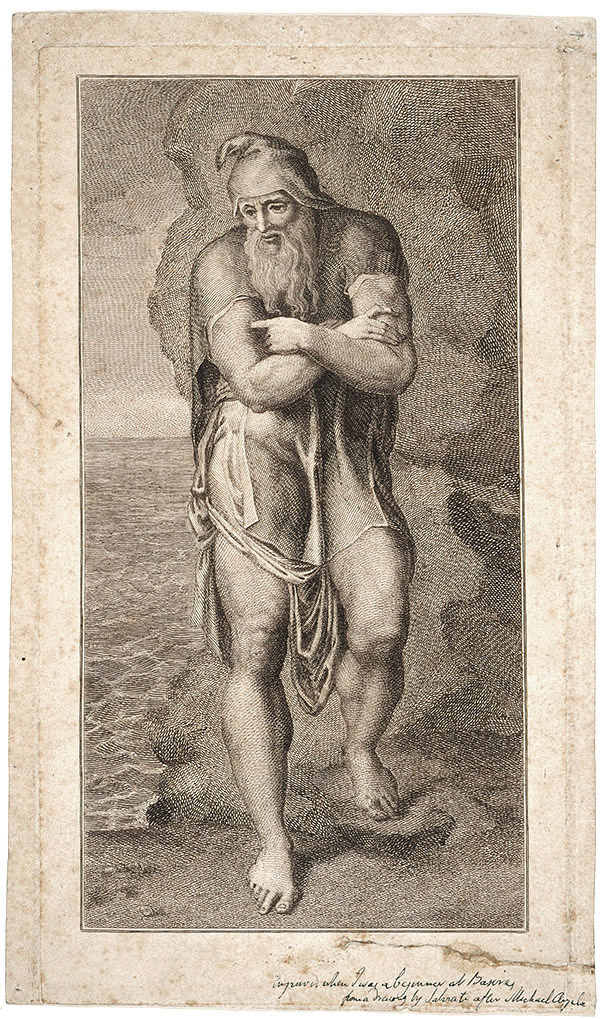
William Blake, Joseph of Arimathea among the Rocks of Albion, ca. 1773, engraving, 254 × 138 mm (Cambridge, Fitzwilliam Museum), reproduced on p. 192.
• Ulrike Eydinger, Review of Jürgen Müller, Lea Hagedorn, Giuseppe Peterlini and Frank Schmidt, eds., Gegenbilder. Bildparodistische Verfahren in der Frühen Neuzeit (Deutscher Kunstverlag, 2021), pp. 185–87.
• Nigel Ip, Review of Owen Davies, Art of the Grimoire (Yale University Press, 2023), pp. 187–89.
• Antony Griffiths, Review of Mario Bevilacqua, ed., Edizione Nazionale dei Testi delle Opere di Giovanni Battista Piranesi. I. Opere giovanili, ‘Vedute di Roma’, ‘Pianta di Roma e Campo marzo’ (De Luca Editori d’Arte, 2023), pp. 191–92.
• Mark Crosby, John Barrett and Adam Lowe, Note on William Blake as an apprentice engraver, pp. 192–93.
• Ersy Contogouris, Review of Pascal Dupuy, ed. De la création à la confrontation. Diffusion et politique des images (1750–1848) (Presses Universitaires de Rouen et du Havre, 2023), pp. 194–95.
• Cynthia Roman, Review of David Atkinson and Steve Roud, Cheap Print and Street Literature of the Long Eighteenth Century (Open Book Publishers, 2023), pp. 197–98.
• Sarah Grant, Review of Peter Boughton and Ian Dunn, George Cuitt (1779–1854), ‘England’s Piranesi’: His Life and Work and a Catalogue Raisonné of His Etchings (University of Chester Press, 2022), pp. 199–201.
• Timon Screech, Review of Akiko Yano, ed., Salon Culture in Japan: Making Art, 1750–1900 (British Museum Press, 2024), pp. 201–03.
• Bethan Stevens, Review of Evanghelia Stead, Goethe’s Faust I Outlined: Moritz Retzsch’s Prints in Circulation (Brill, 2023), pp. 240–43.
New Book | Holkham
From Hirmer, with distribution by The University of Chicago Press:
Elizabeth Angelicoussis and Leo Schmidt, eds., with photographs by Pete Huggins, Holkham: An English Treasure House and Its Landscape (Munich: Hirmer Publishers, 2025), 368 pages, ISBN: 978-3777444444, $65. With contributions by Peter Burman, Polly Feversham, Anne Glenconner, Katherine Hardwick-Kulpa, John Hardy, Uta Hassler, Christine Hiskey, Markus Joachim, Christian Keller, Axel Klausmeier, Werner Koch, Silke Langenberg, Tom Leicester, Laura Nuvoloni, Bernhard Ritter, Christoph Martin Vogtherr, and Tom Williamson.
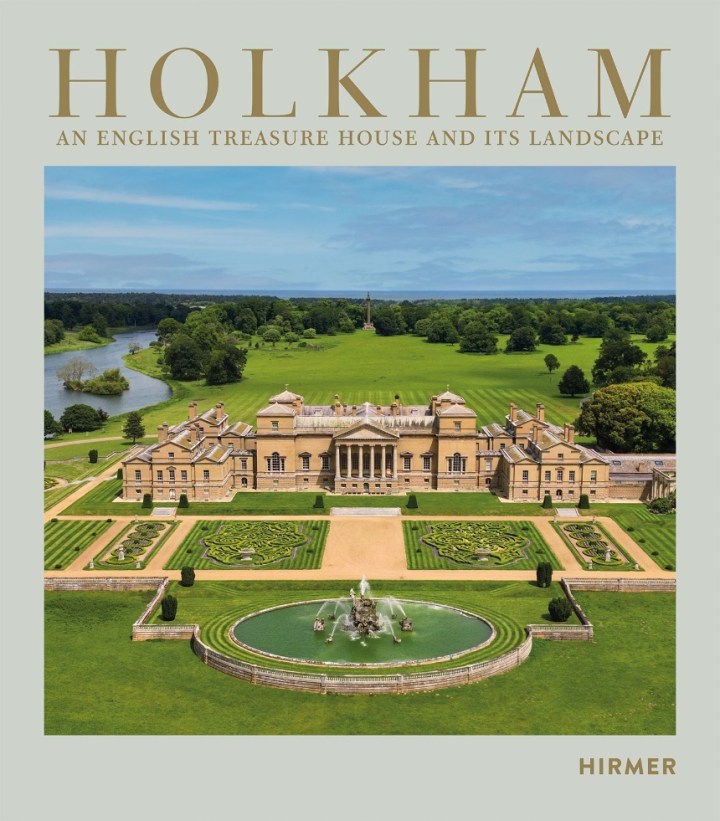 Created over four decades, from the 1720s to the 1760s, by the highly erudite, visionary, and ambitious Earl of Leicester, Holkham Hall is a masterpiece of Palladian architecture. Richly illustrated and with far-reaching essays, this volume invites us to a splendid tour through an incredibly well-preserved house, with all its splendidly furnished interiors and amazing collection of artworks still in place. Lord Leicester designed Holkham as the ideal home and setting for the ancient sculptures, distinguished paintings, and other treasures he had acquired on his Grand Tour. The unique Marble Hall and the Gallery revive and celebrate the virtues of ancient Rome, while the saloons and staterooms vibrate with a baroque sense of grandeur and splendor. With the original family still in custodianship, Holkham is a unique survivor of the golden age of English country house culture.
Elizabeth Angelicoussis is a classical archaeologist and expert on eighteenth-century sculpture collections.
Leo Schmidt is an architectural historian and emeritus professor of heritage conservation at Brandenburg University of Technology in Cottbus.
c o n t e n t s
Foreword
Introduction
1 Thomas Coke, Earl of Leiceser — The Builder of Holkham
2 The Holkham Landscape
3 The Architecture
4 The Rooms and the Collections
5 Living at Holkham
6 Holkham — Past, Present, and Future
Picture Credits
Acknowledgments
Authors and Contributors
Selected Bibliography
Index
Exhibition | Duplessis (1725–1802): The Art of Painting Life

From the press release for the exhibition:
Duplessis (1725–1802): The Art of Painting Life / L’art de peindre la vie
Inguimbertine, Hôtel-Dieu, Carpentras, 14 June — 28 September 2025
Curated by Xavier Salmon
From June 14 to September 28, 2025, the Inguimbertine at the Hôtel-Dieu of Carpentras hosts an exhibition dedicated to Joseph Siffred Duplessis (1725–1802), one of the most remarkable portraitists of the 18th century, in celebration of the 300th anniversary of his birth. The Hôtel-Dieu of Carpentras, magnificently restored, provides the perfect setting. Inaugurated in April 2024, this heritage site is now home to the Bibliothèque-Musée Inguimbertine. With nearly 43,000 visitors since its opening, it has established itself as a major cultural venue in the Provence-Alpes-Côte d’Azur region, immersing visitors in the history of Carpentras and the Comtat Venaissin, as well as in the world of an 18th-century library-museum and a grand fine arts gallery.

Joseph Siffred Duplessis, Portrait of Benjamin Franklin, oil on canvas, 72 × 58 cm (New York: The Metropolitan Museum of Art, The Friedsam Collection, 32.100.100).
In 2025, the Inguimbertine has the honor of celebrating a native of Carpentras, Joseph Siffred Duplessis, born 300 years ago and recognized as a master of portrait painting at the court of King Louis XVI. His works, now housed in the world’s greatest museums, attest to Duplessis’s artistic genius. The exhibition brings together around sixty paintings from the 200 he created, sourced from prestigious collections such as the Metropolitan Museum of Art in New York, the Nelson-Atkins Museum of Art in Kansas City, the National Gallery of Canada in Ottawa, the Palace of Versailles, and the Louvre Museum. The exhibition also provides the Inguimbertine with an opportunity to highlight the richness of its own collection, which includes the largest public holding of the artist’s works—22 paintings and drawings, among them the only two religious paintings he ever produced. These masterpieces allow visitors to discover or rediscover Duplessis’s remarkable skill, particularly in his role as the official portraitist of Louis XVI. This first retrospective of the master portraitist is accompanied by a catalog of his works, listing nearly two hundred paintings, published by Lienart Editions.
Duplessis had an extraordinary ability to capture the essence of his subjects with mastery and sensitivity that transcend time. Visitors will be particularly impressed by his virtuosity in rendering the complexions of faces and the textures of fabrics. Acknowledged by his contemporaries as “the greatest portrait painter in the kingdom,” his talent for portraying character and presence is being showcased through a carefully curated selection of works. For a portraitist, painting and exhibiting well-known figures was essential to gaining public recognition. In this pursuit, Duplessis worked within three spheres: men of letters, scholars, and artists. Among his most famous works are the full-length portrait of Louis XVI and two portraits that have left a lasting mark on art history: that of Austrian composer Gluck and that of the American statesman Benjamin Franklin, whose long stay in France embodied the ideals of the Enlightenment and the birth of a new world.
Curated by Xavier Salmon, curator at the Louvre Museum and a specialist in 18th-century portraiture, this exhibition promises to be a major cultural event of 2025. It offers a unique opportunity to understand why Duplessis was considered one of the greatest portraitists of his time. Visitors are able to explore his official commissions for the royal court and the ministers of Louis XVI, his clientele in both Provence and Paris, as well as his rare religious paintings, all within the stunning setting of the Hôtel-Dieu of Carpentras.
Xavier Salmon, Joseph Siffred Duplessis (1725–1802): Le Van Dyck de la France (Paris: Lienart éditions, 2025), 224 pages, ISBN: 978-2359064650, €35.
New Book | Giovanni Battista Piranesi: Etchings from the BSR
From De Luca Editori d’Arte:
Clare Hornsby and Caroline Barron, Giovanni Battista Piranesi: Etchings from the Research Collections of the British School at Rome (Rome: De Luca Editori d’Arte, 2025), 272 pages, ISBN: 978-8865576403, €60.
 This book presents some of the most significant objects in the Research Collections of the British School at Rome (BSR), gathered by the School’s first student and third Director, the archaeologist Thomas Ashby (1874–1931). Ashby bought a large number of early books and prints that now make up the basis of the Special Collections, including a substantial number—around 150—loose etched prints and several complete printed books made by the multi-talented artist, architect, and printmaker Giovanni Battista Piranesi (Venice 1720–Rome 1778).
The etchings come from all stages of Piranesi’s career and reflect many aspects of his vast output. They have been the subject of exhibitions organised by the British School, in Rome and elsewhere, and they feature in online catalogues, but this book is the first produced by BSR to offer an analysis of a selection of the loose prints, 104 in total. The focus of the catalogue is the archaeological and topographical subject matter of the prints, as well as an examination of the text that accompanies them in the form of detailed labels and captions. Piranesi’s print output has become widely known in the last century or so and his name has come to be associated with drama, exaggeration, fantasy and even mystery. This book takes a close look at the prints and reveals a partial corrective to that view: Piranesi the antiquarian and archaeologist emerges as protagonist here, highlighting just one of the rich variety of responses to the ancient past that formed the cultural environment of Grand Tour Rome.
Clare Hornsby is an art and architectural historian and a Research Fellow at BSR. She has published on the Grand Tour, the antiquities market between Rome and London, and on eighteenth-century architecture. She is a Fellow of the Society of Antiquaries of London, a member of the Centro di Studi sulla Cultura e l’Immagine di Roma, and of the Scientific Committee of the Edizione Nazionale delle Opere di Giovanni Battista Piranesi.
Caroline Barron is an ancient historian who works on the cultural and historical significance of Latin epigraphy, from antiquity to the present day. A monograph on the collecting of Latin inscriptions in the eighteenth-century is forthcoming, and her current research project is on the history of epigraphic forgery. She is Assistant Professor in Classics (Roman History) in the Department of Classics and Ancient History at Durham University, a Fellow of the Society of Antiquaries of London, and a Research Fellow at BSR.










 Enfilade
leave a comment