New Book | London: A History of 300 Years in 25 Buildings
Published last year by Yale UP, with a paperback edition due in September:
Paul Knox, London: A History of 300 Years in 25 Buildings (New Haven: Yale University Press, 2024), 448 pages, ISBN: 978-0300269208, $35.

A lively new history of London told through twenty-five buildings, from iconic Georgian townhouses to the Shard
A walk along any London street takes you past a wealth of seemingly ordinary buildings: an Edwardian church, modernist postwar council housing, stuccoed Italianate terraces, a Bauhaus-inspired library. But these buildings are not just functional. They are evidence of London’s rich and diverse history and have shaped people’s experiences, identities, and relationships. Paul L. Knox traces the history of London from the Georgian era to the present day through twenty-five surviving buildings. He explores where people lived and worked, from grand Regency squares to Victorian workshops, and highlights the impact of migration, gentrification, and inequality. We see famous buildings, like Harrods and Abbey Road Studios, and everyday places like Rochelle Street School and Thamesmead. Each historical period has introduced new buildings, and old ones have been repurposed. As Knox shows, it is the living history of these buildings that makes up the vibrant, but exceptionally unequal, city of today.
Paul Knox is an expert in the social and architectural history of London. Originally from the UK, he is now University Distinguished Professor at Virginia Tech. He is the author of Metroburbia: The Anatomy of Greater London; London: Architecture, Building, and Social Change; and Cities and Design.
New Book | The London Club: Architecture, Interiors, Art
Coming September from ACC Art Books:
Andrew Jones, with photographs by Laura Hodgson, The London Club: Architecture, Interiors, Art (New York: ACC Art Books, 2025), 288 pages, ISBN: 978-1788843294, $75.
 A stunning exploration of London’s most beautiful, interesting, and unusual members’ club architecture and interiors
London has more private members’ clubs than any other city, with new locations opening every year. The UK capital has exclusive clubs for everyone from plutocrats and bishops to jockeys and spies. Written by Andrew Jones, travel writer for the Financial Times and author of The Buildings of Green Park, this large-format picture book is richly illustrated with newly commissioned photographs by Laura Hodgson, covering 300 years of the capital’s architecture and interior design. The London Club: Architecture, Interiors, Art offers a fascinating take on the structures and decorations inside some of the most niche spots in London, giving readers a one-off glimpse into the hidden corners of the city’s social infrastructure.
Andrew Jones has lived in the heart of London clubland, on the border of Mayfair and St James’s, for almost 20 years. He is the author of The Buildings of Green Park, a tour of certain buildings, monuments and other structures in Mayfair and St. James’s, and a contributor to Seeing Things: The Small Wonders of the World according to Writers, Artists, and Others. He writes about cities for the Financial Times, and has also written on architecture for Blueprint, Drawing Matter, and The London Gardener, as well as pieces on London for The World of Interiors and the Londonist.
New Book | Castle Howard
Coming this fall, from Rizzoli:
Christopher Ridgway, with photographs by Mattia Aquila and Nicholas Howard, Castle Howard: A Grand Tour of England’s Finest Country (Paris: Flammarion, 2025), 364 pages, ISBN: 978-2080445865, £100 / $130.
 An exclusive tour of a famous English historic house—featured in period dramas including Bridgerton and Brideshead Revisited—set on acres of beautiful parkland and gardens.
The iconic architectural marvel Castle Howard is the epitome of English baroque magnificence. Nestled in the rolling hills of North Yorkshire, this grand estate was commissioned by Charles Howard, 3rd Earl of Carlisle, and masterfully crafted by Sir John Vanbrugh and Nicholas Hawksmoor in the early eighteenth century. The residence’s facades reveal Vanbrugh’s signature flair for the dramatic, while inside, extravagant frescoes, intricately carved stonework, and antique furnishings tell the captivating story of centuries of aristocratic elegance. Recent renovations, undertaken by American designer Remy Renzullo, have rejuvenated the castle’s bedrooms, merging history with contemporary opulence.
The domain’s sprawling parkland features meticulously landscaped gardens, a tranquil lake, a monumental neoclassical mausoleum and pyramids, and the breathtaking Atlas fountain. This comprehensive monograph explores the history of Castle Howard, its architecture, its gardens, and the generations of the Howard family who have lived there for more than three hundred years. Featuring previously unpublished archival documents, as well as photographs of the sumptuous interiors and art collections, this book is a celebration of a British national treasure, whose timeless beauty has captured the imagination of filmmakers for decades.
Christopher Ridgway, curator at Castle Howard since 1984, has lectured extensively on the history of country houses. He coauthored The Irish Country House: A New Vision (yeartk). Mattia Aquila is an interior design and architecture photographer. His photographs have appeared in Venice: A Private Invitation (2022) and Pierre Frey: A Family Legacy of Passion and Creativity (2023). Nicholas Howard manages Castle Howard with his wife, Victoria.
New Book | Mrs Kauffman and Madame Le Brun
From Bloomsbury Publishing:
Franny Moyle, Mrs Kauffman and Madame Le Brun: The Extraordinary Entwined Lives of Two Eighteenth-Century Painters (London: Apollo, 2025), 496 pages, ISBN: 978-1801107440, $45.
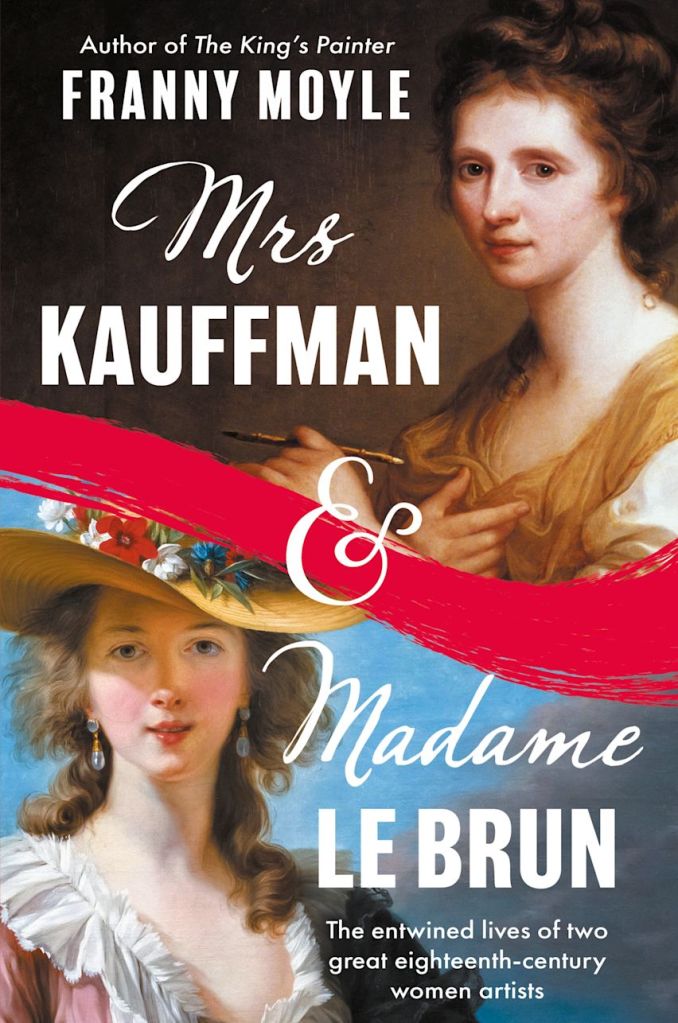 In the late autumn of 1789, two of Europe’s most celebrated painters met in Rome. One, Angelica Kauffman, was a Swiss-born prodigy who had conquered the art scenes of London and Italy. The other, Élisabeth Louise Vigée Le Brun, a Parisienne portraitist and favourite of the ancien regime, had just fled revolutionary France under threat of violence and scandal. Both were feted in their time, both were trailblazers in a male-dominated world—visionaries who helped define eighteenth-century art and feminism before the term existed.
This dual biography, framed within a thrilling story, restores these two extraordinary but unjustly overlooked figures to their rightful place in history. Set against a backdrop of revolution, empire and Enlightenment, it traces the dramatic lives and remarkable careers of Vigée Le Brun and Kauffman: artists who not only achieved unparalleled success and influence, but did so while pushing the boundaries of what women could be, both on canvas and in society. With vivid storytelling, one of the most gifted living writers of artistic biography, Franny Moyle, reclaims their legacies. She examines how each artist navigated fame, scandal and exile; explores the relationships between them and their peers; and considers how they were caught up in the huge cultural cross-currents that were reshaping Europe.
Through their work and their lives, they spoke boldly to the roles of women in public life, highlighted the prejudices and abuses suffered by their sex, reimagined and celebrated the female subject, and challenged the institutions that sought to contain them. Through them we encounter icons such as Marie Antoinette (whose portrait by Le Brun scandalised French society) and Catherine the Great, as well as cultural figures such as Emma Hamilton and Madame de Staël. The most notable men of their time—monarchs, statesman, aristocrats, artists, and more—are also woven into the fabric of the tale. Mrs Kauffman and Madame Le Brun is a timely, revelatory history that not only brings two forgotten artists into view, but rethinks the story of European art itself.
Franny Moyle is a British television producer and author. Her first book Desperate Romantics was adapted into the BBC drama serial of the same title by screenwriter Peter Bowker. Her second book Constance: The Tragic and Scandalous Life of Mrs Oscar Wilde was published in 2011 to critical acclaim. In 2016 she released The Extraordinary Life and Times of J.M.W Turner.
New Book | Daring: The Life and Art of Elisabeth Vigée Le Brun
The life of Vigée Le Brun, as targeted to teenagers; from The Getty (for the context of the cover design, see Elisabeth Egan, “The Book Cover Trend You’re Seeing Everywhere,” The New York Times 21 June 2025) . . .
Jordana Pomeroy, Daring: The Life and Art of Elisabeth Vigée Le Brun (Los Anges: Getty Publications, 2025), 112 pages, ISBN: 978-1947440104, $22.
 The dramatic life story of Elisabeth Vigée Le Brun, one of the greatest portrait painters of all time.
Supremely talented and strategically charming, Elisabeth Vigée Le Brun (1755–1842) overcame tragedy and broke gender barriers to reach the height of success as a portrait painter, first in Paris, and then across Europe. After losing her father at age twelve and facing financial insecurity, she fought to gain access to artistic training and opportunity. She was pressured to marry at age twenty, to an art dealer who both helped and harmed her career. Vigée Le Brun deployed her intelligence and beauty to attract powerful clients, who relied on her to style the personal identities they projected to the world. Vigée Le Brun’s salons were the talk of Paris, and she became court painter to Marie Antoinette. Then came the French Revolution, when marginalized groups demanded change to centuries-old systems of oppression. Vigée Le Brun was forced to reexamine her alliances and run for her life, taking her young daughter but leaving her husband behind. Making her way through the countrysides and capitals of Europe and Russia—including a stay at the imperial court of Catherine the Great—the artist conquered fear and adversity to refashion her life and art. Ages thirteen and up.
Jordana Pomeroy is director and CEO of the Currier Museum of Art and former chief curator at the National Museum of Women in the Arts.
Exhibition | Marie Antoinette Style
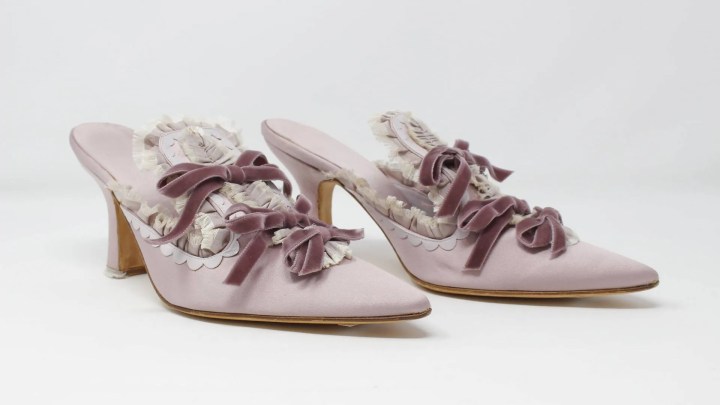
Manolo Blahnik, Antonietta, 2005.
◊ ◊ ◊ ◊ ◊
Curator Sarah Grant provides a preview of the exhibition with a focus on scent in a recorded talk from the study day The Museum and the Senses, held at the Barber Institute of Fine Arts (February 2025). From the press release for the exhibition:
Marie Antoinette Style
Victoria & Albert Museum, London, 20 September 2025 – 22 March 2026
Curated by Sarah Grant
Opening in September 2025 at V&A South Kensington, Marie Antoinette Style will be the UK’s first exhibition on the French queen Marie Antoinette (1755–1793). It will explore the origins and countless revivals of the style shaped by the most fashionable queen in history. Marie Antoinette not only contributed to the fashions, interiors, gardens, and fine and decorative arts of her own time, but continued to influence more than two and a half centuries of graphic and decorative arts, fashion, photography, film, and performance. This excessive, lavish, and feminine style will come to life through some 250 objects, including exceptional loans from the Château de Versailles never before seen outside France. Historical and contemporary fashion, alongside audio visual installations and immersive curation, will explore how and why Marie Antoinette, the person, has provided a constant source of inspiration. The exhibition will consider afresh the legacy of this complex figure whose style, youth, and notoriety have contributed to her timeless appeal. The exhibition will also trace the cultural impact of the Marie Antoinette style and her ongoing inspiration for leading designers and creatives, from Sofia Coppola and Manolo Blahnik to Moschino and Vivienne Westwood.

François-Hubert Drouais, Portrait of Marie Antoinette, Queen of France, in a Court Dress, 1773, oil on canvas (London: V&A, Jones Collection, 529-1882).
On display will be exceptionally rare personal items owned and worn by Marie Antoinette including richly embellished fragments of court dress, the Queen’s own silk slippers, and jewels from her private collection. Other highlights include personal effects such as the queen’s dinner service from the Petit Trianon, a selection of her accessories, and intimate items from her toilette case. A scent experience will re-create scents of the court and the perfume favoured by the Queen herself. The exhibition will also feature contemporary clothing including couture pieces by designers such as Moschino, Dior, Chanel, Erdem, Vivienne Westwood, and Valentino, along with costumes made for Sofia Coppola’s Oscar winning Marie Antoinette (staring Kirsten Dunst), as well as shoes designed for the film by Manolo Blahnik.
Sarah Grant, curator of Marie Antoinette Style, said: “The most fashionable, scrutinised, and controversial queen in history, Marie Antoinette’s name summons both visions of excess and objects and interiors of great beauty. The Austrian archduchess turned Queen of France had an enormous impact on European taste and fashion in her own time, creating a distinctive style that now has universal appeal and application. This exhibition explores that style and the figure at its centre, using a range of exquisite objects belonging to Marie Antoinette, alongside the most beautiful fine and decorative objects that her legacy has inspired. This is the design legacy of an early modern celebrity and the story of a woman whose power to fascinate has never ebbed. Marie Antoinette’s story has been re-told and re-purposed by each successive generation to suit its own ends. The rare combination of glamour, spectacle, and tragedy she presents remains as intoxicating today as it was in the eighteenth century.”
Presented chronologically, the first section, Marie Antoinette: The Origins of a Style, begins in 1770 and ends at Marie Antoinette’s execution in 1793. It sets the scene by presenting her life and the story of the beginnings of the style she shaped. On display will be key pieces of furniture, fashion, jewellery, porcelain, and musical instruments from her court, revealing her roles and interests as queen consort. It will consider the way in which she embraced some aspects of enlightenment thought, through her approach to maternity and childhood and support of new technologies. It will also address the ‘let them eat cake’ mythology and mythmaking that surround the queen to this day, drawing on recent research on early modern women, queenship, and celebrity. Highlights in this section include a replica of the Boehmer and Bassenge diamond necklace, from the diamond necklace affair of 1784–85, commissioned for Madame du Barry in 1772. The original necklace was famously stolen, broken up, and sold in Bond Street; the replica will sit alongside the Sutherland diamond necklace from the V&A collection, thought to be made from the original diamonds.
The first section will also display exceptionally rare loans that have never before left France, including personal effects such as the queen’s dinner service from the Petit Trianon, her accessories, and items from her toilette case. Other personal items include the queen’s armchair from the V&A’s collection with Marie Antoinette’s monogram and a jatte téton / bol sein or ‘breast cup’—one of four from the queen’s Sèvres Rambouillet dairy service delivered in 1787—which has led to the persistent though erroneous belief that it was modelled on the queen’s own breast, inspiring modern-day examples. Finally, this section includes the last note Marie Antoinette wrote before she died, on a blank page in her prayer book.
 The second section, Marie Antoinette Memorialised: The Birth of a Style Cult, explores the revival of Marie Antoinette’s style in the mid-1800s, at the impetus of Empress Eugénie. A romanticised and sentimental view of the queen took hold, and a phenomenal wave of interest continued throughout the century, peaking again in the 1880s and 1890s. Elements of Marie-Antoinette’s style became the ‘French’ or ‘French Revival’ style—the dominant style in Britain and North America for over fifty years. English collectors sought to acquire objects, furniture, and mementoes associated with the queen, and important collections of eighteenth-century French art were formed. Highlight objects include fancy dress costumes by Worth and other couturiers and photographs by Eugène Atget and Francis Frith.
Marie Antoinette: Enchantment and Illusion, the exhibition’s third section, looks to the late 19th century when the Marie Antoinette style entered a new phase of fantasy, magic, and fairy tales. The queen’s image came to embody escapism and beauty, as well as decadence and debauchery. Objects and artworks will illustrate this shifting narrative through the Art Nouveau and Art Deco periods, including the evening dress designs of couturiers such as Jeanne Lanvin and the Boué Soeurs, alongside luminous watercolour illustrations by Golden Age illustrators Erté, George Barbier, and Edmund Dulac.
The final section, Marie Antoinette Re-Styled, considers the modern and contemporary legacy of the Marie Antoinette style from the 20th century to the present day, in fashion, performance, and pop culture. Couture pieces by designers such as Moschino, Dior, Chanel, Erdem, Vivienne Westwood, and Valentino alongside photographs by Tim Walker and Robert Polidori will highlight Marie Antoinette’s continued influence on fashion globally. Costumes, accessories, film, and stills will bring to life the queen’s enduring legacy in film, stage, and even music videos. Artist Beth Katleman and designer Victor Glemaud will also showcase contemporary works inspired by elements of Marie Antoinette’s timeless style and period.
Support for the V&A is more vital than ever. Marie Antoinette Style is sponsored by Manolo Blahnik, with support from Kathryn Uhde.
Sarah Grant, ed., with forewords by Antonia Fraser, Manolo Blahnik, and Sofia Coppola, Marie Antoinette Style (London, V&A Publishing, 2025), 304 pages, ISBN: 978-1838510541, £40 / $70.
Exhibition | 1793–1794: Un Tourbillon Révolutionnaire
A second iteration of the exhibition on view previously at the Musée Carnavalet:
1793–1794: Un Tourbillon Révolutionnaire
Musée de la Révolution française, Vizille, 27 June — 23 November 2025
 Entre 1793 et 1794, « l’An II de la République » marque les débuts mouvementés de la toute première république française. Des idéaux de la Révolution aux grands procès politiques, de la liesse aux insurrections populaires, les premiers mois du nouveau régime emportent tout sur leur passage, jusqu’au quotidien des Français. Un véritable tourbillon révolutionnaire, nourri d’espoirs et de peurs.
Cette exposition revient sur des mois décisifs pour l’histoire de France : l’arrestation des Girondins, l’assassinat de Marat, l’exécution de Marie-Antoinette jusqu’à la chute de Robespierre. Voici donc « la Terreur », décryptée à la lumière des recherches historiques les plus récentes.
L’exposition 1793–1974: Un tourbillon révolutionnaire est une adaptation de l’exposition Paris 1793–1794: Une année révolutionnaire conçue par le musée Carnavalet – Histoire de Paris.
Exhibition | Traits of Genius
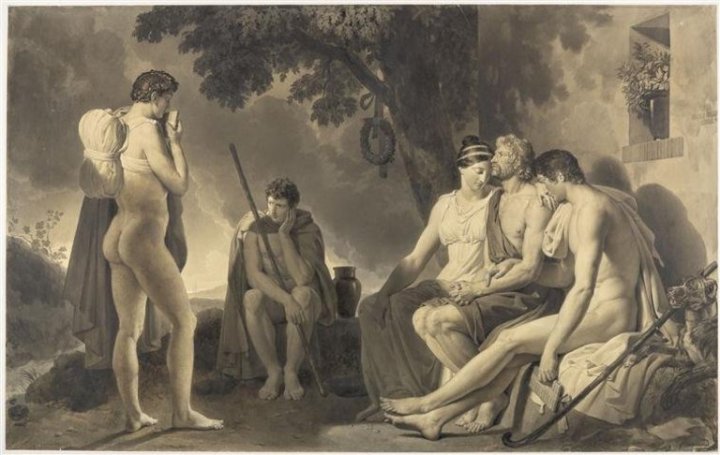
Alexandre-Évariste Fragonard, Pastorale / Homère et les Bergers, 1810; graphite, brown wash, black ink, and white highlights on beige paper; 55 × 88 cm (Louvre, INV 26657).
◊ ◊ ◊ ◊ ◊
The exhibition presents some sixty drawings by Jean-Honoré Fragonard, his wife Marguerite Gérard, and their son Alexandre-Évariste from the collections of the Louvre:
Les Traits du Génie: Dessins du Louvre par Jean-Honoré Fragonard,
Alexandre-Évariste Fragonard, et Marguerite Gérard
Musée International de la Parfumerie, Grasse, 27 June — 26 October 2025
Cet été, le Musée International de la Parfumerie vous invité à découvrir l’œuvre de Jean-Honoré Fragonard, l’un des plus grands peintres du XVIIIe siècle, à travers une exposition exceptionnelle. Né à Grasse en 1732, Fragonard a marqué son époque par son talent unique, tout en restant profondément attaché à sa ville natale. Bien que Paris ait été son principal lieu de vie, son mariage avec Marie-Anne Gérard, issue d’une famille de parfumeurs grassois, ainsi que ses séjours réguliers à Grasse, témoignent de l’attachement de l’artiste à sa ville d’origine.
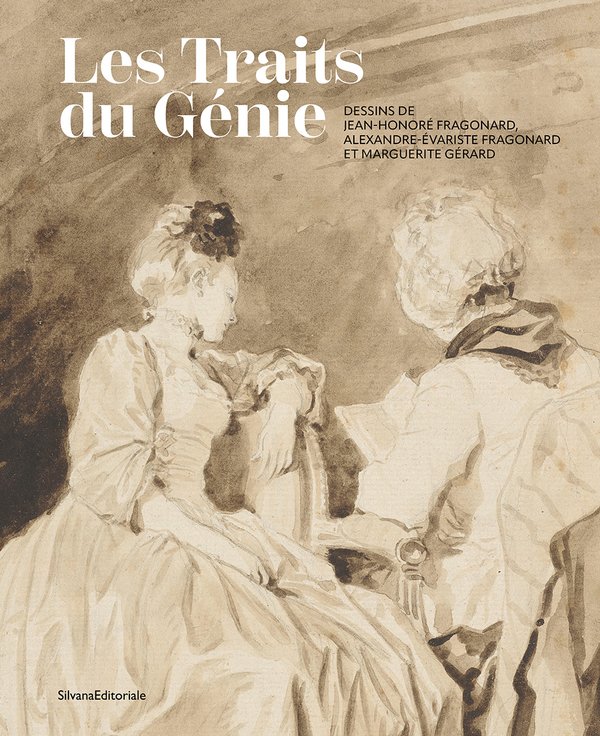 L’exposition propose une sélection de plus de soixante dessins de Fragonard, jamais exposés à Grasse et rarement montrés ailleurs. Ces œuvres, provenant des collections du département des Arts Graphiques du musée du Louvre, offrent un regard privilégié sur le processus créatif de Fragonard. Que ce soit des autoportraits, des souvenirs de voyages, des études de figures ou des projets d’illustration, les dessins de Fragonard nous donnent un aperçu de l’étendue du génie de l’artiste et offrent au visiteur grassois une proximité inédite avec l’essence de son œuvre.
Fragonard n’a pas seulement marqué l’histoire de la peinture. Son influence s’étend également aux arts décoratifs, et notamment à l’univers de la parfumerie, un domaine dans lequel Grasse occupe une place centrale. Pour illustrer ce lien, l’exposition présente une série de flacons de parfum en porcelaine du XVIIIe siècle, prêtés par la société Givaudan. Que vous soyez passionné d’art, d’histoire ou simplement curieux, cette exposition est une occasion unique de plonger dans l’univers de Jean-Honoré Fragonard, de découvrir ses œuvres et d’explorer les liens entre son art et l’univers du parfum.
From Silvana:
Laure Decomble, Olivier Quiquempois, Xavier Salmon, and Martine Uzan, Les Traits du Génie: Dessins de Jean-Honoré Fragonard, Alexandre-Évariste Fragonard et Marguerite Gérard (Milan: Silvana Editoriale, 2025), 200 pages, ISBN: 978-8836661534, €29.
c o n t e n t s
• Grasse et Jean-Honoré Fragonard — Olivier Quiquempois
• Crayonnages et lavis de Fragonard: Quelques considérations sur certains amateurs et collectionneurs — Xavier Salmon
Oeuvres
• Les Fragonard, une famille d’artistes — Laure Decomble
• Voyager et apprendre — Laure Decomble
• Regarder et inventer — Xavier Salmon
• Fragonard, illustrateur — Olivier Quiquempois
• Les Flacons de la Séduction — Martine Uzan
English Texts
Bibliographie
Exhibition | Adèle de Romance (1769–1846)
Now on view at the Fragonard Museum in Grasse (with more information available here, pp. 124–27):
Adèle de Romance: A Liberated Painter / Peintre Libre
Musée Fragonard, Grasse, 14 June — 12 October 2025
Curated by Carole Blumenfeld
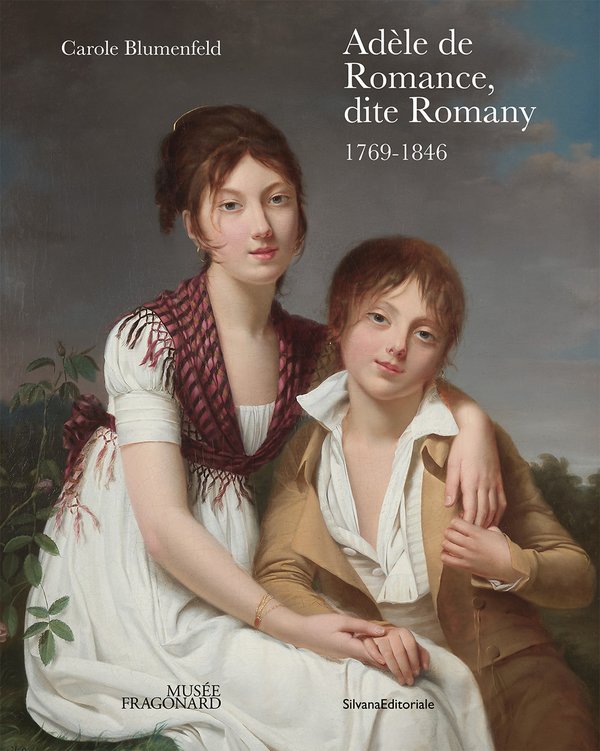 After dedicating the summer 2023 exhibition to the Lemoine sisters and their cousin Jeanne Élisabeth Chaudet, the Jean-Honoré Fragonard Museum will celebrate Adèle de Romance in 2025. This painter, whose life was as brilliant as it was tumultuous, embodies all the opportunities that the end of the 18th century and the beginning of the 19th century offered to talented artists.
Born from an illegitimate union between the Marquis Godefroy de Romance, Adèle de Romance (1769–1846) was eventually recognized and adopted by her father at the age of 8. Her younger half-sister, whose personal life perfectly met their father’s expectations, received many signs of trust from him. Despite this, Adèle de Romance now had a name and enjoyed one of the largest collections of Nordic and French paintings, including many works by Fragonard. Concerned with her education, the Marquis de Romance guided all her personal choices, from her passion for painting to the birth of her first child at the age of 18. Adèle then married the miniaturist François Antoine Romany, a mismatched union whose sole purpose was to give her a status. When her father left France in August 1791 to defend the counter-revolutionary ideas that mattered to him, Adèle de Romance was forced to conceal her partly aristocratic origins and to live… by her brushes.
After a divorce, which she willingly kept her married name, she began a series of small portraits of prominent figures. She took advantage of the fame of her subjects and, for four decades, played with a multitude of surnames, embracing public exposure and presenting dozens of works. Witnessing the upheavals of her time, she made the most of the political and social context that favored portraiture. Better than many other artists, she succeeded in capturing the desire for reinvention of the personalities she painted, presenting a gallery of portraits that reflected France. Adèle de Romance participated in a time when images were about to play an unprecedented role. Portraits, a rather insignificant genre in a monarchy—where only one person matters and everyone else is nothing—acquired a new level of interest in a Republic. It then became a vector of virtues, talents, services, and memories.
Adèle de Romance did not have the privilege of joining the royal collections, the birthplace of today’s national collections. Paying tribute to this painter who managed to live from her art first required finding her works. Thus, with the exception of the rich corpus preserved in the collections of the Comédie-Française, the paintings of Adèle de Romance held in French public collections are not only rare but rarely exhibited. Many of her portraits remained with the descendants of the sitters, who kindly allowed them to be displayed for the Grasse exhibition, thus honoring this woman who, very early on, understood that culture and artistic talents were a remarkable passport to being accepted, regardless of her origins, and having a voice in a world dominated by men.
From Silvana:
Carole Blumenfeld, Adèle de Romance, dite Romany, 1769–1846 (Milan: Silvana Editoriale, 2025), 232 pages, ISBN: 978-8836661121, €35.
Adèle de Romance appartient à cette caste ténue de femmes qui, sans jamais se poser en séditieuses, surent hanter les lisières du monde établi et frayer, dans les anfractuosités d’un ordre contraignant, un sentier d’autonomie patiemment conquis. Douée d’un discernement affûté et d’un sens exquis de la conjoncture, la portraitiste sut, avec adresse et aplomb, tirer parti des ondulations du temps et des vents favorables, pour jouer des équivoques de sa propre identité et en faire un atout, pour ses modèles et pour elle-même. Adèle de Romance devint pleinement maîtresse de son destin en peignant les visages d’autrui, qu’elle signait parfois de son nom de naissance, « de Romance », mais le plus souvent : « Romany », « Rom… », « Romanée », « de Romany » ou « DR »… Ces jeux de recomposition nominale, souples et ductiles, savamment dosés, relèvent d’une poétique du nom propre, où l’identité se dit autant par esquive que par assertion.
c o n t e n t s
Philippe Costamagna — Preface
Carole Blumenfeld — Peindre pour s’appartenir: Marie Jeanne de Romance, Adèle de Romance, dite Romany, Adèle Romanée, Adèle Romany-de-Romance, AR
Carole Blumenfeld — Catalogue des Oeuvres Exposées
Arbre généalogique d’Adèle de Romance
Chronobiographie
Liste des œuvres présentées aux Salons
Annexes
Index
Bibliographie
New Book | Les Pierres de la Nation
From Mare et Martin:
Maddalena Napolitani, Les pierres de la Nation: Les collections minéralogiques de l’Ecole des mines de Paris, 1760–1860 (Paris: Les Éditions Mare et Martin, 2025), 362 pages,
ISBN: 978-2362220838, €48.
 Les pierres de la Nation raconte l’histoire des collections de minéralogie de l’Ecole des mines de Paris, les considérant surtout sous le point de vue de leurs caractéristiques esthétiques et artistiques, à un moment clé pour l’histoire du collectionnisme : celui de la naissance des musées et du patrimoine. De leur constitution pendant les années 1760, à la création du musée de minéralogie dans les années 1850–1860, passant par les bouleversements révolutionnaires, ces collections contribuent à bâtir de nouveaux récits historiques au fil des changements socio-politiques, et se lient au territoire national et à la création de ses monuments et musées.
Maddalena Napolitani | Docteure histoire de l’art, ses recherches, à la croisée avec l’histoire des sciences concernent l’histoire des collections, des musées et du patrimoine scientifique, ainsi que les rapports entre esthétique et sciences de la Terre à l’âge moderne (XVIIIe–XIXe siècles). Italienne, elle travaille à présent au Musée Galileo (Florence) et a travaillé en France (ENS de Paris, Université de Grenoble), participant aussi à des expositions sur les collections mixtes des cabinets de curiosités.










 Enfilade
leave a comment