New Book | Objects and Material Cultures in the Dutch Republic
From Amsterdam UP:
Judith Noorman and Feike Dietz, eds., Objects, Commodities, and Material Cultures in the Dutch Republic: Exploring Early Modern Materiality across Disciplines (Amsterdam: Amsterdam University Press, 2024), 272 pages, ISBN: 978-9048562770, €129.
 How did objects move between places and people, and how did they reshape the Republic’s arts, cultures and sciences? ‘Objects’ were vitally significant for the early modern Dutch Republic, which is known as an early consumer society, a place famous for its exhaustive production of books, visual arts, and scientific instruments. What happens when we push these objects and their materiality to the centre of our research? How do they invite us to develop new perspectives on the early modern Dutch Republic? And how do they contest the boundaries of the academic disciplines that have traditionally organized our scholarship?
In Objects, Commodities and Material Cultures, the interdisciplinary community of specialists around the Amsterdam Centre for the Study of Early Modernity innovatively explores the diverse early modern world of objects. Its contributors take a single object or commodity as a point of departure to study and discuss various aspects of early modern art, culture, and history: from natural objects to consumer goods, from knowledge instruments to artistic materials. The volume aims to unravel how objects have moved through regions, cultures, and ages, and how objects impacted people who lived and worked in the Dutch Republic.
Judith Noorman is Associate Professor of Art History at the University of Amsterdam and leads the Dutch Research Council project The Female Impact, 2021–2026. As Director of the Amsterdam Centre for Studies in Early Modernity, she has organized the Object Colloquia Series, which laid the foundation for this book.
Feike Dietz is Professor of Global Dynamics of Dutch Literature at the University of Amsterdam. Her research focuses on the relationship between early modern texts, knowledge, and reading, with special attention devoted to youth, women, and girls.
c o n t e n t s
Acknowledgements
1 Feike Dietz and Judith Noorman — Introduction: Objects, Commodities and Material Cultures in the Dutch Republic
2 Weixuan Li and Lucas van der Deijl — The Anatomical Atlas: Govert Bidloo and Gerard de Lairesse’s Anatomia Humani Corporis (1685)
3 Djoeke van Netten — The Bullet and the Printing Press: Objects Celebrating the Battle of Gibraltar (1607)
4 Saskia Beranek — A Baluster: Amalia van Solms and the Global Trade in Japanese Lacquer
5 Lieke van Deinsen and Feike Dietz — The Graphometer and the Book: How Petronella Johanna de Timmerman (1723/1724–1786) Merged Science and Poetry
6 Hanneke Grootenboer, Cynthia Kok, and Marrigje Paijmans — Shells: Shaping Curiosity in the Dutch Republic
7 Gabri van Tussenbroek — The VOC Boardroom: A Forensic Investigation into the Built Environment
8 Maartje Stols-Witlox — The Muller: Insights into Practical Artistic Knowledge through Re-Making Experiments
9 Judith Noorman — Blue Paper: Its Life, Origin, History, and Artistic Exploration
List of illustrations with photo credits
Index
New Book | Maisons de plaisance des environs de Paris
Co-editor Anaïs Bornet has curated an exhibition on the same topic, which recently opened at the Musée du Domaine royal de Marly. From Edizioni Artemide:
Anaïs Bornet and Francesco Guidoboni, eds., Maisons de plaisance des environs de Paris (Rome: Edizioni Artemide, 2023), 232 pages, ISBN: 978-8875754402, €30.
Texts by Janine Barrier, Andrea Baserga, David Beaurain, Hervé Bennezon, Karine Berthier, Anaïs Bornet, Françoise Brissard, Roselyne Bussière, Ekaterina Bulgakova, Bernard Chevallier, Jérémie David, François de Vergnette, François Gilles, Francesco Guidoboni, Laetitia Jacquey-Achir, Desmond-Bryan Kraege, Louis-Joseph Lamborot, Marianne Mercier, Alexandra Michaud, Lucie Nottin, Claire Ollagnier, Camilla Pietrabissa, Jean Potel, Daniel Rabreau, Gabriel Wick.
 Autrefois situées « aux champs », les demeures de plaisance franciliennes—châteaux, maisons, pavillons aux dimensions variées—permettaient à une élite fortunée de quitter Paris lors de la belle saison, et de se détendre dans un environnement champêtre loin du tumulte de la ville. Avec l’annexion à la capitale de nombreuses anciennes résidences de villégiature, et le développement continu de la métropole parisienne menant au Grand Paris d’aujourd’hui, s’ouvrent de nouveaux questionnements sur les liens existants entre la ville et ce patrimoine autrefois éloigné.
Cet ouvrage collectif s’intéresse particulièrement aux maisons de plaisance bâties entre la moitié du XVIIe siècle et la fin du XIXe siècle, au sein des limites actuelles de l’Ile-de-France. Souvent méconnus et peu valorisés, les vestiges de la villégiature francilienne (non royale) de cette période se trouvent au cœur de l’actualité; ces bâtiments, pour certains encore préservés, se trouvent aujourd’hui face à diverses problématiques de conservation, d’adaptation aux nouveaux besoins, d’accueil du public, etc., mais sont également souvent menacés par les transformations urbaines qui répondent aux évolutions de la société du XXIe siècle.
Dans l’espoir de permettre aux franciliens de se réapproprier leur patrimoine, les textes réunis dans le présent volume s’attachent à offrir aux lecteurs un aperçu du phénomène de la villégiature en Ile-de-France, en retranscrivant l’histoire d’anciennes maisons de plaisance, certaines disparues, d’autres réhabilitées ou encore à l’avenir incertain, entre art de vivre, décors raffinés, jardins sophistiqués, réceptions et promenades dans des sites naturels aux vues panoramiques spectaculaires…
The table of contents can be seen here»
Exhibition | Biedermeier: The Rise of an Era
Now on view at the Leopold Museum, with the full press release available at Art Daily . . .
Biedermeier: The Rise of an Era / Eine Epoche im Aufbruch
Leopold Museum, Vienna, 10 April — 27 July 2025
Curated by Johann Kräftner with Lili-Vienne Debus
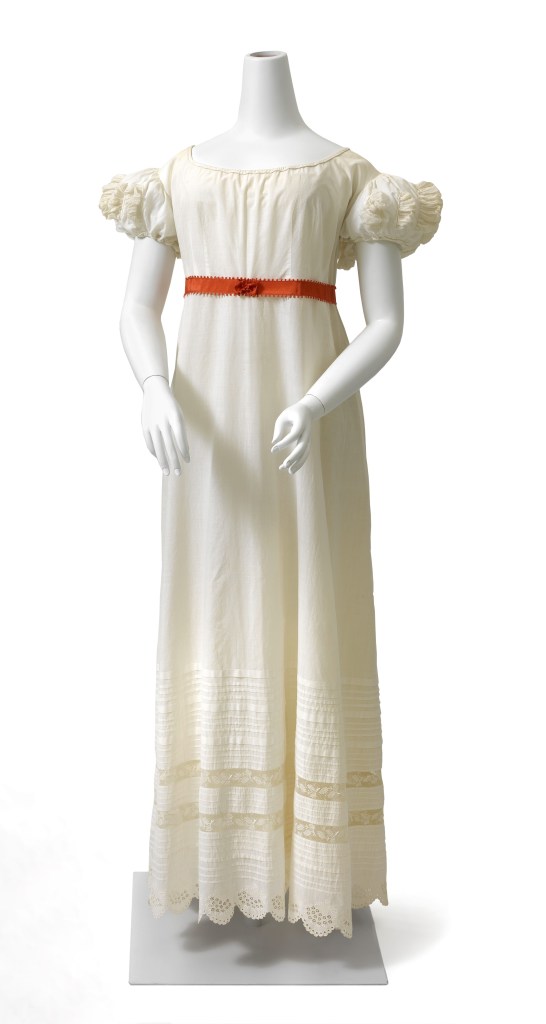
Day Dress, ca. 1816 (Wien Museum; photo by Birgit and Peter Kainz).
The fascinating era of the Biedermeier, which lasted from around the time of the Congress of Vienna in 1814/15 to the revolutions of 1848, delineates a period in Europe that was shaped by political upheaval and social revolts, which profoundly changed society. The congress resulted in the restitution of absolutism and princely rule, heralding a long phase of political restoration founded on a suppression of democratic aspirations. The resigned population turned away from politics and revolutionary ideals for fear of reprisals, seeking refuge in the private sphere. Themes of longing for security and harmony in everyday life entered the pictorial worlds of the Biedermeier.
Aside from all the political friction, the Biedermeier was also an era of great innovation and esthetical changes. The most important driving force was the industrial progress, which led to the construction of the first railway lines and spectacular suspension bridges, like the one connecting Buda and Pest. These technological revolutions resulted in decisive changes in the development of art. Many of these innovations did not emanate from Vienna as the center of the Habsburg Monarchy, but rather from the splendid cities of the crown lands, such as Budapest, Prague, Ljubljana, Trieste, Venice, and Milan.
The art of the monarchy was shaped by international exchange. Thus, the exhibition showcases not only the Viennese masters, including Ferdinand Georg Waldmüller and Friedrich von Amerling, but also Miklós Barabás and József Borsos from Budapest, Antonín Machek and František Tkadlík from Prague, as well as the artists active in Lombardy-Venetia Francesco Hayez and Jožef Tominc (Giuseppe Tominz).

Secretary, Bohemia, ca. 1820 (Prague: The Museum of Decorative Arts; photo by Gabriel Urbánek and Ondřej Kocourek).
Despite the severe poverty of the time, which affected large segments of the population, the simultaneous economic upturn yielded a bourgeoisie whose members wanted to be depicted in confident portraits. Alongside portraits celebrating realistic likenesses of the depicted and the documentation of their social status, the pictorial worlds were dominated by themes from everyday life: family portraits, genre paintings, and renderings of the artists’ own surroundings. Despite the Biedermeier’s typical restrictions to the microcosm of the everyday and one’s immediate surroundings, artists of the period also looked further afield to far-flung countries and cities in order to satisfy people’s curiosity and interest in foreign cultures. Featuring around 190 works from Austrian and international collections, ranging from paintings and graphic works to furnishings, glassware and dresses, the exhibition presents a varied picture of this era.
Curator: Johann Kräftner
Curatorial Assistance and Project Coordination: Lili-Vienne Debus
Johann Kräftner and Hans-Peter Wipplinger, eds., Biedermeier: Eine Epoche im Aufbruch / The Rise of an Era (Cologne: Walther König, 2025), 328 pages, ISBN: 978-3753308159, €40.
The catalogue, in German and English, includes essays by Lili-Vienne Debus, Sabine Grabner, Johann Kräftner, Stefan Kutzenberger, Michaela Lindinger, Fernando Mazzocca, Juliane Mikoletzky, Adrienn Prágai and Radim Vondráček, as well as a prologue by Hans-Peter Wipplinger.
◊ ◊ ◊ ◊ ◊
Note (added 23 April 2025) — This posting originally appeared April 22; it was moved back to April 21st for improved continuity with other posts.
Exhibition | Art and Power in the Age of the Doges of Genoa
Some 100 works—paintings, sculpture, and decorative arts—from the 17th and 18th centuries are now on view in Turin for this exhibition produced in collaboration with the National Museums of Genoa–Palazzo Spinola and the National Gallery of Liguria.
Magnificent Collections: Art and Power during the Age of the Doges of Genoa
Reggia di Venaria, Torino, 10 April — 7 September 2025
Curated by Gianluca Zanelli, Marie Luce Repetto, Andrea Merlotti, and Clara Goria, with Donatella Zanardo

Anton von Maron, Portrait of Maria Geronima Pellegrina ‘Lilla’ Cambiaso and Her Daughter Caterina, 1792, oil on canvas (Genoa: Palazzo Spinola di Pellicceria).
In mostra alla Reggia di Venaria le straordinarie raccolte d’arte di alcune delle più importanti famiglie del patriziato genovese (i Pallavicino, i Doria, gli Spinola, i Balbi) conservate a Palazzo Spinola di Pellicceria, insieme alle più recenti acquisizioni dei Musei Nazionali di Genova con prestiti da altri musei e collezioni private.
Un patrimonio unico di arte e storia che annovera celebri dipinti di Peter Paul Rubens, Antoon Van Dyck, Orazio Gentileschi, Guido Reni, Carlo Maratta, Luca Giordano, e poi ancora Hyacinthe Rigaud e Angelica Kauffman, oltre ai maestri della grande scuola figurativa genovese. Attraverso un centinaio di opere tra dipinti, sculture, argenti e arredi del Sei e Settecento, si proporrà un percorso espositivo, suddiviso in sei sezioni, riferito alle raccolte del palazzo poi divenuto museo, ma anche il racconto del secolo d’oro di Genova ‘la Superba’, teatro del Barocco, antica repubblica retta dai dogi, con la sua regalità e fasto. La mostra continua il grande filone dedicato alla storia, all’arte, alla cultura e alla magnificenza delle corti inaugurato dalla riapertura della Reggia e proseguito negli anni.
Gianluca Zanelli and Marie Luce Repetto, eds., Magnifiche collezioni: Arte e potere nella Genova dei Dogi (Genoa: Sagep Editori, 2025), 128 pages, ISBN: 979-1255902041, €18.
New Book | The Fricks Collect
After a $220million renovation that lasted nearly five years, The Frick reopens today. There’s been lots of media coverage; I especially enjoyed Patricia Leigh Brown’s piece in The New York Times (1 April 2025), highlighting various artists and craftspeople who contributed. –CH
From Rizzoli:
Ian Wardropper, with a foreword by Julian Fellowes, The Fricks Collect: An American Family and the Evolution of Taste in the Gilded Age (New York: Rizzoli Electa, 2025), 160 pages, ISBN: 978-0847845750, $50.
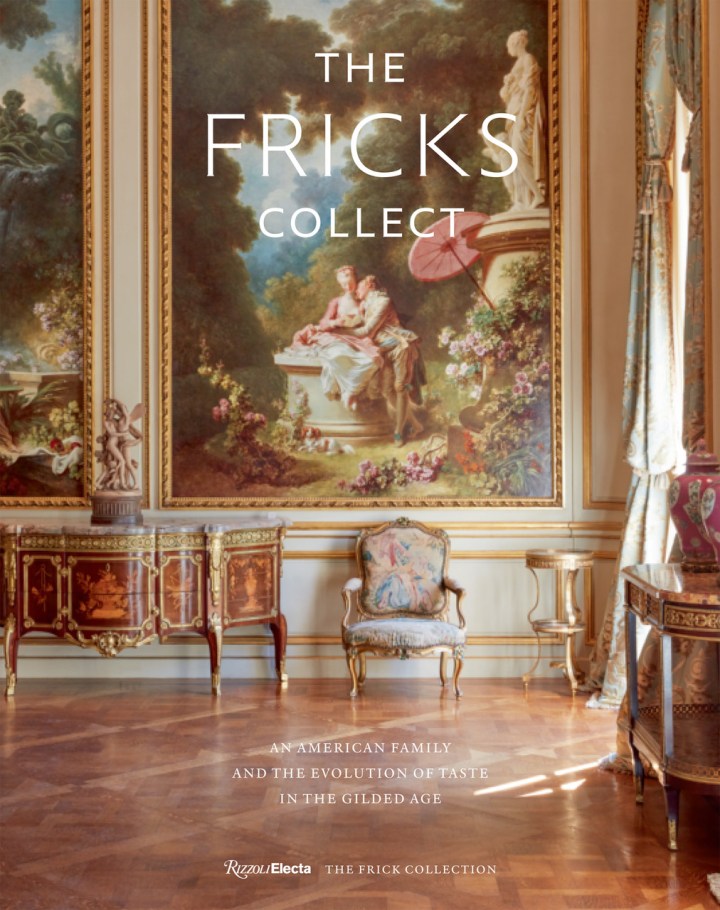 Before his New York home became a museum, Henry Clay Frick engaged some of his era’s most important art dealers to build a notable collection and the best decorators to create suitable Gilded Age interiors to accommodate the works. This story traces the journey that led to the creation of one of America’s finest art collections.
At its heart, this story centers on Frick and his daughter Helen Clay Frick, both pivotal figures in the formation of the renowned Frick Collection. The volume delves into the Fricks’ exposure to and acquisition of some of the finest art of their time. With an exquisite blend of textual narrative and ample imagery showcasing masterpieces and the sumptuous interiors of homes in Pittsburgh and New York, the book offers a captivating narrative of ambition, wealth, and cultural patronage.
White, Allom & Co. and Elsie de Wolfe worked with Frick on the decoration of his houses and influenced the choice of many furnishings the owner acquired and that formed the backdrop for his paintings. As was commonplace at the time, decorators often collaborated with dealers in creating spaces suitable for the esteemed works of art. Further influential figures who shaped the era’s cultural landscape include Frick’s business partner Andrew Carnegie and noted art dealers Joseph Duveen in London and Charles Carstairs of M. Knoedler & Co. in New York. Presenting the glittering halls of their homes and the masterpieces adorning the walls of The Frick Collection, this volume is a testament to the enduring allure of art and the power of patronage in shaping cultural institutions.
Ian Wardropper is the Anna-Maria and Stephen Kellen Director of The Frick Collection. Julian Fellowes is an English novelist, director, and screenwriter, best known as the creator and head writer of the popular TV series Downton Abbey.
New Book | Le Comte d’Angiviller
From Éditions Monelle Hayot:
Monelle Hayot and Antoine Maës, Le Comte d’Angiviller: Directeur des Arts sous Louis XVI (Saint-Rémy-en-l’Eau: Éditions d’art Monelle Hayot, 2025), 384 pages, ISBN: 979-1096561421, €60.
 Gentilhomme de la manche, le comte d’Angiviller (1730–1809) élève le futur Louis XVI et ses frères. Dès son accession au trône en 1774, Louis XVI le nomme directeur des Bâtiments. Son rôle est immense. Fondateur du musée du Louvre il orchestre les travaux et constitue les collections en acquérant des œuvres majeures. Il est responsable de tous les bâtiments royaux, achète Rambouillet pour le roi. Angiviller préside au sort des manufactures de Sèvres et des Gobelins, dirige l’Académie de peinture et de sculpture, ainsi que l’Académie de France à Rome.
L’époque révolutionnaire fait de lui un témoin oculaire majeur de faits historiques auxquels il participe. Le roi lui demande d’émigrer en Espagne. D’une fidélité sans faille, il revient pour aider le roi en danger, mais sa tête est sur la liste des aristocrates à décapiter. Il part pour l’Allemagne dont il ne reviendra jamais.
Angiviller avait un secrétaire, Narcisse, qui recopiait toute sa correspondance avec le roi. Il fut le témoin de sa vie et émigra avec lui. Sur ses vieux jours, Narcisse écrit ses mémoires pour la marquise de Capellis qui vit au château de Saint-Rémy-en-l’Eau, lieu de naissance d’Angiviller. Ce manuscrit inédit est entièrement retranscrit à la fin de cet ouvrage.
New Book | La Tabatière Choiseul
Published in October by Faton:
Michèle Bimbenet-Privat, ed., La Tabatière Choiseul: Un monument du XVIIIe siècle (Dijon: Éditions Faton, 2025), 256 pages, ISBN: 978-2878443721, €49.
 Acquise en 2023 par le musée du Louvre, la tabatière Choiseul est incontestablement la plus originale et la plus célèbre des tabatières du XVIIIe siècle. La précieuse monture en or de l’orfèvre Louis Roucel sert d’écrin à six miniatures de Louis Nicolas Van Biarenberghe mettant en scène le flamboyant duc de Choiseul, le grand ministre de Louis XV, au faîte de sa gloire. Toutes les facettes de la vie quotidienne de ce personnage généreux et arrogant s’y succèdent, soulignant son travail acharné, parfois solitaire, indissociable de l’exercice du pouvoir. La tabatière Choiseul séduit aussi par sa description minutieuse du cadre de vie raffiné du ministre, de son immense collection de tableaux et d’objets d’art, esquissant ainsi une réflexion sur les relations entre art et pouvoir. Elle offre enfin une multitude d’énigmes à résoudre sur son origine, ses possesseurs successifs, la signification des scènes, l’identification des lieux et des personnages représentés.
Exhibition | Music and the Republic
Now on view at the Musée des Archives Nationales:
Music and the Republic: From the French Revolution to the Popular Front
Hôtel de Soubise, Paris, 26 March — 14 July 2025
Curated by Marie Ranquet, Sophie Lévy, and Christophe Barret
 L’exposition Musique et République, de la Révolution au Front populaire—organisée avec le concours du Conservatoire national supérieur de musique et de danse de Paris—souhaite mettre en lumière les liens entre la musique et la construction de la République. De la Révolution, qui organise de nouvelles institutions et utilise la musique pour fonder un sentiment patriotique, au Front populaire de 1936, qui fait le pari de l’émancipation sociale du citoyen par l’accès aux loisirs et à la culture, la formation et la pratique musicale permettent à la fois le partage d’un patrimoine sonore commun et l’expression personnelle, parfois subversive.
Les Archives nationales retracent l’histoire de cette rencontre entre le citoyen et la musique. Des partitions inédites retrouvées dans les fonds des Archives nationales, des instruments de musique étonnants ou oubliés, des correspondances politiques, des commandes passées à des compositeurs prestigieux et de nombreux autres documents, racontent une histoire mouvementée : celle d’un siècle et demi de production, d’éducation et de pratique musicales, envisagées en regard de l’idée républicaine.
Commissariat scientifique
• Marie Ranquet, conservatrice en chef du patrimoine aux Archives nationales
• Sophie Lévy, responsable des archives au Conservatoire national supérieur de musique et de danse de Paris
Commissariat technique
• Christophe Barret, chargé d’expositions au département de l’Action culturelle et éducative des Archives nationales
Musique et République: De la Révolution au Front populaire (Paris: Éditions Snoeck, 2025), 168 pages, ISBN: 978-9461619464, €30. With contributions by Adrián Almoguera, Mathias Auclair, Rémy Campos, Myriam Chimènes, Peter Hicks, Sophie Lévy, Marie Ranquet, Émeline Rotolo, and Charles-Éloi Vial.
New Historical Fiction | Allegro
From Other Press, where one can also find a playlist for the book:
Ariel Dorfman, Allegro: A Novel (New York: Other Press, 2025), 272 pages, ISBN: 978-1635424485, $18.
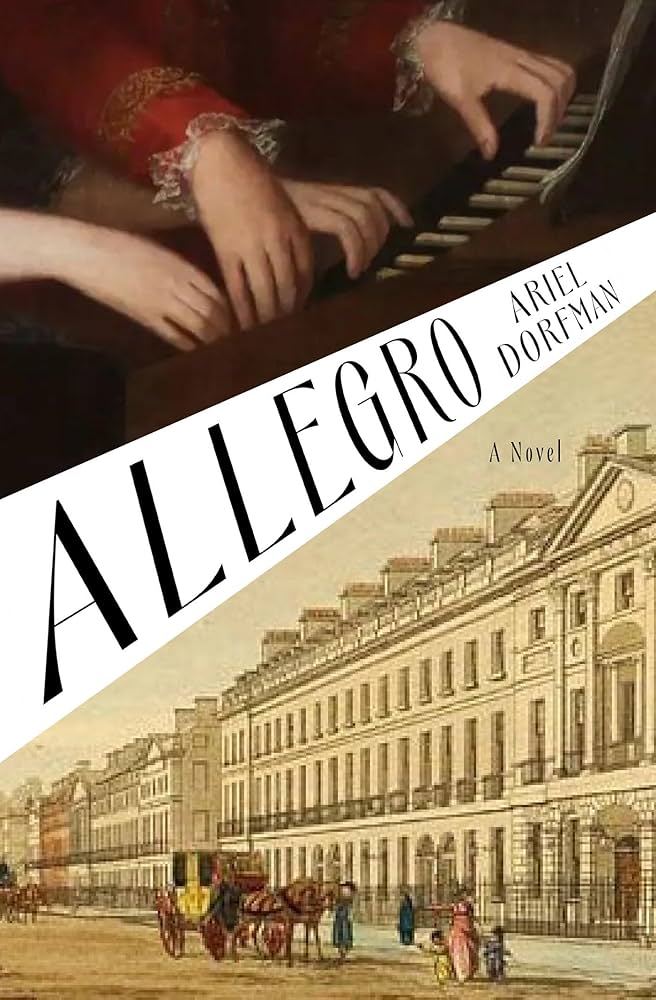 This thrilling historical mystery starring Mozart tells of friendship and betrayal, and how music allows us to defy death—from the acclaimed author of Death and the Maiden and The Suicide Museum.
In 1789 Wolfgang Amadeus Mozart visits the grave of Johann Sebastian Bach in Leipzig, looking for a sign, a signal, an answer to an enigma that has haunted him since childhood: Was Bach murdered by a famous oculist? And years later, was Handel a victim of the same doctor? Allegro follows his investigation, from the salons of London to the streets of Paris, recreating an enthralling and turbulent time, full of rogues and brilliant composers, charlatans and presumptuous nobles. Running parallel to this search is the rise of Mozart, his knowledge and fame, his trials and losses.
Ariel Dorfman is a Chilean-American author, born in Argentina, whose award-winning books in many genres have been published in more than fifty languages and his plays performed in more than one hundred countries. Among his works are the plays Death and the Maiden and Purgatorio, the novels The Suicide Museum (Other Press, 2023), Widows, and Konfidenz, and the memoirs Heading South, Looking North and Feeding on Dreams. He lives with his wife Angélica in Santiago, Chile, and Durham, North Carolina, where he is the Walter Hines Page Emeritus Professor of Literature at Duke University.
New Book | On the Calculation of Volume
The shortlist for this year’s International Booker Prize was announced on Tuesday. Included is the first installation Solvej Balle’s seven-part novel On the Calculation of Volume. As noted by Hilary Leichter in her review for The New York Times (25 January 2025), the central character is an antiquarian bookseller “specializing in illustrated works from the 18th century.” I’ve not yet read the book, but that feels just about perfect to me. –CH
From New Directions:
Solvej Balle, On the Calculation of Volume, Part I, translated from the Danish by Barbara Haveland (New Directions, 2024), 160 pages, ISBN: 978-0811237253, $16.
 Tara Selter, the heroine of On the Calculation of Volume, has involuntarily stepped off the train of time: in her world, November eighteenth repeats itself endlessly. We meet Tara on her 122nd November 18th: she no longer experiences the changes of days, weeks, months, or seasons. She finds herself in a lonely new reality without being able to explain why: how is it that she wakes every morning into the same day, knowing to the exact second when the blackbird will burst into song and when the rain will begin? Will she ever be able to share her new life with her beloved and now chronically befuddled husband? And on top of her profound isolation and confusion, Tara takes in with pain how slight a difference she makes in the world. (As she puts it: “That’s how little the activities of one person matter on the eighteenth of November.”)
Balle is hypnotic and masterful in her remixing of the endless recursive day, creating curious little folds of time and foreshadowings: her flashbacks light up inside the text like old flash bulbs. The first volume’s gravitational pull―a force inverse to its constriction―has the effect of a strong tranquilizer, but a drug under which your powers of observation only grow sharper and more acute. Give in to the book’s logic (its minute movements, its thrilling shifts, its slant wit, its slowing of time) and its spell is utterly intoxicating. Solvej Balle’s seven-volume novel wrings enthralling and magical new dimensions from time and its hapless, mortal subjects. As one Danish reviewer beautifully put it, Balle’s fiction consists of writing that listens. “Reading her is like being caressed by language itself.”
Solvej Balle was born in 1962, made her debut in 1986 with Lyrefugl, and she went on to write one of the 1990s’ most acclaimed works of Danish literature, According to the Law: Four Accounts of Mankind (praised by Publishers Weekly for its blend of “sly humor, bleak vision, and terrified sense of the absurd with a tacit intuition that the world has a meaning not yet fathomed”). Since then, she’s published a book on art theory, Det umuliges kunst, 2005, a political memoir Frydendal og andre gidsler, 2008, and two books of short prose Hvis and Så, published simultaneously in 2013. On the Calculation of Volume is Solvej Balle’s major comeback, not just to Danish or Nordic fiction, but―expanding the possibilities of the novel―to all of world literature.
Barbara J. Haveland (born 1951) is a Scottish literary translator, resident in Copenhagen. She translates fiction, poetry, and drama from Danish and Norwegian to English. She has translated works by many leading Danish and Norwegian writers, both classic and contemporary, including Henrik Ibsen, Peter Høeg, Linn Ullmann, and Carl Frode Tiller.










 Enfilade
leave a comment