New Book | Detailing Worlds
From Bloomsbury Publishing:
Eric Bellin, Detailing Worlds: A Conceptual History of Architectural Detail (London: Bloomsbury Visual Arts, 2025), 376 pages, ISBN: 978-1350204379, $115.
 In the 21st century, the word ‘detail’ appears constantly in discussions of building, and we use it in many different ways-yet just over 250 years ago, ‘detail’ meant nothing at all particular to the work of architects, engineers, or builders. Detailing Worlds is the first book to examine the origins and evolution of ‘detail’ as a concept with meanings specific to practices of building. By exploring how past meanings and roles were ascribed to detail in different ‘worlds of practice’—those of academics, technicians, students, engineers, and architects—Detailing Worlds looks to the future, illuminating the ways disciplinary knowledge and the concepts on which it is based evolve and change over time. It is a story about how such concepts are slowly but constantly reconceived, redefined, and transformed by individuals as they interact with one another, and how this process is shaped by the ever-changing sociocultural and technological dimensions of the world around us. Richly illustrated with more than 200 images—including figures from rare texts, archival student drawings, and practitioners’ construction documents from the 18th through 20th centuries—Detailing Worlds ventures to tell the history of a disciplinary-specific idea and offer insights about how we think and speak about the practice of building today.
Eric Bellin is an Assistant Professor at Thomas Jefferson University’s College of Architecture and the Built Environment in Philadelphia, where he teaches courses in design, representation, and history. In addition to his PhD from the University of Pennsylvania, he holds March and MS in Architectural Pedagogy degrees from the University of Florida.
c o n t e n t s
1 Introduction: The Question of Detail
2 The Academic
3 The Technician
4 The Student
5 The Engineer
6 The Architect
7 Conclusion: On the Practice of Detailing
Index
Exhibition | Japanese Poetry, Calligraphy, and Painting
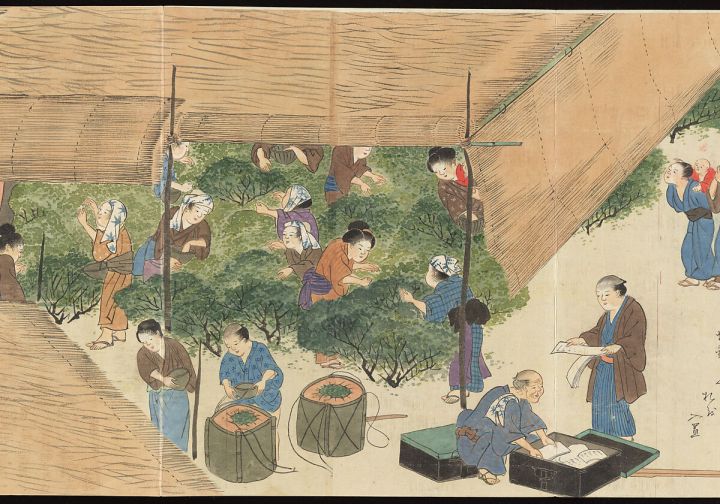
Saitō Motonari, Illustrations of Uji Tea Production, 1803, Edo period (1615–1868), handscroll (57 feet) of thirty-two sheets reformatted as a folding album (New York: The Metropolitan Museum of Art, 2023.237).
◊ ◊ ◊ ◊ ◊
Now on view at The Met:
The Three Perfections: Japanese Poetry, Calligraphy, and
Painting from the Mary and Cheney Cowles Collection
The Metropolitan Museum of Art, New York, 10 August 2024 — 3 August 2025
Curated by John Carpenter
In East Asian cultures, the arts of poetry, calligraphy, and painting are traditionally referred to as the ‘Three Perfections’. This exhibition presents over 160 rare and precious works—all created in Japan over the course of nearly a millennium—that showcase the power and complexity of the three forms of art. Examples include folding screens with poems brushed on sumptuous decorated papers, dynamic calligraphy by Zen monks of medieval Kyoto, hanging scrolls with paintings and inscriptions alluding to Chinese and Japanese literary classics, ceramics used for tea gatherings, and much more. The majority of the works are among the more than 250 examples of Japanese painting and calligraphy donated or promised to The Met by Mary and Cheney Cowles, whose collection is one of the finest and most comprehensive assemblages of Japanese art outside Japan.
The exhibition is made possible by The Miriam and Ira D. Wallach Foundation Fund.
Information on the objects exhibited can be found here»
◊ ◊ ◊ ◊ ◊
The catalogue is distributed by Yale UP:
John Carpenter, with Tim Zhang, The Three Perfections: Japanese Poetry, Calligraphy, and Painting (New York: The Metropolitan Museum of Art, 2025), 320 pages, ISBN: 978-1588397805, $65.
 In East Asian cultures, the integration of poetry, painting, and calligraphy, known as the ‘Three Perfections’, is considered the apex of artistic expression. This sumptuous book explores 1,000 years of Japanese art through more than 100 works—hanging scrolls, folding screens, handscrolls, and albums—from the Mary and Cheney Cowles Collection at The Metropolitan Museum of Art. John T. Carpenter provides an engaging history of these interrelated disciplines and shows evidence of intellectual exchange between Chinese and Japanese artists in works with poetry in both languages, calligraphies in Chinese brushed by Japanese Zen monks, and examples of Japanese paintings pictorializing scenes from Chinese literature and legend. Many of the works featured, including Japanese poetic forms, Chinese verses, and Zen Buddhist sayings, are deciphered and translated here for the first time, providing readers with a better understanding of each work’s rich and layered meaning. Highlighting the talents of such masters as Musō Soseki, Sesson Shūkei, Jiun Onkō, Ryōkan Taigu, Ike no Taiga, and Yosa Buson, this book celebrates the power of brush-written calligraphy and its complex visual synergy with painted images.
John T. Carpenter is the Mary Griggs Burke Curator of Japanese Art in the Department of Asian Art at The Metropolitan Museum of Art. He has been with The Met since 2011. From 1999 to 2011, he taught the history of Japanese art at the School of Oriental and African Studies (SOAS), University of London, and served as head of the London office of the Sainsbury Institute for the Study of Japanese Arts and Cultures. He has published widely on Japanese art, especially in the areas of calligraphy, painting, and woodblock prints, and has helped organize numerous exhibitions at the Museum, including Designing Nature (2012–13), Brush Writing in the Arts of Japan (2013–14), Celebrating the Arts of Japan (2015–17), The Poetry of Nature (2018–2019), and The Tale of Genji: A Japanese Classic Illuminated (2019).
Tim T. Zhang is Research Associate of Asian Art at The Metropolitan Museum of Art.
c o n t e n t s
Director’s Foreword
Preface
Becoming a Collector of Japanese Art — Cheney Cowles
Acknowledgments
Note to the Reader
Introduction
Inscribing and Painting Poetry: The Three Perfections in Japanese Art — John T. Carpenter
Catalogue
1 Courtly Calligraphy Styles: Transcribing Poetry in the Heian Palace
Entries 1–13
2 Spiritual Traces of Ink: Calligraphies by Medieval Zen Monks
Entries 14–31
3 Reinvigorating Classical Poetry: Brush Writing in Early Modern Times
Entries 32–59
4 Poems of Enlightenment: Edo-Period Zen Calligraphy
Entries 60–84
5 China-Themed Paintings: Literati Art of Later Edo Japan
Entries 85–111
Notes
Bibliography
Index
Credits
Exhibition | 100 Ideas of Happiness
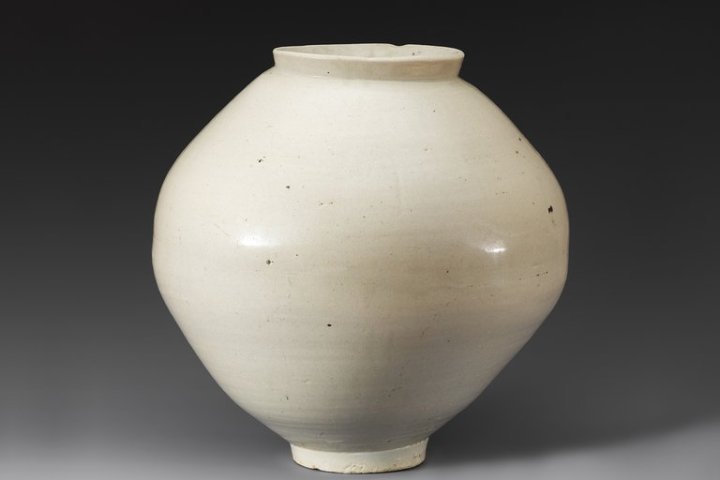
Moon Jar, white porcelain, Joseon Dynasty, 18th century
(Seoul: National Museum of Korea)
◊ ◊ ◊ ◊ ◊
From the press release for the exhibition:
100 Ideas of Happiness: Art Treasures from Korea
Residenzschloss, Dresden, 15 March — 10 August 2025
For the first time in over 25 years, precious artifacts that give an overview of Korean art and cultural history are on display in Germany. The exhibition 100 Ideas of Happiness takes place thanks to a cooperation with the National Museum of Korea, which is supported by the Korea Foundation.
Embedded in the baroque Paraderäume (Royal State Apartments) and the Neues Grünes Gewölbe (New Green Vault) of the Dresden Residenzschloss (Royal Palace), the show opens up an exciting dialogue between cultures. The central theme is the timeless question of the various ideas of happiness—including the desire for eternal life, peace in this world and the next, inner strength or pure joie de vivre— as expressed in works of art through colours, symbols, and the choice of subject matter.
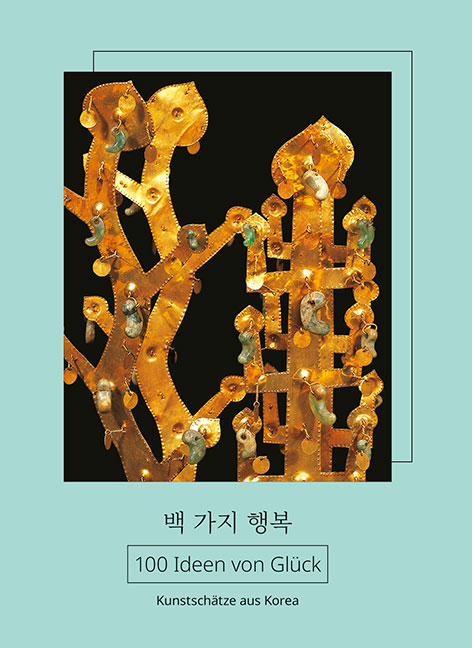 On display are around 180 outstanding individual objects and groups of objects, including valuable grave goods, precious jewellery, royal robes, and exquisite porcelain from several eras of Korean history. The objects give a multifaceted impression of Korea’s artistic traditions from the time of the ancient kingdoms of Goguryeo, Baekje, and Silla (57 BC–935 AD) to the Joseon Dynasty (1392–1897). Numerous loans are on show for the first time in Europe. The central themes of the presentation are ancient funerary traditions, the role of Buddhism and Confucianism as state-endorsed religions, the legacy of ceramic art, and the significance of the traditional Korean attire, the Hanbok, in the past and present.
A tour of the exhibition through the Paraderäume concludes with a selection of Korean artworks from the ethnographic collections of the Staatliche Kunstsammlungen Dresden (Dresden State Art Collections). These include folding screens, armour, and weapons collected by German travellers in Korea at the beginning of the 19th century. They offer valuable insights into Korea at that time and document the beginnings of a cultural exchange between Korea and Germany. An important item is the folding screen from the GRASSI Museum of Ethnology in Leipzig. Its title is 100 Ideas for Happiness and Longevity and gave the exhibition its name.
The second exhibition venue within the Residenzschloss is located in the Sponsel Room of the Neues Grünes Gewölbe. Surrounded by the treasures of Augustus the Strong, a selection of precious gold jewellery from the royal tombs of the Silla Dynasty is displayed there. These objects—including the famous gold crown from Geumgwanchong, one of the most important royal tombs in Gyeongju, the ancient capital of the Silla kingdom—are among Korea’s national treasures. An elaborately decorated belt made of pure gold, a wing-shaped headdress, and magnificent earrings and rings (presented in the exhibition as an ensemble for the first time in many years) also come from this tomb. They are cultural and historical testimonies to the great significance of the Silla Kingdom.
Claudia Brink and Sojin Baik, 100 Ideen von Glück: Kunstschätze aus Korea (Dresden: Staatliche Kunstsammlungen Dresden, 2025), 216 pages, ISBN: 978-3954988631, €34.
New Book | Objects and Material Cultures in the Dutch Republic
From Amsterdam UP:
Judith Noorman and Feike Dietz, eds., Objects, Commodities, and Material Cultures in the Dutch Republic: Exploring Early Modern Materiality across Disciplines (Amsterdam: Amsterdam University Press, 2024), 272 pages, ISBN: 978-9048562770, €129.
 How did objects move between places and people, and how did they reshape the Republic’s arts, cultures and sciences? ‘Objects’ were vitally significant for the early modern Dutch Republic, which is known as an early consumer society, a place famous for its exhaustive production of books, visual arts, and scientific instruments. What happens when we push these objects and their materiality to the centre of our research? How do they invite us to develop new perspectives on the early modern Dutch Republic? And how do they contest the boundaries of the academic disciplines that have traditionally organized our scholarship?
In Objects, Commodities and Material Cultures, the interdisciplinary community of specialists around the Amsterdam Centre for the Study of Early Modernity innovatively explores the diverse early modern world of objects. Its contributors take a single object or commodity as a point of departure to study and discuss various aspects of early modern art, culture, and history: from natural objects to consumer goods, from knowledge instruments to artistic materials. The volume aims to unravel how objects have moved through regions, cultures, and ages, and how objects impacted people who lived and worked in the Dutch Republic.
Judith Noorman is Associate Professor of Art History at the University of Amsterdam and leads the Dutch Research Council project The Female Impact, 2021–2026. As Director of the Amsterdam Centre for Studies in Early Modernity, she has organized the Object Colloquia Series, which laid the foundation for this book.
Feike Dietz is Professor of Global Dynamics of Dutch Literature at the University of Amsterdam. Her research focuses on the relationship between early modern texts, knowledge, and reading, with special attention devoted to youth, women, and girls.
c o n t e n t s
Acknowledgements
1 Feike Dietz and Judith Noorman — Introduction: Objects, Commodities and Material Cultures in the Dutch Republic
2 Weixuan Li and Lucas van der Deijl — The Anatomical Atlas: Govert Bidloo and Gerard de Lairesse’s Anatomia Humani Corporis (1685)
3 Djoeke van Netten — The Bullet and the Printing Press: Objects Celebrating the Battle of Gibraltar (1607)
4 Saskia Beranek — A Baluster: Amalia van Solms and the Global Trade in Japanese Lacquer
5 Lieke van Deinsen and Feike Dietz — The Graphometer and the Book: How Petronella Johanna de Timmerman (1723/1724–1786) Merged Science and Poetry
6 Hanneke Grootenboer, Cynthia Kok, and Marrigje Paijmans — Shells: Shaping Curiosity in the Dutch Republic
7 Gabri van Tussenbroek — The VOC Boardroom: A Forensic Investigation into the Built Environment
8 Maartje Stols-Witlox — The Muller: Insights into Practical Artistic Knowledge through Re-Making Experiments
9 Judith Noorman — Blue Paper: Its Life, Origin, History, and Artistic Exploration
List of illustrations with photo credits
Index
New Book | Maisons de plaisance des environs de Paris
Co-editor Anaïs Bornet has curated an exhibition on the same topic, which recently opened at the Musée du Domaine royal de Marly. From Edizioni Artemide:
Anaïs Bornet and Francesco Guidoboni, eds., Maisons de plaisance des environs de Paris (Rome: Edizioni Artemide, 2023), 232 pages, ISBN: 978-8875754402, €30.
Texts by Janine Barrier, Andrea Baserga, David Beaurain, Hervé Bennezon, Karine Berthier, Anaïs Bornet, Françoise Brissard, Roselyne Bussière, Ekaterina Bulgakova, Bernard Chevallier, Jérémie David, François de Vergnette, François Gilles, Francesco Guidoboni, Laetitia Jacquey-Achir, Desmond-Bryan Kraege, Louis-Joseph Lamborot, Marianne Mercier, Alexandra Michaud, Lucie Nottin, Claire Ollagnier, Camilla Pietrabissa, Jean Potel, Daniel Rabreau, Gabriel Wick.
 Autrefois situées « aux champs », les demeures de plaisance franciliennes—châteaux, maisons, pavillons aux dimensions variées—permettaient à une élite fortunée de quitter Paris lors de la belle saison, et de se détendre dans un environnement champêtre loin du tumulte de la ville. Avec l’annexion à la capitale de nombreuses anciennes résidences de villégiature, et le développement continu de la métropole parisienne menant au Grand Paris d’aujourd’hui, s’ouvrent de nouveaux questionnements sur les liens existants entre la ville et ce patrimoine autrefois éloigné.
Cet ouvrage collectif s’intéresse particulièrement aux maisons de plaisance bâties entre la moitié du XVIIe siècle et la fin du XIXe siècle, au sein des limites actuelles de l’Ile-de-France. Souvent méconnus et peu valorisés, les vestiges de la villégiature francilienne (non royale) de cette période se trouvent au cœur de l’actualité; ces bâtiments, pour certains encore préservés, se trouvent aujourd’hui face à diverses problématiques de conservation, d’adaptation aux nouveaux besoins, d’accueil du public, etc., mais sont également souvent menacés par les transformations urbaines qui répondent aux évolutions de la société du XXIe siècle.
Dans l’espoir de permettre aux franciliens de se réapproprier leur patrimoine, les textes réunis dans le présent volume s’attachent à offrir aux lecteurs un aperçu du phénomène de la villégiature en Ile-de-France, en retranscrivant l’histoire d’anciennes maisons de plaisance, certaines disparues, d’autres réhabilitées ou encore à l’avenir incertain, entre art de vivre, décors raffinés, jardins sophistiqués, réceptions et promenades dans des sites naturels aux vues panoramiques spectaculaires…
The table of contents can be seen here»
Exhibition | Biedermeier: The Rise of an Era
Now on view at the Leopold Museum, with the full press release available at Art Daily . . .
Biedermeier: The Rise of an Era / Eine Epoche im Aufbruch
Leopold Museum, Vienna, 10 April — 27 July 2025
Curated by Johann Kräftner with Lili-Vienne Debus
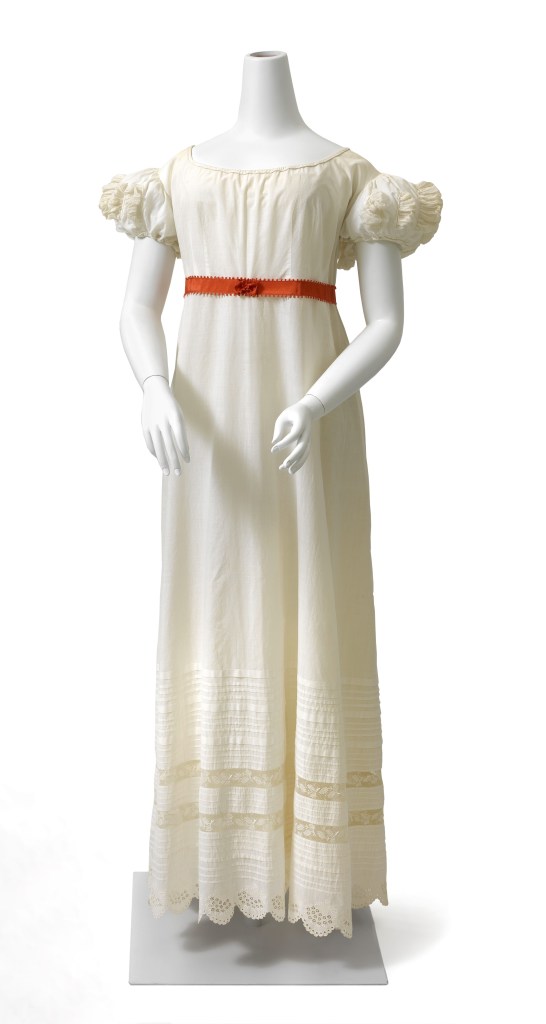
Day Dress, ca. 1816 (Wien Museum; photo by Birgit and Peter Kainz).
The fascinating era of the Biedermeier, which lasted from around the time of the Congress of Vienna in 1814/15 to the revolutions of 1848, delineates a period in Europe that was shaped by political upheaval and social revolts, which profoundly changed society. The congress resulted in the restitution of absolutism and princely rule, heralding a long phase of political restoration founded on a suppression of democratic aspirations. The resigned population turned away from politics and revolutionary ideals for fear of reprisals, seeking refuge in the private sphere. Themes of longing for security and harmony in everyday life entered the pictorial worlds of the Biedermeier.
Aside from all the political friction, the Biedermeier was also an era of great innovation and esthetical changes. The most important driving force was the industrial progress, which led to the construction of the first railway lines and spectacular suspension bridges, like the one connecting Buda and Pest. These technological revolutions resulted in decisive changes in the development of art. Many of these innovations did not emanate from Vienna as the center of the Habsburg Monarchy, but rather from the splendid cities of the crown lands, such as Budapest, Prague, Ljubljana, Trieste, Venice, and Milan.
The art of the monarchy was shaped by international exchange. Thus, the exhibition showcases not only the Viennese masters, including Ferdinand Georg Waldmüller and Friedrich von Amerling, but also Miklós Barabás and József Borsos from Budapest, Antonín Machek and František Tkadlík from Prague, as well as the artists active in Lombardy-Venetia Francesco Hayez and Jožef Tominc (Giuseppe Tominz).

Secretary, Bohemia, ca. 1820 (Prague: The Museum of Decorative Arts; photo by Gabriel Urbánek and Ondřej Kocourek).
Despite the severe poverty of the time, which affected large segments of the population, the simultaneous economic upturn yielded a bourgeoisie whose members wanted to be depicted in confident portraits. Alongside portraits celebrating realistic likenesses of the depicted and the documentation of their social status, the pictorial worlds were dominated by themes from everyday life: family portraits, genre paintings, and renderings of the artists’ own surroundings. Despite the Biedermeier’s typical restrictions to the microcosm of the everyday and one’s immediate surroundings, artists of the period also looked further afield to far-flung countries and cities in order to satisfy people’s curiosity and interest in foreign cultures. Featuring around 190 works from Austrian and international collections, ranging from paintings and graphic works to furnishings, glassware and dresses, the exhibition presents a varied picture of this era.
Curator: Johann Kräftner
Curatorial Assistance and Project Coordination: Lili-Vienne Debus
Johann Kräftner and Hans-Peter Wipplinger, eds., Biedermeier: Eine Epoche im Aufbruch / The Rise of an Era (Cologne: Walther König, 2025), 328 pages, ISBN: 978-3753308159, €40.
The catalogue, in German and English, includes essays by Lili-Vienne Debus, Sabine Grabner, Johann Kräftner, Stefan Kutzenberger, Michaela Lindinger, Fernando Mazzocca, Juliane Mikoletzky, Adrienn Prágai and Radim Vondráček, as well as a prologue by Hans-Peter Wipplinger.
◊ ◊ ◊ ◊ ◊
Note (added 23 April 2025) — This posting originally appeared April 22; it was moved back to April 21st for improved continuity with other posts.
Exhibition | Art and Power in the Age of the Doges of Genoa
Some 100 works—paintings, sculpture, and decorative arts—from the 17th and 18th centuries are now on view in Turin for this exhibition produced in collaboration with the National Museums of Genoa–Palazzo Spinola and the National Gallery of Liguria.
Magnificent Collections: Art and Power during the Age of the Doges of Genoa
Reggia di Venaria, Torino, 10 April — 7 September 2025
Curated by Gianluca Zanelli, Marie Luce Repetto, Andrea Merlotti, and Clara Goria, with Donatella Zanardo

Anton von Maron, Portrait of Maria Geronima Pellegrina ‘Lilla’ Cambiaso and Her Daughter Caterina, 1792, oil on canvas (Genoa: Palazzo Spinola di Pellicceria).
In mostra alla Reggia di Venaria le straordinarie raccolte d’arte di alcune delle più importanti famiglie del patriziato genovese (i Pallavicino, i Doria, gli Spinola, i Balbi) conservate a Palazzo Spinola di Pellicceria, insieme alle più recenti acquisizioni dei Musei Nazionali di Genova con prestiti da altri musei e collezioni private.
Un patrimonio unico di arte e storia che annovera celebri dipinti di Peter Paul Rubens, Antoon Van Dyck, Orazio Gentileschi, Guido Reni, Carlo Maratta, Luca Giordano, e poi ancora Hyacinthe Rigaud e Angelica Kauffman, oltre ai maestri della grande scuola figurativa genovese. Attraverso un centinaio di opere tra dipinti, sculture, argenti e arredi del Sei e Settecento, si proporrà un percorso espositivo, suddiviso in sei sezioni, riferito alle raccolte del palazzo poi divenuto museo, ma anche il racconto del secolo d’oro di Genova ‘la Superba’, teatro del Barocco, antica repubblica retta dai dogi, con la sua regalità e fasto. La mostra continua il grande filone dedicato alla storia, all’arte, alla cultura e alla magnificenza delle corti inaugurato dalla riapertura della Reggia e proseguito negli anni.
Gianluca Zanelli and Marie Luce Repetto, eds., Magnifiche collezioni: Arte e potere nella Genova dei Dogi (Genoa: Sagep Editori, 2025), 128 pages, ISBN: 979-1255902041, €18.
New Book | The Fricks Collect
After a $220million renovation that lasted nearly five years, The Frick reopens today. There’s been lots of media coverage; I especially enjoyed Patricia Leigh Brown’s piece in The New York Times (1 April 2025), highlighting various artists and craftspeople who contributed. –CH
From Rizzoli:
Ian Wardropper, with a foreword by Julian Fellowes, The Fricks Collect: An American Family and the Evolution of Taste in the Gilded Age (New York: Rizzoli Electa, 2025), 160 pages, ISBN: 978-0847845750, $50.
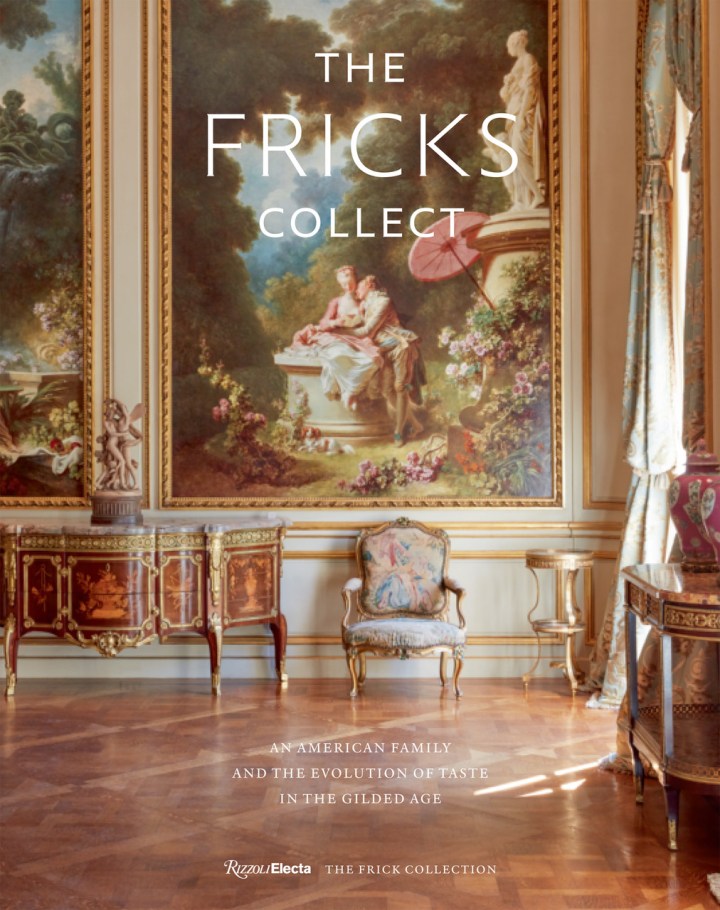 Before his New York home became a museum, Henry Clay Frick engaged some of his era’s most important art dealers to build a notable collection and the best decorators to create suitable Gilded Age interiors to accommodate the works. This story traces the journey that led to the creation of one of America’s finest art collections.
At its heart, this story centers on Frick and his daughter Helen Clay Frick, both pivotal figures in the formation of the renowned Frick Collection. The volume delves into the Fricks’ exposure to and acquisition of some of the finest art of their time. With an exquisite blend of textual narrative and ample imagery showcasing masterpieces and the sumptuous interiors of homes in Pittsburgh and New York, the book offers a captivating narrative of ambition, wealth, and cultural patronage.
White, Allom & Co. and Elsie de Wolfe worked with Frick on the decoration of his houses and influenced the choice of many furnishings the owner acquired and that formed the backdrop for his paintings. As was commonplace at the time, decorators often collaborated with dealers in creating spaces suitable for the esteemed works of art. Further influential figures who shaped the era’s cultural landscape include Frick’s business partner Andrew Carnegie and noted art dealers Joseph Duveen in London and Charles Carstairs of M. Knoedler & Co. in New York. Presenting the glittering halls of their homes and the masterpieces adorning the walls of The Frick Collection, this volume is a testament to the enduring allure of art and the power of patronage in shaping cultural institutions.
Ian Wardropper is the Anna-Maria and Stephen Kellen Director of The Frick Collection. Julian Fellowes is an English novelist, director, and screenwriter, best known as the creator and head writer of the popular TV series Downton Abbey.
New Book | Le Comte d’Angiviller
From Éditions Monelle Hayot:
Monelle Hayot and Antoine Maës, Le Comte d’Angiviller: Directeur des Arts sous Louis XVI (Saint-Rémy-en-l’Eau: Éditions d’art Monelle Hayot, 2025), 384 pages, ISBN: 979-1096561421, €60.
 Gentilhomme de la manche, le comte d’Angiviller (1730–1809) élève le futur Louis XVI et ses frères. Dès son accession au trône en 1774, Louis XVI le nomme directeur des Bâtiments. Son rôle est immense. Fondateur du musée du Louvre il orchestre les travaux et constitue les collections en acquérant des œuvres majeures. Il est responsable de tous les bâtiments royaux, achète Rambouillet pour le roi. Angiviller préside au sort des manufactures de Sèvres et des Gobelins, dirige l’Académie de peinture et de sculpture, ainsi que l’Académie de France à Rome.
L’époque révolutionnaire fait de lui un témoin oculaire majeur de faits historiques auxquels il participe. Le roi lui demande d’émigrer en Espagne. D’une fidélité sans faille, il revient pour aider le roi en danger, mais sa tête est sur la liste des aristocrates à décapiter. Il part pour l’Allemagne dont il ne reviendra jamais.
Angiviller avait un secrétaire, Narcisse, qui recopiait toute sa correspondance avec le roi. Il fut le témoin de sa vie et émigra avec lui. Sur ses vieux jours, Narcisse écrit ses mémoires pour la marquise de Capellis qui vit au château de Saint-Rémy-en-l’Eau, lieu de naissance d’Angiviller. Ce manuscrit inédit est entièrement retranscrit à la fin de cet ouvrage.
New Book | La Tabatière Choiseul
Published in October by Faton:
Michèle Bimbenet-Privat, ed., La Tabatière Choiseul: Un monument du XVIIIe siècle (Dijon: Éditions Faton, 2025), 256 pages, ISBN: 978-2878443721, €49.
 Acquise en 2023 par le musée du Louvre, la tabatière Choiseul est incontestablement la plus originale et la plus célèbre des tabatières du XVIIIe siècle. La précieuse monture en or de l’orfèvre Louis Roucel sert d’écrin à six miniatures de Louis Nicolas Van Biarenberghe mettant en scène le flamboyant duc de Choiseul, le grand ministre de Louis XV, au faîte de sa gloire. Toutes les facettes de la vie quotidienne de ce personnage généreux et arrogant s’y succèdent, soulignant son travail acharné, parfois solitaire, indissociable de l’exercice du pouvoir. La tabatière Choiseul séduit aussi par sa description minutieuse du cadre de vie raffiné du ministre, de son immense collection de tableaux et d’objets d’art, esquissant ainsi une réflexion sur les relations entre art et pouvoir. Elle offre enfin une multitude d’énigmes à résoudre sur son origine, ses possesseurs successifs, la signification des scènes, l’identification des lieux et des personnages représentés.










 Enfilade
leave a comment