New Book | Mediterranean Encounters
From Penn State UP:
Elisabeth Fraser, Mediterranean Encounters: Artists between Europe and the Ottoman Empire, 1774–1839 (University Park: The Pennsylvania State University Press, 2017), 320 pages, ISBN: 978 0271 073200, $90.
 In this volume, Elisabeth Fraser shows that artists and the works they created in the Mediterranean during the late eighteenth and early nineteenth centuries were informed by mutual dependence and reciprocity between European nations and the Ottoman Empire. Her rich exploration of this vibrant cross-cultural exchange challenges the dominant interpretation of European relations with the East during the period, revealing a shared world of fluid and long-sustained interactions.
Voyagers to and from the Ottoman Empire documented their journeys in prints, paintings, and lavishly illustrated travelogues; many of these helped define Europe’s self-identified role as heir to Ottoman civilizations and bolstered its presence in the Islamic Mediterranean and beyond. Fraser finds that these works illuminate not only how travelers’ experiences abroad were more nuanced than the expansionist ideology with which they became associated, but also how these narratives depicted the vitality of Ottoman culture and served as extensions of Ottoman diplomacy. Ottomans were aware of and responded to European representations, using them to defend Ottoman culture and sovereignty. In embracing the art of both cultures and setting these works in a broader context, Fraser challenges the dominant historiographical tradition that sees Ottoman artists adopting European modes of art in a one-sided process of ‘Europeanization’.
Theoretically informed and rigorously researched, this cross-cultural approach to European and Ottoman art sheds much-needed critical light on the widely disseminated travel images of the era—important cultural artifacts in their own right—and provides a fresh and inviting understanding of the relationships among cultures in the Mediterranean during an era of increasing European expansionism.
Elisabeth A. Fraser is Professor of Art History at the University of South Florida and the author of Delacroix, Art, and Patrimony in Post-Revolutionary France.
◊ ◊ ◊ ◊ ◊
C O N T E N T S
List of Illustrations
Acknowledgments
Introduction: Interpreting Travel in the Ottoman Mediterranean
Part I: Power in Question
1 Reading Choiseul in the Gaps of the Orientalist Archive
2 In the Shadow of les Grands: Cassas’s Orientalist Self-Fashioning
Part II: Ottoman Culture Abroad
3 The Translator’s Art: Mouradgea d’Ohsson, Ottoman Dragoman in Paris
4 Miniatures in Black and White: Melling’s Istanbul
Part III: Contradictory Contact
5 Skin of Nation, Body of Empire: Louis Dupré in Ottoman Greece
6 A Painter’s Renunciation: Delacroix in North Africa
Postscript
Notes
Bibliography
Index
Exhibition | Images and Revolts in Book and Prints
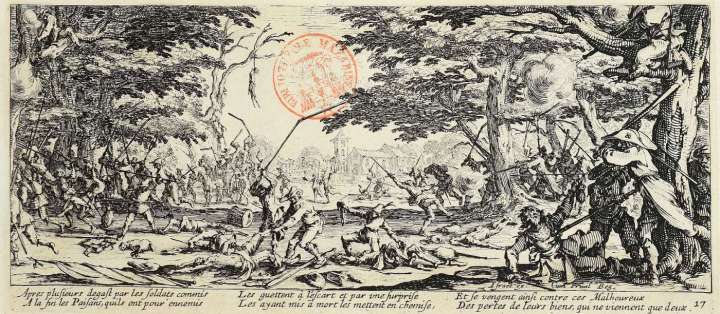
Now on view at the Bibliothèque Mazarine:
Images and Revolts in Book and Prints, 14th–Mid-18th Century
Images & Révoltes dans le livre et l’estampe, 14e–milieu du 18e siècle
Bibliothèque Mazarine, Paris, 14 December 2016 — 17 March 2017
Curated by Tiphaine Gaumy
Since the late Middle Ages, revolts and uprisings have marked European history. For a long time, historians believed that due to the extent of illiteracy, opponents had very few means of self-expression. However, the increase and widespread appearance of contesting images during periods of insurgency provides evidence of a visual and popular culture existing long before the French Revolution. Significant examples can be observed during the Bohemian Hussite movement in the 15th century or during the Peasants War in the Holy Roman Empire (1525).
An iconography of revolts emerged and spread, especially on ephemeral and scarcely preserved materials, but also in manuscripts, and very soon on new media. Opponents expressed their discontent through pamphlets and prints. In response, authorities tried to contain the dissemination of seditious images and to display, through other images, their own legitimacy and authority. This visual production raises many questions. How did rebels influence their creation? How did technical innovations (printing) or spiritual ones (reformation, iconoclasm…) determine their spread, form and content? Can historians trust them?
The exhibition features a broad variety of images, from rebellions of Flemish cities in the 14th century, to peasants revolts and religious troubles of the 15th and 16th centuries, uprisings and revolutions in the mid-17th century (in France, Portugal, Naples, the British Isles), and Jansenist protests in the 18th century. They form an unknown and astonishing visual legacy and a key testimony to understanding the political culture of Europe.
An exhibition organised by the Bibliothèque Mazarine, in collaboration with the ANR project Culture des révoltes et révolutions.
Stéphane Haffemayer, Alain Hugon, Yann Sordet, and Christophe Vellet, eds., Images & Révoltes dans le livre et l’estampe, XIVe–milieu du XVIIIe siècle (Paris: Bibliothèque Mazarine & Editions des Cendres, 2016), 315 pages, ISBN: 979 1090853 096, 38€.
Exhibition | House Style: Five Centuries of Fashion at Chatsworth

Mario Testino, Stella Tennant (in Junya Watanabe) with Her Grandmother the Duchess of Devonshire (in Oscar de la Renta), from British Vogue (December 2006). © Mario Testino.
◊ ◊ ◊ ◊ ◊
Press release (via Art Daily):
House Style: Five Centuries of Fashion at Chatsworth
Chatsworth House, Derbyshire, 25 March — 22 October 2017
Curated by Hamish Bowles
In 2017 Chatsworth will present its most ambitious exhibition to date, exploring the history of fashion and adornment: House Style: Five Centuries of Fashion at Chatsworth. Hamish Bowles, International Editor-at-Large at American Vogue, will curate this landmark show with creative direction and design by Patrick Kinmonth and Antonio Monfreda, the duo behind some of the most memorable fashion exhibitions of recent years. House Style will give unprecedented insight into the depth of the Devonshire Collection and the lives of renowned style icons from Georgiana, Duchess of Devonshire to Stella Tennant.
 The exhibition will bring to life the captivating individuals from the Cavendish family, including Bess of Hardwick, one of the most powerful women of the 16th century; the 18th-century ‘Empress of Fashion’ Georgiana, Duchess of Devonshire; and Adele Astaire, the sister and dance partner of Fred Astaire. Deborah Devonshire and Nancy Mitford (two of the Mitford sisters), model Stella Tennant, and John F. Kennedy’s sister ‘Kick’ Kennedy will also be central to the show. Telling the rich history of both international style and the Devonshire Collection, the exhibition will demonstrate the power of fashion to illuminate these extraordinary characters.
House Style will be woven throughout one of Britain’s finest stately homes, including the largest and grandest room of the Baroque house, the Painted Hall, the Chapel, and the lavishly decorated State Music Room. Layering art history, fashion, jewellery, archival material, design, and textiles, the exhibition will be organised by theme, including Coronation Dress, The Devonshire House Ball, Bess of Hardwick and the Tudor influence, The Georgiana Effect, Ducal Style, Country Living, The Circle of Life, and Entertaining at Chatsworth.
Highlights of the exhibition will include exceptional couture designed by Jean Phillipe Worth and Christian Dior, together with influential contemporary garments from designers such as Gucci, Helmut Lang, Margiela, Vivienne Westwood, Erdem, Alexander McQueen, Christopher Kane, and Vetements. The show will also feature personal family collections, including items belonging to the current Duke and Duchess of Devonshire, such as a Givenchy bolero worn on the Duchess’s wedding day. These pieces will be displayed alongside livery, uniforms, coronation robes, and fancy-dress costumes, demonstrating the varying breadth of fashion and adornment from the collection throughout the generations.
Important artworks will also be on display, including rare costume designs from the 1660s by Inigo Jones, Surveyor to the King’s Works and one of the most notable architects of 17th-century England. Contemporary artist T. J. Wilcox will be showing his intimate filmed portrait of Adele Astaire, which contains the only extant film of the star, found at Chatsworth in 2015.
Hamish Bowles commented: “To be let loose in the wardrobe rooms, the gold vaults, the muniment room, and the closets, cupboards, and attics of Chatsworth, in search of sartorial treasures has been a dream come true for me. Chatsworth is a real treasure house and the characters of generations of Cavendish family members who have peopled its rooms and gardens and landscapes is revealed as vividly through their choice of clothing and adornments, as through the canvases and lenses of the great artists and photographers who have memorialised them through the centuries. In House Style, we hope to bring these compelling and fascinating people and the very different worlds they inhabited to life, through the clothes and the jewels that they wore.”
Alessandro Michele, Creative Director at Gucci, commented: “Chatsworth is unlike anywhere else in the world—a place full of charm, history, and rituals. It is a piece of England, of Europe, and the contemporary world, all at the same time. You can see history everywhere, yet everything is alive.
This exhibition proves how much historical objects are an incredible source of inspiration for creating the present. Thus far the house has been speaking, now House Style gives a voice to the wardrobes of its inhabitants and guests.”
Patrick Kinmonth commented: “The patina of Chatsworth House itself is one of the greatest treasures of the collections, and looking at the surfaces and materials of clothes worn over hundreds of years in these very rooms proves to be a novel way to rediscover both the house and the wonderful things in it. Clothes and personal objects (especially jewels), in turn bring ghosts and visions of remarkable characters to the surface of the place, and we hope to conjure the presence of these remarkable men and women who have animated, loved and created this unique ensemble of great art, furniture, and personal style in its many layers.”
Hamish Bowles, ed., House Style: Five Centuries of Fashion at Chatsworth (New York: Rizzoli, 2017), 192 pages, ISBN: 978 0847 858965, $45. With a foreword by the Duke of Devonshire, an introduction by the Countess of Burlington, and essays and texts by Hamish Bowles, Kimberly Chrisman-Campbell, Charlotte Mosley, Sarah Mower, Diana Scarisbrick, and Lady Sophia Topley.
New Book | The Jacobites and Their Drinking Glasses
Charles Edward Stuart (Bonnie Prince Charlie) was born on this day (31 December) in 1720; whether you harbor Jacobite sympathies or simply anticipate ringing in the new year with a toast, these glasses might provide some inspiration. Happy New Year! –CH
From ACC Distribution:
Geoffrey B. Seddon, The Jacobites and Their Drinking Glasses, third edition (Woodbridge: Antique Collectors Club, 2016), 208 pages, ISBN: 978-1851497959, £35 / $65.
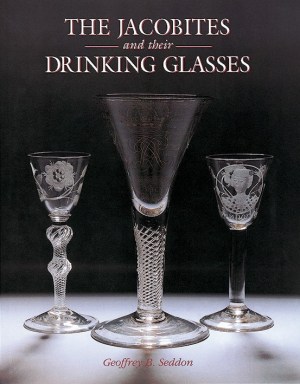 This book, first published in 1995, remains the most detailed study of Jacobite glass ever undertaken, and the glasses are described against the compelling history of the Jacobite movement in the 18th century. Hundreds of detailed photographs of the engravings help to authenticate the genuine glasses in a field well known to be infested with fakes. This third edition follows the same format as previous editions but is published in a more compact form, replete with an additional chapter.
The diamond point engraved ‘Amen’ glasses are, without question, the most valuable of all Jacobite glasses and indeed one of the most valuable of any of the 18th-century drinking glasses. Further studies have revealed that the ‘Amen’ glasses were engraved by the famous Scottish line engraver, Sir Robert Strange, and the evidence for this is provided in the final chapter.
Geoffrey B. Seddon, a retired medical practitioner, has been a member of the Glass Circle for over 40 years and has contributed papers to its publications and to Country Life magazine.
Exhibition | Enlightened Princesses
Press release (2 November 2016) for the exhibition:
Enlightened Princesses: Caroline, Augusta, Charlotte, and the Shaping of the Modern World
Yale Center for British Art, New Haven, 2 February — 30 April 2017
Kensington Palace, London, June 22–November 12, 2017
Curated by Joanna Marschner
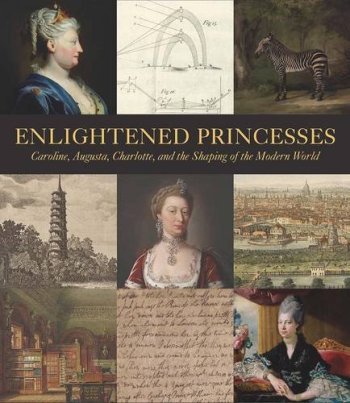 This exhibition will be the first to explore the instrumental roles played by Caroline of Ansbach (1683–1737), Augusta of Saxe-Gotha (1719–1772), and Charlotte of Mecklenberg-Strelitz (1744–1818) in the promotion of the arts, sciences, medicine, education, charity, trade, and industry in Britain over the course of the long eighteenth century. “The princesses had sweeping intellectual, social, cultural, and political interests, which helped to shape the courts in which they lived, and encouraged the era’s greatest philosophers, scientists, artists, and architects to develop important ideas that would guide ensuing generations. The palaces and royal gardens they inhabited served as incubators for enlightened conversation and experimentation, and functioned as platforms to project the latest cultural developments to an international audience. Their innovative contributions across disciplines held great signi cance centuries ago and continue to inform our lives,” said Amy Meyers, Director of the Yale Center for British Art, and organizing curator at the Center.
These three German princesses, who all married into the British royal family, played an important part in the shaping of their nation’s culture during a time of change that in its complexity and dynamism would presage our own age. “Until this point, their contributions have been little understood and it is the aim of this exhibition to demonstrate how they influenced the interests of their era in the most vibrant of ways and left a legacy that resonates in the world today,” said Joanna Marschner, Senior Curator at Historic Royal Palaces, and lead curator of this exhibition. Caroline and Charlotte became queens consort to George II and George III respectively, while Princess Augusta never achieved this distinction but held the titles of Princess of Wales and Princess Dowager, and was mother to King George III.
Nearly three hundred magnificent objects have been drawn together from numerous public and private collections from across Britain, Europe, and the United States, including the Royal Collection Trust; Royal Society; British Museum; National Portrait Gallery, London; and Smithsonian Institution, Washington, D.C., as well as Historic Royal Palaces and the Yale Center for British Art. The exhibition will feature works by the most influential artists of the period, such as Hans Holbein the Younger, Allan Ramsay, Mary Delany, George Stubbs, Thomas Gainsborough, Joshua Reynolds, and Johan Joseph Zoffany, as well as craftsmen such as Josiah Wedgwood and Matthew Boulton, and architects such as William Kent and William Chambers.
A rich variety of objects will offer a glimpse into the princesses’ private lives, their courts, and their legacy. The exhibition will bring together state portraits of the royal women, musical manuscripts, elaborate court costume, botanical and anatomical renderings, the Princesses’ own scientific instruments, architectural drawings and garden designs, royal children’s artwork, rare books and manuscripts, and much more. The display also will include a work created by the artist Yinka Shonibare MBE (RA), for this exhibition. It is inspired by the meeting, in 1753, between Princess Augusta and Mrs. Eliza Lucas Pinckney, the owner of a profitable slave plantation in South Carolina in the British colonies of North America. A letter written by Mrs. Pinckney to a friend, detailing the encounter, will be featured in the exhibition as a special loan from the collection of The National Society of The Colonial Dames of America in the State of South Carolina. The dress worn by Mrs. Pinckney on this occasion, made of silk produced on her plantation, will be lent to the Yale Center for British Art from the Smithsonian Institution.
E X H I B I T I O N T H E M E S
The exhibition will be organized according to five basic themes. Grand oil portraits by Joseph Highmore of Queen Caroline of Ansbach (ca. 1735), Allan Ramsay of Augusta, Dowager Princess of Wales (1769), and Johan Joseph Zoffany of Queen Charlotte (1771) will set the stage for the exhibition.
The Court as a Stage
In the world of the palaces, the royal court operated as a stage, not only in the literal sense for the performance of music, dance, and theater but also as a political and cultural arena in which the intricate power plays between and among monarch, consort, and courtier took place. In their furnishing of the spaces, Caroline, Augusta, and Charlotte constructed a visual statement of the authority of the Hanoverian dynasty–past, present, and future– under which the patronage of music and the arts would flourish. Yet at the same time they had to navigate the inherently political nature of public and private life (even family life) at court during a period that saw an information revolution, initiated by the mass circulation of newspapers, journals, and magazines providing commentary, debate, and critique. Art illustrative of this theme includes works by Hans Holbein the Younger, such as Lady Lister (ca. 1532–43), drawn together in celebration of the distinguished pedigree of royal ancestry, and displayed alongside images of the royal children, the future hope of the dynasty, represented by such works as a lively genre scene by Phillippe Mercier, ‘The Music Party’: Frederick, Prince of Wales with his Three Eldest Sisters (1733).
Cultures of Learning: Powerful Conversations
At the heart of their social circles, Caroline, Augusta, and Charlotte built relationships with leading cultural and intellectual figures of their age, including politicians, clergymen, natural philosophers, gardeners, architects, authors, playwrights, and composers. While each princess developed these connections in different ways and with different priorities, their interests often overlapped or had a common focus, such as in science, medicine, philanthropy, and especially maternity, the care of infants, and the commercial interests of the state in Britain and abroad. Their pursuits in this area are re ected in objects on display including an oil portrait by John Vanderbank of Sir Isaac Newton (1726); Thomas Gainsborough’s splendid grand manner portrait of his friend, the musician Carl Abel, later acquired by Queen Charlotte for whom he provided music; and Allan Ramsey’s beautifully nuanced portrait of Charlotte’s medical adviser, Dr. William Hunter.
Royal Women: Education, Charity, and Health
Attitudes regarding royal child-rearing changed rapidly over the lifetimes of Caroline, Augusta, and Charlotte. There were shifts in methodology and focus in response to the evolving contemporary philosophies about childhood, sentimentality, and the freedom of the individual. The princesses were active contributors to the educational programs devised for their children, the future promise for the dynasty, and sought to draw them into worlds outside the palace walls. In their public roles as encouragers and protectors, the princesses sought involvement with ambitious and wide-reaching public philanthropic projects, organizations, and societies, especially those connected with health and social welfare. A precious silk satin baby robe (1762) belonging to George, Prince of Wales (later George IV), the eldest child of George III and Queen Charlotte, compares poignantly with tokens left by unmarried and impoverished mothers as they consigned their children to the Foundling Hospital. The hospital was a charity supported by all three of the princesses, which reflected their concern for progressive social change.
Political Gardening
Caroline, Augusta, and Charlotte created and recast each other’s gardens, which were by turns political and social spaces, as well as private retreats. They drew in the products of empire; plants and animals were collected from many continents, not only for their beauty and rarity but also their economic value. Likewise, the development of the collections of animals and birds brought back from the exploration of these ‘new’ worlds were an important feature in the royal gardens. In the design of their gardens, the princesses explored contemporary garden philosophies and exercised their architectural ambitions. Many of their landscapes, which they invested with message, were made to
be shared, not just with the community of gardeners, philosophers, and scientists the princesses drew into their circle, but with a wider community of the middling sort, which allowed a new relationship between monarchy and subject to be brokered. The gardens served each princess well but each manifestation was different, reacting to a volatile commercial environment as well as a changing perception of the bonds between and among the dynasty, nationhood, and empire.
Over the course of the long eighteenth century these three royal women seized the opportunities of a dynamic age, and their determined and imaginative promotion of the arts, sciences, medicine, education, charity, trade, and industry, shaped not only society and politics of their own time but were the forbearers of much of the beliefs and policies that continue in modern British culture. A brilliant watercolor by Mark Catesby, The Painted Finch and the Loblolly Bay (ca. 1722–26), and an intricate cut-paper collage by Mary Delany, Cactus Grandi orus, melon thistle (1778), serve as evidence of the princesses’ interest in Britain’s widespread imperial range.
To Promote and Protect: The Princesses and the Wider World
In working to promote and encourage the arts and science, Caroline, Augusta, and Charlotte supported and championed national products and allowed their interest to be used by enterprising industrialists, which helped win hearts and minds for the new regime. The development of new industrial technologies enabled mass-produced consumer goods, ensuring for the first time the dissemination of the image of the British monarchy, in a way that today is recognized as a ‘brand’, for a domestic and international audience. In the furnishing of their homes and the development of their gardens, the princesses celebrated the fruits of empire. The first British incursions into the Americas began in the sixteenth century, burgeoned in the seventeenth century, and matured over the first half of the eighteenth century. Following the War of Independence, these efforts would be succeeded by increased colonial expansion (Caribbean, India, Africa, China, and Australasia). Masterpieces that reflect the imperatives of empire which helped to brand the character of the British monarchy internationally will include one of the Center’s treasured works, a painting by William Verelst, Audience Given by the Trustees of Georgia to a Delegation of Creek Indians (1734–35), and a painting by George Stubbs of a zebra belonging to Queen Charlotte (1763).
C R E D I T S A N D P U B L I C A T I O N
Enlightened Princesses: Caroline, Augusta, Charlotte, and the Shaping of the Modern World is a collaboration between Historic Royal Palaces and the Yale Center for British Art. Lead curator Joanna Marschner, Senior Curator at Historic Royal Palaces, is assisted by Samantha Howard, Curatorial Assistant. The organizing curator at the Center, Amy Meyers, Director, is assisted by Lisa Ford, Assistant Director of Research; Glenn Adamson, Senior Research Associate; and Tyler Griffith, Postdoctoral Research Associate. The exhibition will be accompanied by a publication of the same title, a beautifully illustrated catalogue of works edited by Joanna Marschner, with the assistance of David Bindman and Lisa Ford. Co-published with Historic Royal Palaces in association with Yale University Press, this book will feature contributions by an international team of scholars.
◊ ◊ ◊ ◊ ◊
The catalogue is scheduled for March publication from Yale UP:
Joanna Marschner, ed., with David Bindman and Lisa Ford, Enlightened Princesses: Caroline, Augusta, Charlotte, and the Shaping of the Modern World (New Haven: Yale Center for British Art, 2017), 592 pages, ISBN: 978 0300 217100, $85.
Caroline of Ansbach (1683–1737), Augusta of Saxe-Gotha (1719–1772), and Charlotte of Mecklenberg-Strelitz (1744–1818) were three German princesses who became Queens Consort—or, in the case of Augusta, Queen in Waiting, Regent, and Princess Dowager—of Great Britain, and were linked by their early years at European princely courts, their curiosity, aspirations, and an investment in Enlightenment thought. This sumptuously illustrated book considers the ways these powerful, intelligent women left enduring marks on British culture through a wide range of activities: the promotion of the court as a dynamic forum of the Hanoverian regime; the enrichment of the royal collection of art; the advancement of science and industry; and the creation of gardens and menageries. Objects included range from spectacular state portraits to pedagogical toys to plant and animal specimens, and reveal how the new and novel intermingled with the traditional.
New Book | Silver for Entertaining: The Ickworth Collection
From Philip Wilson:
James Rothwell, Silver for Entertaining: The Ickworth Collection (London: Philip Wilson Publishers, 2016), 304 pages, ISBN: 978 1781 300428, £50 / $90.
 This book is a comprehensive, well illustrated guide to one of the most important collections of 18th-century silver in Europe, extending to nearly a thousand individual pieces, being of the highest quality, style, and exuberance of form and surviving virtually intact along with extensive and previously untapped archival evidence of its commissioning and use. The book analyses the silver from stylistic and technical perspectives and uses it to shed light on the patronage, fashion, and diplomatic, political and social history of the period. It also casts new light on the Herveys, one of England’s most famous and eccentric aristocratic families.
James Rothwell studied art history at Warwick University and gained a master’s degree at the Courtauld Institute of Art. He has worked for the National Trust since 1995 and is the organisation’s adviser on silver, carrying out extensive research on the collections and guiding displays, interpretation, and acquisitions. He has published numerous articles on the subject and is the co-author of Country House Silver from Dunham Massey (2006). In collaboration with the Goldsmiths’ Company, he has overseen a ground-breaking series of exhibitions of works by contemporary silversmiths in National Trust houses.
New Book | Ceramics: 400 Years of British Collecting
From Philip Wilson:
Patricia Ferguson, Ceramics: 400 Years of British Collecting in 100 Masterpieces (London: Philip Wilson Publishers, 2016), 192 pages, ISBN: 978 1781 300435, £45 / $75.
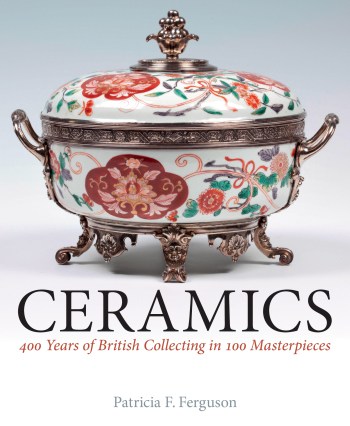 The aim of this publication is to introduce the rich and varied ceramics in the National Trust’s vast and encyclopaedic collection, numbering approximately 75,000 artefacts, housed in 250 historic properties in England, Wales, and Northern Ireland. One hundred key pieces have been selected from this rich treasure trove, each contributing to our knowledge of ceramic patronage and history, revealing the very personal stories of ownership, display, taste, and consumption. The selection includes the following Continental wares: ‘Red-figure’ wares, Italian armorial tablewares, Dutch Delft from the Greek A factory (owned by Adrianus Kocx), Chinese Kraak ware and Dehua ware, Japanese Kakiemon-style and Imari-style tablewares and garnitures, Meissen table sculpture by Johann Joachim Kandler and tablewares attributed to Adam Friedrich von Lowenfinck, along with Castelli fayence from the Grue workshop. There are wares from the following porcelain manufactories: Doccia, Vienna, Vincennes, Sevres, Dihl, and Feulliet. English pottery and porcelain includes delftware, salt-glazed stoneware, creamware, Wedgwood Black Basalt and Etruscan ware, Chelsea, Bow, Worcester and Derby porcelain, Minton China, De Morgan, and Martin ware. And from the Americas, Pueblo ware. Many pieces are published for the first time, sometimes illustrated in their original interiors. Collectively, the selection surveys patterns of ceramic collecting by the British aristocracy and gentry over a four-hundred-year period.
Patricia F. Ferguson is an external adviser on ceramics to The National Trust, having researched their collections since 2003, and is a consulting curator at the Victoria & Albert Museum, London. She has an MA from SOAS, University of London, where she studied Chinese, Japanese, and Safavid ceramics. At the George R. Gardiner Museum of Ceramic Art in Toronto, she re-displayed the European galleries, curated Containers of Beauty: The Art of Floral Display and Your Presence Is Requested: The Art of Dining in Eighteenth-Century Europe, and was author of Cobalt Treasures: The Robert Murray Bell and Ann Walker Bell Collection of Chinese Blue and White Porcelain (2003).
Exhibition | Wooden Sculptures, Busts, Reliquaries, and Shrines
Now on view at Pinacoteca Giovanni Züst:
Sculptures, Busts, Reliquaries, and Shrines from the Middle Ages to the Eighteenth Century
Legni Preziosi: Sculture, Busti, Reliquiari e Tabernacoli dal Medioevo al Settecento
Pinacoteca Giovanni Züst, Rancate, Switzerland, 16 October 2016 — 22 January 2017
Curated by Edoardo Villata
 La mostra presenta una carrellata di sculture in legno dal XII al XVIII secolo— Madonne, Crocifissi, Compianti, busti, polittici scolpiti e persino un Presepe—provenienti da musei, chiese e monasteri del territorio ticinese, dove questi autentici capolavori sono stati oggetto di devozione e ammirazione per secoli. L’allestimento è stato curato da Mario Botta, che ha studiato, a titolo completamente gratuito, ogni dettaglio, affinché il visitatore sia immerso in un’atmosfera suggestiva e solenne, in cui la sacralità delle immagini esposte risulta pienamente valorizzata.
Edoardo Villata, Legni Preziosi: Sculture, busti, reliquiari e tabernacoli dal Medioevo al Settecento nel Cantone Ticino (Milan: Silvana, 2016), 208 pages, ISBN: 978 8836 634767, $55.
The Burlington Magazine, December 2016
The eighteenth century in The Burlington (the issue is dedicated to ‘Art in Britain’):
 The Burlington Magazine 158 (December 2016)
A R T I C L E S
• Lydia Hamlett, “Pandora at Petworth House: New Light on the Work and Patronage of Louis Laguerre,” pp. 950–55.
• Jennifer Melville, “Lady Forbes of Monymusk: A Rediscovered Portrait by Joshua Reynolds,” pp. 956–60.
• Brendan Cassidy, “A Portrait by Gavin Hamilton: Sir John Henderson of Fordell,” pp. 961–63.
• Alex Kidson, “David Solkin’s Art in Britain, 1660–1815 (Paul Mellon Centre for Studies in British Art, 2015),” pp. 964–67.
L E T T E R S
• Peter Lindfield, “A Further Allusion to Strawberry Hill at Lee Priory, Kent,” p. 979.
• Nicholas Penny, “Hugh Honour,” p. 979.
R E V I E W S
• Susanna Avery-Quash, Review of Lucilla Burn, The Fitzwilliam Museum: A History (Philip Wilson Publishers, 2016), p. 980.
• Greg Smith, Review of the exhibition catalogue, Tim Barringer and Oliver Fairclough, Pastures Green & Dark Satanic Mills: The British Passion for Landscape (Giles, 2014), pp. 981–82.
• Barry Bergdoll, Review of Stefan Koppelkamm, The Imaginary Orient: Exotic Buildings of the 18th and 19th Centuries in Europe (Axel Munges, 2015), p. 982.
• Giles Waterfield, Review of the exhibition catalogue, Victoria Avery, Melissa Calaresu, and Mary Laven, eds., Treasured Possessions from the Renaissance to the Enlightenment (Philip Wilson Publishers, 2015), p. 988.
• Malcolm Bull, Review of the exhibition In the Light of Naples: The Art of Francesco de Mura (Cornell Fine Arts Museum, Rollins College, Winter Park, 2016; Chazen Museum, University of Wisconsin-Madison, 2017; The Frances Lehman Loeb Art Center, Vassar College, Poughkeepsie, 2017), pp. 1006–07.
S U P P L E M E N T
• Tim Knox, “Recent Acquisitions (2012–16) at the Fitzwilliam Museum, Cambridge,” pp. 1017–28.
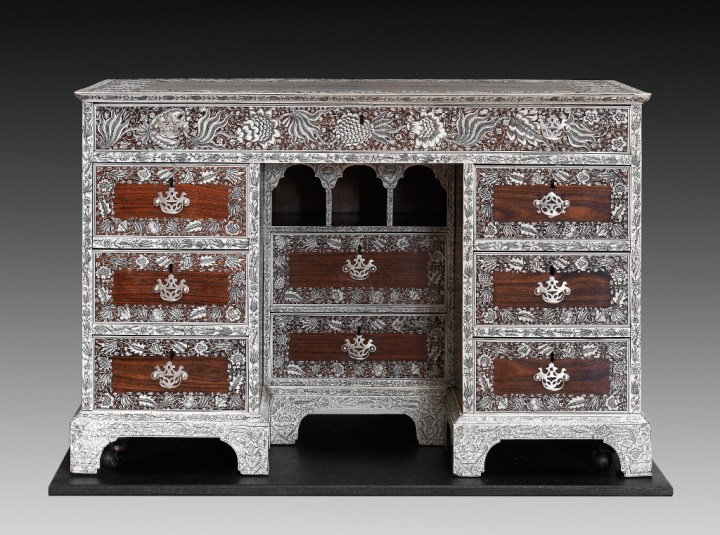
The Rumbold Desk, by an unknown craftsman from Vizagapatam, Southern India, ca. 1750–60, rosewood inlaid with ivory, silver handles, 76 × 113 × 62 cm. Accepted in Lieu of Inheritance Tax by HM Government and allocated to the Fitzwilliam Museum, 2016 (M.3–2016). This Anglo-Indian desk has been on loan to the Fitzwilliam Museum in Cambridge since 2012 and is one of the finest of a very small group of similar desks made for British patrons in India at Vizagapatam (near Madras), a centre for the manufacture of such luxurious ivory-inlaid furniture. It belonged to Sir Thomas Rumbold, 1st baronet (1736–91), a British administrator in India, who amassed a great fortune in the service of the East India Company and served as Governor of Madras from 1777 to 1780.
New Book | Claudio Francesco Beaumont
From ArtBooks.com:
Luca Fiorentino, Claudio Francesco Beaumont: L’Album di Disegni del Museo Civico d’Arte Antica di Palazzo Madama a Torino (Florence: Centro Di, 2016), 288 pages, ISBN: 978 8870 385380, €40 / $75.
 Questo studio di Luca Fiorentino analizza L’Album di Disegni di Claudio Francesco Beaumont (1694–1766), artista piemontese che divenne primo pittore della corte sabauda. L’Album, composto da 309 disegni (non tutti di mano di Beaumont), entro nelle collezioni comunali del Museo Civico d’Arte Antica di Torino nel 1931, dopo essere stato conservato dall’autore stesso e in seguito dalla sua famiglia. La ricerca è suddivisa in due sezioni: il saggio critico e il catalogo, composto da schede dettagliate e redatte secondo i moderni parametri scientifici.










 Enfilade
leave a comment