New Book | Visual Culture and the Revolutionary and Napoleonic Wars
From Routledge:
Satish Padiyar, Philip Shaw, Philippa Simpson, eds., Visual Culture and the Revolutionary and Napoleonic Wars (New York: Routledge, 2016), 252 pages, ISBN: 978-1472447111, $150.
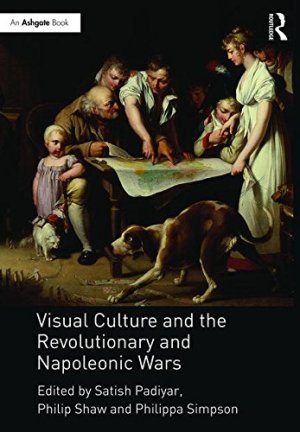 Individually and collectively, the essays in this cross-disciplinary collection explore the impact of the revolutionary and Napoleonic Wars on European visual culture, from the outbreak of the pan-European conflict with France in 1792 to the aftermath of the Battle of Waterloo in 1815. Through consideration of a range of media, from academic painting to prints, drawings and printed ephemera, this book offers fresh understanding of the rich variety of ways in which warfare was mediated in visual cultures in Britain and continental Europe.
The fourteen essays in the collection are grouped thematically into three sections, each focusing on a specific type of visual communication. Thus, Part One engages with historically specific ways of transmitting messages about war and conflict, including maps, prints, silhouette imagery and war games produced in France and Germany. Part Two considers popular and elite imagining of war between 1793 and 1815, encompassing readings of paintings by Turner, Girodet and Goya, Portuguese anti-French drawings and British satirical book illustrations. Part Three concentrates on visual cultures of commemoration, addressing British theatrical reenactments and museum collections, and British and Dutch paintings of the Battle of Waterloo. As such, the volume uncovers fascinating new visual material and throws fresh light on some of the more canonical visual representations of conflict during the first ‘Total War’.
Satish Padiyar is Senior Lecturer in Nineteenth-Century European Art at The Courtauld Institute of Art. He is author of Chains: David, Canova and the Fall of the Public Hero in Postrevolutionary France (2007) and editor of Modernist Games: Cézanne and His Card Players (2013). He is currently preparing a monograph on Jean-Honoré Fragonard.
Philip Shaw is Professor of Romantic Studies at the University of Leicester. He is author of Waterloo and the Romantic Imagination (2002), The Sublime (2006) and Suffering and Sentiment in Romantic Military Art (2013), and editor of Romantic Wars: Studies in Culture and Conflict, 1793–1822 (2000). He has written essays on military art in the Romantic period for Soldiering in Britain and Ireland, 1750–1850: Men of Arms (2013) and Tracing War in British Enlightenment and Romantic Culture (2015).
Philippa Simpson is Client Project Manager at the Victoria and Albert Museum. She was co-curator and catalogue author of Turner and the Masters (Tate Britain, Musée du Louvre, Museo del Prado) and Blake and British Visionary Art (Pushkin Museum) and has contributed essays to Turner Inspired: In the Light of Claude (2012), Blake 2.0: William Blake in Twentieth-Century, Art, Music and Culture (2012) and Sexy Blake (2013).
◊ ◊ ◊ ◊ ◊
C O N T E N T S
Introduction—Contested Views: The Image in the First Total War, Satish Padiyar, Philip Shaw, and Philippa Simpson
Part One: Cultures of Participation
1 The Territorial Imaginary of the Revolutionary and Napoleonic War, Katie Hornstein
2 Beholder, Beheaded: Theatrics of the Guillotine and the Spectacle of Rupture, Stephanie O’Rourke
3 Smuggled Silhouettes: Opacity and Transparency as Visual Strategies for Negotiating Royal Sovereignty during the Revolutionary and Napoleonic Wars, Allison Goudie
4 Wargaming: Visualizing Conflict in French Printed Boardgames, Richard Taws
5 Battle Lines: Drawing, Lithography and the Casualties of War, Sue Walker
Part Two: War and the Image
6 From the Nore: Turner at the Mouth of the Thames, Richard Johns
7 Ghosts and Heroes: Girodet and the Ossianic Mode in Post-Revolutionary French Art, Emma Barker
8 King Ferdinand’s Veto: Goya’s 2nd and 3rd May 1808 as Patriotic Failures, Simon Lee
9 “The most atrocious [acts] one may imagine”: The So-called Series of the French Invasions and Anti-French Propaganda during the Peninsular War, Foteini Vlachou
10 The Comic View of Johnny Newcome’s Military Adventures, Neil Ramsey
Part Three: Cultures of Commemoration
11 Reality Effects: War, Theatre and Re-enactment around 1800, Gillian Russell
12 Ephemeral Histories: Social Commemoration of the Revolutionary and Napoleonic Wars in the Paper Collections of Sarah Sophia Banks, Arlene Leis
13 Exhibiting the Nation’s Navy: The Foundation of the National Gallery of Naval Art, 1795– 1845, Cicely Robinson
14 Picturing the Battlefield of Victory: Document, Drama, Image, Susan L. Siegfried
New Book | Neo-Georgian Architecture, 1880–1970
Distributed in North America by The University of Chicago Press:
Julian Holder and Elizabeth McKellar, eds., Neo-Georgian Architecture, 1880–1970 (London: Historic England, 2016), 256 pages, ISBN: 978-1848022355, $100.
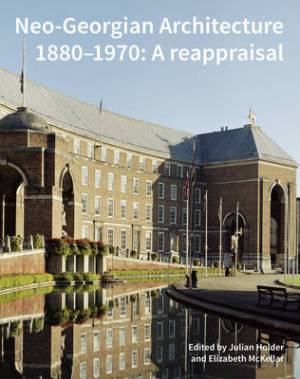 Neo-Georgian design, which began with a revival of the Georgian ideals of symmetry and classical proportion in the late nineteenth century, has exerted a powerful and enduring influence on English-language cultures around the world. Neo-Georgian Architecture, 1880–1970 assesses the impact of this movement through a consideration of the buildings, objects, institutions, and actors involved, contending that Neo-Georgianism was not simply another dying gasp of Revivalism but a complex assertion of national image and identity with a complicated, and at times fraught, relationship to modernism.
Julian Holder is Lecturer in the History and Theory of Architecture department at the University of Salford. Elizabeth McKellar is Professor of Architectural and Design History at the Open University.
◊ ◊ ◊ ◊ ◊
C O N T E N T S
Notes on Contributors
Acknowledgements
Foreword by Louise Campbell
1 Introduction: Reappraising the Neo-Georgian, Julian Holder and Elizabeth McKellar
I: Origins of the Neo-Georgian
2 Quality in Quality Street: Neo-Georgian and Its Place in Architectural History, Alan Powers
3 The Call to Order: Neo-Georgian and the Liverpool School of Architecture, Peter Richmond
4 Georgian London before Georgian London: Beresford Chancellor Rasmussen and ‘The true and sad story of the Regent’s Street’, Elizabeth McKellar
II: Developing the Neo-Georgian Language
5 Edwin Lutyens: Wrenaissance to Neo-Georgian, Margaret Richardson
6 Emanuel Vincent Harris: Civic, Civil and Sane, Julian Holder and Nick Holmes
7 Giles Gilbert Scott and Classical Architecture, Gavin Stamp
8 C. H. James: Neo-Georgian: From the Small House to the Town Hall, Nick Chapple
III: Establishing a New Tradition: Typologies of the Neo-Georgian
9 Banker’s Georgian, Neil Burton
10 A State of Approval: Neo-Georgian Architecture and His Majesty’s Office of Works, 1914–1939, Julian Holder
11 Neo-Georgian: The Other Style in Britain’s 20th-century University Architecture?, William Whyte
IV: Neo-Georgian: A Prelude to Modernism?
12 ‘Modern Swedish Rococo’: The Neo-Georgian Interior in Britain, c. 1920–1945, Clare Taylor
13 ‘A Live Universal Language’: The Georgian as Motif in interwar English Architectural Modernism, Elizabeth Darling
V: Global Neo-Georgian
14 The Neo-Georgian in New Zealand, 1918– 1939: Architectural Revivalism at the End of Empire, Ian Lochhead
15 ‘Phony Coloney’: The Reception of the Georgian and the Construction of 20th-Century America, Stephen Hague
Index
New Book | The Architecture of Percier and Fontaine
Coming this fall from Routledge:
Iris Moon, The Architecture of Percier and Fontaine and the Struggle for Sovereignty in Revolutionary France (New York: Routledge, 2016), 260 pages, ISBN: 978-1472480163, $150.
 French architects Charles Percier (1764–1838) and Pierre-François-Léonard Fontaine (1762–1853) became the most celebrated decorators of the French Revolution and achieved success as the official architects of Napoleon Bonaparte. This book explores how Percier and Fontaine created the Empire style and a system of decoration that engaged with the difficult politics of the period. Taking seriously the architects’ achievements in interior decoration, furnishings, theater designs, and publications during the early and most active period of their collaborative practice, their integral role in reestablishing the luxury market in Paris after the Terror, cultivating the taste of a new clientele, and creating sites of power through their interior decorations are explored. From meeting rooms designed to resemble military encampments to gilded imperial thrones that replaced Bourbon fleur-de-lys with Napoleonic bees, the architects moved beyond a Neoclassical idiom in order to transform the symbols of monarchy and revolution into an imperial ideology defined by a contradictory aesthetics. At the heart of Percier and Fontaine’s decorative work and central to grasping the politics of the Empire style is a dialectical tension between the search for a monumental architecture of permanence and the reliance upon portable, collapsible, and mobile forms. Percier, Fontaine and the Politics of the Empire Style will contribute new interdisciplinary perspectives on the relationship of the decorative arts and architecture with the political culture of post-revolutionary France and how interior decoration engendered a new awareness of time, memory, and identity.
Iris Moon is a visiting assistant professor in the School of Architecture at Pratt Institute. She specializes in eighteenth and nineteenth-century European art, architecture, and the decorative arts.
◊ ◊ ◊ ◊ ◊
C O N T E N T S
List of Illustrations
Acknowledgements
Introduction: Finding Revolutionary Architecture in the Decorative Arts
1 Visionary Friendship at the End of the Ancien Régime
Clean Sheets and Water Magic
Architects in Training
Roman Fever
Solo Missions
An Etruscan Friendship
2 Propulsion and Residue: Constructing the Revolutionary Interior
Rome à Rebours
Staging Antiquity and Austerity
Revolutionary Rearrangements
Seek, Record, Destroy
The Eternal Return of Luxury
3 The Recueil de décorations intérieures: Furnishing a New Order
Paper Studios
Furnishing Techniques
Strategies of Redaction
Consuming Desires
Writing Against Fashion
Between the Lines
Empire Styles
4 The Platinum Cabinet: Luxury in Times of Uncertainty
Pastoral Pastimes
Incorruptible Precision
Fast Times in Consulate Paris
Haunting Season
5 Tent and Throne: Architecture in a State of Emergency
Après Coup
Fantasies of the Ideal Villa
A Permanent Work in Progress
Little Pleasures
The Moving Bivouac
Political Theology
Divorcing the Past
Coda: Revolutionary Atonement
New Book | Lancelot Brown and the Capability Men
The Capability Brown Festival 2016 has marked the 300th anniversary of the landscape designer’s birth in August 1716. This week, a major conference addressing Brown and his international significance takes place in Bath, and now come the books!
Distributed by The University of Chicago Press:
David Brown and Tom Williamson, Lancelot Brown and the Capability Men: Landscape Revolution in Eighteenth-Century England (London: Reaktion Books, 2016), 352 pages, ISBN: 978-1780236445, $45.
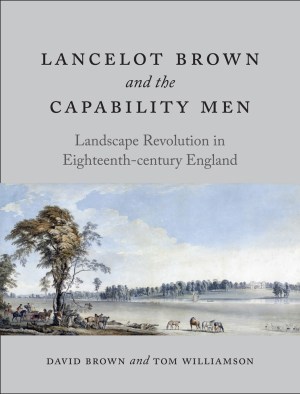 Lancelot ‘Capability’ Brown is often thought of as the innovative genius who single-handedly pioneered a new, naturalistic style of landscape design, but he was in fact only one of many landscape designers in Georgian England. Published to commemorate the three hundredth anniversary of Brown’s birth, this book casts important new light on his world-renowned work, his eventful life, and the wider and robust world of landscape design in Georgian England.
David Brown and Tom Williamson argue that Brown was one of the most successful designers of his time working in a style that was otherwise widespread—and that it was his skill with this style, and not his having invented it, that linked his name to it. The authors look closely at Brown’s design business and the products he offered clients, showing that his design packages helped define the era’s aesthetic. They compare Brown’s business to those of similar designers such as the Adam brothers, Thomas Chippendale, and Josiah Wedgwood, and they contextualize Brown’s work within the wider contexts of domestic planning and the rise of neoclassicism. Beautifully illustrated throughout, this book celebrates the work of a master designer who was both a product and harbinger of the modern world.
David Brown is a tutor of landscape history at the University of Cambridge. Tom Williamson is professor of landscape history at the University of East Anglia and the author of many books, including An Environmental History of Wildlife in England, 1650–1950.
C O N T E N T S
1 The World of Mr Brown
2 Gardens and Society, 1700–1750
3 The ‘Brownian’ Landscape
4 The Brown Connection
5 Landscape and Modernity
6 Alternatives and Oppositions
Conclusion: Afterlife and Legacy
References
Bibliography
Acknowledgements
Photo Acknowledgements
Index
New Book | Capability Brown: Designing the English Landscape
From Rizzoli:
John Phibbs, with photography by Joe Cornish, Capability Brown: Designing the English Landscape (New York: Rizzoli, 2016), 280 pages, ISBN: 978-0847848836, $65.
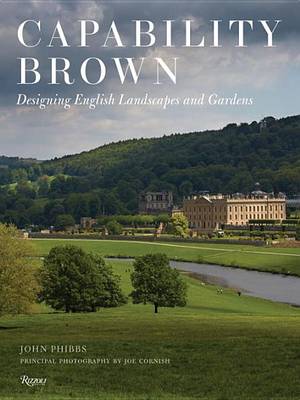 In celebration of his 300th year, a definitive survey of Capability Brown’s most famous gardens and landscapes in Britain. Widely acknowledged as the most influential landscape designer of his age, Lancelot ‘Capability’ Brown was to England what Frederick Law Olmsted was to America—responsible for shaping the very ideal of the nation’s parkland. Brown’s ambition was to bring out of a landscape the best of its potential rather than impose his own ideas upon it. His designs are organic, weaving gestures of color and perspective into the features that the country already afforded. So natural are his designs, and so perfectly do they complement the houses within them, that for many a Capability Brown landscape is the epitome of the English estate. His gardens and parklands—as much as the houses themselves—would become icons of British country life. Published to coincide with the tercentenary of his birth, this remarkable book illuminates fifteen of Brown’s most celebrated landscapes. To love the great English estates is to love the settings with which Brown surrounded them—from idyllic parklands at Milton and Broadlands to structured landscapes around iconic houses at Blenheim, Burghley, Wakefield, and Chatsworth. With photography commissioned for the book, and including rarely seen archival drawings that shed light on Brown’s process, this book serves as a guide to Britain’s most beloved landscapes and an exploration of the masterful mind behind their creation.
John Phibbs set up the Capability Brown 1716–2016 Partnership and is a renowned garden historian and author with more than thirty years’ experience in the management and restoration of historic landscapes. Joe Cornish is an award-winning landscape photographer and an honorary fellow of the Royal Photographic Society with a studio and gallery in Yorkshire, England.
New Book | Place-Making: The Art of Capability Brown, 1716–1783
This one is an interesting economic model of publication. Historic England is the publisher, but at least a portion of the funding depends upon supporters (‘subscribers’ to use the eighteenth-century term) pledging money at Unbound. Hearing John Phibbs pitch for the project in the 3-minute video is fascinating: in effect, the ‘elevator pitch’ is directed toward potential readers rather than an editor. –CH
John Phibbs, Place-Making: The Art of Capability Brown, 1716–1783 (London: Historic England, 2016), 320 pages, £50.
Capability Brown was a great artist, and this book shows what his artistry consisted of. His influence on the culture of England has been as great as that of Turner, Telford and Wordsworth.
Lancelot ‘Capability’ Brown (1716–1783) is the iconic figure at the head of the English landscape style, a tradition that has dominated landscape design in the western world. He was widely acclaimed for his genius in his own day, lived on personal terms with the king, a friend of five prime-ministers, and the great men of his day.
Two factors make his astonishing achievements relevant to us today: first the scale at which he worked and the prolixity of his commissions have given him a direct influence on some half a million acres of England and Wales (that’s an average size English county); and second, arising from that, Brown didn’t just transform the English countryside, he also transformed our idea of what it is to be English and what England is. His work is everywhere, but goes largely unnoticed, the phrase ‘Invisible in plain sight’ comes to mind. Even today though he has had biographers, his work has generated very little analysis.
Very little of what he wrote survives, but the reason why he isn’t noticed—and this point was made in his own day in the 18th century—is that his was such a naturalistic style that all his best work was mistaken for untouched nature. This has made it very difficult to see and understand, which leaves us in a strange situation today. Of the 250 or so country houses for which he designed parks, about 200 are still worth seeing, and millions of people every year visit the 140 that are at least occasionally open to the public. Yet if you were to ask any one of these visitors the simplest questions about the parks (‘what are they for?’, ‘how do they work?’, ‘why did they need so much grass?’ ‘what do they have to do with country houses?’, for example), they would look at you bemused, as if you had asked what mountains are for. For people who are used to English landscape, parks simply are what they are: parks have grass because they are parks.
This blindness to these obvious questions is not confined to the general public. Professional landscape architects, academics and those involved in landscape conservation would be no more able to answer them. It is not just that there is no consensus in understanding Capability Brown’s work, but there has been no attempt to understand it. Even the framework of language for understanding it is lacking. For all his acknowledged importance, Brown is a blank. This book for the first time answers these simple questions about the English landscape tradition and Brown’s place in it, but it aims primarily to make landscape legible, to show people where to stand, what to look at and how to see.
John Phibbs read Classics at Oxford and then developed the idea that historic parks and gardens could and should be recorded and analysed like any other works of art, and that this would be a sensible first step towards deciding what should happen to them next. This idea was widely adopted after the great storm of October 1987. John Phibbs himself spent the next five years building up his own practice in landscape management and assessing landscapes for English Heritage. It was an amazing education out of which came the realisations that Lancelot ‘Capability’ Brown was not only the most prolific but also the greatest of the English landscape gardeners, and that his work had long been misunderstood, largely because of the mischievous attacks made on it by the proponents of the Picturesque style, which arose after his death in reaction to his work. In this book John hopes to put right the wrongs that have been done to Brown’s reputation and to re-establish him in his rightful place as a figure of great significance in the characterisation of England and Wales.
New Book | Moving Heaven and Earth
From Unicorn Publishing:
Steffie Shields, Moving Heaven and Earth: Capability Brown’s Gift of Landscape (London: Unicorn Publishing Group, 2016), 240 pages, ISBN: 978-1910787151, £30.
 Moving Heaven and Earth reveals the driven polymath behind the famous nickname. It explores both Brown’s artistic legacy and his pioneering work with water in the landscape. The book evaluates the rise of the English landscape garden in the climatic context of his designs and also forms a comprehensive guide for tours and visits. Approximately 350 clearly labelled colour photographs pin-point Brown’s enduring views and surprisingly vibrant planting palette.
Steffie Shields is a professional garden photographer, writer, and historic landscape consultant. Having researched ‘Capability’ Brown for over twenty-five years, she has now compiled a photographic archive of over 200 attributed works. She lectures country-wide, has appeared on Channel 4 television, and been an advisor for More 4. Her photographic awards include several commendations in the International Garden Photographer of the
Year competition.
New Book | Capability Brown and His Landscape Gardens
From the National Trust:
Sarah Rutherford, Capability Brown and His Landscape Gardens (National Trust, 2016), 192 pages, ISBN: 978:1909881549, £15.
 One of the most remarkable men of the 18th century, Lancelot ‘Capability’ Brown was known to many as ‘The Omnipotent Magician’ who could transform unpromising countryside into beautiful parks that seemed to be only the work of nature. His list of clients included half the House of Lords, six Prime Ministers and even royalty. Although his fame has dimmed, we still enjoy many of his works today at National Trust properties such as Croome Park, Petworth, Berrington, Stowe, Wimpole, Blenheim Palace, Highclere Castle (location of the ITV series Downton Abbey) and many more. In Capability Brown, author and garden historian Sarah Rutherford tells his triumphant story, uncovers his aims, and reveals why he was so successful. Illustrated throughout with colour photographs of contemporary sites, historical paintings, and garden plans, this is an accessible book for anyone who wants to know more about the man who changed the face of the nation and created landscape style which for many of us defines the English countryside.
Sarah Rutherford is an enthusiastic garden historian and Kew-trained gardener. She has a passion for Capability Brown and his landscape gardens and has visited and studied many to understand the man and his legendary capabilities. As a consultant she has been preparing conservation plans for over twelve years for all sorts of historic parks and gardens. She has written books on subjects as diverse as Victorian Asylums, Georgian Garden Buildings, and Botanic Gardens.
New Book | The English Landscape Garden in Europe
From Historic England:
Michael Symes, The English Landscape Garden in Europe (London: Historic England, 2016), 136 pages, ISBN: 978-1848023574, £25.
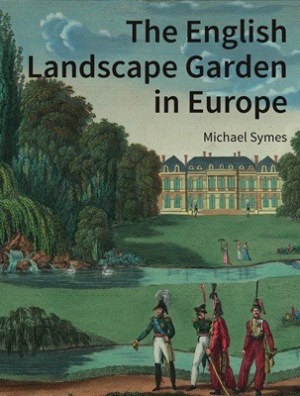 This book provides an overview of the extent to which the 18th-century English landscape garden spread through Europe and Russia. While this type of garden acted widely as an inspiration, it was not slavishly copied but adapted to local conditions, circumstances and agendas.
A garden ‘in the English style’ is commonly used to denote a landscape garden in Europe, while the term ‘landscape garden’ is used for layouts that are naturalistic in plan and resemble natural scenery, though they might be highly contrived and usually large in scale.
The landscape garden took hold in mainland Europe from about 1760. Due to the differing geopolitical character of several of the countries, and a distinct division between Catholic and Protestant, the notion of the landscape garden held different significance and was interpreted and applied variously in those countries: in other words, they found it a very flexible medium.
Each country is considered individually, with a special chapter devoted to ‘Le Jardin Anglo-Chinois’, since that constitutes a major issue of its own. The gardens have been chosen to illustrate the range and variety of applications of the landscape garden, though they are also those about which most is known in English.
C O N T E N T S
The Many Faces of the Landscape Garden
Exporting the English Garden
Le Jardin Anglo-Chinois
France
Germany
Russia
Poland
The Czech Republic
Sweden
Hungary
Italy
Other Countries
Exhibition | Fragonard: Un Provençal aux Pays-Bas
Now on view at the Villa-Musée Fragonard:
Fragonard: Un Provençal aux Pays-Bas
Villa-Musée Jean-Honoré Fragonard, Grasse, 1 July — 30 September 2016
 Grasse et Fragonard, l’association semble évidente et pourtant la réalité est plus complexe. Certes Jean-Honoré Fragonard naît à Grasse en 1732 dans une famille modeste d’ouvriers gantiers, cet artisanat grassois qui, depuis le XVIIe siècle, accompagne et est aussi pour partie à l’origine du développement de l’activité liée au parfum dans la ville. Mais dès ses six ans, en 1738, toute la famille quitte la ville pour s’installer à Paris. Par la suite nous n’avons ni témoignages ni documents écrits qui pourraient faire supposer un retour ou un séjour du peintre dans sa ville natale. Cela jusqu’en février 1790, où Alexandre Maubert, son cousin, consigne, avec précision dans son livre de compte, un loyer mensuel que Fragonard lui verse pour loger avec sa femme et sa belle-soeur, Marguerite Gérard, dans sa bastide à un jet de pierre de l’entrée de Grasse. L’année suivante les Fragonard retournent à Paris, leur présence est confirmée dans la capitale en août 1793 par un document bancaire. Rien n’établit ensuite que le peintre revienne à Grasse. Il meurt le 22 août 1806 après une promenade sur le Champs de Mars à Paris. Six ans puis une grosse année : certes deux périodes cruciales dans la vie du peintre, mais c’est au final assez peu.
Ajoutons à cela la théorie, paradoxalement uniquement défendue localement, avec aplomb, depuis les années 1980, que les travaux de décoration de la cage d’escalier de la Villa Maubert n’étaient pas de la main de Jean-Honoré mais de son fils, le musée Fragonard rebaptisé Musée d’Art et d’Histoire de Provence en 1977, de trop rares expositions consacrées au peintre, une en 1957, une autre en 2006, voilà que progressivement semble s’éloigner la présence du peintre à Grasse. Pourtant la Villa Maubert, transformée en Villa Musée Fragonard par la ville, conserve un trésor. En ses murs ce sont les derniers feux créateurs du peintre en cette fin du XVIIIe siècle que l’on peut encore admirer aujourd’hui. Ce patrimoine, dont l’histoire est complexe et mal documentée, est unique et original, il justifie pleinement de mettre en lumière Jean- Honoré Fragonard dans la capitale des parfums.
Avec cette première exposition d’été, Un Provencal aux Pays-Bas, c’est ce que les musées de Grasse veulent réaffirmer en s’efforçant d’initier un nouveau cycle de travaux et de recherches consacré à cet enfant du pays grassois.
◊ ◊ ◊ ◊ ◊
The catalogue is available from Artbooks.com:
Marie-Anne Dupuy-Vachey, Fragonard: Un Provençal aux Pays-Bas (Milan: Silvana, 2016), 32 pages, ISBN: 978-8836633388, $23.
 Né à Grasse en 1732, à quelques lieues de la frontière italienne, Fragonard ne pouvait qu’être séduit par les paysages méditerranéens comme ses deux séjours dans la péninsule en témoignent. Mais le peintre a aussi exploré des territoires plus septentrionaux. A l’instar des amateurs de son temps, Fragonard fut très attiré par la peinture flamande et hollandaise du XVIIème siècle. Tout au long de sa carrière il entretint un dialogue fructueux avec les maîtres du passé, étudiant et copiant les toiles de Rembrandt et de Rubens, les paysages de Ruysdael. Il en vint même à absorber leur style et leur technique au point de les pasticher tout en restant lui-même. Cette pratique fut stimulée par des voyages, dont un documenté en 1773, qui le mena de Paris à Amsterdam en passant par Bruxelles, Malines, Anvers et La Haye. Les collections de la ville de Grasse, complétées par des prêts de collections publiques et privées, offrent l’occasion de se pencher sur cet aspect moins connu de l’auteur du Verrou et des Hasards heureux de l’escarpolette.










 Enfilade
leave a comment