New Book | American Laughter, American Fury
From Johns Hopkins UP:
Eran Zelnik, American Laughter, American Fury: Humor and the Making of a White Man’s Democracy, 1750–1850 (Baltimore: Johns Hopkins University Press, 2025), 352 pages, ISBN: 978-1421450605, $65.
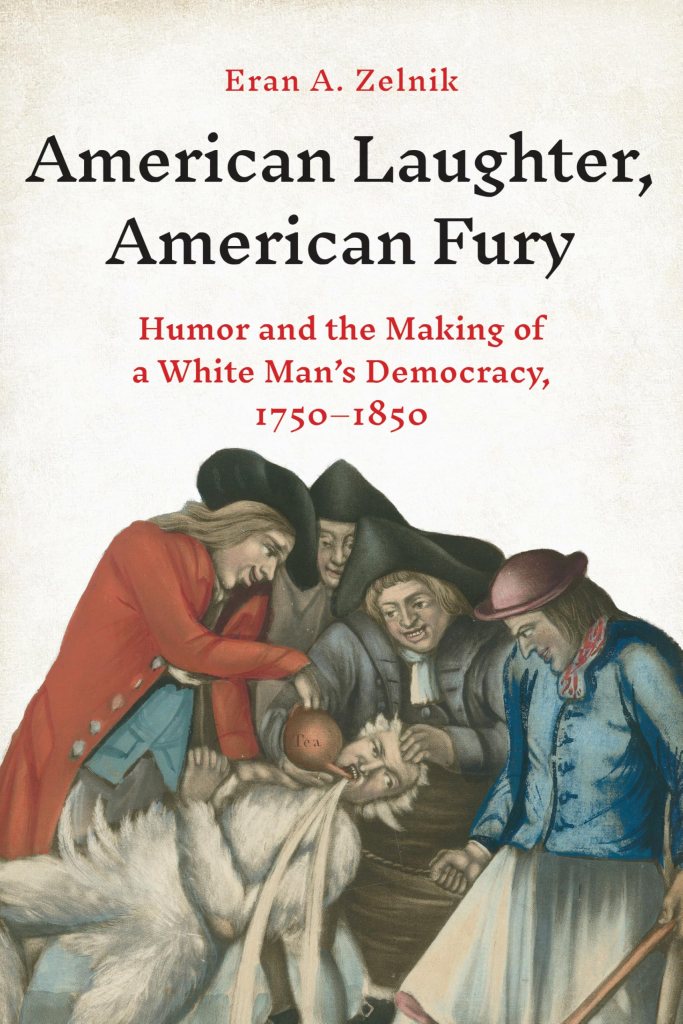 A joke is never just a joke―not even in the eighteenth century. In American Laughter, American Fury, Eran A. Zelnik offers a cultural history of early America that shows how humor among white men served to define and construct not only whiteness and masculinity but also American political culture and democracy more generally. Zelnik traces the emerging bonds of affinity that white male settlers in North America cultivated through their shared, transformative experience of mirth. This humor―a category that includes not only jokes but also play, riot, revelry, and mimicry―shaped the democratic and anti-elitist sensibilities of Americans. It also defined the borders of who could participate in politics, notably excluding those who were not white men. While this anti-authoritarian humor transformed the early United States into a country that abhorred elitism and class hierarchies, ultimately the story is one of democratization gone awry: this same humor allowed white men to draw the borders of the new nation exclusively around themselves. Zelnik analyzes several distinct forms of humor to make his case: tall tales, ‘Indian play’, Black dialect, riot and revelry, revolutionary protests, and blackface minstrelsy. This provocative study seeks to understand the vexing, contradictory interplay among humor, democracy, and violence at the heart of American history and culture that continues today.
Eran A. Zelnik is a lecturer in the Department of History at California State University, Chico.
c o n t e n t s
Introduction
Part I | Yankees and Gentlemen
1 The Joyous Multitude: Humor and the Premodern Crowd in the Revolutionary Era
2 The Witty Few: Augustan Humor and the Politics of Exclusion
Part II | From Backcountry to Frontier
3 Laughter in the Wilderness: Transgression and Mirth in Rural America
4 The Laughter and the Fury: Terror and Masquerade on the American Frontier
5 Alligator-Horses: The Frontier Jester and the Origins of Manifest Destiny
Part III | A Tale of Two Clowns
6 A Black Clown for a White Nation: The Origins and Context of Blackface Minstrelsy
7 American Folks: Black and White Jesters in Antebelluum Popular Culture
Epilogue: Laughter and Fury from the Klan to January 6, 2021
Acknowledgments
Notes
Index
New Book | Thomas Sully’s Philadelphians
Coming in April, from Penn Press:
Peter Conn, Thomas Sully’s Philadelphians: Painting the Athens of America (Philadelphia: The American Philosophical Society Press, 2025), 216 pages, ISBN: 978-1606180495, $40. Also available as an ebook.
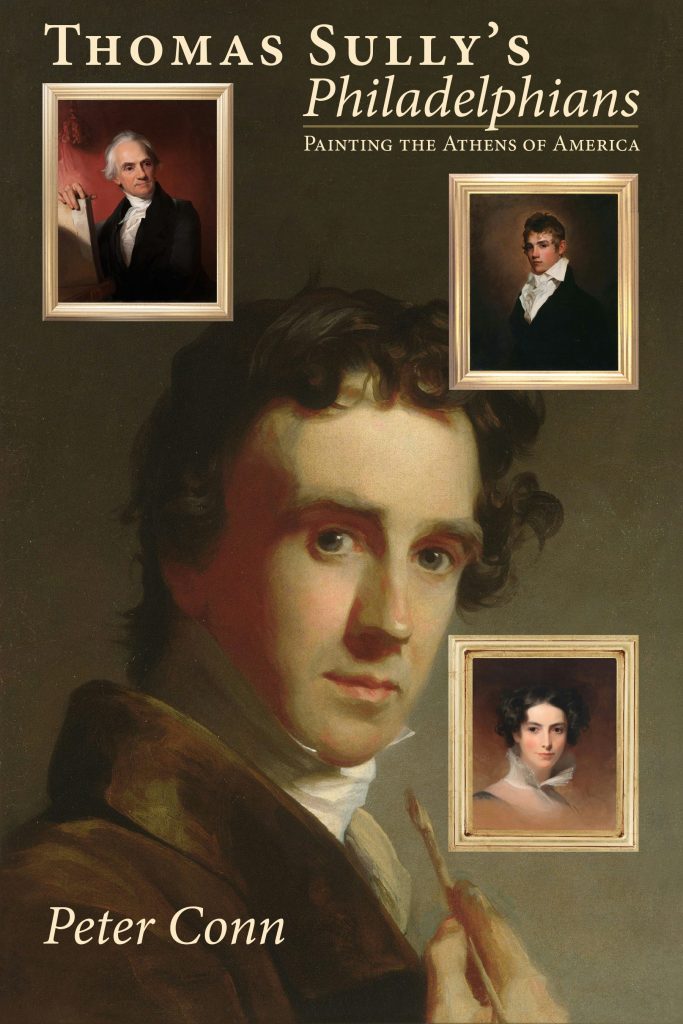 Philadelphia’s early national history represented in Thomas Sully’s portraits
Thomas Sully (1783–1872) is widely regarded as perhaps the most important portrait painter of the antebellum years. Using those portraits, Thomas Sully’s Philadelphians: Painting the Athens of America reconstructs many of the people, institutions, and events that combined to make Philadelphia—from the Revolution until the 1840s—at once the most cosmopolitan and most racially embattled city in America. The book approaches Sully’s portraits as visual documents in the history of Philadelphia in the first half of the nineteenth century. Gathered here under headings that include individuals, institutions, professions, and contemporary events, Sully’s portraits offer points of entry into much that was going on in early nineteenth-century Philadelphia. Peter Conn explores education, politics, theater, medicine, journalism, commerce, philanthropy, religion, and the fierce debate over slavery. Drawing upon wide research, including previously unpublished archival material, Thomas Sully’s Philadelphians brings to vivid life the men and women who were making the history of early national Philadelphia.
Peter Conn retired from the University of Pennsylvania as Vartan Gregorian Professor of English and Professor of Education and was a member of the graduate groups in the history of art and American civilization. His publications include The Divided Mind: Ideology and Imagination in America, 1898–1917 and Literature in America. Pearl S. Buck: A Cultural Biography was chosen as a New York Times Notable Book. The American 1930s: A Literary History was published in 2009. Conn wrote and presented a video course on American Best Sellers for the Teaching Company. He has given talks at the Brooklyn Museum of Art, the Pennsylvania Academy of Fine Arts, the Whitney Museum, the Philadelphia Museum of Art, and other institutions, on a number of American artists, including Edward Hopper, William Christenberry, Thomas Wilmer Dewing, Maxfield Parrish, Charles Sheeler, Winslow Homer, Wharton Esherick, and The Eight.
c o n t e n t s
1 Introduction
2 A Brief Biography
3 Pennsylvania Hospital
• Samuel Coates
• Benjamin Rush
4 The Second Bank of the United States
• Nicholas Biddle
5 The Theater
• George Frederick Cooke
• Fanny Kemble
• Charlotte Cushman
6 The Library Company of Philadelphia
• Zachariah Poulson
7 The Jews of Philadelphia
• Rebecca Gratz
8 The American Philosophical Society
• John Vaughan
• Peter Stephen Du Ponceau
9 Lafayette Returns to Philadelphia
10 The Historical Society of Pennsylvania
• William Rawle
11 Natural History
• William Wagner
• William Maclure
12 The University of Pennsylvania
• John Andrews
13 The Debate over Slavery
• William Henry Furness
• Benjamin Coates
• Daniel Bashiel Warner and Edward Roye
14 Epilogue: Thomas Sully and His Critics
• Jonathan Williams
• George Mifflin Dallas
Bibliography
Index
New Book | Rebellion 1776
I’m a big fan of Anderson’s Seeds of America Trilogy (Chains, Forge, and Ashes) and Fever, 1793. Her latest is set to be published April 1, from Simon and Schuster. –CH
Laurie Halse Anderson, Rebellion 1776 (New York: Atheneum/Caitlyn Dlouhy Books, 2025), 416 pages, ISBN: 978-1416968269, $19.
 From New York Times bestselling author Laurie Halse Anderson comes a “thoroughly researched, emotionally resonant” (Booklist, starred review) historical fiction middle grade adventure about a girl struggling to survive amid a smallpox epidemic, the public’s fear of inoculation, and the seething Revolutionary War.
In the spring of 1776, thirteen-year-old Elsbeth Culpepper wakes to the sound of cannons. It’s the Siege of Boston, the Patriots’ massive drive to push the Loyalists out that turns the city into a chaotic war zone. Elsbeth’s father—her only living relative—has gone missing, leaving her alone and adrift in a broken town while desperately seeking employment to avoid the orphanage. Just when things couldn’t feel worse, the smallpox epidemic sweeps across Boston. Now, Bostonians must fight for their lives against an invisible enemy in addition to the visible one. While a treatment is being frantically fine-tuned, thousands of people rush in from the countryside begging for inoculation. At the same time, others refuse protection, for the treatment is crude at best and at times more dangerous than the disease itself. Elsbeth, who had smallpox as a small child and is now immune, finds work taking care of a large, wealthy family with discord of their own as they await a turn at inoculation, but as the epidemic and the revolution rage on, will she find her father?
Laurie Halse Anderson is a New York Times bestselling author known for tackling tough subjects with humor and sensitivity. She’s twice been a National Book Award finalist, for Chains and Speak; Chains also received the 2009 Scott O’Dell Award for Historical Fiction. Laurie was chosen for the 2009 Margaret A. Edwards Award and received the Astrid Lindgren Memorial Award in 2023, presented to her by the Crown Princess of Sweden.
New Book | Beautiful Shells
From Bodleian Library Publishing, with distribution by The University of Chicago Press:
Mark Carnall, Beautiful Shells: George Perry’s Conchology (Oxford: Bodleian Library, 2025), 192 pages, ISBN: 978-1851246168, £25 / $40.
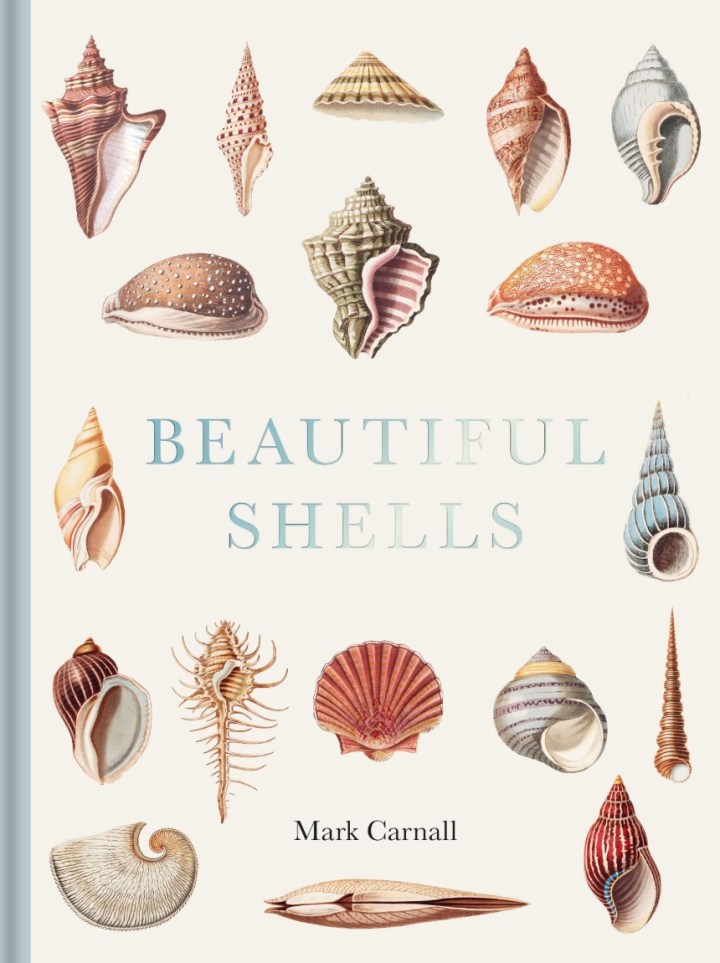 In 1811, architect, stone mason, and shell obsessive George Perry published his lavishly illustrated volume, Conchology or the Natural History of Shells. The work featured 348 beautifully illustrated mollusk shells with descriptions of species, many of which were new to science. Despite the effort that went into producing it—and at a time when conchophilia, or shell fancying, was at its height—Perry’s Conchology disappeared from scientific literature, after being suppressed by the leading conchologists of the day and then cruelly mocked for decades after. Beautiful Shells reproduces the stunning, exquisitely drawn, and sometimes fanciful shell illustrations from this extraordinary forgotten volume. Following an introduction exploring our fascination with shells and their impact on human history, culture, and science, each of the sixty-one color illustrations is included alongside a description of notable shells and what is known of the mysterious organisms that make them. From the common limpet and razor clam to the valuable cowry and spectacular divine conch, the wide range of featured shells form a treasure trove of natural beauty from our oceans and shores.
Mark Carnall is collections manager of human remains and non-insect invertebrate collections at the Oxford University Museum of Natural History.
c o n t e n t s
Introduction
The Shells
Appendix
Notes
Bibliography
Picture Credits
Index
New Book | Catesby’s Natural History
From Bodleian Library Publishing, with distribution by The University of Chicago Press:
Stephen Harris, Catesby’s Natural History (Oxford: Bodleian Library, 2024), 304 pages, ISBN: 978-1851246397, £50 / $75.
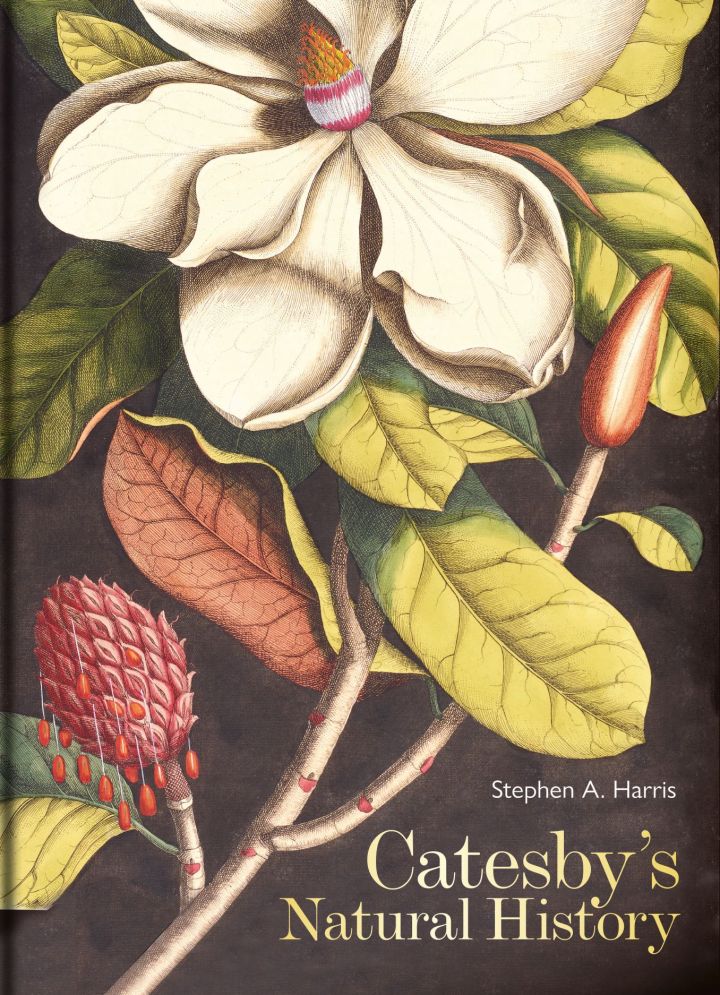 A beautiful reproduction of naturalist Mark Catesby’s flora and fauna illustrations of North America and the Caribbean.
Mark Catesby was an eighteenth-century naturalist and artist whose work on the natural history of North America and the Caribbean still resonates today. During several perilous trips, Catesby collected specimens and made extensive observations in the field, gathering material that would eventually become The Natural History of Carolina, Florida and the Bahama Islands, which featured 220 elaborate, distinctive hand-colored illustrations.
With their striking combinations of animals and plants paired together with the first-hand observations he made, Catesby’s stunning illustrations were widely appreciated in their time and catalyzed interest in the natural history of Colonial America. Ultimately, his work was established as a key reference for the scientific understanding of natural history. As an artist, Catesby meticulously recorded the environment, sifting fact from fiction about the lives of the plants and animals he observed. As a collector, he introduced many living plants to Britain, thereby changing European gardens forever. Catesby’s Natural History reproduces all the original plates and shows how Catesby’s practical field experience shaped his work in all areas. Whether through the now-extinct species he recorded or the cultural changes he witnessed, his research continues to be relevant, demonstrating the vulnerability and fragility of the natural world.
Stephen A. Harris is Druce Curator of Oxford University Herbaria.
c o n t e n t s
1 Natural History in the Thirteen Colonies
2 Who was Mark Catesby?
3 On Habitats and Uses
4 On Indigenous and Enslaved Peoples
5 On Collection and Cultivation
6 On Illustrations
7 On Publishing the Natural History
8 Legacy
Exhibition | Andrea Appiani (1754–1817)
Now on view at the Château de Bois-Préau in Rueil-Malmaison (as noted at Art History News) . . .
Andrea Appiani (1754–1817): Napoleon’s Painter in Italy
Musée national des châteaux de Malmaison et Bois-Préau, 16 March — 28 July 2025
Curated by Francesco Leone, Fernando Mazzocca, and Simone Ferraro
 Une centaine d’oeuvres—peintures, dessins, gravures, médailles appartenant à des collections européennes publiques et privées—sont réunies pour la première rétrospective organisée en France sur cet artiste, considéré comme le plus important peintre de la période néo-classique au nord de l’Italie. L’exposition révélera un portraitiste attachant et un fresquiste brillant, malgré la destruction d’une partie de ses décors peints au Palais Royal et dans certains hôtels particuliers milanais durant les bombardements de 1943.
Victorieux à la bataille du Pont de Lodi le 10 mai 1796, le général Bonaparte fait son entrée dans Milan le 15. Il y rencontre Appiani dont le talent est reconnu pour des décors de théâtre, d’hôtels particuliers et d’églises ainsi que des portraits. La manière de l’artiste a déjà perdu de la relative raideur de ses débuts et le peintre-décorateur sait combiner la précision et la fermeté du trait avec la délicatesse du modelé et la suavité de la matière. Trois ans plus tard, au retour des Français, à l’occasion de la Deuxième campagne d’Italie, Appiani se voit confier par Napoléon la charge de sélectionner les oeuvres d’art prélevées dans les églises et les couvents pour enrichir et faire rayonner les musées du Nord de la péninsule.
L’ascension d’Appiani, iconographe de la république puis du Royaume d’Italie est consacrée par le nombre important de commandes publiques et privées qu’il reçoit alors. En cinq séquences chronologiques et thématiques, l’exposition permet de montrer l’oeuvre de l’artiste à la fois fresquiste et peintre de chevalet : La carrière pré-napoléonienne, Les Fastes de Napoléon, Portraits publics et privés, Décors à fresque et, Fortune artistique d’Appiani.
Présentée dans les salons du château de Bois-Préau, l’exposition révèle au public le talent et la richesse de l’oeuvre de cet artiste au service de l’Empereur. L’exposition présente la manière sensible, monumentale ou intimiste du plus grand artiste milanais de son temps : les débuts d’un peintre formé au dix-huitième siècle, les scènes de la geste napoléonienne et de la république naissante, les effigies de Napoléon et Joséphine, les études et dessins préparatoires pour les décors des hôtels particuliers et des églises.
Exposition produite par le GrandPalaisRmn.
Rémi Cariel, ed., Andrea Appiani: Le peintre de Napoléon en Italie (Paris: Éditions Flammarion, 2025), 224 pages, ISBN: 978-2711880737, €40.
◊ ◊ ◊ ◊ ◊
At the Italian Cultural Institute in Paris:
Rémi Cariel and Alessandro Morandotti | Andrea Appiani et la tradition artistique de la Lombardie
Institut culturel italien, Paris, 31 March 2025, 6.30pm
A l’occasion de l’exposition temporaire Andrea Appiani (1754–1817): Le peintre de Napoléon en Italie, l’Institut Culturel Italien rend hommage à ce grand peintre italien avec une conférence autour de sa figure. La conférence explorera sa vie et sa carrière avec une attention particulière aux racines de sa culture. Avec Rémi Cariel, conservateur en chef du patrimoine en charge des collections de peintures, sculptures et arts graphiques du Musée Malmaison et Alessandro Morandotti, professeur d’histoire de l’art moderne et président du cursus d’Histoire de l’Art de l’Université de Turin.
Book tickets here»
New Book | The Soldier’s Reward
From Princeton UP:
Jennifer Ngaire Heuer, The Soldier’s Reward: Love and War in the Age of the French Revolution and Napoleon (Princeton: Princeton University Press, 2025), 384 pages, ISBN: 978-0691262574, £38 / $45.
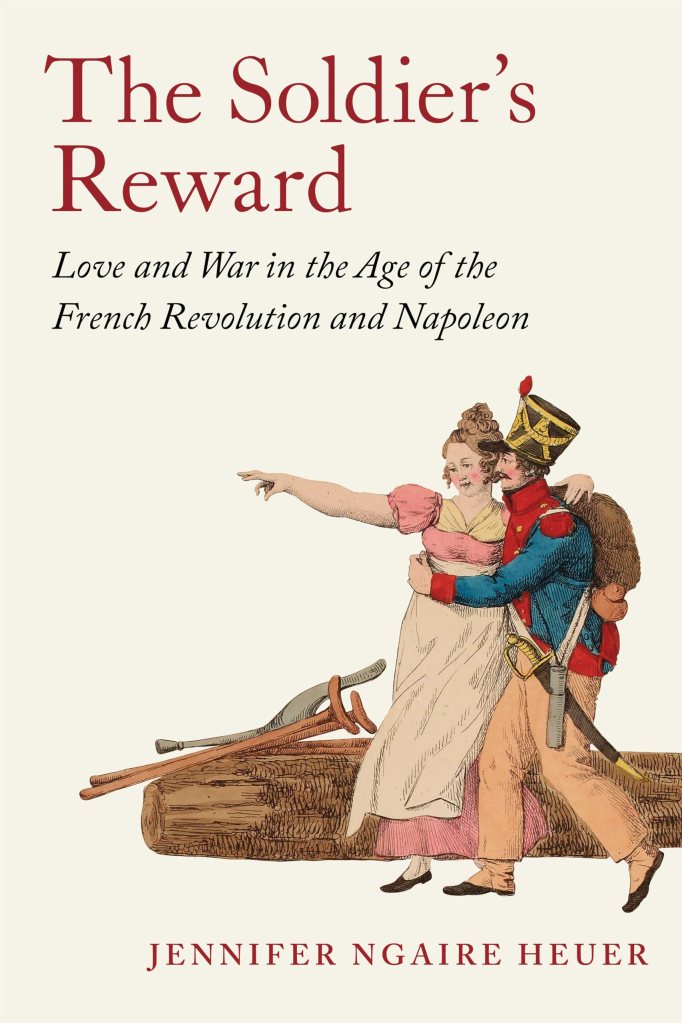
A sweeping history of intimacy and family life in France during the age of revolution
The French Revolution and Napoleonic Wars devastated Europe for nearly a quarter of a century. The Soldier’s Reward recovers the stories of soldiers and their relationships to family and domestic life during this period, revealing how prolonged warfare transformed family and gender dynamics and gave rise to new kinds of citizenship.
In this groundbreaking work combining social, cultural, gender, and military history, Jennifer Ngaire Heuer vividly describes how men fought for years with only fleeting moments of peace. Combatants were promised promotion, financial gain, and patriotic glory. They were also rewarded for their service by being allowed to return home to waiting families and love interests, and with marriages that were arranged and financially supported by the state. Heuer explores competing ideas of masculinity in France, as well as the experiences of the men and women who participated in such marriages. She argues that we cannot fully understand the changing nature of war and peace in this period without considering the important roles played by family, gender, and romantic entanglements. Casting new light on a turbulent era of mass mobilization and seemingly endless conflict, The Soldier’s Reward shows how, from the Revolution through the Restoration, war, intimacy, and citizenship intersected in France in new and unexpected ways.
Jennifer Ngaire Heuer is professor of history at the University of Massachusetts, Amherst. She is the author of The Family and the Nation: Gender and Citizenship in Revolutionary France, 1789–1830 and the editor (with Mette Harder) of Life in Revolutionary France.
Exhibition | Brenet: Painter to the King
As noted at Art History News, from the press materials for the exhibition:
Brenet: Un peintre du roi à Douai au 18e siècle
Musée de la Chartreuse, Douai, 19 March — 23 June 2025
Curated by Pierre Bonnaure and Marie Fournier
 Le musée de la Chartreuse de Douai présente la première exposition jamais consacrée au peintre Nicolas-Guy Brenet (Paris, 1728–1792), l’un des rénovateurs de la peinture d’Histoire à la veille de la Révolution.
Formé auprès des plus grands maîtres de la première moitié du 18e siècle (Charles Antoine Coypel, François Boucher et Carle Vanloo), puis à l’Académie de France à Rome, Nicolas-Guy Brenet est reçu à l’Académie royale de peinture et de sculpture en 1769, l’année même où il exécute de grands décors pour Douai. Il conçoit un cycle de six peintures allégoriques toujours en place au sein de l’actuel palais de justice, l’ancien parlement de Flandre. Il travaille également au décor de la collégiale Saint-Pierre en peignant un spectaculaire Triomphe de la Vierge, encore visible à son emplacement d’origine, dans la chapelle du Dôme. À Paris, il honore tout au long de sa carrière de prestigieuses commandes destinées principalement à l’Église, ainsi qu’aux rois Louis XV et Louis XVI.
Cette première exposition consacrée à Nicolas-Guy Brenet permet de découvrir à travers une sélection de tableaux, d’esquisses et de dessins, un artiste emblématique du renouveau de la peinture d’Histoire de la seconde moitié du siècle des Lumières et d’apprécier la richesse de la vie artistique douaisienne au temps des parlementaires de Flandre.
• 42 œuvres exposées dans la salle capitulaire du musée de la Chartreuse
• 37 prêteurs (particuliers et institutions), dont le musée du Louvre et le château de Versailles, les musées de Compiègne, Quimper, Dunkerque, Orléans, Strasbourg, Blois etc.
Information about Marie Fournier’s 2023 monograph on Brenet is available here»
The full exhibition brochure is available here»
New Book | Imagined Neighbors: Visions of China in Japanese Art
I’m sorry for not posting earlier news of the exhibition, which was on view in Washington at the National Museum of Asian Art from 16 March until 15 September 2024. Fortunately, the catalogue is still available. –CH
Frank Feltens, ed., with additional contributions by Paul Berry and Michiyo Morioka, Imagined Neighbors: Visions of China in Japanese Art, 1680–1980 (Munich: Hirmer Publishers, 2024), 304 pages, ISBN: 978-3777442662, $65.
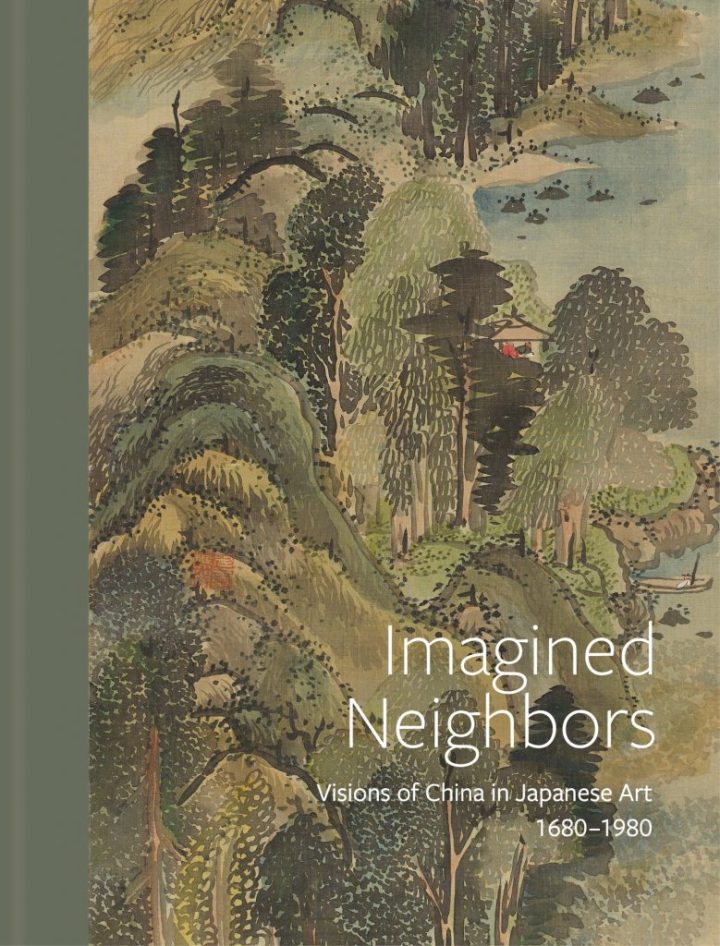 Imagined Neighbors: Visions of China in Japanese Art examines Japanese artistic understanding of China from the late 1600s, Japan’s period of seclusion, to its age of modernization after the mid-nineteenth century. It focuses on ways Japanese painters from the late 1600s to the twentieth century pictured China, both as a real place and as an imagined promised land. It features three essays by renowned Japanese art historians in addition to more than fifty catalog entries highlighting unusual artworks revealing Japanese artists’ complex responses to Chinese art, history, and culture. In recent years, a handful of scholarly studies have tried to push against the established narrative of an exclusively Western-inspired modern Japan. Imagined Neighbors challenges the established narrative of an exclusively Western-inspired modern Japan by offering a more nuanced approach to understanding the country’s struggle with reconciling the old with the new as it reinvented itself into a modern nation-state.
Frank Feltens is curator of Japanese art at the Smithsonian’s National Museum of Asian Art.
Paul Berry is an independent scholar of Japanese art and cinema who has taught at the University of Michigan, the University of Washington, and Kansai Gaidai University.
Michiyo Morioka is an independent scholar of Japanese art based in Seattle.
Exhibition | A Movable Feast: Food and Drink in China

Ding Guanpeng (active 1726–1770), A Night Banquet at the Peach and Plum Garden, Qing dynasty (1644–1911), handscroll, ink, and colour on paper
(Beijing: The Palace Museum)
◊ ◊ ◊ ◊ ◊
From the press release and the general exhibition description:
A Movable Feast: The Culture of Food and Drink in China
Hong Kong Palace Museum, 19 March — 18 June 2025
A Movable Feast: The Culture of Food and Drink in China offers a fresh perspective centred on the concept of ‘mobility’, connecting significant aspects of Chinese food culture. Over 110 exquisite artefacts have been meticulously selected to explore the evolution of food vessels, eating practices, and related traditions, comprehensively illustrating the rich culinary culture and lifestyle throughout the history of China. Food culture encompasses the sourcing and utilisation of ingredients, the preparation and processing of food, and the consumption of food as well as the customs, etiquette, and ideologies developed around eating and drinking. It touches nearly every aspect of our material and spiritual life. According to anthropological archaeologist Kwang-chih Chang, “one of the best ways of getting to a culture’s heart would be through its stomach.”
Food culture is naturally an important element of the Chinese civilisation. This exhibition invites visitors to enjoy a multicourse feast spanning five thousand years of Chinese history. The first part, “Crossing from Life to Death”, features a ceremonial meal for the deceased. Showcasing ritual and burial objects related to food and drink dated from the Neolithic period (about 10000–2000 BCE) to the Han dynasty (206 BCE–220 CE), this section demonstrates the importance of transferring food and drink to the afterlife in Chinese beliefs. The second section “Crossing Cultures” presents a multicultural banquet, focusing on eating and drinking vessels from the Tang (618–907) to Song (960–1279) periods, such as platters and ewers introduced to China through the Silk Routes. It reveals how China and Central and West Asia embraced each other’s eating practices. The next section “Crossing Mountains and Lakes” exhibits famous scenes of literati gatherings and picnic sets produced in the Ming (1368–1644) and Qing (1644–1911) dynasties, which demonstrates the important role food and drink played at elegant gatherings and excursions. Finally, at the “Crossing Time” multimedia table, visitors are encouraged to find out more about the past and present lives of modern eating and drinking vessels.
Accompanying the exhibition is the publication A Movable Feast: The Culture of Food and Drink in China, available in both Traditional Chinese and English. The book features six chapters written by a team of scholars and experts from the Hong Kong Palace Museum and around the world—addressing how people have traversed the culinary landscape with food and eating utensils for 5,000 years, examining preparations for the afterlife, adaptations to foreign culinary practices from other regions, and the enjoyment of outdoor picnics. The catalogue will be available at the Hong Kong Museum and later from major bookstores in Hong Kong.
Crossing from Life to Death: Feeding the Spirits
The first section features food and drink vessels used in rituals and burials from the Neolithic period to the Han dynasty (206 BCE–220 CE). Key objects on display include the zun (wine vessel) for Father Ding and the jue (wine vessel) of Marquis of Lu from the Palace Museum’s collection, dating back to the Western Zhou dynasty (about 1100–771 BCE). These bronze ritual vessels were used for making offerings and served as a medium between people and spirits.
A dou (food vessel) with cord pattern from the Warring States period (475–221 BCE) was a container for pickles, preserved vegetables, meat sauce, gravy, and more. In a first-century Chinese dictionary, the character feng, meaning abundance, is explained by a pictograph of a dou filled with food, while some scholars further interpret it as depicting two skewers of meat on a dou. The Chinese character li, meaning ritual, also has a component of feng, a further indicator of the significance of food and food vessels in Chinese culture.
During the mid-to late Western Han dynasty (206 BCE–8 CE), earthenware burial objects in the shape of granaries, wells, stoves, pigsties, and chicken coops were prevalent, not only mirroring the way of life and the flourishing food culture of the time but also signifying people’s desire for an abundant afterlife. A model of a brazier with cicadas, from the Hong Kong Museum of Art, was fired using low-temperature lead glaze, resulting in striking colours. The roasting rack with two rows of cicadas illustrates the custom of eating cicadas during this period.
Crossing Cultures: Nomadic Eating Practices
The second section presents the intersection and integration of culinary customs between China and Central and West Asia during the Tang (618–907), Song (960–1279), and Yuan (1271–1368) dynasties, demonstrating how the richness and evolution of ‘tradition’ develops over time. The introduction of new ingredients, utensils, and tall furniture to the Central Plains via the Silk Routes significantly transformed the region’s food culture. Foods from Central Asia were given the prefix hu (roughly indicates regions beyond the Central Plains of China), as seen in terms like hujiao (black pepper), hutao (walnuts), and huma (sesame), which remain widely used today
Among the exhibits in this section is a quatrefoil cup from the Tang Dynasty (877), which traces its origins back to the Sassanian Empire (present-day Iran). Scholars believe it is associated with the term ‘poluo’, a foreign term that frequently appeared in Tang and Song poetry, referring to a drinking vessel for alcoholic drinks. The renowned poet Li Bai (701–762) wrote about it, saying “Grape wine, gold poluo, a hu girl aged 15 years was carried by a fine horse.” To this day, the term ‘gold poluo’ is used in Cantonese to describe a greatly cherished child. Another key exhibit, a phoenix-head ewer, which features a handle and spout. This vessel exemplifies how the nomadic drinking custom of pouring wine from ewers gradually replaced the tradition of spooning wine from a jar with a ladle in the Central Plains.
With the introduction of hu foods to the Central Plains, large platters emerged during the Tang dynasty to accommodate nomadic foods such as hubing (hu flatbread) and sushan (shaved ice-like dessert). By the Yuan and Ming (1368–1644) periods, large platters produced in China had become important export commodities, enjoying popularity in the Middle East. Historical records from the Ottoman Empire indicate that porcelain was frequently used for banquet serving ware during significant ceremonies, such as the sultan’s accession, birthdays, and weddings. One of the exhibits, a dish with chrysanthemum and lotus scrolls from the Ming dynasty closely resembles a 15th-century blue-and-white platter in the collection of the Ardabil Shrine in Iran, exemplifying the multidirectional nature of cultural exchange.
Crossing Mountains and Lakes: Packing the Perfect Picnic
The third section showcases the mobility of food and drink across different landscapes by presenting artworks and picnic sets of the Ming and Qing dynasties. Historically significant excursions and picnics have become a source of inspiration for numerous calligraphies, paintings, and other works of art. For example, A Night Banquet at the Peach and Plum Garden by the renowned Qing court painter, Ding Guanpeng (active 1726–1770), portrays the famous Tang poet Li Bai (701–762) and his cousins enjoying a banquet amidst a garden filled with peach blossoms.
During the Ming and Qing dynasties, the custom of dining on pleasure boats became a particularly popular activity along the lower reaches of the Yangtze River. Late Ming literati considered that an elegant pleasure boat should accommodate “six hosts and guests and four attendants” and allow them to brew tea during the excursion. A notable exhibit, an ivory boat from the British Museum’s Qing dynasty collection, vividly captures a leisurely outing on the water: two bearded men enjoy a chat over tea under the canopy of the boat, while others carry a food container and net freshwater fish from the lake.
The design of the paraphernalia used for these excursions was intended to keep objects organised, preventing them from colliding, and ensuring that the objects remained safe and accessible during travel. The Qing imperial court later adopted these organisational boxes to manage and store cultural artefacts accumulated in the palaces. The exhibition features a box of curiosities assembled during the Qing dynasty, intricately designed to hold a variety of antiques crafted from different materials, transforming it into a curated collection of treasures.
Crossing Time: The Heritage
The final section features multimedia interactive installations that blend ancient and modern scenes and artefacts, inviting the audience to enjoy a virtual feast that transcends time and space. Visitors can simulate ordering food at a virtual dining table while observing the cooking processes of various dishes, allowing them to discover diverse cooking techniques associated with these utensils.
The exhibition is jointly organised by the Hong Kong Palace Museum and The Palace Museum. The exhibits mainly come from The Palace Museum and the Hong Kong Palace Museum. The British Museum, the Asian Art Museum of San Francisco, the Cleveland Museum of Art, the Hong Kong Museum of Art, and the Hong Kong Flagstaff House Museum of Tea Ware have also provided a number of loans. The Robert Chang Art Education Charitable Foundation is the exhibition’s Supporting Sponsor.










 Enfilade
leave a comment