New Book | Jewish Country Houses
From Brandeis UP:
Juliet Carey and Abigail Green, eds., with photography by Hélène Binet, Jewish Country Houses (Waltham, MA: Brandeis University Press, 2024), 300 pages, ISBN: 978-1684582204, $60. Part of the Tauber Institute Series for the Study of European Jewry.
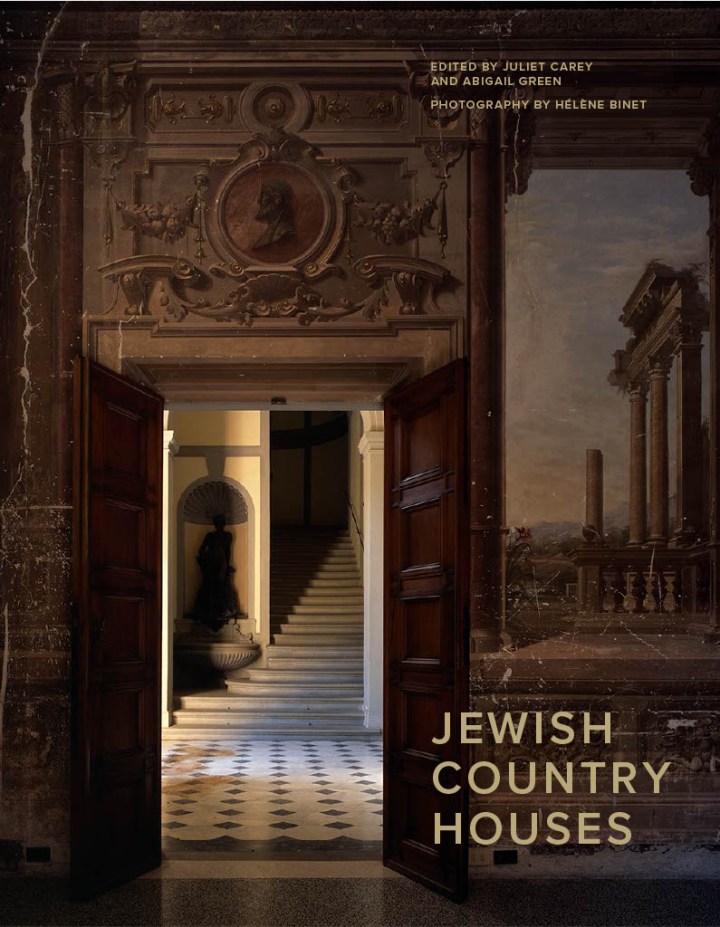 Country houses are powerful symbols of national identity, evoking the glamorous world of the landowning aristocracy. Jewish country houses—properties that were owned, built, or renewed by Jews—tell a more complex story of prejudice and integration, difference and connection. Many had spectacular art collections and gardens. Some were stages for lavish entertaining, while others inspired the European avant-garde. A few are now museums of international importance, many more are hidden treasures, and all were beloved homes that bear witness to the remarkable achievements of newly emancipated Jews across Europe—and to a dream of belonging that mostly came to a brutal end with the Holocaust. Lavishly illustrated with historical images and a new body of work by the celebrated photographer Hélène Binet, this book is the first to tell their story, from the playful historicism of the National Trust’s Waddesdon Manor in Buckinghamshire to the modernist masterpiece that is the Villa Tugendhat in the Czech city of Brno—and across the pond to the United States, where American Jews infused the European country house tradition with their own distinctive concerns and experiences. This book emerges from a four-year research project funded by the UK Arts and Humanities Research Council that aims to establish Jewish country houses as a focus for research, a site of European memory, and a significant aspect of European Jewish heritage and material culture.
Juliet Carey is senior curator at Waddesdon Manor. Abigail Green is an Oxford historian and author of the award-winning Moses Montefiore: Jewish Liberator, Imperial Hero.
◊ ◊ ◊ ◊ ◊
A conversation with the authors will take place at Yale on Monday:
Juliet Carey and Abigail Green | Jewish Country Houses
Yale University, New Haven, 24 March 2025, 4pm
Juliet Carey and Abigail Green will discuss their new book, Jewish Country Houses, which explores these remarkable houses, their architecture and collections, and the lives of the extraordinary men and women who created and transformed them. Moderated by Laurel O. Peterson, Assistant Curator of Prints and Drawings, Yale Center for British Art; the event is cosponsored by the Yale Center for British Art and Yale Jewish Studies Program.
Print Quarterly, March 2025
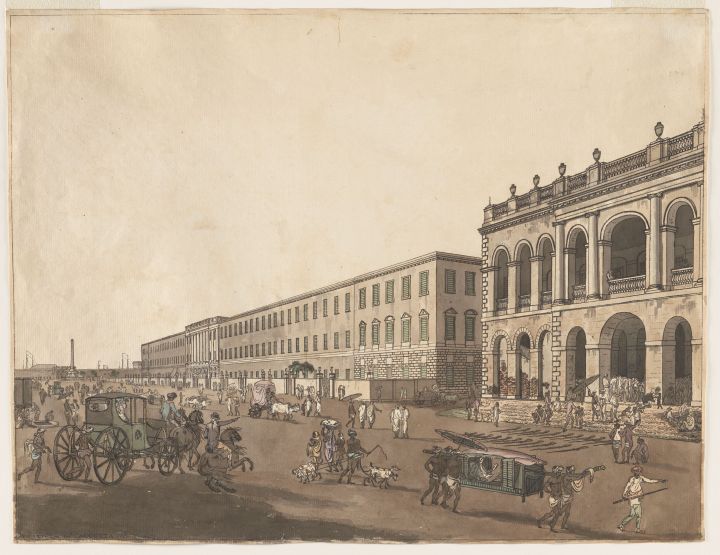
Thomas Daniell, The Old Court House and Writers’ Building, 1786, hand-coloured etching, 403 × 524 mm
(Philadelphia Museum of Art; image Thomas Primeau).
◊ ◊ ◊ ◊ ◊
The long eighteenth century in the latest issue of Print Quarterly:
Print Quarterly 42.1 (March 2025)
a r t i c l e s
• Jalen Chang, “‘Bengalee Work’ before Aquatint: Thomas Daniell’s Views of Calcutta”, pp. 20–30.
This article reevaluates eleven hand-coloured etchings by Thomas Daniell (1749–1840) held by the Philadelphia Museum of Art, previously presumed to be published states of his 1786–88 print series Views of Calcutta, often cited as the earliest aquatints made outside of Europe. Devoid of the rudimentary aquatinting and hand-coloured skies which characterize other extant examples, the relatively bare objects document a distinct stage of Daniell’s artistic process and are unprecedented in their survival. The article suggests that these prints were trial proofs never intended for publication or sale, meant instead to serve as colour tests for Daniell and his team of Indian copyists. Furthermore, the article considers early imperial printmaking and its ideological functions in British India.
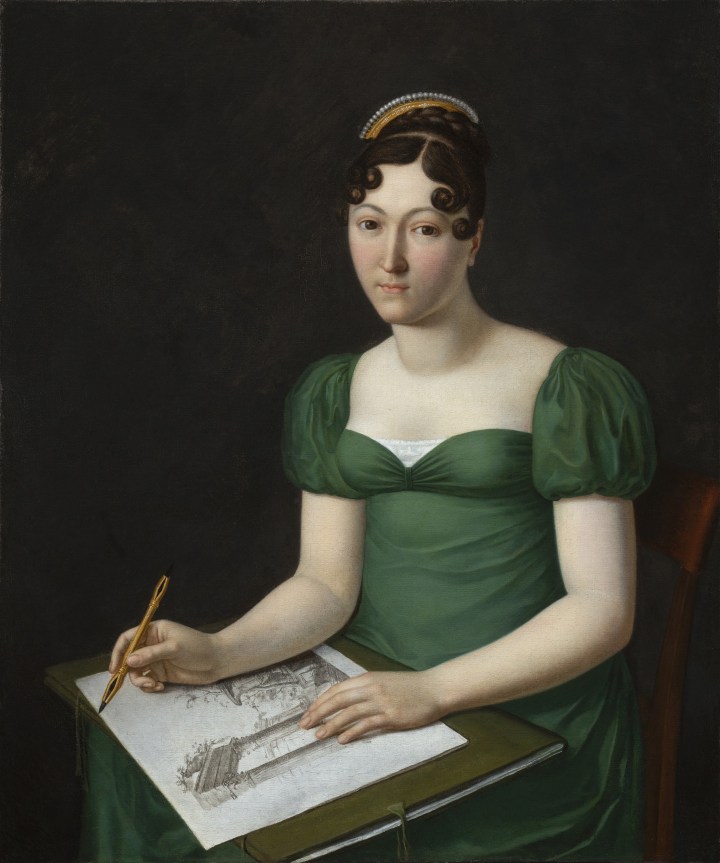
Charlotte Bonaparte, Self-Portrait, ca. 1824–26, oil on canvas, 885 × 730 mm (Princeton University Art Museum).
• Thomas Busciglio-Ritter, “From Brussels to Point Breeze: Charlotte Bonaparte’s Lithographic Landscapes, 1821–25”, pp. 31–43.
This article discusses a series of twelve lithographs by Charlotte Bonaparte (1802–1839), niece to Napoleon I, of North American views known as the Vues pittoresques de l’Amérique dessinées par la Comtesse Charlotte de Survillier (printed 1824), which she completed and disseminated on her return to Europe. The series, published in Brussels, became the first lithographic scenic views of the United States to circulate among western European audiences. The article situates Bonaparte’s landscape views within the context of transatlantic print culture of the early nineteenth century, touching on the role of women as producers of landscape images and the introduction of lithography as a new medium for American audiences.
n o t e s a n d r e v i e w s
• Bernard Aikema, Review of the exhibition catalogue Connecting Worlds: Artists and Travel, ed. by Anita Viola Sganzerla and Stephanie Buck (Paul Holberton Publishing, 2023), pp. 64–66.
• Catherine Jenkins, Review of the exhibition catalogue Trésors en noir et blanc. Estampes du Petit Palais, de Dürer à Toulouse-Lautrec, by Anne-Charlotte Cathelineau, Joëlle Raineau-Lehuédé, and Clara Roca (Paris Musées, 2023), pp. 74–76.
• Ellis Tinios, Review of Hokusai’s Fuji, ed. by Kyoko Wada (Thames and Hudson, 2023), pp. 76–77.
• Victoria Sancho Lobis, Review of Aaron Hyman, Rubens in Repeat: The Logic of the Copy in Colonial Latin America (Getty Research Institute, 2021), pp. 99–105.
Exhibition | Lines of Connection: Drawing and Printmaking

Hendrick Goltzius, Study of a Right Hand, 1588
(Haarlem: Teylers Museum, N058)
◊ ◊ ◊ ◊ ◊
Recently opened at the AIC:
Lines of Connection: Drawing and Printmaking
Art Institute of Chicago, 15 March — 1 June 2025
Getty Center, Los Angeles, 1 July — 14 September 2025
Curated by Jamie Gabbarelli and Edina Adam
The first exhibition ever to focus on the multiple connections between drawing and printmaking, this presentation brings together around 90 works on paper by some of the greatest artists in the Western tradition to uncover the inner workings of their creative process and offer new ways to think about the links between the two mediums.

Joseph Wright of Derby, Self-Portrait in a Fur Cap, 1765–68, monochrome pastel (grisaille) on blue-gray laid paper, 42.5 × 29.5 cm (Art Institute of Chicago, Clarence Buckingham Collection, 1990.141).
Featuring fascinating drawings and exceptional prints from the late 15th century though the mid-19th century by artists such as Albrecht Dürer, Parmigianino, Rembrandt, Peter Paul Rubens, Maria Sibylla Merian, Francisco Goya, and William Blake, the exhibition explores the creative exchange between the two practices by showcasing preparatory drawings for prints, printed imitations of drawings, and drawn copies of prints. A selection of hybrid works also questions traditional definitions, strict boundaries, and outdated hierarchical distinctions between media.
Among the many remarkable loans enriching the exhibition are two astonishing drawings of a right hand by Hendrick Goltzius, which will be shown alongside each other for the first time in over a generation. Additionally an impressive drawing by Rembrandt of Leonardo da Vinci’s Last Supper makes its Chicago debut. With a wealth of exceptionally beautiful works, Lines of Connection offers fresh perspectives on two intertwined mediums and lifts the curtain on the rarely foregrounded subjects of artistic training, workshop practices, and the afterlife and collecting of works on paper.
Lines of Connection: Drawing and Printmaking is co-organized by the Art Institute of Chicago and the J. Paul Getty Museum. The exhibition is curated by Jamie Gabbarelli, Prince Trust Associate Curator, Prints and Drawings, Art Institute of Chicago, and Edina Adam, assistant curator of drawings, The J. Paul Getty Museum.
Jamie Gabbarelli and Edina Adam, Lines of Connection: Drawing and Printmaking, 1400–1850 (Los Angeles: Getty Publications, 2025), 230 pages, ISBN 978-1606069653, $40.
New Book | Danish Porcelain: 250 Years
From ACC Art Books:
Elliot Todd, Danish Porcelain: 250 Years of Royal Copenhagen and Bing & Grøndahl; Volume 1: A Legacy in Porcelain, Stoneware, and Faience; Volume 2: A Collection of Works (New York: ACC Art Books, 2025), 936 pages, ISBN: 978-1788841504, £125 / $175.
 This detailed two-volume set offers an unparalleled scholarly insight into the history of Danish porcelain. Renowned for its ceramic industry, Denmark earned its status as a leading porcelain exporter through intense rivalry with other firms across Europe. With its factories excelling time and time again at the largest international expositions of the 19th and early 20th century, Danish porcelain took its own place on the world stage. Founded in 1775, Royal Copenhagen remains one the oldest porcelain manufacturers still in operation today. Throughout its history, the factory has experienced numerous highs and lows and has weathered more than 130 years of competition from the Bing & Grøndahl Porcelain Factory. After 1882, the two factories were located less than a mile apart, with their flagship stores eventually competing side-by-side for sales in the heart of Copenhagen.
Danish Porcelain was inspired by a two-generation collection of Royal Copenhagen and Bing & Grøndahl porcelain, stoneware, and faience begun by the author’s father in 1947. Developed over the past 20 years, this is the first comprehensive publication to critically review the history of both factories, from their beginnings to their eventual merger. Featuring detailed appendices and over 2400 images, these two volumes comprise an important source of information on the history of Danish porcelain, including the many technical and artistic successes of the late 1880s that revolutionized production worldwide.
Elliot Todd is a second-generation collector of Danish porcelain, stoneware, and faience from the factories of Royal Copenhagen and Bing & Grøndahl. Dr. Todd recently retired as Professor Emeritus from a major American university and is internationally recognized as a leading researcher and educator.
New Book | Adventures in the Louvre
From Norton:
Elaine Sciolino, Adventures in the Louvre: How to Fall in Love with the World’s Greatest Museum (New York: W. W. Norton, 2025), 384 pages, ISBN: 978-1324021407, $30.
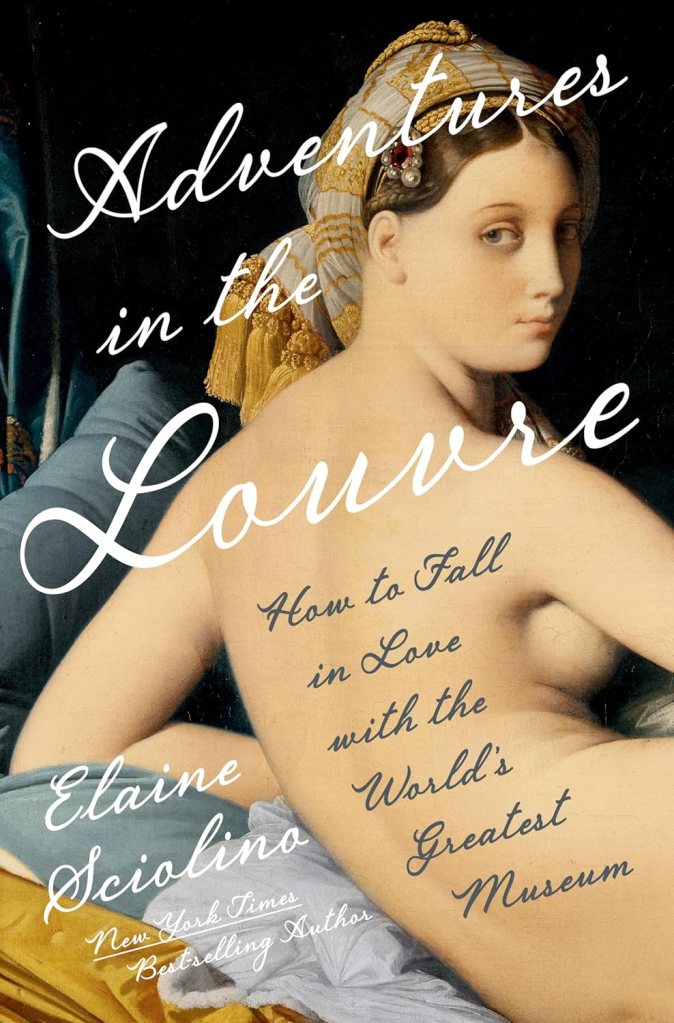 A former New York Times Paris bureau chief explores the Louvre, offering an intimate journey of discovery and revelation.
The Louvre is the most famous museum in the world, attracting millions of visitors every year with its masterpieces. In Adventures in the Louvre, Elaine Sciolino immerses herself in this magical space and helps us fall in love with what was once a forbidding fortress. Exploring galleries, basements, rooftops, and gardens, Sciolino demystifies the Louvre, introducing us to her favorite artworks, both legendary and overlooked, and to the people who are the museum’s lifeblood: the curators, the artisans producing frames and engravings, the builders overseeing restorations, the firefighters protecting the aging structure. Blending investigative journalism, travelogue, history, and memoir, Sciolino walks her readers through the museum’s front gates and immerses them in its irresistible, engrossing world of beauty and culture. Adventures in the Louvre reveals the secrets of this grand monument of Paris and basks in its timeless, seductive power.
Elaine Sciolino, contributing writer and former Paris bureau chief for The New York Times, is the author of The New York Times bestseller The Only Street in Paris, as well as The Seine and La Seduction. She lives in Paris.
Exhibition | Wild Apollo’s Arrows

Josef Abel, Klopstock’s Arrival in Elysium / Klopstocks Ankunft im Elysium, 1805
(National Gallery Prague)
◊ ◊ ◊ ◊ ◊
Now on view at Vienna’s Academy of Fine Arts:
Wild Apollo’s Arrows: Klopstock Cult & Ossian Fever
Die Pfeile des wilden Apollo: Klopstockkult & Ossianfieber
Akademie der bildenden Künste Wien, 7 March — 25 May 2025
Curated by Alexander Roob
The exhibition Wild Apollo’s Arrows: Klopstock Cult & Ossian Fever presents significant artistic works that exemplify the epochal shift from the Enlightenment to the irrationalism of the Storm and Stress movement and Romanticism, exploring for the first time the immense influence of the poet Friedrich Gottlieb Klopstock (1724–1803) on the fine arts and music of his own age.
Decades before the French Revolution, the Age of Enlightenment saw a sudden outbreak of irrational sentiment, expressed in exuberant emotions, notions of spiritualistic gender switching, and a fragmented, heroic, and introspective view of art. This was the onset of an epochal shift with consequences for pictorial art: reliance on the actual appearance of things gave way to the mystical and diffuse, accompanied by a greater interest in the realm of acoustics. Nothing seems to better define this ‘acoustic turn’ than the trope of the blind prophet and lyrical poet, which functioned as a literary model for this new epoch, as seen in the figures of Homer, Ossian, and John Milton. Milton’s grand inner images were proclaimed to be the perfection of the romantic sublime, and the myth of the lost and regained paradise to which he had given literary form was associated with Mesmer’s notion of lucid dreaming. In the early 1750s, German poet Friedrich Gottlieb Klopstock positioned himself as an heir to Milton, with his pietistic epic The Messiah: A Heroic Poem, and in this he issued a challenge to the self-proclaimed English national bard William Blake.
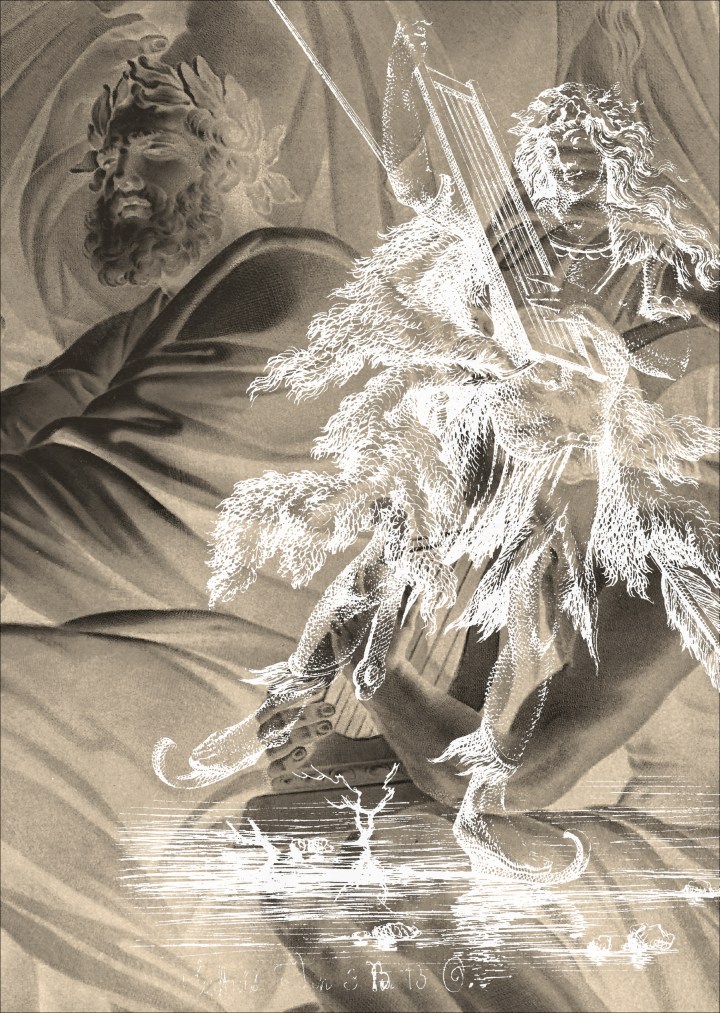
Motif combining works by Johann Peter Pichler after Heinrich Friedrich Füger, Homer Reciting, 1803 (Graphic Collection of the Academy of Fine Arts Vienna), and Carl Wilhelm Kolbe the Elder, Ice-skating Bard (‘Braga’), 1793–94 (Hamburger Kunsthalle, Kupferstichkabinett / bpk, photo by Julia Bau), design composite motif: Beton.
For cultural philosopher Johann Gottfried Herder, ‘wild Apollo’s arrows’ were the rousing sounds of an early folk movement and the Nordic dronescapes of a budding nationalist mysticism, which was all heralded in the pseudo-Celtic poem cycle Ossian. In the visions of the superstar poet Klopstock ‘wild Apollo’ appeared in a Celtic-Germanic mix, and the bard’s song and cosmic ice-dance put the world into creative turmoil. Klopstock, a keen ice-skater, who was nowhere more popular than in Austria, became a role-model for a sentimental skating trend that saw motion as a way to transcend limitations.
The exhibition presents art works that exemplify this epochal shift from the Enlightenment to the irrationalism of the Storm and Stress (Sturm und Drang) movement and Romanticism. For the first time, Klopstock‘s immense influence on the fine arts and music of his own age is explored. With interpretations of his work in art and music by Angelika Kauffmann, Heinrich Friedrich Füger, Josef Abel, and Franz Schubert, the republican poet Klopstock was surprisingly still very present in the Habsburg Empire at the time of the Napoleonic Wars. The exhibition blends works of Austrian classicism, evidence of international early romanticism, and the narcotic imagery of the Nazarenes to the accompaniment of music by Joseph Haydn, Christoph Willibald Gluck, and Franz Schubert.
Alongside works from the Paintings Gallery and numerous loans, this exhibition draws widely on works from the Academy of Fine Arts Vienna Graphic Collection. The project also integrates works by students from the Academy of Fine Arts Vienna, and it will be presented in the Exhibit Galerie and three rooms at the Paintings Gallery. A comprehensive publication with essays and illustrations will accompany the exhibition.
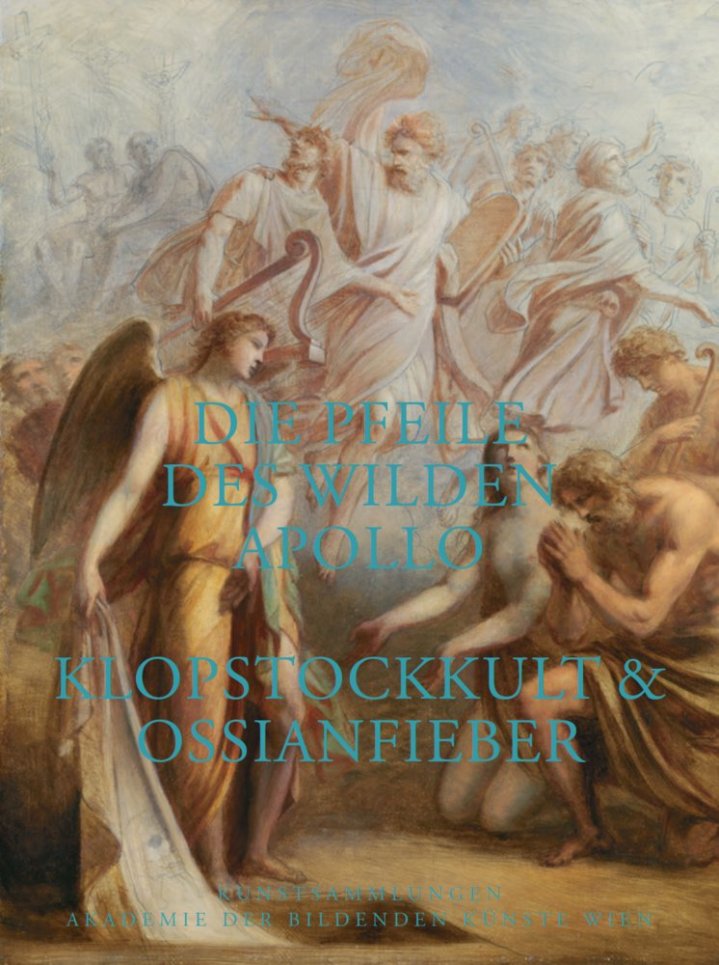 With works by Josef Abel, Edmund Aigner, Johann Wilhelm Baur, Thomas Blackwell, William Blake, Filippo Caporali, Thomas Chatterton, Daniel Chodowiecki, Edward ‘Celtic’ Davies, Josef Dorffmeister, Bonaventura Emler, Heinrich Friedrich Füger, Johann Heinrich Füssli, Hendrick Goltzius, Christoph Willibald Gluck, Johann Valentin Haidt, Joseph Haydn, Anton Herzinger, William Hogarth, Bartholomäus Hübner, Anne Hunter, Archduchess Maria Clementina of Austria, Johann Evangelist Scheffer von Leonhardshoff, Friedrich John, Owen Jones, Angelika Kauffmann, John Kay, Friedrich Gottlieb Klopstock, Joseph Anton Koch, Carl Wilhelm Kolbe the Elder, Simon Petrus Klotz, Leopold Kupelwieser, Johann Caspar Lavater, Johann Friedrich Leybold, William James Linton, Johann Heinrich Lips, Johann Hieronymus Löschenkohl, Josef Löwy, James Macpherson, Charles-François-Adrien Macret, Jacob Wilhelm Mechau, Heinrich Merz, Isaac Mills, Jean-Michel Moreau, Wilhelm Müller, Friedrich Olivier, Carl Hermann Pfeiffer, Johann Peter Pichler, Albert Christoph Reindel, Johan Christian Reinhart, Ferdinand Ruscheweyh, Luigi Schiavonetti, Julius Schnorr von Carolsfeld, Ludwig Ferdinand Schnorr von Carolsfeld, Franz Schubert, Moritz von Schwind, William Bell Scott, Franz Xaver Stöber, Joseph Sutter, Johanna Dorothea Sysang, Giambattista Vico, Marianne von Watteville, Josef Wintergerst, Franz Wolf, Nikolaus Ludwig von Zinzendorf, Felice Zuliani, and others.
Works after William Blake, Asmus Jakob Carstens, Johann Nepomuk Ender, Heinrich Friedrich Füger, Bonaventura Genelli, Gerdt Hardorff, G. W. Hoffmann, William Hogarth, Angelika Kauffmann, Nicaise de Keyser, Giuseppe Longhi, Johann Friedrich Overbeck, Raffaello Santi, genannt Raffael, Bertel Thorvaldsen, Angiolo Tramontini, Richard Westall.
Contemporary works by students of the Academy such as Christian Azzouni, Ina Ebenberger, Hicran Ergen, Eginhartz Kanter, Julia Kronberger, Prima Mathawabhan, Amar Priganica, Liese Schmidt, Pia Wilma Wurzer, and Ancient Britons Team (ABK Stuttgart).
Alexander Roob, with Sabine Folie, Die Pfeile des wilden Apollo: Klopstockkult & Ossianfieber (Hamburg: Textem Verlag), 248 pages, ISBN: 978-3864853340, €32.
New Book | Yearning for Immortality
From The University of Chicago Press:
Rune Nyord, Yearning for Immortality: The European Invention of the Ancient Egyptian Afterlife (Chicago: The University of Chicago Press, 2025), 320 pages, ISBN: 978-0226838236 (hardback), $115 / ISBN: 978-0226838250 (paperback), $33.
 How our understanding of the ancient Egyptian afterlife was shaped by Christianity.
Many of us are familiar with the ancient Egyptians’ obsession with immortality and the great efforts they made to secure the quality of their afterlife. But, as Rune Nyord shows, even today, our understanding of the Egyptian afterlife has been formulated to a striking extent in Christian terms. Nyord argues that this is no accident, but rather the result of a long history of Europeans systematically retelling the religion of ancient Egypt to fit the framework of Christianity. The idea of ancient Egyptians believing in postmortem judgment with rewards and punishments in the afterlife was developed during the early modern period through biased interpretations that were construed without any detailed knowledge of ancient Egyptian religion, hieroglyphs, and sources. As a growing number of Egyptian images and texts became available through the nineteenth century, these materials tended to be incorporated into existing narratives rather than being used to question them. Against this historical background, Nyord argues that we need to return to the indigenous sources and shake off the Christian expectations that continue to shape scholarly and popular thinking about the ancient Egyptian afterlife.
Rune Nyord is associate professor of ancient Egyptian art and archaeology at Emory University. He is the author of Breathing Flesh: Conceptions of the Body in the Ancient Egyptian Coffin Texts and Seeing Perfection: Ancient Egyptian Images Beyond Representation, and he has edited or coedited several anthologies.
c o n t e n t s
Introduction
1 Antiquity’s Antiquity: Ancient Sources
2 Explaining the Remains: Medieval and Renaissance Sources
3 The Egyptian Afterlife in Universal History, 1650–1700
4 Death and Initiation, 1700–1750
5 Describing Egypt, 1750–1798
6 Invasion and Aftermath, 1798–1822
7 The Decline of Metempsychosis, 1822–1860
8 Emergence of the Modern Paradigm, 1860–1885
Conclusion: Where Do We Go from Here?
Acknowledgments
References
Index
Exhibition | Myth and Marble
Opening this month at AIC:
Myth and Marble: Ancient Roman Sculpture from the Torlonia Collection
Art Institute of Chicago, 15 March — 29 June 2025
Kimbell Art Museum, Fort Worth, 14 September 2025 — 25 January 2026
Montreal Museum of Fine Arts, 14 March — 19 July 2026
Curated by Lisa Ayla Çakmak and Katharine Raff
 From large-scale figures of gods and goddesses to portraits of emperors and magnificent funerary monuments, this exhibition brings to North America, for the first time, a selection of 58 rarely seen ancient Roman sculptures from Italy’s storied Torlonia Collection. Nearly half of these sculptures, which range in date from the 5th century BCE to the early 4th century CE, have not been publicly displayed in more than 70 years and have been newly cleaned, conserved, and studied specifically for this exhibition, making for a spectacular opportunity to experience their first public presentation in decades.
The Torlonia Collection is not only the largest private collection of Roman marble sculptures in Italy, but it is also arguably the most important of such private collections in the world. Comprising 622 works and a wide range of sculptural types and subjects, its holdings rival those of major institutions in Europe, including the Capitoline and Vatican Museums.
This veritable ‘collection of collections’ was formed in the 19th century by Prince Giovanni Torlonia (1754–1829) and his son Prince Alessandro (1800–1886), primarily through the purchase of several groups of ancient sculpture assembled in early modern Rome, as well as through extensive archaeological excavations on Torlonia estates in Italy. The taste at this time was for complete works of art, and restorations and other interventions carried out across the decades—in some instances by famed sculptors of the day—have impacted the sculptures’ current appearances while also enriching their histories.
By the 1870s, the collection was placed on view in a private museum in Rome, and a number of its masterworks became world-famous—among them the lovely portrait of a young woman known as the ‘Maiden of Vulci’ as well as the ‘Torlonia Girl’. In the wake of the Second World War, Alessandro Torlonia’s museum closed, and the collection went unseen for generations. During this closure, the Torlonia Foundation was created at the behest of Prince Alessandro Torlonia (1925–2017) to continue to both study and conserve the collection and the Villa Albani Torlonia.
Beginning in 2020, a series of exhibitions across Europe have brought selected highlights of the Torlonia Collection to public display once more. Myth and Marble debuts these masterpieces to a North American audience, presenting a once-in-a-lifetime opportunity to experience these exceptional ancient sculptures and explore the fascinating stories they reveal about both their ancient pasts and their modern afterlives.
Myth and Marble: Ancient Roman Sculpture from the Torlonia Collection is co-organized by the Art Institute of Chicago and The Torlonia Foundation, in collaboration with the Kimbell Art Museum, Musée des beaux-arts Montréal, and The Museum Box. The exhibition is curated by Lisa Ayla Çakmak, Mary and Michael Jaharis Chair and Curator, Arts of Greece, Rome, and Byzantium, and Katharine A. Raff, Elizabeth McIlvaine Curator, Arts of Greece, Rome, and Byzantium.
Lisa Ayla Cakmak and Katharine A Raff, eds., with contributions by Silvia Beltrametti and Salvatore Settis, Myth and Marble: Ancient Roman Sculpture from the Torlonia Collection (New Haven: Yale University Press, 2025), 160 pages, ISBN: 978-0300279658, $40.
New Book | Walking Rome’s Waters
From Yale UP:
Katherine Wentworth Rinne, Walking Rome’s Waters (New Haven: Yale University Press, 2025), 344 pages, ISBN: 978-0300276374, $35.
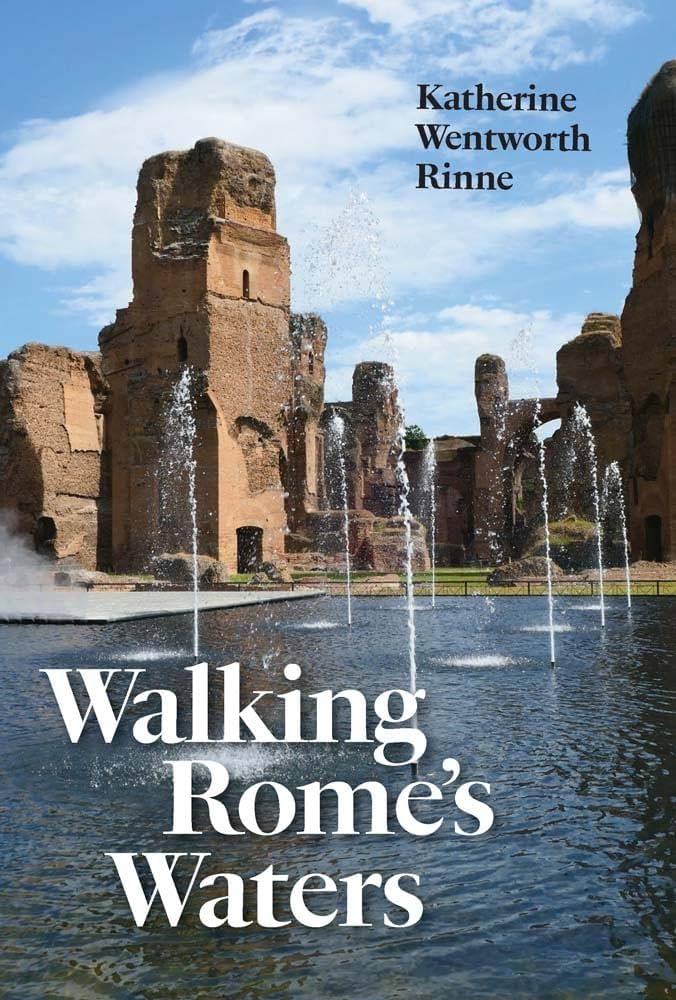 An engaging guide to the waterways of Rome and their role in shaping the city’s culture, history, and landscape
Written by a leading expert on the water infrastructure of Rome, this grand tour offers a new way to appreciate the history, geology, and character of the ancient and contemporary city. Richly illustrated itineraries wind through Rome’s streets, piazzas, and gardens, following the trail of water as it flows, propelled by gravity, through different neighborhoods. In addition to mapping thirteen walking tours, Katherine Wentworth Rinne also pulls the reader underground—where hidden springs and streams still flow—to illuminate how Rome’s complex topography has been transformed since antiquity, as well as into the sky, imaginatively flying over Rome’s villas and parks to give readers a sense of the infrastructure through an aerial view. Whether enjoyed from an armchair at home or as a companion on strolls next to aqueducts, fountains, and the Tiber River, this guidebook, filled with the author’s unique insights, brings the vibrant world of Rome’s water to life, with its eddies and whorls twisting throughout the city’s storied history.
Katherine Wentworth Rinne is a visiting scholar in the Center for Cultural Landscapes in the School of Architecture and an associate fellow at the Institute for Advanced Technology in the Humanities at the University of Virginia.
New Book | Casting a New Light

From the Museum of Fine Arts, Budapest and distributed by Unicorn Publishing:
Mirian Szőcs and Márton Tóth, eds., Casting a New Light: Plaster Casts & Cast Collections in Europe and Beyond (Budapest: Museum of Fine Arts, 2025), 178 pages, ISBN: 978-6156595232, $35.
This volume publishes the papers of the international conference Plaster Casts & Cast Collections across Europe: History and Future, held in the Museum of Fine Arts, Budapest on 24 May 2022. The conference was organised in celebration of the refurbishment of the plaster cast collection of the Museum of Fine Arts, Budapest and its exhibition in the Star Fortress in Komárom (opened in the autumn of 2021) and in the visible storage in the newly built National Museum Conservation and Storage Centre in Budapest (installed in 2022). Featuring a collection of papers, including several case studies, the volume delves into various aspects of collecting and showcasing plaster casts, an important phenomenon that shaped European and American art museums from the nineteenth century onwards. It explores international connections and influences in the establishment of cast collections while also shedding new light on the role and uses of plaster casts in the antiquity and in the era of historicism. Moreover, the volume offers valuable reflections on the intricate contexts of the contemporary reception of these collections, presenting new perspectives on their significance and future.
Miriam Szőcs is head of the Department of Sculptures at the Museum of Fine Arts, Budapest. She specializes in Renaissance and baroque bronzes. She was the curator of the new permanent exhibition of sculptures at the Museum of Fine Arts that opened in 2013. Between 2013 and 2021, she worked on the project of the refurbishment of the plaster cast collection of the Museum of Fine Arts, being the chief curator of the plaster cast exhibition at the Star Fortress in Komárom.
c o n t e n t s
• Eckart Marchand, “‘The best laid schemes’ …: The Politics of the Universal Museum and the Vicissitudes of their Plaster Cast Collections at the Turn of the Twentieth Century”
• Miriam Szőcs, “The Colleoni Monument and the Medici Tombs: Monumental Renaissance Casts in the Museum of Fine Arts in Budapest”
• Flavia Berizzi, “From Northern Italy to Hungary: Medieval and Renaissance Monumental Casts from the Museo Campi Carlo in Milan to the Museum of Fine Arts in Budapest”
• Jean-Marc Hofman, “Generation and Regeneration of the Cast Collections of the Musée de Sculpture Comparée, Paris”
• Géza Andó and Eszter Süvegh, “The Ways of the Casts: Plaster Casts of Antiquities in Budapest and Kolozsvár (today Cluj-Napoca, Romania)”
• Eszter Hajós-Baku and Beáta Szűts, “A Brief History of the Plaster Cast Collection of the Department of Graphics, Form, and Design at the Budapest University of Technology and Economics”
• Júlia Katona, “Nineteenth-Century Constructions and Monument Reconstruction in Hungary in the Context of Educational Plaster Cast Collections: A Case Study with Special Focus on the Romanesque Hall of the Museum of Fine Arts, Budapest”
• Rune Frederiksen, “The Role of Ancient Plaster Casts in Ancient Art: The Written Evidence”
• Lorenz Winkler-Horaček, “Appreciation and Rejection: Plaster Casts in the Discourse of Copy and Original, with an Excursus on the Sleeping Ariadne in the Berlin Cast Collection”
• Marjorie (Holly) Trusted, “The Making and Meaning of Plaster Casts in the Nineteenth Century: Their Future in the Twenty-First Century”










 Enfilade
leave a comment