New Book | Les funérailles princières en Europe (XVIe–XVIIIe siècle)
The third and final installment of the princely funeral series is published by Presses Universitaires de Rennes (and soon to be available from Artbooks.com):
Juliusz A. Chrościcki, Mark Hengerer, and Gérard Sabatier, eds., Les funérailles princières en Europe (XVIe–XVIIIe siècle), 3. Le deuil, la mémoire, la politique (Rennes: Presses Universitaires de Rennes, 2015), 440 pages, ISBN: 978-2753540750, 22€ / $42.50.
 Les funérailles princières à l’époque moderne sont médiatisées à travers des rapports d’ambassadeurs, des publications hagiographiques, des documents administratifs ou encore des articles de presse et des gravures à vocation commerciale. La pratique du deuil des souverains, très variable d’un pays à l’autre, est révélatrive de l’état des sociétés et du rapport entre le prince et ses sujets. Ce volume est le dernier d’une trilogie consacrée aux funérailles princières de l’Europe moderne. En coédition avec le Centre de recherche du château de Versailles.
◊ ◊ ◊ ◊ ◊
C O N T E N T S
• Juliusz A. Chroscicki, Mark Hengerer et Gérard Sabatier, Les funérailles princières en Europe, xvie–xviiie siècle
• Mark Hengerer et Gérard Sabatier, La communication, l’opinion publique, la politique
I. UN ÉVÉNEMENT MÉDIATIQUE
• Giovanni Ricci, Dépêches diplomatiques et plaquettes : la connaissance des funérailles royales françaises dans l’Italie de la Renaissance
• Philippe Martin, Une stratégie éditoriale : publier les funérailles de Charles III de Lorraine
• Michel Cassan, L’annonce de la mort d’Henri IV dans le royaume
• Stéphane Haffemayer, La mort des princes dans les gazettes au xviie siècle
• Friedrich Polleross, La gravure et la diffusion de la mort des Habsbourg, xvie–xviiie siècle
II. LE DEUIL DES SOUVERAINS DANS LEUR ROYAUME
• Leonardo Carvalho-Gonçalves, Les funérailles de Manuel Ier au Portugal et à Goa
• Luis Javier Cuesta Hernández, Les funérailles de Philippe IV dans les États de la Couronne d’Espagne
• Ulrich Niggemann, Deuil par condoléances pour Guillaume III en Angleterre
• Bernard Hours, Quand les villes pleurent leur prince: services funèbres provinciaux en France au xviiie siècle
• Britta Kägler, De Bavière ou d’Empire ? Double deuil pour l’empereur Charles VII
• Martin Papenheim, Deuils princiers et impériaux dans l’Empire au xviiie siècle
• Dmitri Zakharine, Le deuil du tsar dans la société russe
III. LES FUNÉRAILLES DES SOUVERAINS ÉTRANGERS : STRATÉGIES MÉMORIELLES
• Sylvène Édouard, « Les nouvelles de la mort du Roy d’Espagne » : réception d’un discours exemplaire
• Kerstin Weiand, La mort d’Henri IV et l’image du Warrior King en Angleterre
• Francis B. Assaf, La mort de Louis XIV commémorée par le premier Bourbon d’Espagne, Madrid 1716
• Sara Mamone, Funerali in effigie : défilé royal à Florence
• Martine Boiteux, Les usages politiques d’un rituel de majesté : les funérailles des souverains étrangers à Rome
• Gesa zur Nieden, L’accompagnement musical des funérailles romaines en l’honneur de princes européens, 1650–1750
• Mark Hengerer, Les monarchies comme famille : les pompes funèbres des souverains étrangers à Vienne, xviie-xixe siècle
• Jean-Marie Le Gall, Une stratégie d’impérialisme dynastique : les pompes funèbres des souverains étrangers à Notre-Dame de Paris, xvie–xviiie siècle
Conclusion
• Gérard Sabatier et Mark Hengerer, Les funérailles princières : un outillage politique performant
Index des noms de personnes
Index des toponymes
Les auteurs
Table des illustrations
Crédits photographiques
Exhibition | La Manufacture des Lumières: La Sculpture à Sèvres
Opening at Sèvres in September:
La Manufacture des Lumières: La Sculpture à Sèvres de Louis XV à la Révolution
Cité de la Céramique, Sèvres, 16 September 2015 — 18 January 2016
Curated by Guilhem Scherf
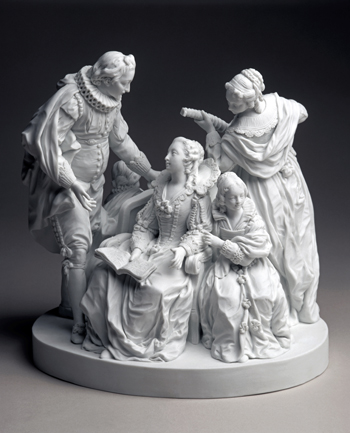
Jean-François Duret, La Mandoline ou La conversation espagnole, 1772 (Collection Sèvres—Cité de la céramique, SCC.2012.2.1)
Raconter l’histoire de la sculpture à Sèvres, de la création de la Manufacture par la volonté de Louis XV et de Madame de Pompadour jusqu’à la période révolutionnaire, permet de dévoiler tour à tour l’excellence du goût des élites de l’Ancien Régime pour la perfection des objets d’art et l’explosion d’une thématique nourrie par le siècle des Lumières.
La sculpture à Sèvres relève d’un processus minutieux partant d’un modèle en terre pour aboutir au biscuit de porcelaine. La surface de porcelaine, non émaillée mais polie, permet ainsi de rivaliser le marbre. Le biscuit de porcelaine, inventé par la Manufacture vers 1752, connait immédiatement un immense succès et a concurrencé la production venant de Chine puis celle de sa grand rivale saxonne, la Manufacture de Meissen.
Les artistes de la Manufacture ont su créer et diffuser des sujets remplis de charme, de délicatesse et de vie sur les thèmes de l’enfance, de la fable et de l’allégorie, de la littérature et de la vie quotidienne tout en innovant dans le domaine du portrait et de l’iconographie politique. Les biscuits exécutés sous la direction des sculpteurs du roi (Falconet, Pajou, Boizot), parfois inspirés par des compositions de Boucher ou de Coypel, ont délecté les amateurs du temps les plus exigeants.
L’exposition présente plus de 80 terres cuites et 120 biscuits de porcelaine, mais aussi des dessins, des estampes, ainsi que des modèles et des moules en plâtre originaux. Cette richesse des collections patrimoniales complétée par des prêts extérieurs, permet de montrer au mieux cette apothéose du goût et de l’excellence artistique que fut la création au XVIIIe siècle des célèbres biscuits de Sèvres.
Cet événement a été rendu possible grâce à la restauration financée par la Fondation BNP Paribas, des modèles originaux en terre cuite du XVIIIe siècle, étape initiale à la production des sculptures en porcelaine.
Après une introduction historique et technique, le parcours de l’exposition se décompose en dix sections. Elles abordent les thèmes du goût pour l’enfance, les animaux, la fable et l’allégorie, le surtout de table, la vie contemporaine, les sujets littéraires, les œuvres religieuses, les portraits, les statuettes des grands hommes et, enfin, la décennie révolutionnaire.
Aujourd’hui, la fabrication de biscuits se poursuit dans les ateliers de la Manufacture de Sèvres, pour certains issus du répertoire de Sèvres, pour d’autres fruits de l’imagination des artistes contemporains invités.
Le commissariat général de l’exposition est assuré par Guilhem Scherf, conservateur en chef au département des sculptures du musée du Louvre, spécialiste de la sculpture du XVIIIe siècle et auteur de nombreux ouvrages. La scénographie est confiée à Cécile Degos.
Le catalogue est édité sous la direction de Tamara Préaud par les éditions Faton. Une première partie traite de la Manufacture de Sèvres, des techniques et de la restauration des terres cuites et du dialogue des arts (l’estampe, la sculpture, le costume). La deuxième est le catalogue des œuvres exposées, selon dix sections. Quant à la dernière partie, elle présente le catalogue sommaire illustré de l’ensemble des sculptures du XVIIIe siècle conservées à Sèvres – Cité de la céramique.
La Cité de la céramique – Sèvres & Limoges et la Société Pyramis Design ont signé un accord de mécénat de compétence en matière de digitalisation 3D. Dans le cadre de l’exposition, grâce à cette technologie, une lecture inédite du surtout de table La Conversation espagnole sera proposée aux visiteurs, en regard de l’œuvre originale.
Tamara Préaud, ed., La Sculpture à Sèvres au XVIIIe Siècle (Dijon: Éditions Faton, 2015), 432 pages, 45€.
Exhibition | Gardens & Groves: George Washington’s Mount Vernon
◊ ◊ ◊ ◊ ◊
Now on view at Mount Vernon:
Gardens & Groves: George Washington’s Mount Vernon
Mount Vernon, Virginia, 22 February 2014 — 30 May 2016
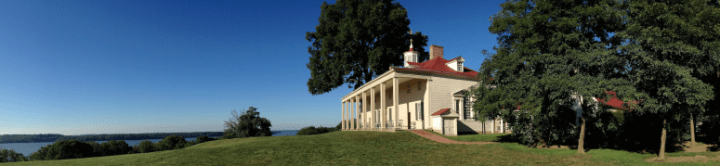
Countless photographs testify to the beauty of Mount Vernon’s landscape. Two hundred years after its creation, it continues to delight. Although the beautiful gardens, sweeping lawns, and inviting paths seem perfectly natural, these features were all carefully planned by George Washington. When he returned to Mount Vernon after the American Revolution, General Washington found the estate in need of extensive repairs and improvements. The buildings and grounds surrounding the Mansion lacked an overall design, having evolved over time with an eye more for practical function than beauty.
Between 1785 and 1787, George Washington completely transformed Mount Vernon’s grounds into a landscape very similar to the one that survives today. During this break from public affairs, few days passed without the General working on the landscape. To update Mount Vernon, Washington had his free and enslaved workers install such picturesque features as sweeping lawns, groves of trees, curving paths, vistas, and hidden walls (called “ha-has”). From laying out paths to tagging trees for transplanting, the General was involved in every aspect of designing and installing his gardens and grounds.
From the exhibition press release (27 January 2014) . . .
Mount Vernon invites visitors to explore George Washington’s design for the grounds of his estate, through the exhibition, Gardens & Groves: George Washington’s Landscape at Mount Vernon, on view until May 2016. Gardens & Groves is the first museum exhibition to focus specifically on Washington’s landmark achievements as a landscape designer combining rarely-seen original documents, artworks, and books with period garden tools, gorgeous landscape photography, and a stunning scale model of the Mount Vernon estate. In Gardens & Groves, visitors can view the first president’s spyglass, watering can, and garden roller, in addition to reading Washington’s notes and instructions for Mount Vernon’s landscape in his own hand.

Kitchen garden at Mount Vernon
“Each year, more than a million visitors enjoy the remarkable beauty of Mount Vernon’s gardens and grounds,” said Mount Vernon curator, Susan Schoelwer. “But few realize that the views that we enjoy today were all carefully planned by George Washington himself. Gardens & Groves aims to change that, as visitors have the opportunity to ‘unpack’ the landscape surrounding the Mansion, following in Washington’s footsteps to examine each of the elements in the design.”
The exhibit presents five 18th-century views of Mount Vernon—oil paintings of both river and land fronts of the Mansion, by Edward Savage; two detailed drawings of the layout of the grounds, by English admirer Samuel Vaughan; and a recently-acquired image of the Washingtons relaxing on the piazza in 1796, by Benjamin Henry Latrobe, architect of the US Capitol Building (due to their fragility, the Vaughan and Latrobe drawings were on view in Gardens & Groves through August 17, 2014).
“Bringing these five important works together presents a rare opportunity to see Mount Vernon through the eyes of artists who visited during George Washington’s lifetime,” said Mount Vernon exhibition curator Adam T. Erby. “These artworks record details of the landscape that we would not otherwise know—information that continues to inform our ongoing research and restoration efforts.”
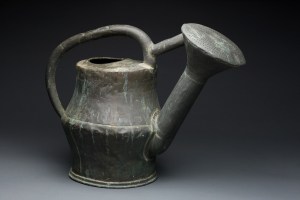
Watering Pot, made in France or England, 18th century, copper, iron.
At the center of Gardens & Groves is a fascinating 8’x 9’x 11’ model of Mount Vernon’s landscape as Washington last saw it in 1799. Developed by Mount Vernon historians, archaeologists, and curators, this state-of-the-art model has returned home from a national tour in Mount Vernon’s traveling exhibition, Discover the Real George Washington: New Views from Mount Vernon. In addition to delighting viewers with its intricate craftsmanship, the model incorporates countless scenes from daily life—laundry drying in the laundry yard, a sailing ship on the Potomac, just-planted trees along the bowling green.
Such details introduce a broad view of the landscape, revealing two separate, but intersecting landscapes that existed at Mount Vernon: the pleasure grounds of the planter and the working spaces of the enslaved community. Gardens & Groves also tells the stories of the men and women, both hired and enslaved, who created and maintained George Washington’s gardens, and visitors will see some actual artifacts that they used, including a copper watering can and archeologically-recovered flower pot fragments.
An interactive touchtable will demonstrate the evolution of the landscape at Mount Vernon over time. Visitors will be able to scroll through three topographical maps created by Mount Vernon’s preservation staff, reconstructing the appearance of the landscape when Washington inherited the property, during an early renovation, and as it finally appeared at the end of Washington’s life. On each of the maps, visitors will be able to click on individual elements to bring up more information about a particular feature.
A list of ten facts about the landscape at Mount Vernon is available here»
◊ ◊ ◊ ◊ ◊
Published this spring in connection with the exhibition:
Susan P. Schoelwer, ed., The General in the Garden: George Washington’s Landscape at Mount Vernon (Mount Vernon: Mount Vernon Ladies’ Association, 2015), 208 pages, ISBN: 978-0931917486, $35.
 The General in the Garden provides an engaging, informative, and richly illustrated introduction to George Washington’s landscape at Mount Vernon—arguably the best-documented, best-preserved complex of gardens and grounds to survive from eighteenth-century America.
The book’s three essays, by Adam T. Erby, J. Dean Norton, and Esther C. White, chronicle Washington’s transformation of the estate in the years between the American Revolution and the Constitutional Convention of 1787, the stewardship of its gardens by the Mount Vernon Ladies’ Association since 1860, and the archaeology that led to the recent restoration of Washington’s showplace upper garden. Mount Vernon assistant curator Adam Erby examines Washington’s critical role in developing Mount Vernon’s landscape, arguing that the general drew on British design sources and gardening manuals but adapted them to his own circumstances, creating a truly American garden. J. Dean Norton, Mount Vernon’s director of horticulture, traces the evolution of the estate’s landscape and recreated gardens across the two centuries since Washington’s death. And Esther White, Mount Vernon’s director of historic preservation and research, shows how groundbreaking archaeological methods facilitated the discovery of Washington-era garden beds and borders of flowers, shrubs, and vegetables in his upper garden—a remarkable find that yielded one of the most significant eighteenth-century garden recreations of our time. Also included is a lavishly illustrated guide to Mount Vernon’s landscape features, introducing Washington’s beloved estate to a modern audience.
An interview with the authors of the book is available here»
New Book | To My Dear Pieternelletje
From Brill:
Bea Brommer, To My Dear Pieternelletje: Grandfather and Granddaughter in VOC Time, 1710–1720 (Leiden: Brill, 2015), ISBN: 978-9004289666, 175€ / $227.
 To my dear Pieternelletje describes a ten-year period in the lives of Pieternella van Hoorn and her grandfather Willem van Outhoorn, former governor-general of the Dutch East Indies. Eleven years old, Pieternella left for Amsterdam and the only contact possible was by mail. Numerous letters have survived and combined with contemporaneous documents—most of them never published before—they offer a vivid and clear picture of their private life and feelings, forming a most welcome addition to official VOC-history. Van Outhoorn not only acted as Pieternella’s mentor while she tried to adjust to her new but unknown fatherland, but also sent her numerous exquisite presents, the greater part of which has been traced and described in full, thus offering new insight in the cultural history of Asia.
◊ ◊ ◊ ◊ ◊
C O N T E N T S
Preface
Introduction
Part 1: Pieternella van Hoorn and Willem van Outhoorn
1. My Long-Standing Request for my Release: The first letter
2. Sing the Watch Song
3. Flees and Hottentots: The Cape of Good Hope
4. Your Very Dear and Beloved Father: Batavia
5. What a Wonderfull Country
6. To Invest Our Pennies Securely
7. Tied with a Chinese Silken Bow: Presents for Pieternella
8. Raised in My Small Country Garden: Country Estates around Batavia
9. Some Pins, Needles, and Thread: Grandfather’s Slaves
10. Becoming Quite an Amsterdam Young Lady
11. Those Gentlemen!
12. Not Without Ailments: Medication, Dutch and Asian, The cordial stone
13. My Beloved Grandpapa: Grandfathers’s Burial and Estate
Part II: The Dramaties Personae
1. The Hair Grown Grey: The Van Outhoorn Family: Japanese Lacquer Dishes
2. My Dear Son Johannes: The Van Outhoorn Family
3. The Cold I Cannot Stand Very Well: The Van Riebeeck Family Portraits
4. Personalia
Appendices
Letters of Willem van Outhoorn
Inventory of Willem van Outhoorn, Batavia
Invenotry of Joan van Hoorn, Amsterdam
Inventory of The Van Hoorn Collection
Glossary
Sources
Index
New Book | The Courtiers’ Anatomists
From The University of Chicago Press:
Anita Guerrini, The Courtiers’ Anatomists: Animals and Humans in Louis XIV’s Paris (Chicago: The University of Chicago Press, 2015), 352 pages, ISBN: 978-0226247663, $35.
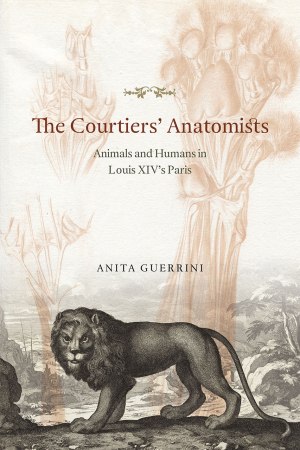 The Courtiers’ Anatomists is about dead bodies and live animals in Louis XIV’s Paris–and the surprising links between them. Examining the practice of seventeenth-century anatomy, Anita Guerrini reveals how anatomy and natural history were connected through animal dissection and vivisection. Driven by an insatiable curiosity, Parisian scientists, with the support of the king, dissected hundreds of animals from the royal menageries and the streets of Paris. Guerrini is the first to tell the story of Joseph-Guichard Duverney, who performed violent, riot-inducing dissections of both animal and human bodies before the king at Versailles and in front of hundreds of spectators at the King’s Garden in Paris. At the Paris Academy of Sciences, meanwhile, Claude Perrault, with the help of Duverney’s dissections, edited two folios in the 1670s filled with lavish illustrations by court artists of exotic royal animals.
Through the stories of Duverney and Perrault, as well as those of Marin Cureau de la Chambre, Jean Pecquet, and Louis Gayant, The Courtiers’ Anatomists explores the relationships between empiricism and theory, human and animal, as well as the origins of the natural history museum and the relationship between science and other cultural activities, including art, music, and literature.
Anita Guerrini is Horning Professor in the Humanities and professor of history in the School of History, Philosophy, and Religion at Oregon State University. She is the author of Experimenting with Humans and Animals: From Galen to Animal Rights and Obesity and Depression in the Enlightenment: The Life and Times of George Cheyne.
◊ ◊ ◊ ◊ ◊
C O N T E N T S
A Note on Names, Dates, and Other Matters
Abbreviations Used in the Notes
List of Illustrations
Introduction
1 Anatomists and Courtiers
2 The Anatomical Origins of the Paris Academy of Sciences
3 The Animal Projects of the Paris Academy of Sciences
4 The Histoire des animaux
5 Perrault, Duverney, and Animal Mechanism
6 The Courtiers’ Anatomist: Duverney at the Jardin du roi
Conclusion
Epilogue: The Afterlife of the Histoire des animaux
Acknowledgments
Notes
Bibliography
Index
Exhibition | New for Now: The Origin of Fashion Magazines
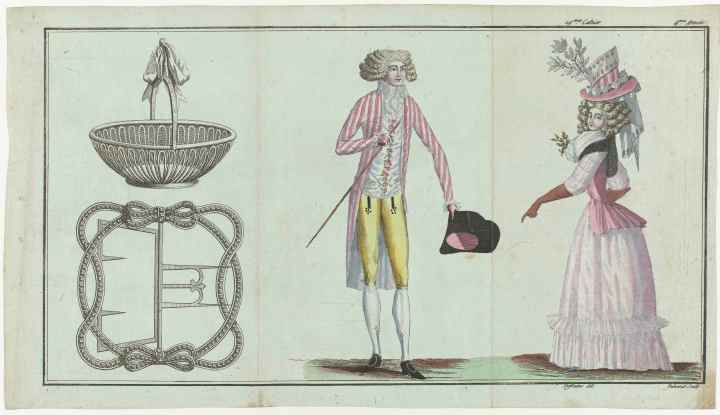
Magasin des Modes Nouvelles Françaises et Anglaises (1 Juin 1789), Pl. 1, 2 et 3
(Amsterdam: Rijksmuseum)
◊ ◊ ◊ ◊ ◊
Press release (20 May 2015) from the Rijksmuseum:
New for Now: The Origin of Fashion Magazines
Rijksmuseum, Amsterdam, 12 June — 27 September 2015
From 12 June, the Rijksmuseum presents a major retrospective of its rich collection of costume and fashion prints for the first time. The change in women’s and men’s fashion from the year 1600 up to and including the first half of the 20th century, and the development of the fashion magazine into the fashion glossies we know today, can be seen in more than 300 prints. The exhibition was designed by designer and co-curator Christian Borstlap, in collaboration with fashion illustrators Piet Paris and Quentin Jones.
The publishers of fashion prints did everything to make their product as attractive as possible. They attracted skilled illustrators for this purpose, some of whom went on to become specialists in this area: true ‘fashion illustrators’. The trick was to portray the models on the prints as skillfully as possible and with a great sense of elegance. The printmaker was responsible for transferring the design sketches onto an engraving that could reproduce the design. A so-called ‘colourist’ subsequently added colours to each individual image by hand.
New for Now shows prints by fashion designer Paul Poiret, among others. His ‘Fashion is Art’ statement marked the beginning of a new era. He presented his designs in two artfully designed series of works in bright opaque colours, which served as an inspiration for a number of artistically high-quality fashion magazines.
Many of the prints shown are from two important collections acquired by the Rijksmuseum in 2009: The Raymond Gaudriault Collection and The MA Ghering-van Ierlant Collection. All 8,000 prints from these collections can be seen online from June 2015. This is the result of a multi-year project in which the prints were catalogued, described and digitalised.
◊ ◊ ◊ ◊ ◊
The catalogue is available from the Rijksmuseum:
Georgette Koning and Els Verhaak, New For Now: The Origin of Fashion Magazines (Amsterdam: Rijksmuseum, 2015), 204 pages, 20€.
 Fashion changes constantly, but the desire to be ‘in fashion’ is eternal. For centuries people have eagerly followed the latest fashion trends. But how did one keep up in an age without internet, fashion blogs, Pinterest and glossy fashion magazines? New for Now explores how trends were spread before Vogue and Harper’s Bazaar appeared on the shelves. From the costume book in the 16th century by way of individual, hand-coloured fashion plates to the first fashion magazine to roll off the presses in 1785: Cabinet des Modes. There was no stopping after this, and one fashion magazine appeared hard on the heels of the other, reaching an absolute high point in the Gazette du Bon Ton in 1912, full of magnificent art deco illustrations.
Exhibition | Tavole Barocche: Banchetti, Feste e Nature Morte

◊ ◊ ◊ ◊ ◊
From Gioia Oggi:
Tavole Barocche: Banchetti, feste e nature morte tra
XVII e XVIII secolo dalla Collezione Corsi di Firenze
Castello Svevo di Gioia del Colle (Ba), 11 April — 28 June 2015
Curated by Francesco Di Ciaula
Nell’anno dell’Expo di Milano, dedicato alle tematiche dell’alimentazione, le suggestive sale del Castello Svevo di Gioia del Colle (Ba) ospitano dall’11 aprile al 28 giugno 2015 la mostra Tavole Barocche, promossa dalla Regione Puglia e dal Comune di Gioia del Colle.
La mostra, a cura di Francesco Di Ciaula ed organizzata dalla società Sistema Museo, espone dipinti raffiguranti nature morte, paesaggi e scene conviviali tra XVII e XVIII secolo, provenienti dalla Collezione Corsi di Firenze conservata presso il Museo Bardini, una delle istituzioni museali più importanti del capoluogo toscano. L’esposizione è allestita nel Castello di Gioia del Colle, tra i più affascinanti manieri realizzati dalle maestranze dell’Imperatore Federico II Hohenstaufen, il Sovrano tedesco che fece della Puglia del XIII secolo la sua terra d’elezione. Tra la magnifica Sala del Trono, così nominata per la presenza dell’imponente seggio reale, la Sala del Camino, la Torre de’ Rossi e il Gineceo, si sviluppa armoniosamente la mostra, ricca di opere importanti per la storia dell’arte del Seicento e del Settecento italiano e fiammingo, come quelle del Gobbo dei Carracci, lo Spadino, Giovan Battista Ruoppolo, Jacopo da Empoli, Gian Domenico Ferretti, della bottega dell’Arcimboldo e del seguito di Pieter Brueghel il Giovane. Due le sezioni di mostra, incentrate sulla cultura del cibo e della tavola: la prima espone la rappresentazione degli alimenti nel genere della natura morta, che si impone in maniera decisiva nel Seicento. I dipinti sono dominati dalla variegata presenza di carni, selvaggina, pesci, frutti e ortaggi realizzati da artisti soprattutto di ambito toscano e romano-napoletano. La seconda sezione, arricchita dalle opere di autori fiamminghi, presenta i piaceri conviviali: prevalgono scene di banchetto e di festa, riscontrabili sia nei rituali opulenti e fastosi delle classi aristocratiche sia nelle immagini di contesti umili e popolari, nei quali l’alimentazione più che piacere della tavola diviene ricerca di appagamento della fame.
Le Sezioni
Il tema delle quaranta opere esposte, il cibo e la tavola, si rifà al mondo fisico puramente rappresentato, in un contesto di pittura profana dell’epoca barocca, il cui chiaro richiamo alle esperienze dei sensi conduce l’osservatore verso una visione seducente delle cose naturali. La nascita della natura morta, al centro della prima sezione della mostra, è paradigmatica di un interesse, presente già negli ultimi decenni del XVI secolo tra Fiandre e Italia settentrionale, della possibilità di indagare il reale negli aspetti più dettagliati e “microscopici”, considerati “laterali” nella pittura di storia. L’illusionismo, tutto teatrale, di credere di poter toccare, annusare, assaggiare i cibi sul piano della tela, accentua questa visione di una riproduzione della realtà riconoscibile come vita e vissuto quotidiano dove gli stessi alimenti, fuori da ogni intendimento retorico, suscitano desideri e ricordi sensoriali. Il processo di crescita e decadenza della frutta e dei vegetali, in connessione con l’idea del tempo che scorre, pone la natura morta come specchio della vita della materia, le cui forme assumono più o meno colore e spessore dall’impatto con la luce, l’unico elemento in grado di interagire con lo spazio della scena. Nella seconda sezione della mostra, illustrante i piaceri conviviali, i dipinti di ambito fiammingo e francese, raffiguranti feste aristocratiche tra parchi e boschi, fanno riferimento alla fusione del momento della tavola con l’intrattenimento di danze e musiche. Sempre fiamminghe le scene campestri illustranti i pasti del mondo contadino e le colazioni borghesi, mentre nelle vedute urbane del Settecento fiorentino si osserva la vita brulicante delle città, tra fiere e mercati. Le dispense e le cucine, come luoghi della conservazione e della cottura dei cibi, assumono anch’esse una rilevanza artistica, espressione di una concezione fortemente naturalistica e verosimile della realtà, priva ormai del puro idealismo del Rinascimento.
Le Opere
Come incipit del percorso di visita, accanto al trono di Federico, sono collocate la Primavera, l’Estate e l’Inverno eseguiti dalla bottega dell’Arcimboldo, l’enigmatico pittore lombardo cinquecentesco, il quale inventò la conversione del corpo umano in figura vegetale, facendo delle sue opere una prefigurazione della nascita della natura “in posa”. Nell’insieme delle nature morte qui presenti spiccano i dipinti, la Frutta e la Natura morta con cacciagione e frutta, legati a due tra gli esponenti più rappresentativi del genere in Italia, come Pietro Paolo Bonzi, detto il Gobbo dei Carracci e il Maestro S.B., noto come lo Pseudo Salini, i quali riflettono le innovazioni caravaggesche dei primi capolavori romani del Merisi, connotate da un intenso e “contemplativo” naturalismo. Nel caso del secondo pittore si nota la ripresa di modelli nordici, nell’iconografia degli animali da selvaggina, e una carica cromatica tipica della scuola napoletana del Seicento alla quale egli era legato, che in mostra è splendidamente rappresentata dalla tela attribuita a Giovan Battista Ruoppolo, la Natura morta di cucina. La natura morta fiorentina è presente nelle opere della cerchia di Jacopo da Empoli, il pittore che, formatosi sulla pittura manierista fiorentina, “importa” a Firenze nei primi decenni del XVII secolo il nuovo genere proveniente dalle botteghe romane, tramite la presenza nelle collezioni Medicee di varie tele raffiguranti “pose” di animali e vegetali. I fasti del Barocco romano sono evocati dalla Natura morta di frutta e zucche di Giovanni Paolo Castelli detto lo Spadino, e la grande tela di Michelangelo Pace detto da Campidoglio, Natura morta di fiori e frutta con papere che si abbeverano ad una fontana. La seconda parte della mostra è aperta dai convivi immersi liberamente nel contesto naturale di parchi, boschetti e giardini, con l’allusione all’imprescindibile legame tra cibo ed Eros. La cornice fiabesca delle tele fiamminghe qui esposte, Festa nel parco del Castello e Convivio, con i meravigliosi sfondi di castelli dall’aspetto ancora medievale, dona alla scena un’atmosfera sognante e ovattata, tipica della vita di corte. Ancora di scuola fiamminga, della prima metà del Seicento, sono le due tele che illustrano la piacevolezza del mangiare immersi nella natura, il Banchetto all’aperto e il Paesaggio estivo, nei quali gli atteggiamenti dei personaggi richiamano una disinvoltura borghese nell’atto della consumazione dei pasti e dello stare a tavola. La presenza in mostra di un’opera come Interno di osteria con contadini, attribuibile a un artista del seguito di Pieter Brueghel il Giovane, ci permette di cogliere l’elemento grottesco di una scena di festa contadina, dove l’aspetto di preparazione e consumazione del pasto assume una grandissima forza espressiva, tipica dell’arte bruegheliana. La descrizione della vita umile degli ultimi, in una chiave legata ai costumi alimentari, viene espressa dalla presenza di una tela del pittore del Settecento bolognese, Stefano Gherardini, Interno di osteria con personaggi, formatosi sulla scia del Crespi, e da Il Pulcinella malato, eseguito da un seguace di Pier Leone Ghezzi, il grande caricaturista romano attivo nella Roma della prima metà del XVIII secolo. In posizione dominante, nella bellissima Sala del Camino, svetta il Bacco e Arianna del pittore Rococò fiorentino Gian Domenico Ferretti, il cui dipinto celebra il Dio del vino, dell’ebbrezza, della trasformazione e della rigenerazione della vegetazione. Seguendo un suadente percorso tra dipinti ricolmi di frutta, selvaggina, pesci, tavole imbandite e paesaggi animati da feste aristocratiche, colazioni campestri e fiere cittadine, si assiste alla rivelazione di una cultura artistica dominata dal trionfo della Natura mater, la procreatrice dei prodotti della terra, raffigurata nei paesaggi come luogo di bucolico abbandono, dove Eros e le Dee della fertilità e dell’abbondanza giacciono felici sul verde rigoglioso di un prato primaverile.
Il Castello
Tra le opere fortificate di epoca federiciana presenti in Puglia, il castello di Gioia del Colle è una di quelle che conservano più integro l’impianto architettonico, definito dall’ampio cortile quadrangolare, le poderose torri angolari e le cortine con paramento a conci bugnati. L’originaria struttura di epoca bizantina fu ampliata in epoca normanna. Fin dal 1500 storici, viaggiatori e studiosi hanno attribuito a Federico II la sistemazione definitiva del castello così come appare attualmente. Parte integrante della visita al monumentale Castello di Gioia del Colle sono le sale del Museo Archeologico, dove è presente una sistematica esposizione dei numerosi corredi delle necropoli di Monte Sannace e Santo Mola che coprono un ampio arco cronologico, dall’inizio del VI al III/II secolo a.C. Vasi geometrici e figurati, armi in bronzo, fibule e statuine fittili definiscono la consueta composizione dei corredi funerari del glorioso centro indigeno, ma anche delle più ampie comunità peucete.
◊ ◊ ◊ ◊ ◊
The catalogue is available from Artbooks.com:
Francesco Di Ciaula, Tavole Barocche: Banchetti, feste e nature morte tra XVII e XVIII secolo dalla Collezione Corsi di Firenze (Foggia: Claudio Grenzi, 2015), 96 pages, ISBN: 978-8884315830, $53.
New Series from Ashgate | Science and the Arts since 1750
A new series from Ashgate:
Science and the Arts since 1750
Series editor: Barbara Larson
This series of monographs and edited volumes explores the arts—painting and sculpture, drama, dance, architecture, design, photography, popular culture materials—as they intersect with emergent scientific theories, agendas, and technologies, from any geographical area from 1750 to now. It welcomes studies on the aesthetic conditioning of scientists as well as those that explore the influence of technologies, medicine, and science on visual culture either in a specific cultural or social context or through webs of influence that cross national, political, or imperial boundaries. Projects additionally might address philosophies of mind, brain, and body that changed the way visuality and aesthetic theory were understood or how new theories can be used to reinterpret the past. For more information on how to submit a book proposal to the series, please contact Margaret Michniewicz, at mmichniewicz@ashgate.com.
Barbara Larson is Professor of Art History at the University of West Florida.
New Book | Anarchist’s Guide to Historic House Museums
Forthcoming from Left Coast Press:
Franklin D. Vagnone and Deborah E. Ryan, Anarchist’s Guide to Historic House Museums (Walnut Creek, California: Left Coast Press, 2015), 210 pages, ISBN: 978-1629581705 (hardback), $99 / ISBN: 978-1629581712 (paperback), $30 / ISBN: 978-162958173 (ebook), $30.
 In these days of an aging traditional audience, shrinking attendance, tightened budgets, increased competition, and exponential growth in new types of communication methods, America’s house museums need to take bold steps and expand their overall purpose beyond those of the traditional museum. They need not only to engage the communities surrounding them, but also to collaborate with visitors on the type and quality of experience they provide. This book
• is a ground-breaking manifesto that calls for the establishment of a more inclusive, visitor-centered paradigm based on the shared experience of human habitation
• draws inspiration from film, theater, public art, and urban design to transform historic house museums
• provides a how-to guide for making historic house museums sustainable, through five primary themes: communicating with the surrounding community, engaging the community, re-imagining the visitor experience, celebrating the detritus of human habitation, and acknowledging the illusion of the shelter’s authenticity
• offers a wry, but informed, rule-breaking perspective from authors with years of experience
• gives numerous vivid examples of both good and not-so-good practices from house museums in the U.S.
Franklin Vagnone has professional experience in preservation, architecture, design, landscape architecture, archive formation and management. He was the Executive Director of the Philadelphia Society for the Preservation of Landmarks (PSPL) for four years and managed four Historic House Museums. In 2008 Vagnone became the Executive Director of the Historic House Trust of New York City, where he manages 23 Historic House Museums. Vagnone has won numerous awards, including two Lucy G. Moses Awards from the New York Landmarks Conservancy, the Award of Excellence from the Greater Hudson Heritage Network, and the Award of Merit from the Museum Association of New York. He serves on numerous nonprofit boards, such as the Greater Hudson Heritage Network and the Advisory Board for the national organization Partners for Sacred Places. His expertise and knowledge are utilized as a grant reviewer for the New York State Culture and Arts Panels. In addition to his passion for architecture and preservation, Vagnone also paints and sculpts, regularly writes on his blog Twisted Preservation, moderates the international LinkedIn Discussion group The Anarchist Guide to Historic House Museums, and tweets about museums on @Franklinvagnone and @museumanarchist.
Deborah Ryan, RLA is an associate professor of architecture and urban design at the University of North Carolina Charlotte, where she founded the Charlotte Community Design Studio as the community outreach arm of the university. As director of the Mayor’s Institute for City Design: South and the Open Space Leadership Institute, she led symposia that taught local leaders how to face growth issues in their communities. Ryan has also served as a faculty member at the Graduate School of Design at Harvard University and as a visiting critic at Columbia University. Ryan designed and developed Wikiplanning™ as an online site for increasing civic engagement in the community planning process. She has published and lectured widely on the subject of community engagement, and in 2013 she was named a Senior Edward I. Koch Fellow by the Historic House Trust of New York City to lead civic engagement efforts for the LatimerNOW project.
◊ ◊ ◊ ◊ ◊
C O N T E N T S
Foreword by Gretchen Sorin
Preface
Research Tools
1 Introduction: Why ‘Anarchist’?
2 Community Markings
3 Communication Markings
4 Experience Markings
5 Environmental Markings
6 Shelter Markings
Appendix: Evaluation Questions
References
Index
Exhibition | Rich and Tasty: Vermont Furniture to 1850
On view this summer at the Shelburne Museum:
Rich and Tasty: Vermont Furniture to 1850
Shelburne Museum, Shelburne, 25 July — 1 November 2015

Stand, attributed to Lemuel Bishop, Charlotte, Vermont, ca. 1815. Cherry, birch, mahogany, basswood and brass, 28 x 18 x 15 inches. Private Collection
This exhibition and accompanying catalogue will introduce and identify Vermont high style furniture, previously known only to decorative arts scholars, historians, and collectors. The project arrives twenty years after Shelburne Museum published a seminal checklist of early Vermont Furniture and is the result of two decades of scholarship. The exhibition will feature pieces that will illuminate the craft practices and regional economics that help define Vermont furniture’s stylistic features and unexpected aesthetic innovations, referred to as “rich and tasty” by one Vermont cabinetmaker.
◊ ◊ ◊ ◊ ◊
Jean M. Burks and Philip Zea, eds., Rich and Tasty: Vermont Furniture to 1850 (Shelburne, Vermont: Shelburne Museum, 2015), 180 pages, ISBN: 978-0939384112, $30.
Two landmark 1995 publications, The Best the Country Affords: Vermont Furniture 1765–1850 and Vermont Cabinetmakers & Chairmakers Before 1855: A Checklist, reintroduced Vermont high style furniture to decorative arts scholars, historians, and collectors. Equipped with this seminal knowledge, a small cadre of Vermont connoisseurs started scouring country auctions, adding signed and well-documented pieces to their private collections. Twenty years later, it is time to bring these pieces together and share them with the public. This catalog and the accompanying exhibition advances the understanding of Vermont high style furniture—from its features, craftsmanship, and economics, to its unexpected aesthetic innovations. The authors identify key eighteenth-century Vermont pieces before covering a variety of topics, including clockmaking, chairmaking, the half sideboard, furniture from Woodstock, and furniture from Vermont factories. Seventy-five full-color photographs by acclaimed Boston photographer David Bohl and extended catalog entries display furniture from all over the Green Mountain State.










 Enfilade
leave a comment