Online Conversation | Teaching the 18th Century Now
From the event flyer (which includes a QR code for registering). . .
Online Conversation | Teaching the Eighteenth Century Now: Pedagogy as Ethical Engagement
Online, Wednesday, 26 February 2025, 3pm (Eastern Time)
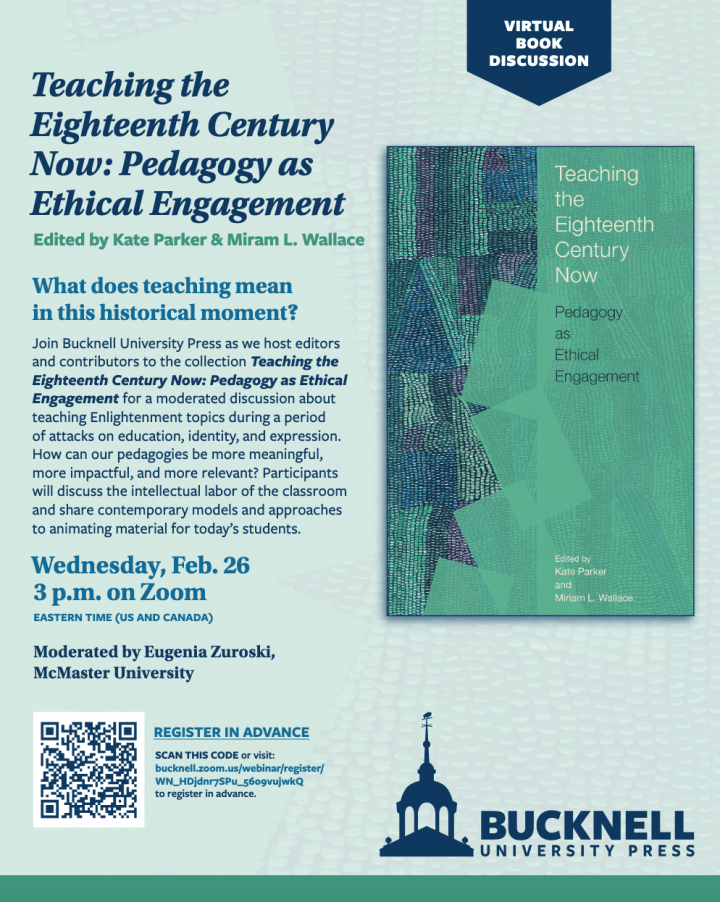 What does teaching mean in this historical moment? Join Bucknell University Press as we host editors and contributors to the collection Teaching the Eighteenth Century Now: Pedagogy as Ethical Engagement for a moderated discussion about teaching Enlightenment topics during a period of attacks on education, identity, and expression. How can our pedagogies be more meaningful, more impactful, and more relevant? Participants will discuss the intellectual labor of the classroom and share contemporary models and approaches to animating material for today’s students. The conversation will be moderated by Eugenia Zuroski.
Kate Parker and Miriam Wallace, eds., Teaching the Eighteenth Century Now: Pedagogy as Ethical Engagement (Lewisburg, PA: Bucknell University Press, 2024), 196 pages, ISBN: 978-1684485048 (hardcover) / ISBN: 978-1684485031 (paperback), $38.
Exhibition | J. M. W. Turner: Romance and Reality
 .
.
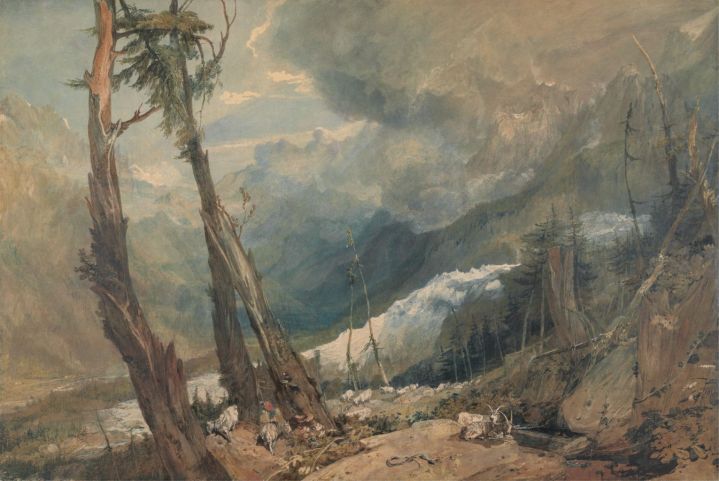
J.M.W. Turner, Mer de Glace, in the Valley of Chamonix, 1803, watercolor, graphite, gum, scraping out and stopping out on moderately thick, slightly textured, cream wove paper mounted on thick, smooth wove paper (New Haven: Yale Center for British Art, B1977.14.4650)
◊ ◊ ◊ ◊ ◊
Opening next month at the YCBA, which itself reopens after a two-year conservation project:
J. M. W. Turner: Romance and Reality
Yale Center for British Art, New Haven, 29 March — 27 July 2025
Dordrechts Museum, Spring 2026
The year 2025 marks the 250th anniversary of the birth of Joseph Mallord William Turner (1775–1851), possibly the most widely admired and influential British artist of all time.
Though Turner was trained within the English topographical tradition, his practice was deeply rooted in a wider European heritage of landscape painting. Turner pushed this inheritance to its limits in pursuit of his own expressive ends, astounding contemporaries with his bold and highly original compositions. His unique approach paved the way for a new form of landscape art, one that combined virtuoso brushwork with brilliant color, dazzling light effects, and an almost abstract sensibility. As a result, Turner came to be recognized as the most radical and innovative painter of his time and has continued to be so ever since.
This exhibition, the first show focused on Turner to be held at the Yale Center for British Art in more than thirty years, will showcase the museum’s rich holdings of the artist’s work. Unequaled in North America, this collection includes some of Turner’s most acclaimed oil paintings, notably his masterpiece Dort or Dordrecht: The Dort Packet-Boat from Rotterdam Becalmed (1818) and his celebrated later painting Staffa, Fingal’s Cave (1831–32). Alongside these major works, the exhibition will also feature outstanding watercolors and prints from the YCBA’s collection, including the artist’s only complete sketchbook outside of the British Isles.
Turner’s works are akin to painted poems, filled with incident, anecdote, and symbolism. Conveying both the beauty and cruelty of nature and human life, they shed fascinating light on the artist’s world and reveal an aesthetic—and moral—complexity that is at once discomforting and strangely modern.
The exhibition is generously supported by the Dr. Lee MacCormick Edwards Charitable Foundation.
From Yale UP:
Ian Warrell, with contributions by Gillian Forrester, Turner (New Haven: Yale University Press, 2025), 144 pages, ISBN: 978-0300279719, $40.
 This book, the inaugural installment in the Yale Center for British Art’s Collection Series, explores the museum’s astonishing Turner holdings—the largest outside the United Kingdom—in a manner that will engage the general reader and expert alike. Six sections of plates provide a comprehensive overview of the artist’s career, place the works within their historical and cultural context, and include new discoveries regarding the identification of locations, landscapes, and dates. Gillian Forrester’s supplementary essay offers a novel account of Turner’s innovative printmaking practice, illuminating his fraught collaborations with other printmakers. Complementing an exhibition at the YCBA and a satellite exhibition at the Dordrechts Museum (The Netherlands), both planned for the 250th year of Turner’s birth, this publication celebrates the artist’s unparalleled vision as exemplified in the YCBA’s world-class collection of his work.
Ian Warrell is an independent curator specializing in British art of the nineteenth century. Gillian Forrester is an independent curator specializing in British art from the eighteenth century to the present and former senior curator of prints and drawings at the Yale Center for British Art.
New Book | Art and Artifice in Visual Culture
From Routledge:
Sonia Coman, Vasile-Ovidiu Prejmerean, and Michael Yonan, eds., Art and Artifice in Visual Culture, Eighteenth Century to the Present (New York: Routledge, 2025), 210 pages, ISBN (hardback): 978-1032756783, $180 / ISBN (ebook): 978-1003478898, $50.
 This edited volume explores the notion of ‘artifice’ in modern visual culture, ranging from the eighteenth century to the present, in countries around the globe.
Artifice has been regarded as a primarily Western phenomenon, playing as it does a central role in European art theory since the Renaissance. This volume proposes that artifice is better understood as a transcultural artistic phenomenon and requires far broader conceptualization across international contexts. It acquaints readers with works of art, visual modes of communication, and concepts originating in France, Germany, the United States, Japan, and China, and includes painting, sculpture, drawings, prints, photographs, film, and virtual reality/augmented reality (VR/AR) objects. Contributors demonstrate how practices of artifice function as both symbol and form, in parallel and divergent ways, in multiple cultural settings.
Sonia Coman, PhD is a Contributor and Consultant at Smarthistory and Director of Digital Engagement at Washington National Cathedral. Vasile-Ovidiu Prejmerean is a PhD candidate at Université de Fribourg, Switzerland. Michael Yonan, PhD is a Professor of Art History and Alan Templeton Endowed Chair in the History of European Art, 1600–1830, at the University of California, Davis.
c o n t e n t s
List of Illustrations
List of Contributors
Introduction: Art and Artifice in a Transcultural Perspective — Sonia Coman, Vasile-Ovidiu Prejmerean, Michael Yonan
Part 1 | Artifice and Spectatorship
1 Fractured Perception: Drawings, Prints, and Verres Casses — J. Cabelle Ahn
2 Rococo Aesthetics and the Problem of Trompe l’Oeil — Michael Yonan
3 Degas’s ‘Histories’ and the Foreshadowing Artifice of Self-Candaulism — Vasile-Ovidiu Prejmerean
Part 2 | Haptic Illusions
4 Suggestive Surfaces: The Self-Referential Texture of Woodgrain in Japanese Woodblock Prints — Kit Brooks
5 Reconsidering the Origins of Yongzheng Guwantu: From the Aniconic Period to Vimalakīrtinirdeśa Sūtra — Chih-En Chen
6 Fooling Art History: John F. Peto and William Harnett — Yinshi Lerman-Tan
Part 3 | Alternative Realities
7 First Nations’ Wampum Belts: A Colonial Vision of Artifice in Eighteenth-Century New France — Clémence Fort
8 ‘An Opportunity to Grapple with the Picture Plane…’: The Stereo-Illusion’s History of Frustration — Eszter Polonyi
9 Self-Reference and Medium-Reference in Virtual Reality and Trompe l’Oeil — Sonia Coman
Index
New Book | Thinking Women and Art in the Long Eighteenth Century
From Amsterdam UP:
Mechthild Fend, Jennifer Germann, and Melissa Hyde, eds., Thinking Women and Art in the Long Eighteenth Century: Strategic Reinterpretations (Amsterdam: Amsterdam University Press, 2025), 414 pages, ISBN: 978-9048558827, €153 / $168.
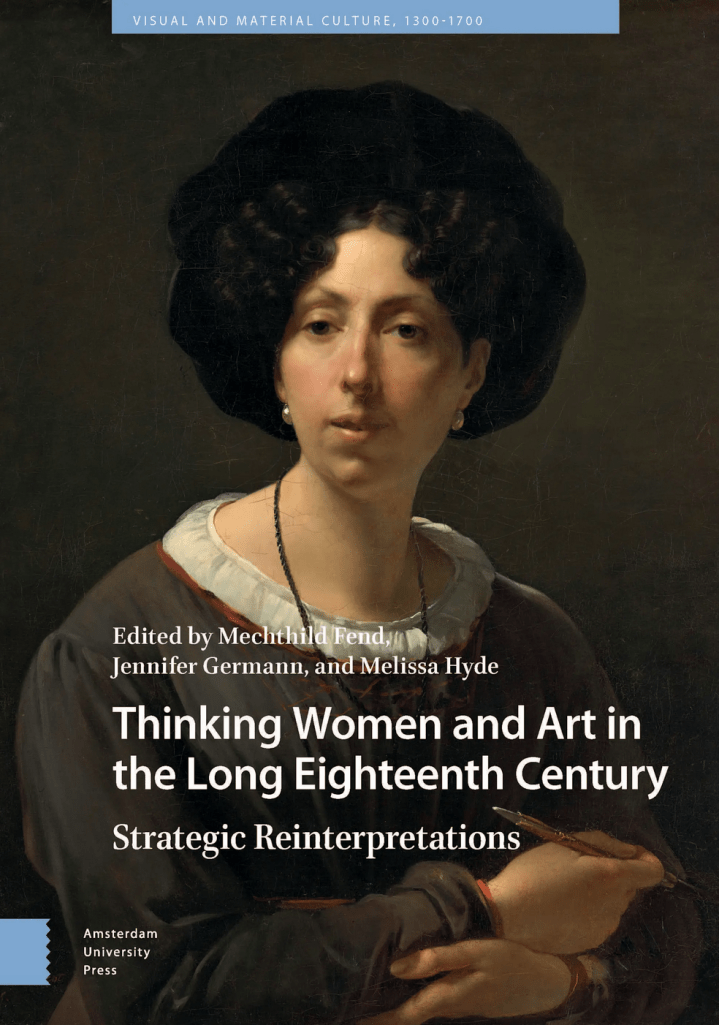 This collection of essays represents state-of-the-art feminist scholarship in the field of eighteenth-century French and British art and visual culture. Topics range from women and their activities in art and science, to gendered representations of childhood and animals to fashion, femininity and temporality. Some chapters center on individual genres like hunting portraits, or on specific paintings, such as David Martin’s Portrait of Dido Elizabeth Belle and Lady Elizabeth Murray (ca. 1780) or Marie Guillemine Benoist’s Portrait of a Young Black Woman (Madeleine) (1800). Others make contributions on the work of familiar actors like Jean-Siméon Chardin or Élisabeth Louise Vigée Le Brun. The volume also brings to the fore lesser-known figures including Marie-Thérèse Reboul, Madeleine Basseporte, Marguerite Le Comte, and Gabrielle Capet. Written by eleven distinguished (art) historians, the assembled essays engage with and honor the work of the late Mary D. Sheriff, whose unpublished chapter on women artists’ self-portraiture opens the book.
Mechthild Fend is Professor of History of Art, Goethe-University Frankfurt. She specializes in French eighteenth- and nineteenth-century art, with particular interests in feminist art history and its historiography, images of the body, and medical imagery. Her books include Fleshing out Surfaces: Skin in French Art and Medicine, 1650–1850, published in 2017.
Jennifer Germann is an art historian specializing in women’s history and eighteenth-century French and British art. She has published in Eighteenth-Century Studies, American Art, and Studies in Eighteenth-Century Culture. She is the author of Picturing Marie Leszczinska (1703–1768): Representing Queenship in Eighteenth-Century France (2015).
Melissa Hyde is Professor of Art History and Distinguished Teaching Scholar, University of Florida. She publishes on gender, the visual arts, and women artists and Rococo and its afterlives in the long eighteenth century in France. Books include Becoming a Woman in the Age of Enlightenment (with Mary Sheriff) (2017), as well as numerous edited volumes.
c o n t e n t s
Acknowledgements
Preface
Introduction
Mary D. Sheriff: Charting New Possibilities for Feminist Art History — Mechthild Fend, Jennifer Germann, and Melissa Hyde
Overture
1 Women and Modes of Self-Portraiture: Fashion, Motherhood, Sensibilité — Mary D. Sheriff
Part I | Art as Social Practice
2 The Woman Artist and the Uncovering of the Social World — Lynn Hunt
3 ‘La touche d’une femme’: Women Artists in the Age of Revolutions — Paris Spies-Gans
Part II | Gender and Fashion
4 Chardin’s Girls: The Ethics of Painting — Ewa Lajer-Burcharth
5 Thinking Animals: Dogs and Men in Eighteenth-Century French Hunting Art — Amy Freund
6 Temporality and Figures de mode: Fashion, Costume, and Gender in Eighteenth-Century Drawings and Prints — Susan L. Siegfried
Part III | Women in Natural History
7 Marie-Thérèse Reboul (Mme Vien): More Than a Footnote in Art History — Melissa Hyde
8 Mlle Basseporte’s Jardin, Mlle Biheron’s Cabinet: Artist-Scientists and Their Spheres of Sociability — Nina Rattner Gelbart
Part IV | Encounters in Portraiture
9 Marguerite Le Comte’s Smile: Portrait of an Amatrice — Mechthild Fend
10 Imperial Family Portraits: Gender, Race, and Social Rank in The Portrait of Dido Elizabeth Belle and Lady Elizabeth Murray — Jennifer Germann
11 Madeleine of the Americas: Resituating Benoist’s Portrait of a Young Black Woman in Colonial Art — Anne Lafont
Index
New Book | Ornamental Blackness
Coming this spring from Yale UP, with a brilliant preview by Dr. Childs now available in the latest issue of The Magazine of the Decorative Arts Trust (Winter 2024–25) . . .
Adrienne L. Childs, Ornamental Blackness: The Black Figure in European Decorative Arts (New Haven: Yale University Press, 2025), 208 pages, ISBN: 978-0300246094, $65.
 Exploring the role the decorative arts played in the representation of Black people in European visual and material culture
This revelatory look at European decorative arts addresses the long-ignored implications of the depiction of Black bodies on luxury objects from the Baroque period through the nineteenth century. Adrienne L. Childs traces the complex history of the vogue for representing the Black body as an ornamental motif throughout spaces of wealth and refinement. Objects such as furniture, porcelain, clocks, silver, light fixtures, and more conveyed the taste for exoticism and portrayed the laboring Black body in the guise of décor. These objects also express larger ideas about the concept of race, romantic notions of distant lands, the harsh realities of slave labor in the colonies, the presence of Black servants in wealthy European households, and the culture of luxury consumption.
Ornamental Blackness demonstrates how seemingly benign decorative objects can embody the complexities of race, slavery, and representation. Childs examines the tensions inherent in the system of codes in which the Black body can be enslaved, reviled, feared, subjugated, and assaulted on one hand and a symbol of opulence on the other. In this important volume she establishes a framework for understanding the racialized aesthetics of luxury.
Adrienne L. Childs is an art historian and curator and is the Senior Consulting Curator at The Phillips Collection.
New Book | The Sensory Experience in 18th-Century Art Exhibitions
The volume originated from a June 2021 conference on the topic. From the University of Heidelberg’s arthistoricum.net, where all contents are available free of charge
Gaëtane Maës, Isabelle Pichet, and Dorit Kluge, eds., L’expérience sensorielle dans les expositions au XVIIIe siècle / The Sensory Experience in 18th-Century Art Exhibitions (Heidelberg: arthistoricum.net-ART-Books, 2024 / Passages online, Volume 25), 274 pages, ISBN: 978-3985011544 (hardcover) / ISBN: 978-3985011537 (PDF).
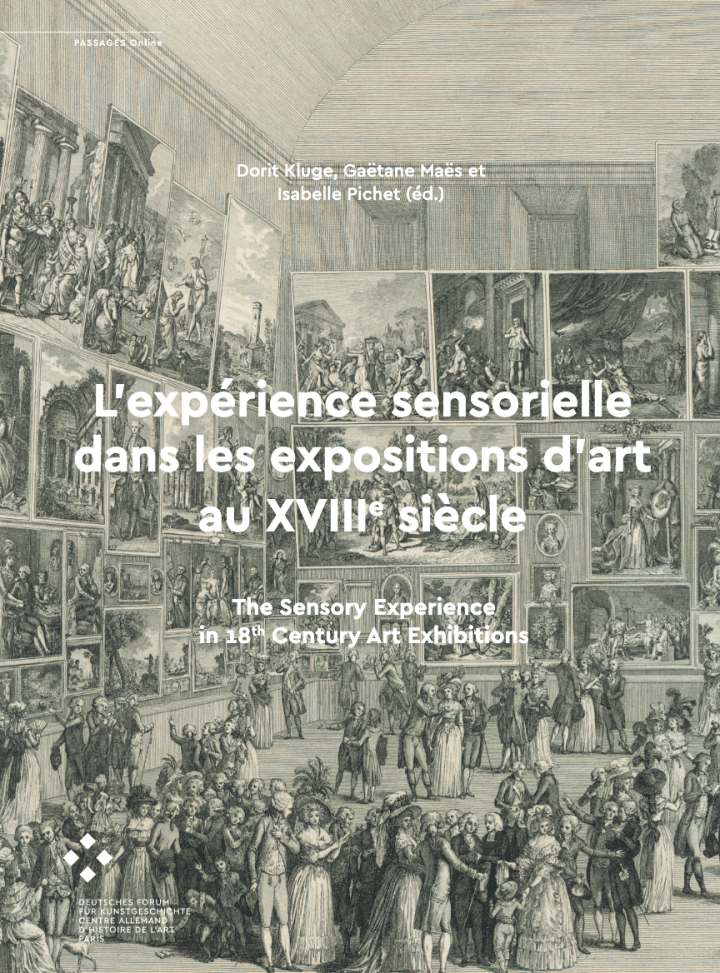 In the 18th century, the art exhibitions organised in the Louvre in Paris by the Académie royale de Peinture et de Sculpture created an unprecedented cultural event, which quickly aroused the curiosity and envy of the public in the French provinces and other nations. A visit to the Salon du Louvre or any other art exhibition, where the desire to be entertained and to learn are intertwined, is an experience that appeals to all the senses. It is therefore possible to introduce the notion of ‘sensory experience’, since not only sight, but also hearing, touch, smell and taste are called upon in varied and complex ways at every moment of the visit. Using a variety of approaches, this book aims to capture the sensations experienced by visitors to art exhibitions in Europe during the long eighteenth century (1680–1815), drawing on visual and textual sources from the period.
c o n t e n t s
Introduction — Gaëtane Maës, Dorit Kluge, Isabelle Pichet (translated from the French by Nicole Charley)
Partie 1 | L’expérience sensorielle dans les œuvres
• Viewing Blindness at the Paris Salon — Emma Barker
• Les saisons en exposition: L’expérience des sensations à travers les sculptures de Jean-Antoine Houdon — Friederike Vosskamp
• Exhibitions of Automata in Ireland in the Age of Enlightenment — Alison Fitzgerald
Partie 2 | L’expérience sensible dans les œuvres
• Depicting identity or emotion? Clairon vs. Dumesnil at the Salon of the Louvre — Gaëtane Maës
• Ducreux’s Yawning: Attention, Sensation, and the Ambiguity of Affect — Lisa Hecht
• Les plaisirs du public: L’érotisation du regard dans les expositions de la Royal Academy au XVIIIe siècle — Jan Blanc
• The Minds and Bodies of Women in the Salon Views of Gabriel de Saint-Aubin: A ‘peintre de la vie moderne’ in the Age of Enlightenment — Kim de Beaumont
Partie 3 | L’expérience spatiale de la visite
• Une surface au service de l’expérience sensorielle: Le mur des espaces d’exposition au XVIIIe siècle — Valérie Kobi
• Le conditionnement de l’expérience du sensible — Isabelle Pichet
• L’émerveillement « rationalisé » des visiteurs des ‘country houses’ dans la Grande-Bretagne du XVIIIe siècle — Sophie Soccard
Partie 4 | L’expérience de la critique
• ‘I’m Dying up Here!’: Disappointing History Painting — Mark Ledbury
• L’aveugle aux Salons de Denis Diderot — You Gyeong Lee
• L’identité de la critique d’art allemande: Un glissement du visuel/descriptif vers l’auditif/narratif — Dorit Kluge
• Le langage du corps face à l’art: Entre affection, discussion et contemplation — Markus Castor
Résumés
Abstracts
Auteurs
Crédits
New Book | Slavery and the Invention of Dutch Art
From Duke UP, with a talk on Thursday at BGC:
Caroline Fowler, Slavery and the Invention of Dutch Art (Durham: Duke University Press, 2025), 176 pages, ISBN: 978-1478028093 (hardcover), $125 / ISBN: 978-1478031321 (paperback), $30.
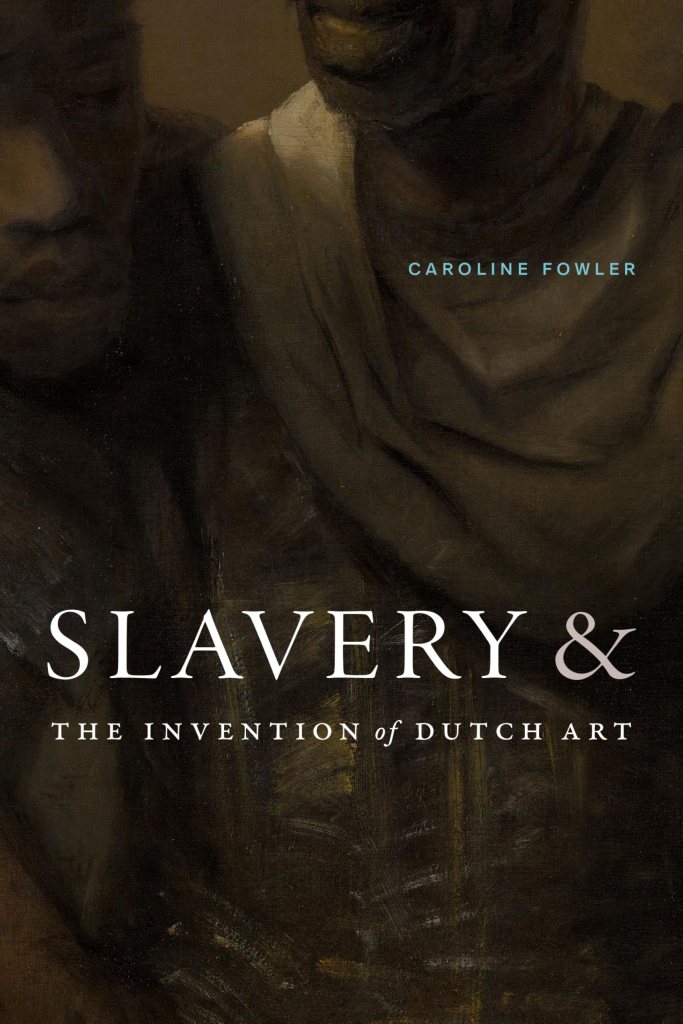 In Slavery and the Invention of Dutch Art, Caroline Fowler examines the fundamental role of the transatlantic slave trade in the production and evolution of seventeenth-century Dutch art. Whereas the sixteenth-century image debates in Europe engaged with crises around the representation of divinity, Fowler argues that the rise of the transatlantic slave trade created a visual field of uncertainty around picturing the transformation of life into property. Fowler demonstrates how the emergence of landscape, maritime, and botanical painting were deeply intertwined with slavery’s economic expansion. Moreover, she considers how the development of one of the first art markets was inextricable from the trade in human lives as chattel property. Reading seventeenth-century legal theory, natural history, inventories, and political pamphlets alongside contemporary poetry, theory, and philosophy from Black feminism and the African diaspora, Fowler demonstrates that ideas about property, personhood, and citizenship were central to the oeuvres of artists such as Rembrandt van Rijn, Hercules Segers, Frans Post, Johannes Vermeer, and Maria Sibylla Merian and therefore inescapably within slavery’s grasp.
Caroline Fowler is Starr Director of the Research and Academic Program at the Clark Institute. She is the author of The Art of Paper: From the Holy Land to the Americas and Drawing and the Senses: An Early Modern History.
c o n t e n t s
Acknowledgments
Introduction: Transubstantiation across Atlantic Worlds
1 Art Markets and Futures Speculation
2 Seascapes and Landscapes
3 Monuments and Architectural Painting
4 Domestic Interiors and Natural History
Conclusion: Historiography and Race
Notes
Bibliography
Index
◊ ◊ ◊ ◊ ◊
Slavery and the Invention of Dutch Art | A Conversation with Caroline Fowler and Helga Davis
Bard Graduate Center, New York, 13 February 2025, 6pm
Caroline Fowler will speak with renowned artist and podcaster Helga Davis about the book Slavery and the Invention of Dutch Art, thinking about the role of poetics in writing history, the importance of Black feminism in rethinking art history, and the ways in which ‘Old Master’ painting continues to impact how the world is seen and interpreted.
Registration is available here»
New Book | The Empire’s New Cloth
Available soon from Yale UP (and please note Rado’s upcoming BGC talk, noted below) . . .
Mei Mei Rado, The Empire’s New Cloth: Cross-Cultural Textiles at the Qing Court (New Haven: Yale University Press, 2024), 208 pages, ISBN: 978-0300275148, $75.
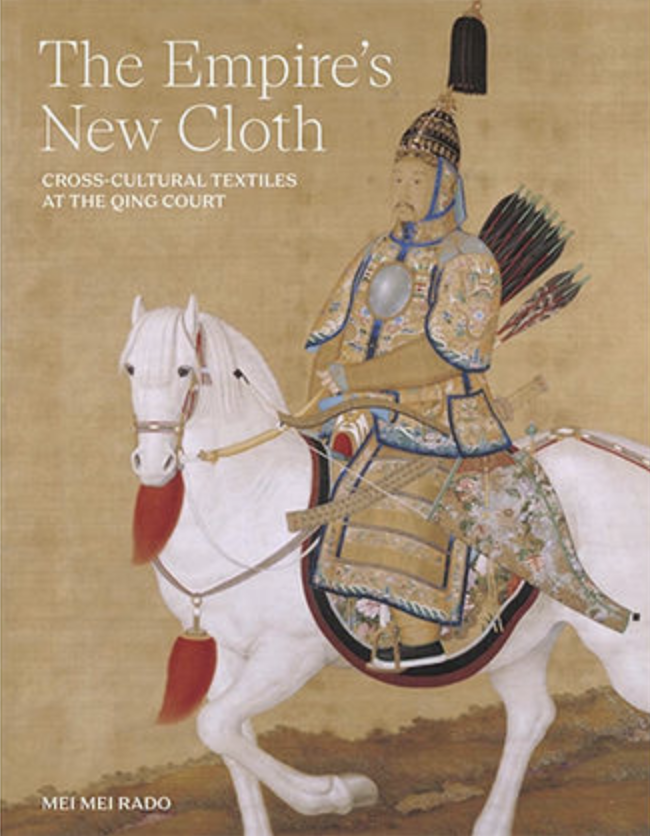 A groundbreaking study of textiles as transcultural objects in the Qing court that provides a new understanding of the interconnectedness of the early modern world
In the early modern period luxury textiles circulated globally as trade goods and diplomatic gifts, fostering cultural exchange between distant regions. By the eighteenth century, both China and Europe had developed a splendid tradition of silk and tapestry weaving. While the role of Chinese silk imports in Europe has been well studied, this book reconstructs the forgotten history of the eastward movement of European textiles to China and their integration into the arts and culture of the Qing Empire. The Empire’s New Cloth explores how Qing court workshops adapted European textile designs and techniques and uncovers the specific uses and meanings of these textiles in imperial military ceremonies, religious spaces, and palace interiors. Through careful study of a wide range of previously unpublished objects, Mei Mei Rado illuminates how these cross-cultural textiles provided the visual and material means for the Qing ruler to convey political messages. By revealing how Qing imperial patrons and artisans responded and assigned meanings to European influences, this beautifully illustrated volume highlights the reciprocity in eighteenth-century Sino-European exchanges and centers textiles within the dynamic global flow of objects and ideas.
Mei Mei Rado received her MA from the University of Chicago and her PhD from Bard Graduate Center, New York, where she is currently an assistant professor. Her research and teaching focus on the history of textiles, dress, and decorative arts in China and France from the eighteenth to the early twentieth centuries, especially on Sino-French exchanges. From 2020 to 2022 she was associate curator of costume and textiles at Los Angeles County Museum of Art, and previously she has held research fellowships in the Department of European Sculpture and Decorative Arts at the Metropolitan Museum of Art and in the Department of Court Arts at the Palace Museum, Beijing..
◊ ◊ ◊ ◊ ◊
Mei Mei Rado | The Empire’s New Cloth
Bard Graduate Center, New York, 19 February 2025, 6pm
Registration is available here»
Master Drawings, Winter 2024
In the latest issue of Master Drawings:
Master Drawings 62.4 (Winter 2024)
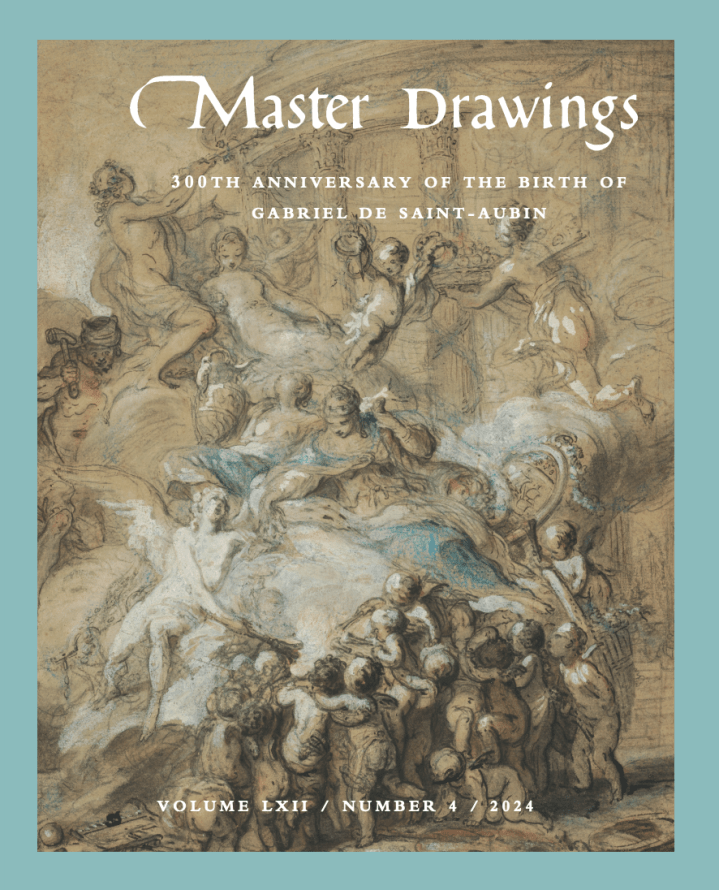 a r t i c l e s
• Perrin Stein, “The Crown, the City, and the Public: Saint-Aubin’s Images of Paris.”
• Kim de Beaumont, “A Curious Swan Song for Gabriel de Saint-Aubin: The Comte d’Estaing’s New World Naval Exploits.”
• Margaret Morgan Grasselli, “A Drawing by Hubert Robert and Jean Robert Ango: Correcting a Technical Description.”
• Sarah Catala, “Signed ‘Roberti’: Drawings by Hubert Robert and Jean Robert Ango.”
• Kee Il Choi Jr., “Learning to Draw: The Éducation visuelle of Alois Ko and Étienne Yang.”
r e v i e w s
• Aaron Wile, Review of the exhibition catalogue Claude Gillot: Satire in the Age of Reason, by Jennifer Tonkovich.
• Eduoard Kopp, Review of the exhibition catalogue, Promenades on Paper: Eighteenth-Century French Drawings from the Bibliothèque Nationale de France, edited by Esther Bell, Sarah Grandin, Corinne Le Bitouzé, and Anne Leonard.
• Ashley E. Dunn, Review of the exhibition catalogue Impressionists on Paper: Degas to Toulouse-Lautrec, by Ann Dumas, Leïla Jarbouai, Christopher Lloyd, and Harriet Stratis.
o b i t u a r y
• Perrin Stein, Obituary for Alaster Laing.
New Book | Eighteenth-Century Sicily: Rebuilding after Natural Disaster
From Amsterdam UP:
Martin Nixon, Architecture, Opportunity, and Conflict in Eighteenth-Century Sicily: Rebuilding after Natural Disaster (Amsterdam: Amsterdam University Press, 2023), 284 pages, ISBN: 978-9463725736, €134 / $154.
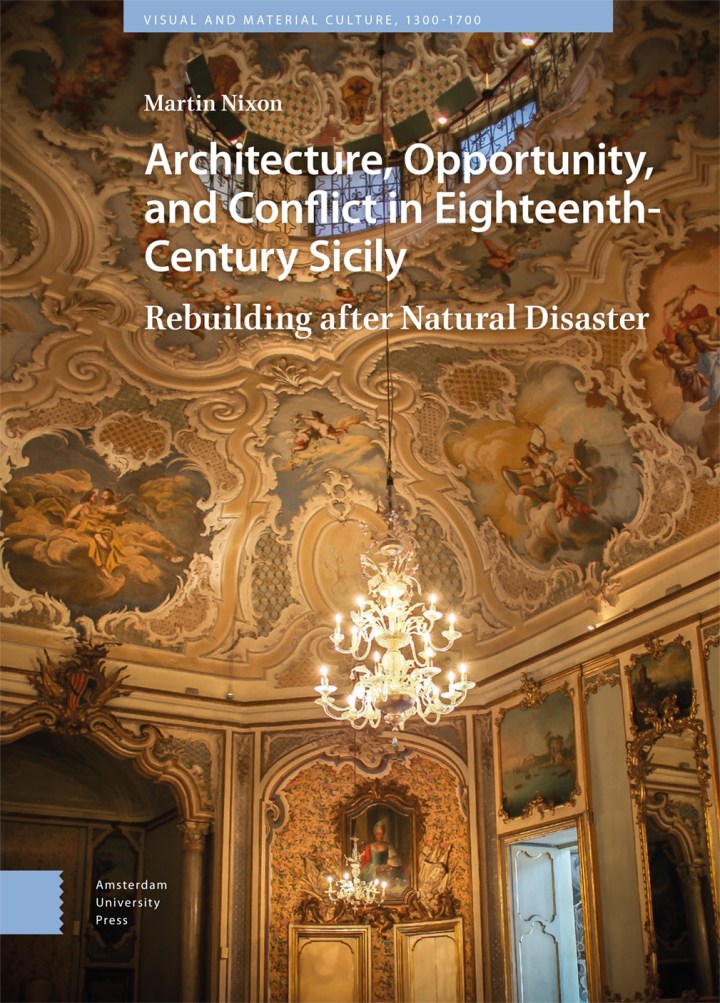 The catastrophic Sicilian earthquake of 1693 led to the rebuilding of over 60 towns in the island’s south-west. The rebuilding extended into the eighteenth century and gave opportunities for the reassertion and the transformation of power relations. Although eight of the towns are now protected by UNESCO, the remarkable architecture resulting from this rebuilding is little known outside Sicily.
This is the first book-length study in English of this interesting area of early modern architecture. Rather than seek to address all of the towns, five case studies discuss key aspects of the rebuilding by approaching the architecture from different scales, from that of a whole town to parts of a town, or single buildings, or parts of buildings and their decoration. Each case study also investigates a different theoretical assumption in architecture, including ideas of the Baroque, rational planning, and the relegation of decoration in architectural discourse.
Martin Nixon is Assistant Professor of Art History at Zayed University, United Arab Emirates. His research interests include Southern Italian art and architecture, architecture and political power, urbanism and territorial transformation, the reception of architectural ornament, and questions of cultural and stylistic hybridity in architecture. Nixon completed his doctoral dissertation on the eighteenth-century rebuilding of the Val di Noto, Sicily with York University in 2018. In 2011, he received the John Fleming Travel Award to assist his doctoral research in Sicily. He completed an MA in Art History at the Open University in December 2007 with a dissertation on the eighteenth-century Sansevero Chapel in Naples.
c o n t e n t s
List of illustrations
Acknowledgments
Introduction
1 Sicily as a Colonial Possession c. 1600–1750: Subordination and Resistance
2 The Hexagonal Towns of Avola and Grammichele: Urbanism, Fortification, and Coercion
3 The Palaces of Noto: Ornament, Order, and Opportunism
4 The Palazzo Biscari in Catania: Lightness, Refinement, and Distinction
5 The Palazzo Beneventano in Scicli: Trauma and Violence
6 The Palaces of Ragusa: Abundance, Famine, and the Grotesque
Conclusion
Glossary
Bibliography
Index










 Enfilade
leave a comment