The Burlington Magazine, May 2025
The long 18th century in the May issue of The Burlington:
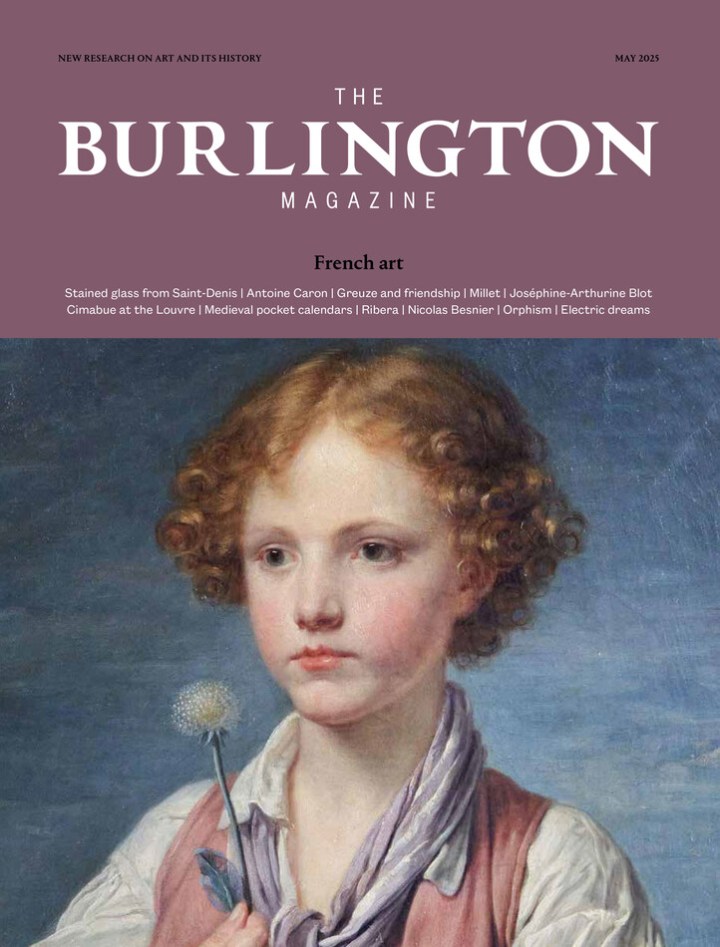
The Burlington Magazine 167 (May 2025) | French Art
 e d i t o r i a l
• “Fashionistas,” p. 427.
The costume institute and its annual gala in May at the Metropolitan Museum of Art, New York (the Met), have become fixtures on the museum world’s map and calendar. Whether you delight in them or are bemused by the spectacle they provide, or indeed try and take no notice at all, they are hard to ignore. The alignment they represent between fashion history, contemporary celebrity and the gravitas of a major museum is immensely beneficial in terms of fundraising and profile.
l e t t e r
• “A Sleeping Apostolado at Wentworth Woodhouse,” pp. 428–29.
We are launching an appeal for the conservation, reframing, and rehanging of an important set of seventeenth-century paintings. We are making this appeal in honour of the art historian Alastair Laing, who died aged seventy-nine in 2024. It was he who identified the artist of this series as the Flemish painter Gérard Seghers (1591–1651). . . . By 1870 the thirteen paintings were framed in groups and fixed against the walls, as they are now, probably to give a more church-like feel to the simple prayer-book chapel of 1736, with its panelling and gallery of craved, unstained oak.
a r t i c l e s
• Yuriko Jackall, John Delaney, and Michael Swicklik, “Friendship Tokens: Jean-Baptiste Greuze’s Paintings for Madame de Pompadour,” pp. 438–49.
Greuze’s paintings, known for their sentimentality and charm, were lauded by the artist’s contemporaries. Two early compositions, Simplicity and Young Shepherd Holding a Flower, were part of the collection of Madame de Pompadour; stylistic and technical analysis of them, in conjunction with another version of Simplicity, expands their early provenance.
• Humphrey Wine, “Napoleon Crossing the Alps: British Press Reaction to the London Exhibitions of David, Lefèvre, Wicar, and Lethière,” pp. 450–59.
Paintings by notable French artists were exhibited in Britain during the first third of the nineteenth century. Reactions to these works published in British newspapers and journals between 1814 and 1830 were often negative in tone and politically motivated. Despite this criticism, these accounts provide a valuable perspective on the art of the period that was shipped across the Channel.
• Daniëlle Kisluk-Grosheide, “Bravery, Ingenuity, and Aerial Post: An Enamelled Bowl by Joséphine-Arthurine Blot,” pp. 470–77.
During the height of the Franco-Prussian War, Gaston Tissandier made a perilous balloon journey from Paris to deliver correspondence from the besieged city. The flight is commemorated in a small bowl by Joséphine-Arthurine Blot, a technically accomplished yet little-known enamellist. Her bold design celebrates Tissandier’s bravery as well as French resistance and resourcefulness.
r e v i e w s
• Alice Minter, Review of Christophe Huchet de Quénetain, Nicolas Besnier (1686–1754): Architecte, orfèvre du roi et échevin de la Ville de Paris (Presses universitaires de Rennes, 2024), pp. 516–17.
• Céline Cachaud, Review of La Tabatière Choiseul: Un monument du XVIIIe siècle, edited by Michèle Bimbenet-Privat (Éditions Faton, 2025), pp. 519–20.
• Mark Evans, Review of Ulrike Müller, Private Collectors in Brussels, Antwerp, and Ghent, ca.1780–1914: Between Public Relevance and Personal Pleasure (Brepols, 2024), pp. 521–22.
o b i t u a r y
• Christopher Baker and Stephen Duffy, Obituary for Rosalind Joy Savill (1951–2024), pp. 526–28.
An immensely successful director of the Wallace Collection, London, and a pre-eminent scholar of eighteenth-century Sèvres porcelain, Rosalind (‘Ros’) Savill had a profound and enduring impact both on the museum and the research she cared passionately about.
New Book | The Writer’s Lot
From Harvard UP:
Robert Darnton, The Writer’s Lot: Culture and Revolution in Eighteenth-Century France (Cambridge: Belknap Press, 2025), 240 pages, ISBN: 978-0674299887, $27.
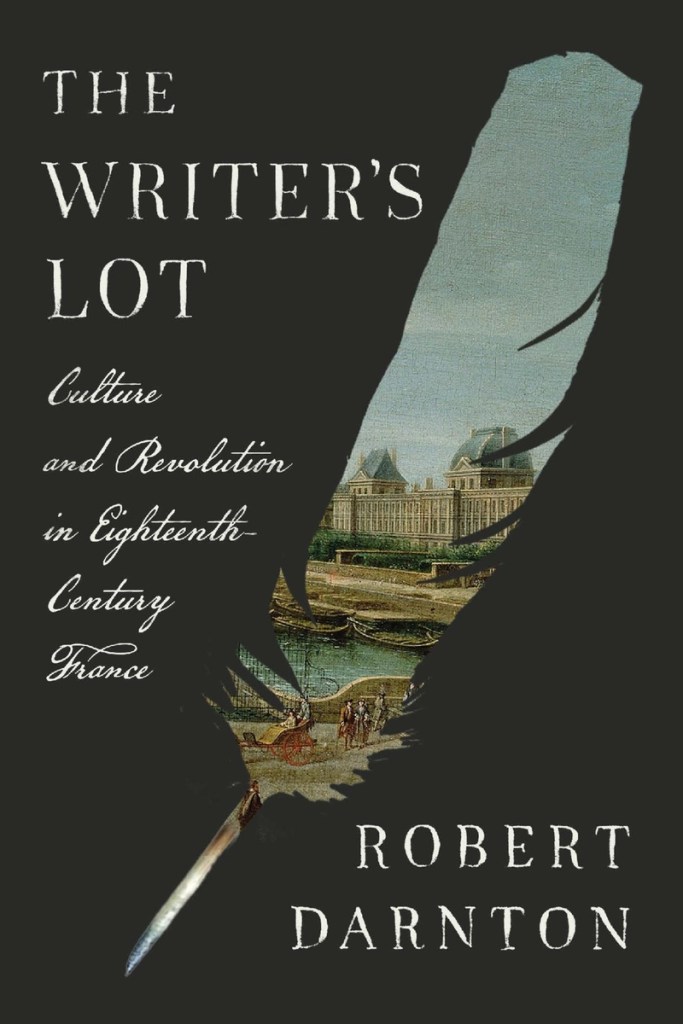 A pioneering social history of French writers during the Age of Revolution, from a world-renowned scholar and National Book Critics Circle Award winner.
In eighteenth-century France, writers emerged as a new kind of power. They stirred passions, shaped public opinion, and helped topple the Bourbon monarchy. Whether scribbling in dreary garrets or philosophizing in salons, they exerted so much influence that the state kept them under constant surveillance. A few became celebrities, but most were hacks, and none could survive without patrons or second jobs.
The Writer’s Lot is the first book to move beyond individual biography to take the measure of ‘literary France’ as a whole. Historian Robert Darnton parses forgotten letters, manuscripts, police reports, private diaries, and newspapers to show how writers made careers and how they fit into the social order—or didn’t. Reassessing long-standing narratives of the French Revolution, Darnton shows that to be a reject was not necessarily to be a Jacobin: the toilers of the Parisian Grub Street sold their words to revolutionary publishers and government ministers alike. And while literary France contributed to the downfall of the ancien régime, it did so through its example more than its ideals: the contradiction inherent in the Republic of Letters—in theory, open to all; in practice, dominated by a well-connected clique—dramatized the oppressiveness of the French social system.
Darnton brings his trademark rigor and investigative eye to the character of literary France, from the culture war that pitted the ‘decadent’ Voltaire against the ‘radical’ Rousseau to struggling scribblers, booksellers, censors, printers, and royal spies. Their lives, little understood until now, afford rare insight into the ferment of French society during the Age of Revolution.
Robert Darnton is the author of numerous award-winning books on French cultural history, including The Revolutionary Temper. A MacArthur Fellow, chevalier in the Légion d’honneur, and winner of the National Humanities Medal and the National Book Critics Circle Award, Darnton is the Carl H. Pforzheimer University Professor and Director of the University Library, Emeritus, at Harvard University.
c o n t e n t s
Introduction: Paths to Grub Street
1 Careers: The Ancien Régime
2 The Facts of Literary Life
3 Contemporary Views
4 Careers: Revolutionary Denouements
Conclusion
Notes
Acknowledgments
Index
New Book | Women Artists & Designers at the National Trust

From the National Trust:
Rachel Conroy, with an introduction by Sandi Toksvig, Women Artists & Designers at the National Trust (National Trust, 2025), 272 pages, ISBN: 978-0707804699, £15.
From the magnificent gardens created by Vita Sackville-West at Sissinghurst to a striking self-portrait by Angelica Kauffman, the elegant, mass-produced ceramics of Susie Cooper and a model of a Palmyran temple by lady’s maid Elizabeth Ratcliffe, this beautifully illustrated book explores the lives and work of women whose creativity has shaped the National Trust’s collections and, often, the experience of visitors to its places. Spanning six centuries, this book takes a closer look at some of the many women artists and designers whose lives are connected to National Trust places or whose work is represented in its vast collections. The selection features both talented amateur artists and professionals who have shaped the art-historical canon—such as Eileen Agar, Elisabeth Vigee Le Brun, Rosalba Carriera, and Barbara Hepworth—focusing on their unique contributions and achievements across a range of disciplines, including garden and interior design, photography, illustration, enamelling, fine art, studio pottery, and textiles.
Rachel Conroy is a Senior National Curator at the National Trust and loves telling stories through objects. She has worked as a curator specialising in British decorative arts since 2004, curating many exhibitions and displays. Having contributed articles to numerous specialist journals, Rachel recently co-authored a book on historic Welsh ceramics.
Sandi Toksvig OBE is a comedian, broadcaster, campaigner, and author. Her broadcasting career has included QI, The Great British Bake Off, The News Quiz, and Call My Bluff. An activist for gender equality, Sandi co-founded the Women’s Equality Party in 2015. She is a Bye-Fellow of Christ’s College, Cambridge, where she has delivered lectures on women in art.
New Book | Neighbours and Rivals
Published by Pallas Athene and distributed by Simon & Schuster:
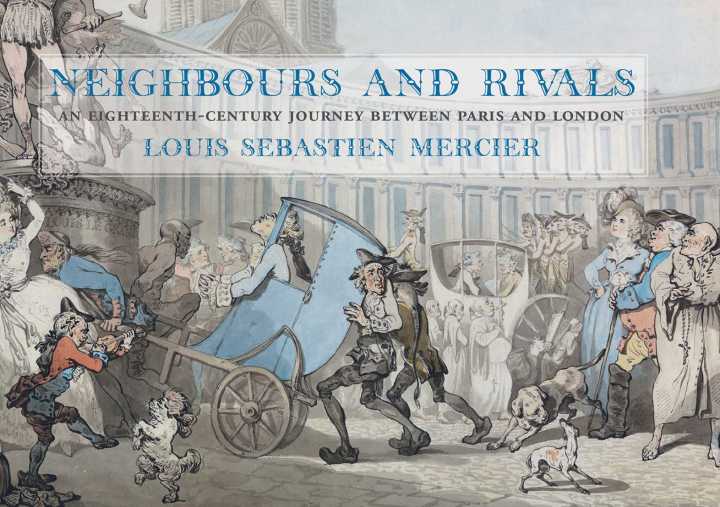
Louis-Sébastian Mercier, Neighbours and Rivals: An Eighteenth-Century Journey between Paris and London, translated by Laurent Turcot and Jonathan Conlin (London: Pallas Athene, 2025), 284 pages, ISBN: 978-1843682707, £25 / $33.
The great French journalist Louis-Sébastien Mercier’s descriptions of an optimistic, utopian 18th-century London, translated by Laurent Turcot and Jonathan Conlin.
Louis-Sébastien Mercier (1740–1814) first traveled to London and began recording his impressions in 1780. An exemplar of a new form of journalistic, reflective literature, his account presents emotive representations of the city as collections of experiences, habits, and personalities. And differently from Dickens’s London or Baudelaire’s Paris, with their contrasts of opulence and misery, Mercier describes a less familiar urban environment—more optimistic, perhaps even utopian. His version of London is, in fact, a projection of his philosophical imagination—not simply a rounded portrait but also a reflection of what he hoped Paris could become. For this first publication in English, Laurent Turcot and Jonathan Conlin’s translation preserves the life and humor of Mercier’s text. It is illustrated with contemporary images, with an emphasis on Thomas Rowlandson and Gabriel-Jacques de Saint-Aubin, the first Parisian flâneur-artist.
Jonathan Conlin, a senior lecturer at the University of Southampton, specializes in modern British cultural history from the 18th century to the present, with a focus on urban history. His previous books include The Nation’s Mantelpiece, Evolution and the Victorians, and Civilisation. Laurent Turcot is a professor of history at l’Université du Québec à Trois-Rivières, specializing in the 16th to the 19th century, particularly urban culture and leisure.
Exhibition | Picturing Nature: British Landscapes
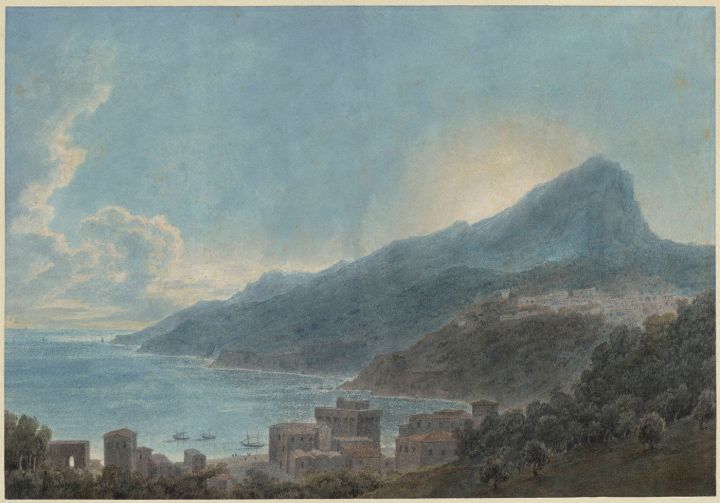
John Robert Cozens, View of Vietri and Raito, Italy, ca. 1783, watercolor over graphite on cream laid paper (The Museum of Fine Arts, Houston, The Stuart Collection, museum purchase funded by Francita Stuart Koelsch Ulmer in honor of Dena M. Woodall).
◊ ◊ ◊ ◊ ◊
Now on view at the MFAH:
Picturing Nature: The Stuart Collection
of 18th- and 19th-Century British Landscapes and Beyond
The Museum of Fine Arts Houston, 12 January — 6 July 2025
Featuring more than 70 works of art in a variety of media, Picturing Nature: The Stuart Collection of 18th- and 19th-Century British Landscapes and Beyond explores how the genre of landscape evolved during an era of immense transformation in Britain. This diverse collection of watercolors, drawings, prints, and oil sketches traces the shift from topographical and picturesque depictions of the natural world to intensely personal ones that align with Romantic poetry of the period. The exhibition spotlights the Stuart Collection, built over the past decade in collaboration with Houstonian Francita Stuart Koelsch Ulmer. This exceptional collection includes standout works by notable artists such as John Constable, John Robert Cozens, Thomas Gainsborough, J.M.W. Turner, and Richard Wilson, whose innovative approaches to watercolor raised its status as an art form and heralded a golden age for the medium.
Through the work of these luminaries and their contemporaries, Picturing Nature reveals how landscape emerged as a distinct artistic genre in England in the late 1700s, then reached its greatest heights the following century, attracting international response and inspiring both artists and collectors at home and abroad. Period publications and artist’s supplies, including drawing manuals and a mid-19th-century Winsor & Newton watercolor box, further illustrate the flowering of the landscape tradition.
Dena M. Woodall, Picturing Nature: The Stuart Collection of 18th- and 19th-Century British Landscapes and Beyond, $35. The online catalogue of the Stuart Collection is available here.
New Book | The Education of Things
From the University of Massachusetts Press:
Elizabeth Massa Hoiem, The Education of Things: Mechanical Literacy in British Children’s Literature, 1762–1860 (Amherst: University of Massachusetts Press, 2024), 328 pages, ISBN: 978-1625347565 (hardback), $99 / ISBN: 978-1625347558 (paperback), $31.
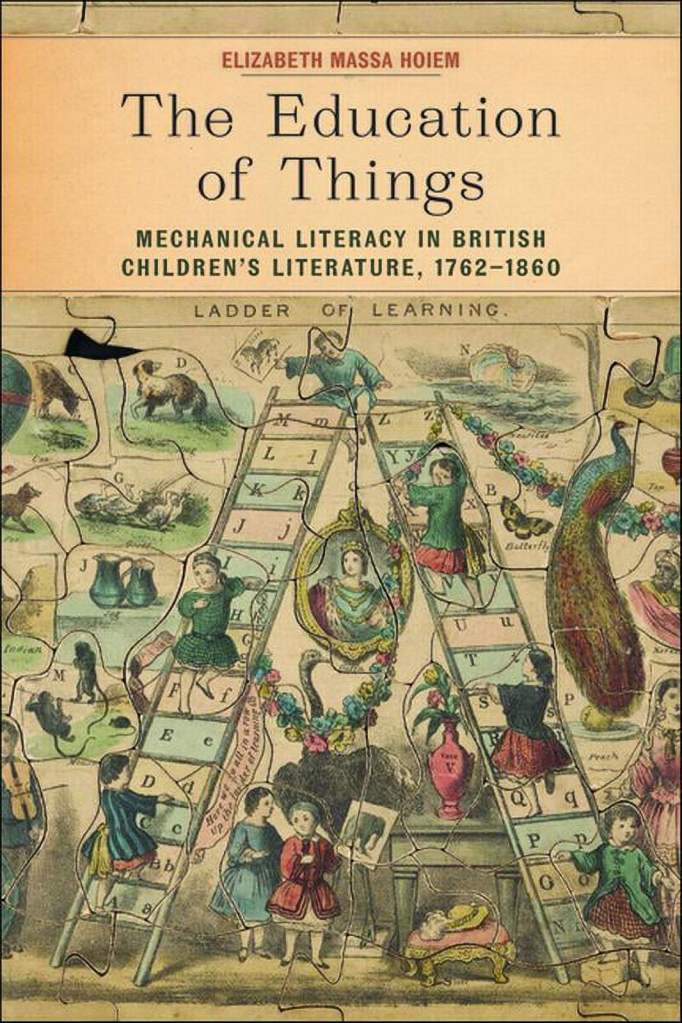 Winner of the 2025 Justin G. Schiller Prize for Bibliographical Work on Children’s Books from The Bibliographical Society of America
By the close of the eighteenth century, learning to read and write became closely associated with learning about the material world, and a vast array of games and books from the era taught children how to comprehend the physical world of ‘things’. Examining a diverse archive of popular science books, primers, grammars, toys, manufacturing books, automata, and literature from Maria Edgeworth, Jean-Jacques Rousseau, and Anna Letitia Barbauld, The Education of Things attests that material culture has long been central to children’s literature. Elizabeth Massa Hoiem argues that the combination of reading and writing with manual tinkering and scientific observation promoted in late eighteenth- and early nineteenth-century Britain produced new forms of ‘mechanical literacy’, competencies that were essential in an industrial era. As work was repositioned as play, wealthy children were encouraged to do tasks in the classroom that poor children performed for wages, while working-class children honed skills that would be crucial to their social advancement as adults.
Elizabeth Massa Hoiem is assistant professor in the School of Information Sciences at University of Illinois Urbana-Champaign.
c o n t e n t s
List of Illustrations
Preface
Introduction
1 What Children Grasp: The Tangible Properties of Objects
2 Moving Bodies: Manual Labor and Children’s Play in Mechanical Philosophy Books
3 ‘The Empire of Man over Material Things’: Children’s Books on Manufacturing and Trade
4 Self-Governing Machines: Automata and Autonomy in Maria Edgeworth’s Fiction
5 ‘Knowledge That Shall Be Power in Their Hands’: Radical Grammars for Working-Class Readers
Conclusion: William Lovett’s Case of Moveable Type
Notes
Index
New Book | The National Gallery: A History
Distributed by Yale UP:
Jonathan Conlin, The National Gallery: A History (London: National Gallery Global, 2025), 384 pages, ISBN: 978-1857097191, £35 / $45.
 Published in the National Gallery’s bicentenary year, this is the story of how one of the world’s finest collections of paintings was formed by (and for) the people of Britain.
For two hundred years the National Gallery has been at the heart of the nation’s life. Established in 1824 and situated in the centre of London with a commitment to free admission, it was conceived as a gallery to be enjoyed by all, while also serving as a place of refuge in times of war and crisis. The National Gallery: A History tells the story of an institution that holds education, social cohesion, and national heritage at its core, and whose outstanding collection has shaped the art historical canon over two centuries. Special focus on fifteen highlight paintings affords an opportunity to explore changes in taste over the decades, as well as the reactions of visitors to the Gallery’s great works of art.
Jonathan Conlin is professor of modern history at the University of Southampton. His books include The Met: A History of a Museum and Its People (2024) and a cultural history of the 1969 BBC2 television series Civilisation (2009).
New Book | Rethinking the Republic of Letters
Previously, Scholten has spent considerable time addressing the 970-page travel journal of the Utrecht-born Joannes Kool (1672–1712). From Amsterdam UP:
Koen Scholten, Rethinking the Republic of Letters: Memory and Identity in Early Modern Learned Communities (Amsterdam: Amsterdam University Press, 2025), 442 pages, ISBN: 978-9048559855, €159.
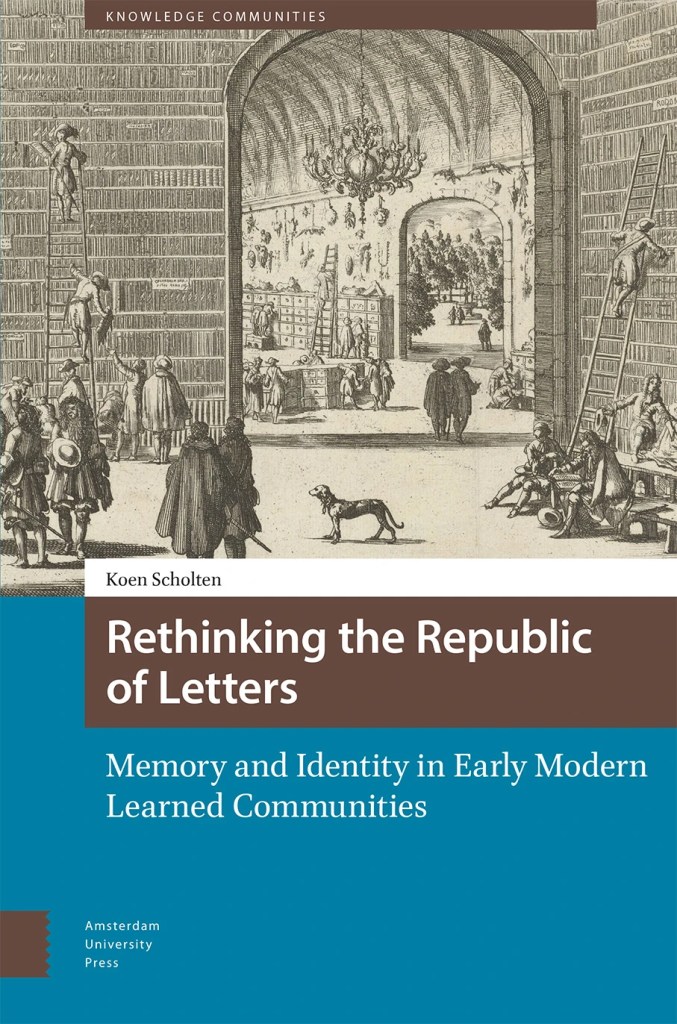 This book offers a revisionist look at the historiography of the Republic of Letters and the community of learning in early modern Europe. It suggests a new approach, conceptualising the learned world as a web of imagined communities in which the members do not know all their peers. These communities formed through distinct memory cultures and the representation of and identification with collective identities. Rethinking the Republic of Letters looks at early modern biographical dictionaries (vitae), eulogies, letters, travelogues, and funerary monuments of early modern learned men to trace the (re)formation of these communities. It thereby offers a novel perspective on early modern learned communities—the many Republics of Letters.
Koen Scholten is a historian of science and published on memory and identity in scholarly and scientific communities. He edited Memory and Identity in the Learned World (Brill, 2022) and received his PhD from Utrecht University on a thesis on the formation of early modern communities in the world of learning in 2023.
c o n t e n t s
Introduction: The Republic of Letters as an Imagined Community
1 An Inventory of Scholarly Values and Virtues
2 Collective History and Geographical Inclusion in Vitae and Elogia
3 Collective Memory and Identity in Hugo Grotius’s Correspondence
4 The Peregrinatio Literaria: Experiencing, Representing, and Forming Learned Communities
5 The Basilica di Santa Croce: The Florentine Site of Learned Memory
6 The Pieterskerk: Representing the Learned Community of Leiden University
Conclusion
Bibliography
List of Abbreviations
Manuscript Sources
Printed Sources, Before 1800
Printed Sources, Modern
Secondary Literature
Appendix 1
Corpus and Keyword Analysis
Main Corpus
Reference Corpus
Acknowledgements
New Book | Fragmentary Forms: A New History of Collage
From Princeton UP (with most books now 50% off, until May 31 with code BLOOM50) . . .
Freya Gowrley, Fragmentary Forms: A New History of Collage (Princeton: Princeton University Press, 2024), 400 pages, ISBN: 978-0691253749, £50 / $60.
 A beautifully illustrated global history of collage from the origins of paper to today
While the emergence of collage is frequently placed in the twentieth century when it was a favored medium of modern artists, its earliest beginnings are tied to the invention of paper in China around 200 BCE. Subsequent forms occurred in twelfth-century Japan with illuminated manuscripts that combined calligraphic poetry with torn colored papers. In early modern Europe, collage was used to document and organize herbaria, plant specimens, and other systems of knowledge. In the eighteenth and nineteenth centuries, collage became firmly associated with the expression of intimate relations and familial affections. Fragmentary Forms offers a new, global perspective on one of the world’s oldest and most enduring means of cultural expression, tracing the rich history of collage from its ancient origins to its uses today as a powerful tool for storytelling and explorations of identity.
Presenting an expansive approach to collage and the history of art, Freya Gowrley explores what happens when overlapping fragmentary forms are in conversation with one another. She looks at everything from volumes of pilgrims’ religious relics and Victorian seaweed albums to modernist papiers collés by Pablo Picasso and Georges Braque and quilts by Faith Ringgold exploring African-American identity. Gowrley examines the work of anonymous and unknown artists whose names have been lost to history, either by accident or through exclusion. Featuring hundreds of beautiful images, Fragmentary Forms demonstrates how the use of found objects is an important characteristic of this unique art form and shows how collage is an inclusive medium that has given voice to marginalized communities and artists across centuries and cultures.
Freya Gowrley is a leading scholar of the cultural lives of images and objects. She is based at the University of Bristol, where she writes about the relationship between art and identity from the early modern period to the present day. She is the author of Domestic Space in Britain, 1750–1840: Materiality, Sociability, and Emotion.
c o n t e n t s
Introduction
1 New Material Possibilities
2 Divine Collections
3 Knowledge and Owning the World
4 Material Proliferations
5 Desire and Devotion
6 Craft into Canon
7 Objects of Modernity
8 Radical Possibilities
Conclusion
Bibliography
Index
Acknowledgments
Credits
Exhibition | Mama: From Mary to Merkel
From the press release for the exhibition:
Mama: From Mary to Merkel
Kunstpalast, Düsseldorf, 12 March — 3 August 2025
Curated by Linda Conze, Westrey Page, and Anna Christina Schütz

Marie-Victoire Lemoine, Portrait of Madame de Lucqui with Her Daughter Anne-Aglaé Deluchi, 1800, oil on canvas, 100 × 81 cm (Arp Museum Bahnhof Rolandseck, Rau Collection for UNICEF).
The exhibition Mama: From Mary to Merkel explores the many different aspects of motherhood over eight chapters. The focus is on the societal expectations that have always influenced motherhood and are reflected in art, culture, and everyday life. The approximately 120 works on display from the fourteenth century to the present day create a panorama that involves everyone, including fathers and those without children of their own. From the concept of the ‘good mother’ to care work and family configurations, the show illustrates how the role of mother quickly breaks down into different, highly individual perspectives that are nevertheless deeply intertwined in cultural history. A polyphonic sound installation uses pre-recorded voice messages to give space to personal experiences, memories, and visions.
“Everyone has a mother. By placing motherhood at the centre of an exhibition, the Kunstpalast is once again addressing a topic that directly touches the lives of our visitors and that everyone can relate to with their own experiences and opinions. The show combines seriousness with humour and art with everyday life and pop culture— thus tying in with the Kunstpalast’s mission statement on several levels,” says Felix Krämer, general director of the Kunstpalast.
Popular culture and art both emphasise societal expectations of mothers and the role of the GOOD MOTHER. We begin with figures of the Virgin Mary from the fourteenth to the eighteenth centuries. The image of Mary—probably the most prominent mother in Christian culture—remains a symbol of total maternal devotion today. The stereotype of the ‘good’ mother was established in the eighteenth century and is still widespread: contemporary artists in the exhibition explore the efforts involved in attaining this ideal. For a portrait of his mother, Aldo Giannotti (b. 1977) pressed a sign into her hands. The word ‘MOM’ on it only becomes an admiring exclamation of ‘WOW’ when she subjects herself to the strain of hanging upside down from the ceiling. Motherhood is a yardstick by which a woman’s achievement is measured—even if she is not a mother. A well-known example is Angela Merkel (b. 1954): nicknamed ‘Mutti’ (Mum) when she was German Chancellor, she can also be seen as Mother Theresa on the cover of Der Spiegel magazine.
The historical changeability of notions of ‘good’ motherhood is demonstrated by advice books from various decades of the twentieth and twenty-first centuries, whose recommendations to mothers are often fundamentally contradictory. ADVICE OR REGULATION—from the Weimar Republic to National Socialism, the early Federal Republic and the GDR to the present-day reunified Germany, this genre is characterised by both consistencies and inconsistencies. A bookshelf in the exhibition gathers advice literature from recent decades and invites visitors to pause and read.
“Ideals and role models, advice, expectations and emotions—the aim of this exhibition is to make the subject of motherhood tangible in all its artistic, cultural historical, social and, of course, highly personal dimensions,” agree the three curators of the show. Linda Conze, Westrey Page and Anna Christina Schütz have approached the topic from different angles, finding mothers and non-mothers in the Kunstpalast collection, supplementing these artists with important, sometimes international loans and bringing everything together to create a narrative. “Connections between the collectively selected works reveal continuities, but also the mutability of images of mothers, which are constantly being reappropriated, reinterpreted, contested and celebrated. We see the show as an invitation to open up a dialogue about care and motherliness and look forward to hearing the audience’s perspectives,” explains the curatorial team.
Looking after children is work. Nevertheless, CARE WORK remains mostly unpaid and has traditionally been automatically assigned to women. With a critical eye, artists have drawn attention to the fact that care is influenced by social norms and class affiliations. For a long time, only poor mothers breastfed their babies themselves, while wealthier women hired wet nurses. Around 1800, the idea that all women should take care of their babies themselves became prevalent; the presence of the biological mother became more important. In the present day, working mothers who focus “too much” on their careers are judged just as much as those who devote themselves entirely to their children and the household. The balancing of care and paid work as well as the role of caregiver and other identities is a recurring theme among the women artists in the exhibition. Several paintings in the exhibition are by Paula Modersohn-Becker (1876–1907), who was always fascinated by motifs of the bond between mother and child. However, she was also apprehensive about the effects of her own motherhood on her artistic work. In her sculpture of a body dissolving in the mechanics of a breast pump, Camille Henrot (b. 1978) focuses on the fine line between providing nourishment and self-sacrifice.
The exhibition delves deeper into the subject of the PLACES OF MOTHERHOOD: historical doll’s house kitchens are brought into dialogue with the video work Semiotics of the Kitchen by Martha Rosler (b. 1943), which examines the distance of the housewife’s domain from intellectual settings. Scottish artist Caroline Walker (b. 1982) portrays mothers with their newborns in the intimate yet isolating domestic sphere. Finnish artist Katharina Bosse (b. 1968) photographs herself in erotically charged poses with her toddler crawling beside her in natural landscapes. In this way, she disrupts the seemingly natural idyll that surrounds motherhood in art and cultural history.
Several women artists use their work to address the fact that the decision to (NOT) HAVE CHILDREN often could not and still cannot be made freely, despite all the progress that has been made. For centuries, female ‘nature’ was defined in a wide variety of societies by a woman’s ability to conceive and bear children. The Virgin Mary, whose life is depicted in Dürer’s Life of the Virgin, is both a female role model and a special case. Her actions are always centred on her son, whom she conceived by divine intervention.
The medical achievements and societal developments of the twentieth century allowed women to emancipate themselves from their socially prescribed destiny for the first time by taking the contraceptive pill or asserting their hard-fought right to terminate a pregnancy. Hannah Höch (1889–1978) paints her struggle with the decision to not have a child by Raoul Hausmann. Nina Hagen’s (b. 1955) protest against the expectations of fulfilling her duty as a mother in the song “Unbeschreiblich Weiblich” (Indescribably Feminine) is juxtaposed with Elina Brotherus’s (b. 1972) confrontation with her own involuntary childlessness.
For a long time, the physical bond between mother and child was unquestioningly viewed as a prerequisite for a motherly love that was regarded as intrinsic. The exhibition also shows that the often positively connoted intimate relationship between mother and child at all ages can also have a potentially traumatic side. In a series of photographs, Leigh Ledare (b. 1976) explores his CLOSENESS to his mother, who confronts her adult son with uncompromising desire. In a video work by performance artist Lerato Shadi (b. 1979), she and her mother lick sugar and salt off each other’s tongues and explore the space between repulsion and affection. The armchair by Italian designer Gaetano Pesce (1939–2024) promises a return to the mother’s womb, with the foot section connected to the main body of the furniture via an ‘umbilical cord’.
In German, the word MUTTERSEELENALLEIN describes the utmost loneliness. Mary, Our Lady of Sorrows, mourning her dead son Jesus Christ, is one of the central motifs in Western art history. Artists have repeatedly made reference to the so-called Pietà, appropriating and reinterpreting it as a motif. The loss of the child is juxtaposed with the loss of the mother, which artists of different generations have sometimes made an autobiographical theme and thus given expression and form to their personal grief. Finally, mutterseelenallein can also refer to anyone who has been denied motherhood, whether due to social norms, physical conditions or decisions that were not made voluntarily.
 The exhibition chapter FAMILY CONFIGURATIONS asks what influence family images have on motherhood. In the eighteenth century, the nuclear family rose to become the ideal of the Western world. In this model, the mother is the centre of care, while the father is responsible for financial support. Through processing their own personal or observed experiences, artists have questioned the dominance of this father-mother-child constellation. Alice Neel, who lived apart from her daughter, captures psychological subtleties in her family portraits that resist simple narratives. Oliviero Toscani’s photos for a campaign for the Benetton fashion brand around 1990 challenged conservative notions of family by placing homosexual parents at the centre. Queer lifestyles can inspire ways of thinking in which the burden of care is placed on several shoulders instead of being the sole responsibility of the biological mother. The circle of people who can be mothered also extends beyond biological relatives: foster, step-, adopted children and those in care are also looked after. In the complexity of modern living arrangements, the bond with a pet can be just as important as other relationships. Art reflects the shift from the question ‘Who is the mother?’ to ‘Who is mothering?’
The exhibition is an invitation to continue the dialogue about care and motherhood—for example in the diverse accompanying programme, which ranges from a midwife consultation in the exhibition to workshops with various collectives and organisations such as Düsseldorf family centres. One of Germany‘s most prominent mother figures has recorded the audio guide for the exhibition: Marie-Luise Marjan, aka ‘Mutter Beimer’ from the popular TV series Lindenstraße.
Mama: From Mary to Merkel is curated by Linda Conze, Head of Department of Photographs; Westrey Page, Curator Special Projects; and Anna Christina Schütz, Department of Prints and Drawings, Research Associate.
Linda Conze, Westrey Page, and Anna Christina Schütz, ed., Mama: Von Maria bis Merkel (Munich: Hirmer Verlag, 2025), 200 pages, ISBN: 978-3777444888, €45.










leave a comment