New Book | Architectural Temperance: Spain and Rome, 1700–1759
From Taylor & Francis:
Victor Deupi, Architectural Temperance: Spain and Rome, 1700–1759 (New York: Routledge, 2014), 214 pages, ISBN: 978-0415724395, $155.
 Architectural Temperance examines relations between Bourbon Spain and papal Rome (1700–1759) through the lens of cultural politics. With a focus on key Spanish architects sent to study in Rome by the Bourbon Kings, the book also discusses the establishment of a program of architectural education at the newly founded Real Academia de Bellas Artes de San Fernando in Madrid.
Victor Deupi explores why a powerful nation like Spain would temper its own building traditions with the more cosmopolitan trends associated with Rome; often at the expense of its own national and regional traditions. Through the inclusion of previously unpublished documents and images that shed light on the theoretical debates which shaped eighteenth-century architecture in Rome and Madrid, Architectural Temperance provides readers with new insights into the cultural history of early modern Spain.
Victor Deupi teaches the history of art and architecture at the School of Architecture and Design at the New York Institute of Technology and in the Department of Visual and Performing Arts
at Fairfield University. His research focuses on cultural politics in
the early modern Ibero-American world.
◊ ◊ ◊ ◊ ◊
C O N T E N T S
Introduction: Architectural Temperance
1 Spain and Rome in the Early Eighteenth Century
2 Italian Grandeur
3 Metropoli Dell’ Universo
4 Iberian Architects in Rome
5 Santissima Trinità Degli Spagnoli in Via Condotti
6 Bourbon Patronage and Italian Influence
7 The Written Word and the Artifact
Exhibition | Goya: The Witches and Old Women Album
In the spirit of marking the 250th anniversary of Horace Walpole’s ’s The Castle of Otranto (published on Christmas Eve, 1764), I draw your attention to this upcoming exhibition, with best wishes for keeping the ghosts of Christmas at bay. –CH
Goya: The Witches and Old Women Album
The Courtauld Institute of Art, London, 26 February 2015 — 25 May 2014
Curated by Juliet Wilson-Bareau and Stephanie Buck
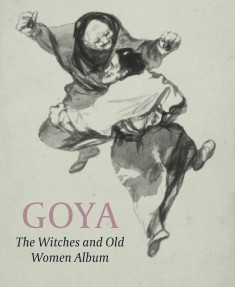 The Courtauld Gallery presents a groundbreaking exhibition which reunites for the first time all of the surviving drawings from one of Goya’s celebrated private albums. The albums were never intended to be seen beyond a small circle of friends, giving Goya the freedom to create images which range from the humorous, to the macabre and the bitingly satirical. With its themes of witchcraft, dreams and nightmares.
The ‘Witches and Old Women Album’ offers an important perspective on the development of Goya’s interest in old age, the fantastic and the diabolical. Above all, the drawings reveal his penetrating observation of human nature.
Additional information is available at The Guardian (10 December 2014).
◊ ◊ ◊ ◊ ◊
From Paul Holberton:
Juliet Wilson-Bareau with Stephanie Buck, Reva Wolf and Ed Payne, Goya: The Witches and Old Women Album (London: Paul Holberton Publishing, 2015), 200 pages, ISBN: 978-1907372766, £30.
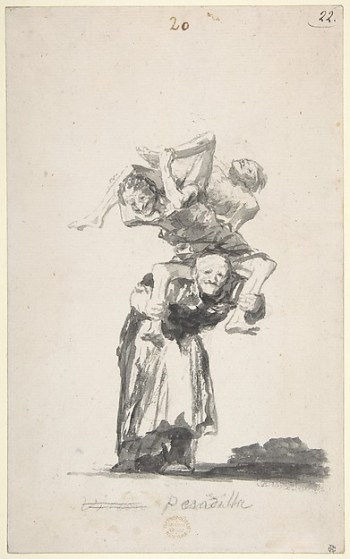
Goya, Nightmare, ‘Witches and Old Women’ Album (D), page 20, ca. 1819–23. Brush, black ink, and wash on Netherlandish laid paper (New York: Metropolitan Museum of Art, Rogers Fund, 1919)
One of the masterpieces of The Courtauld Gallery’s collection of Spanish drawings is a sheet known as Cantar y bailar (Singing and dancing), page 3 from Goya’s Album D, also known as the ‘Witches and Old Women’ album. Bringing together all the extant album pages, currently numbered up to 23, this catalogue proposes a reconstruction of the album that would include the sheets from which Goya’s page numbers have been erased or trimmed away.
Goya began to create ‘journal albums’ of drawings relatively late in life, after the shattering illness that left him stone deaf before the age of fifty. It was a practice he would sustain until his death, creating eight albums (named with letters A to H) that originally included a total of some 550 drawings. Visually, technically and intellectually coherent, these albums are unified in their discrete techniques and types of support, and paginated (after the first). In these album pages Goya committed to paper his views, with or without written comments, on human nature and the world around him. Each album has its own distinctive subject matter, style and technique.
The later history of the eight albums, already expertly chronicled, remains under investigation. The disbound album sheets were remounted in large volumes by Goya’s son, then sold en bloc by his grandson. Following their final dispersal by Federico de Madrazo and Valentín Carderera in the 1860s and 1870s, many gaps remain in all the albums.
This exhibition and the research underpinning it on Album D are the pilot for an international project for the reconstruction of Goya’s graphic oeuvre. The publication will test the extent of Album D and explore the possible sequence and thematic coherence of the sheets. The individual Album D drawings will be reproduced as a proposed reconstructed sequence, each with detailed catalogue entry and technical information. In addition, the publication will define the context of the album by including a number of closely related works by Goya.
New Book | L’imaginaire des grottes dans les jardins européens
Published by Hazan and available from Artbooks.com:
Hervé Brunon and Monique Mosser, L’imaginaire des grottes dans les jardins européens (Paris: Hazan, 2014), 399 pages, ISBN: 978-2754104890, 125€ / $190.
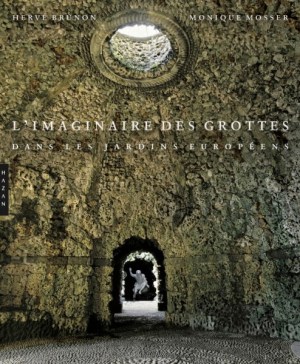 Dès l’Antiquité, puis de la Renaissance à nos jours, les grottes artificielles constituent un topos incontournable dans la création des jardins de toute l’Europe, soumis à d’infinies variations de formes, au gré des changements de goût, de l’excentricité des mécènes et de la fantaisie des concepteurs. Ce sont des milliers de grottes qui furent aménagées au cours des cinq derniers siècles selon des échelles extraordinairement variées allant de la simple niche abritant une petite fontaine à l’immense chaos naturel transformé en paysage sublime. Beaucoup ont disparu, en raison de l’extrême fragilité de ces décors précieux, mais d’admirables réalisations témoignent encore de cet engouement jamais démenti, notamment en Allemagne, en France, en Italie ou au Royaume-Uni, au Portugal et en Russie, en Finlande et Ukraine.
En rendant compte sans volonté d’exhaustivité—à travers plus d’une centaine d’exemples illustrés grâce à des prises de vue actuelles d’excellente qualité—de la richesse de ce patrimoine relativement méconnu, l’ouvrage vise à explorer les enjeux de cette fascination ininterrompue pour les grottes de jardin et à mettre en lumière l’inventivité formelle et technique à laquelle elles ont donné lieu. Il ne s’agit pas d’aborder les grottes en tant que motifs autonomes et isolés, mais bien de les inscrire tant dans leur contexte spatial et culturel, en considérant le rôle qu’elles tiennent dans la composition et la poésie du jardin, l’écriture du relief et des eaux miroitantes ou jaillissantes, la narration de la statuaire, et la manière dont elles révèlent les aspirations de chaque époque ou de chaque individu.
Une centaine de documents iconographiques—illustrations encyclopédiques, peintures allégoriques, portraits, décors de théâtre, etc.—permettent d’évoquer leur arrière-plan à la fois artistique, littéraire, scientifique, technique, religieux, philosophique ou encore anthropologique. Si le jardin opère comme microcosme, la grotte constitue à son tour un monde en réduction, une cristallisation de l’imaginaire s’incarnant dans des formes sensibles qui puisent à la réalité des lieux et poussent le vocabulaire ornemental à son paroxysme, qu’il relève du rustique, du grotesque ou encore de la rocaille. L’accumulation des matériaux et l’intensité des effets sonores et lumineux produisent des fantasmagories théâtrales ; la pénombre, les anfractuosités favorisent une intimité qui renvoie aux origines. Dépassant le simple catalogue par pays ou par périodes, les douze chapitres diachroniques de ce livre embrassent une série de catégories littéraires, esthétiques ou anthropologiques, qui, du primordial au profane en passant par le tellurique, le merveilleux et le diluvien, déclinent la poétique profonde des éléments et des émotions à l’œuvre dans la grotte. Un patrimoine exceptionnel à travers toute l’Europe redécouvert ici. Une iconographie non moins exceptionnelle. Un livre prestigieux présenté dans un coffret.
Hervé Brunon, historien des jardins et du paysage, est chargé de recherche au CNRS et directeur adjoint du Centre André Chastel (UMR8150, Paris), Laboratoire de recherche en histoire de l’art (du Moyen Âge à l’immédiat contemporain). Il est membre du comité de rédaction des revues Les Carnets du paysage et Projets de paysage : revue scientifique sur la conception et l’aménagement de l’espace, et fait partie du comité scientifique consultatif de la Fondazione Benetton Studi Ricerche (Trévise) et du conseil de l’enseignement et de la recherche de l’École nationale supérieure du paysage de Versailles. Il enseigne également à l’École nationale supérieure d’architecture de Versailles. Il est l’auteur de nombreuses publications, parmi lesquelles: Le Jardin, notre double: sagesse et déraison (direction, Autrement, 1999); Les Éléments et les métamorphoses de la nature: Imaginaire et symbolique des arts dans la culture européenne du XVIe au XVIIIe siècle (codirection; William Blake & Co, 2004); Rosario Assunto: Retour au jardin: Essais pour une philosophie de la nature, 1976–1987 (édition critique et traduction, Les Éditions de l’Imprimeur, 2003); Le Jardin contemporain: Renouveau, expériences et enjeux (avec Monique Mosser, Scala, 2006); Le Jardin comme labyrinthe du monde: Métamorphoses d’un imaginaire de la Renaissance à nos jours (direction, Presses de l’université Paris-Sorbonne/Musée du Louvre, 2008).
Monique Mosser est historienne de l’art, de l’architecture et des jardins, est ingénieur au CNRS (Centre André Chastel, UMR8150, Paris). Elle codirige, au sein de l’École nationale supérieure d’architecture de Versailles, le Master « Jardins historiques, patrimoine, paysage ». Elle a enseigné l’histoire des jardins à l’École nationale supérieure du paysage, à l’École de Chaillot, à l’École d’architecture de Genève. Engagée de longue date dans l’action culturelle et la défense du patrimoine, elle a organisé de très nombreuses expositions, tant en France qu’en Italie et d’autres pays d’Europe. Pionnière en matière d’histoire des jardins en France, elle a présenté, dès 1977, l’exposition Jardins, 1760–1820: Pays d’illusion, terre d’expérience à la Caisse nationale des monuments historiques et des sites (Hôtel de Sully) et joué, depuis, un rôle actif dans la politique menée par le ministère de la Culture sur le sujet. Auteur de nombreux articles et catalogues, elle a codirigé, avec Georges Teyssot, le livre de synthèse : Histoire des jardins de la Renaissance à nos jours (1990), publié en italien, anglais, français et allemand. Elle a été responsable d’une collection d’ouvrages sur le paysage et les jardins aux Éditions de l’Imprimeur (Besançon), où sont parus une vingtaine de titres.
Exhibition | Martin van Meytens the Younger

Martin van Meytens, Joseph de France with his Family, 1748
(Stockholm, National Museum)
◊ ◊ ◊ ◊ ◊
Press release (via ArtDaily) for the exhibition:
Martin van Meytens the Younger
Winter Palace, Belvedere, Vienna, 18 October 2014 — 8 February 2015
In Martin van Meytens the Younger (1695–1770) the Belvedere is presenting a preeminent European master of the Baroque age. As the preferred portraitist at Maria Theresa’s imperial court, Meytens impressively captured influential personalities of his period’s intellectual, artistic, and political spheres. The Belvedere is the first museum to highlight this important figure of the Austrian art scene in a monographic exhibition, which is on view from 18 October 2014 to 8 February 2015 in the Baroque ambience of the Winter Palace. Of Dutch origins and born in Sweden, Martin van Meytens the Younger developed his specific style, for which he borrowed from diverse European models and which he later successfully passed on to numerous students, during several lengthy sojourns in France, England, and Italy. Originally trained as a painter of miniatures, Meytens perfected monumental painting over the years while always remaining true to portraiture, apart from a few forays into other figural genres. The focus of this exhibition is on his fascinating portraits and the art of his most important pupils, including that of Joseph Hickel.

Martin van Meytens, Portrait of a Man Wearing a Traditional Hungarian Costume, ca. 1740/1750 (Vienna: Belvedere)
“It is a great joy for me personally that the first monographic show on Martin van Meytens is taking place in Vienna—the city where the artist, following extensive stays in a number of other countries, spent more than half of his life and where he left behind impressive traces,” says the Belvedere’s director Agnes Husslein-Arco. Like no other artist, Martin van Meytens the Younger succeeded in documenting the protagonists of the legendary age of Maria Theresa in his portraits. “The precisely painted facial features, the detailed rendering of elaborate garments, and the unmistakable clues to the sitters’ social standing and profession still convey a lively impression of this period, which was probably not as glamorous as it appears in the paintings,” Agnes Husslein-Arco adds. Unlike the other genres, portraiture necessitated the artist’s direct confrontation with the ‘original’, i.e., the person of the sitter or patron. “Those who had their portraits painted by Meytens had to abandon themselves to his art and artifice,” curator Georg Lechner explains.
Martin van Meytens the Younger was born in Stockholm in 1695 the son of Martin Mijtens the Elder (1648–1736), who was also active as a portraitist. His parents, who originally came from Southern Holland, had emigrated to Sweden. Having first been trained by his father, the younger Meytens embarked on a study tour of several years as early as 1714, which led him to his parents’ native country, as well as to England, France, Italy, and, finally, to Vienna. “Emperor Charles VI enabled this very likeable and widely travelled artist to study in Italy for an extensive period of time when he was still very young, so that from 1731 on the Habsburg dynasty and, above all, the empire’s aristocracy had an accomplished and versatile portraitist at their disposal,” Georg Lechner points out.
Martin van Meytens cannot be assigned to any particular painting tradition, such as the Swedish, French, or Roman school. His personal style, which is characterised by precise drawing and partly intense colours, is much too distinctive for categorisation. Having been highly interested in alchemy and physics, he immersed himself in the development of his own materials, namely paints, besides his activities as an artist, receiving a patent from the imperial government for the production of mineral paints in 1743. Moreover, Martin Meytens the Younger is said to have had a written and spoken command of several languages, so that he can probably be most fittingly described as a European citizen who was proud of his Swedish origins.
The beginnings of Meytens, who today is known primarily for his life-sized portraits, lie in miniature painting, which was greatly appreciated at the time. Meytens, a student of his compatriot Charles Boit (1662–1727), soon acquired considerable fame in this genre and achieved a special brilliance in the enamel technique. Even the Russian tsar and the Swedish king tried to lure him to their courts, but Meytens decided for Vienna. He entered the service of the Habsburg family and became a successful portraitist of the court and the aristocracy. In 1732 he was officially appointed ‘imperial chamber painter’. The names of those whose likenesses, physiques, and social ranks he depicted in his paintings almost resemble a Who’s Who of the age of Maria Theresa. They include such statesmen as Johann Christoph von Bartenstein or Wenzel Anton von Kaunitz-Rietberg, as well as members of the Batthyány, Liechtenstein, Pálffy, and Schwarzenberg families. However, they only represent one aspect of his oeuvre. Besides more than a dozen of self-portraits, he also painted such artist colleagues as Johann Gottfried Auerbach, the costume designer and Maria Theresa’s drawing teacher Antonio Bertoli, and the librettist Pietro Metastasio. Held in high esteem particularly by Maria Theresa, Meytens was finally appointed director of the Vienna Academy and filled this position until his death in 1770.
The precision in the rendering of laces, fabrics, and other details is characteristic of the works by Martin van Meytens the Younger and his collaborators. Such paintings as Maria Theresa in a pink lace dress have thereby even gained documentary importance. This special focus on textiles and accessories sometimes also stands out in portraits that were produced outside the artist’s workshop or by his followers. Frequently, the actual portrait even appears to be a neglected element. The meticulous representation of motifs recalls Lucas Cranach the Elder, whose flourishing workshop was also known for its extraordinary precision and sharpness with regard to details, which occasionally even gives the impression of a certain degree of steeliness. Whereas Meytens was so successful during his lifetime just because of the great precision of his works, this very characteristic of his style would later meet with disapproval among critics.
 It can hardly be estimated how many paintings left Meytens’s studio over the decades. In any case, the demand for his paintings was so high that the artist was soon no longer able to cope with the workload by himself and therefore employed numerous pupils and collaborators. Among the most talented of them were Sophonias de Derichs (1712–1773), who also came from Sweden, and Joseph Hickel (1736–1807). They worked entirely in the master’s manner so that their share in the individual works has remained hidden for both patrons and art lovers of the past and present. Moreover, Meytens hardly ever signed his works. Scholars therefore also depend on archival materials and contemporary engravings after Meytens’s works for their attributions, as these documents and reproductions usually mention the names of both painter and sitter. The following generation of artists represents the transition from the type of official Baroque portraiture they had been taught by
Meytens to a distinctly drier style that was in keeping with the
age of Josephinism and the Enlightenment.
Georg Lechner, Rolf H. Johannsen, Anne-Sophie Banakas, Birgit A. Schmidt, Agnes Husslein-Arco, Martin van Meytens der Jüngere (Vienna: Belvedere, 2014), 160 pages, ISBN: 978-3902805546, €29.
Exhibition | American Encounters: The Simple Pleasures of Still Life
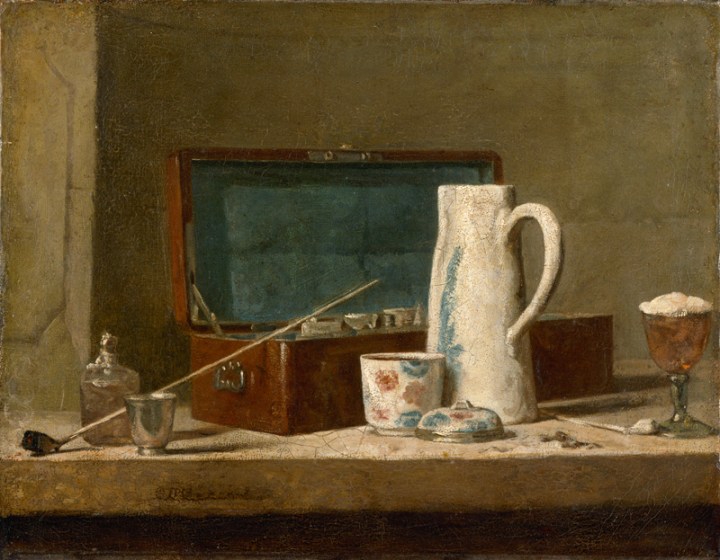
Jean-Siméon Chardin, Pipes and Drinking Pitcher, 1737
(Paris: Musée du Louvre)
◊ ◊ ◊ ◊ ◊
Press release (10 December 2014) from the High Museum:
American Encounters: The Simple Pleasures of Still Life
Musée du Louvre, Paris, 5 February — 27 April 2015
Crystal Bridges Museum of American Art, Bentonville, Arkansas, 16 May — 14 September 2015
High Museum of Art in Atlanta, 26 September 2015 — 31 January 2016
The Musée du Louvre, the High Museum of Art, Crystal Bridges Museum of American Art, and the Terra Foundation for American Art have announced the final installation in their four-year collaboration focusing on the history of American art. Opening at the Louvre, American Encounters: The Simple Pleasures of Still Life explores how late 18th- and early 19th-century American artists adapted European still-life tradition to American taste, character and experience. The culminating presentation of the American Encounters series—which has aimed to broaden appreciation for and dialogue about American art both within the U.S. and abroad—The Simple Pleasures of Still Life follows previous installations examining important genres in American art, including portraiture, landscape and genre paintings.
Though a centuries-old tradition in Europe, still-life painting was slow to take hold in the U.S., increasing in popularity over the course of the 19th century, an era of remarkable political, economic and social transformation. The subjects depicted in American still lifes evolved throughout these decades, drawing on and expanding the traditions of Dutch-style tabletops laden with fruits and vegetables and ornate French bouquet arrangements in the selection, arrangement and depiction of objects imbued with New World symbolism. As the country became more cosmopolitan, a result of its growing industrial and economic power, art patronage in the Gilded Age increasingly focused on the representation of wealth in pictures of exotic objects popular among the upper classes. The subjects of still-life painting during this period served as evocative emblems—whether of regional identity, moral values or eclectic collecting—and reflect the story of an evolving nation.
“This focused presentation could not be a more fitting conclusion to the American Encounters series,” said Stephanie Mayer Heydt, Margaret and Terry Stent Curator of American Art at the High Museum of Art. “Each individual painting, intimately scaled and packed with lush imagery rife with symbolic and historical meaning, invites close observation and tells the story of a young nation finding its voice. We’re thrilled to share this distinctly American experience and educate audiences about the history of American art both at home and abroad.”
Added Guillaume Faroult, curator, Department of Paintings, Musée du Louvre: “Our partnership over the past four years has allowed for unprecedented opportunities for scholarship, engagement and creative exchange. Collectively, we have been able to provide a much richer, holistic narrative of the development of American art than any of the institutions could have presented alone. This collaboration has had a significant impact on the understanding and appreciation for American art in Paris and beyond, and we look forward to continuing the dialogue fostered by this installation series.”
The ten masterpieces in the The Simple Pleasures of Still Life speak to the diversity of the still-life genre in the U.S. and range from works by artists De Scott Evans, Martin Johnson Heade, Joseph Biays Ord, William Sydney Mount and Raphaelle Peale to trompe l’oeil masterworks by John Haberle, William Michael Harnett and George Cope. Two paintings by John-Baptiste-Siméon Chardin and Abraham Mignon demonstrate the European examples frequently emulated by American artists first experimenting with still life in the early 1800s. The presentation at the High will be supplemented with four additional paintings drawn from the museum’s extensive holdings in American art, including works by William Mason Brown, Joseph Decker and John Frederick Peto.
Highlights
• Pipes and Drinking Pitcher (1737) by Chardin, the most popular French still-life painter of the 18th century, depicts an unusual subject for the artist that subtly conjures sensory pleasures. (Musée du Louvre)
• Corn and Cantaloupe (c. 1813) by Peale demonstrates how American artists adopted the European “tabletop composition” to feature distinctly American horticulture: the ear of corn and a Maryland-specific variety of cantaloupe grown on the plantation of the painting’s original owner. (Crystal Bridges Museum of American Art)
• Civil War-era Apples on a Tin Cup (1864) by Mount juxtaposes opposing symbols of the apple—the iconic American fruit and a common gift from children to Union soldiers during the Civil War—atop an empty, battled-worn army-issued cup to create a poignant contrast between sustenance and absence in a nation weary from war. (Terra Foundation for American Art)
• Still Life with Bust of Dante (1883) by Harnett is a trompe l’oeil painting illustrating the late 19th-century trend towards collecting eclectic and exotic objects made available through rapidly expanding international commerce. (High Museum of Art)
The partners have collaborated to produce a small catalogue for each installation in the series. The illustrated book for American Encounters: The Simple Pleasures of Still Life will feature an essay by Heydt that charts the rise of the still-life tradition in the 19th century and infusion of American symbolism into a traditionally European genre. The book will be published by the High Museum of Art, produced by Marquand Books, and distributed by the University of Washington Press. A lecture on the exhibition by Stephanie Heydt will be held at the Louvre auditorium on Wednesday, February 4 at 12:30pm. (more…)
Exhibition | Joshua Reynolds: Experiments in Paint
From the press release for the exhibition:
Joshua Reynolds: Experiments in Paint
The Wallace Collection, London, 12 March — 7 June 2015
Curated by Lucy Davis, Mark Hallett, and Alexandra Gent
A room hung with pictures is a room hung with thoughts. –Joshua Reynolds (1784)
The Wallace Collection’s spring exhibition will offer a fresh perspective on the work of a towering figure of British painting, Joshua Reynolds. Although widely regarded as one of the most important and influential painters of the period, Reynolds’s reputation as an ‘establishment’ artist masks his unquenchable thirst for innovation and his experimental approach to the practice and materials of painting. The exhibition explores Reynolds’s painting techniques, pictorial compositions and narratives through the display of 20 paintings, archival sources and x-ray images.

Joshua Reynolds, Mrs. Abington as Miss Prue in ‘Love for Love’ by William Congreve, 1771 (New Haven Yale Center for British Art)
Joshua Reynolds: Experiments in Paint will draw upon the significant works within the Wallace Collection and major loans from the UK, other European countries and the USA, all chosen to reveal Reynolds’s compositional and narrative experimentation and his unorthodox choice of materials, admixtures of paint and complex layering techniques. The exhibition reveals discoveries made during a four-year research project into the outstanding collection of twelve Reynolds paintings at the Wallace Collection.
With support from the Paul Mellon Centre for Studies in British Art, TEFAF, the Hertford House Trust, various private donors, and Trusts and drawing on the research expertise of the National Gallery in London and the Yale Center for British Art in New Haven, the exhibition spans most of Reynolds’s career and includes portraits, ‘fancy’ pictures and history painting.
On display will be celebrated portraits such as Nelly O’Brien (c.1762–64), Mrs Abington as Miss Prue (1771) and Reynolds’s own Self Portrait Shading the Eyes (1747–49) together with experimental studies and a canvas showing how Reynolds observed the effects of different combinations of colour and media. Collectively, alongside the hidden stories behind the paintings, archive resources and x-ray-images, the exhibition demonstrates the diversity of Reynolds’s artistic production, his highly original approach to image-making, composition and narrative, and prompts us to review opinions and perceptions of this truly experimental artist.
Joshua Reynolds: Experiments in Paint has been curated by Dr Lucy Davis, Curator of Old Master Pictures at the Wallace Collection, Professor Mark Hallett, Director of Studies in British Art at the Paul Mellon Centre and Alexandra Gent, also responsible for paintings conservation for the Reynolds Research Project. Director of the Wallace Collection, Dr Christoph Martin Vogtherr initiated the Reynolds Research Project. The Wallace Collection is a leading centre for the study of Joshua Reynolds and owns twelve important paintings by the artist dating from 1759 until the end of his career, covering several important aspects of his oeuvre: bust-length, half-length and full-length portraits of male and female sitters, ‘fancy’ pictures and a rare history painting.
◊ ◊ ◊ ◊ ◊
From Paul Holberton:
Lucy Davis and Mark Hallet, eds., Joshua Reynolds: Experiments in Paint (London: Paul Holberton Publishing, 2015), 192 pages, ISBN: 978-0900785757, £30 / $50.
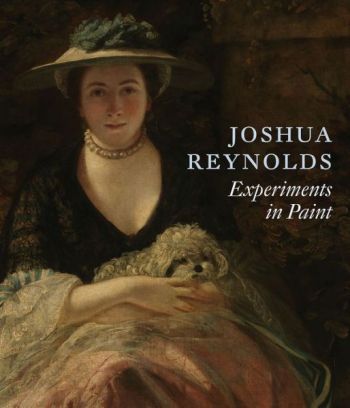 One of Britain’s most important and influential painters, Sir Joshua Reynolds (1723–1792) is justly celebrated for his dynamic portraiture, his poignant ‘fancy pictures’, his ambitious history paintings and his role as the first President of Britain’s Royal Academy.
This catalogue, published to accompany a major exhibition at the Wallace Collection, provides a fresh perspective on the artist, focusing on his innovative, often highly experimental approaches to the practice and materials of painting. Building on the many discoveries made during a four-year research project into the outstanding collection of the artist’s works at the Wallace Collection, Joshua Reynolds: Experiments in Paint investigates his radical manipulation of pigments, oils, glazes and varnishes. It traces his experiments with colour, tone and handling, reveals his continual temptation to rework and revise his pictures, and illuminates his highly creative responses to the new exhibition culture of his day. It also suggests the extent to which the artist’s work was founded upon a radical agenda of pictorial assemblage, in which he mixed anew the motifs, narratives and visual effects he drew from in the great art of the past. Finally, it demonstrates how Reynolds’s innovations as a painter were often the product of collaboration—in part, with his assistants and his students, but, more importantly, with his patrons and subjects, with whom he continually explored the possibilities of gesture, expression, performance and role-play.
The catalogue features an introduction, seven essays by leading scholars, curators and conservators, a chronology of the artist’s life and career, and detailed entries on a range of Reynolds’s pictures, at the centre of which are the Wallace Collection’s own collection of works by the artist.
Exhibition | The King of Groningen: Jan Albert Sichterman (1692–1764)

Johann Dietrich Findorff, after Jean-Baptiste Oudry, Clara the Rhinoceros, ca. 1752
(Schwerin: Staatliches Museum)
◊ ◊ ◊ ◊ ◊
Along with the exhibition highlighting treasures from the Dresden Picture Gallery acquired in the eighteenth century, the Groninger Museum is currently presenting an exhibition addressing the collection of the Dutch merchant Jan Albert Sichterman:
De Koning van Groningen: Jan Albert Sichterman (1692–1764)
Groninger Museum, Groningen, 20 September 2014 — 1 March 2015
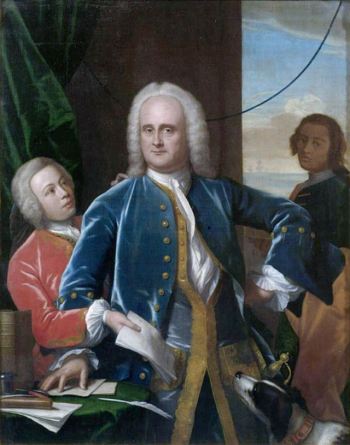
Philip van Dijk, Portrait of Jan Albert Sichterman (Groninger Museum)
The art collection of the Groningen merchant Jan Albert Sichterman—one of the most striking figures of the eighteenth century—included Asian ceramics, beautiful porcelain, splendid portraits painted by Philip van Dijk, Cornelis Troost and others, inconceivably fine pappercutting by Koster, furniture, silver, chintz, and memories of Clara the rhinoceros. After Sichterman’s death in 1764, his art collection was auctioned off and the collection largely dispersed. Fortunately, many collection pieces remained within the family and, in the course of time, the Groninger Museum has also been able to acquire several items. With this exhibition, the Groninger Museum has seized the exceptional opportunity to gather together what has been diffused since 1764. For this occasion, the Museum’s own Sichterman collection has been supplemented by hitherto unshown objects from private collections, as well as a number of works on loan. Never before has so much Chine de Commande porcelain owned a single family been exhibited in our country.
Christiaan J.A. Jörg, Egge Knol, and Denise A. Campbell, Jan Albert Sichterman (1692–1764): Een imponerende Groninger liefhebber van kunst (Groningen: Groninger Museum, 2014), 184 pages, ISBN: 978-9071691737, €39.
New Book | The Portrait Collection of Francesco Maria Niccolò Gabburri
From Artbooks.com:
Andrea Donati, Conoscere Collezionando: I ritratti della collezione Gabburri (Foligno: Etgraphiae editrice, 2014), 120 pages, ISBN: 978-8890868481, $69.
 Nella storia del collezionismo europeo e della cultura illuministica Francesco Maria Niccolò Gabburri (Firenze, 1676–1742) rappresenta un caso di straordinario interesse per l’autentica passione e lungimiranza che lo contraddistinsero a Firenze come accademico, mecenate, collezionista, conoscitore. L’interesse per i ritratti maturò in lui fin dalla giovinezza, sulla scorta delle memorie fiorentine e delle raccolte dei Granduchi di Toscana, ma divenne parte vitale di un progetto originale, quando egli capì di dover combinare la sua vocazione collezionistica con lo studio della storia dell’arte. Conoscere collezionando, questo è il senso della sua vita e della sua opera. Questo è il senso del libro che gli ho dedicato.
New Book | The Buildings of Peter Harrison
From McFarland:
John Fitzhugh Millar, The Buildings of Peter Harrison: Cataloguing the Work of the First Global Architect, 1716–1775 (Jefferson, NC: McFarland, 2014), 244 pages, ISBN: 978-0786479627, $75.
 Perhaps the most important architect ever to have worked in America, Peter Harrison’s renown suffers from the destruction of most of his papers when he died in 1775. He was born in Yorkshire, England in 1716 and trained to be an architect as a teenager. He also became a ship captain, and soon sailed to ports in America, where he began designing some of the most iconic buildings of the continent.
In a clandestine operation, he procured the plans for the French Canadian fortress of Louisbourg, enabling Massachusetts Governor William Shirley to capture it in 1745. This setback forced the French to halt their operation to capture all of British America and to give up British territory they had captured in India. As a result, he was rewarded with commissions to design important buildings in Britain and in nearly all British colonies around the world, and he became the first person ever to have designed buildings on six continents.
He designed mostly in a neo–Palladian style, and invented a way of building wooden structures so as to look like carved stone—“wooden rustication.” He also designed some of America’s most valuable furniture, including inventing the coveted “block-front,” and introducing the bombe motif. In America, he lived in Newport, Rhode Island, and in New Haven, Connecticut, where he died at the beginning of the War of Independence.
Material-culture historian John Fitzhugh Millar has several books to his credit on architectural history, colonial ships, and historic dance; he also runs the historic Bed & Breakfast Newport House in Williamsburg, Virginia.
C O N T E N T S
Preface
1. Carl Bridenbaugh’s Account of Harrison
2. A New Narrative of the Life of Peter Harrison
3. The British Isles and Europe
4. Canada
5. New England
6. The Mid-Atlantic
7. The American South and Atlantic Islands
8. The Caribbean
9. Other Continents–South America, Africa, Asia and Australasia
10. Furniture
Appendices
A. Buildings Attributed to Harrison
B. Student to Teacher
C. Architectural Pattern Books in Harrison’s Library
Illustrated Glossary of Architectural Terms
Bibliography
Index
New Book | The First Frame: Theatre Space in Enlightenment France
From Cambridge UP:
Pannill Camp, The First Frame: Theatre Space in Enlightenment France (New York: Cambridge University Press, 2015), 299 pages, ISBN: 978-1107079168, $99.
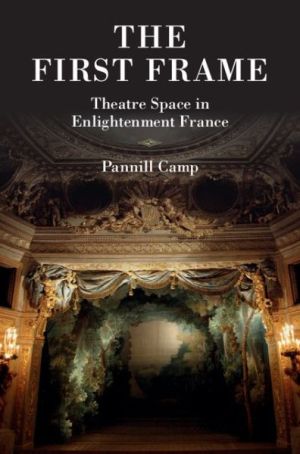 In the late eighteenth century, a movement to transform France’s theatre architecture united the nation. Playwrights, philosophers, and powerful agents including King Louis XV rejected the modified structures that had housed the plays of Racine and Molière, and debated which playhouse form should support the future of French stagecraft. In The First Frame, Pannill Camp argues that these reforms helped to lay down the theoretical and practical foundations of modern theatre space. Examining dramatic theory, architecture, and philosophy, Camp explores how architects, dramatists, and spectators began to see theatre and scientific experimentation as parallel enterprises. During this period of modernisation, physicists began to cite dramatic theory and adopt theatrical staging techniques, while playwrights sought to reveal observable truths of human nature. Camp goes on to show that these reforms had consequences for the way we understand both modern theatrical aesthetics and the production of scientific knowledge in the present day.
Pannill Camp is Assistant Professor of Drama at Washington University, St Louis. His research examines points of intersection between theatre history and the history of philosophy, especially in eighteenth-century France. Before joining the faculty of Washington University, he was a postdoctoral fellow at the Humanities Center at Harvard University and taught in Harvard’s Department of the History of Art and Architecture. At Brown University, he won the Joukowski Family Foundation’s Award for Outstanding Dissertation in the Humanities, and The Weston Award for theatre directing. His work has been published in journals including Theatre Journal, Performance Research, the Journal for Eighteenth-Century Studies, and the Journal of Dramatic Theory and Criticism.
◊ ◊ ◊ ◊ ◊
C O N T E N T S
Introduction: The ‘first frame’ of Enlightenment theatre space
1. The divided scene of theatre space in the Neo-classical era
2. The theatrical frame in French Neo-classical dramatic theory
3. Enlightenment spectators and the theatre of experiment
4. Theatre architecture reform and the spectator as sense function
5. Optics and stage space in Enlightenment theatre design
Epilogue: Modern spectatorial consciousness
Appendix: Dedicated public theatres built in France, 1752–90.










 Enfilade
leave a comment