Exhibition | Caravaggio to Canaletto
My apologies for (once again) being so late with this exhibition, which recently closed at the Museum of Fine Arts in Budapest. The catalogue, however, is still available from Artbooks.com. -CH
Caravaggio to Canaletto: The Glory of Italian Baroque and Rococo Painting
Museum of Fine Arts, Budapest, 26 October 2013 — 16 February 2014
Curated by Zsuzsanna Dobos

◊ ◊ ◊ ◊ ◊
The Museum of Fine Arts’ exhibition titled Caravaggio to Canaletto will present the leading styles, outstanding artist figures as well as the extraordinary wealth of genres, techniques, and themes of 17th- and 18th-century Italian painting through more than 140 works by 100 masters, including nine paintings—the highest number by a single artist included in the displayed material—by the period’s prominent painter genius, Caravaggio.
The backbone of the selection is formed by the 34 principal works from the internationally highly acclaimed Italian Baroque and Rococo collection of the museum’s Old Masters Gallery, which will be complemented by 106 masterpieces arriving in Budapest from sixty-two collections of eleven countries, such as the National Galleries in Washington and London, the Musée du Louvre in Paris, the Museo del Prado and the Museo Thyssen-Bornemisza in Madrid, the Galleria degli Uffizi in Florence, the Gemäldegalerie in Berlin, the Gemäldegalerie Alte Meister in Dresden, the Kunsthistorisches Museum in Vienna, and the Galleria Borghese in Rome. The material commands international attention since such a large-scale, comprehensive exhibition surveying the entirety of Italian painting as the one in Budapest has not been put on for decades anywhere in the world.
Some years ago the Museum of Fine Arts set itself the ambitious goal of presenting 15th- to 18th-century Italian painting in two consecutive exhibitions, unprecedented in its scope in Hungary. The first one, titled Botticelli to Titian, held in 2009–2010, attracted 230 thousand visitors, and thus became one of the most successful shows in the history of the museum.
The next, representative exhibition devoted to 17th- and 18th-century Italian painting will be the closing event of the Italian-Hungarian Cultural Season 2013 in Hungary. The two centuries of Italian art surveyed by the exhibition were determined by the Baroque style, which prevailed during the period all over Europe. The early Baroque, which had started at the end of the previous century saw the rise of the naturalism of Caravaggio and his followers, as well as the Bolognese School of Classicism linked to the Carracci. High Baroque, which lasted more than fifty years, was characterised equally by the dynamic style of the so-called master decorators, Baroque Classicism, and early Romanticism. We can talk about the Late Baroque period from the last decades of the seicento, when the tradition of the great masters was carried on in a somewhat empty, routine-like way. The Baroque Era ended in the 18th century with the luxurious Venetian Rococo, while in the middle of the century, also referred to as settecento, the beginnings of Neoclassicism started to appear. The artists of the various painting schools and styles of the 17th and 18th centuries were driven by the same desire: to imitate reality, strive for realistic depiction and create the illusion of tangibility, for which they had the whole range of artistic means at their disposal.
The exhibition will survey the period in eight chapters, starting with Caravaggio, whose activity in Rome brought radical change to painting, going on to the Baroque replacing Mannerism, and ending with the development of Rococo and Classicism, and the introduction of their masters. The opening section will display two early works by Caravaggio—one of them Boy with a Basket of Fruit—which will be followed by some religious compositions of Caravaggist painting, including two versions of Caravaggio’s Salome. The third section will showcase classicising Baroque linked to the names of Lodovico, Agostino and Annibale Carracci, while the fourth unit will present the spreading and flourishing of Baroque art. The fifth section will give an overview of the bourgeois genres of the still-life, the landscape, the portrait and the genre portrait, followed by the part devoted to the main stylistic trends of the 18th century. The last two sections will provide a glimpse into 18th-century painting in Venice and introduce the veduta (townscape), which became a popular genre at that time, through four Venetian townscapes by Canaletto.
The exhibition is implemented at the highest standard, thanks to the collaboration of nearly fifty Hungarian and foreign curators specialising in the period, and is accompanied by a Hungarianand English catalogue. The exhibition is curated by Zsuzsanna Dobos, art historian at the Old Masters Gallery, Museum of Fine Arts.
◊ ◊ ◊ ◊ ◊
From Artbooks.com:
Dobos, Zuzsanna, ed., Caravaggio to Canaletto: The Glory of Italian Baroque and Rococo Painting (Budapest: Museum of Fine Arts, 2013), 458 pages, ISBN: 978-6155304187, $130.
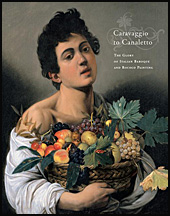 Contents include
• J. Jernyei-Kiss, Italian Painting in the 17th and 18th Centuries
• J. Spike, Caravaggio and the Caravaggesque Movement
• D. Benati, The Carracci Academy: From Nature to History
• C. De Seta, The Grand Tour: The European Rediscovery of Italy in the 17th and 18th Centuries
• A. Vecsey, The Reception of 17th- and 18th-Century Italian Painting in Hungary: Taste and Collecting
New Book | Giovanni Baratta, 1670–1747
From L’Erma di Bretschneider (and available from artbooks.com) . . .
Francesco Freddolini, Giovanni Baratta 1670–1747: Scultura e industria del marmo tra la Toscana e le corti d’Europa (Rome: L’Erma di Bretschneider, 2013), 355 pages, ISBN: 978-8882659257, €215.
 Discendente di una tra le più importanti dinastie di scultori attive in Italia tra Sei e Settecento, Giovanni Baratta fu a capo del primo importante studio di scultura basato a Carrara, la città del marmo. Negli anni giovanili l’ ambiente artistico fiorentino ed il sofisticato mondo dei cortigiani medicei ispirarono lo scultore a sperimentare ardite soluzioni formali e soggetti raffinati e a creare alcuni tra i capolavori assoluti della decorazione a stucco italiana di primo Settecento. La natura delle commissioni, la composizione della bottega, l’organizzazione del lavoro ed i rapporti con i committenti subirono tuttavia un progressivo cambiamento nella stagione matura, quando l’ industria del marmo inizió a guidare le scelte dello scultore. Questo studio mostra come l’ evoluzione della carriera di Baratta—attraverso la grande decorazione scultorea e architettonica per le corti europee, la collaborazione con Filippo Juvarra ed il mercato del marmo—rifletta la risposta dello scultore alle sfide dell’ agone artistico italiano ed europeo e getti nuova luce sulla storia materiale e sociale della scultura.
Francesco Freddolini è Assistant Professor of Art History a Luther College, University of Regina, ed ha ricevuto borse di studio dalla National Gallery of Art, Washington, D.C., dallo Smithsonian American Art Museum, Washington, D.C., dalla Huntington Library, San Marino, CA, e dal Getty Research Institute, Los Angeles.
A preview of the book is available here»
New Book | Art, Theatre, and Opera in Paris, 1750–1850
Due out from Ashgate in April:
Sarah Hibberd and Richard Wrigley, eds., Art, Theatre, and Opera in Paris, 1750–1850: Exchanges and Tensions (Aldershot: Ashgate, 2014), 288 pages, ISBN: 978-1409439479, £65.
 Art, Theatre, and Opera in Paris, 1750–1850: Exchanges and Tensions maps some of the many complex and vivid connections between art, theatre, and opera in a period of dramatic and challenging historical change, thereby deepening an understanding of familiar (and less familiar) artworks, practices, and critical strategies in the eighteenth and nineteenth centuries. Throughout this period, new types of subject matter were shared, fostering both creative connections and reflection on matters of decorum, legibility, pictorial, and dramatic structure. Correspondances were at work on several levels: conception, design, and critical judgement. In a time of vigorous social, political, and cultural contestation, the status and role of the arts and their interrelation came to be a matter of passionate public scrutiny.
Scholars from art history, French theatre studies, and musicology trace some of those connections and clashes, making visible the intimately interwoven and entangled world of the arts. Protagonists include Diderot, Sedaine, Jacques-Louis David, Ignace-Eugène-Marie Degotti, Marie Malibran, Paul Delaroche, Casimir Delavigne, Marie Dorval, the ‘Bleeding Nun’ from Lewis’s The Monk, the Comédie-Française and Etienne-Jean Delécluze.
Sarah Hibberd is Associate Professor in the Department of Music at the University of Nottingham, UK. Richard Wrigley is Professor of Art History at the University of Nottingham, UK.
C O N T E N T S
Sarah Hibberd and Richard Wrigley, Introduction
David Charlton, Hearing through the eye in eighteenth-century French opera
Mark Darlow, Nihil per saltum: Chiaroscuro in eighteenth-century lyric theatre
Mark Ledbury, Musical mutualism: David, Degotti, and operatic painting
Thomas Grey, Music, theatre, and the Gothic imaginary: Visualising the ‘Bleeding Nun’
Sarah Hibberd, Belshazzar’s Feast and the operatic imagination
Olivia Voisin, Romantic painters as costumiers: The stage as pictorial battlefield
Stephen Bann, Delaroche off stage
Patricia Smyth, Performers and spectators: Viewing Delaroche
Beth S. Wright, Delaroche and the drama of history: Gesture and impassivity from The Children of Edward IV to Marie-Antoinette at the Tribunal
Céline Frigau Manning, Playing with excess: Maria Malibran as Clari at the Théâtre Italien
Richard Wrigley, All mixed up: Etienne-Jean Delécluze and the théâtral in art and criticism
Bibliography
Index
Catalogue | Art and Music in Venice
This catalogue accompanies the exhibition Venice: The Golden Age of Art and Music, which opened last weekend at the Portland Museum of Art. From Yale UP:
Hilliard T. Goldfarb, ed., Art and Music in Venice: From the Renaissance to Baroque (New Haven: Yale University Press, 2013), 240 pages, ISBN: 978-0300197921, $65.
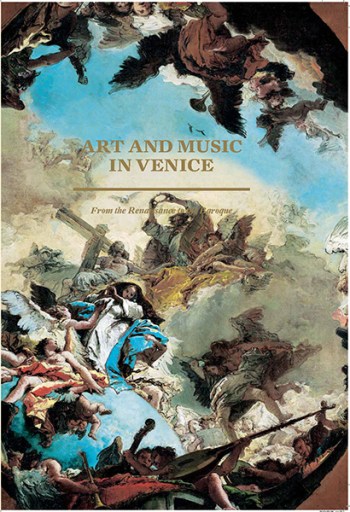 Artistic and musical creativity thrived in the Venetian Republic between the early 16th century and the close of the 18th century. The city-state was known for its superb operas and splendid balls, and the acoustics of the architecture led to complex polyphony in musical composition. Accordingly, notable composers, including Antonio Vivaldi and Adrian Willaert, developed styles that were distinct from those of other Italian cultures. The Venetian music scene, in turn, influenced visual artists, inspiring paintings by artists such as Jacopo Bassano, Canaletto, Francesco Guardi, Pietro Longhi, Bernardo Strozzi, Giambattista and Domenico Tiepolo, Tintoretto, and Titian. Together, art and music served larger aims, whether social, ceremonial, or even political. Lavishly illustrated, Art and Music in Venice brings Venice’s golden age to life through stunning images of paintings, drawings, prints, manuscripts, textbooks, illuminated choir books, musical scores and instruments, and period costumes. New scholarship into these objects by a team of distinguished experts gives a fresh perspective on the cultural life and creative output of the era.
Hilliard T. Goldfarb is associate chief curator and curator of Old Masters at the Montreal Museum of Fine Arts.
New Book | Early American Silver in The Metropolitan Museum of Art
Distributed by Yale UP:
Beth Carver Wees with Medill Higgins Harvey, Early American Silver in The Metropolitan Museum of Art (New York: The Metropolitan Museum of Art, 2013), 340 pages, ISBN: 978-0300191837, $75.
 This lavishly illustrated book documents the most distinguished works from The Metropolitan Museum’s extensive collection of domestic, ecclesiastical, and presentation silver from the Colonial and Federal periods. Detailed discussions provide a stylistic and socio-historical context for each piece, offering a wealth of new information to both specialist and non-specialist readers. Every object is documented with new photography that captures details, marks, and heraldic engraving. Finally, accompanying essays discuss issues of patronage and provenance, design and craft, and patterns of ownership and collecting, providing windows onto the past that help bring these pieces to life.
Beth Carver Wees is curator of American decorative arts, and Medill Higgins Harvey is a research associate in the American Wing, both at The Metropolitan Museum of Art, New York.
New Book | The Libertine: The Art of Love in Eighteenth-Century France
From Abbeville:
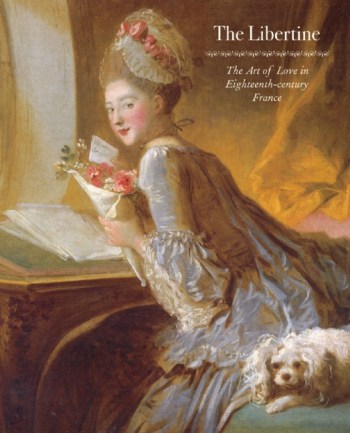
Michel Delon, ed., with a foreword by Marilyn Yalom, The Libertine: The Art of Love in Eighteenth-Century France (New York: Abbeville, 2013), 496 pages, ISBN: 978-0789211477, $150.
 “Delon’s anthology… display[s] the dazzling breadth and depth of the 18th-century obsession with pleasures of the flesh. Certainly The Libertine is as lavish—with its sumptuous illustrations of luscious Rococo nudes and other toothsome lovelies—as an 18th-century bal masqué. But Delon’s analogy understates the dizzying diversity of the ball’s invitees. Priapic peasants, depraved duchesses, masked miscreants, sexy sylphs, coy mistresses, foot fetishists, human sofas (!) and a surprising abundance of naughty nuns: These raunchy revelers engage in one decadent mating dance after another, tirelessly chasing ‘it’, and gamely explaining why it matters.” —The New York Times
“That which both sexes then called ‘love’ was a kind of commerce that they entered into, often without inclination, where convenience was always preferred to sympathy, interest to pleasure, and vice to feeling.” Thus did one novelist describe the spirit that pervaded the twilight years of the Ancien Régime, the heyday of the libertine. Today this word typically evokes the excesses of a Sade or the cruel manipulations of Dangerous Liaisons, but the game of love, as the jaded French aristocracy played it, was most often characterized by a refinement of speech and manner, a taste for nuance over forthright assertion that finds its counterpart in the paintings of Fragonard and the operas of Mozart. The amours of the libertine also colored the intellectual life of the time, figuring into the great debates about natural instinct versus social institutions, and the proper limits of personal freedom.
This sumptuous volume re-creates the milieu of the libertine in all its lively decadence, bringing together more than eighty brief selections from eighteenth-century French literature, grouped into eight broad themes—including tales of seduction, fantasies of exotic lands, and the discoveries of youth—and introduced by an eminent French scholar. These pieces, which encompass fiction, drama, verse, essays, and letters, are the work of nearly sixty writers, some familiar to Anglophone readers—such as Voltaire, Rousseau, Diderot, and yes, the Marquis de Sade—and some much less so; indeed, many of the selections are hitherto untranslated. Each excerpt is accompanied by splendid reproductions of period artworks, many rarely seen, by Watteau, Boucher, Fragonard, and numerous others, that echo and heighten the mood of the texts.
Michel Delon, professor of French literature at the Sorbonne, is the author of several studies of the eighteenth-century libertine. He has edited the works of Diderot and Sade for the Bibliothèque de la Pléiade, as well as Routledge’s Encyclopedia of the Enlightenment.
Marilyn Yalom is a former professor of French and presently a senior scholar at the Clayman Institute for Gender Research at Stanford University. In 1991 she was decorated as an Officier des Palmes Académiques by the French Government. She is the author of widely acclaimed books such as Blood Sisters: The French Revolution in Women’s Memory (1993), A History of the Breast (1997), A History of the Wife (1997), and How the French Invented Love: 900 Years of Passion and Romance (2012). She lives in Palo Alto, California, with her husband, the psychiatrist and author Irvin D. Yalom.
Forthcoming Book | Between Formula and Freestyle: Nicolai Abildgaard
Due out in June from Archetype:
Troels Filtenborg, Between Formula and Freestyle: Nicolai Abildgaard and Eighteenth-Century Painting Technique (London: Archetype, 2014), 152 pages, ISBN: 978-1909492097, £38 / $80.
As the most important Danish history painter, Nicolai Abildgaard (1743–1809) worked in a century that saw marked shifts in the styles of painting, from the late Baroque via Rococo to Neoclassicism, as well as the emergence of art academies throughout Europe as the prevalent factor in the training of young artists. Abildgaard has been the subject of a number of studies through the years. Within this considerable body of research, however, little attention has been given to the technical material aspect of his art. This book presents results of a paint technical study of his oeuvre, from early student paintings to mature works from his later years.
As a result of the composite nature of his training in Copenhagen as well as in Rome in the 1760s and 70s, a number of factors in Abildgaard’s formative years were influential in shaping his painting methods and choice of materials. Defying a specific formula, his technique displays the coexistence of a stepwise, systematic approach, typical of academic painting, with a freer, more alla prima manner. However, in adopting a variety of interchanging methods, Abildgaard does not appear to be unique for his time. And although his practice may at times appear unorthodox and inconsistent, most of its separate components are found in works by his contemporaries, making his technique a reflection of different characteristic currents in 18th-century painting.
C O N T E N T S
Preface
Introduction
Painting supports: Fabrics, sizes and formats
Grounds
Underdrawings
Paint layers: Pigments and Varnishes
The Christiansborg series
The Terence series
Exhibition | Samuel Hieronymus Grimm, 1733–1794
From Bern’s Kunstmuseum:
Samuel Hieronymus Grimm, 1733–1794: A Very English Swiss
Kunstmuseum, Bern, 17 January — 21 March 2014
Curated by William Hauptman with Therese Bhattacharya-Stettler
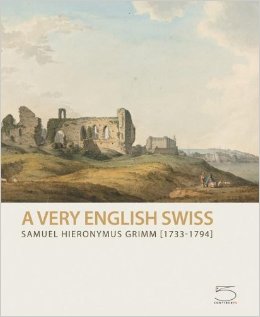 Samuel Hieronymus Grimm (1733–1794) is being presented in a comprehensive exhibition for the very first time. He pursued a career as topographer, illustrator, caricaturist and painter of watercolors, acquiring quite a reputation especially in England.
Grimm was born in Burgdorf and was initially devoted to poetry. Around 1760 he became interested in painting and took lessons with Johann Ludwig Aberli (1723–1786). In 1765 he went to Paris to continue his art studies with Jean-Georges Wille (1715–1808). There Grimm focused on landscape painting, going on long hikes with his art teacher in the countryside. In 1768 he moved to London, where he stayed for the rest of his life, working as both an illustrator and a caricaturist. With biting humor Grimm portrayed British society, fashion and politics. Around 1773, he was commissioned by Sir Richard Kaye to paint to watercolors. Kaye was to become one of his most devoted patrons, giving Grimm carte blanche to capture everything he found ‘unusual’. 2600 watercolors and drawings illustrating everyday subjects in Britain, the country’s architecture and the mores of its people were the outcome of Kaye’s patronage, producing a veritable illustrated encyclopedia of Georgian England during the 18th century. Grimm had numerous additional well-known personages as his patrons whom he accompanied on trips in England and Wales.
Grimm’s great popularity is due to the exactness of his representations; he was renowned for his speed with the pen, his moderate prices, and the perfection of his technique in sketching and painting outdoors. Specialists on British art see in Grimm one of the most talented topographers of his generation, his watercolors leave nothing to be desired and are equal to those of the best British masters of the time.
The exhibition combines examples from every genre Grimm worked in and will be accompanied by a richly illustrated catalogue in German and English. Prof. William Hauptman, Lausanne, is curator of the show, a great specialist for the period. Already in 1996 he was in charge of organizing the large John Webber exhibition at the Kunstmuseum Bern. Dr. Therese Bhattacharya-Stettler is co-curator.
William Hauptman, Samuel Hieronymus Grimm, 1733–1794: A Very English Swiss (Milan: 5 Continents Editions, 2014), 224 pages, ISBN: 978-8874396627, €35 / $45.
New Book | From Pompeii: The Afterlife of a Roman Town
From Harvard UP:
Ingrid D. Rowland, From Pompeii: The Afterlife of a Roman Town (Cambridge, MA: Belknap Press, 2014), 352 pages, ISBN 978-0674047938, $29 / £22 / €26.
 When Vesuvius erupted in 79 CE, the force of the explosion blew the top right off the mountain, burying nearby Pompeii in a shower of volcanic ash. Ironically, the calamity that proved so lethal for Pompeii’s inhabitants preserved the city for centuries, leaving behind a snapshot of Roman daily life that has captured the imagination of generations.
The experience of Pompeii always reflects a particular time and sensibility, says Ingrid Rowland. From Pompeii: The Afterlife of a Roman Town explores the fascinating variety of these different experiences, as described by the artists, writers, actors, and others who have toured the excavated site. The city’s houses, temples, gardens—and traces of Vesuvius’s human victims—have elicited responses ranging from awe to embarrassment, with shifting cultural tastes playing an important role. The erotic frescoes that appalled eighteenth-century viewers inspired Renoir to change the way he painted. For Freud, visiting Pompeii was as therapeutic as a session of psychoanalysis. Crown Prince Hirohito, arriving in the Bay of Naples by battleship, found Pompeii interesting, but Vesuvius, to his eyes, was just an ugly version of Mount Fuji. Rowland treats readers to the distinctive, often quirky responses of visitors ranging from Wolfgang Amadeus Mozart, Charles Dickens, and Mark Twain to Roberto Rossellini and Ingrid Bergman. Interwoven throughout a narrative lush with detail and insight is the thread of Rowland’s own impressions of Pompeii, where she has returned many times since first visiting in 1962.
Ingrid D. Rowland is Professor at the University of Notre Dame School of Architecture in Rome.
Introduction: Naples, 1962
1. Pompeii, May 2013
2. The Blood of San Gennaro and the Eruption of Vesuvius
3. Before Pompeii: Kircher and Holste
4. Mr. Freeman Goes to Herculaneum
5. The Rediscovery of Pompeii
6. Wolfgang Amadeus Mozart
7. Further Excavations
8. Karl Bryullov
9. Railway Tourism
10. Charles Dickens and Mark Twain
11. Giuseppe Fiorelli, the “Pope” of Pompeii
12. Bartolo Longo
13. The Social Role of Tourist Cameos
14. Pierre-Auguste Renoir
15. The Legacy of August Mau
16. Crown Prince Hirohito of Japan
17. Don Amedeo Maiuri
18. Roberto Rossellini and Ingrid Bergman
19. Autobus Gran Turismo
Coda: Atomic Pizza
Notes
Bibliography
Acknowledgments
Index
New Book | French Bronze Sculpture: Materials and Techniques
Published by Archetype and available from ACC Distribution:
David Bourgarit, Jane Bassett, Francesca Bewer, Geneviève Bresc-Bautier, Philippe Malgouyres, and Guilhem Scherf, eds., French Bronze Sculpture: Materials and Techniques, 16th–18th Century (London: Archetype Publications, 2014), 256 pages, ISBN: 978-1909492042, £65 / $140.
 The papers in this volume examine the origins and cross-fertilization of ideas and technology related to the making of bronzes in France between the Renaissance and the 18th century from the perspectives chronology, geography and typology. The production of specific sculptors and founders, or of specific works of art are considered in terms of the technology, the documentation of both the processes and the persons involved e.g. sculptors, founders, merchants, etc. and how these may have impacted the stylistic and technical outcome.
Also presented are state-of-the-art research methods and their application to multi-disciplinary studies—including historical and archeological investigations, analytical studies of materials (e.g. metal, core and patina), as well as experimental reconstructions of metallurgical processes.
C O N T E N T S
Part 1: From Primaticcio to Houdon
I.1 Francesco Bordoni: spécificités techniques chez un sculpteur-fondeur du 17e siècle D. Bourgarit , G. Bresc, F. Bewer
I.2 Barthélemy Prieur fondeur, son atelier, ses méthodes de travail R. Seelig, F. Bewer, D. Bourgarit
I.3 De Dame Tholose au Mercure volant: fondre en Languedoc aux 16e et 17e siècles P. Julien, A. de Beauregard
I.4 Casts after the antique by Hubert Le Sueur J. Griswold, C. Hess, J. Bassett, G. Bresc, M. Bouchard, R. Harris
I.5 Keller et les autres: les fondeurs des jardins de Versailles ou les cent-un bronzes de Louis XIV A. Maral, A. Amarger, D. Bourgarit
I.6 Keller and his alloy: copper, some zinc and a little bit of tin J.-M. Welter
I.7 Jean-Antoine Houdon: sculptor and founder J. Bassett, G. Scherf
Part 2: Small castings and multiples
II.1 The Dresden bronze of the Bath of Apollo: a model, not a copy F. Moureyre, U. Peltz
II.2 Les bronzes décoratifs à Paris autour de 1700: A propos des groupes de François Lespingola Ph. Malgouyres
II.3 Bronzes Dorés: A technical approach to examination and authentication A. Heginbotham
II.4 A Prussian manufactory of gilt bronzes à la française: Johann Melchior Kambly (1718–84) and the adoption of Parisian savoir-faire T. Locker
II.5 Les mortiers, objets méconnus des bronziers français B. Bergbauer
Part 3: Casting techniques: transmission and evolution
III.1 Casting Sculpture and Cannons in Bronze: Jehan Barbet’s Angel of 1475 in The Frick Collection J. Day, D. Allen
III.2 The cut-back core process in late 17th- and 18th-century French bronzes J. Bassett, F. Bewer
III.3 Témoins archéologiques d’un atelier de bronzier travaillant à Saint-Denis à la fin du 16e siècle O. Meyer, N. Thomas, M. Wyss
III.4 The Foundry at the Hippodrome: a French foundry for monumental sculpture in Stockholm around 1700 L. Hinners
III.5 Boffrand’s and Mariette’s descriptions of the casting of Louis XIV and Louis XV on Horseback A.-L. Desmas
III.6 Cire perdue moule carapace: à travers les recherches et les réalisations de la fonderie de Coubertin J. Dubos










 Enfilade
leave a comment