Exhibition | Renaissance and Baroque Bronzes from the Hill Collection
From The Frick:
Renaissance and Baroque Bronzes from the Hill Collection
The Frick Collection, New York, 28 January — 15 June 2014
Curated by Denise Allen
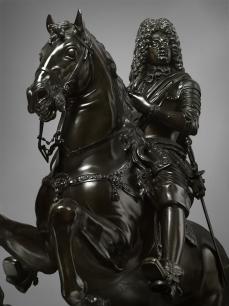
Giuseppe Piamontini, Prince Ferdinando di Cosimo III on Horseback, ca. 1695, bronze, 25 inches (62.5 cm), The Collection of Mr. and Mrs. J. Tomilson Hill
The Frick Collection will be the only venue for the first public exhibition of this private collection devoted to the bronze figurative statuette. The nearly forty sculptures included in the show are of exceptional quality and span the fifteenth through the eighteenth century, exemplifying the genre from its beginnings in Renaissance Italy to its dissemination across the artistic centers of Europe.
The Hill Collection is distinguished by rare, autograph masterpieces by Italian sculptors such as Andrea Riccio, Giambologna, and Giuseppe Piamontini. Its holding of works by the Giambologna school evokes the splendor of the late Renaissance courts, while the richness of the international Baroque is represented by Alessandro Algardi’s religious sculptures and by a remarkable assemblage of seventeenth- and eighteenth-century French bronzes in the classical mode. The Hill Collection reveals the range of artistry, invention, and technical refinement characteristic of sculptures created when the tradition of the European statuette was at its height. The exhibition is accompanied by an illustrated scholarly catalogue edited by Patricia Wengraf with
contributions by Claudia Kryza-Gersch, Dimitrios Zikos, and Denise Allen,
organizing curator of the exhibition at The Frick Collection.
◊ ◊ ◊ ◊ ◊
Patricia Wengraf, ed., Renaissance and Baroque Bronzes from the Hill Collection (London: Paul Holberton Publishing, 2014), 384 pages, ISBN: 978-1907372636, $125.
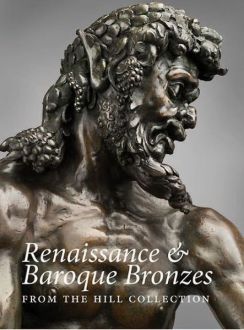 This richly illustrated and beautifully produced scholarly catalog of the superlative collection of Renaissance and Baroque bronze figurative statuettes from the Hill Collection, accompanies an exhibition of the collection at The Frick Collection, New York opening late January 2014. Spanning the 15th through the 18th century, the sculptures presented are of exceptional quality and exemplify the bronze statue or statuette from its beginnings in Renaissance Italy to its dissemination across the artistic centers of Europe.
The Hill Collection is distinguished by rare, autograph masterpieces by Italian sculptors such as Andrea Riccio and Giambologna, and has the most important collection of Baroque bronzes by Giuseppe Piamontini in the world. Its holding of works by the Giambologna school – the strongest found in any single collection, with the sole exception of the Museo Nazionale del Bargello, Florence – evokes the splendor of the late Renaissance courts, while the richness of the international Baroque is represented by religious sculptures by Alessandro Algardi, northern bronzes by Adriaen de Vries and Hubert Gerhard, and a remarkable assemblage of French 17th- and early 18th-century bronzes in the classical mode, by Barthelemy Prieur and from the circle of Ponce Jacquiot. The Hill Collection reveals the range of artistry, invention and technical refinement characteristic of sculptures created when the tradition of the European statuette was at its height.The catalog includes detailed biographies of each of the artists represented and is introduced with essays by the distinguished authors.
Patricia Wengraf is one of the world’s leading dealers in bronzes, sculpture and works of art, and in her particular specialty, bronzes of the 15th-18th centuries, her knowledge and connoisseurship are of world repute. Denise Allen is Curator of Renaissance Paintings and Sculpture at The Frick Collection. Claudia Kryza-Gersch is Curator of Renaissance Sculpture at the Kunsthistorisches Museum, Vienna. Dimitrios Zikos is Curator at the Museo Nazionale del Bargello in Florence. Rupert Harris is the leading conservator of metalwork and sculpture in the UK.
New Book | From Still Life to the Screen
From Yale UP:
Joseph Monteyne, From Still Life to the Screen: Print Culture, Display, and the Materiality of the Image in Eighteenth-Century London (London: Paul Mellon Centre for Studies in British Art, 2013), 292 pages, ISBN: 978-0300196351, $85.
 From Still Life to the Screen explores the print culture of 18th-century London, focusing on the correspondences between images and consumer objects. In his lively and insightful text, Joseph Monteyne considers such themes as the display of objects in still lifes and markets, the connoisseur’s fetishistic gaze, and the fusion of body and ornament in satires of fashion. The desire for goods emerged in tandem with modern notions of identity, in which things were seen to mirror and symbolize the self. Prints, particularly graphic satires by such artists as Matthew and Mary Darly, James Gillray, William Hogarth, Thomas Rowlandson, and Paul Sandby, were actively involved in this shift. Many of these images play with the boundaries between the animate and the inanimate, self and thing. They also reveal the recurring motif of image display, whether on screens, by magic lanterns, or in “raree-shows” and print-shop windows. The author links this motif to new conceptions of the self, specifically through the penetration of spectacle into
everyday experience.
Joseph Monteyne is associate professor in the history
of art at the University of British Columbia.
New Book | Guide to the Sculpture in the Mansion House
From Paul Holberton Publishing:
Julius Bryant, ‘Magnificent Marble Statues’: A Guide to the Sculpture in the Mansion House (London: Paul Holberton Publishing, 2013), 144 pages, ISBN: 978-1907372551, £20.
 The Mansion House, the palatial city residence of the Lord Mayor of London, is home to one of the capital’s finest collections of British sculpture from the 18th and 19th centuries. Forming part of the spectacular setting for official functions, as well as the background to busy offices and the home of the Lord Mayor and his family, the sculpture ranges from handsome chimneypieces and elaborate stuccowork wall decorations to heroic single statues of figures from British literature and history.
Described by the architectural historian Nicolaus Pevsner as “magnificent marble statues,” the sculptures are almost unknown to the general public. Their significance, however, is much greater than as an example of the changing fortunes of Victorian sculpture and of the fluctuating attitudes of the Corporation of London to art patronage. Taken as a whole, the sheer range and variety is exceptional. After the monuments in Westminster Abbey and St Paul’s Cathedral and the galleries of the Victoria and Albert Museum, Mansion House presents the most extensive permanent exhibition of British sculpture in London. It differs from these rival collections in the range of its sculpture, from Palladian chimneypieces carved by City stonemasons and virtuoso Rococo plasterwork by anonymous stuccadors to heroic ideal statues made to rival the greatest works from antiquity and the Renaissance.
The time has come for a fresh appreciation of these “magnificent marble statues.” The first book on the sculpture ever published, this beautifully illustrated study reveals the subjects of the sculptures, the stories behind the commissions and the importance of the artists themselves. New photography highlights the qualities of the individual sculptures in their historic settings. A unique insight to the challenges and delights of living, working and raising a family in Mansion House is given in an introductory essay by the Lady Mayoress, Clare Gifford. The sculptures and architecture are described by Julius Bryant, Keeper of Word and Image at the Victoria and Albert Museum. This beautifully produced new handbook provides a companion volume to The Harold Samuel Collection, Dutch and Flemish Pictures at the Mansion House (Paul Holberton Publishing, 2012) by Michael Hall and Clare Gifford.
New Book | The Beau Monde: Fashionable Society in Georgian London
From Oxford University Press:
Hannah Greig, The Beau Monde: Fashionable Society in Georgian London (Oxford: Oxford University Press, 2013), 352 pages, ISBN: 978-0199659005, $35.
 Caricatured for extravagance, vanity, glamorous celebrity and, all too often, embroiled in scandal and gossip, 18th-century London’s fashionable society had a well-deserved reputation for frivolity. But to be fashionable in 1700s London meant more than simply being well dressed. Fashion denoted membership of a new type of society – the beau monde, a world where status was no longer determined by coronets and countryseats alone but by the more nebulous qualification of metropolitan ‘fashion’. Conspicuous consumption and display were crucial; the right address, the right dinner guests, the right possessions, the right jewels, the right seat at the opera.
The Beau Monde leads us on a tour of this exciting new world, from court and parliament to London’s parks, pleasure grounds, and private homes. From brash displays of diamond jewelry to the subtle complexities of political intrigue, we see how membership of the new elite was won, maintained – and sometimes lost. On the way, we meet a rich and colorful cast of characters, from the newly ennobled peer learning the ropes and the imposter trying to gain entry by means of clever fakery, to the exile banned for sexual indiscretion.
Above all, as the story unfolds, we learn that being a Fashionable was about far more than simply being ‘modish’. By the end of the century, it had become nothing less than the key to power and exclusivity in a changed world.
Hannah Greig is a lecturer in eighteenth-century British history at the University of York. Prior to joining York she held posts at Balliol College, Oxford, and the Royal College of Art. Alongside her academic work, Dr Greig works as a historical adviser for film, television and theatre. Recent credits include the feature film The Duchess (Pathe/BBC films 2008, directed by Saul Dibb) and Jamie Lloyd’s production of The School for Scandal (at the Theatre Royal in Bath).
Exhibition | Behind Closed Doors: Art in the Spanish American Home
Now on view at the Brooklyn Museum:
Behind Closed Doors: Art in the Spanish American Home, 1492–1898
Brooklyn Museum, New York, 10 September 2013 — 12 January 2014
Albuquerque Museum of Art and History, New Mexico, 16 February — 18 May 2014
New Orleans Museum of Art, 20 June — 21 September 2014
The John and Mable Ringling Museum of Art, Sarasota, Florida, 17 October 2014 — 11 January 2015
Curated by Richard Aste
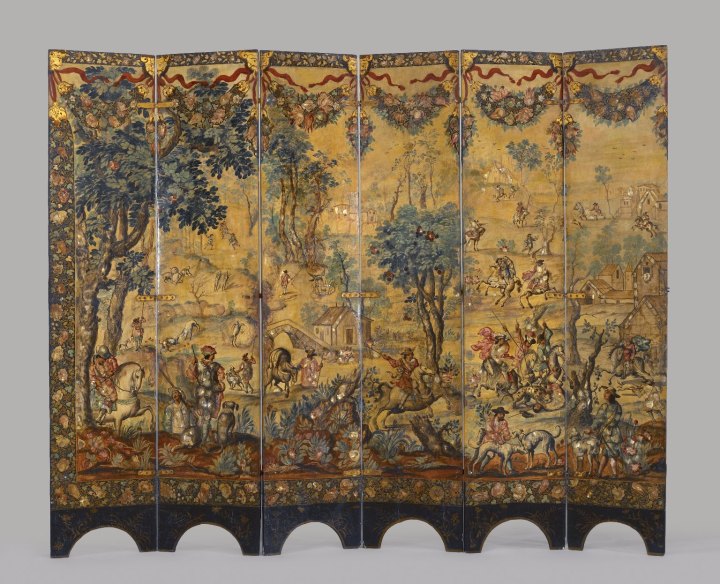
Screen with the Siege of Belgrade (front) and Hunting Scene (reverse,
as shown above). Mexico, ca. 1697–1701. Oil on wood, inlaid
with mother-of-pearl, 90 x 108 inches (Brooklyn Museum)
◊ ◊ ◊ ◊ ◊
The first major exhibition in the United States to explore the private lives, power struggles, and collecting practices of Spain’s New World elite brings together approximately 160 exceptional works in a wide range of media that illuminate conspicuous consumption and domestic display in the colonial era. Behind Closed Doors: Art in the Spanish American Home, 1492–1898 debuted at the Brooklyn Museum, where it will be on view through January 12, 2014, before traveling to three additional venues.
Included are paintings, manuscripts, prints, sculpture, decorative-arts objects, and textiles. The material demonstrates how colonial Spanish America’s new moneyed classes—including Spaniards, Creoles (Spaniards born in the New World), individuals of mixed race, and indigenous people—secured their social status through the spectacular private display of luxury goods from all over the world. The exhibition invites the visitor into an elite Spanish colonial home, beginning with more public reception rooms, hung with elaborately costumed family portraits and filled with fine imported and locally produced luxury goods, and ending with more private rooms, displaying objects that also spoke to the racial and social identity of their owners.
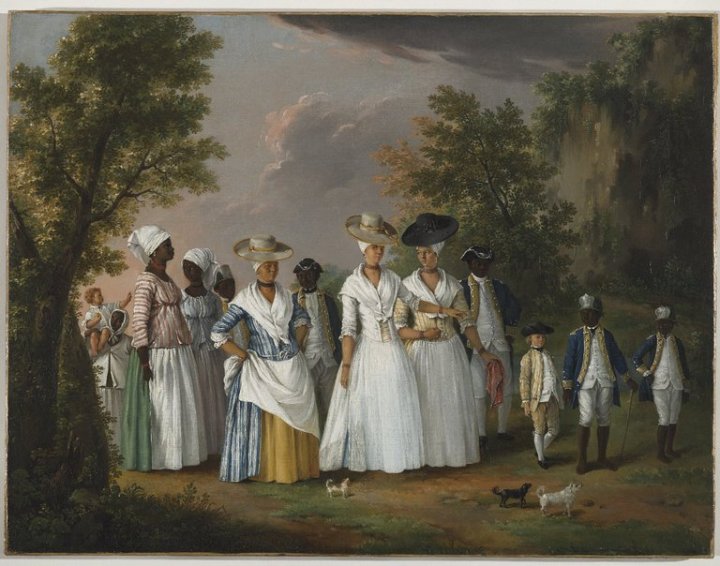
Agostino Brunias, Free Women of Color with Their Children
and Servants in a Landscape, ca. 1770–96. Oil on canvas,
20 x 26 inches (Brooklyn Museum)
◊ ◊ ◊ ◊ ◊
When the Spanish empire first expanded its borders into the Americas, the early conquistadors brought with them a rich artistic tradition, along with a monotheistic religion and an obsession with racial purity. Within a hundred years, fabulous fortunes had been amassed in the New World, thanks to the region’s abundant natural resources and robust market economy. Although Spanish America’s newly privileged class consisted of some of the wealthiest people in the world, the crown consistently favored those born in Spain for prominent local government and church positions, and political reforms in the eighteenth century further limited Creole power. In defiance, American-born elites responded by acquiring and ostentatiously displaying luxury goods from around the world in their dress and in their homes as pointed reminders of the crown’s reliance on New World resources. Their collections became more eclectic, including works by local artists and indigenous craftsmen as well as European masters.
Most of the objects in the exhibition are drawn from the Brooklyn Museum’s superb Spanish colonial holdings, supplemented by additional selections from the American, European, Asian, and Islamic collections as well as loans from public and private collections. For the first time in an exhibition in this country, Spanish colonial objects destined for the home will be paired with British American counterparts for purposes of comparison. The exhibition, which encompasses all of the New World under Spanish domination, calls attention to the Caribbean’s pivotal but, surprisingly, often overlooked role in Spanish American history.

José Joaquín Bermejo, Doña Mariana Belsunse y Salasar, ca. 1780 (Brooklyn Museum)
Among the exhibition highlights is a group of luxury objects from the viceroyalty of New Spain, which comprised present-day Mexico and Central America. One is a shell-inlaid and painted folding screen, or biombo enconchado, commissioned expressly for Mexico City’s viceregal palace about 1700 by Viceroy José Sarmiento de Valladares. This extremely rare, massive six-panel screen will be a focal point of the exhibition, along with a newly discovered late eighteenth-century neoclassical portrait by the mixed-race Puerto Rican painter José Campeche. Depicting twenty-one-year-old Doña Maria de los Dolores Gutiérrez del Mazo y Pérez, the painting commemorated her marriage to the future viceroy of New Granada.
Other objects in the exhibition include a pair of painted leather Peruvian chests from about 1690 decorated with allegories of the four elements, symbols of the zodiac, and a scene of a merry company dining outdoors; eighteenth-century Chinese export porcelain bearing the coat of arms of one of colonial Mexico’s leading families; an early sixteenth-century medallion Ushak carpet from Turkey of the type recorded in South American women’s sitting rooms; a late eighteenth-century polychromed wood portable tabernacle, adorned with the Virgin Mary and mirrors to reflect candlelight; Free Women of Color with Their Children and Servants in a Landscape, a portrait from about 1764–96 of members of the mixed-race elite in the British colony of Dominica by Italian painter Agostino Brunias; and Francisco de Goya’s monumental portrait of Peruvian-born Don Tadeo Bravo de Rivero, painted in Madrid in 1806.
The Brooklyn Museum began acquiring domestic Spanish colonial art in earnest in 1941 when Herbert J. Spinden, Curator of American Indian Art and Primitive Cultures, purchased approximately fourteen hundred art works from eight Latin American countries. The collection, which now ranks among the country’s finest, has been augmented with important recent acquisitions that are included in the exhibition.
◊ ◊ ◊ ◊ ◊
Programming at the Brooklyn Museum includes an afternoon roundtable:
Roundtable Discussion: Behind Closed Doors
Brooklyn Museum, Saturday, 16 November 2013, 11:30 a.m.–4 p.m.

Water Heater (Pava). Bolivia, 18th century, silver (Brooklyn Museum)
Join us for a day-long, bilingual roundtable discussion about calculated collecting practices in the colonial Americas, in celebration of the exhibition Behind Closed Doors: Art in the Spanish American Home, 1492–1898. The program begins with a morning session, in Spanish, on collecting for the home, moderated by Jorge F. Rivas Pérez, Curator of Colonial Art at the Colección Patricia Phelps de Cisneros. The afternoon session, in English, explores adorning the colonial body and will be moderated by Richard Aste, Curator of European Art at the Brooklyn Museum.
Collecting and signaling status through dress also connect with our fall exhibition The Fashion World of Jean Paul Gaultier: From the Sidewalk to the Catwalk.
Speakers include:
· Gustavo Curiel, Research Fellow, Instituto de Investigaciones Estéticas, Universidad Nacional Autónoma de México
· Maria Del Pilar Lopez Perez de Bejarano, Associate Professor, Instituto de Investigaciones Estéticas, Universidad Nacional de Colombia
· Barbara E. Mundy, Associate Professor of Art History, Fordham University
· Linda Rodríguez, Postdoctoral Fellow, Art History Department, New York University
· Caroline Weber, Associate Professor of French, Barnard College
· Luis Eduardo Wuffarden, independent Lima scholar and curator
This event is co-sponsored by the Brooklyn Museum and the Colección Patricia Phelps de Cisneros. Additional support provided by PAMAR’s eighth annual Latin American Cultural Week.
A box lunch will be available on the day of the event for $15. Museum Members receive free admission; call the Membership Hotline at (718) 501-6326 or email us for reservations.
◊ ◊ ◊ ◊ ◊
From Monacelli Press:
Richard Aste, ed., Behind Closed Doors: Art in the Spanish American Home, 1492–1898 (Monacelli Press, 2013), 224 pages, ISBN: 978-1580933650, $50.
 A critical contribution to the burgeoning field of Spanish colonial art, Behind Closed Doors reveals how art and luxury goods together signaled the identity and status of Spanish Americans struggling to claim their place in a fluid New World hierarchy.
By the early sixteenth century, the Spanish practice of defining status through conspicuous consumption and domestic display was established in the Americas by Spaniards who had made the transatlantic crossing in search of their fortunes. Within a hundred years, Spanish Americans of all heritages had amassed great wealth and had acquired luxury goods from around the globe. Nevertheless, the Spanish crown denied the region’s new moneyed class the same political and economic opportunities as their European-born counterparts. New World elites responded by asserting their social status through the display of spectacular objects at home as pointed reminders of the empire’s
dependence on silver and other New World resources.
The private residences of elite Spaniards, Creoles (American-born white Spaniards), mestizos, and indigenous people rivaled churches as principal repositories for the fine and decorative arts. Drawing principally on the Brooklyn Museum’s renowned colonial holdings, among the country’s finest, this book presents magnificent domestic works in a broad New World (Spanish and British) context. In the essays within, the authors lead the reader through the elite Spanish American home, illuminating along the way a dazzling array of both imported and domestic household goods. There, visitors would encounter European-inspired portraiture, religious paintings used for private devotion and also as signifiers of status, and objects that spoke to the owner’s social and racial identity.
◊ ◊ ◊ ◊ ◊
Karen Rosenberg reviewed the exhibition for The New York Times (19 September 2013)
New Book | The Museum of French Monuments 1795–1816
From Ashgate:
Alexandra Stara, The Museum of French Monuments 1795–1816: ‘Killing art to make history’ (Aldershot: Ashgate, 2013), 198 pages, ISBN: 978-1409437994, $100.
 The first volume in two centuries on Alexandre Lenoir’s Museum of French Monuments in Paris, this study presents a comprehensive picture of a seminal project of French Revolutionary cultural policy, one crucial to the development of the modern museum institution. The book offers a new critical perspective of the Museum’s importance and continuing relevance to the history of material culture and collecting, through juxtaposition with its main opponent, the respected connoisseur and theorist Quatremère de Quincy. This innovative approach highlights the cultural and intellectual context of the debate, situating it in the dilemmas of emerging modernity, the idea of nationhood, and changing attitudes to art and its histories.
Open only from 1795 to 1816, the Museum of French Monuments was at once popular and controversial. The salvaged sculptures and architectural fragments that formed its collection presented the first chronological panorama of French art, which drew the public; it also drew the ire of critics, who saw the Museum as an offense against the monuments’ artistic integrity. Underlying this localized conflict were emerging ideas about the nature of art and its relationship to history, which still define our understanding of notions of heritage, monument, and the museum.
Alexandra Stara is Reader in the History and Theory of Architecture at Kingston University, London.
Forthcoming Book | New Approaches to Naples, 1500–1800
Scheduled for November publication from Ashgate:
Melissa Calaresu and Helen Hills, eds., New Approaches to Naples c.1500–c.1800: The Power of Place (Aldershot: Ashgate, 2013), 264 pages, ISBN: 978-1409429432, $120.
 Early modern Naples has been characterized as a marginal, wild and exotic place on the fringes of the European world, and as such an appropriate target of attempts, by Catholic missionaries and others, to ‘civilize’ the city. Historiographically bypassed in favour of Venice, Florence and Rome, Naples is frequently seen as emblematic of the cultural and political decline in the Italian peninsula and as epitomizing the problems of southern Italy. Yet, as this volume makes plain, such views blind us to some of its most extraordinary qualities, and limit our understanding, not only of one of the world’s great capital cities, but also of the wider social, cultural and political dynamics of early modern Europe.
As the centre of Spanish colonial power within Europe during the vicerealty, and with a population second only to Paris in early modern Europe, Naples is a city that deserves serious study. Further, as a Habsburg dominion, it offers vital points of comparison with non-European sites which were subject to European colonialism. While European colonization outside Europe has received intense scholarly attention, its cultural impact and representation within Europe remain under-explored. Too much has been taken for granted. Too few questions have been posed.
In the sphere of the visual arts, investigation reveals that Neapolitan urbanism, architecture, painting and sculpture were of the highest quality during this period, while differing significantly from those of other Italian cities. For long ignored or treated as the subaltern sister of Rome, this urban treasure house is only now receiving the attention from scholars that it has so long deserved.
This volume addresses the central paradoxes operating in early modern Italian scholarship. It seeks to illuminate both the historiographical pressures that have marginalized Naples and to showcase important new developments in Neapolitan cultural history and art history. Those developments showcased here include both theoretical or methodological innovation and new empirical approaches. Thus this volume illuminates new models of cultural history designed to ask new questions of Naples and tell new stories that have implications beyond the Kingdom of Naples for the study of early modern Italy and, indeed, early modern Europe.
Melissa Calaresu is Lecturer in History at Gonville and Caius College, Cambridge; Helen Hills is Professor of the History of Art at the University of York.
◊ ◊ ◊ ◊ ◊
C O N T E N T S
Introduction
• Melissa Calaresu and Helen Hills, Between Exoticism and Marginalization: New Approaches to Naples
I: Disaster and Decline
• John Marino, Myths of Modernity and the Myth of the City: When the Historiography of Pre-modern Italy Goes South
• Helen Hills, Through a Glass Darkly: Material Holiness and the Treasury Chapel of San Gennaro in Naples
• Rose Marie San Juan, Contaminating Bodies: Print and the 1656 Plague in Naples
II: Topographies
• Harald Hendrix, Topographies of Poetry: Mapping Early Modern Naples
• Dinko Fabris, The Collection and Dissemination of Neapolitan Music, c.1600–1790
• Helena Hammond, Landed Identity and the Bourbon Neapolitan State: Claude-Joseph Vernet and the Politics of the ‘siti reali’
III: Exceptionality
• Paola Bertucci, The Architecture of Knowledge: Science, Collecting, and Display in 18th-Century Naples
• Melissa Calaresu, Collecting Neapolitans: The Representation of Street Life in Late 18th-Century Naples
• Anna Maria Rao, ‘Missed Opportunities’ in the History of Naples
Bibliography
Index
New Book | Collecting Chinese and Japanese Porcelain in Paris
Scheduled to appear in November from Getty Publications:
Stéphane Castelluccio, Collecting Chinese and Japanese Porcelain in Pre-Revolutionary Paris (Los Angeles: Getty Publications, 2013), 224 pages, ISBN 978-1606061398, $60.
 This beautifully illustrated volume traces the changing market for Chinese and Japanese porcelain in Paris from the early years of the reign of Louis XIV (1643–1715) through the eighteenth century. The increase in the quantity and variety of East Asian wares imported during this period spurred efforts to record and analyze them, resulting in a profusion of inventories, sales catalogues, and treatises. These contemporary sources—many never published before—provide a comprehensive picture of porcelains: when they were first available; what kinds were most admired during various periods; where and at what price they were sold; who owned them; and how they were displayed and used.
Over the course of these two centuries, a preference for blue-and-white Chinese works arranged in crowded, asymmetrical groupings gave way to symmetrical presentations of polychrome and monochrome Japanese pieces on brackets, tables, and mantelpieces, often mixed with bronzes, marble vases, and paintings. Some porcelains now received elaborate silver or gilt-bronze mounts. The illustrated pieces, which include pitchers, vases, lidded bowls, and writing sets, are drawn from the collections of the J. Paul Getty Museum, the Victoria and Albert Museum, and the Musée des Arts Décoratifs in Paris. Also included are exquisite porcelains from the Musée Guimet in Paris, many published here for the first time.
Stéphane Castelluccio is chargé de recherche at Le Centre National de la Recheche Scientifique (CNRS), Centre André Chastel, Paris. He is the author of Le Commerce du Luxe à Paris aux XVIIe et XVIIIe (Peter Lang, AG, 2009) and Les Fastes de la Galerie des Glaces (Payot, 2007).
Exhibition | A Queer History of Fashion
From The Museum at FIT:
A Queer History of Fashion: From the Closet to the Catwalk
The Museum at FIT, New York, 13 September 2013 — 4 January 2014
Curated by Fred Dennis and Valerie Steele

Man’s three piece silk velvet suit, 1790–1800, France
Museum purchase, 2010.98.1. Photo by Eileen Costa
A Queer History of Fashion: From the Closet to the Catwalk features approximately 100 ensembles, from 18th-century menswear styles associated with an emerging gay subculture to 21st-century high fashion. This is the first museum exhibition to explore in depth the significant contributions to fashion made by LGBTQ (lesbian-gay-bisexual-transgender-queer) individuals over the past 300 years.
Exhibition curators Fred Dennis, senior curator of costume, and Valerie Steele, director and chief curator of The Museum at FIT, spent two years researching and curating the exhibition. They worked with an advisory committee of eminent scholars, including professors George Chauncey (author of Gay New York), Shaun Cole (author of Don We Now Our Gay Apparel), Jonathan Katz (author/curator of Hide and Seek), Peter McNeil (co-editor of The Men’s Fashion Reader), and Vicki Karaminas (co-editor of the forthcoming Queer Style), as well as FIT faculty and fashion professionals.
“This is about honoring the gay and lesbian designers of the past and present,” said Dennis. “By acknowledging their contributions to fashion, we want to encourage people to embrace diversity.”
“We also hope that this exhibition will transform our understanding of fashion history,” added Steele. “For many years, gays and lesbians were hidden from history. By acknowledging the historic influence of gay designers, and by emphasizing the important role that fashion and style have played within the LGBTQ community, we see how central gay culture has been to the creation of modern fashion.”
From Cristobal Balenciaga and Christian Dior to Yves Saint Laurent and Alexander McQueen, many of the greatest fashion designers of the past century have been gay. Organized in roughly chronological order, the exhibition explores the history of modern fashion through the lens of gay and lesbian life and culture, addressing subjects including androgyny, dandyism, idealizing and transgressive aesthetic styles, and the influence of subcultural and street styles, including drag, leather, and uniforms.
The exhibition will trace how the gay vernacular styles changed after Stonewall, becoming increasingly “butch.” Lesbian style also evolved, moving from the ‘butch-femme’ paradigm toward an androgynous, anti-fashion look, which was, in turn, followed by various diversified styles that often referenced subcultures like punk. The AIDS crisis marks a pivotal mid-point in the exhibition. Clothing by a number of designers who died of AIDS, including Perry Ellis, Halston, and Bill Robinson, will be featured, as will a wide range of activist T-shirts for ACT UP, Queer Nation, the Lesbian and Gay Rights March in Washington and the iconic Read My Lips. Emphasizing that gay rights are human rights, the exhibition concludes with a section on gay wedding fashions as the sartorial expression of the issue of marriage equality.
Exhibition design is by Joel Sanders, well-known architect and author of Stud: The Architecture of Masculinity.
◊ ◊ ◊ ◊ ◊
From Yale UP:
Valerie Steele, ed., A Queer History of Fashion: From the Closet to the Catwalk (New Haven: Yale University Press, 2013), 248 pages, ISBN: 978-0300196702, $50.
 From Christian Dior to Yves Saint Laurent and Alexander McQueen, many of the greatest fashion designers of the past century have been gay. Fashion and style have played an important role within the LGBTQ community, as well, even as early as the 18th century. This provocative book looks at the history of fashion through a queer lens, examining high fashion as a site of gay cultural production and exploring the aesthetic sensibilities and unconventional dress of LGBTQ people, especially since the 1950s, to demonstrate the centrality of gay culture to the creation of modern fashion.
Contributions by some of the world’s most acclaimed scholars of gay history and fashion – including Christopher Breward, Shaun Cole, Vicki Karaminas, Jonathan D. Katz, Peter McNeil, and Elizabeth Wilson – investigate topics such as the context in which key designers’ lives and works form part of a broader ‘gay’ history; the ‘archeology’ of queer attire back to the homosexual underworld of 18th-century Europe; and the influence of LGBTQ subcultural styles from the trouser suits worn by Marlene Dietrich (which inspired Yves Saint Laurent’s ‘Le Smoking’) to the iconography of leather. Sumptuous illustrations include both fashion photography and archival imagery.
Valerie Steele is director and chief curator of The Museum at the Fashion Institute of Technology, New York.
New Book | From Marie-Antoinette’s Garden
As noted at Style Court and distributed by Rizzoli:
Élisabeth De Feydeau, edited by Alain Baraton with a foreword by Catherine Pegard, From Marie-Antoinette’s Garden: An Eighteenth-Century Horticultural Album (Paris: Flammarion, 2013), 240 pages, ISBN: 978-2080201423, $50.
 A horticultural tour of Marie-Antoinette’s domain, the lavishly constructed gardens at Versailles, accompanied by eighteenth-century archival illustrations. Plants, flowers, and trees were Marie-Antoinette’s passion; she transformed the Petit Trianon’s gardens into an enchanted escape from the oppressive shackles of Versailles. Based on archival documents, this book meanders through Marie-Antoinette’s estate as the queen herself would have walked it: traversing hyacinths, buttercups, and anemones in the French Gardens, via winding paths in the Anglo-Chinese Gardens, through the conifers of the Belvedere Gardens—where fabulous nocturnal parties were hosted—past the entrancing aromas of the shrubs surrounding the Temple of Love, to the wildflowers of the Garden of Solitude. This fascinating reconstruction includes descriptions of the cosmetic and medicinal uses of the garden’s plants, anecdotes from the royal court, and watercolors of the herbarium.
Historian and perfume specialist Élisabeth de Feydeau has published books on perfume. She teaches at the École des Parfumeurs in Versailles. Catherine Pégard is the president of the Établissement Public du Château, du Musée, et du Domaine National de Versailles.










 Enfilade
leave a comment