Holiday Gift Guide | Books for People Who Love Cooking and Eating
As you may have already noticed, this year’s Holiday Gift Guide feature has been scaled back from last year (try searching for ‘holiday gift guide’), and rather than taking up a full week, postings will appear occasionally alongside regular offerings. While the following food books are not exclusively about the eighteenth century, I think dix-huitièmistes interested in food and its history will find something to enjoy. -CH
◊ ◊ ◊ ◊ ◊
From London Calling:
Ralph Roylance, The Epicure’s Almanack: Eating and Drinking in Regency London, edited by Janet Ing Freeman (London: British Library, 2012), 512 pages, ISBN: 978-0712358613, $55.
 The British Library has published a new edition of the 1815 Epicure’s Almanack, the first ever ‘good food guide’ to London. Listing some 650 eating houses, taverns, coffee houses, and inns, the original Almanack was the work of Ralph Rylance, an aspiring poet and dramatist. This new edition, edited by Janet Ing Freeman, presents his original text together with commentary on many of the establishments and on the wider subject of eating and drinking in London at the beginning of the nineteenth century.
Fewer than 30 copies of the original book are recorded in libraries today. It was never continued nor reprinted, and lack of public enthusiasm for the guide meant that several hundred unsold copies were destroyed two years after publication. Nonetheless, scholars continue to refer to it for descriptions such as that of London’s first Indian restaurant, the Hindostanee Coffee House in Marylebone, where all the dishes were ‘dressed with curry-powder and the best spices of Arabia’, and a room was set apart for ‘smoking from hookahs with oriental herbs’.
Rylance reviewed the eateries and their menus single-handedly and on foot. His book provides an excellent contemporary view of an important aspect of Regency London life, and gives a glimpse of a bygone city, in which the oysterman at the Cock Tavern in Fleet Street busily opens shells ‘with the dexterity of a squirrel’ and more elegant eating houses display their wares in the window, including the ‘fine, lively, amiable turtle’ shortly to appear on the menu.
Larissa Zimberoff reviewed the book for The Inquisitive Eater (21 November 2012).
◊ ◊ ◊ ◊ ◊
From the website for the book:
Bee Wilson, Consider the Fork: A History of How We Cook and Eat (London, Basic Books, 2012)), 352 pages, 978-0465021765, $27.
 Since prehistory, humans have braved sharp knives, fire, and grindstones to transform raw ingredients into something delicious—or at least edible. Tools shape what we eat, but they have also transformed how we consume, and how we think about, our food. Technology in the kitchen does not just mean the Pacojets and sous-vide of the modernist kitchen. It can also mean the humbler tools of everyday cooking and eating: a wooden spoon and a skillet, chopsticks and forks.
In Consider the Fork, award-winning food writer Bee Wilson provides a wonderful and witty tour of the evolution of cooking around the world, revealing the hidden history of everyday objects we often take for granted. Knives—perhaps our most important gastronomic tool—predate the discovery of fire, whereas the fork endured centuries of ridicule before gaining widespread acceptance; pots and pans have been around for millennia, while plates are a relatively recent invention. Many once-new technologies have become essential elements of any well-stocked kitchen—mortars and pestles, serrated knives, stainless steel pots, refrigerators. Others have proved only passing fancies, or were supplanted by better technologies; one would be hard pressed now to find a water-powered egg whisk, a magnet-operated spit roaster, a cider owl, or a turnspit dog. Although many tools have disappeared from the modern kitchen, they have left us with traditions, tastes, and even physical characteristics that we would never have possessed otherwise.
Blending history, science, and anthropology, Wilson reveals how our culinary tools and tricks came to be, and how their influence has shaped modern food culture. The story of how we have tamed fire and ice and wielded whisks, spoons, and graters, all for the sake of putting food in our mouths, Consider the Fork is truly a book to savor.
◊ ◊ ◊ ◊ ◊
From Columbia University Press:
Massimo Montanari, Let the Meatballs Rest: And Other Stories About Food and Culture, translated by Beth Brombert (New York: Columbia University Press, 2012), 192 pages, ISBN: 978-0231157322, $27.
 Known for his idiosyncratic, entertaining investigations into culinary practice, Massimo Montanari turns his hungry eye to the phenomenon of food culture, food lore, cooking methods, and eating habits throughout history. An irresistible buffet of one hundred concise and engaging essays, this collection provides stimulating food for thought for those curious about one of life’s most fundamental pleasures.
Focusing on the selection, preparation, and mythology of food, Montanari traverses such subjects as the status of the pantry over the centuries, the various strategies of cooking deployed by humans over time, the gastronomy of famine, the science of flavors, the changing characteristics of convivial rituals, the customs of the table, and the ever-evolving identity of food. He shows that cooking is not only a decisive part of our cultural heritage but also communicates essential information about our material and intellectual selves. From the invention of basic bread-making to chocolate’s acquired reputation for decadence, Montanari positions food culture as a lens through which we can plot changes in historical values and social and economic trends. Even the biblical story of Jacob buying Esau’s birthright for a bowl of lentils is a text full of essential meaning for Montanari, representing human civilization’s all-important shift from a hunting to an agrarian society. Readers of all backgrounds will enjoy these delectable insights and their easy consumption in one companionable volume.
◊ ◊ ◊ ◊ ◊
From Bloomsbury:
Russell Norman, P O L P O: A Venetian Cookbook (Of Sorts) (London: Bloomsbury Publishing, 2012), 320 pages, ISBN: 978-1408816790, £25.
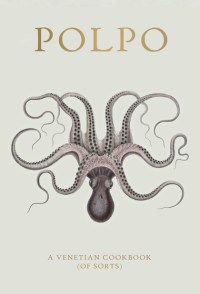 Tucked away in a backstreet of London’s edgy Soho district, POLPO is one of the hottest restaurants in town. Critics and food aficionados have been flocking to this understated bàcaro where Russell Norman serves up dishes from the back streets of Venice. A far cry from the tourist-trap eateries of the famous floating city, this kind of cooking is unfussy, innovative and exuberantly delicious.
The 140 recipes in the book include caprese stacks; zucchini shoestring fries; asparagus with Parmesan and anchovy butter; butternut risotto; arancini, rabbit cacciatore; warm duck salad with wet walnuts and beets; crispy baby pizzas with prosciutto and rocket; scallops with lemon and peppermint; mackerel tartare; linguine with clams; whole sea bream; warm octopus salad; soft-shell crab in Parmesan batter with fennel salad; walnut and honey semifreddo; tiramisù; fizzy bellinis and glasses of bright orange spritz.
With luminescent photography by Jenny Zarins, which captures the unfrequented corners, the bustling bàcari and the sublime waterways of Venice, POLPO is a dazzling tribute to Italy’s greatest hidden cuisine.
Exhibition | Laurent Pécheux: A French Painter in Italy
Exhibition press release from the Musée des Beaux-Arts de Dole:
Laurent Pécheux: A French Painter in the Italian Enlightenment
Musée des Beaux-Arts de Dole, 27 June — 30 September 2012
Musée des Beaux-Arts de Chambéry, 24 October 2012 — 20 January 2013
Curated by Sylvain Laveissière with Sylvie de Vesvrotte and Anne Dary
 Rome au XVIIIe siècle : foyer artistique fécond où l’Europe entière vient s’instruire, admirer, mais aussi créer. L’Antique, exhumé, restauré, collectionné, est l’objet d’approches nouvelles avec Piranèse, défenseur de la création étrusque et romaine, et Winckelmann, théoricien du « beau idéal » dans l’art grec. Les deux peintres les plus en vue sont l’allemand Anton Raphaël Mengs (1728-1779), et Pompeo Batoni (1708-1787), le portraitiste obligé des jeunes lords accomplissant leur « Grand Tour » d’Europe. Arrivé de Lyon à Rome en 1753, Laurent Pécheux est d’emblée en contact étroit avec ces deux maîtres éminents : Mengs qui le conseille, et Batoni avec lequel il sera associé pour certaines commandes. Il s’affirme comme l’un des représentants les plus accomplis de la peinture d’histoire romaine, au moment
où s’élabore ce qu’on devait plus tard nommer le Néoclassicisme.
Carrière exceptionnellement riche que la sienne. Après avoir travaillé vers 1757 pour un lord écossais, puis pour des couvents et des particuliers de Lyon, sa ville natale, il est reçu à la prestigieuse Académie romaine de Saint-Luc en 1762. Il est bientôt appelé à Parme en 1765 pour y portraiturer avec succès la future reine d’Espagne, et les plus grandes familles romaines lui confient les plafonds de leurs palais urbains (Borghèse, Barberini). Il travaille pour des amateurs français, pour le grand-maître de l’ordre de Malte, le pape Pie VI, ainsi que la Grande Catherine. En 1777, il quitte Rome pour Turin, où le roi de Piémont-Sardaigne, Victor Amédée III, l’a choisi comme premier peintre et directeur d’une Académie tombée en léthargie. Son activité de peintre de cour, qui lui vaut de décorer le palais royal de Turin, ne l’empêche pas d’assurer de prestigieuses commandes privées, tel le plafond de la salle du Gladiateur à la Villa Borghèse à Rome, dont la décoration est la plus fameuse entreprise picturale de l’époque.
Il n’a suscité jusqu’à présent aucune exposition monographique. Les villes de Dole et Chambéry possèdent un ensemble remarquable de ses oeuvres. A Dole se trouve un cycle de douze tableaux sur la vie du Christ commandé pour la collégiale et récemment restauré, dont huit esquisses sont conservées au musée des Beaux-Arts. L’exposition présente 115 oeuvres, prêtées par des collections publiques et privées françaises ainsi qu’italiennes, et sera accompagnée d’une importante monographie. Celle-ci étudie, au-delà des oeuvres exposées, l’ensemble de la production de cet artiste aux dons multiples, l’un des derniers de sa stature qui restaient à découvrir.
◊ ◊ ◊ ◊ ◊
From Dessin Original books:
Catalogue: Sylvain Laveissière, Sylvie de Vesvrotte, Vittorio Natale, Bénédicte Gaulard, Laurent Pécheux (1729-1821): Un peintre français dans l’Italie des Lumières (Silvana, 2012), 192 pages, ISBN: 978-8836623174, 28€.
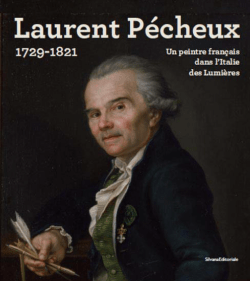 Publié à l’occasion de l’exposition des musées des Beaux-Arts de Dole et de Chambéry, cet ouvrage est le premier, depuis l’étude de Luigi Bollea parue en 1942, à être consacré à ce peintre, dont l’importance commence seulement à être reconnue.
D’origine Lyonnaise, Laurent Pécheux effectue l’ensemble de sa carrière en Italie, à Rome, puis à Turin, où il devient peintre officiel du roi de Piémont-Sardaigne. Sa carrière fut exceptionnellement riche : après avoir travaillé vers 1755 pour des clients lyonnais ou écossais, il est reçu à l’Académie romaine de Saint-Luc en 1762. Il est bientôt appelé à Parme en 1765 pour y portraiturer avec succès la future reine d’Espagne et les plus grandes familles romaines lui confient les plafonds de leurs palais. Il travaille également pour des amateurs français. En 1777, il quitte Rome pour Turin, où le roi de Piémont-Sardaigne l’a choisi comme premier peintre. Son activité de peintre de cour, qui lui vaut de décorer le palais royal de Turin, ne l’empêche pas d’assurer de prestigieuses commandes privées (par exemple : plafond de la salle du Gladiateur à la villa Borghèse, le plus fameux ensemble décoratif de Rome à l’époque ; suite de douze grands tableaux de la Vie du Christ pour la collégiale de Dole, auxquels une restauration exemplaire vient de rendre leur éclat et plusieurs chefsd’oeuvre conservés à Chambéry : Mort d’Epaminondas, Vénus, Narcisse, etc.). Cet ouvrage étudie, au-delà des oeuvres exposées, l’ensemble de la production de cet artiste aux dons multiples, l’un des derniers de sa stature qui restaient à découvrir.
◊ ◊ ◊ ◊ ◊
Didier Rykner reviewed the exhibition for The Art Tribune (21 August 2012) . . .
An artist from Lyon who spent most of his career in Italy, first Rome then Turin where he became official painter to the King of Piemonte-Sardegna, Laurent Pécheux is however not very well known outside of the restricted circle of art historians. The first retrospective highlighting his oeuvre, organized by the Musée des Beaux-Arts in Dole, which will then travel to Chambéry, now reveals a first rate artist, a pioneer of European Neo-Classicism though he maintained, in certain works, a Baroque spirit or even, if we adopt the term now used for some paintings corresponding to the second half of the 19th century, “Neo-Baroque” . . .
The full review (in English or French) is available here»
New Title | Henry Raeburn: Context, Reception, and Reputation
From Edinburgh University Press:
Viccy Coltman and Stephen Lloyd, eds., Henry Raeburn: Context, Reception and Reputation (Edinburgh: Edinburgh University Press, 2012), 352 pages, hardback, ISBN: 978-0748654840, £90 ($145) / paperback, ISBN: 9780748654833, £30 ($50).
The first illustrated scholarly work devoted to the reception and reputation of Edinburgh’s premier Enlightenment portrait painter.
 Sir Henry Raeburn (1756-1823) is especially well known in Scotland as the portrait painter of members of the Scottish Enlightenment. However, outside Scotland, the artist rarely makes more than a fleeting appearance in survey books about portraiture. Ten international scholars recover Raeburn from his artistic isolation by looking at his local and international reception and reputation, both in his lifetime and posthumously. It focuses as much on Edinburgh and Scotland as on metropolitan markets and cosmopolitan contexts. Previously unpublished archival material is brought to light for the first time, especially from the Innes of Stow papers and the archives of the dukes of Hamilton.
New Title | Anatomy and the Organization of Knowledge
From Pickering & Chatto:
Matthew Landers and Brian Muñoz, eds., Anatomy and the Organization of Knowledge, 1500–1850 (London: Pickering & Chatto, 2012), 272 pages, ISBN: 978-1848933217, £60/$99.
 Across early modern Europe, the growing scientific practice of dissection prompted new and insightful ideas about the human body. This collection of essays explores the impact of anatomical knowledge on wider issues of learning and culture. The contributors argue that the study of anatomy directly influenced the way in which emerging disciplines of study were organized.
◊ ◊ ◊ ◊ ◊
C O N T E N T S
Introduction – Matthew Landers
Part I: The Body as a Map
1 Early Modern Dissection and a Physical Model of Organization – Matthew Landers
2 ‘Who Will Not Force a Mad Man to be Let Blood?’ Circulation and Trade in the Early Eighteenth Century – Amy Witherbee
3 Earth’s Intelligent Body: Subterranean Systems and the Circulation of Knowledge, or, The Radius Subtending Circumnavigation – Kevin L Cope
4 ‘After and Unwonted Manner’: Anatomy and Poetical Organization in Early Modern England – Mauro Spicci
5 Subtle Bodies: The Limits of Categories in Girolamo Cardano’s De subtilitate – Sarah Parker
Part II: The Collective Body
6 Mirroring, Anatomy, Transparency: The Collective Body and the Co-opted Individual in Spencer, Hobbes and Bunyan – Nick Davis
7 From Human to Political Body and Soul: Materialism and Mortalism in the Political Theory of Thomas Hobbes – Ionut Untea
8 Visualizing the Fibre-Woven Body: Nehemiah Grew’s Plant Anatomy and the Emergence of the Fibre Body – Hisao Ishizuka
9 Forms of Materialist Embodiment – Charles T Wolfe
Part III: Bodies Visualized
10 Visualizing Monsters: Anatomy as a Regulatory System – Touba Ghadessi
11 Anatomy, Newtonian Physiology and Learned Culture: The Myotomia Reformata and its Context within Georgian Scholarship – Craig Ashley Hanson
12 Art and Medicine: Creative Complicity between Artistic Representation and Research – Filippo Pierpaolo Marino
13 The Internal Environment: Claude Bernard’s Concept and its Representation in Fantastic Voyage – Jérôme Goffette and Jonathan Simon
The Burlington Magazine, November 2012
The eighteenth century in The Burlington:
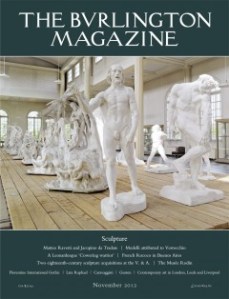
The Burlington Magazine 154 (November 2012)
 A R T I C L E S
• Marjorie Trusted, “Two Eighteenth-Century Sculpture Acquisitions for the Victoria and Albert Museum, London,” pp. 773-79. Two marble sculptures, a Crouching Venus by John Nost (1702) and a relief of Julius Caesar Invading Britain by John Deare (1796), have been acquired by the Victoria and Albert Museum, London.
• Gauvin Alexander Bailey, “French Rococo Prints and Eighteenth-Century Altarpieces in Buenos Aires,” pp. 780-85. French Rococo designs used in altarpiece decorations in eighteenth-century Buenos Aires.
R E V I E W S
• Philip Ward-Jackson, Review of Stefano Grandesso and Laila Skjøthaug, Bertel Thorvaldsen, 1770–1844 (Milan: Silvana, 2010), pp. 798-99.
• Mark Stocker, Review of Mary Ann Steggles and Richard Barnes, British Sculpture in India: New Views and Old Memories (Kirstead, Norfolk: Frontier Publishing, 2011), pp. 800-01.
• Christopher Baker, Review of the exhibition and catalogue The English Prize: The Capture of the Westmorland, an Episode of the Grand Tour (2012), pp. 817-18.
Exhibition | Coaches from Versailles on View at Arras
From the exhibition website:
Roulez Carrosses! Le Château de Versailles à Arras
Musée des Beaux-Arts, Arras, 17 March 2012 — 10 November 2013
Curated by Béatrix Saule, Jean-Louis Libourel, and Hélène Delalex
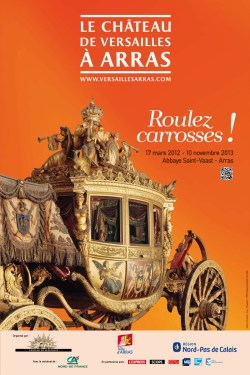 Roulez Carrosses!, the inaugural exhibition of the partnership signed in 2011 between the Château de Versailles, the City of Arras and the Nord-Pas-de-Calais Region, is a landmark event. It is the first French exhibition to be devoted to horse-drawn vehicles. Berlin coaches, royal and imperial carriages from the Versailles collection have all taken the road for Arras, to be admired here until November 2013. The Musée des Beaux-Arts is thus hosting paintings, sculptures, sledges, sedan chairs, horse harnesses and several outstanding carriages such as the coaches of Napoleon I’s marriage procession, Charles X’s coronation coach or the impressive funeral hearse of Louis XVIII. From Louis XIV to the Third Republic, these little-known vehicles will offer a journey through the History of France. Chronologically displayed over 1,000 m², these works are set against a backdrop of innovative scenography combining reconstructions, activities, immersion and multimedia. The exhibition provides an opportunity to discover Versailles and its collections whilst at the same time highlighting the historical links between Arras and the former residence of kings. It will also provide an insight into the operation
and evolution of horse-drawn vehicles.
Curatorship
Béatrix Saule, Director of the Musée National des châteaux de Versailles et de Trianon
Jean-Louis Libourel, Honorary Chief Curator of Heritage
Hélène Delalex, Heritage Conservation Manager at the Château de Versailles
◊ ◊ ◊ ◊ ◊
As Didier Rykner judges in his review for The Art Tribune (24 September 2012) . . .

Sedan Chair for the King’s House Versailles, Musée national des châteaux de Versailles et de Trianon Photo : RMNGP/G. Blot
Even if it is much longer than the usual three-month period, this is a true exhibition, not a lineup of works; it is accompanied by a beautiful scholarly catalogue on a subject which is not often studied; it does not replace the display of the permanent collections as the exhibition rooms occupy the space acquired at the Saint-Vast Abbey; it does not deprive visitors going to the lending museum from seeing major works there since the Musée des carrosses (a rather exaggerated term given the usual presentation conditions) is rarely open to the public; and, above all, it will result in enduring benefits for the coach collection as well as for the Musée des Beaux-Arts itself. . . .
The museum staging by Frédéric Beauclair is very well done. Paintings, sculptures and drawings round out the presentation of the carriages illustrating their use, the way they functioned and the context in which they were produced. Visitors will also discover some little-known works. . . .
The full review is available here»
◊ ◊ ◊ ◊ ◊
Eight short videos accompany the exhibition:
◊ ◊ ◊ ◊ ◊
From the Château de Versailles bookshop:
Béatrix Saule, ed., Roulez Carrosses! Le Château de Versailles à Arras (Paris: Skira Flammarion, 2012), 256 pages, ISBN: 9782081278172, 40€.
 Roulez carrosses! is the first exhibition in France devoted to horse-drawn coaches and carriages and, in this case, historical examples, all totally luxurious in every detail and all different: carriages for the outings of the children of Louis XVI, a sumptuous berline for the wedding of Napoleon I, the hearse of Louis XVIII, the coronation coach of Charles X, etc. Other outstanding masterpieces from the collections of Versailles accompany them: a series of paintings by Van der Meulen, major royal portraits, or unique vehicles like these fantasy sledges in which Louis XV and then Marie-Antoinette were pulled over the snow-covered walks of the park of Versailles. This book describes episodes from the political history of the palace, dynastic events and customs of the court, narrated and commented on here by eminent historians. Fans of handsome horse-drawn vehicles will discover the grand coaches for ceremonial occasions – from the “modern coach” invented in the reign of Louis XIV to the coaches for state ceremonies of the presidents of the Republic – along with their technical innovations, the refinement of their accessories and the extreme lavishness of their ornamentation, at a time when the art of French coach-building was at its apogee.
Exhibition | Nude Men in Vienna
With the advertising for this exhibition having been covered sensationally by the international press, the focus on contemporary work has obscured the late eighteenth-century offerings. Press release from the Leopold Museum:
◊ ◊ ◊ ◊ ◊
Nude Men from 1800 to the Present / Nackte Männer
Leopold Museum, Vienna, 19 October 2012 — 28 January 2013
Curated by Elisabeth Leopold and Tobias Natter
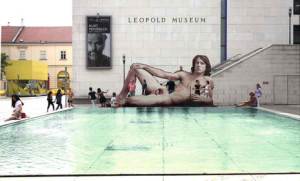
Ilse Haider, Mr. Big, installed at the Leopold Museum
The endless flood of images intrinsic to today’s lifestyle has given unprecedented public prominence to the depiction of male nudes. At the same time seemingly firmly established categories such as masculinity, body, and nakedness are apparently being redefined on a broad social basis, resulting in a new interpretation of male gender roles. These developments have prompted the Leopold Museum to embark on a topical as well as historical journey through the visual arts in search of the male nude, a quest leading predominantly from the longing for antiquity prevalent in art around 1800 to contemporary art. The exhibition Naked Men: Power & Powerlessness through the Ages also represents the fulfillment of the museum’s long-cherished ambition to present a counterpart to the highly successful 2006 exhibition Body – Face – Soul curated by Elisabeth Leopold, which explored the female image in art from the 16th century to the present. Thus, the current presentation constitutes a continuation of this theme, except that its focus is now on the opposite sex.
The exhibition Naked Men: Power & Powerlessness through the Ages is based on works by Egon Schiele, Richard Gerstl and Anton Kolig – three artists who are more comprehensively represented in the Leopold Museum than in any other institution and in whose oeuvre the depiction of the male nude features prominently. Schiele’s male nudes can be seen as unconditional explorations of the self, as expressions of inner emotions and as body images situated between vulnerability and provocation. Gerstl followed the tradition of Christian iconography with the first of his two life-sized self-portraits, while he elevated the fragmentation of form to a principal in the second with his wild brushstrokes. Kolig was captivated by the depiction of naked young men all his life and dedicated his drawings almost exclusively to this motif.
Based on eminent examples from its own collection and complemented by loaned works from all over Europe, the Leopold Museum’s exhibition will set out in two main directions, examining the depiction of the male nude in contemporary art, while also exploring the Old Masters’ approach to the subject from the Renaissance all the way back to antiquity. The exhibition unites examples of many different genres, including painting, sculpture, graphic arts, photography and new media, with special emphases on the following themes:
The Measure of All Things: The Male Body and Art Academies
Ever since the Renaissance, the naked male body was considered to be an important object of study and an indispensable part of the academies’ curriculum, which was one of the reasons that women were denied access to art academies for so long. The presentation affords insights into the life drawing rooms of European art academies from the Baroque period onwards and illustrates to what an extent all eyes were focused on the naked man, though he himself was the only one to remain naked.
Longing for Antiquity and the Male Ideal
For centuries, the depiction of the male nude was only legitimized by ancient art. These restrictions prompted the emergence of various artistic strategies that reinterpreted ancient ideals under the guise of antiquity. This is illustrated in the exhibition with examples from the period around 1800 up until the present.
The Naked Self
While Klimt still believed that nakedness and truth coincided in the Nuda Veritas, Schiele began to make his own body the object of his paintings. Expressionism brought with it a radical examination of the self, which saw the artists exposing themselves both physically and existentially and exploring the use of their own nudity as a sphere of political influence.
In the Sights of Women
The battle of female desire and male denial is not often addressed in the visual arts, but it has its historical sources both in the biblical story of Joseph and the Wife of Potiphar and in the ancient mythological traditions of Narcissus and Adonis. The emancipation of women as artists has brought with it a new basis for the depiction of such conflicts. Nowadays, female artists also have access to male nude models and are free to interpret and depict this motif at their will, currently often with a view to deconstructing gender and gender asymmetries.
Bathers — On the Beach
In the second half of the 19th century depictions of naked people in nature abounded. These renderings had their origin in a reassessment of man’s position in nature. Based on early depictions such as Dürer’s The Men’s Bath, the exhibition features many eminent examples of such encounters and get-togethers of naked men, from Cézanne to Mapplethorpe.
◊ ◊ ◊ ◊ ◊
In the United States, the English edition of the catalogue will be distributed by The University of Chicago Press:
Catalogue: Elisabeth Leopold and Tobias Natter, eds., Nude Men from 1800 to the Present (Vienna: Hirmer, 2013) ISBN: 9783777458519, $50.
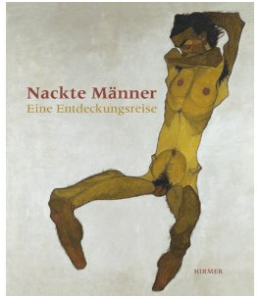 Rodin’s Thinker. Da Vinci’s Vitruvian Man. Pigalle’s controversial portrayal of the philosopher Voltaire. From its earliest days, art history is rife with representations of nude men. But while there is no shortage of studies of art celebrating the female form, the male nude has suffered from relative neglect. This book seeks to correct this imbalance with a collection of paintings, sculptures, and photographs that challenge conceptions of the body and masculinity, many of which continue to have considerable cultural resonance today.
Beginning with a look at art completed in life-drawing classes popular across European academies, the book moves on to representations of masculinity throughout the French Revolution, including works by Johann Heinrich Füssli and Antonio Canova; provocative Sturm und Drang paintings by Edvard Munch and contemporaries; and late impressionist works. The unsettling self-portraits of Austrian artists Egon Schiele and Richard Gerstl exemplify an extreme candor that characterized the early twentieth century. Other twentieth-century artists whose work is included in this book are Jean Cocteau, David Hockney, Andy Warhol, Nan Goldin, and Louise Bourgeois.
With nearly four hundred full-color illustrations, the book also includes insightful essays examining topics like male identity, depictions of desire in modern art, and the use of nude men in advertising.
◊ ◊ ◊ ◊ ◊
Note (added 2 February 2013) — The sensational coverage is likely to continue. As reported by the AFP, viewers are invited to step out of their own clothes for a special viewing on February 18, “Our museum will be a clothes-free zone for one evening. . . Nudists, naturists are welcome!”
New Title | Art & Visual Culture 1600–1850: Academy to Avant-Garde
From The Open University:
Emma Barker, ed., Art & Visual Culture 1600–1850: Academy to Avant-Garde (London: Tate Publishing, 2012), 384 pages, ISBN: 9781849760966, $32.
Part 1: City and Country
Part 2: New Worlds of Art
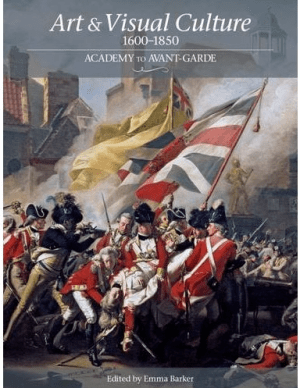 This investigates the art and visual culture of the period from roughly 1600 to 1850. This was the period in which a distinctly modern art world began to appear, with its own institutions and associated ideas about art and artists. The book assesses the significance and value of the labels traditionally used to define the art of this period, notably Baroque, Neo-classical and Romantic. In addition, it explores the ways in which art and visual culture were shaped by the ruling elites of different European countries, as well as considering the impact of socio-economic change and growing engagement with the world beyond Europe.
The first part addresses the period from around 1600 to about 1760. Rather than attempting a broad survey of artistic developments, this part of the book highlights the way in which the relationship between the country and the city helped to shape different cultures of visual representation in different national contexts. Material covered includes: the embodiment of religious power in the restructuring of Rome by Bernini; seventeenth-century Dutch painting and the thorny problem of realism; the development of urban London; and the new culture of British landscape parks.
The second part is concerned with the period from around 1760 to 1850. It explores some of the ways in which art and other visual forms responded to changing societies and contributed to the emergence of a recognisably modern world. It covers: the emergence of public exhibitions in Britain and France and the codification of genres and types of art; the representation of the body in Canova’s sculpture; the meeting of western travellers with Pacific islanders, as reflected in images; and the emergence of the Romantic ‘genius’.
Book Talk | Simon Werrett on Fireworks
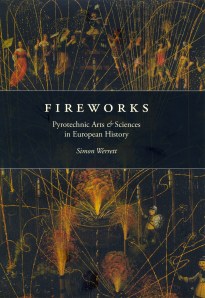 Simon Werrett, The History of Fireworks
Ealing Central Library, 8 November 2012
Simon Werrett will give talk on his book Fireworks: Pyrotechnic Arts and Science in European History at the Ealing Central Library on November 8, 2012 at 6:15pm. Enjoy a free glass of wine courtesy of Waterstones. Green Room, Ealing Central Library, Broadway Centre, Ealing W5 5JY. The event is free, but please book in advance at reading@ealing.gov.uk or in Ealing Waterstones.
New Title | Antiquarianism and Intellectual Life in Europe and China
From The University of Michigan Press:
Peter N. Miller and François Louis, eds., Antiquarianism and Intellectual Life in Europe and China, 1500-1800 (Ann Arbor: University of Michigan Press, 2012), 440 pages, ISBN: 978-0472118182, $65.
 This book is a project in comparative history, but along two distinct axes, one historical and the other historiographical. Its purpose is to constructively juxtapose the early modern European and Chinese approaches to historical study that have been called “antiquarian.” As an exercise in historical recovery, the essays in this volume amass new information about the range of antiquarian-type scholarship on the past, on nature, and on peoples undertaken at either end of the Eurasian landmass between 1500 and 1800. As a historiographical project, the book challenges the received—and often very much under conceptualized—use of the term “antiquarian” in both European and Chinese contexts. Readers will not only learn more about the range of European and Chinese scholarship on the past—and especially the material past—but they will also be able to integrate some of the historiographical observations and corrections into new ways of conceiving of the history of historical scholarship in Europe since the Renaissance, and to reflect on the impact of these European terms on Chinese approaches to the Chinese past. This comparison is a two-way street, with the European tradition clarified by knowledge of Chinese practices, and Chinese approaches better understood when placed alongside the European ones.
Peter N. Miller is Dean and Professor at the Bard Graduate Center. François Louis is Associate Professor at the Bard Graduate Center.
◊ ◊ ◊ ◊ ◊
This volume is the first to juxtapose the autochthonous traditions of antiquarianism of Early Modern Europe and Late Imperial China. Rather than asking only what the West might be able to learn about China, it self-consciously and quite successfully seeks to open up new perspectives on both sides of the comparison. It moreover breaks important ground in suggesting historically traceable links between evidential learning in China and European traditions of ‘Herodotean’ historiography. —Lothar von Falkenhausen, University of California, Los Angeles
This splendid collection of essays is at once a major addition to the literature on the history of scholarship in Western Europe, a burgeoning field in its own right, and a model effort at comparative cultural history . . . The collection as a whole sheds light on areas little known even to erudite scholars. —Anthony Grafton, Princeton University










 Enfilade
leave a comment