New Book | Yearning for Immortality
From The University of Chicago Press:
Rune Nyord, Yearning for Immortality: The European Invention of the Ancient Egyptian Afterlife (Chicago: The University of Chicago Press, 2025), 320 pages, ISBN: 978-0226838236 (hardback), $115 / ISBN: 978-0226838250 (paperback), $33.
 How our understanding of the ancient Egyptian afterlife was shaped by Christianity.
Many of us are familiar with the ancient Egyptians’ obsession with immortality and the great efforts they made to secure the quality of their afterlife. But, as Rune Nyord shows, even today, our understanding of the Egyptian afterlife has been formulated to a striking extent in Christian terms. Nyord argues that this is no accident, but rather the result of a long history of Europeans systematically retelling the religion of ancient Egypt to fit the framework of Christianity. The idea of ancient Egyptians believing in postmortem judgment with rewards and punishments in the afterlife was developed during the early modern period through biased interpretations that were construed without any detailed knowledge of ancient Egyptian religion, hieroglyphs, and sources. As a growing number of Egyptian images and texts became available through the nineteenth century, these materials tended to be incorporated into existing narratives rather than being used to question them. Against this historical background, Nyord argues that we need to return to the indigenous sources and shake off the Christian expectations that continue to shape scholarly and popular thinking about the ancient Egyptian afterlife.
Rune Nyord is associate professor of ancient Egyptian art and archaeology at Emory University. He is the author of Breathing Flesh: Conceptions of the Body in the Ancient Egyptian Coffin Texts and Seeing Perfection: Ancient Egyptian Images Beyond Representation, and he has edited or coedited several anthologies.
c o n t e n t s
Introduction
1 Antiquity’s Antiquity: Ancient Sources
2 Explaining the Remains: Medieval and Renaissance Sources
3 The Egyptian Afterlife in Universal History, 1650–1700
4 Death and Initiation, 1700–1750
5 Describing Egypt, 1750–1798
6 Invasion and Aftermath, 1798–1822
7 The Decline of Metempsychosis, 1822–1860
8 Emergence of the Modern Paradigm, 1860–1885
Conclusion: Where Do We Go from Here?
Acknowledgments
References
Index
Exhibition | Myth and Marble
Opening this month at AIC:
Myth and Marble: Ancient Roman Sculpture from the Torlonia Collection
Art Institute of Chicago, 15 March — 29 June 2025
Kimbell Art Museum, Fort Worth, 14 September 2025 — 25 January 2026
Montreal Museum of Fine Arts, 14 March — 19 July 2026
Curated by Lisa Ayla Çakmak and Katharine Raff
 From large-scale figures of gods and goddesses to portraits of emperors and magnificent funerary monuments, this exhibition brings to North America, for the first time, a selection of 58 rarely seen ancient Roman sculptures from Italy’s storied Torlonia Collection. Nearly half of these sculptures, which range in date from the 5th century BCE to the early 4th century CE, have not been publicly displayed in more than 70 years and have been newly cleaned, conserved, and studied specifically for this exhibition, making for a spectacular opportunity to experience their first public presentation in decades.
The Torlonia Collection is not only the largest private collection of Roman marble sculptures in Italy, but it is also arguably the most important of such private collections in the world. Comprising 622 works and a wide range of sculptural types and subjects, its holdings rival those of major institutions in Europe, including the Capitoline and Vatican Museums.
This veritable ‘collection of collections’ was formed in the 19th century by Prince Giovanni Torlonia (1754–1829) and his son Prince Alessandro (1800–1886), primarily through the purchase of several groups of ancient sculpture assembled in early modern Rome, as well as through extensive archaeological excavations on Torlonia estates in Italy. The taste at this time was for complete works of art, and restorations and other interventions carried out across the decades—in some instances by famed sculptors of the day—have impacted the sculptures’ current appearances while also enriching their histories.
By the 1870s, the collection was placed on view in a private museum in Rome, and a number of its masterworks became world-famous—among them the lovely portrait of a young woman known as the ‘Maiden of Vulci’ as well as the ‘Torlonia Girl’. In the wake of the Second World War, Alessandro Torlonia’s museum closed, and the collection went unseen for generations. During this closure, the Torlonia Foundation was created at the behest of Prince Alessandro Torlonia (1925–2017) to continue to both study and conserve the collection and the Villa Albani Torlonia.
Beginning in 2020, a series of exhibitions across Europe have brought selected highlights of the Torlonia Collection to public display once more. Myth and Marble debuts these masterpieces to a North American audience, presenting a once-in-a-lifetime opportunity to experience these exceptional ancient sculptures and explore the fascinating stories they reveal about both their ancient pasts and their modern afterlives.
Myth and Marble: Ancient Roman Sculpture from the Torlonia Collection is co-organized by the Art Institute of Chicago and The Torlonia Foundation, in collaboration with the Kimbell Art Museum, Musée des beaux-arts Montréal, and The Museum Box. The exhibition is curated by Lisa Ayla Çakmak, Mary and Michael Jaharis Chair and Curator, Arts of Greece, Rome, and Byzantium, and Katharine A. Raff, Elizabeth McIlvaine Curator, Arts of Greece, Rome, and Byzantium.
Lisa Ayla Cakmak and Katharine A Raff, eds., with contributions by Silvia Beltrametti and Salvatore Settis, Myth and Marble: Ancient Roman Sculpture from the Torlonia Collection (New Haven: Yale University Press, 2025), 160 pages, ISBN: 978-0300279658, $40.
New Book | Walking Rome’s Waters
From Yale UP:
Katherine Wentworth Rinne, Walking Rome’s Waters (New Haven: Yale University Press, 2025), 344 pages, ISBN: 978-0300276374, $35.
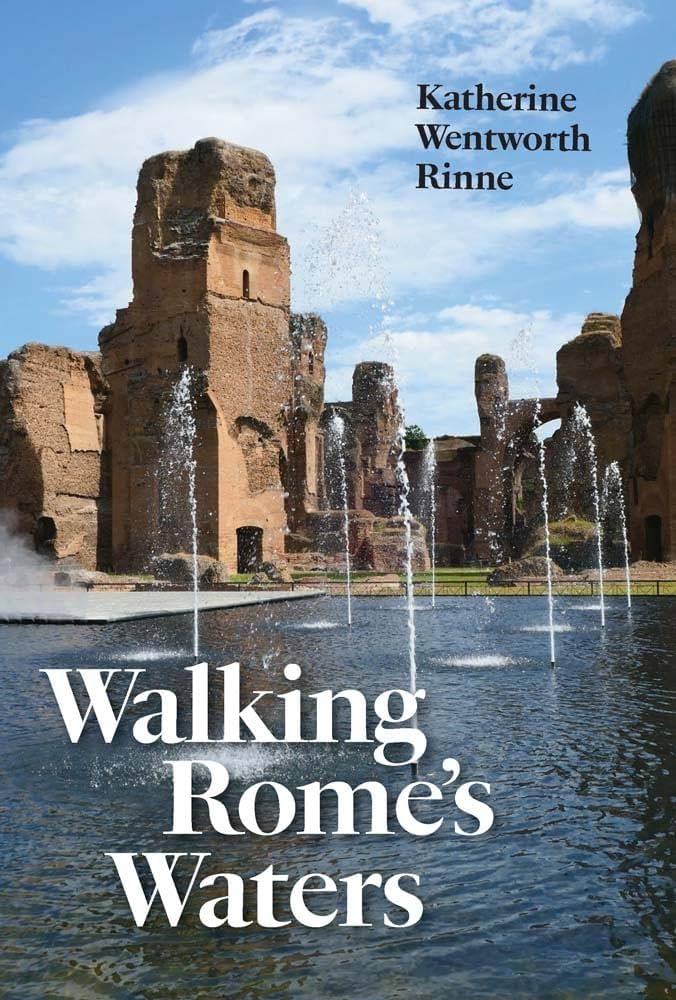 An engaging guide to the waterways of Rome and their role in shaping the city’s culture, history, and landscape
Written by a leading expert on the water infrastructure of Rome, this grand tour offers a new way to appreciate the history, geology, and character of the ancient and contemporary city. Richly illustrated itineraries wind through Rome’s streets, piazzas, and gardens, following the trail of water as it flows, propelled by gravity, through different neighborhoods. In addition to mapping thirteen walking tours, Katherine Wentworth Rinne also pulls the reader underground—where hidden springs and streams still flow—to illuminate how Rome’s complex topography has been transformed since antiquity, as well as into the sky, imaginatively flying over Rome’s villas and parks to give readers a sense of the infrastructure through an aerial view. Whether enjoyed from an armchair at home or as a companion on strolls next to aqueducts, fountains, and the Tiber River, this guidebook, filled with the author’s unique insights, brings the vibrant world of Rome’s water to life, with its eddies and whorls twisting throughout the city’s storied history.
Katherine Wentworth Rinne is a visiting scholar in the Center for Cultural Landscapes in the School of Architecture and an associate fellow at the Institute for Advanced Technology in the Humanities at the University of Virginia.
New Book | Casting a New Light

From the Museum of Fine Arts, Budapest and distributed by Unicorn Publishing:
Mirian Szőcs and Márton Tóth, eds., Casting a New Light: Plaster Casts & Cast Collections in Europe and Beyond (Budapest: Museum of Fine Arts, 2025), 178 pages, ISBN: 978-6156595232, $35.
This volume publishes the papers of the international conference Plaster Casts & Cast Collections across Europe: History and Future, held in the Museum of Fine Arts, Budapest on 24 May 2022. The conference was organised in celebration of the refurbishment of the plaster cast collection of the Museum of Fine Arts, Budapest and its exhibition in the Star Fortress in Komárom (opened in the autumn of 2021) and in the visible storage in the newly built National Museum Conservation and Storage Centre in Budapest (installed in 2022). Featuring a collection of papers, including several case studies, the volume delves into various aspects of collecting and showcasing plaster casts, an important phenomenon that shaped European and American art museums from the nineteenth century onwards. It explores international connections and influences in the establishment of cast collections while also shedding new light on the role and uses of plaster casts in the antiquity and in the era of historicism. Moreover, the volume offers valuable reflections on the intricate contexts of the contemporary reception of these collections, presenting new perspectives on their significance and future.
Miriam Szőcs is head of the Department of Sculptures at the Museum of Fine Arts, Budapest. She specializes in Renaissance and baroque bronzes. She was the curator of the new permanent exhibition of sculptures at the Museum of Fine Arts that opened in 2013. Between 2013 and 2021, she worked on the project of the refurbishment of the plaster cast collection of the Museum of Fine Arts, being the chief curator of the plaster cast exhibition at the Star Fortress in Komárom.
c o n t e n t s
• Eckart Marchand, “‘The best laid schemes’ …: The Politics of the Universal Museum and the Vicissitudes of their Plaster Cast Collections at the Turn of the Twentieth Century”
• Miriam Szőcs, “The Colleoni Monument and the Medici Tombs: Monumental Renaissance Casts in the Museum of Fine Arts in Budapest”
• Flavia Berizzi, “From Northern Italy to Hungary: Medieval and Renaissance Monumental Casts from the Museo Campi Carlo in Milan to the Museum of Fine Arts in Budapest”
• Jean-Marc Hofman, “Generation and Regeneration of the Cast Collections of the Musée de Sculpture Comparée, Paris”
• Géza Andó and Eszter Süvegh, “The Ways of the Casts: Plaster Casts of Antiquities in Budapest and Kolozsvár (today Cluj-Napoca, Romania)”
• Eszter Hajós-Baku and Beáta Szűts, “A Brief History of the Plaster Cast Collection of the Department of Graphics, Form, and Design at the Budapest University of Technology and Economics”
• Júlia Katona, “Nineteenth-Century Constructions and Monument Reconstruction in Hungary in the Context of Educational Plaster Cast Collections: A Case Study with Special Focus on the Romanesque Hall of the Museum of Fine Arts, Budapest”
• Rune Frederiksen, “The Role of Ancient Plaster Casts in Ancient Art: The Written Evidence”
• Lorenz Winkler-Horaček, “Appreciation and Rejection: Plaster Casts in the Discourse of Copy and Original, with an Excursus on the Sleeping Ariadne in the Berlin Cast Collection”
• Marjorie (Holly) Trusted, “The Making and Meaning of Plaster Casts in the Nineteenth Century: Their Future in the Twenty-First Century”
The Burlington Magazine, February 2025
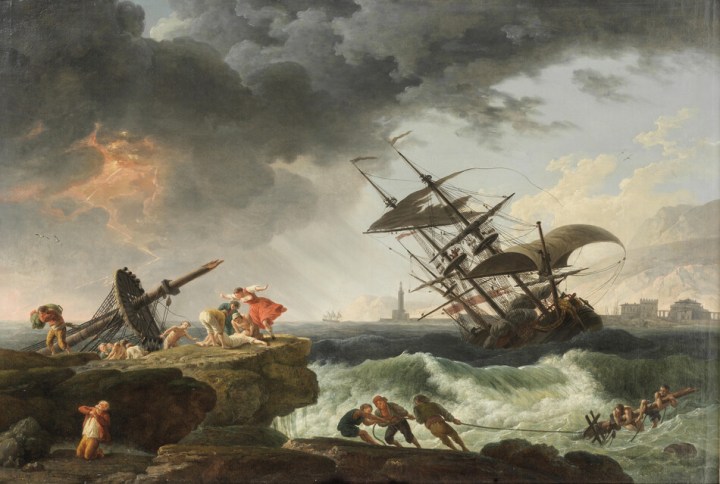
Claude-Joseph Vernet, Shipwreck on a Rocky Coast, 1775, oil on canvas, 74 × 108 cm (Private Collection). The work and its pendant, Harbour Scene at Sunset, are identified by Yuriko Jackall as paintings acquired directly from the artist by François-Marie Ménage de Pressigny, who likely commissioned The Swing by Fragonard. In contrast to the latter, which in 1794 was valued at 400 livres, the two paintings by Vernet were valued at 4,000 livres—the most valuable paintings owned by Ménage de Pressigny.
◊ ◊ ◊ ◊ ◊
The long 18th century in the February issue of The Burlington:
The Burlington Magazine 167 (February 2025)
e d i t o r i a l
• “Cataloguing,” p. 79.
It is one of the basic responsibilities of major collections to research and publish the works of art in their care. Such projects can take many years to mature and are often abandoned because of a lack of funding or shifting institutional priorities. It might be imagined, therefore, that because of these threats and the formidable cost of producing specialist and richly illustrated books, that collection catalogues would have become an extinct species. However, happily, a close reading of this Magazine in recent months would suggest otherwise, across a wide range of media and in terms of a broad chronological span . . .
 a r t i c l e s
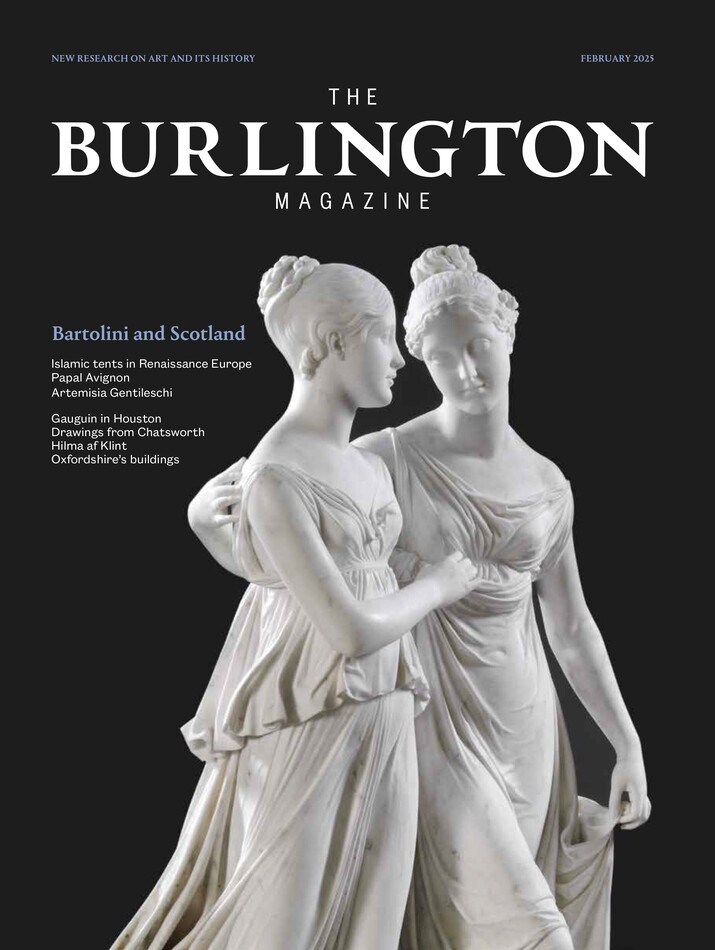
• Lucy Wood and Timothy Stevens, “The Elder Sisters of The Campbell Sisters: William Gordon Cumming’s Patronage of Lorenzo Bartolini,” pp. 126–53.
s h o r t e r n o t i c e s
• Yuriko Jackall, “Ménage de Pressigny and His Art Collection,” pp. 157–61.
• Dyfri Williams, “Lusieri’s Mysterious Wooded Lake Identified,” pp. 161–63.
r e v i e w s
• Marjorie Trusted, Review of the exhibition Luisa Roldán: Escultora Real (Museo Nacional de Escultura, Valladolid, 2024–25), pp. 164–66.
• Karin Hellwig, Review of the exhibition Hand in Hand: Sculpture and Colour in the Spanish Golden Age (Prado, 2024–25), pp. 166–69.
• William Whyte, Review of Simon Bradley, Nikolaus Pevsner and Jennifer Sherwood, Oxfordshire: Oxford and the South-East, The Buildings of England (Yale UP, 2023), pp. 188–89.
• Elizabeth Savage, Review of Esther Chadwick, The Radical Print: Art and Politics in Late Eighteenth-Century Britain (Paul Mellon Centre for Studies in British Art, 2024), pp. 194–96.
New Book | The Revolutionary Self
From Norton:
Lynn Hunt, The Revolutionary Self: Social Change and the Emergence of the Modern Individual, 1770–1800 (New York: W. W. Norton & Company, 2025), 208 pages, ISBN: 978-1324079033, $35.
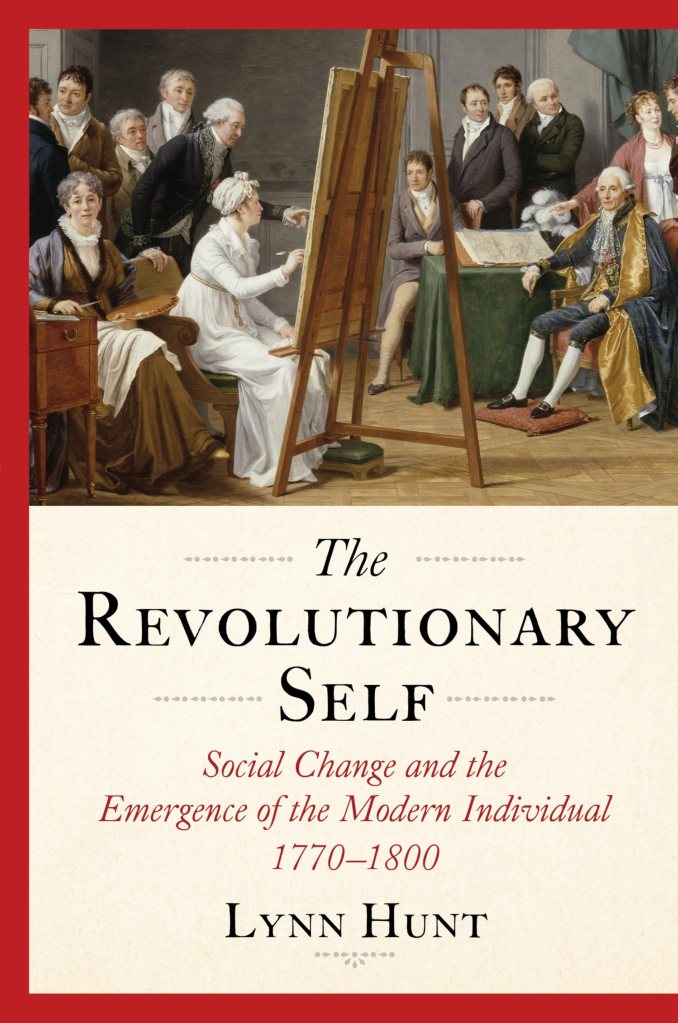
An illuminating exploration of the tensions between self and society in the age of revolutions.
The eighteenth century was a time of cultural friction: individuals began to assert greater independence and there was a new emphasis on social equality. In this surprising history, Lynn Hunt examines women’s expanding societal roles, such as using tea to facilitate conversation between the sexes in Britain. In France, women also pushed boundaries by becoming artists, and printmakers’ satiric takes on the elite gave the lower classes a chance to laugh at the upper classes and imagine the potential of political upheaval. Hunt also explores how promotion in French revolutionary armies was based on men’s singular capabilities, rather than noble blood, and how the invention of financial instruments such as life insurance and national debt related to a changing idea of national identity. Wide-ranging and thought-provoking, The Revolutionary Self is a fascinating exploration of the conflict between individualism and the group ties that continues to shape our lives today.
Lynn Hunt is Distinguished Research Professor at the University of California, Los Angeles. The author of numerous works, including Inventing Human Rights and Writing History in the Global Era and former president of the American Historical Association, she lives in Los Angeles.
c o n t e n t s
Introduction: How the Smallest Things Lead to Big Changes
1 Tea and How Women Became ‘Civilized’
2 Revolutionary Imagery and the Uncovering of Society
3 Art, Fashion, and One Woman’s Experience
4 Revolutionary Armies and the Strategies of War
5 Money, Self-Interest, and Making a Republic
Epilogue: Self Society and Equality
Acknowledgments
Notes
Index
Exhibition | Versailles: Science and Splendour

From the press release for the exhibition, a reworking of Sciences et curiosités de Versailles, which was on view at the palace in 2010–11.
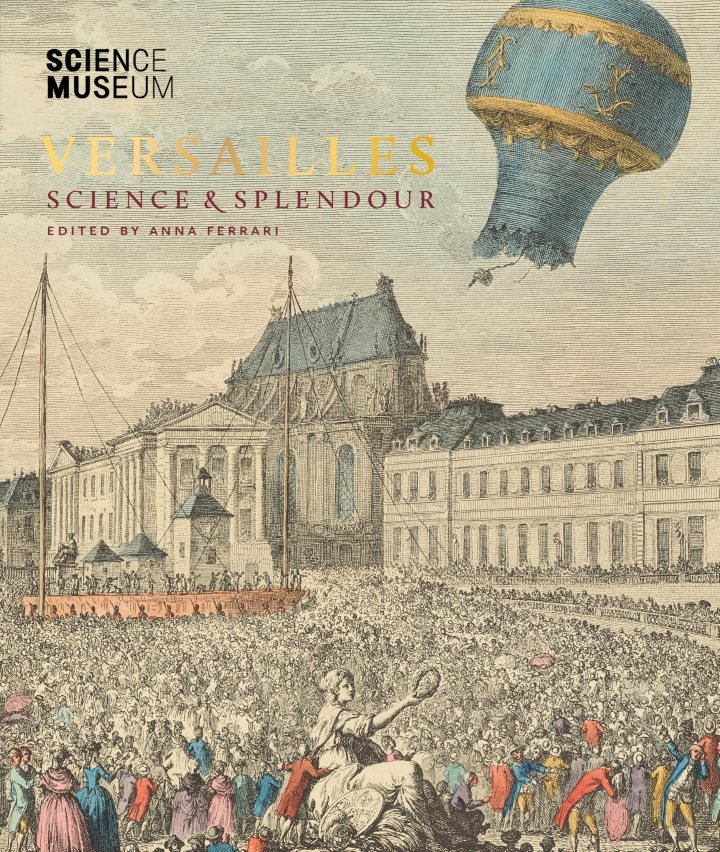
Versailles: Science and Splendour
Science Museum, London, 12 December 2024 — 21 April 2025
Curated by Anna Ferrari
A significant new exhibition unveils the fascinating stories of science at Versailles, exploring how scientific knowledge became widespread, fashionable, and a tool of power to enhance France’s prestige. Versailles: Science and Splendour invites visitors to discover the unexpected, yet vitally important, role of science at the French royal court through spectacular scientific objects and artworks. Many items will be on display for the first time in the UK, including Louis XV’s rhinoceros and a splendid sculptural clock representing the creation of the world. The sumptuous exhibition also sheds light on the contribution of women to physics, medicine, and botany in 18th-century France.
Versailles—the seat of royal power in France in the 17th and 18th centuries—was renowned for its opulent palace and gardens, but it was also a cradle of scientific spirit. Developed with support from the Palace of Versailles, the exhibition reveals the meeting of art and science in the court as it showcases more than 100 fascinating objects, from the extravagant to the everyday. The exhibition explores how Louis XIV, Louis XV, and Louis XVI encouraged scientific pursuit and readily drew on technological advances of their times, enhancing France’s prestige and extending its influence. The exhibition highlights significant figures, including stories of women in science, such as the pioneering midwife Madame du Coudray who trained thousands of midwives in rural France and Emilie du Châtelet, the eminent physicist and mathematician who translated Isaac Newton’s Principia.
Anna Ferrari, lead curator of Versailles: Science and Splendor, said: “We are delighted to bring Versailles to London in this new exhibition, which invites visitors to discover an unusual but crucial side of the palace’s history and grandeur. This exhibition will reveal fascinating stories of science at Versailles through more than a hundred treasures, bringing new attention to the relationship between science and power.”
Christophe Leribault, President of the Palace of Versailles, said: “The Sciences and Curiosities at the Court of Versailles exhibition, held in 2010 at the Palace of Versailles, made a lasting impression. It unveiled a lesser-known aspect of life at the former royal residence: the interest in sciences and the spirit of curiosity and innovation that animated the sovereigns and the entire court. Through this revisited version of the exhibition, we take pride in the fact that our collections and expertise can now cross the Channel to meet visitors at the Science Museum, inspiring them to visit or revisit the Palace of Versailles.”
Sir Ian Blatchford, Director and Chief Executive of the Science Museum Group, said: “Science was at the heart of the French royal court, from the engineering innovations needed to build the regal seat of power to the lavish scientific demonstrations staged for the kings. We are able to share these remarkable stories with Science Museum visitors for the first time thanks to a close partnership with the Palace of Versailles. In strengthening such cultural connections with European partners, we will continue to inspire people with incredible stories of science and culture around the world.”

Versailles: Science and Splendour as installed in London’s Science Museum.
◊ ◊ ◊ ◊ ◊
Harnessing Science
Versailles: Science and Splendour takes visitors on a 120-year journey through the evolution of science at Versailles, from the creation of the Academy of Sciences by Louis XIV in 1666, to Louis XV’s passion for exquisite scientific instruments, and Louis XVI’s ordering of the La Pérouse expedition to the Pacific in 1785.
Measuring time and space was one of the key tasks of the Academy of Sciences, reflecting the challenges of the time in Europe. Members of the Academy mapped the Earth and the skies as visitors can observe in a 1679 map of the Moon by Cassini, the precision of which remained unrivalled for over 200 years. The promotion of France’s power through scientific developments also served political purposes, with exquisite instruments given as diplomatic gifts across the world.
The exhibition also gives visitors the opportunity to see the magnificent gardens of Versailles in a new light. Recruited by Louis XIV, Academicians and experts used mathematics and engineering to transform the site into a statement of power and prestige. Of particular importance for Louis XIV was the creation of spectacular fountains and water features in the grounds, which required hydraulic engineering projects of unprecedented scale. A painting of the monumental Marly Machine, which supplied Versailles’ fountains with water from the river Seine, will impress upon visitors the magnitude of Louis XIV’s grand ambitions.
Understanding Nature

Louis XV’s Rhinoceros (Paris: Muséum national d’Histoire naturelle).
France’s imperial reach enabled Versailles to become a centre for the scientific study of plants and animals from around the world. The exhibition will display this growing interest in zoology and the kings’ luxurious taste, which pushed for inventive botanic engineering to allow exotic fruits, like pineapples, to grow at Versailles.
Visitors will also be able to learn the surprising story of Louis XV’s rhinoceros, on display in the UK for the very first time. Gifted by a French governor in India, this rhinoceros was perhaps the Versailles menagerie’s most pampered and famous resident. Acquired by the Muséum national d’Histoire naturelle in Paris during the revolution, it was dissected after its death in 1793, and has been held there for over two hundred years.
Versailles will also feature the medical advances supported by the kings. The royal family made precious contributions to these developments by submitting their own bodies to procedures. On display will be a scalpel designed specifically to operate on the Sun King, while the exhibition will cover the inoculation against smallpox which Louis XVI and his family underwent as soon as he ascended the throne.
Louis XV supported the training of midwives across France to reduce infant mortality and grow a populous and strong kingdom. Born outside the nobility, to a family of doctors, Madame du Coudray rose to prominence through her pioneering practical training of midwives. She employed sophisticated life-sized mannequins to demonstrate the mechanics of birth—part of the only surviving mannequin will be showcased in the exhibition. Madame du Coudray ultimately trained over 5,000 women, as well as physicians, across France.

Versailles: Science and Splendour as installed in London’s Science Museum.
◊ ◊ ◊ ◊ ◊
Embracing Knowledge
Scientific culture became widespread and fashionable at the courts of Louis XV and Louis XVI, with members of the royal family and of the aristocracy educated in physics, mathematics, and chemistry. Examples of Louis XV’s magnificent collection of instruments will be on display. Visitors will see a sophisticated and rare optical microscope made by the king’s brilliant engineer, Claude-Siméon Passemant, which is also a work of art with its gilt bronze rococo stand by the Caffieri sculptors.
Jean-Antoine Nollet, tutor of physics and natural history to the royal children during Louis XV’s reign, demonstrated principles of physics in sensational presentations at court. His air-pump, used to ‘make the invisible visible’, will be on display in the exhibition. Visitors will also learn about Emilie du Châtelet, an exceptional physicist and mathematician. Her translation of Isaac Newton’s Principia Mathematica into French, with her own additional commentary, remains in use today.
From the heart of government at Versailles, science was used strategically to assert imperial power on the world stage. The exhibition highlights technological developments in warfare and defence engineering, as well as the 1785 expedition of La Pérouse. Commissioned by Louis XVI, the expedition had a dual aim. It sought to establish trade connections around the Pacific as well as further scientific knowledge: mapping coastlines as yet uncharted by Europeans and collecting scientific data.
The exhibition also interrogates the surprising role of science in Versailles’ taste for spectacle. The palace provided an influential platform for scientific figures to present their work, as well as for the kings to display their power through extraordinary demonstrations, such as the flight of Etienne Montgolfier’s hot-air balloon at Versailles in 1783. One of the most complex pieces of engineering of its time, Pendule de la Création du Monde, presented to Louis XV in 1754, will also be on display. This exquisite astronomical clock exemplifies the intersection of scientific interest and royal opulence, boasting Versailles’ splendour through mechanical wonder.
Anna Ferrari, ed., Versailles: Science and Splendour (Milan: Scala, 2025), 128 pages, ISBN: 978-1785515828, £30.
Published to accompany the exhibition at London’s Science Museum, this richly illustrated book breaks new ground in exploring the relationship between science and power at the French court of Versailles. It features sixteen short chapters by experts from Britain, France, and America.
Anna Ferrari is Curator of Art and Visual Culture at the Science Museum and lead curator of the exhibition Versailles: Science and Splendour. Trained as an art historian, she has previously curated and co-curated exhibitions at the Victoria and Albert Museum, the Royal Academy of Arts and the Sainsbury Centre for Visual Arts.
New Book | The Enlightenment’s Most Dangerous Woman
From Oxford UP:
Andrew Janiak, The Enlightenment’s Most Dangerous Woman: Émilie du Châtelet and the Making of Modern Philosophy (Oxford: Oxford University Press, 2024), 304 pages, ISBN: 978-0197757987, .
 Just as the Enlightenment was gaining momentum throughout Europe, philosopher Émilie Du Châtelet (1706–1749) broke through the many barriers facing women at the time and published a major philosophical treatise in French. Within a few short years, she became famous: she was read and debated from Russia to Prussia, from Switzerland to England, from up north in Sweden to down south in Italy. This was not just remarkable because she was a woman, but because of the substance of her contributions. While the men in her milieu like Voltaire and Kant sought disciples to promote their ideas, Du Châtelet promoted intellectual autonomy. She counselled her readers to read the classics, but never to become a follower of another’s ideas. Her proclamation that a true philosopher must remain an independent thinker, rather than a disciple of some supposedly ‘great man’ like Isaac Newton or René Descartes, posed a threat to an emerging consensus in the Enlightenment. And that made her dangerous.
After all, if young women took Du Châtelet’s advice to heart, if they insisted on thinking for themselves, they might demand a proper education—the exclusion of women from the colleges and academies of Europe might finally end. And if young women thought for themselves, rather than listening to the ideas of the men around them, that might rupture the gender-based social order itself. Because of the threat that she posed, the men who created the modern philosophy canon eventually wrote Du Châtelet out of their official histories. After she achieved immense fame in the middle of the eighteenth century, her ideas were later suppressed, or attributed to the men around her. For generations afterwards, she was forgotten. Now we can hear her voice anew when we need her more than ever. Her lessons of intellectual independence and her rejection of hero worship remain ever relevant today.
Andrew Janiak is Professor of Philosophy and Bass Fellow at Duke University. For the last decade, he has co-led—with Liz Milewicz—Project Vox, a digital project that seeks to recover the lost voices of women who contributed to modern science and philosophy. Janiak is the author or editor of five previous books and numerous articles concerning the relationship between science and philosophy in the 17th and 18th centuries.
c o n t e n t s
1 The Rise and Fall of Émilie Du Châtelet
2 What Was the Scientific Revolution?
3 Du Châtelet’s Vision of Science and Philosophy
4 The Enlightenment’s Most Famous Woman
5 The Enlightenment’s Most Dangerous Woman, Or The Making of Modern Philosophy
6 Du Châtelet’s Enlightenment: Philosophy for Freethinkers
Notes
Bibliography
Index
New Book | Hercules of the Arts
The exhibition was on view last year at Vienna’s Gartenpalais Liechtenstein. The catalogue is distributed by The University of Chicago Press:
Stephan Koja, ed., Hercules of the Arts: Johann Adam Andreas I von Liechtenstein and Vienna around 1700 (Munich: Hirmer Verlag, 2024), 240 pages, ISBN: 978-3777443638, $45. With contributions by Thomas Baumgartner, Reinhold Baumstark, Alexandra Hanzl, Claudia Lehner-Jobst, Katharina Leithner, Gernot Mayer, Cecilia Mazzetti di Pietralata, Andreas Nierhaus, Peter Stephan, Arthur Stögmann, and Silvia Tammaro.
 The life of one of Vienna’s foremost patrons of art.
This book focuses on Prince Johann Adam Andreas I of Liechtenstein (1657–1712). His skillful economic policies enabled him to increase his fortune, with which he purchased important artworks, invested in building projects and their artistic design, founded a city district, and developed Italian art and architecture in Vienna in around 1700. The prince was an important individual in his dynasty and a great patron and builder. He reorganized administrative structures and invested in businesses and innovative production techniques. He thus created the financial basis for the expansion of the art collection and the construction and furnishing of imposing buildings. To this day, the Gartenpalais and Stadtpalais in Vienna bear witness to the activities of this prince known as a Hercules of the arts.
New Book | Maria Theresa Empress
From Yale UP:
Richard Bassett, Maria Theresa Empress: The Making of the Austrian Enlightenment (New Haven: Yale University Press, 2025), 520 pages, ISBN: 978-0300243987, $38.
 A major new biography of Maria Theresa, the formidable Habsburg Empress
Maria Theresa was the single most powerful woman in eighteenth-century Europe. At the age of just twenty-three she succeeded to the Habsburg domains only to find them contested by almost every power in Europe. Over the next forty years, she became a fierce leader and opponent, as well as a devoted wife and mother to sixteen children. In this engrossing biography, Richard Bassett traces Maria Theresa’s life and complex legacy. Drawing on hitherto unpublished sources, Bassett reveals her keen sense of moderation and tolerance, innovative ideas on free trade and finance, and studied reluctance to resort to policies of territorial expansion. Yet Maria Theresa’s modernisation policies were not entirely progressive. Antisemitism and an enduring suspicion of Protestantism greatly affected the lives of her subjects. This is a gripping study of one of the world’s most influential leaders, revealing how Maria Theresa confounded gendered expectations and left a lasting mark on Europe.
Richard Bassett is the author of several books, most notably For God and Kaiser, the first history of the Habsburg army to be published in English. An authority on Central Europe where he has worked for 45 years, he is a Bye-Fellow of Christ’s College Cambridge and a visiting professor at the Central Europe University of Budapest.










leave a comment