New Book | The Venetian Façade
From ORO Editions:
Michael Dennis, The Venetian Façade (South Bend: Notre Dame School of Architecture / ORO Editions, 2024), 160 pages, ISBN: 978-1961856356, $40.

There are no books that focus on the unique artistic characteristics of the Venetian facade and its potential relevance to contemporary architectural and urban issues, as this book intends.
This book is about architecture. It is not about history, although a bit of history is necessary to set the context. It is not about theory, although, again, a bit is necessary to connect the facade with urbanism. It is also not about structure and technology. And, most definitely, it is not about the plan. All of these topics are well-covered elsewhere. This book is about the facade. It explores the art and typology of the Venetian facade, not only as a high point of architectural literacy and achievement, but as a potentially useful contemporary stimulant.
Michael Dennis is the principal of Michael Dennis & Associates in Boston, and Professor of Architecture Emeritus at MIT. 1986 Thomas Jefferson Professor of Architecture, University of Virginia; 1988 Eero Saarinen Professor of Architecture, Yale University; 2006 Charles Moore Professor of Architecture, University of Michigan.
New Book | Canaletto and Guardi: Views of Venice
Published by Scala and distributed by Rizzoli:
Lelia Packer and Charles Beddington, Canaletto and Guardi: Views of Venice at the Wallace Collection (Milan: Scala, 2024), 192 pages, ISBN: 978-1785513206, £25 / $30.

A celebration of the beauty of Venice that Wallace Collection’s paintings convey and an enjoyable and informative complement to viewing the paintings in the flesh. Among the renowned Old Master paintings at the Wallace Collection in London is an important group of 27 eighteenth-century views of Venice, known as vedute, by Canaletto and his followers, including Francesco Guardi. They hang together in a dedicated gallery known as the Canaletto Room, but the majority had not been cleaned since the nineteenth century and their original beauty was obscured by multiple layers of discoloured varnish.
The paintings have now been restored, following a recent multi-year conservation and research project, and this book presents them in their renewed splendour. It features essays and commentaries by Charles Beddington, the global expert on vedute, and by Wallace Collection curator Lelia Packer, which provide fresh insights into the artists’ creative processes, the dating of pictures and their authorship. Canaletto and Guardi is a gorgeous celebration of the beauty of Venice that these paintings convey.
Lelia Packer is the curator of Dutch, Italian, Spanish, German, and pre-1600 paintings at the Wallace Collection.
Charles Beddington is an independent scholar and art dealer based in London.
◊ ◊ ◊ ◊ ◊
More information on the conservation and research project is available here»
New Book | Women Artists and Artisans in Venice
From Amsterdam UP:
Tracy Cooper, ed., Women Artists and Artisans in Venice and the Veneto, 1400–1750: Uncovering the Female Presence (Amsterdam: Amsterdam University Press, 2024), 292 pages, ISBN: 978-9048559718, €141.
 This book of essays highlights the lives, careers, and works of art of women artists and artisans in Venice and its territories from the fourteenth to the eighteenth centuries. The collection represents the first fruits of an ongoing research program launched by Save Venice, Inc., Women Artists of Venice, directed by Professor Tracy Cooper of Temple University, in conjunction with a conservation program, led by Melissa Conn, Director of Save Venice, Inc. Inspired by a growing body of research that has resurrected female artists and artisans in Florence and Bologna during the last decade, the Save Venice project seeks to recover the history of women artists and artisans born or active in the Venetian republic in the early modern period. Topics include their contemporary reception—or historical silence—and current scholarship positioning them as individuals and as an underrepresented category in the history of art and cultural heritage.
Tracy E. Cooper is Professor of Art History at Temple University and on the Board of Directors of Save Venice, Inc., where she is director of the Women Artists in Venice research program. She is best known for Palladio’s Venice: Architecture and Society in a Renaissance Republic (Yale, 2006), winner of the Phyllis Goodhart Gordan Prize from the Renaissance Society of America.
c o n t e n t s
List of Illustrations
Introduction — Tracy Cooper, Temple University
1 La Serenissima in Context: Women Artists in Venice and Beyond — Babette Bohn, Texas Christian University
2 The Taiapiera in Fourteenth-Century Venice: What’s in a Name? — Louise Bourdua, University of Warwick
3 In Search of Marietta Tintoretta — Robert Echols, Independent Scholar, and Frederick Ilchman, Museum of Fine Arts Boston
4 The ‘Vite’ of Women Artists in Venice (Sixteenth to Eighteeth Century) — Antonis Digalakis, University of Crete
5 Artists and Artisans in the Account Books of Marino Grimani, Patrician and Doge of Venice (Late Sixteenth–Early Seventeenth Centuries) — Maria Adank, Università degli Studi di Verona
6 Chiara Varotari (1584/1585–after 1663) — Diana Gisolfi, Pratt Institute
7 Artemisia Gentileschi in Venice: Facts and Suppositions — Davide Gasparotto, J Paul Getty Museum
8 Giovanna Garzoni and Venetian Witchcraft: Still Lifes as Natural Enchantments — Sheila Barker, Medici Archive Project and University of Pennsylvania
9 Caterina Tarabotti Unveiled — Georgios Markou, University of Cambridge
10 Shining a Light on Giulia Lama’s Painting Practice in the San Marziale Four Evangelists — Cleo Nisse, Columbia University
11 Rosalba Carriera Unframed — Xavier Salomon, The Frick Collection
General Bibliography
Archival Abbreviations
Works Cited
Index
Netherlands Yearbook for History of Art | Women, 1500–1950
The latest issue of NKJ:
Elizabeth Alice Honig, Judith Noorman, and Thijs Weststeijn, eds., Women: Female Roles in Art and Society of the Netherlands, 1500–1950, Netherlands Yearbook for History of Art / Nederlands Kunsthistorisch Jaarboek 74 (2024), ISBN: 978-9004710740, $162.
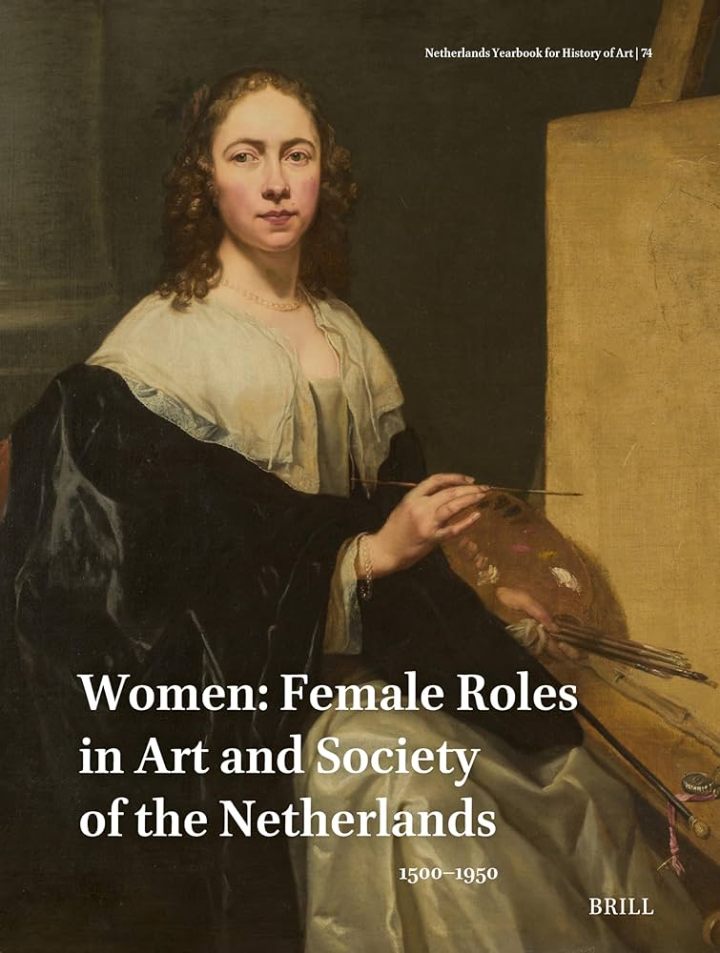 Long overdue in the history of the Netherlands Yearbook for History of Art, this volume foregrounds women as creators, patrons, buyers, and agents of change in the arts of the Low Countries. Venturing beyond the participation of ‘exceptional’ individuals, chapters investigate how women produced paintings, sculptures, scientific illustrations, and tapestries as well as their role in architectural patronage and personalized art collections. Teasing out a variety of socio-economic, legal, institutional, and art-theoretical dimensions of female agency, the volume highlights the role of visual culture in women’s lived experience and self-representation, asking to what extent women challenged, subverted, or confirmed societal norms in the Netherlands.
Elizabeth Alice Honig is Professor of Northern European Art at the University of Maryland, and Professor Emerita at the University of California, Berkeley. She works on Dutch, Flemish, and British art.
Judith Noorman is Associate Professor in Early Modern Art History at the University of Amsterdam. From 2021 to 2026, she is Principal Investigator of The Female Impact, a research project funded by the Dutch Research Council (NWO).
Thijs Weststeijn is Professor of Art History before 1800 at Utrecht University, where he chairs the research project The Dutch Global Age (2023–2028).
c o n t e n t s
• Introduction
• Dynamic Partnership: The Work of Married Women in Dutch Seventeenth-Century Artists’ Households — Marleen Puyenbroek
• The Sculptor and the Sculptress: Gendering Sculpture Production in the Early Modern Low Countries —Elizabeth Rice Mattison
• The Images and the Interventions of Adriana Perez in the Rockox Collection — Kendra Grimmett
• Household Heroines: Maria van Nesse’s Memory-Book and the Interplay between the Art Market and Household Consumption — Judith Noorman
• Weaving a Business: Clara de Hont’s (1664–1751) Tapestry Workshop in Amsterdam — Rudy Jos Beerens
• Situational Awareness and Practices of Exchange in the Art of Johanna Helena Herolt and Alida Withoos — Catherine Powell-Warren
• Cultivating a Female Presence in the Early Eighteenth-Century Learned Community: The Printed Portraits of Maria de Wilde (1682–1729) — Lieke van Deinsen
• Unmarried, Married, Widowed, and Dead: Female Patrons of Architecture in Amsterdam (1680–1800) —Pieter Vlaardingerbroek
• Caretaker of a Collection: The Case of Jo van Bilderbeek-Lamaison — Bert-Jaap Koops
• We Could Hardly Refuse Them: Alida Pott and the Women of De Ploeg, 1918–1931 — Anneke de Vries
New Book | Campaspe Talks Back
From Brepols:
Lieke van Deinsen, Bert Schepers, Marjan Sterckx, Hans Vlieghe, and Bert Watteeuw, eds., Campaspe Talks Back: Women Who Made a Difference in Early Modern Art (Turnhout: Brepols: 2024), 436 pages, ISBN: 978-2503613055, €125.
 With forty-three contributions this book pays homage to Katlijne Van der Stighelen, who has shown exceptional range in her own contributions to the history of art in the Southern Netherlands and beyond. With monographs on Peter Paul Rubens and Anthony van Dyck, she has considerably expanded scholarship on canonical artists. Yet early on, a catalogue raisonné of the portraits of the lesser-known Cornelis de Vos revealed that Van der Stighelen was not one to preserve the status quo but to challenge it. Mindful of protagonists and their historiographical pull, she has consistently rehabilitated artists relegated to the background, in some cases by single-handedly saving them from total oblivion and—remarkable feat—having them added to the canon.
Portraiture, supposedly a sijd-wegh der consten, was paved into a central avenue of inquiry in Van der Stighelen’s work. Her approach to the genre made it into a pathway for the introduction of women artists. What was a sijd-wegh became a zij-weg. From seminal publications on Anna-Maria van Schurman to revelatory exhibitions on Michaelina Wautier, Van der Stighelen’s particular brand of feminism has impacted scholarship as deeply as it has touched the museum-going public.
Women and portraiture are the core themes of the essays assembled in this book. The resulting group portrait is crowded and rambunctious and reflects the varied subject matter that has attracted Van der Stighelen’s professional attention. It also paints a partial portrait of the community of scholars that she has so generously fostered. In trying to summarize the motivations of authors to contribute to this volume or the gratitude of generations of art historians trained by her, it is best to quote the title of the first exhibition on women artists in Belgium and The Netherlands, which Van der Stighelen curated in 1999: Elck zijn waerom.
Lieke van Deinsen is assistant research professor Dutch literature at KU Leuven.
Bert Schepers is senior editor of the Corpus Rubenianum Ludwig Burchard.
Marjan Sterckx is associate professor in the histories of art and interior design 1750–1950 at Ghent University.
Hans Vlieghe is emeritus professor history of early modern art at Leuven University.
Bert Watteeuw is director of the Antwerp Rubenshuis.
c o n t e n t s
Introduction
Campaspe, Apelles, and Alexander the Great
• Hans Vlieghe — Katlijne: Portrait of an Art Historian
I | Sitters & Subjects
• Barbara Baert — Cutting the Gaze: Salome in Andrea Solario’s Oeuvre, c. 1465–1524
• Nils Büttner — Rubens, the Capaio Ladies, and Their Niece
• Hans Cools — Why Margaret of Parma Should Make It to the Next Version of the Flemish Canon
• Liesbeth De Belie — Concerning Orbs and the Value of a Destroyed Portrait
• Guy Delmarcel — The Virtuous Women of the Bible: A Series of Baroque Tapestries from Bruges and Their Mysteries
• Gerlinde Gruber — Brave (if Brazen) Women: Spartans, not Amazons, by Otto van Veen (1556–1629)
• Karen Hearn — Portrait of a Poisoner? An Early Seventeenth-Century British Female Portrait Reconsidered
• Fiona Healy — Sacred History Imitating Real Life: How a Curious Portrayal of the Birth of the Virgin Reflects Childbirth Practices in the Early Modern Period
• Koenraad Jonckheere — Rubens’s Verwe: Head Studies and Complexion
• Elizabeth McGrath — The Girls in Rubens’s Allegory of Peace
• Hubert Meeus — Judith’s Maid
• Bert Schepers — Lifting the Veil on Justus van Egmont (1602–1674): On Cleopatra Approaching Alexandria and Some Other Newly Identified Designs for Tapestries
• Lieke van Deinsen — The Voiceless Virgin and the Speaking Likeness: Anna Maria van Schurman’s Portrait as a Labadist
• Hans Vlieghe — Portrait of a Young Woman in Triplicate: On a ‘Rubensian’ Head Study
II | Artists & Artisans
• Rudy Jos Beerens — Unravelling the Story of Jannetje Laurensd. Wouters (c. 1640–1722), Tapitsierster
• Ralph Dekoninck — Pausias and Glycera by Rubens and Beert: Amorous Emulation and/or Mimetic Rivalry
• Kirsten Derks — Leaving Her Mark: Michaelina Wautier’s Signing Practice
• Inez De Prekel — Female Artists and Artisans in the Antwerp Guild of St Luke, 1629–1719
• Ad Leerintveld — Constantijn Huygens and Louise Hollandine, Princess of the Palatinate, or How High a Highness Could Rise in the Arts
• Fred G. Meijer — All in the Family: A Previously Unrecorded Landscape Painter: Catrina Tieling, 1670-?
• Judith Noorman — ‘Elck heeft sijn eijgen pop’: Dollmaker Drawings by Leonart Bramer and Dolls as Indicators of Class and Identity
• Anna Orlando — Sofonisba and van Dyck: A Matter of Style
• Marjan Sterckx — Talent and Sentiment: A Portrait of the Artist Marie-Anne Collot (1748–1821) as a Young Woman
• Jan Van der Stock — Women Who Stood Their Ground in the Guild of St Luke at the Beginning of Antwerp’s ‘Golden Age’, 1453–1552
• Francisca van Vloten — From ‘Russian Rembrandt’ to ‘Baronin’ and ‘Nonna’: Marianne von Werefkin (1860–1938), Evolution and Appreciation
• Wendy Wiertz — Craft, Gender, and Humanitarian Aid: The Representation of Belgian Lacemakers in the Era of World War I
• Beatrijs Wolters van der Wey — Catharina Pepyn, Rising Star
III | Partners & Patrons
• Rudi Ekkart and Claire van den Donk — In the Lead: Another Look at the Role of Women in Seventeenth-Century Family Portraits
• Valerie Herremans — Arte et Marte: Countess Maria-Anna Mulert-van den Tympel and Ian-Christiaen Hansche’s Pioneering Stucco Ceilings in Horst Castle (1655)
• Corina Kleinert — Hidden in the Footnotes: The Collection of Anna-Isabella van den Berghe, 1677–1754
Hannelore Magnus, ‘Periculum in Mora’: Frans Langhemans the Younger (1661–c.1720) and the Scandalous Elopement of Maria Cecilia de Wille
• Volker Manuth and Marieke de Winkel — The Marital Misfortunes and Messy Divorce of a Mennonite Woman: Catharina Hoogsaet
• Sarah Joan Moran — Court Beguinage Mistresses as Art Curators
• Erik Muls — Isabella and Catharina Ondermarck: Spiritual Daughters on a Mission
• Eric Jan Sluijter — Rembrandt’s Saskia Laughing (1633): The Affect and Effect of Reciprocal Love
• Bert Timmermans — Art Patronage in an Unequal Playing Field: Women’s Convents during the Building Boom of the Antwerp ‘Invasion Conventuelle’
• Ben van Beneden — A Flemish Shepherd for Amalia? Some Thoughts on a Newly Discovered Painting by Thomas Willeboirts Bosschaert
• Carla van de Puttelaar — Marriage in Painting: Painterly Collaborations between Juriaan Pool and Rachel Ruysch and a Newly Discovered Portrait of a Girl
• Martine van Elk — ‘The Name Gives Lustre’: Anna Maria van Schurman’s Glass Engravings
• Bert Watteeuw and Klara Alen —Dealing with Helena
• Jeremy Wood — In the Shadow of the ‘Proud Duke’? Elizabeth Percy, Duchess of Somerset (1667–1722), as Patron
• Lara Yeager-Crasselt — Painting Margherita: Louis Cousin and Flemish Portraiture in Seventeenth-Century Italy
• Leen Huet — Epilogue: Reading between the Lines, Reading between the Brushstrokes – Two letters
Bibliography of Katlijne Van der Stighelen — Compiled by Lies De Strooper and Koen Brosens
The Burlington Magazine, October 2024
The long 18th century in the October issue of The Burlington:
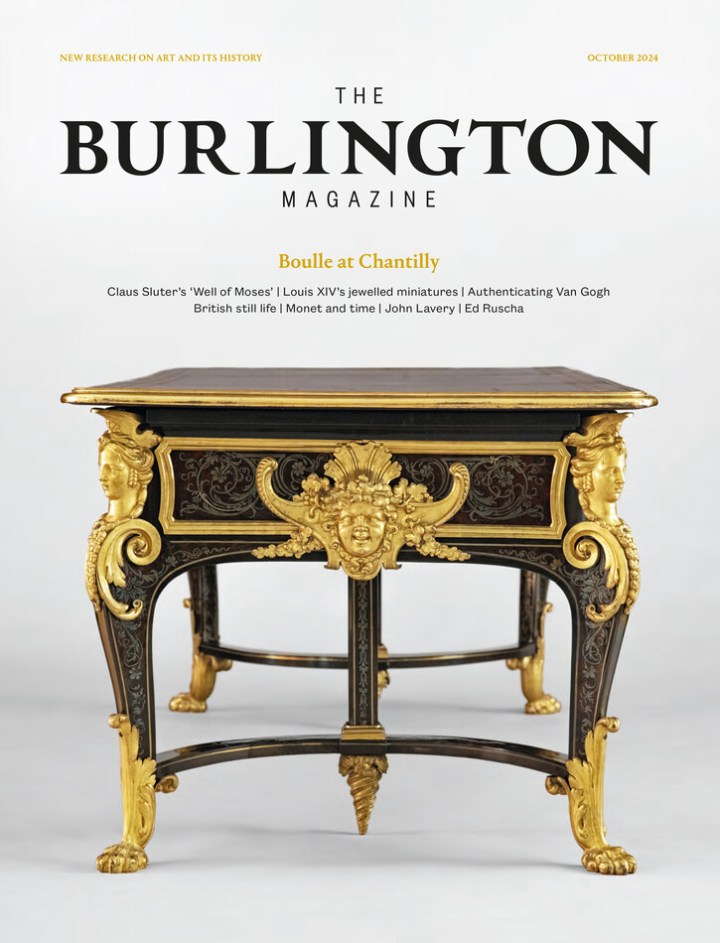
The Burlington Magazine 166 (October 2024)
 e d i t o r i a l
• “Restoring the ‘belle époque’,” pp. 995–96.
The Musee Jacquemart-André is a treasure house that graces the Haussmann boulevards in Paris and is perhaps not nearly as well-known as it should be. The recent re-opening of the museum on 6th September, following a period of closure for conservation, therefore provides a welcome opportunity to draw fresh attention to this most romantic and beguiling of collections and the elegant building that houses it.
a r t i c l e s
• Jacob Willer, “Annibale Carracci and the Forgotten Magdalene,” pp. 1028–35.
A painting the collection of the National Trust at Kedleston Hall, Derbyshire, is published here as a work of Annibale Carracci’s maturity. Related to comparable compositions which derive from it, in collections in Rome and Cambridge, it was acquired in Florence in 1758 for the 1st Baron Scarsdale.
• Samantha Happé, “Portable Diplomacy: Louis XIV’s ‘boîtes à portrait’,” pp. 1036–43.
Louix XIV’s ambitious and carefully orchestrated diplomatic programme included gifts of jewelled miniature portraits known as ‘boîtes à portrait’. Using the ‘Présents du Roi’, the circumstances around the commissioning and creation of these precious objects can be explored and a possible recipient suggested for a well-preserved example now in the Musée du Louvre, Paris.
r e v i e w s
• Alexander Collins, Review of the exhibition André Charles Boulle (Musée Condé, Château de Chantilly, 2024), pp. 1056–59.
• Claudia Tobin, Review of the exhibition The Shape of Things: Still Life in Britain (Pallant House Gallery, 2024), pp. 1067–69.
Helen Hillyard, Review of of the recently renovated galleries of the Barber Institute of Fine Arts, Birmingham, pp. 1077–79.
• Colin Thom, Review of Steven Brindle, Architecture in Britain and Ireland, 1530–1830 (Paul Mellon Centre, 2024), pp. 1080–81.
• Christopher Baker, Review of Bruce Boucher, John Soane’s Cabinet of Curiosities: Reflections on an Architect and His Collection (Yale University Press, 2024), pp. 1087–88.
o b i t u a r y
• Christopher Rowell, Obituary for Alastair David Laing (1944–2024), pp. 1094–96.
Although renowned in particular for his expertise on the art of François Boucher, Alastair Laing had very wide-ranging art historical taste and knowledge, which he shared with great generosity of spirit. He curated some important exhibitions and brought scholarly rigour to his inspired custodianship of the art collections of the National Trust.
New Book | Chronos: Die Personifikation der Zeit
In the US, daylight saving time ends Sunday morning. New from Michael Imhof:
Angelika Eder, Chronos: Die Personifikation der Zeit und ihr Einsatz in der Kunst des 17. und 18. Jahrhunderts (Petersberg: Michael Imhof Verlag, 2024), 240 pages, ISBN: 978-3731914044, €50.
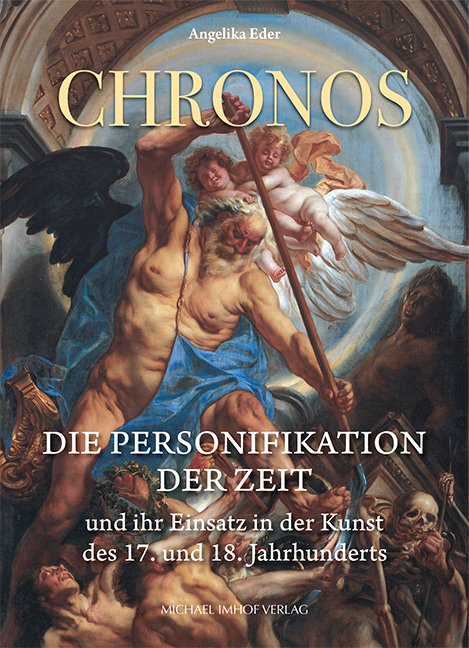 Chronos, die Personifikation der Zeit, fand in der Kunst des 17. und 18. Jahrhunderts weite Verbreitung—sei es in Tafelbildern, in Deckengemälden, in der Druckgrafik oder der Skulptur. Das weite Einsatzspektrum dieser äußerst komplexen Figur bildet den Schwerpunkt der vorliegenden Untersuchung.
Die Konfrontation mit der Erkenntnis des befristeten Lebens und der Fragilität jeder Existenz machte die Menschen im 17. und 18. Jahrhundert empfänglich für das Thema der Vergänglichkeit, das die destruktive Seite von Chronos in den Vordergrund stellt. Auf vielfältige Weise wird die Personifikation der Zeit als Zerstörerin dargestellt: von menschlichem Leben, von Liebe, von materiellen Errungenschaften. Parallel zeigen Kunstwerke die positive Seite von Chronos, bei denen sich die Zeit als Helferfigur offenbart. In der Allegorie trägt so die Zeit den Ruhm des Herrschers über dessen Tod hinaus in die Zukunft. Ebenso bewahrt Chronos die Schöpfungen der neuzeitlichen Künstler vor dem Verfall und sichert deren Andenken in ihren bleibenden Werken. Im Buch wird eine bisher fehlende Systematik entwickelt, die von der Herkunft und Genese der Zeitfigur ausgeht und anhand von ausgewählten Beispielen ihre facettenreiche Verwendung in den Blick nimmt.
New Book | Fierce Desires
From Norton:
Rebecca Davis, Fierce Desires: A New History of Sex and Sexuality in America (New York: W. W. Norton & Company, 2024), 480 pages, ISBN: 978-1631496578, $35.

From an esteemed scholar, a richly textured, authoritative history of sex and sexuality in America—the first major account in three decades.
Our era is one of sexual upheaval. Roe v. Wade was overturned in the summer of 2022, school systems across the country are banning books with LGBTQ+ themes, and the notion of a ‘tradwife’ is gaining adherents on the right while polyamory wins converts on the left. It may seem as though debates over sex are more intense than ever, but as acclaimed historian Rebecca L. Davis demonstrates in Fierce Desires, we should not be too surprised, because Americans have been arguing over which kinds of sex are ‘acceptable’—and which are not—since before the founding itself.
From the public floggings of fornicators in early New England to passionate same-sex love affairs in the 1800s and the crackdown on abortion providers in the 1870s, and from the movements for sexual liberation to the recent restrictions on access to gender affirming care, Davis presents a sweeping, engrossing, illuminating four-hundred-year account of this nation’s sexual past. Drawing on a wealth of sources, including legal records, erotica, and eighteenth-century romance novels, she recasts important episodes—Anthony Comstock’s crusade against smut among them—and, at the same time, unearths stories of little-remembered pioneers and iconoclasts, such as an indentured servant in colonial Virginia named Thomas/Thomasine Hall, Gay Liberation Front cofounder Kiyoshi Kuromiya, and postwar female pleasure activist Betty Dodson.
At the heart of the book is Davis’s argument that the concept of sexual identity is relatively novel, first appearing in the nineteenth century. Over the centuries, Americans have shifted from understanding sexual behaviors as reflections of personal preferences or values, such as those rooted in faith or culture, to defining sexuality as an essential part of what makes a person who they are. And at every step, legislators, police, activists, and bureaucrats attempted to regulate new sexual behaviors, transforming government in the process. The most comprehensive account of America’s sexual past since John D’Emilio and Estelle Freedman’s 1988 classic, Intimate Matters, Davis’s magisterial work seeks to help us understand the turmoil of the present. It demonstrates how fiercely we have always valued our desires, and how far we are willing to go to defend them.
Rebecca L. Davis is professor of history at the University of Delaware and author of Public Confessions: The Religious Conversions That Changed American Politics and More Perfect Unions: The American Search for Marital Bliss. She lives in Swarthmore, Pennsylvania.
New Book | Lower than the Angels
From Penguin Random House in the UK, with publication forthcoming (2025) in the US:
Diarmaid MacCulloch, Lower than the Angels: A History of Sex and Christianity (London: Allen Lane, 2024), 688 pages, ISBN: 978-0241400937, £35 / $40.
 The Bible observes that God made humanity “for a while a little lower than the angels.” If humans are that close to angels, does the difference lie in human sexuality and what we do with it? Much of the political contention and division in societies across the world centres on sexual topics, and one-third of the global population is Christian in background or outlook. In a single lifetime, Christianity or historically Christian societies have witnessed one of the most extraordinary about-turns in attitudes to sex and gender in human history. There have followed revolutions in the place of women in society, a new place for same-sex love amid the spectrum of human emotions and a public exploration of gender and trans identity. For many the new situation has brought exciting liberation—for others, fury and fear.
This book seeks to calm fears and encourage understanding through telling a 3000-year-long tale of Christians encountering sex, gender, and the family, with noises off from their sacred texts. The message of Lower than the Angels is simple, necessary and timely: to pay attention to the sheer glorious complexity and contradictions in the history of Christianity. The reader can decide from the story told here whether there is a single Christian theology of sex, or many contending voices in a symphony that is not at all complete. Oxford’s Emeritus Professor of the History of the Church introduces an epic of ordinary and extraordinary Christians trying to make sense of themselves and of humanity’s deepest desires, fears, and hopes.
Diarmaid MacCulloch is a fellow of both St Cross College and Campion Hall, Oxford, and emeritus professor of the history of the church at Oxford University. His books include Thomas Cranmer: A Life, which won the Whitbread Biography Prize, the James Tait Black Prize, and the Duff Cooper Prize, and Christianity: The First Three Thousand Years, a New York Times bestseller that won the Cundill Prize in History. He has presented many highly celebrated documentaries for television and radio and was knighted in 2012 for his services to scholarship. He is an ordained deacon of the Church of England. He lives in Oxford.
New Book | Augustus the Strong
From Penguin Random House:
Tim Blanning, Augustus the Strong: A Study in Artistic Greatness and Political Fiasco (London: Allen Lane, 2024), 432 pages, ISBN: 978-0241705148, £30.
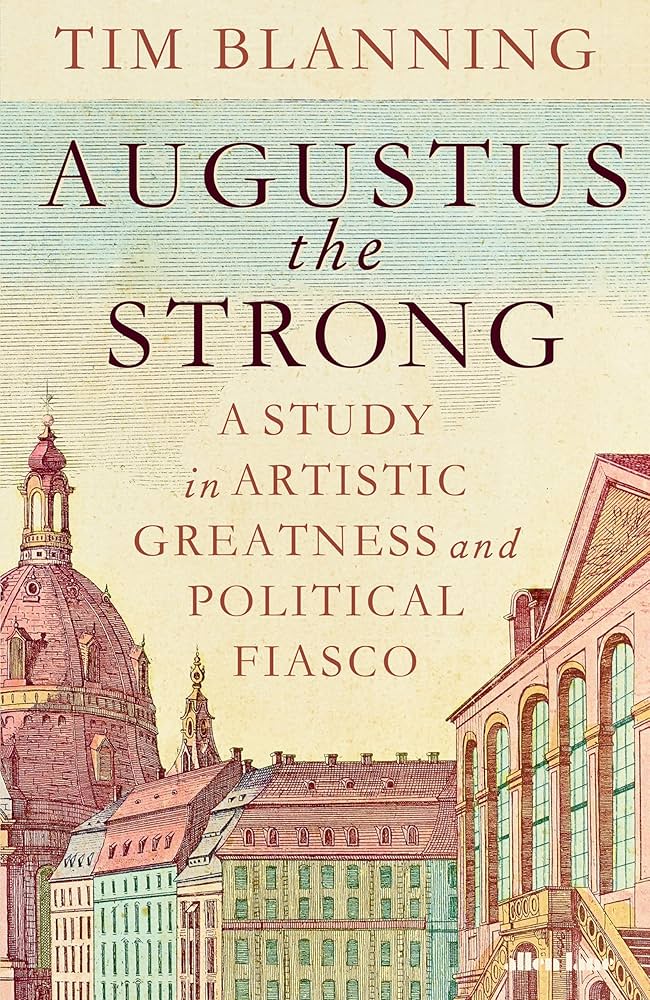 From the acclaimed author of The Pursuit of Glory and Frederick the Great, a riotous biography of the charismatic ruler of 18th-century Poland and Saxony—and his catastrophic reign.
Augustus is one of the great what-ifs of the 18th century. He could have turned the accident of ruling two major realms into the basis for a powerful European state—a bulwark against the Russians and a block on Prussian expansion. Alas, there was no opportunity Augustus did not waste and no decision he did not get wrong. By the time of his death Poland was fatally damaged and would subsequently disappear as an independent state until the 20th century. Tim Blanning’s wonderfully entertaining and original new book is a study in failed statecraft, showing how a ruler can shape history as much by incompetence as brilliance. Augustus’s posthumous sobriquet ‘The Strong’ referred not to any political accomplishment, but to his legendary physical strength and sexual athleticism. Yet he was also one of the great creative artists of the age, combining driving energy, exquisite taste, and apparently boundless resources to master-mind the creation of peerless Dresden, the baroque jewel of jewels. Augustus the Strong brilliantly evokes this time of opulence and excess, decadence, and folly.
Until age-dictated retirement in 2009, Tim Blanning was Professor of Modern History at the University of Cambridge. He remains a Fellow of Sidney Sussex College, Cambridge, and has been a Fellow of the British Academy since 1990. His major works include The French Revolution in Germany, The French Revolutionary Wars, The Power of Culture and the Culture of Power, The Pursuit of Glory: Europe 1648–1815, and The Triumph of Music. He has written biographies of Joseph II, Frederick the Great, and George I.










 Enfilade
leave a comment