Exhibition: Contested Visions in the Spanish Colonial World
From LACMA:
Contested Visions in the Spanish Colonial World
Los Angeles County Museum of Art, 6 November 2011 — 29 January 2012
Museo Nacional de Historia, Mexico City, 6 July — 7 October 2012

"The Apparition of San Miguel del Milagro to Diego Lázaro," first half of the 18th century (Museo Universitario Casa de los Muñecos, Benemérita Universidad Autónoma de Puebla, Mexico)
Contested Visions in the Spanish Colonial World examines the significance of indigenous peoples within the artistic landscape of colonial Latin America. The exhibition offers a comparative view of the two principal viceroyalties of Spanish America—Mexico and Peru—from the fifteenth to the nineteenth centuries. Under colonial rule, Amerindians were not a passive or homogenous group but instead commissioned art for their communities and promoted specific images of themselves as a polity. By taking into consideration the pre-Columbian (Inca and Aztec) origins of these two vast geopolitical regions and their continuities and ruptures over time, Contested Visions offers an arresting perspective on how art and power intersected in the Spanish colonial world. The exhibition is divided into themes:
Contested Visions
Tenochtitlan and Cuzco Pre-Columbian Antecedents
Ancient Styles in the New Era
Conquest and New World Orders
The Devotional Landscape and the Indian as Good Christian
Indian Festivals and Sacred Rituals
Memory, Genealogy, and Land
A checklist of the exhibition is available here»
◊ ◊ ◊ ◊ ◊
Exhibition catalogue: Ilona Katzew, ed., Contested Visions in the Spanish Colonial World (New Haven: Yale University Press, 2011), 320 pages, ISBN: 9780300176643, $70.
 Contested Visions offers a comparative view of the two principal viceroyalties of Spanish America: Mexico and Peru. Spanning developments from the 15th to the 19th century, this ambitious book looks at the many ways and contexts in which indigenous peoples were represented in art of the early modern period—by colonial artists, European artists, and themselves. More than two hundred works of art, including paintings, sculptures, illustrated books, maps, codices, manuscripts, and other materials such as textiles, keros, and feather works, are reproduced in full-color illustrations, demonstrating the rich variety of these artistic approaches.
A collection of essays by an international team of distinguished scholars in the field uncovers the different meanings and purposes behind these depictions of native populations of the Americas. These experts explore
the role of the visual arts in negotiating a sense of place in late pre-Columbian and colonial Latin America. They address a range of important topics, such as the construct of the Indian as a good Christian; how Amerindians drew on their pre-Columbian past to stake out a place within the Spanish body politic; their participation in festive rites; and their role as artists. Lavishly illustrated, this ambitious book provides a compelling and original framework by which to understand the intersection of vision and power in the Spanish colonial world.
Ilona Katzew is curator and co-department head of Latin American art at the Los Angeles County Museum of Art.
◊ ◊ ◊ ◊ ◊
Symposium: Contested Visions in the Spanish Colonial World
Los Angeles County Museum of Art, 2-4 December 2011
LACMA and UCLA are co-sponsoring a major international three-day symposium in conjunction with the special exhibition Contested Visions in the Spanish Colonial World, which brings together thirty of the most distinguished scholars in the field from Mexico, South America, Europe, and the United States.
Free, no reservations | Printable Schedule | View Abstracts
Exhibition: Daniel Sarrabat
From the Centre des monuments nationaux website:
Daniel Sarrabat (1666-1743) l’éclat retrouvé
Monastère royal de Brou, Bourg-en-Bresse (near Lyon), 15 October 2011 — 29 January 2012
Curated by François Marandet
 Cette exposition révèle l’art d’un des plus grands peintre d’histoire à Lyon et dans sa région, pendant la première moitié du XVIIIe siècle : Daniel Sarrabat (1666-1743). Alors que le style rocaille triomphe en France, il poursuit l’idéal artistique de Nicolas Poussin, et montre combien la peinture d’histoire s’est maintenue à Lyon et dans sa région depuis la disparition de Jacques Stella (1596-1657) et Thomas Blanchet (1614-1689).
Cette toute première rétrospective rassemble près de 50 œuvres de l’artiste, dont 36 tableaux. Sont présentées des réalisations inédites aux cotés d’œuvres de collections privées, notamment le décor mythique de l’Hôtel de Sénozan, à Lyon, complété par un groupe de tableaux provenant du patrimoine religieux de la région, avec le cycle illustrant l’histoire de Marie-Madeleine de l’église de Thoissey. Le parcours de l’exposition restitue les étapes successives de la carrière de Daniel Sarrabat : l’époque de son apprentissage à Paris, le séjour à
Rome (1685-1694), son implantation à Lyon en 1695, jusqu’à sa consécration
(1716-1732).
Additional information is available from the exhibition brochure (PDF).
◊ ◊ ◊ ◊ ◊
Catalogue: François Marandet, Daniel Sarrabat, 1666-1748 (Saint-Étienne: I.A.C. Éditions d’Art, 2011), 128 pages, ISBN: 9782916373478, $42.50. [Available from Artbooks.com]
Reviewed: The Intelligence of Tradition in Rajput Court Painting
Recently added to caa.reviews:
Molly Emma Aitken, The Intelligence of Tradition in Rajput Court Painting (New Haven: Yale University Press, 2010), 352 pages, ISBN: 9780300142297, $65.
Reviewed by Catherine Glynn; posted 21 October 2011.
“Why Rajput paintings look the way that they do” is the enormous concept that Molly Emma Aitken addresses in ‘The Intelligence of Tradition in Rajput Court Painting’. Fortunately for readers entering into her innovative and complex thinking, Aitken is especially gifted in her word choice, graphically evocative, and the book is filled with well-reproduced images of stunning Rajput paintings. Her descriptions of the paintings and the artists who produced them give both the seasoned scholar and uninitiated reader a series of intriguing ideas to ponder.
Aitken’s premise is concisely explained in her introduction: conventions used in Rajput painting were purposefully developed; painters made choices based on intent. As she posits, much past analysis by scholars of Indian painting has juxtaposed “a simple, archaic aesthetic [Rajput painting] against a technically advanced idiom [Mughal painting]” (11). It is Aitken’s contention that Rajput painters were skilled in their own aesthetic, taking what they deemed useful from Mughal painting and rejecting those elements that did not fit into their vision. It was not a question of ability—the Rajput painters were able to paint in any style that they chose—it was a question of choice.
The full review is available here» (CAA membership required)
New Title: Drew Armstrong on Julien-David Leroy
From the publisher:
Christopher Drew Armstrong, Julien-David Leroy and the Making of Architectural History (Routledge, 2011), 300 pages, ISBN: 9780415778893, $125.00
 This book examines the career and publications of the French architect Julien-David Leroy (1724–1803) and his impact on architectural theory and pedagogy. Despite not leaving any built work, Leroy is a major international figure of eighteenth-century architectural theory and culture. Considering the place that Leroy occupied in various intellectual circles of the Enlightenment and Revolutionary period, this book examines the sources for his ideas about architectural history and theory and defines his impact on subsequent architectural thought. This book will be of key interest to graduate students and scholars of Enlightenment-era architectural history.
C O N T E N T S
Introduction: Positioning LeRoy
Part 1: Voyageur / Philosophe — 1. Traveler in the Academy 2. A Book by Its Cover 3. Measuring the Earth 4. Greek Architecture and the Doctrine of Vitruvius 5. Greece and the Orient 6. A New Way of Making History 7. Mentor in the Garden
Part 2: Academician / Mentor — 8. Architecture and Enlightenment 9. Science for the Public Good 10. Monument to a Revolutionary Hero. Select Bibliography
◊ ◊ ◊ ◊ ◊
Christopher Drew Armstrong is an Assistant Professor and Director of Architectural Studies in the Department of History of Art and Architecture at the University of Pittsburgh.
Exhibition: Monkeys and Dragons at Chantilly
The following press release comes from the Musée Conde. -HB
Singes et Dragons: La Chine et le Japon à Chantilly au XVIIIe Siècle
Musée Conde, Château de Chantilly, 14 September 2011 — 1 January 2012
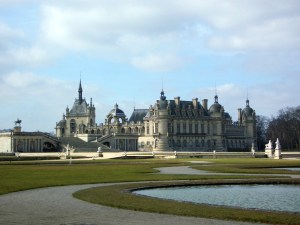
Pour la rentrée de septembre 2011, le musée Condé propose une exposition qui s’inscrit dans la thématique du « voyage » qui sera développée jusqu’à la fin 2011 par le Domaine de Chantilly. En effet, les visiteurs sont invités à remonter le temps, au XVIIIe siècle, quand artistes et artisans réalisaient des œuvres peintes ou d’art décoratif sur commande, afin de combler un goût immodéré pour les décors asiatiques où singes et dragons se mêlaient parfois avec délicatesse aux animaux familiers de nos campagnes.
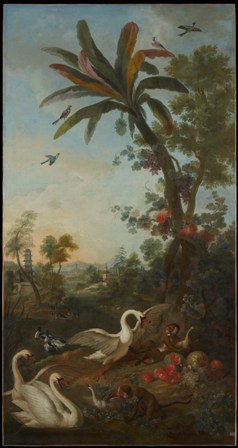 En ce début du XVIIIe siècle, alors que la France se passionne pour l’exotisme, le duc de Bourbon, prince de Condé (1692-1740), collectionne pour son Château de Chantilly les porcelaines, les indiennes – tissus peints ou imprimés fabriqués en Asie entre le XVIIe siècle et le XIXe siècle – et les meubles en laque de Chine et du Japon. Il les fait copier par des artisans français et crée pour ce faire trois manufactures. En mécène entrepreneur passionné, il commande en 1735 au dessinateur Jean-Antoine Fraisse (1680-1739) un album de modèles, gravés en taille-douce, d’après ses collections. Les artisans au service du prince s’en inspirent, notamment pour les porcelaines de Chantilly ; et ce jusqu’en 1740 à la mort du Prince et au tournant de cet engouement pour l’exotisme. C’est à partir de cet ouvrage in-folio rarissime que Nicole Garnier, conservateur général du patrimoine chargée du musée Condé, a conçu son exposition de rentrée où sont présentés outre les deux exemplaires enluminés provenant des collections du Château de Chantilly et de la Bibliothèque nationale de France (Bnf), des gravures de Fraisse (dont deux de plus de trois mètres sont extraites de l’exemplaire enluminé), d’autres de Jean-Baptiste Guélard (1698-1767), des peintures de Christophe Huet (1700-1759) et des pièces d’art décoratif représentatives de cette époque où l’Extrême-Orient était de mise à la Cour et dans les plus belles demeures. . . .
The full press release is available here»
◊ ◊ ◊ ◊ ◊
Catalogue: Manuela Finaz de Villaine and Nicole Garnier-Pelle with assistance from Eléonore Follain, Singes et Dragons: La Chine et le Japon à Chantilly au XVIIIe siècle (Chantilly: Édité par la Fondation pour la Sauvegarde et le Développement du Domaine de Chantilly, 2011), 64 pages, ISBN: 9782953260335, 12€.
Exhibition: The Young Tiepolo, The Discovery of Light
Xavier Salomon reviews the exhibition in the October issue of The Burlington (pp. 698-99). From the Udine website:
Il giovane Tiepolo: la scoperta della luce
Civic Museum of Udine, Castello, Udine, 4 June — 4 December 2011
Curated by Giuseppe Pavanello and Vania Gransinigh
ISBN: 9788895752112
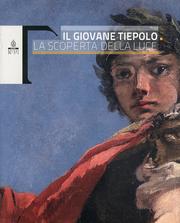
Che cosa caratterizza l’esordio di un giovane pittore di genio? Quali percorsi mentali e creativi presiedono alla formazione di un artista di talento? A questa e ad altre domande proverà a dare risposta la mostra che i Civici Musei di Udine inaugurano il 4 giugno 2011 all’interno della terza edizione delle Giornate del Tiepolo. L’esposizione, dal titolo Il giovane Tiepolo: la scoperta della luce, è rivolta proprio a ricostruire, attraverso le opere più significative, il periodo giovanile dell’attività di Tiepolo, prima del suo soggiorno udinese del 1726.
Se, nel corso del suo apprendistato presso la bottega del pittore accademico Gregorio Lazzarini, l’artista ebbe modo di confrontarsi con i modelli offerti dalla tradizione figurativa veneta del Cinquecento, egli si dimostrò particolarmente attento anche a quanto i suoi contemporanei andavano sperimentando, e alle nuove teorie sulla luce di ispirazione newtoniana. Le opere di Federico Bencovich e Giambattista Piazzetta rappresentarono per il giovane Tiepolo un punto di riferimento ugualmente importante che egli seppe assimilare in maniera originale, in sintonia con il suo essere “tutto spirito e foco,” attraverso un linguaggio pittorico costruito sull’interpretazione luminosa dell’immagine. Ed è proprio su questa peculiare visione tiepolesca della luce che l’esposizione udinese si focalizza, ripercorrendo il tracciato di un’attività che dalle tele dipinte per la chiesa veneziana dell’Ospedaletto si dipana, per il tramite delle decorazioni di Palazzo Sandi, fino al ciclo di affreschi realizzati a Udine nel Palazzo Patriarcale.
I dipinti in esposizione permettono così di documentare il passaggio da una pittura costruita nella luce, secondo precise fonti di illuminazione interne all’immagine, a una pittura costruita dalla luce, nella quale forme e volumi appaiono generati, come vetro soffiato, dall’interna energia luminosa della materia. In mostra sono presentate opere provenienti dai musei di Venezia, Milano, Torino e da alcune delle più prestigiose collezioni pubbliche e private internazionali.
Comitato scientifico: Svetlana Alpers, William L. Barcham, Linda Borean, Caterina Furlan, Peter O. Krückmann, Giuseppe Pavanello e Catherine Whistler.
◊ ◊ ◊ ◊ ◊
Catalogue: Giuseppe Pavanello and Vania Gransinigh, eds., Il Giovane Tiepolo. La Scoperta della Luce (Udine: Civici Musei e Gallerie di Storia e Arte di Udine, 2011), 207 pages, ISBN: 9788895752112, €45 / $87.50.
The Irish Country House
From the Irish Georgian Society:
The Irish Country House: Its Past, Present and Future
Lettsom House, London, 20 October 2011
ISBN: 9781846822346
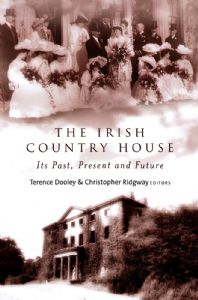
Since the founding of the IGS over fifty years ago, considerable change has taken place in the fortunes of and attitudes to the Irish country house and these changes have been discussed each year at the Annual Historic Houses of Ireland Conference and now published in a book of essays titled The Irish Country House: Its Past, Present and Future, edited by Dr Terence Dooley and Dr Christopher Ridgway and published by Four Courts Press.
Launched earlier this year at the 9th Historic Houses of Ireland Conference, this marvelous collection of essays looks at dozens of houses across a range of time periods, covering a diversity of topics relating to the architecture of these buildings, the people who lived in them, and the position and perception of the Big House in Ireland. Essays include, Terence Dooley – “Social life at Castle Hyde, 1931–88”, Christopher Ridgway – “Making and meaning in the Historic House: new perspectives in England, Ireland and Scotland” and Allen Warren – “The Twilight of the Ascendancy and the Big House.” The London Chapter is delighted to welcome Drs Dooley and Ridgway to discuss these and other aspects of the Irish country house.
Dr Dooley, MA, Ph.D. (NUI), H. Dip. Ed. is senior lecturer at National University of Ireland at Maynooth and Director of the Centre for the Study of Historic Irish Houses and Estates, of which one of its key functions is the organisation of the Annual Historic Houses of Ireland Conference with the aim of promoting focus and recognition for new scholarship and other developments in the field of built heritage studies. Dr Dooley is responsible for the MA in Historic House Studies at Maynooth and author of The Decline of the Big House in Ireland: A Study of Irish Landed Families, 1860-1960 (2001) and A Future For Irish Historic Houses: A Study of 50 Houses (2003) among others. Dr Ridgway, FSA, has been curator at Castle Howard since 1985 and has written and lectured widely on its architecture, gardens and collections. Dr Ridgway is a member of the Board of the National Trust for Scotland and Adjunct Professor in the History Department at the NUI.
The lecture is at Lettsom House, 11 Chandos Street, London W1G 9EB. The nearest tube station is Oxford Circus. Wine will be served from 6.30pm with the lecture commencing at 7pm and costs £12 per person. If you would like to attend, please send your completed application form and cheque to Colm Owens, Apartment 50, Kilner House, Clayton Street, London SE11 5SE. Please note that tickets will not be issued.
Exhibition and Colloquium: The Hôtels Particuliers of Paris
As noted by Hélène Bremer, from the museum’s website:
The Townhouse: A Parisian Ambition / L’hôtel particulier: Une ambition parisienne
Cité de l’Architecture & du Patrimoine, Palais de Chaillot, Paris, 6 October 2011 — 19 February 2012
Curated by Alexandre Gady
The townhouse is a key part of Paris’s architectural character, and we can trace the story of the capital by studying the development of the townhouse in different districts of the city.
 The Parisian townhouse made its first appearance in the Middle Ages and became more popular during the 16th century when, thanks to François I, Paris again became the political capital where the monarchic state assembled and settled. It was important to be at court, near the king, and, therefore, at Paris. This golden age continued throughout the 17th, 18th and 19th centuries. The last of the townhouses were built in the period between the two world wars, marking the end of a long history, but they still exist in today’s 21st-century Paris and are very much in use: (museums, embassies, ministries). This exhibition aims to explore this history and takes the visitor on three complementary and illuminating journeys, in a bid to discover the secret of the Parisian townhouse.
The first section features a small reconstructed townhouse, between garden and courtyard, with different authentically decorated rooms for the visitor to explore. In this way, each visitor can enjoy a sense of familiarity with, and ownership of, the building. The building is not an exact replica of an existing townhouse but aims rather to convey a general impression, an overall picture, with each “external” and internal space specifically designed for educational purposes.
In the second section of the exhibition, the visitor will take a journey through the history of the townhouse, this time organized chronologically, from the Middle Ages to the Belle Epoque. This part of the exhibition, displayed in a vast open space, presents a series of large models of townhouses, specifically chosen for their distinctive characteristics – hôtels de Cluny, Lambert, Thélusson and finally the Palais-Rose (these last two buildings no longer exist) – complete with an interactive terminal with wonderfully illustrated information on some 300 town houses.
The last section offers themed reading, examining the Parisian hotel as an architectural object. Three “alcoves” will be devoted to the relationship between the city and the townhouse – a relationship which was both passionate and destructive. A further three sections allow the visitor to explore the external architecture of the townhouse (façades overlooking gardens and courtyards), its interior décor, gardens and finally internal layout. To complete the display, there is a multi-touch screen on the layout and organization of the townhouse, presented in a fun way.
Alexandre Gady, L’hôtel particulier de Paris: Du Moyen Age à la belle époque, second edition (Paris: Parigramme, 2011), 320 pages, ISBN: 9782840967040, €49.
◊ ◊ ◊ ◊ ◊
Colloquium: L’hôtel particulier des capitales régionales, une ambition française
Cité de l’Architecture & du Patrimoine, Palais de Chaillot, Paris, 2-3 December 2011
Ce colloque placé sous la direction scientifique de Pascal Liévaux, conservateur en chef à la Direction générale des patrimoines et Alexandre Gady, professeur à l’université de Nantes, commissaire de l’exposition L’Hôtel particulier. Une ambition parisienne, fait écho à cette manifestation.
Il propose d’en élargir la thématique à l’ensemble du territoire national et donnera la parole à des chercheurs et à des professionnels du patrimoine. Ces spécialistes témoigneront des dernières avancées dans la connaissance, la conservation, la restauration et la mise en valeur de ces édifices complexes qui, associant au plus haut niveau d’excellence l’architecture, l’art des jardins et celui du décor, témoignent de trois siècles de vitalité et de diversité de l’architecture urbaine sur l’ensemble du territoire national.
Exhibition: Master Drawings from the Crocker Art Museum
From The Frances Lehman Loeb Art Center at Vassar:
A Pioneering Collection: Master Drawings from the Crocker Art Museumm
Portland Art Museum, Oregon, 12 June — 19 September 2010
Crocker Art Museum, Sacramento, California, 10 October 2010 — 6 February 2011
Frances Lehman Loeb Art Center, Vassar College, Poughkeepsie, New York, 16 September — 11 December 2011

Hubert Robert, "Massacre of the Innocents," 1796, chalk, brown, and red, on paper, 8 1/4 in. x 7 1/4 in. (Sacramento: Crocker Art Museum)
A Pioneering Collection: Master Drawings from the Crocker Art Museum includes 57 rarely seen works by artists such as Albrecht Durer, Fra Bartolommeo, Anthonie van Dyck, Francois Boucher, and Jean-Auguste-Cominque Ingres. The exhibition is divided thematically into four sections of drawings from Italy, the Low Countries, France, and Central Europe.
These drawings date from the late 15th- to the mid-19th centuries and were purchased between 1869-71 by forward-thinking railroad magnate E. B. Crocker, forming the basis of the Crocker Museum’s master drawings collection. In total, the Crockers purchased 1344 master drawings and 700 paintings during their time in Europe and these formed the basis of their private art gallery, which opened in 1872, featuring visitors like the queen of Hawaii and former U.S. President Grant. Following the death of Edwin Crocker, his wife Margaret transferred the gallery to the California Museum Association, now the Crocker Art Museum. Their old master drawing collection was one of the first historically to be opened to the
public in 1885.
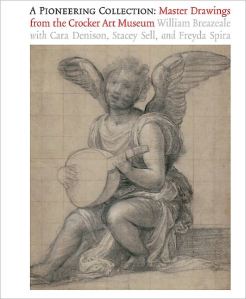 This exhibition was organized in celebration of the Crocker’s Anne and Malcolm McHenry Works on Paper Study Center and exhibition space, designed to significantly enhance public access to this collection of master drawings.
A catalogue by lead author and Crocker Art Museum curator Wiliam Breazeale; Cara Dufour Denison, curator at the Morgan Library and Museum; Stacey Sell, associate curator of Old Master drawings at the National Gallery of Art, and Freyda Spira, research associate at the Metropolitan Museum of Art, accompanies the exhibition and will be available at the Art Center gift shop (Paul Holberton Publishing, 2010, $35).
A full checklist for the exhibition is available here»
The Eighteenth Century in the October Issue of The Burlington
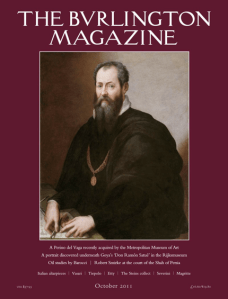
The Burlington Magazine 153 (October 2011)
◊ ◊ ◊ ◊ ◊
Editorial
• The Holburne Museum, Bath
 . . . Earlier this year, the Museum received extensive publicity when it re-opened after renovation and an extension carried out by Eric Parry Architects. This has included the daring and entirely successful moving of the central staircase of the house, to a few feet to the left, unblocking the vista through the ground-floor entrance to the gardens at the back; a beautiful full-height glass extension to the rear of the building that creates temporary exhibition rooms and a greater feeling of light and air; and the almost complete redisplay of the collections. While it has to be admitted that the Museum is distinctly eclectic and charmingly provincial (and in places still fussily crowded), in its renovated state its former shabby gentility has been vanquished. It now presents itself like Gainsborough’s Lord and Lady Byam, stepping out with the next generation, all in their finery, to greet the future.
The full editorial is available here»
◊ ◊ ◊ ◊ ◊
Articles
• Antonello Cesareo, “New Portraits of Thomas Jenkins, James Byres and Gavin Hamilton” — Two new portraits of Thomas Jenkins and James Byres by Anton von Maron and a self-portrait by Gavin Hamilton.
• Christopher Baker, “Robert Smirke and the Court of the Shah of Persia” — A watercolour study by Robert Smirke in the National Gallery of Scotland, Edinburgh, for a painting of the court of the Shah of Persia.
• Duncan Bull and Anna Krekeler, with Matthias Alfeld, Doris Jik, and Koen Janssens, “An Intrusive Portrait by Goya” — The discovery of an earlier three-quarter length portrait of a man by Goya beneath his Portrait of Ramón Satué (1823) in the Rijksmuseum, Amsterdam.
◊ ◊ ◊ ◊ ◊
Books
• Philip McEvansoneya, Review of N. Glendinning and H. Macartney, eds., Spanish Art in Britain and Ireland, 1750–1920: Studies in Reception in Memory of Enriqueta Harris Frankfort.
• Mark Stocker, Review of M. Kisler, Angels and Aristocrats: Early European Art in New Zealand Public Collections.
• Luke Herrmann, Review of M. and J. Payne, Regarding Thomas Rowlandson (1757–1827): His Life, Art & Acquaintance and P. Phagan, Thomas Rowlandson: Pleasures and Pursuits in Georgian England.
◊ ◊ ◊ ◊ ◊
Exhibitions
• Xavier F. Salomon, Young Tiepolo










 Enfilade
2 comments