Johan Zoffany, More to Come — Exhibition, Catalogue, and Conference
From The Yale Center for British Art:
Johan Zoffany RA: Society Observed
Yale Center for British Art, New Haven, 27 October 2011 — 12 February 2012
The Royal Academy of Arts, London, 10 March — 10 June 2012
Curated by Martin Postle with Gillian Forrester and MaryAnne Stevens

Johan Zoffany, “The Drummond Family” (detail), ca. 1769 (New Haven: Yale Center for British Art)
Of all the major artists working in eighteenth-century England, none explored more inventively the complexities of Georgian society and British imperial rule than Johan Zoffany (1733–1810). Born near Frankfurt, Zoffany trained as an artist in Germany and Italy. In 1760 he moved to London, where he adapted brilliantly to the indigenous art culture and patterns of patronage, creating virtuoso portraits and subject pictures that proved to be highly desirable to a wide range of patrons. Zoffany’s work provides an invaluable and distinctive appraisal of key British institutions and edifices: the art academy, the Court, the theatre, the families of the aristocracy and bourgeoisie, and the burgeoning empire. Despite achieving considerable success in England, Zoffany remained in many ways an outsider, scrutinizing British society and its customs and mores. Restless and drawn to a peripatetic existence, he traveled for extended periods in his native Germany, Austria, Italy, and India. After his death there was no move to situate Zoffany as one of the key figures in the burgeoning British school of art; this exhibition aims to correct that oversight and will demonstrate his central importance to the artistic culture of eighteenth-century Britain and Europe. (more…)
Just Published: Mary Webster on Zoffany
On the heels of Penelope Treadwell’s biography, Johan Zoffany: Artists and Adventurer (University of Washington Press, 2009), comes this massive tome by Mary Webster. From Yale University Press:
Mary Webster, Johan Zoffany, R.A. 1733-1810 (New Haven: Yale University Press / London: Paul Mellon Centre for Studies in British Art, 2011), 720 pages, ISBN: 9780300162783, $100.
 Universally recognized as a brilliant and gifted 18th-century artist, Johan Zoffany (1733-1810) was regarded by Horace Walpole as one of the three greatest painters in England, along with his friends Reynolds and Gainsborough. Yet he has remained without a detailed study of his life and works, owing to the fascinating and complex vicissitudes of his career, now established from widely scattered sources. From being a late-baroque painter at a German princely court to working under the royal patronage of George III and Queen Charlotte, from his serious interest in Indian life and landscape, developed while living near Calcutta, to his attacks on the bloody progress of the French Revolution, Zoffany created pictures that document with incomparable liveliness the worlds and people among whom he moved.
Mary Webster was formerly at the Warburg Institute and was curator
of the College Art Collections at University College London.
Reviewed: English Silver from the Virginia Museum of Fine Arts
Recently published by Apollo Magazine:
Christopher Hartop, A Noble Pursuit: English Silver from the Rita Gans Collection at the Virginia Museum of Fine Arts (Richmond: Virginia Museum of Fine Arts, 2011), 88 pages, ISBN 9780917046902, $25.
Reviewed by Martin Chaisin; posted 1 May 2011.
In 1988, Jerome (Jerry) and Rita Gans loaned their magnificent collection of English silver of the 17th and 18th centuries to the Virginia Museum of Fine Arts (VMFA). The collection was eventually gifted to the museum in 1997; a decade later, it was permanently housed in a beautifully designed installation, as celebrated in Christopher Hartop’s earlier overview, ‘A Noble Feast: The Jerome and Rita Gans Collection of English Silver’ (2007). Then, following Jerry’s death, Rita assembled a collection – reflecting her taste and engaging personal style – from which she donated an additional 50 pieces to the museum in 2009. Hartop’s present publication is a catalogue of that latter collection, as well as an illuminating discussion of collecting, connoisseurship and the design and uses of silver in 18th-century England. . . .

The full review is available here»
Reviewed: ‘Baroque: Style in the Age of Magnificence’
Recently added to caa.reviews:
Michael Snodin and Nigel Llewellyn, eds., Baroque: Style in the Age of Magnificence 1620–1800, exhibition catalogue (London: V&A Publishing, 2009), 372 pages, ISBN: 9781851775583, $85.
Reviewed by Matthew Knox Averett, Creighton University; posted 29 April 2011.
‘Baroque 09’ was a yearlong series of cultural events in the United Kingdom that celebrated the era’s art, music and culture. The Victoria and Albert Museum participated with the well-received exhibition, ‘Baroque 1620–1800: Style in the Age of Magnificence‘, which ran from April 4 to July 19, 2009. Michael Snodin and Nigel Llewellyn’s volume of the same name serves as the catalogue for the exhibition. The book is more than this, however, as the catalogue itself comprises only twenty-eight pages located toward the back of the book. The preceding three hundred pages attempt to reconstruct the Baroque and present it to a wide audience. Making sense of the Baroque is a difficult challenge, but for the
most part the authors have succeeded. . .
The full review is available here» (CAA membership required)
Forthcoming Title: ‘Fragonard and the Fantasy Figure’
Coming this December, as noted at Ashgate:
Melissa Percival, Fragonard and the Fantasy Figure: Painting the Imagination (Aldershot: Ashgate, 2011), 304 pages, ISBN: 9781409401377, $124.95.
A fresh interpretation of the group of Fragonard’s paintings known as the “figures de fantaisie,” Fragonard and the Fantasy Figure: Painting the Imagination reconnects the fantasy figures with neglected visual traditions in European art, and firmly situates them within the cultural and aesthetic contexts of eighteenth-century France. Previously discussed in connection with portraiture, this study relocates Fragonard’s paintings within a tradition of fantasy figures, where resemblance was ignored or downplayed. The book defines Fragonard as a painter of the imagination, and foregrounds the imaginary at a time when Enlightenment rationalism and classical aesthetics contrived to delimit the imagination. The book unravels scholarly writing on these Fragonard paintings, and examines the history of the fantasy figure from early modern Europe to eighteenth-century France. Emerging from this background is a view of Fragonard turning away from the academically sanctioned “invention,” towards more playful variants of the imaginary: fantasy and caprice. Melissa Percival demonstrates how fantasy figures engage both artists and viewers, allowing artists to unleash their imaginations through displays of virtuosity, and viewers to use their imagination to explore the paintings’ unusual juxtapositions and humour.
Contents: Introduction; Fact and fantasy: demystifying Fragonard’s fantasy figures; The fantasy figure in European painting; Fragonard, ‘pasticheur inspiré’; Departures from resemblance; Fictional identities; Fantaisie and caprice; Conclusion; Bibliography; Index.
Melissa Percival is Senior Lecturer in French at the University of Exeter, UK
◊ ◊ ◊ ◊ ◊
In this smartly written, thoroughly researched work, Fragonard and the Fantasy Figure, Melissa Percival explodes the myth that Fragonard’s fantasy figures are dazzling but impenetrable images; she offers instead a wide range of interpretive perspectives that provides the ground for a renewed appreciation of these works. In a book that is a model of scholarly clarity, Percival has made a valuable contribution to Fragonard studies.
–Julie-Anne Plax, University of Arizona
Collecting and the Art Market in Venice and Rome
This round table has been organized by Nathalie Volle et Chantal Georgel. From the INHA:
Collectionnisme et marché de l’art à Venise et à Rome au XVIIIème siècle
Institut national d’histoire de l’art, Paris, 17 May 2011
Table ronde autour des livres de Paolo Coen (Il mercato dei quadri a Roma nel Diciottesimo secolo, la domanda, la offerta e la circolazione delle opere in un grande centro artistico europeo), et de Stefania Mason (Il collezionismo d’arte a Venezia. Il Settecento). Participants: Paolo Coen, Stefania Mason, Daniela Gallo, Nathalie Volle.
◊ ◊ ◊ ◊ ◊
Linda Borean, Stefania Mason, eds. Il collezionismo d’arte a Venezia. Il Settecento (Venice: Marsilio, 2009), 432 pages, ISBN: 9788831799263, €35.
 Questa pubblicazione, la terza di una collana specificatamente dedicata al collezionismo artistico a Venezia in età moderna, prende in esame il Settecento, il secolo definito della “gloria” di Venezia, particolarmente ricco e articolato per l’evoluzione del gusto e degli orientamenti del fenomeno, con elementi di continuità e altri di contrasto con l’epoca che lo precede. Composto da saggi tematici che illuminano tipologie di opere, aspetti e problemi del commercio artistico (anche in connessione con le conseguenze delle soppressioni delle corporazioni religiose), presenze forestiere di artisti, collezionisti e agenti, casi-studio di raccolte particolarmente significative per i loro proprietari (una casata di antica nobiltà e un facoltoso imprenditore della manifattura del tabacco) e la loro formazione, il volume è completato da un corpus di oltre quaranta voci biografiche su raccoglitori, mercanti, agenti, diplomatici e critici che hanno assunto un ruolo determinante nello sviluppo del collezionismo nel Settecento veneziano: accanto a personalità in parte conosciute, ne compaiono numerose altre dal profilo sinora indefinito nonostante la loro rilevanza nel panorama del tempo. Un’appendice di documenti inediti offre un campione rappresentativo delle diverse tipologie di fonti archivistiche disponibili, da quelle “classiche” quali inventari, testamenti e carteggi, ad altre prodotte da precise contingenze storiche, ad esempio i saccheggi compiuti nei palazzi veneziani nel 1797.
◊ ◊ ◊ ◊ ◊
Paolo Coen, Il Mercato Dei Quadri a Roma nel Diciottesimo Secolo: La Domanda, l’Offerta e la Circolazione delle Opere in un Grande Centro Artistico Europeo, 2 vols (Florence: Leo S. Olschki Editore, 2010), 816 pages, ISBN: 9788822258953), €80.
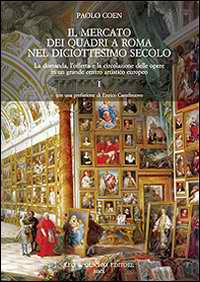 Il binomio arte-denaro, oggi persino ovvio, esisteva anche in passato, sebbene attraverso forme e meccanismi in parte differenti. Tradizionalmente uno dei centri del mercato pittorico fu Roma, meta prediletta di artisti e viaggiatori provenienti da ogni parte del globo. Il libro ricostruisce questo complesso fenomeno individuando un momento chiave nel diciottesimo secolo, quando la città, anche sulla scia del Grand Tour, vede ancor più aumentare il suo peso nei sistemi artistici d’Europa.
In the May Issue of ‘Apollo’: From the Landsdowne Collection
From Apollo:
Elizabeth Angelicoussis, “Diomedes and Diskobolus,” Apollo Magazine (May 2011)
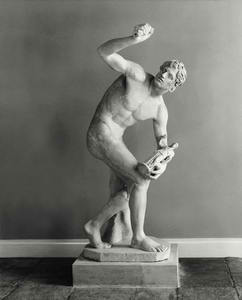 Among the collection of classical sculpture belonging to the 1st Marquess of Lansdowne was a Roman copy of a lost bronze of Diskobolus by the Greek sculptor Myron. Excavated by the dealer Gavin Hamilton in 1774, the marble’s fascinating story has much to reveal about late 18th-century.
. . . It is hoped that this article’s examination of this particular distinctive Lansdowne sculpture and its interesting history will stimulate awareness in a new book, developed by this author in conjunction with Ian Jenkins, Senior Curator of Greek and Roman Antiquities at the British Museum and Daniella Ben-Arie, co-curator of the 2008 Thomas Hope exhibition at the Victoria and Albert Museum. The book aims to rediscover, examine, photograph and interpret the once coherent group of Lansdowne sculptures that is now widely dispersed across the globe. . . .
A brief bit of online searching for details regarding the new book turned up nothing, though presumably we will hear more in the coming months. -CH
Reviewed: New Publications on Meissen
Recently added to caa.reviews:
Ulrich Pietsch and Claudia Banz, eds., Triumph of the Blue Swords: Meissen Porcelain for Aristocracy and Bourgeoisie, 1710–1815 (Leipzig: E. A. Seemann, 2010), 400 pages, ISBN: 9783865022486, €49.90.
Ulrich Pietsch and Theresa Witting, eds., Fascination of Fragility: Masterpieces of European Porcelain (Leipzig: E. A. Seemann, 2010), 368 pages, ISBN: 9783865022479, €49.90.
Reviewed by Donna Corbin, Associate Curator, European Decorative Arts, Philadelphia Museum of Art; posted 22 April 2011.
‘Triumph of the Blue Swords, Meissen Porcelain for Aristocracy and Bourgeoisie, 1710–1815’ (the English-language version of ‘Triumph der blauen Schwerter. Meissener Porzellan für Adel und Bürgertum 1710–1815‘) and the accompanying exhibition at the Japanese Palace in Dresden (May 8–August 29, 2010) celebrate the three hundredth anniversary of the founding of the Meissen porcelain manufactory. The exhibition was conceived as one of three complementary exhibitions—the other two being ‘The Fascination of Fragility‘ (Ephraim-Palais, Berlin, May 9–August 29, 2010; catalogue reviewed below) and ‘All Nations are Welcome. Three Hundred Years of the Meissen Manufactory’ (Meissen, January 23–December 31, 2010)—organized for the anniversary year. The exhibitions were intended to commemorate the anniversary, to highlight the indisputably influential role Meissen played in the development of porcelain production across Europe in the eighteenth century, and to bring attention to the Staatliche Porzellan-Manufaktur Meissen that still exists today. . .
The full review is available here» (CAA membership required)
Reviewed: Portrait of the County of Dorset
Notice of the exhibition appeared here back in February. Alex Kidson’s recent review is, however, much more illuminating — and laudatory — than the general description.
Alex Kidson, “Review of Georgian Faces: Portrait of a County,” The Burlington Magazine 153 (April 2011): 274-75.
Anyone expecting . . . the kind of celebratory ‘treasures from local houses’ show that was a staple of regional museums until the later part of the last century is in for a surprise. The sixty-seven portraits that make up this exhibition are for the most part not masterpieces; but they have been selected with immense rigour. . . Gwen Yarker, the curator, for whom the show is a triumph, has lived in Dorset for many years, and her understanding of the history of the county is apparent at every turn. She has explicitly based her selection on the structure of the Revd John Hutchin’s ‘History and Antiquities of the County of Dorset’ of 1774, with its emphasis on social hierarchy, and has given full weight to eighteenth-century modes of patronage. She fearlessly prefers, for example, to include replicas over originals to remind us that our present-day obsession with ‘originality’ is not one that was shared in the eighteenth century. . . .
Yet in Yarker’s text [for the catalogue], as well as with her selection, art-historical revisionism is far from suppressed. . . . In fact, the show is full of art-historical trouvailles. . . . It seems almost an understatement to say that the exhibition is at the forefront of the current study of eighteenth-century British portraiture. More than that, in its concern for local detail, its accuracy, but also its willingness to confront problems and to speculate, it points the way forward for future research. In revealing just how powerfully the old county structure acts as a focus of inquiry, it occupies some of the same research terrain as the catalogues of the Public Catalogue Foundation, or some of the initiatives of the National Portrait Gallery’s Subject Specialist Network project Understanding British Portraits (which supported the exhibition’s study day); yet its impact is far more direct and forceful than theirs. . . What takes this exhibition out of the realms of the remarkable and into those of the miraculous is that it was accomplished on a budget of £1000. . . .
This Month’s ‘Burlington Magazine’
This month’s issue of The Burlington Magazine is devoted to British Art with the following eighteenth-century offerings:
 The Burlington Magazine 153 (April 2011)
- Richard Hewlings, “Nicholas Hawksmoor in Chester,” pp. 224-28.
- Hugh Belsey, “Reading the Caricature Groups of Thomas Patch,” pp. 229-31.
- Malcolm Warner, Review of British Paintings in the Metropolitan Museum of Art, 1575-1875, Katharine Baetjer, p. 257.
- Brian Allen, Review of James Barry, 1741-1806: History Painter, ed. Tom Dunne and William Pressly, pp. 258-59.
- Timothy Wilcox, Review of Constable, Jonathan Clarkson, pp. 259-60.
- Giles Waterfield, Review of The English Virtuoso: Art, Medicine, and Antiquarianism in the Age of Empiricism, Craig Hanson, pp. 266-67.
- Alex Kidson, Review of the exhibition Georgian Faces: Portrait of a County, pp. 274-75.










 Enfilade
1 comment