New Title: ‘Maria Spilsbury’
Charlotte Yeldham, Maria Spilsbury Taylor (1776-1820): Artist and Evangelical (Aldershot: Ashgate, 2010), 230 pages, ISBN: 9780754669913, $124.95.
 Maria Spilsbury Taylor (1776-1820) lived and worked in London and Ireland and was patronized by the Prince Regent. A painter of portraits, genre scenes, biblical subjects and large crowd compositions – an unusual feature in women’s art of this period – she is represented in major museums and art galleries as well as in numerous private collections. Her work, hitherto considered on a purely decorative level, merits closer attention.
For the first time, this volume argues the relevance of Spilsbury’s religious background, and in particular her evangelical and Moravian connections, to the interpretation of her art and examines her pervasive, and often inovert references to the Bible, hymnody and religious writing. The art that emerges is distinctly Protestant and evangelical, offering a vivid illustration of the mood of patriotic, Protestant fervour that characterized the quarter century succeeding the French revolution. This focus may be situated in the general context of increasing interest in the religious faith of historical actors – men and women – in the eighteenth century, and in the related contexts of growing acknowledgement of a religious aspect to “enlightenment” art, as well as investigations into Protestant culture in Ireland. The book is extensively illustrated and contains a list of all of Spilsbury’s known works.
Contents: Introduction; Family background; A Moravian childhood; Early career; Themes 1798–1813; Exhibition and marriage; Ireland 1813/14 to 1820; Reputation; List of works; Bibliography; Index.
Charlotte Yeldham is an independent scholar based in the UK.
New Title: Eighteenth-Century Royal Monuments
Charlotte Chastel-Rousseau, ed., Reading the Royal Monument in Eighteenth-Century Europe (Aldershot: Ashgate, 2011), 232 pages, ISBN: 9780754655756, $99.95.
 Reading the Royal Monument in Eighteenth-Century Europe is the first in-depth study of the major role played by royal monuments in the public space of expanding cities across eighteenth-century Europe. Using the royal public statues as the basis for its examination of modern European cities, the book considers the development of urban landscapes from the creation of capital cities to the last embers of the Ancien Régime and at how the royal politics of the arts affected the cityscapes of the time. The focus of the book thereby intersects across a spectrum of disciplines, including the social and architectural history of cities, the politics of urban planning, the history of monumental sculpture, and the material culture of the eighteenth century.
- Charlotte Chastel-Rousseau, Introduction
- Etienne Jollet, The king and others: multiple figures in French royal monuments of the modern era
- Daniel Rabreau, Statues of Louis XV: illustrating the monarch’s character in public squares whilst renewing urban art
- Godehard Janzing, ‘Levez-vous, citoyens!’ Military reforms and the fate of the pedestal slaves in 18th-century France
- Miguel Figueira de Faria, 6 June, the king’s birthday present: an insight into the history of royal monuments in Portugal at the end of the ancien régime
- Basile Baudez, The monument to Peter the Great by Falconet: a place royale by the Neva?
- Johan Cederlund, Two royal monuments in Stockholm
- David Bindman, King of the new republic: Houdon’s equestrian monument to George Washington
- Alexander Grönert, Independence in the imperial realm: political iconography and urbanism in 18th-century Palermo
- Charlotte Chastel-Rousseau, Originals or replicas? Royal equestrian monuments in 18th-century Great Britain and Ireland,
- Philip McEvansoneya, Royal monuments and civic ritual in 18th-century Dublin
Charlotte Chastel-Rousseau received a PhD in history of art from the Université Paris I- Panthéon- Sorbonne on “Royal monuments and public space in Great-Britain and Ireland, 1714-1820” in 2005. After ten years spent in England, in Oxford, London, and Leeds, she now lives in Paris and works in the Musée du Louvre for the art-historical programmes in the auditorium. She has mainly written on eighteenth-century British and French monumental sculpture and town-planning and is currently particularly interested in the circulation of artistic models and ideas in a European cultural space from the Renaissance to the eighteenth century.
Furniture Exhibition at Winterthur: ‘Paint, Pattern, and People’
Press release from Winterthur:
Paint, Pattern & People: Furniture of Southeastern Pennsylvania, 1725-1850
Winterthur, 2 April 2011 — 8 January 2012
Curated by Wendy Cooper and Lisa Minardi

ISBN: 9780912724690, $55
This landmark exhibition explores the colorful furniture of southeastern Pennsylvania along with the people who made, owned, inherited, and collected it. Featuring nearly 200 objects—including furniture, fraktur, needlework, and paintings—the show focuses on the culture and creativity of the area’s English- and German-speaking inhabitants. Paint, Pattern & People sheds new light on southeastern Pennsylvania’s highly distinctive local expressions of furniture and presents important objects for which the maker or family history is known. This well-documented furniture provides a new context to understand the objects as fully as possible and place them within specific locations. Although the exhibition is about furniture, it is not about dovetails and glue blocks but rather the people of the region who are the threads from which the story is woven. Thus the furniture in Paint, Pattern & People is the vehicle that transports us into the lives of our ancestors and leads to a greater understanding of our rich cultural heritage.
Due to William Penn’s policy of religious tolerance that attracted people of various faiths and ethnic backgrounds, Pennsylvania was the most culturally diverse of the thirteen colonies. Through the study of objects produced by this great mixed multitude, the extraordinary vibrance and variety of the region’s furniture comes into focus. Ethnicity, religious affiliation, personal taste, socioeconomic status, and the skill of the craftsman all influenced local forms, ornamentation, and construction. (more…)
Reviewed: ‘Gem Engraving in Britain from Antiquity to the Present’
Recently published by Apollo Magazine:
Julia Kagan, Gem Engraving in Britain from Antiquity to the Present (Oxford: Archaeopress, 2010), ISBN 9781407305578, £80 / $160.
Reviewed by Diana Scarisbrick; posted 1 April 2011.
Neglected for years, the study of English glyptics has recently taken on a new lease of life. Following the publication of Professor Sir John Boardman’s ‘The Marlborough Gems’ (2009) and of his catalogue, co-authored by Kirsten Aschengreen Piacenti, of the collection of HM Queen Elizabeth II, it is now the turn of Julia Kagan. Here, she tells the whole story, from its roots in the mid-1st- century-BC Roman invasion up to modern times, bringing together in chronological sequence the many artists, patrons, collectors and scholars involved. Her narrative is easy to read, fully illustrated, with every statement supported by a reference, helpfully inserted into the text and not relegated to the back of the book. . . .
The full review is available here»
Reviewed: ‘Early Georgian Furniture’
Adam Bowett, Early Georgian Furniture 1715–1740 (Woodbridge, UK: Antique Collectors’ Club, 2009) 328 pages, ISBN: 9781851495849.
Reviewed for Enfilade by David Pullins
 In the preface to Adam Bowett’s first book English Furniture 1660–1714 From Charles II to Queen Anne (2002), he wrote “I have attempted to write this book from first principles and, in the main, from primary evidence — bills, inventories and, of course, the furniture itself” (10). In Bowett’s latest work, Early Georgian Furniture 1715–1740, he pursues this disciplined and productive approach, providing numerous correctives to the sloppy dating that has infiltrated not only the antiques trade but also academic publications on English furniture. In particular, his research reveals the dangers of back-dating in the field, which, he argues, has created stylistic vacuums, particularly for the period of the 1720s and 1730s. In order more precisely to date a given form or motif, Bowett focuses on “fashionable furniture” — which is to say items typically produced in London for less than ten percent of the population. While this might at first appear to limit the usefulness of his study beyond the most rarefied examples, his point is not so much to disregard less elevated or vernacular examples but to provide solid points of departure through vanguard furniture. A trickle-down effect, largely accepted by most scholars who examine commerce during the period, is therefore a basic premise of the study. For readers aiming to identify and date a given piece of furniture, this method — along with the structure of the book, which is divided into six chapters according to form (e.g., “Seat Furniture” or “Mirrors”) — results in a remarkably user friendly text that, through a rich range of intelligently selected illustrations, can help contextualize furniture of varied quality and geography.
While Bowett’s meticulously documented corrections to the accepted chronology of English furniture will probably prove the strongest case for the importance of his book, the contribution he offers expands beyond issues of dating. Bowett’s primary research has revealed a fascinating body of information on the training of craftsmen, power structure in the workshop and the intricacies of interaction between patrons and furniture makers. By looking at contemporary documents, including inventories, trade-cards and labels (many of them illustrated), Bowett is able better to define basic terms used to describe furniture forms and the division of labor in the trade between, for example, turners and chair-makers or cabinet-makers and carvers. In the best case scenarios, contemporary descriptions are matched with the surviving work allowing us better to describe undocumented pieces of furniture and better to imagine pieces which are known now only through written descriptions. Bowett also lays the groundwork for understanding two especially complex issues relevant to his subject, the timber trade and the influence of East Asian furniture on English stylistic developments. While expanding on either topic would have greatly enriched his book and its relevance apart from the objects immediately at hand, he wisely curtails his discussion within the context of a self-acknowledged survey (though East Asia appropriately reappears in his description of the development of the cabriole leg, the top rails and back splats of early Georgian chairs).
In addition to Bowdett’s primary concern with form, this survey is also notable for its detailed account of gilt furniture (an important counterpoint to the materials caught in the colloquial phrase “Age of Walnut” to describe the period) and japanned surfaces, which Bowett first treated with considerable care in his earlier book on the preceding period. Both kinds of decoration remind us of the resilience of baroque modes well into the eighteenth century which issues of condition have sometimes occluded.
Bowett’s reappraisal of early Georgian furniture stands out as arguably the most important since R.W. Symonds’s classic texts from the 1920s through 1950s and the Dictionary of English Furniture (last revised in 1954), all of which continue to be used regularly by scholars. At two to three color illustrations per page, each given a detailed caption, the book moves beyond what earlier authors could offer while retaining their high standards of archival research. Following from his earlier work on furniture from Charles II through Queen Anne, Bowett’s book also paves a carefully plotted path for his next anticipated project devoted to the rise and influence of the most famous English cabinet-maker, Thomas Chippendale.
David Pullins is a Ph.D. candidate in History of Art and Architecture at Harvard University. His research addresses the circulation of images across media in eighteenth-century France.
New Title: ‘The Efflorescence of Caricature, 1759-1838’
Todd Porterfield, ed., The Efflorescence of Caricature, 1759–1838 (Aldershot: Ashgate), 240 pages, ISBN: 9780754665915, $99.95.
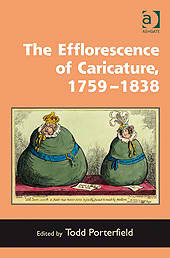 Searing disputes over caricature have recently sparked flames across the world—the culmination, not the beginning, of the story of one of modernity’s definitive artistic practices. Modern visual satire erupts during a period marked by reform and revolution, by cohering nationalisms and expanding empires, and by the emerging discipline of art history. This has long been recognized as its Golden Age. It is time to look anew.
In The Efflorescence of Caricature, 1759–1838, an international, interdisciplinary, and intergenerational team of scholars reconfigures the geography of modern visual satire, as the expansive narrative reaches from North America to Europe, to China and the Ottoman Empire. Caricature’s specific visual cultures are also laid bare, its iconographic means and material support, as well as the diverse milieu of its making—the military, the art academy, diplomacy, politics, art criticism, and popular entertainment. Some of its greatest practitioners—James Gillray and Honoré Daumier—are seen in a new light, alongside some of their far flung and opportunistic pastichers. Most trenchantly, assumptions about the consequences of caricature’s rise come under intense scrutiny, interrogated for its cherished and long-vaunted civilizational claims on individual character, artistic supremacy, political liberty, and global domination.
- Todd Porterfield, The efflorescence of caricature
- Dominic Hardy, Caricature on the edge of empire: George Townshend in Quebec
- Pierre Wachenheim, Early modern Dutch emblems and French visual satire: transfers of models across the 18th century
- Reva Wolf, John Bull, liberty and wit: how England became caricature
- Douglas Fordham, On bended knee: James Gillray’s global view of courtly encounter
- Helen Weston, The light of wisdom: magic lanternists as truth-tellers in post-Revolutionary France
- Richard Taws, The currency of caricature in Revolutionary France
- Mike Goode, The public and the limits of persuasion in the age of caricature
- Robert L. Patten, Signifying shape in pan-European caricature
- Christina Oberstebrink, James Gillray, caricaturist and modernist artist avant la lettre
- Ségolène Le Men, The Musée de la caricature
Todd Porterfield is Professor and Canada Research Chair in Art History at the Université de Montréal. He is the author of The Allure of Empire: Art in the Service of French Imperialism, 1798–1836 (1998), and co-author of Staging Empire: Napoleon, Ingres, and David (2006).
Art History Publication Initiative for First Books
Art History Publication Initiative
A multi-press collaboration to create new publishing opportunities for scholars of art history
 This exciting new publishing opportunity offers art historians seeking publication of their first book the chance to be part of a groundbreaking collaborative publishing project. Authors whose books are selected for inclusion in AHPI will find many benefits, including:
• Financial assistance and guidance in acquiring and securing permission for illustrations
• Publication in both print and electronic editions
• A shared website hosting additional electronic enhancements to the book, including but not limited to audio, video, illustrative material, animation, and podcasts
• A strong marketing program including both print and digital
advertising (more…)
Reviewed: ‘Italy’s Eighteenth Century’
Recently added to caa.reviews:
Paula Findlen, Wendy Wassyng Roworth, and Catherine M. Sama, eds., Italy’s Eighteenth Century: Gender and Culture in the Age of the Grand Tour (Stanford: Stanford University Press, 2009), 504 pages, ISBN: 9780804759045, $65.
Reviewed by Sarah Betzer, McIntire Department of Art, University of Virginia; posted 31 March 2011.
Following an efflorescence of critical work on the subject over the last twenty-five years, the European Grand Tour has emerged as a focus of innovative interdisciplinary scholarship. The significance of ancient and Renaissance art to the Grand Tour itinerary—together with the emergence of modern display practices and attendant opportunities for the exercise of aesthetic judgment—have conspired to guarantee the Grand Tour’s special appeal to art historians. The subject’s enduring interest is surely also due to the fact that it has proven especially fertile ground for art history’s disciplinary move toward thinking beyond national borders. The Grand Tour was founded on the experience of boundary crossing, and the best recent work on the subject has explored how the touristic encounter with real and imagined Italian geographies put productive pressure on national, class, and gender identities. “Italy’s Eighteenth Century: Gender and Culture in the Age of the Grand Tour” is an important addition to this literature, charting new territory by examining Italy in the age of Enlightenment with a view from inside.
Like Paula Findlen’s excellent introduction, the collection reflects a “multidisciplinary conversation about the state of this field” (1), with authors hailing from the history of science, history of art, history of music, literature, and gender studies. The collection makes available in English the recent work of established Italian scholars who are united with their North American counterparts by their scrupulous mining of archival sources; the generous footnotes shed light on a veritable treasure trove of primary documents.
The volume’s ambitious core contribution is couched methodologically: to unsettle the tendency to examine Italy of the Grand Tour primarily through the eyes of foreign visitors whereby “Italy” emerges as a sort of afterimage, a composite of lived experiences, mythic tropes, and memories. This approach, shared by many of the foremost Grand Tour scholars, has yielded fundamental insights about foreign perceptions of Italy, albeit one that Findlen observes can threaten to reduce the site to “an itinerary rather than a living, breathing entity” (4). This volume proposes to expand our understanding of the place and period by examining the particular cultural episodes of the Italian peninsula “in its own terms” (7). . . .
The full review is available here» (CAA membership required)
At CUNY: Three Revolutions of Liberty: England, America, and France
From the Center for Humanities at CUNY:
Three Revolutions of Liberty: England, America, and France
Philippe Raynaud, Nadia Urbinati, Jeremy Jennings, and Richard Wolin
Center for the Humanities, The City University of New York, 13 April 2011
400 pages, ISBN: 9782130568742
Over the last few decades, the revival of political liberalism has gone hand in hand with a reassessment of the commonalities and differences subtending the eighteenth-century trans-Atlantic revolutions. A comparative perspective allows us to better appreciate the standpoints of both the revolutions’ leading intellectual progenitors (Locke, Montesquieu, and Jefferson) as well as of their leading critics (Edmund Burke, Madame de Stael, and Alexis de Tocqueville). In Trois révolutions de la liberté, Angleterre, États-Unis, France (2009), Philippe Raynaud, one of the protagonists of the French liberal revival, has fashioned a unique interpretation of the intellectual lineage that defines this trans-Atlantic revolutionary heritage – a heritage that, in so many ways, continues to define the central terms of modern politics. Join Prof. Raynaud (Political Science, University of Paris II), Nadia Urbinati (Political Science, Columbia University), Jeremy Jennings (Political Science, Queen Mary, University College London), and Richard Wolin (Political Science and
History, The Graduate Center, CUNY) for a vigorous debate on the
implications and relevance of the revolutionary legacy for both the history
of ideas as well as contemporary politics.
Exhibition: ‘The Art of Courtly Lucknow’
I’m afraid this exhibition slipped past me when it was at LACMA. It opens today, however, at the Musée Guimet in Paris. Thanks to Hélène Bremer for pointing it out. The following description comes from the LACMA press release:
India’s Fabled City: The Art of Courtly Lucknow / Une cour royale en Inde: Lucknow
The Los Angeles County Museum of Art, 12 December 2010 — 27 February 2011
Musée National des Arts asiatiques-Guimet, Paris, 6 April — 11 July 2011
Curated by Stephen Markel and Tushara Bindu Gude
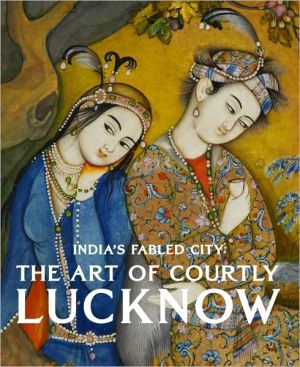
Exhibition catalogue, 272 pages, ISBN: 9783791350752
The Los Angeles County Museum of Art presents India’s Fabled City: The Art of Courtly Lucknow—the first major international exhibition devoted to the cosmopolitan culture of the northern Indian court of Lucknow, and the refined artistic production of the city’s multiethnic residents and artists. On view from December 12, 2010 through February 27, 2011, the exhibition will include almost 200 artworks: European oil paintings, watercolors, and prints; Indian opaque watercolor paintings generally made for albums, vintage photography, textiles, and garments, and a range of decorative art objects including metalwork, glassware, weaponry, and jewelry. Organized by Stephen Markel, LACMA curator of South & Southeast Asian art and department head, and Tushara Bindu Gude, associate curator, The Art of Courtly Lucknow will not only present the unique artistic traditions of Lucknow, but will also provide a framework for understanding the history of this extraordinary region and the nature of India’s colonial history and memory. . . .

After Johann Zoffany, "Colonel Polier Watching a Nautch," gouache on paper, ca. 1786-88 (Zurich: Museum Rietberg)
Lucknow was the capital of Awadh (a province in the Mughal Empire located in the present-day Indian state of Uttar Pradesh), and has become identified with the broader region and culture. From the mid-eighteenth century until the establishment of formal British rule in India in 1858, Lucknow overshadowed Delhi—the capital of the Mughal dynasty—to become the cultural center of northern India. Indian artists, poets, and courtiers flocked to Awadh seeking security and patronage, as Delhi suffered an extended period of unrest beginning in 1739. European artists, travelers and political agents were also soon lured to the region, seduced by tales of the wealth, opulence, and the generosity of Lucknow’s rulers (nawabs) and by the beauty of the city itself. The dynamic interaction between Indians and Europeans, the interplay
between their respective tastes and traditions, and the hybrid
lives led by many of Lucknow’s residents are explored in the
exhibition and accompanying publication. (more…)










 Enfilade
leave a comment