Exhibition: Drawings at the Art Institute
The current exhibition of drawings at the Art Institute includes works by Charles de la Fosse, Charles-Antoine Coypel, Panini, Canaletto, Tiepolo, Guardi, Gaetano Gandolfi, Fragonard, Jean-Baptiste Isabey, David, and Ingres. From the museum’s website:
Gray Collection: Seven Centuries of Art
The Art Institute of Chicago, 25 September 2010 — 2 January 2011
Curated by Suzanne Folds McCullagh
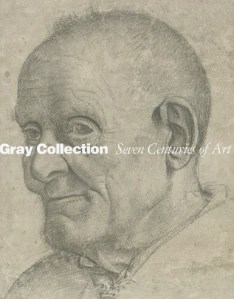 One of America’s foremost art dealers, Richard Gray, and his wife, art historian and author Mary Lackritz Gray, have gathered an unparalleled collection of paintings, drawings, and sculpture spanning the 15th century to the present. This exhibition features more than 120 of the couple’s most dynamic and important works on paper, including Renaissance- and Baroque-era treasures by Guercino, Tiepolo, and Rubens; 19th-century works by masters such as Delacroix, Degas, and Seurat; and stellar examples by acclaimed 20th-century artists Picasso, Matisse, and Miró.
Lifelong Chicagoans deeply involved in the cultural life of city, the Grays have devoted more than half a century—both privately and professionally—to pursuits associated with the visual arts. Their first work on paper was a Paul Klee lithograph received as a wedding present in 1953; ten years later, Richard founded the Richard Gray Gallery, exposing the couple to a much more encyclopedic view of art as he helped major museums and private individuals form collections of real substance and quality. At the same time, the Grays acquired works for their own collection without any specific program, discovering the various pleasures of looking at and living with drawings. This highly personal collection has been shaped by Richard’s informed eye as a dealer—his intuitive sense, willingness to take risks and respond to opportunities—and Mary’s historical and contextual approach enriched by her graduate degree in art history. As the reach of their collecting interests in more recent years extended back in time from the modern and contemporary masters they knew so well, the art of drawing has offered a quality of instantaneity, a means to maintain contact with artistic genius across the centuries. The varied, individually important works collectively combine to create a rich and resonant survey of some of the most accomplished draftsmen of the ages. (more…)
The Image of the Black in Western Art
At the appearance of the first four volumes of a ten-volume series on the theme of The Image of the Black in Western Art, Harvard is hosting a symposium next week (largely focused on the sixteenth and seventeenth centuries). Volume III, Part 3: From the “Age of Discovery” to the Age of Abolition / The Eighteenth Century: Court, Enlightenment, Slavery, and Abolition is scheduled to be published next fall.
From the Harvard Art Museums website:
M. Victor Leventritt Symposium: The Image of the Black in Western Art
Harvard University, Cambridge, MA, 15 November 2010

"Portrait of a Black Boy," formerly attributed to Christopher Wren, 1680s (British Museum)
David Bindman, University College London and Harvard University; Paul Kaplan, State University of New York at Purchase; Joseph Koerner, Harvard University; Elmer Kolfin, University of Amsterdam; and Jeremy Tanner, University College London. Henry Louis Gates Jr., Harvard University, will moderate. Held in conjunction with the exhibition Africans in Black and White: Images of Blacks in 16th- and 17th-Century Prints, this symposium will feature five presentations followed by a panel discussion concerning the perception and representation of people of African descent in Western art.
Organized by the W. E. B. Du Bois Institute for African and African American Research and David Bindman, Emeritus Professor of the History of Art, University College London, and a 2010 Sheila Biddle Ford Foundation Fellow, W. E. B. Du Bois Institute, with Anna Knaap, former Theodore Rousseau Postdoctoral Fellow, Division of European and American Art, Harvard Art Museums, and current Visiting Fellow, Jesuit Institute, Boston College. . . .
Reviewed: ‘Regulating the Académie’
Recently added to caa.reviews:
Reed Benhamou, Regulating the Académie: Art, Rules and Power in “ancien régime” France (Oxford: Voltaire Foundation, 2009), 308 pages, ISBN: 9780729409728, $100.
Reviewed by Elizabeth C. Mansfield, Department of Art History, New York University; posted 27 October 2010.
Few institutions have influenced the course of European art or the writing of art history as decisively as the French Royal Academy of Painting and Sculpture. Its pulse animated the visual extravagance of Versailles, the popularity of public art exhibitions, the emergence of art criticism, and the codification of an approach to arts instruction that persists to this day. The Academy’s legacy extends even to the enduring assumption that a centralized system of arts administration distinguishes a functioning nation-state. It is no surprise, then, that the Academy should cast a strong shadow in so many histories of post-Renaissance European art. Yet, for all this, art historians rarely allow the Academy to assume more than a vaguely adumbrated role as a monolithic force bent on enforcing conservative artistic values and practices. To be sure, some scholars have succeeded in bringing to life the Academy’s complex institutional operation. Thomas Crow’s ‘Painters and Public Life in Eighteenth-Century Paris’ (New Haven: Yale University Press, 1985) and ‘Emulation: Making Artists for Revolutionary France’ (New Haven: Yale University Press, 1995), for instance, exemplify the capacity for subtle institutional analysis to yield compelling art-historical interpretations. Reed Benhamou’s ‘Regulating the Académie: Art, Rules and Power in ancien régime France‘ offers both a prompt and an aid to scholars who seek to engage in a similarly careful study of the French Royal Academy. Drawing from archival as well as published sources, Benhamou has crafted a satisfyingly detailed account of the administrative history of the Academy. . . .
For the full review, click here» (CAA membership required)
Call for Book Proposals: British Art, Global Contexts
British Art: Global Contexts, 1700–2000
Series Editors: Jason Edwards, Sarah Monks, and Sarah Victoria Turner
Book proposals are welcomed for Ashgate’s series, British Art: Global Contexts, edited by Jason Edwards, University of York; Sarah Monks, University of East Anglia; and Sarah Victoria Turner, University of York. The series provides a forum for the study of British art, design, and visual culture in the global context from 1700 to the present day. Focusing upon the transport, location and reception of British art across the world; the British reception and exhibition of art from around the globe; and transnational and cosmopolitan art containing significant British components; the series seeks to problematize, historicise and specify the idea of ‘British’ art across the period, as it intersects with local, regional, international and global issues, communities, materials, and environments. Books to be published will include monographs and thematic studies, single authored works and edited volumes of essays, specialising in studies of British art within comparative and interdisciplinary frameworks.
Please send a letter of inquiry, or a formal proposal, to Meredith Norwich, Commissioning Editor for Visual Studies, at mnorwich@ashgate.com, AND to the series editors, Jason Edwards, je7@york.ac.uk; Sarah Monks, s.monks@uea.ac.uk; and Sarah Victoria Turner, svt500@york.ac.uk.
Exhibition: Kolbe’s Fantastic Flora
From the Kunsthaus Zürich website:
Giant Herbs and Monster Trees: Drawings and Prints by Carl Wilhelm Kolbe
Anhaltische Gemäldegalerie, Dessau, 28 November 2009 — 31 January 2010
Städtische Galerie in der Reithalle Schloß Neuhaus, Paderborn, 24 April — 13 June 2010
Kunsthaus Zürich, 10 September — 28 November 2010
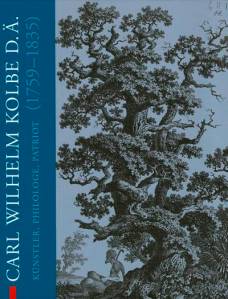
ISBN: 978-3865685179, $89.50
C.W. Kolbe (1759–1835) is one of the most intriguing figures in German art at the turn of the 19th century. With his fantastical, almost surreal landscapes featuring woods and marshes, Kolbe exerted a considerable (albeit long underestimated) influence on the graphic arts between Sturm und Drang and Romanticism. Kolbe, who did research in linguistics in addition to his artistic career, was born in Berlin and spent much of his life in Dessau. From 1805 to 1808 he lived in Zurich, where he produced engravings based on aquarelle gouaches by the late Salomon Gessner, celebrated at the time as a painter and poet.
As a souvenir of his time by the banks of the Limmat, where he had learned of the collapse of the ‘Holy Roman Empire of the German Nation’, he presented the Künstlergesellschaft with the drawing of the trunk of a dead willow tree. Kolbe’s renderings of trees are a wholesale product of his
imagination, and the fear of radical change lurks in his Arcadian fantasies.
Current Issue of ‘Eighteenth-Century Studies’
Selections from Eighteenth-Century Studies 44 (Fall 2010):
- Lisa L. Moore, “Exhibition Review: Mary Delany and Her Circle, in the Museum and on the Page,” pp. 99-104.
- Yuriko Jackall, “Exhibition Review: Jean Raoux, 1677-1734,” pp. 104-111.
- Katherine Arpen, “Review of Thomas Kavanagh’s Enlightened Pleasures: Eighteenth-Century France and the New Epicureanism (Yale UP, 2010),” pp. 136-38.
Exhibition: Artists’ Travels to Italy, 1770-1880
Press release from the museum’s website (the catalogue is available through artbooks.com) . . .
Viaggio in Italia: Künstler auf Reisen 1770–1880
Staatliche Kunsthalle Karlsruhe, 11 September — 28 November 2010
 Künstlerreisen nach Italien sind in der Sammlung der Staatlichen Kunsthalle Karlsruhe durch eine immense Fülle von Werken belegt, von denen nun erstmals eine Auswahl vorgestellt wird. „Viaggio in Italia. Künstler auf Reisen 1770 – 1880“ zeigt mehr als 150 Skizzen und Zeichnungen, Aquarelle und Ölstudien, aber auch großformatige Kartons, Gemälde und Druckgraphik. Vor allem Rom als internationales Kunstzentrum zog Künstler aus ganz Europa an und bildete ein Forum für einen regen Austausch unter Malern, Architekten und Bild-hauern. So vereint die Ausstellung unter anderem Werke von Jean-Honoré Fragonard, Joseph Anton Koch, Bertel Thorvaldsen, Julius Schnorr von Carolsfeld, Carl Blechen, Camille Corot, Johann Wilhelm Schirmer, Arnold Böcklin und Anselm Feuerbach.
Den Schwerpunkt der Ausstellung bilden Landschaftsmotive. Sie beginnt mit einigen Arbeiten französischer Künstler wie Claude Lorrain, Hubert Robert und Jean-Honoré Fragonard. Die jungen Stipendiaten der französischen Akademie in Rom durchstreiften die Campagna in der Nachfolge Lorrains, um zu zeichnen. Künstler wie Fragonard suchten nicht die unberührte, sondern die kultivierte Natur in Form von Parklandschaften, die sich als Kulisse für amouröse und gesellige Szenen eignete. Den französischen Werken werden Arbeiten von deutschen Künstlern wie Jakob Philipp Hackert, Wilhelm Friedrich Gmelin und Joseph Anton Koch gegenübergestellt, für die Italien vor allem aufgrund seiner historischen Dimension und seiner geschichtsträchtigen Stätten zum einzigartigen Anziehungspunkt wurde. Ihnen fehlte das Sammelbecken einer Akademie, doch knüpften sie vereinzelt Kontakte zu ihren Kollegen aus Frankreich und gründeten eigene Zirkel, in denen sie Ideen austauschten. (more…)
Reviewed: ‘Compass and Rule’
Recently added to caa.reviews:
Anthony Gerbino and Stephen Johnston, Compass and Rule: Architecture as Mathematical Practice in England, 1500–1700, exhibition catalogue (Oxford and New Haven: Museum of the History of Science, Yale University Press, and Yale Center for British Art, 2009), 192 pages; ISBN: 9780300150933, $65.
Reviewed by Carolyn Y. Yerkes, Ph.D. candidate, Columbia University; posted 13 October 2010.
‘Compass and Rule: Architecture as Mathematical Practice in England, 1500–1750’ tells a story of social class played out in math class. In the exhibition and catalogue, Anthony Gerbino and Stephen Johnston chart the rise of the professional architect in the early modern era by presenting the tools of the trade. Subtitle notwithstanding, ‘Compass and Rule‘ does not focus on architecture itself but rather on architectural drawing, describing the development of drafting techniques and instruments which led to a division between the design and construction phases of building. Although Gerbino and Johnston are not the first scholars to make this argument about the relationship between drawing and professional organization—it was, for example, a focus of Henry Millon and Vittorio Lampugnani’s 1994 exhibition, ‘The Renaissance from Brunelleschi to Michelangelo’—their show added a new twist with its emphasis on the mathematical principles that British architects applied to their work. This differentiates their project from most of the scholarship on architectural drawings, where the main current rarely flows farther north than medieval France or Germany and tends to pool in the Italian Renaissance.
The scope of ‘Compass and Rule’ might strike some as narrow, since a quarter-century of architectural production cannot be viewed through a single lens without a few distortions. Yet the benefits of this approach are clear, as the authors’ willingness to test their thesis with objects brings several obscure issues into sharper focus. . . .
For the full review, click here» (CAA membership required)
Exhibition: Lisiewsky, Court Painter in Anhalt and Mecklenburg
From the Palace of Mosigkau website:
Teure Köpfe: Lisiewsky, Hofmaler in Anhalt und Mecklenburg
Schloss Mosigkau, Dessau Wörlitz, Germany, 29 August — 31 October 2010

Christoph Friedrich Reinhold Lisiewsky, "Portrait of Leopold III. Friedrich Franz von Anhalt-Dessau," 1762
Christoph Friedrich Reinhold Lisiewsky (1725-1794) zählt zu den bedeutendsten Porträtmalern des 18. Jahrhunderts in Deutschland. Als „das Resultat unermesslichen Fleißes und den Triumph der Prosa in der Malerei” bezeichnete sein berühmter Zeitgenosse, der Bildhauer J. G. Schadow, das Werk Lisiewskys. Ob Schadow mit seinem wohl ironisch gemeinten Urteil die künstlerische Leistung richtig einzuschätzen wusste, sei dahin gestellt. In der gemeinsamen Ausstellung der Kulturstiftung DessauWörlitz und dem Staatlichem Museum Schwerin werden erstmals die herausragenden Malqualitäten des Künstlers gewürdigt.
Lisiewsky überzeugt aus heutiger Sicht mit seiner neuartigen, ganz eigenständigen Darstellungsweise auch im Vergleich mit anderen großen Bildnismalern des 18. Jahrhunderts – wie Antoine Pesne zuvor und Anton Graff nach ihm. Seine Porträtauffassung löste sich allmählich von den barocken Stereotypen der Inszenierung und Idealisierung. Durch seinen realistischen, teils naturalistischen Vortrag praktizierte Lisiewsky frühzeitig den Übergang zum Klassizismus. Seine von Porträtierten beschriebene, sorgfältige und aufwendige Arbeitsweise, die brillant ausgearbeitete Stofflichkeit und die genaue Wiedergabe der charakteristischen Physiognomie, Körpervolumina und -haltung, führen zu einer nahezu greifbaren Präsenz des Dargestellten.

Palace of Mosigkau (Wikimedia Commons)
Lisiewsky entstammte einer polnischen Malerfamilie, die mehrere angesehene Mitglieder hervorgebracht hat. Von 1752 bis 1772 war der Künstler als Hofmaler in Dessau tätig. In dieser Zeit führte er auch Bildnisaufträge für einen bürgerlichen Kundenkreis wie Kaufleute, Universitätsprofessoren und Theologen in Berlin und Leipzig aus. 1778 wurde der Porträtmaler an das mecklenburgische Fürstenhaus nach Ludwigslust berufen, wo er 18 Jahre bis zu seinem Tod wirkte.
Information on exhibition programming is available here»
◊ ◊ ◊ ◊ ◊
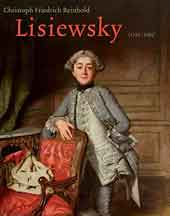 Gert Bartoschek, et al., Christoph Friedrich Reinhold Lisiewsky (1725-1794), exhibition catalogue (Munich: Deutscher Kunstverlag, 2010), 280 pages, ISBN: 9783422070363, $65.
The eighteenth-century painter Christoph Reinhold Friedrich Lisiewsky attained the realistic effect of physical presence in his portraits through a painting method that required many sessions. This richly illustrated catalogue is the first monograph on the painter.
The catalogue is available through artbooks.com.
Reviewed: ‘The National Gallery in Wartime’
In 1939, London’s National Gallery was closed, and some 1800 works of art were evacuated from the city. Suzanne Bosmann tells the story . . . Recently added at Cercles:
Suzanne Bosman, The National Gallery in Wartime (London: National Gallery, 2008), 127 pages, ISBN 9781857094244, $24.95.
Reviewed by Antoine Capet, Université de Rouen.
. . . . Why the Gallery came to be emptied of its permanent collections, how this was effected, where the collections were re-located and what ideas the enterprising Kenneth Clark found to partially fill it and continue to give it an active life – these are the guiding threads of this profusely-illustrated, very attractive large-size paperback. . . .
The full review is available here»










 Enfilade
leave a comment