Exhibition: Gainsborough and the Modern Woman
From Art Daily (19 July 2010) . . .
Thomas Gainsborough and the Modern Woman
Cincinnati Art Museum, 18 September 2010 — 2 January 2011
San Diego Museum of Art, 29 January — 1 May 2011
Curated by Benedict Leca
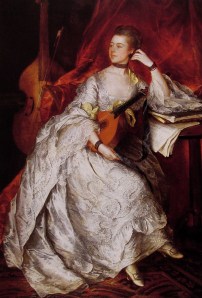
Thomas Gainsborough, "Portrait of Ann Ford" (later Mrs. Philip Thicknesse), 1760 (Cincinnati Art Museum)
The portraits of Thomas Gainsborough (1727-1788) made him perhaps the most famous British artist of the late eighteenth century. Nobles, statesmen, musicians and the range of men and women of the period’s merchant class all sat for him. But it is his portraits of notorious society women—widely considered among the greatest of the Western tradition—which attracted the most attention.
Eighteenth-century viewers appreciated these paintings differently than we do today. In his own time, Gainsborough’s portraits of actresses, performers and courtesans were seen as unconventional, if not radical, not only because of the type of woman they portrayed but also because of the unconventional way they were painted. “These stunning portraits not only give us a perspective on the history of portrait painting and celebrity, but also on the history of women’s progressive self-fashioning, which equally deserves art historical recognition. These are provocative women provocatively painted,” explains exhibition curator Benedict Leca.
Organized by the Cincinnati Art Museum in association with the San Diego Museum of Art, Thomas Gainsborough and the Modern Woman is the first exhibition devoted to Thomas Gainsborough’s feminine portraiture, and the first to focus specifically on modernity and femininity in Georgian England from the perspective of Gainsborough’s groundbreaking portraits of women. Coinciding with the comprehensive cleaning and restoration of the Cincinnati Art Museum’s iconic Ann Ford (Mrs. Thicknesse), this exhibition unites a choice selection of thirteen paintings from renowned museum collections in the United States and Britain to illuminate the role that Gainsborough ’s extraordinary portraiture played in defining new, progressive feminine identities. Among others on view at the Cincinnati Art Museum, September 18, 2010 – January 2, 2011 will be Mrs. Siddons (National Gallery, London), Mrs Richard Brinsley Sheridan (National Gallery, Washington), Giovanna Baccelli (Tate Britain), Grace Dalrymple (Metropolitan Museum of Art), Viscountess Ligonier (Huntington Library, Art Collections and Botanical Gardens). The exhibition will also feature a small selection of period dresses from the Cincinnati Art Museum’s rich fashion arts and textile collection, thereby further contextualizing Gainsborough’s portraits while affording visitors a view of the material accessories of the “modern woman.” . . .
The Art Daily article is available here»
◊ ◊ ◊ ◊ ◊
Exhibition catalogue: Benedict Leca, Aileen Ribeiro, and Amber Ludwig, Thomas Gainsborough and the Modern Woman (London: Giles, 2010), ISBN: 9781904832850, $49.95.
 This beautifully illustrated volume focuses specifically on Thomas Gainsborough’s portraits of well-known, “liberated,” society women, and the way in which the artist executed these special commissions. Thomas Gainsborough and the Modern Woman draws us away from his predominant reputation as a landscape painter, and shows how such portraits were both an affirmation by Gainsborough of his own position in the artistic world of Georgian England, and of the desire of his sitters (including leading artists, musicians, actresses and intellectuals) to be seen as self-assured progressive women.
Author Benedict Leca takes as his starting point the Cincinnati Art Museum’s famous and newly restored portrait of Ann Ford (1760), widely considered the finest of the masterpiece portraits created by Gainsborough at Bath in the early 1760s. He addresses this early portrait as typifying Gainsborough’s comparatively permissive attitude with regard to how notorious women should be presented, and offers a compelling view of Gainsborough’s peculiar manner of painting, one that established the artist as the foremost portraitist of modern life. Featuring portraits from international collections, including Tate Britain, the Metropolitan Museum of Art, the J Paul Getty Museum and the National Gallery, London, this ground-breaking new volume also includes an essay by Aileen Ribeiro examining the portrait of Ann Ford in detail, and by Amber Ludwig discussing the role of feminine identity in 18th-century London.
Thinking Digitally in the Museum
Recently added to caa.reviews:
Ross Parry, ed., Museums in a Digital Age (New York: Routledge, 2009), 496 pages, ISBN: 9780415402620, $52.95.
Reviewed by Craig Saper, Texts and Technology Doctoral Program and Department of English, University of Central Florida; posted 5 August 2010.
This useful collection of previously published essays appears in a series of course readers in museum studies edited by Simon Knell. The goal of this particular anthology is to illuminate the impact of digital media on museum exhibitions and on the conserving of digital artifacts in museums. Knell’s explanation of the general goals of the series ends with a citation from Michel Foucault as a guide to each volume’s efforts to update museum studies curricula. With that directive, it is inevitable that the series will have to navigate between the most mundane practical concerns, in this case how to run a museum’s digital collections and exhibitions, and more theoretical issues involving the implications of conserving an ephemeral digital heritage and putting exhibitions online. The two overlapping conflicts, or contradictions, of museum studies (i.e., practical versus theoretical and the virtual versus actual objects) challenge Museums in a Digital Age to get these concerns to address each other or at least to speak the same language.
Ross Parry, who edited the anthology, organizes the chapters into seven sections (prefaced by his useful introductions) that loosely correspond to the history and management of information, the real and virtual spaces of exhibitions, access and usability, interpretive and educational services, the status of museum artifacts (including digital), sustainability and technical production issues, and speculations on the future of museums. That organization certainly fits neatly with courses in museum studies, but, in following Parry’s description of the volume as a collage, one might also cross-index the chapters into four categories: history of practices, new gadgets and practices, usability of technological resources, and appealing to a wider (and different) audience. . .
For the full review, click here» (CAA membership required)
New Home for Chicago’s Seminary Co-Op Bookstore
From the Editor
I have put in a plug before for Chicago’s Seminary Co-Op Bookstore, but at a time when independent bookstores face an increasingly uncertain future, this Hyde Park gem is worth singling out again. On the eve of its 50th anniversary, plans were announced last month by the University of Chicago for the store to move toward the end of 2011 to a new location, less than a block away (even closer, incidentally, to Frank Lloyd Wright’s Robie House).
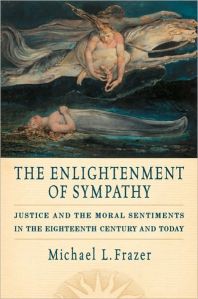
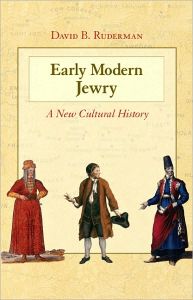
If you never get around to visiting the present (or future) store (and that really would be a shame), you can still take advantage of the Sem Co-Op’s resources through its website — good for browsing and buying. “The Front Table,” which provides a virtual display of new titles, is updated each week, and the eighteenth century is often well represented. Take, for example, the selection for 8 August 2010:




The July Issue of ‘The Burlington Magazine’
The Burlington Magazine 152 (July 2010); the issue concentrates on the eighteenth century with the following:
Articles
- Todd Longstaffe-Gowan, “Mignard, the Marquise and Martinique: A West Indian Setting for a Masterpiece of ‘Grand Epoque’ Portraiture,” pp. 448-51.
- Alden R. Gorden, “Sets and Pendants by J.-B.-M. Pierre and François Boucher in the Collections of Madame de Pompadour and the Marquis de Marigny,” pp. 452-60.
- Deborah Gage, “The Chatsworth Vases: A Gift from Louis XV in 1768 to Henry Léonard Jean-Baptise Bertin,” pp. 461-63.
- Wendy W. Erich, “Did Benjamin Franklin Invent Transferware?,” pp. 464-69.
- Rosalind Savill, “A New Catalogue of French Porcelain in the Royal Collection,” pp. 470-73.
Reviews
- Christoph Martin Vogtherr, Review of Jean-Baptiste Deshays, 1729-1765 by A. Bancel, pp. 479-80.
- Jonathan Scott, Review of Digging and Dealing in Eighteenth-Century Rome by I. Bignamini and C. Hornsby, p. 480.
- Christopher M. S. Johns, Review of The Borghese Collections and the Display of Art in the Age of the Grand Tour by C. Paul, pp. 480-81.
- Richard Rand, Review of Watteau to Degas: French Drawings from the Frits Lugt Collection by C. B. Bailey, S. Grace, and M. van Berge-Gerbaud, p. 482.
- Chris Miele, Review of The Judicious Eye: Architecture against the Other Arts by J. Rykwert, p. 482.
Reviewed: Surveying British Art
Recently added to caa.reviews:
David Bindman, ed., The History of British Art, Volume 2: 1600–1870 (New Haven and London: Yale Center for British Art and Tate Britain, 2008), 248 pages, ISBN: 9780300116717, $50.
Reviewed by Brian Lukacher, Department of Art, Vassar College; posted 21 July 2010
In his magisterial survey of British art, commissioned for the gold standard Pelican History of Art and first published in 1953, Ellis Waterhouse paused in his discussion of Thomas Gainsborough and made the following admission: “Unpleasant as it still is for some of us to introduce the shade of Marx into the history of art, it may contribute to the understanding of Gainsborough” (261). This passage attests to the anxiety of the art historian in introducing even the most innocuous hint of social analysis into the study of art during the post-war period. Waterhouse’s colleague and contemporary Anthony Blunt would find another, more furtive, way around this problem. This squeamishness over allowing “the shade of Marx” to haunt so fleetingly the pages of his survey book itself shows Waterhouse’s sensitivity to one of the most powerful and renowned images in Marxist political discourse—the “specter of communism” with which the Communist Manifesto opened and that would later be exorcised through the deconstructive logic of Derrida’s “specters of Marx.”
A couple of generations later and the history of British art finds itself still contending with “the shade of Marx.” But this shade has become considerably more tangible and omnipresent—in fact, it has now become mainstreamed. This is surely evident in the second volume from the recent three-volume survey entitled “The History of British Art.” Under the capable and expert editorial direction of David Bindman, who is also a contributor to this volume, which covers the Restoration period to the Victorian age, the series seeks to incorporate recent currents in art-historical academic research and cultural theory in its sweeping overview of large swathes of British art and society. Co-sponsored by the Yale Center for British Art and Tate Britain (not exactly cultural bastions of revolutionary discontent), this new survey wants to shake off the dusty tedium associated with older forms of British art history that were structured around the chronology of royal patronage, the tyranny of genre, and the evolution of artistic style. The challenge, which is not without peril and contradiction, is to present a more theoretically complex and politically engaged art history of the kind that has been flourishing in academic circles for the last two decades in a manner that would be accessible to the museum-going public visiting the Yale Center and the Tate.
It is a difficult balancing act, but one carried off with admirable success in volume two of this series. . . .
For the full review, click here» (CAA membership required)
German Drawings in Washington
Press release from the National Gallery:
German Master Drawings from the Wolfgang Ratjen Collection, 1580-1900
National Gallery of Art, Washington D.C., 16 May — 28 November 2010
Curated by Andrew Robison, Senior Curator of Prints and Drawings, National Gallery of Art
 The National Gallery of Art, Washington, will present for the first time worldwide 120 stunning German watercolors and drawings from the Wolfgang Ratjen Collection—one of the finest private European holdings of old master drawings. On view in the Gallery’s West Building from May 16 to November 28, 2010, German Master Drawings from the Wolfgang Ratjen Collection, 1580–1900 will include rare and influential examples of German works on paper encompassing 16th-century mannerism, the 17th-century baroque, the 18th-century rococo, early 19th-century romanticism, and late 19th-century realism.
In 2007, the National Gallery of Art acquired 185 German and Italian works from the Ratjen Collection with the help of a dozen generous private donors as well as the Paul Mellon Fund and the Patrons’ Permanent Fund. Works included in the exhibition are by artists from Germany and German-speaking areas of Europe, German-born artists practicing abroad, and artists born in other areas who spent time working in Germany and adapting to German culture.
Organized chronologically throughout five rooms, the exhibition begins with outstanding early works by three of the most notable German mannerists: Friedrich Sustris (c. 1540–1599), living primarily in Munich; Hans von Aachen (1552–1615), working at the court of the Holy Roman Emperor Rudolf II in Prague; and Hans Rottenhammer (1564/1565–1625), living in Venice and Augsburg. Sustris’ sophisticated drawing An Elaborate Altar with the Resurrection of Christ and the Martyrdom of Saint Andrew (1570/1580) is one of the earliest Bavarian responses to Italian mannerist altars. Von Aachen’s The Madonna Enthroned with Saint John the Baptist and Saint John the Evangelist (1589), a sacra conversazione (devotional scene) produced soon after his return from Venice, was a favored Venetian motif at the time. Rottenhammer’s colorful watercolor Minerva and the Muses (c. 1610) is directly inspired by Tintoretto, whose work he studied in Venice.
From the baroque period, Adam Elsheimer (1578–1610), a favorite artist of both Rubens and Rembrandt, is represented by an extremely rare atmospheric gouache—Ceres Changes Stellio into a Lizard (1605/1608)—perhaps his finest work in the United States.
Ratjen especially pursued watercolors from the 18th century by the great painters—including Cosmas Damian Asam (1686–1739), Matthäus Günther (1705–1788), and Johann Baptist Enderle (1725–1798)—who filled Bavarian churches and palaces with elaborate rococo altarpieces and stunning ceiling frescoes. A remarkable series of Augsburg rococo drawings includes Johann Elias Ridinger’s (1698–1767) charming portrait of the first rhinoceros to come to northern Europe, endearingly nicknamed “Miss Clara” (1748).
Around the turn of the 18th century, German artists developed a particular fondness for nature, as represented here by an extensive series of luminous drawings and watercolors. Highlights include five evocative landscape watercolors by Johann Georg von Dillis (1759–1841) as well as Caspar David Friedrich’s (1774–1840) romantic masterpiece New Moon above the Riesengebirge Mountains (1810 or 1828/1835). (more…)
Visiting London
From The New York Times Book Review (30 July 2010) . . .
Julie Flavell, When London Was Capital of America (New Haven: Yale University Press, 2010), ISBN: 9780300137392, $32.50.
Reviewed by Andrea Wulf
In the decades before the Declaration of Independence, thousands of American colonists visited London. Wealthy Southern plantation owners and New England merchants, husbands and wives, children and slaves all arrived in what was thought to be the most exciting city in the world. Some went shopping for exquisite silver, fashionable furniture and the latest books; others traded their goods and engaged in political arguments in noisy coffee houses. A sojourn in London was part of the education of the sons (and sometimes daughters) of wealthy colonial families because, as one contemporary observed, “more is learnt of mankind here in a month than can be in a year in any other part of the world.”
Julie Flavell’s “When London Was Capital of America” illuminates this fascinating chapter of London’s — and North America’s — past, showing how the metropolis functioned as a magnet for colonists from across the Atlantic (including the West Indies) who sought accomplishment, opportunity and commerce. An American-born scholar who is a fellow of the Royal Historical Society, Flavell has unearthed a host of stories that bring alive a previously neglected aspect of the colonial experience. . . .
The full review is available here»
Piermarini Exhibition
Most famous for his Teatro alla Scala in Milan, Giuseppe Piermarini (1734-1808) is the subject of this exhibition that comes on the heels of the the bicentenary of his death. Also, see the website of the Piermarini Foundation (all pages are available only in Italian). The following description comes from the site of the European Architectural History Network (EAHN) . . .
Giuseppe Piermarini tra Barocco e Neoclassicismo — Rome, Naples, Caserta, Foligno
Palazzo Trinci di Foligno, 5 June — 2 October 2010
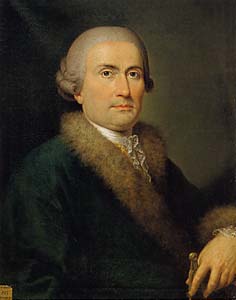 Curated by Marcello Fagiolo and Marisa Tabarrini
Giuseppe Piermarini, one of the most famous neoclassical figures in Italy, is best known as the architect of the Theatre alla Scala in Milan and refounder of good taste in Lombardy during the second half of eighteenth century. The exhibition is divided into chronological and thematic sections, beginning with a panorama of eighteenth-century Rome, the place of Piermarini’s apprenticeship, between the end of the pontificate of Benedict XIV (1740-1758) and the reign of Clement XIII (1758-1769). It then follows the architect to Naples in the studio of Vanvitelli, his time in Milan from 1769 and, finally, his return to his native Foligno in the early nineteenth century.
Note (added 5 August 2010) — The exhibition catalogue, Giuseppe Piermarini tra barocco e neoclassico. Roma, Napoli, Caserta, Foligno, edited by Marcello Fagiolo and Marisa Tabarrini (Perugia, 2010), ISBN: 9788896591277, is available through artbooks.com.
Prince Eugene of Savoy
From The Art Newspaper:
Agnes Husslein-Arco, ed., Prince Eugene: General-Philosopher and Art Lover (Munich: Hirmer Verlag), ISBN 9783777425511, $75.
Reviewed by Theodore K. Rabb, Professor Emeritus, Princeton University; posted 29 June 2010
. . . Ruling a multitude of languages and peoples, the Habsburgs were unique among Europe’s monarchs in their enthusiasm for foreign aristocrats at their court and as commanders of their armies. None repaid that welcome as handsomely as Eugene. In a few decades, he not only launched a once shrinking dynasty into an expansive era of conquest, but he helped make Vienna into one of the most dazzling capitals and cultural centres in Europe.
This catalogue records an exhibition (until 6 June) that pays tribute to the prince’s many achievements. It is held in the lower half of the Belvedere in Vienna, a two-part palace that is a contender for the title of the most imposing townhouse ever built, and which Eugene spent over a decade completing during the 1710s and 1720s. Although more than 300 objects are on display, ranging from sculptures to manuscripts, weapons to portraits, they barely scratched the surface of his possessions. His library alone, now owned by the national library, contained some 15,000 volumes. He had two Van Dycks, seven Guido Renis, and hundreds of Dutch and Italian paintings. At the heart of the Albertina’s collection of prints, the largest in the world, are the 255 volumes of engravings by masters such as Dürer that ultimately came from Eugene. . . .
For the full review, click here»
◊ ◊ ◊ ◊ ◊
The exhibition as described at EuroMuse (sorry that this one slipped by me until just recently). . .
Prinz Eugen: Feldherr, Philosoph, und Kunstfreund / General, Philosopher, and Art Lover
Lower Belvedere, Vienna, 11 February — 6 June 2010
Of Italian descent and a native French, Prince Eugene of Savoy (1663-1736), following his meteoric rise and splendid career as a military leader, became one of the most influential Austrians who had a long-lasting impact on the country’s fate and its art and cultural history. As a diplomat and counsel to the emperors Leopold I, Joseph I, and Charles VI, he travelled across Europe from one theatre of war to the next, playing a decisive role in determining the future of the House of Habsburg.
In 2010, the Vienna Belvedere, with its two palaces and Baroque gardens built by Johann Lucas von Hildebrandt in the early eighteenth century as a summer residence for Prince Eugene of Savoy, will be the venue of an exhibition presenting the prince as a general, statesman, and patron of the arts and sciences. Throughout his lifetime, he devoted himself to the compilation of a comprehensive collection of paintings, copper engravings, incunabula, illuminated manuscripts, and books, which he displayed in his Viennese palaces. From ever changing war sites, Prince Eugene corresponded with artists and artisans, landscape designers and architects, as well as the most influential thinkers of his time.
His acquisitions went down in the annals of European art and cultural history and facilitated the transfer of works of art from the court of the French king Louis XIV to Vienna. His interest in the natural sciences – in matters of which he relied on the expertise of the philosopher and scientist Gottfried Wilhelm Leibniz – is reflected in a large collection of exotic animals and plants.
The exhibition will showcase exhibits from Prince Eugene’s art collections – predominantly paintings from the Galleria Sabauda in Turin and cimelia from the Bibliotheca Eugeniana – in an ambience simulating period interiors, thus conveying to the visitors the complex decoration of those buildings where Prince Eugene, as president of the Imperial War Council and member of the Privy Council, received such illustrious guests as the ambassador of the Ottoman Empire.
◊ ◊ ◊ ◊ ◊
Additional information on the exhibition is available at The Luxury Traveler.
New Title: Cultural Aesthetics of Porcelain

ISBN: 978-0-7546-6386-7
Alden Cavanaugh and Michael E. Yonan, eds., The Cultural Aesthetics of Eighteenth-Century Porcelain (Aldershot: Ashgate, 2010), ISBN: 9780754663867, $99.95
During the eighteenth century, porcelain held significant cultural and artistic importance. This collection represents one of the first thorough scholarly attempts to explore the diversity of the medium’s cultural meanings. Among the volume’s purposes is to expose porcelain objects to the analytical and theoretical rigor which is routinely applied to painting, sculpture and architecture, and thereby to reposition eighteenth-century porcelain within new and more fruitful interpretative frameworks. The authors also analyze the aesthetics of porcelain and its physical characteristics, particularly the way its tactile and visual qualities reinforced and challenged the social processes within which porcelain objects were viewed, collected, and used.
The essays in this volume treat objects such as figurines representing British theatrical celebrities, a boxwood and ebony figural porcelain stand, works of architecture meant to approximate porcelain visually, porcelain flowers adorning objects such as candelabra and perfume burners, and tea sets decorated with unusual designs. The geographical areas covered in the collection include China, North Africa, Spain, France, Italy, Britain, America, Japan, Austria, and Holland.
Contents: “Introduction,” Alden Cavanaugh and Michael E. Yonan; “Rethinking the Arcanum: porcelain, secrecy, and the 18th-century culture of invention,” Glenn Adamson; “The nature of artifice: French porcelain flowers and the rhetoric of the garnish,” Mimi Hellman; “Igneous architecture: porcelain, natural philosophy, and the rococo cabinet chinois,” Michael Yonan; “Marketing celebrity: porcelain and theatrical display,” Heather McPherson; “Balancing act: Andrea Brustolon’s ‘La Forza’ and the display of imported porcelain in 18th-century Venice,” Erin J. Campbell; “The Queen’s nécessaire,” Alden Cavanaugh; “Porcelain, print culture and mercantile aesthetics,” Dawn Odell; “Sugar boxes and blackamoors: ornamental blackness in early Meissen porcelain,” Adrienne L. Childs; “Ties that bind: relations between the Royal Academy of San Fernando and the royal porcelain factory of the BuenRetiro,” Andrew Schulz; Selected bibliography; Index.
About the Editors: Alden Cavanaugh is Associate Professor of Art History at Indiana State University; Michael E. Yonan is Assistant Professor of Eighteenth- and Nineteenth-Century Art at the University of Missouri-Columbia.










 Enfilade
leave a comment