New Titles
Selected books from a recent Michael Shamansky catalogue (15 February 2010)
◊ ◊ ◊ ◊ ◊
 Anthony Gerbino, François Blondel: Architecture, Erudition, and the Scientific Revolution (London: Routledge, 2009), ISBN: 9780415491990, 344 pages, $135.
First director of the Académie royale d’architecture, François Blondel established a lasting model for architectural education that helped transform a still largely medieval profession into the one we recognize today. Most well known for his 1676 urban plan of Paris, Blondel is also celebrated as a mathematician, scientist, and scholar. Few figures are more representative of the close affinity between architecture and the “new science” of the seventeenth century. The first full-length study in English to appear on this polymath, this book adds to the scholarship on early modern architectural history and particularly on French classicism under Louis XIV and his minister Jean-Baptiste Colbert. It studies early modern science and technology, Baroque court culture, and the development of the discipline of
architecture.
◊ ◊ ◊ ◊ ◊
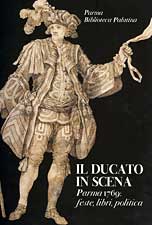 Andrea De Pasquale and Giovanni Godi, eds., Il Ducato in Scena, Parma 1769: Feste, libri, politica (Parma, Step, 2009), 241 pages, ISBN: 887898048X, $115.
Exhibition held at Biblioteca Palatina, Parma. Includes:
- Parma laboratorio di matrimoni tra Borbone e Asburgo per garantire trenta anni di pace all’Europa
- Arti a corte nel primo periodo ferdinandeo 1765-1771
- La nascita della Biblioteca Parmense
- Gli esordi della Stamperia Reale
- Le ricerche archeologiche a Parma negli anni ’70 del XVIII secolo
- Teatro e spettacolo all’epoca di Du Tillot.
◊ ◊ ◊ ◊ ◊
 Liliana Barroero, ed., Intorno a Batoni: Convegno internazionale, Roma, 3 e 4 marzo 2009, Atti (Lucca: Edizioni Fondazione Ragghianti Studi sull’arte, 2009. 270 pages, ISBN: 9788889324233, $38.50.
- G. Fusari “Pompeo Batoni e il cardinale Angelo Maria Querini”
- C. Parretti “Batoni tra Orsini e Ludovisi: Il ritratto della duchessa d’Arce e i restauri del Guercino”
- S. Benedetti “Pier Leone Ghezzi, il giovane Reynolds e i primi ‘milordi’ di Pompeo Batoni”
- C. Hornsby “Serving ‘lovers of the Virtu’ – Barazzi, Batoni and the British Dealers”
- J. Seydl “Contesting the Sacred Heart of Jesus in Late 18th-Century Rome”
- J. Collins “Know Thy Time: Batoni and Pius VI”
- Etc.
◊ ◊ ◊ ◊ ◊
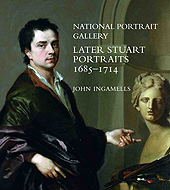 John Ingamells, National Portrait Gallery: Later Stuart Portraits, 1685–1714 (London: National Portrait Gallery, Lund Humphries, 2010), 432 pages, ISBN: 9781855144101, $250.
Sitters who are featured in this comprehensive catalogue of portraits from the premier collections of the National Portrait Gallery, London, include the Duke of Marlborough, Admirals Benbow and Shovell, Archbishop Sancroft (who led the Seven Bishops against James II), John Locke, Isaac Newton, John Vanbrugh and Christopher Wren. Also catalogued are the fearsome Judge Jeffreys, the composer Henry Purcell and diarists Samuel Pepys and John Evelyn. The writers include John Dryden, Mathew Prior, Joseph Addison and Richard Steele and the painters Godfrey Kneller and Michael Dahl. This volume completely revises the second half of David Piper’s Catalogue of the Seventeenth Century Portraits in the National Portrait Gallery, published in 1963. Academic research since then has resulted in both several changes of identity and attribution. It has also facilitated more comprehensive surveys of each sitter’s portraiture. In presenting this research, the author John Ingamells offers new discoveries, insights and observations to create an invaluable historical resource.
◊ ◊ ◊ ◊ ◊
 Marcia Pointon, Brilliant Effects: A Cultural History of Gem Stones and Jewellery (New Haven and London: Yale University Press, 2009), 426 pages, ISBN: 9780300142785, $85.
In a broad-ranging and exceptional work of cultural and art history, Marcia Pointon explores what owning, wearing, distributing, and circulating gems and jewelry has meant in the post-Renaissance history of Europe. She examines the capacity of jewels not only to fascinate but also to create disorder and controversy throughout history and across cultures. Pointon argues that what is materially precious is invariably contentious. When what is precious is a finely crafted artifact made from hard-won imported materials, the stakes become particularly high—evidenced, for example, by the political fallout from Marie-Antoinette’s implication in the affair of the stolen diamond necklace. Prodigiously rich in its range of reference and truly interdisciplinary in its approach, this book challenges the reader to reassess the importance of material things as powerful agents in human relations and in visual and verbal representation.
Picturing the West Indies
The following review appeared at caa.reviews in December (I’m sorry it slipped my notice earlier — C.H.).
Kay Dian Kriz, Slavery, Sugar, and the Culture of Refinement: Picturing the British West Indies, 1700–1840 (New Haven and London: Yale University Press in association with Paul Mellon Centre for Studies in British Art, 2008), 288 pages, ISBN: 9780300140620, $75.
Reviewed by Stephanie Shestakow, College of New Jersey; posted 15 December 2009.
A statue of Sir Hans Sloane stands at the center of London’s Chelsea Physic Garden where all variety of plants vie for attention. Sloane demonstrated his talent for gathering specimens (like those over which his statue presides) in his resplendently detailed title, ‘Voyage to the Islands Madera, Barbados, Nieves, S. Christophers, and Jamaica, with the Natural History of the Herbs and Trees, Four-footed Beasts, Fishes, Birds, Insects, Reptiles Etc. of the Last of those Islands’ (vol. 1, 1707; vol. 2, 1725) which serves as both travel log and visual natural history, a manifestation of the eighteenth-century desire to index the world. Kay Dian Kriz begins ‘Slavery, Sugar and the Culture of Refinement: Picturing the British West Indies, 1700–1840’ with Sloane’s folio in order to explore the visual strategies used to represent the West Indies in the eighteenth and early nineteenth century. In contrast to the abundance of scholarship addressing icons like the kneeling slave and the slave ship, Kriz’s study is aimed at the imagery designed to promote the colonial project in the West Indies, and it makes a remarkable new contribution to this area of study.
Through five chapters plus an introduction and afterword, Kriz charts both high and low artistic attempts to convey competing views of the Caribbean to the English public. She draws on a rich array of glossy color and black-and-white images ranging from graphic satires to natural history illustrations (and other images generally categorized outside the realm of “art”) as she discusses paintings and prints associated with the British West Indies that were produced around the campaign to abolish the slave trade. Just as raw sugar cane was refined into white crystals, artists portrayed island inhabitants as an often savage, overly sexualized, and unruly people who could be refined through colonials. Yet Kriz’s work also transcends the binary of metropolitan center and colonial outpost (the polite society of London versus the impolite colonial settlement) by addressing representations that confirmed and contested what she deems the dominant spatial model. These include paintings and prints that “proffered the possibility of social refinement in these British island colonies, not just economic profit and sexual pleasure” (4). . . .
For the full review click here»
Homecoming for Reynolds
From the City of Plymouth’s exhibition website:
Sir Joshua Reynolds: The Acquisition of Genius
Plymouth City Museum and Art Gallery, 21 November 2009 — 20 February 2010

Exhibition catalogue edited by Sam Smiles, ISBN: 9781906593407
Sir Joshua Reynolds: The Acquisition of Genius is a major art exhibition that celebrates the life and work of a man who was born in Plympton in 1723 and went on to become one of Britain’s finest and most fashionable portrait painters. This, the largest exhibition on Reynolds ever held outside London, showcases new research by the University of Plymouth as well as works of art from Plymouth City Museum and Art Gallery’s own collections, major loan items from regional, national, public and private collections and fascinating personal objects.
Learn about Reynolds’s career from his earliest commissions in and around Plymouth to his pre-eminence in the London art world of the late 18th century. Re-discover his significance to Plymouth and the South West. Find out about his
achievements as both an artist and a collector.
◊ ◊ ◊ ◊ ◊
Hugh Belsey reviews the exhibition for Apollo Magazine (February 2010). Coverage can also be found at the BBC.
Peering into the Peer Review Process
At The Long Eighteenth, Laura Rosenthal (Professor of English at the University of Maryland) reviews Michèle Lamont’s How Professors Think: Inside the Curious World of Academic Judgment, which studies how grants in multi-disciplinary committees are assessed:
In this well-written and relentlessly object study (in the sense that Lamont has no ax to grind as far as I can tell and treats her subjects with respect), the author mainly I think is offering a counterpoint to Pierre Bourdieu’s argument that academic awards constitute a system of self-reproduction. Instead, Lamont finds that even though evaluators certainly see the application through particular lenses, they nevertheless in general make a sincere effort to discover quality. This process, however, takes place contextually through a series of negotiations in which a variety of factors shape decisions. . .
For Rosenthal’s full review, click here»
Collecting in Eighteenth-Century Italy
Reviewed by Graham Perry in the February issue of Apollo Magazine:
Cinzia Sicca, ed., John Talman: An Early Eighteenth-Century Connoisseur (New Haven: Yale University Press/Paul Mellon Centre, 2009), ISBN: 978-0300123357 ($75).
Misfortune hangs over the Talman family like a cloud. William Talman the architect had a flourishing practice in the time of William III, but most of his work has perished. His son John formed one of the greatest collections of drawings ever seen in Britain, but was forced by financial necessity to begin dispersing it before he died. He designed architectural schemes for All Souls, Oxford, and for a new Whitehall Palace, all of which remained unbuilt. He knew more about contemporary Italian art than any man in England, and was mentor to William Kent, whom he took with him to Italy in 1709; yet his name remains virtually unknown. Only recently has his significance begun to be recognised, with an Italian team of scholars, headed by Cinzia Sicca, taking the lead in producing an on-line reconstruction of his dismembered collections, and now producing a volume that clearly illustrates his position in the early-18th-century art world. . .
For the full review, click here»
Amber Exhibition in Scotland
As noted at Artdaily.org:
Amber: Treasures from Poland
Hunterian Art Gallery, University of Glasgow, 5 February — 17 April 2010
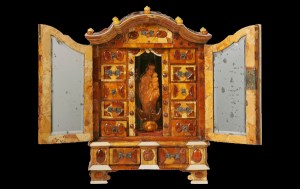
Amber cabinet of King Stanisław August Poniatowski (the last king of Poland). Made in Gdańsk after 1771. Donated by Lady Barbara Carmont of Edinburgh to the Malbork Castle Museum collections in 1979. © Malbork Castle Museum.
From the earliest times, the southern shores of the Baltic Sea have been associated with the gathering, trading and working of amber – a natural substance which has been long valued by man. Featuring some of the finest items from the Polish national collection, this new exhibition, Amber: Treasures from Poland offers a unique chance to see some fascinating and beautiful artefacts which represent both natural history and northern European craftsmanship. This is the first time that these items have been exhibited in the UK.
Most are from the famous Malbork Castle collection in Poland which has an important national collection of Baltic amber artefacts. Also included is the famous Gierłowska lizard from the Gdańsk Amber Museum, as well as a collection of insects trapped in amber and some historical amber artefacts from the Hunterian collection.
 Amber is found in many varieties of colours and forms and amber from the Baltic region of Europe is one of the most abundant in the world. It is used around the world for medical or spiritual wellbeing, for adornment or decoration, and for scientific reasons.
This exhibition introduces amber from prehistory to natural history; it looks at how people related to amber from the Stone Age onwards and at the incredible techniques and skill of the amber craftsmen who created some of the finest examples of amber art ever seen.
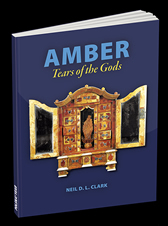
The launch of a new book Amber: Tears of the Gods (Dunedin Academic Press) will coincide with the opening of the exhibition. It has been written by Dr Neil DL Clark, Curator of Palaeontology at the Hunterian.
European Romanticism on Paper
Varieties of Romantic Experience: Drawings from the Collection of Charles Ryskamp
New Haven, Yale Center for British Art, 4 February — 25 April 2010

ISBN: 0300152922 (Yale University Press), $75
In 1824, the Scottish painter David Wilkie wrote to the director of the French Royal Museums, “It is time to show that the arts are cosmopolitan and that all national prejudice is foreign to them.” In spite of Wilkie’s fine sentiment, drawings by British artists from the Romantic period have rarely been considered alongside those produced across the Channel. In response, this remarkable exhibition will take up the challenge of treating Romanticism as an international phenomenon by bringing together nearly two hundred British, French, German, Danish, and Dutch drawings from the outstanding collection of Charles Ryskamp (MA ’51, PhD ’56), Professor Emeritus, Princeton University, and Director Emeritus of the Pierpont Morgan Library and The Frick Collection in New York. The first exhibition of this scope dedicated to northern European drawings, it will consider the place of British art in a European milieu.
Varieties of Romantic Experience: Drawings from the Collection of Charles Ryskamp will explore the direct relationship between British and Continental artists during the Romantic period (here defined as the period between the French Revolution in 1789 and the revolutions of 1848). Despite the very different circumstances in which artists across Europe were working, and the diverse modes of representation they employed, they shared common concerns and frequently explored similar themes. The exhibition and accompanying book will focus on Romanticism’s novel exploration of two worlds in particular: nature and the imagination. (more…)
New Books
Spring titles from the Paul Mellon Centre
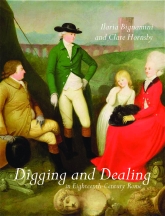
Ilaria Bignamini and Clare Hornsby, Digging and Dealing in Eighteenth-century Rome (New Haven: Yale University Press and the Paul Mellon Centre, 2010), ISBN: 9780300160437, $85.
This important and long-awaited book offers first overview of all British-led excavation sites in and around Rome in the Golden Age of the Grand Tour in the eighteenth century. Based on work carried out by the late Ilaria Bignamini, the authors have undertaken the monumental task of tracing sculptures and other works of art that are currently in public collections around the world from their original find sites via the dealers and entrepreneurs to the private collectors in Britain. In the first of two extensively illustrated volumes, approximately fifty sites, each located by maps, are analysed in historical and topographical detail, supported by fifty newly written and researched biographies of the major names in the Anglo-Italian world of dealing and collecting. Essays by Bignamini and Hornsby introduce the field of study and elucidate the complex bureaucracy of the relevant departments of the Papal courts. The second volume of the books is a collection of hundreds of letters from the dealers and excavators abroad to collectors in England, offering a rich source of information about all aspects of the art market at the time. The book is an invaluable resource for scholars working in a rapidly expanding area where European art and cultural history meets archaeology.
◊ ◊ ◊ ◊ ◊
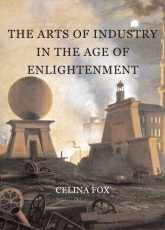
Celina Fox, The Arts of Industry in the Age of Enlightenment (New Haven: Yale University Press and the Paul Mellon Centre, 2010), ISBN: 9780300160420, $95.
This book is about the people who did the work. The arts of industry encompassed both liberal and mechanical realms – not simply the representation of work in the liberal or fine art of painting, but the mechanical arts or skills involved in the processes of industry itself. Drawing on a wealth of primary sources, Celina Fox argues that mechanics and artisans used four principal means to describe and rationalize their work: drawing, model-making, societies and publications. These four channels – which form the four central themes of this engrossing book – provided the basis for experimentation and invention, for explanation and classification, for validation and authorization, promotion and celebration, thus bringing them into the public domain and achieving progress as a true part of the Enlightenment. The book also examines the status of the mechanical arts from the medieval period to the seventeenth century and explains the motives behind and means by which entrepreneurs, mechanics and artisans sought to present themselves to the world in portraits, and the manner in which industry was depicted in landscape and genre painting, informed by the mechanical skills of close observation and accurate draughtsmanship. The book concludes with a look at the early nineteenth century when, despite the drive by gentlemen of science and fine artists towards specialization and exclusivity, not to mention the rise of the profession of engineers, the broad sweep of the mechanical arts retained a distinct identity within a somewhat chaotic world of knowledge for far longer than has generally been recognized. The debates their presence provoked concerning the relationship of theory to practice and the problematic nature of art and technical education are still with us today.
Zoffany Biography Just Published
Penelope Treadwell, Johan Zoffany: Artist and Adventurer (London: Paul Holberton, 2010), ISBN: 9781903470930, $50.
 This beautifully designed and illustrated publication is the first comprehensive biography of the portrait painter Johan Zoffany (1733-1810), one of the leading figures of eighteenth-century British art. The German-born artist shot to fame with his charming conversation pieces and portraits of London celebrities, and he soon became the painter of choice of King George III, depicting the royal family with rare informality, and subsequently a founder-member of the Royal Academy of Arts. His pictures have earned him the right to stand alongside Hogarth, Gainsborough and Reynolds as one of the most important founding artists of the British School.
Following ten years of detailed research, the author traces Zoffany’s remarkable life from his upbringing in Bavaria and apprenticeship in Rome to his subsequent success in Britain and adventures working in India. He is a figure who is ripe for reassessment, as a commentator on eighteenth-century politics and history as well as a painter. This timely and entertaining biography — reproducing many images that have never been previously published — looks beneath the often deceptively smooth surfaces of his art to discover the intelligence, curiosity and subversive humour that made his work and life so distinctive.
Early American Print Culture
Recently added to caa.reviews:
Trish Loughran, The Republic in Print: Print Culture in the Age of U.S. Nation Building, 1770–1870 (New York: Columbia University Press, 2007), 568 pages, $24.50 (9780231139090)
Reviewed by Jennifer Roberts, Department of History of Art and Architecture, Harvard University; posted 14 January 2010
. . . Standard accounts of print culture in the early national period stress the role of print as a telecommunication device; print networks connected people in time and space, forged communities out of disparate groups of disconnected citizens, and permitted something like a coordinated nation-state to develop and persist. Loughran’s brilliant and counterintuitive argument overturns this assumption. She argues instead that the illusion of national unification (the “virtual nation,” as she puts it) could take hold in reality only because the actual capacities of print dissemination networks were severely limited. . . .
What can art historians take from Loughran’s study? While the book devotes considerable attention to visual culture (more on which in a moment), its most profound potential as an art-historical contribution lies in its broad realignment of traditional ways of thinking about media and materiality. First: Loughran persistently redirects the definition of “print media” from their typical scope—ink, paper, etc.—to the broader geographical field through which print artifacts had to move. She emphasizes this in order to overturn persistent models of telecommunicative print culture that tend to ignore the actual heft of printed texts, imagining that they disseminate themselves weightlessly and simultaneously through space. . . .
Second: Loughran elegantly probes the relationship between the virtual spaces evoked by printed texts and the real spaces that they occupied and through which they were hauled and handled. She demonstrates that much of the historical power of these texts as both representations and performances emerged precisely in the cleavage between their “two bodies”: “On one hand, they served as symbols of unity; on the other, they were actual objects with limited circulations” (22). . .
For the full review, click here»










 Enfilade
leave a comment