Exhibition | Looking Allowed?
Now on view at Ambras Castle in Austria:
Looking Allowed? Diversity from the 16th to the 18th Century
Schloss Ambras, Innsbruck, 20 June — 6 October 2024
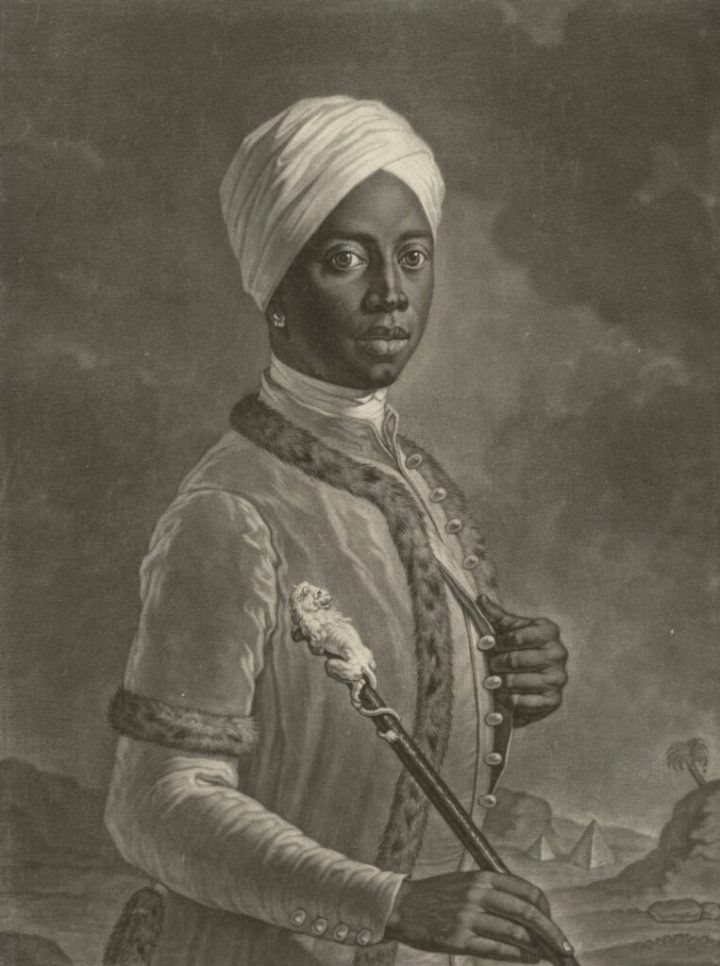
Johann Gottfried Haid after Johann Nepomuk Steiner, Portrait of Angelo Soliman (Mmadi Make), ca. 1750. Born in West Africa, Soliman was enslaved and shipped to Europe before eventually advancing in Austrian society as a successful Freemason and member of court.
Diversity has always existed. In the Renaissance—as humans increasingly took centre stage—it was not only the ideal that was of interest, but also humans’ inexhaustible diversity. The exhibition Looking Allowed? Human Diversity from the 16th to the 18th Century considers diversity in the past from today’s perspective, taking as its point of reference the Ambras collections of Archduke Ferdinand II. Here the whole world was illustrated, as was common in chambers of art and wonders.
Why did the Portrait of a Disabled Man find its way into the Ambras Chamber of Art and Wonders? Who is behind the ‘hair family’? And why do portraits of ‘court giants’ and ‘court dwarves’ move us? Such paintings run the risk of being dismissed as mere curiosities. This exhibition, by contrast, tells the stories of these people who did not fit period norms, taking as its theme the questions of whether, and if so, how encounters with them took place. It invites visitors to reflect on their own perceptions, confronting us with the question: ‘is it permissible to look?’
Current viewpoints are brought into the exhibition through audio and video contributions. Adapted font sizes and objects placed on different levels are aimed at reducing barriers and making it possible for a variety of visitors to experience the exhibition. Furthermore, the installation of a lift in the upper castle offers easy access for the first time to the special exhibition rooms located on the second floor.
Thomas Kuster, Christian Mürner, and Veronika Sandbichler, eds., Schauen erlaubt: Vielfalt Mensch vom 16. bis 18. Jahrhundert (Cologne: Walther König, 2024), 192 pages, ISBN: 978-3753306506, €19. With contributions by Volker Schönwiese, Katharina Seidl, Susanne Hehenberger, Eva Seemann, Anne Kuhlmann-Smirnov, and Rudi Risatti.
With statements, six essays, and over 70 catalog entries, the volume engages human diversity and the tensions between self-empowerment, acceptance, and discrimination.
New Book | The Art of Anna Dorothea Therbusch (1721–1782)
Forthcoming from Amsterdam UP, with a reminder that registration for September’s Therbusch conference in Berlin is due by August 4.
Christina Lindeman, The Art of Anna Dorothea Therbusch (1721–1782) (Amsterdam: Amsterdam University Press, 2024), 212 pages, ISBN: 9789463721486, €117.
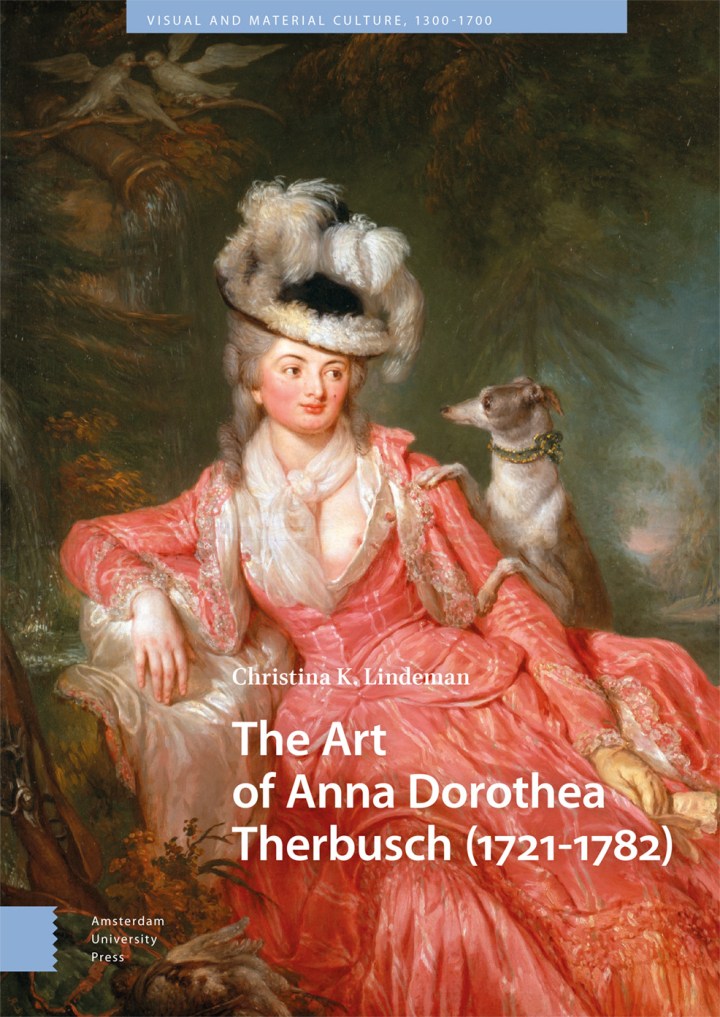 The Art of Anna Dorothea Therbusch (1721–1782) is the first English-language monograph on this exceptional German artist that critically examines Therbusch’s artworks and career as a history and mythological painter, portraitist, and maker of synthetic pigments within the German and international milieu that both condemned and celebrated her accomplishments. Adding to the excellent scholarship on French, British, Italian, and Swiss eighteenth-century women painters, this book showcases the social and cultural practices of court cultures beyond France, with a focus on German-speaking Europe and how a provocative woman painter navigated within them. Meticulous archival and literary research sheds new light on the importance of the family atelier as a place of networking, collaboration, and experimentation in the eighteenth century and provides a fresh perspective on the growing Prussian intellectual and mercantilist cultures and their impact on Therbusch’s artistic production and the unavoidable fluency between painting, the minor or luxury arts, and the laboratory. Therbusch’s life and art enriches our understanding of female artistic agency and the complexities of pursuing a career in the male- and academy-dominated art world of the eighteenth century.
Christina K. Lindeman is Associate Professor of Art History at the University of South Alabama. Her research focuses on the art and material culture of eighteenth-century Germany. Her first book Representing Duchess Anna Amalia’s Bildung: A Visual Metamorphosis from Political to Personal in Eighteenth-Century Germany was published by Routledge in 2017. She has also contributed essays in Intimate Interiors: Sex, Politics, and Material Culture in the Eighteenth-Century Bedroom and Boudoir (2023), Materializing Gender in Eighteenth-Century Europe (2015), Word and Image in the Eighteenth Century (2008), as well as published articles in Source (2013) and Journal 18 (2022).
c o n t e n t s
List of Illustrations
Introduction
1 A Woman Artist Painting Women
2 Collaboration as a Veil
3 Turning Back to the Dutch Masters
4 Arcanum, a New Red
Epilogue
Bibliography
Index
New Book | Between Design and Making
From UCL Press, where it’s also available as a free PDF:
Andrew Tierney and Melanie Hayes, eds., Between Design and Making: Architecture and Craftsmanship, 1630–1760 (London: University College London Press, 2024), 339 pages, ISBN: 978-1800086951 (hardback), £55 / ISBN: 978-1800086944 (paperback), £35.
 The seventeenth and eighteenth centuries represent a high point in the intersection between design and workmanship. Skilled artisans, creative and technically competent agents within their own field, worked across a wide spectrum of practice that encompassed design, supervision, and execution, and architects relied heavily on the experience they brought to the building site. Despite this, the bridge between design and tacit artisanal knowledge has been an underarticulated factor in the architectural achievement of the early modern era.
Building on the shift towards a collaborative and qualitative analysis of architectural production, Between Design and Making re-evaluates the social and professional fabric that binds design to making and reflects on the asymmetry that has emerged between architecture and craft. Combining analysis of buildings, archival material, and eighteenth-century writings, the authors draw out the professional, pedagogical, and social links between architectural practice and workmanship. They argue for a process-oriented understanding of architectural production, exploring the obscure centre ground of the creative process: the scribbled, sketched, hatched, and annotated beginnings of design on the page; the discussions, arguments, and revisions in the forging of details; and the grappling with stone, wood, and plaster on the building site that pushed projects from conception to completion.
Andrew Tierney and Melanie Hayes are post-doctoral research fellows of the European Research Council Advanced Grant project, STONE-WORK, and former research fellows of the Irish Research Council Advanced Laureate Project CRAFTVALUE at Trinity College Dublin.
c o n t e n t s
Foreword — Christine Casey
Introduction: Between Design and Making: Architecture and Craftsmanship, 1630–1760 — Andrew Tierney and Melanie Hayes
Part 1 | Practice
1 Architect and Mason-Architect: Inigo Jones, Nicholas Stone, and the Development of the Open-Well Suspended Stone Staircase in the 1630s — Gordon Higgott and Adam White
2 The Townesend Family and the Building of Eighteenth-Century Oxford — Geoffrey Tyack
3 Codes, Conventions, Circulations: Drawings as an Instrument of Collaboration in the Work of Nicolas Pineau — Bénédicte Gady
4 Architects and Artificers: Building Management at Trinity College Dublin in the 1730s and 1740s — Melanie Hayes
5 Artisans and Architecture in Eighteenth-Century Saxony — Nele Lüttmann
6 Between Concept and Construction: Conservation Insights into the Building of Damer House — Mairtín D’Alton and Flora O’Mahony
Part 2 | Representation
7 Architects and Craftsmen: A Theme with Variations — Alistair Rowan
8 Classical Profiles: The ‘Alphabet of Architecture’? — Edward McParland
9 Allegorising the Space between Architecture and Craft: Mural Painting 1630–1730 — Lydia Hamlett
10 Material, Curiosity, and Performance: The Reception of Workmanship in Early Modern Britain and Ireland — Andrew Tierney
Exhibition | Bologna during the Enlightnement
Now on view the Fesch Museum:
Bologne au siècle des Lumières: Art et science, entre réalité et théâtre
Palais Fesch, Musée des Beaux-Arts, Ajaccio, Corsica, 29 June — 30 September 2024

Attributed to Giacomo Boni, The Triumph of David, oil on canvas (Ajaccio, Palais Fesch, Musée des Beaux-Arts, 852.1.967).
Cette nouvelle exposition sur la peinture, la sculpture et les objets de curiosité, faite en collaboration avec la Pinacoteca Nazionale, les Musei Civici et la fondation de la Cassa di Risparmio de Bologne (CARISBO), s’inscrit dans le prolongement des précédentes expositions du musée d’Ajaccio portant sur l’art italien des XVIIe et XVIIIe siècles. Si le XVIIe siècle bolonais, celui des Carracci, de Reni et de Guercino, est bien connu en France, l’exposition permettra au public de découvrir une période moins familière de ce centre artistique.
Le XVIIIe siècle bolonais s’ouvre avec la fondation de l’Istituto delle Scienze et de l’Accademia Clementina, nés de la volonté du général Luigi Ferdinando Marsili, avec le soutien d’intellectuels inspirés des Lumières et l’approbation du Sénat. Les deux institutions bénéficient de la protection du pape Clément XI, le souverain qui a fait rentrer la ville dans le giron des États de l’Église.
Tandis que l’Istituto delle Scienze, réglé sur les dernières avancées scientifiques européennes, se propose de rendre son prestige à la cité, siège de la plus ancienne université, l’Accademia Clementina vise à retrouver les fastes du siècle d’or de la peinture célébré par la Felsina pittrice de Carlo Cesare Malvasia (1678) et lié aux noms des Carracci, de Reni et de Guercino. Le siècle naissant voit s’achever les carrières de peintres tels que le néo-carracesque Domenico Maria Viani, Benedetto Gennari, neveu de Guercino, rentré à Bologne après un long séjour en Angleterre, Giovanni Gioseffo dal Sole, dernier interprète des finesses de Guido Reni, et Carlo Cignani, prince à vie de l’Accademia Clementina, représentant d’un classicisme teinté de souvenirs corrégiens.
Dans la première moitié du XVIIIe siècle, l’opposition entre les deux champions de la peinture, Donato Creti et Giuseppe Maria Crespi, est radicale et irréductible. Les recherches du premier aboutissent à un classicisme élégant et raffiné, lumineux et incorruptible, alors que le second affiche au contraire un naturalisme agressif et prosaïque aux accents ironiques, d’un caractère presque populaire. Dans le même temps, la culture littéraire de l’Arcadia inspire, avec Marcantonio Franceschini, peintre européen cher aux princes de Liechtenstein, un purisme qui évolue vers un barocchetto atténué, habile et léger, apprécié des milieux aristocratiques et de l’autorité religieuse. Si les solennels tableaux d’autels répondent aux exigences du décorum et de la commande officielle, les grandes peintures destinées aux palais visent à célébrer, avec des allégories et l’évocation des gloires antiques, les familles sénatoriales, soutiens de l’autorité pontificale dans le gouvernement de la ville.
La ville pullule de petites comme de grandes collections. Ce sont non seulement les palais de l’aristocratie, mais aussi les habitations de la bourgeoisie ou des artisans qui se couvrent de peintures, disposées sous les fresques où se déploie la virtuosité perspective des peintres de quadratura.
Trompe-l’œil, dilatations spatiales et illusions théâtrales allant jusqu’à l’invraisemblable rendent les scénographes bolonais célèbres dans les théâtres européens, grâce aux succès de la famille Bibiena, dans le sillage des expériences passées d’Angelo Michele Colonna et d’Agostino Mitelli, appelés, au-delà des cours italiennes, jusqu’en Espagne et en France. Autour de l’Accademia Filarmonica, fréquentée entre autres par des personnalités telles que le chanteur Carlo Broschi, dit Farinelli, le compositeur Johan Christian Bach, le musicologue Charles Burney—à laquelle se sont joints des chanteurs, des compositeurs et des instrumentistes, sous l’œil attentif du célèbre père Giambattista Martini, qui fut le maître du Mozart lorsque celui-ci avait quatorze ans—se développe une intense activité mêlant architecture, peinture, musique et poésie, tandis qu’est inauguré en 1763 le Teatro Comunale avec le Triomphe de Clelia de Christoph Willibald Gluck, sur des textes de Métastase.
Une peinture légère opère la mutation de la solide tradition du XVIIe siècle vers le rocaille. Ses interprètes sont Francesco Monti, Giuseppe Marchesi dit Sanson, Vittorio Maria Bigari, Giuseppe Varotti et Nicola Bertuzzi, rejoints, en parfaite harmonie, par les sculpteurs et modeleurs Giovan Battista Bolognini, Francesco Jannsens, Angelo Piò et son fils Domenico, qui, à partir de l’exemple de Giuseppe Maria Mazza, donnent aux figures de stuc et de terre cuite un élégant mouvement tout en courbes et une grâce pleine de séduction.
Le succès de l’Accademia Clementina, dû au zèle de son secrétaire Gianpietro Zanotti, amène le remplacement progressif de la formation traditionnelle au sein des ateliers par des enseignements codifiés, l’institution officielle de prix dans les différentes branches artistiques et l’ouverture de l’Accademia del nudo. Dans ce contexte vont émerger les deux principales personnalités de la seconde moitié du siècle, les frères Ubaldo et Gaetano Gandolfi, chez qui la tradition s’est régénérée au contact fructueux de la culture picturale vénitienne, freinant l’avancée du néoclassicisme.
En 1796, à l’arrivée des troupes napoléoniennes, Gaetano Gandolfi pourra assister à l’effondrement de l’Ancien Régime, et aux bouleversements socio-politiques qui vont en découler : le renversement du pouvoir pontifical, la suppression des ordres religieux et des confréries laïques avec la confiscation de leurs biens. En remplacement de l’Accademia Clementina, la création de l’Accademia di Belle Arti, accompagnée de la naissance de la moderne Pinacoteca, inaugure cette nouvelle ère.
Bologne au siècle des Lumières: Art et science, entre réalité et théâtre (Milan: Silvana Editoriale, 2024), 368 pages, ISBN: 978-8836658527, €33.
New Book | The End of Enlightenment
Curiously, this trade book has not (yet?) been properly published in the United States. The American version of the Penguin Random House website doesn’t list it, and it’s available through Barnes & Noble only as an ebook and audiobook (at Amazon, hardback copies are available from third-party vendors). In Britain, the book was widely reviewed in popular outlets by critics who didn’t typically engage the larger historiographical debates about the Enlightenment as a conceptual category. Among the more helpful is Linda Colley’s review for the Financial Times (13 December 2023). –CH
From the UK Penguin site:
Richard Whatmore, The End of Enlightenment: Empire, Commerce, Crisis (London: Allen Lane, 2023), 496 pages, ISBN: 978-0241523421, £30.

The Enlightenment is popularly seen as the Age of Reason, a key moment in human history when ideals such as freedom, progress, natural rights, and constitutional government prevailed. In this radical re-evaluation, historian Richard Whatmore shows why, for many at its centre, the Enlightenment was a profound failure.
By the early eighteenth century, hope was widespread that Enlightenment could be coupled with toleration, the progress of commerce, and the end of the fanatic wars of religion that were destroying Europe. At its heart was the battle to establish and maintain liberty in free states—and the hope that absolute monarchies such as France and free states like Britain might even subsist together, equally respectful of civil liberties. Yet all of this collapsed when states pursued wealth and empire by means of war. Xenophobia was rife, and liberty itself turned fanatic. The End of Enlightenment traces the changing perspectives of economists, philosophers, politicians, and polemicists around the world, including figures as diverse as David Hume, Adam Smith, Edmund Burke, and Mary Wollstonecraft. They had strived to replace superstition with reason but witnessed instead terror and revolution, corruption, gross commercial excess, and the continued growth of violent colonialism. Returning us to these tumultuous events and ideas, and digging deep into the thought of the men and women who defined their age, Whatmore offers a lucid exploration of disillusion and intellectual transformation, a brilliant meditation on our continued assumptions about the past, and a glimpse of the different ways our world might be structured—especially as the problems addressed at the end of Enlightenment are still with us today.
Richard Whatmore is Professor of Modern History at the University of St Andrews and co-director of the Institute of Intellectual History. He is the author of several acclaimed contributions to intellectual history and eighteenth-century scholarship, including The History of Political Thought (2022), Terrorists, Anarchists and Republicans (2019), and Against War and Empire (2012).
New Book | The Unnatural Trade
Forthcoming from Yale UP:
Brycchan Carey, The Unnatural Trade: Slavery, Abolition, and Environmental Writing, 1650–1807 (New Haven: Yale University Press, 2024), 280 pages, ISBN: 978-0300224412, $65.
 A look at the origins of British abolitionism as a problem of eighteenth-century science, as well as one of economics and humanitarian sensibilities
How did late eighteenth-century British abolitionists come to view the slave trade and British colonial slavery as unnatural, a ‘dread perversion’ of nature? Focusing on slavery in the Americas, and the Caribbean in particular, alongside travelers’ accounts of West Africa, Brycchan Carey shows that before the mid-eighteenth century, natural histories were a primary source of information about slavery for British and colonial readers. These natural histories were often ambivalent toward slavery, but they increasingly adopted a proslavery stance to accommodate the needs of planters by representing slavery as a ‘natural’ phenomenon. From the mid-eighteenth century, abolitionists adapted the natural history form to their own writings, and many naturalists became associated with the antislavery movement. Carey draws on descriptions of slavery and the slave trade created by naturalists and other travelers with an interest in natural history, including Richard Ligon, Hans Sloane, Griffith Hughes, Samuel Martin, and James Grainger. These environmental writings were used by abolitionists such as Anthony Benezet, James Ramsay, Thomas Clarkson, and Olaudah Equiano to build a compelling case that slavery was unnatural, a case that was popularized by abolitionist poets such as Thomas Day, Edward Rushton, Hannah More, and William Cowper.
Brycchan Carey is professor of literature, culture, and history at Northumbria University in Newcastle upon Tyne. He has published numerous books and articles on the cultural history of slavery and abolition.
Exhibition | Guillaume Lethière
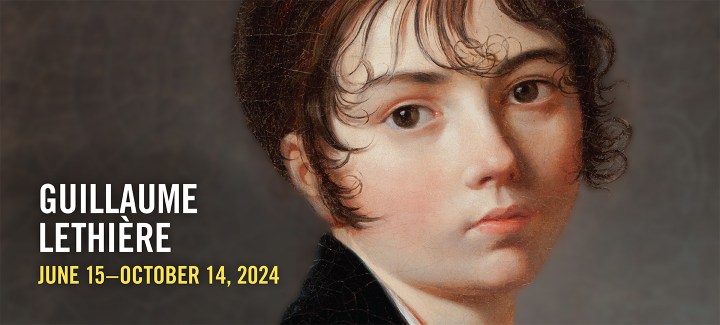
Guillaume Lethière, Woman Leaning on a Portfolio, detail, ca. 1799, oil on canvas
(Worcester Art Museum, Massachusetts, 1954.21)
◊ ◊ ◊ ◊ ◊
Now on view at The Clark:
Guillaume Lethière
The Clark Art Institute, Williamstown, Massachusetts, 15 June — 14 October 2024
Musée du Louvre, Paris, 13 November 2024 — 17 February 2024
Curated by Esther Bell, Olivier Meslay, Sophie Kerwin, and Marie-Pierre Salé
The first monographic exhibition ever presented on the artist
 Born in Sainte-Anne, Guadeloupe, Guillaume Lethière (1760–1832) was a key figure in French painting during the late eighteenth and early nineteenth centuries. The son of a white plantation owner and an enslaved woman of mixed race, Lethière moved to France with his father at age fourteen. He trained as an artist and successfully navigated the tumult of the French Revolution and its aftermath to achieve the highest levels of recognition in his time.
A favorite artist of Napoleon’s brother Lucien Bonaparte, Lethière served as director of the Académie de France in Rome, as a member of the Institut de France, and as a professor at the École des Beaux-Arts. A well-respected teacher, he operated a robust studio that rivaled those of his most successful contemporaries. Despite his remarkable accomplishments and considerable body of work, Lethiere is not well known today. The exhibition, organized in partnership with the Musée du Louvre and featuring some one hundred paintings, prints, and drawings, celebrates Lethière’s extraordinary career and sheds new light on the presence and reception of Caribbean artists in France during his lifetime.
Guillaume Lethière is co-organized by the Clark Art Institute, Williamstown, Massachusetts, and the Musée du Louvre, Paris, and curated by Esther Bell, deputy director and Robert and Martha Berman Lipp Chief Curator; and Olivier Meslay, Hardymon Director; with the assistance of Sophie Kerwin, curatorial assistant, at the Clark; and by Marie-Pierre Salé, chief curator in the Department of Drawings at the Louvre.
For more information, see the exhibition press release»
Esther Bell and Olivier Meslay, eds., Guillaume Lethière (New Haven: Yale University Press, 2024), 432 pages, ISBN: 978-0300275780, $65. With contributions by Alain Chevalier, Natasha Coleman, Darcy Grimaldo Grigsby, Frederic Lacaille, Anne Lafont, Christelle Lozere, Sophie Kerwin, Mehdi Korchane, C.C. McKee, Marie-Isabelle Pinet, Frederic Regent, Marie-Pierre Sale, Aaron Wile, and Richard Wrigley.
New Book | Everyday Politics and Culture in Revolutionary France
From the Oxford University Studies in the Enlightenment series, published by Liverpool UP:
Suzanne Desan, Bryant Ragan, and Victoria Thompson, eds., Everyday Politics and Culture in Revolutionary France: Essays in Honor of Lynn Hunt (Liverpool: Liverpool University Press, 2024), 320 pages, ISBN: 978-1802073812, $99. Also available as a PDF and epublication.
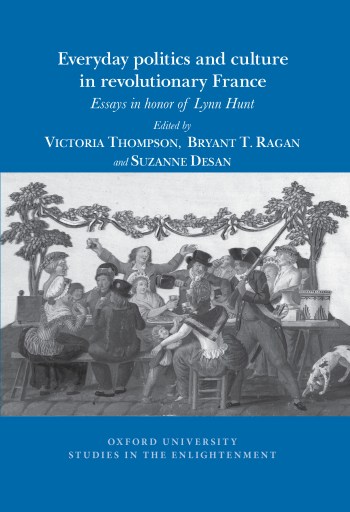 The French revolutionary era produced surprises. Why did the French revolutionaries decriminalize sodomy? How did the Revolution alter fundamental attitudes toward time and progress? How did it change people’s interactions with outdoor spaces and with material objects, from playing cards to holy cards? How did it leave a lasting footprint on personal identity, family relationships, and religious belief? Addressing diverse topics like these, the essays in this volume showcase exciting new research about the revolutionary era. Written to honor the historian Lynn Hunt, the essays rethink our understanding of the French Revolution by exploring three central themes: the multifaceted nature of grassroots politics; the pervasive and personal impact of the Revolution on daily life; and its long-term influence on memory, identity, and sense of self. From the October Days to dechristianization and beyond, the authors probe the precarious invention of democracy, analyze how intimately and intently the French Revolution influenced people’s lives, and examine how it shaped nineteenth-century memory, female religiosity, and political culture. Embracing contingency, diversity of experience and perspective, and the multifarious nature of change, the essays document the power and complexity of the revolutionary era as a lived experience.
Suzanne Desan is Vilas Distinguished Achievement Professor of History Emerita, University of Wisconsin-Madison. She is the author of The Family on Trial in Revolutionary France and co-editor of The French Revolution in Global Perspective. She is currently writing a book on the October Days in the early French Revolution.
Bryant T. Ragan teaches early modern European history and the history of sexuality at The Colorado College. He presently participates on a research team that is developing an interactive website and relational database that focuses on the policing of male sodomy in eighteenth-century Paris.
Victoria E. Thompson is Chair of the School of History and Sociology at the Georgia Institute of Technology. She is completing a book entitled King and Public in the Parisian Royal Square, 1748–89 that examines the relationship between the design, representation, and use of urban space and socio-political transformation.
c o n t e n t s
Introduction: Suzanne Desan and Victoria Thompson
1 Victoria Thompson — A Perpetually Agitated Place: Politics in the Tuileries Garden, 1789–1792
2 Suzanne Desan — Military Men, Violence, and Gender in the October Days of 1789
3 Jeff Horn — Dechristianization and Terror in Champagne
4 Bryant Ragan — Same-sex Sexual Relations and the French Revolution: The Decriminalization of Sodomy in 1789
5 William Max Nelson — Leaping into the Future: Enlightenment Ideas of Progress and French Revolutionary Time
6 Jeff Ravel — ’Plus de rois, de dames, de valets’: Playing Cards during the French Revolution
7 Denise Z. Davidson — ‘Notes et souvenirs … sur la vie politique de mon père’: Memory, Mourning, and Politics in the Revolutionary Era
8 Jennifer Popiel — Martyred Virgins, Embattled Women, and Mass Culture: Sentiment and Authority in Nineteenth-Century Religious Images, 1830–60
Epilogue: Lynn Hunt — Why the French Revolution Continues to Matter
Bibliography
Exhibition | Comment m’habillerai-je?
Now on view at the Museum of the French Revolution (near Grenoble):
Comment m’habillerai-je? Se vêtir sous la Révolution française, 1789–1804
Musée de la Révolution française, Vizille, 28 June — 10 November 2024
 Découvrez une mode en pleine (r)évolution!
Dans la société française de la fin du XVIIIe siècle, marquée par la culture des apparences, dans quelle mesure la rupture que constitue la Révolution française se reflète-t-elle dans la manière de se vêtir ?
L’exposition se propose de répondre à cette question. Véritable marqueur social sous l’Ancien Régime, le vêtement se transforme sous la Révolution française pour devenir le symbole d’une prise de position politique. Face au nouveau contexte politique et social et au nouvel élan de liberté, il devient par la suite un véritable objet de luxe et de mode. L’exposition présentera ces transformations à l’aide de textes, d’objets, d’iconographie et surtout d’estampes, medium de diffusion par excellence des modes, des symboles politiques et des idées.
Dans le cadre de la saison culturelle Des habits et nous, portée par le Département de l’Isère. Une exposition conçue et organisée par le Musée de la Révolution française et la Bibliothèque nationale de France.
Comment m’habillerai-je ? Se vêtir sous la Révolution française, 1789–1804 (Gent: Snoeck Publishers, 2024), 160 pages, ISBN: 978-9461619136, €30.
New Book | Louis Galloche (1670–1761)
From Silvana Editoriale:
François Marandet, Louis Galloche (1670–1761): Un peintre de poesie au XVIIIe siècle (Milan: Silvana Editoriale, 2023), 112 pages, ISBN: 978-8836656165, €28.
 Oublié par l’histoire de l’art, Louis Galloche (Paris, 1670–1761) fut pourtant l’une des figures majeures de la peinture française au cours de la première moitié du XVIIIe siècle. Il décora des résidences aussi importantes que les châteaux royaux de Versailles, de Fontainebleau et du Trianon. Couronné par le titre de chancelier de l’Académie royale de peinture et sculpture, Louis Galloche eut des élèves voués à devenir célèbres tels François Lemoyne et Charles-Joseph Natoire. Ayant conçu des poesie semblables à celles du Titien, Louis Galloche avait surtout un sens de la beauté particulièrement prononcé. Les tableaux, dessins, et multiples documents d’archives qui ont été retrouvés par François Marandet font ainsi redécouvrir, à travers cette toute première monographie consacrée à Louis Galloche, l’œuvre et l’itinéraire d’un des meilleurs artistes français de sa génération.
c o n t e n t s
Préface
Introduction
Chronologie
Un Élève de Louis de Boullogne, 1690–1711
• Premières études
• Grandes peintures à petits prix
• Un retour du pays des morts
Le Temps des Poesie, 1712–1731
• À la manière du Titien
• Nouvelles études
• Un concours truqué
Le Doyen de l’Académie Royale, 1732–1761
• Des tableaux pour la reine
• Les Salons de la concurrence royale
• Un concours sans vainqueur
• Louis Galloche: stéréotypes et réalité
Bibliographie










 Enfilade
leave a comment