Exhibition | Miguel Cabrera (1695–1768)
Now on view at Madrid’s Museo de América:
Miguel Cabrera: Las reglas del arte de un pintor novohispano
Museo de América, Madrid, 31 May — 13 October 2024
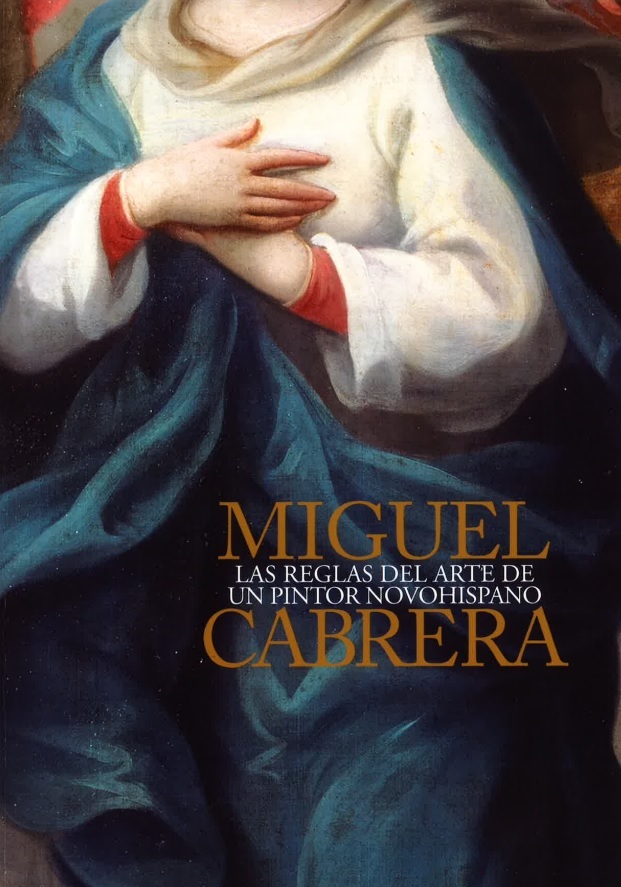 Desde 2019 el Museo de América ha liderado el proyecto Estudio y conservación de la serie La vida de la Virgen, de Miguel Cabrera. El proyecto integró numerosos profesionales de diferentes instituciones museísticas y académicas españolas y latinoamericanas. Sus trabajos han aportado importantes avances en el conocimiento de la pintura barroca novohispana y la conservación de la pintura sobre lienzo. Como resultado del extenso trabajo llevado a cabo se presenta esta magna exposición para cerrar con broche de oro este proyecto: La primera exposición en España dedicada a uno de los pintores más importantes del México Virreinal: Miguel Cabrera, a su vida, obra y el estudio técnico de su pintura. El discurso museográfico se sustenta en veintitrés obras pictóricas pertenecientes principalmente a las colecciones del Museo de América, así como préstamos bibliográficos de la Biblioteca Nacional de España.
Objetivos de la exposición
• Dar a conocer en España la obra y técnica de Miguel Cabrera, maestro de la pintura novohispana
• Presentar la magnífica serie de cuadros de La vida de la Virgen, su historia y su llegada a España en el siglo XVIII
• Mostrar al público los trabajos de conservación y de investigación técnica realizados en torno a estas obras
• Poner en valor el trabajo de conservación y restauración del patrimonio histórico-artístico llevado a cabo en los museos e instituciones museísticas
Miguel Cabrera: Las reglas del arte de un pintor novohispano (Madrid: S.G. Museos Estatales, 2024), 296 pages, ISBN: 978-8481818611, €21.
The Decorative Arts Trust Announces Recipients of Publishing Grants
From the press release (13 June 2024) . . .
The Decorative Arts Trust congratulates the inaugural recipients of their new Publishing Grants. The Hispanic Society Museum and Library; the Philadelphia Museum of Art; and The Huntington Library, Art Museum, and Botanical Gardens received Publishing Grants for Collections, Exhibitions, and Conferences, and Dr. Joseph Larnerd from Drexel University received a Publishing Grant for Dissertations and First-Time Authors.
In November 2024, the Hispanic Society Museum and Library in New York City’s Washington Heights will publish A Room of Her Own: The Estrados of Viceregal Spain to accompany their landmark exhibition of the same name. Guest Curator Alexandra Frantischek Rodriguez-Jack and Deputy Director and Head of Collections Margaret Connors McQuade will lead this examination of the estrado, defined in the early 18th-century treatise Diccionario de Autoridades as the “set of furniture used to cover and decorate the place or room where the ladies sit to receive visitors.” The estrado was a remarkable space where a diverse group of women engaged in elaborate social practices and displayed their collections of valuable objects from the Americas, Asia, and Europe. Decorative arts, paintings, rare books, and engravings from the Hispanic Society Museum and Library’s collection will be presented in an entirely new light, with many to be exhibited for the first time.
The Huntington Library, Art Museum, and Botanical Gardens in San Marino, California plans to release a comprehensive publication about an influential Los Angeles-based ceramics artist in fall 2026. Although additional details cannot be announced at this time, the book will complement an exhibition led by Lauren Cross, PhD, the Gail-Oxford Associate Curator of American Decorative Arts.
The Philadelphia Museum of Art is publishing Art, Industry, and Reform in Philadelphia, 1876–1926, accompanying the museum’s spring 2026 exhibition of the same name. David Barquist, The H. Richard Dietrich, Jr., Curator of American Decorative Arts, and Colin Fanning, Assistant Curator of European Decorative Arts, lead the exhibition and publication, which will focus on Philadelphia artisans and architects who drew on a range of inspirations—from the British Arts and Crafts movement to masterworks at the World’s Fairs—to address challenges of urban industrialization. Their investigation will be among PMA’s offerings during the nation’s 250th commemoration, which is also the museum’s 150th anniversary year.
Dr. Joseph Larnerd received the inaugural Publishing Grant for Dissertations and First-Time Authors. Larnerd, an Assistant Professor of Design History at Drexel University in Philadelphia, will publish Undercut: Cut Glass in Working-Class Life during the Long Gilded Age with the University of Delaware Press in fall 2025. This publication offers an original history of cut glass refracted through the labors required to make and maintain the glistening wares. Larnerd will show how popular representations of the medium and these widely discussed labors undercut how working-class peoples imagined and enacted social class, privilege, and mobility.
The deadline to apply for Decorative Arts Trust Publishing Grants is March 31 annually. For more information, visit decorativeartstrust.org.
New Book | Parenting Advice to Ignore in Art and Life
From Chronicle Books:
Nicole Tersigni, Parenting Advice to Ignore in Art and Life (New York: Chronicle Books, 2023), 96 pages, ISBN: 978-1797222172, $15.
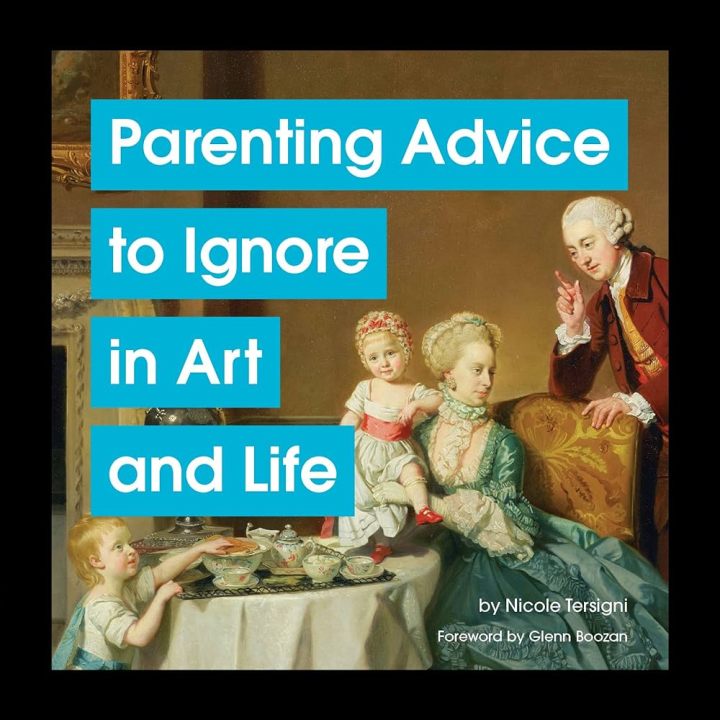 From the author of the hit Men to Avoid in Art and Life and Friends to Keep in Art and Life comes a collection of all-too-familiar unsolicited advice parents receive on the daily.
From in-laws and other parents to complete strangers and even your own kids—when it comes to parenting, everyone’s a critic. Against the classic backdrop of fine art, bestselling author Nicole Tersigni’s Parenting Advice to Ignore in Art and Life pokes fun at the many ‘experts’ who think they know more than you about your own children. Utterly (and unfortunately) relatable and hilarious as ever, Tersigni’s spot-on captions provide a much-needed laugh for anyone who has had the pleasure of parenting and the pain of having a stranger tell you to put a hat on your baby.
Nicole Tersigni is a comedic writer experienced in improv comedy and women’s advocacy. She lives in Metro Detroit with her husband, daughter, and two dogs.
Print Quarterly, June 2024
The long eighteenth century in the latest issue of Print Quarterly:
Print Quarterly 41.2 (June 2024)
a r t i c l e s
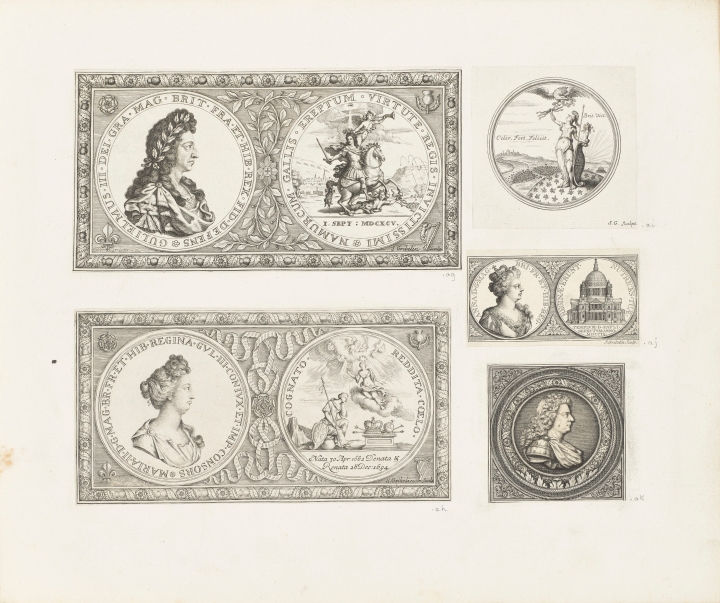
Simon Gribelin, A Medal of William III Commemorating the Fall of Namur, 1695 and other engravings, in the Works of Gribelin album, sheet 311 × 372 mm (Windsor Castle, Royal Collection. Image Royal Collection Trust / © His Majesty King Charles III 2023).
• Rhian Wong, “Simon Gribelin’s Presentation Albums,” pp. 157–71.
The article examines two previously unpublished presentation albums in the Royal Collection, compiled by the engraver Simon Gribelin (1661–1733). The Works of Gribelin album was compiled in 1715 for George II (when Prince of Wales), while an album of prints of the ceiling of the Banqueting House, London was presented around 1720 to George I. A consideration of the contents of the Works of Gribelin album reveals that Gribelin followed a deliberate programme for the arrangement of its contents. The article looks at the purpose of the albums and places their creation in the context of four other albums known to have been assembled by Gribelin.
n o t e s a n d r e v i e w s
• Galina Mardilovich, Review of Julia Khodko, Peterburg Mikhaila Makhaeva. Grafika I zhivopis’ vtoroi poloviny XVIII veka (The State Russian Museum, 2022), pp. 183–85. This is the catalogue for an exhibition addressing the drawings (and resulting prints) of St Petersburg made by Mikhail Makhaev (1717–1770).
• Shijia Yu, Review of The Art of the Deal (Daniel Crouch Rare Books, 2023), pp. 185–87. This is catalogue of the playing card collection assembled by the Dutch collector Frank van den Bergh.
• Thea Goldring, Review of Esther Bell, Sarah Grandin, Corinne Le Bitouzé, and Anne Leonard, Promenades on Paper: Eighteenth-Century French Drawings from the Bibliothèque National de France (Yale University Press, 2022), pp. 188–90.
• Joanna Sheers Seidenstein, Review of Amy Golahny, Rembrandt’s Hundred Guilder Print (Lund Humphries, 2021), pp. 221–26. Includes the reception history of the print, and the section on William Baillie’s restrikes in the 1770s is relevant.
New Book | The Book-Makers
Several chapters address 18th-century topics, including extra-illustration, as seen through the work of Alexander and Charlotte Sutherland. From Hachette Book Group:
Adam Smyth, The Book-Makers: A History of the Book in Eighteen Lives (New York: Basic Books, 2024), 400 pages, ISBN: 978-1541605640, £25 / $32.
 A scholar and bookmaker “breathes both books-as-objects and their creators back into life” (Financial Times) in this five-hundred-year history of printed books, told through the people who created them
Books tell all kinds of stories—romances, tragedies, comedies—but if we learn to read the signs correctly, they can tell us the story of their own making too. The Book-Makers offers a new way into the story of Western culture’s most important object, the book, through dynamic portraits of eighteen individuals who helped to define it. Books have transformed humankind by enabling authors to create, document, and entertain. Yet we know little about the individuals who brought these fascinating objects into existence and of those who first experimented in the art of printing, design, and binding. Who were the renegade book-makers who changed the course of history? From Wynkyn de Worde’s printing of fifteenth-century bestsellers to Nancy Cunard’s avant-garde pamphlets produced on her small press in Normandy, this is a celebration of the book with the people put back in.
Adam Smyth is professor of English literature and the history of the book at Balliol College, University of Oxford. He is a regular contributor to the London Review of Books and the TLS. He also runs the 39 Steps Press, a small printing press, which he keeps in a barn in Oxfordshire, England.
New Book | The Library: A Fragile History
First published in hardcover in 2021, it was released in paperback last fall. From Hachette Book Group:
Andrew Pettegree and Arthur der Weduwen, The Library: A Fragile History (New York: Basic Books, 2021), 528 pages, ISBN: 978-1541600775 (hardcover), $35 / ISBN: 978-1541603721 (paperback), $22.
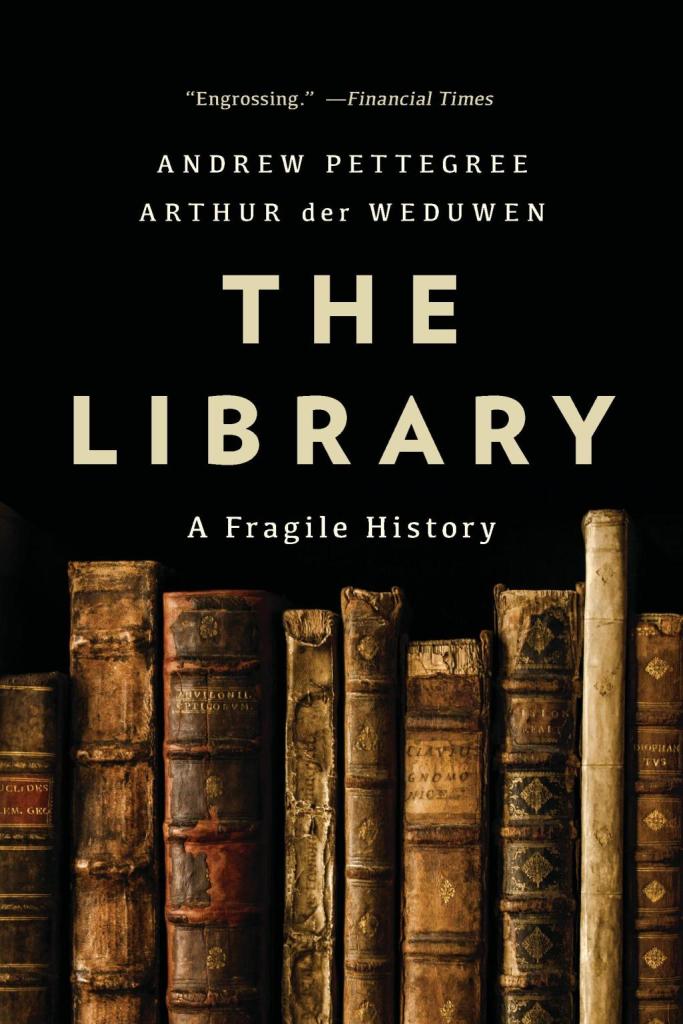 The ‘engaging’ and ‘ambitious’ (Washington Post) history of libraries and the people who built them, from the ancient world to the digital age
The history of the library is rich, varied, and stuffed full of incident. In The Library, historians Andrew Pettegree and Arthur der Weduwen introduce us to the antiquarians and philanthropists who shaped the world’s great collections, trace the rise and fall of literary tastes, and reveal the high crimes and misdemeanors committed in pursuit of rare manuscripts. In doing so, they reveal that while collections themselves are fragile, often falling into ruin within a few decades, the idea of the library has been remarkably resilient as each generation makes—and remakes—the institution anew.
Andrew Pettegree is professor of modern history at the University of St. Andrews and a leading expert on the history of book and media transformations.
Arthur der Weduwen is a British Academy postdoctoral fellow at the University of St. Andrews.
New Book | Ingenious Italians
From Brepols:
Katherine Jean McHale, Ingenious Italians: Immigrant Artists in Eighteenth-Century Britain (Turnhout: Brepols, 2024), 344 pages, ISBN: 978-1915487179, €175.
 Explores the lives of the nearly two hundred Italian artists who made the arduous journey to Britain, adapting to a foreign culture while using their renowned skills and entrepreneurial abilities, inspiring and instructing indigenous artists as they enriched the culture of their new country
This book fills a significant gap in the literature on eighteenth-century art in Britain. Although immigrant Italian artists played a crucial role in the development of Britain’s expanding art world over the course of that century, they have been largely overlooked in books on both British and Italian art. When mentioned in works on eighteenth-century British art, Italian artists are regarded as bit players who were tangential to the art world. Ingenious Italians seeks to correct this view, demonstrating the critical role played by immigrants who brought their skills and talents to a new country. In Britain, they established networks of Italian and British colleagues, cultivated new patrons, and created innovative works for a growing market. In doing so, they influenced the development of art in British society. This little-explored facet of art history in Britain presents readers with a new perspective from which to consider the art of the era, highlighting the important work contributed by Italian artists in Britain. The book also contains an appendix of biographical information on the Italian artists working in Britain throughout the eighteenth century.
Katherine Jean McHale received her PhD from the University of St Andrews in 2018, after a thirty-year career as a lawyer. Her thesis, the basis for this book, continued her masters’ research at Hunter College, New York City, exploring the intersection between eighteenth-century Italian and British art. Her articles have been published in Master Drawings, Dieciocho, The British Art Journal, and The Georgian Group Journal.
New Historical Fiction | The Glassmaker and The Instrumentalist
From Penguin Random House:
Tracy Chevalier, The Glassmaker: A Novel (New York: Viking, 2024), 416 pages, ISBN: 978-0525558279, $32.
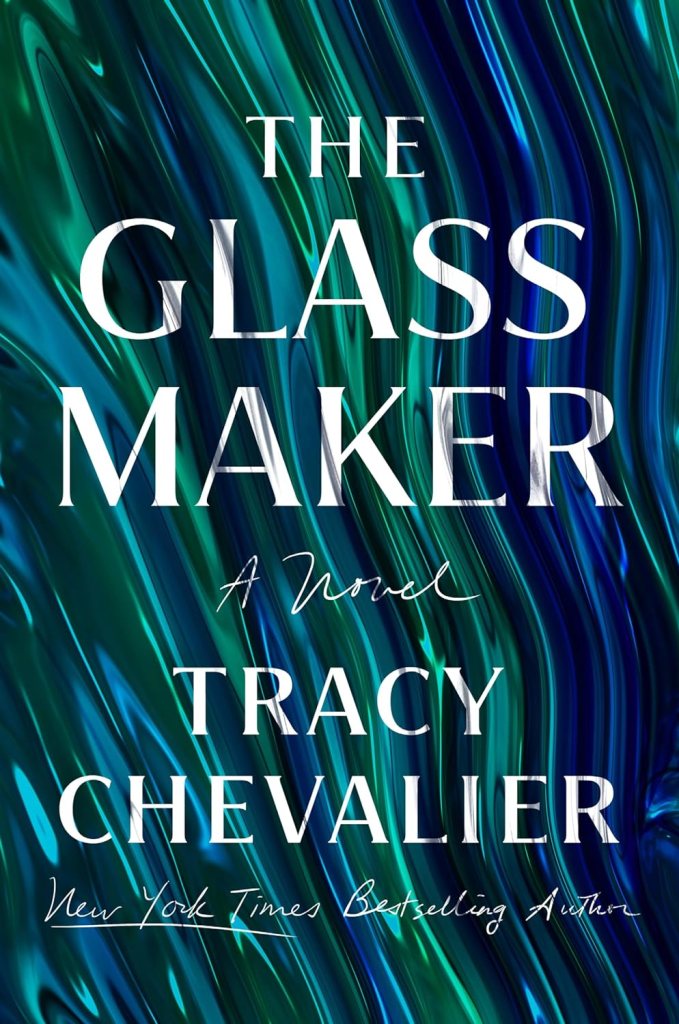 From the bestselling historical novelist, a rich, transporting story that follows a family of glassmakers from the height of Renaissance-era Italy to the present day
It is 1486 and Venice is a wealthy, opulent center for trade. Orsola Rosso is the eldest daughter in a family of glassblowers on Murano, the island revered for the craft. As a woman, she is not meant to work with glass—but she has the hands for it, the heart, and a vision. When her father dies, she teaches herself to make glass beads in secret, and her work supports the Rosso family fortunes. Skipping like a stone through the centuries, in a Venice where time moves as slowly as molten glass, we follow Orsola and her family as they live through creative triumph and heartbreaking loss, from a plague devastating Venice to Continental soldiers stripping its palazzos bare, from the domination of Murano and its maestros to the transformation of the city of trade into a city of tourists. In every era, the Rosso women ensure that their work, and their bonds, endure. Chevalier is a master of her own craft, and The Glassmaker is as inventive as it is spellbinding: a mesmerizing portrait of a woman, a family, and a city as everlasting as their glass.
Tracy Chevalier is the New York Times bestselling author of ten previous novels, including Girl with a Pearl Earring, which has been translated into forty-five languages and made into an Oscar-nominated film, a play, and an opera. Born and raised in Washington, DC, she lives in London with her husband.
◊ ◊ ◊ ◊ ◊
From Simon & Schuster:
Harriet Constable, The Instrumentalist (New York: Simon & Schuster, 2024), 336 pages, ISBN: 978-1668035825, $28.
 A stunning debut novel of music, intoxication, and betrayal inspired by the true story of Anna Maria della Pietà, a Venetian orphan and violin prodigy who studied under Antonio Vivaldi and ultimately became his star musician—and his biggest muse
Anna Maria della Pietà was destined to drown in one of Venice’s canals. Instead, she became the greatest violinist of the 18th century. Anna Maria has only known life inside the Pietà, an orphanage for children born of prostitutes. But the girls of the Pietà are lucky in a sense: most babies born of their station were drowned in the city’s canals. And despite the strict rules, the girls are given singing and music lessons from an early age. The most promising musicians have the chance to escape the fate of the rest: forced marriage to anyone who will have them. Anna Maria is determined to be the best violinist there is—and whatever Anna Maria sets out to do, she achieves. After all, the stakes for Anna could not be higher. But it is 1704 and she is a girl. The pursuit of her ambition will test everything she holds dear, especially when it becomes clear that her instructor, Antonio Vivaldi, will teach Anna everything he knows—but not without taking something in return.
Harriet Constable is an award-winning journalist and filmmaker living in London. She has written for The New York Times, The Economist, and the BBC, and is a grantee of the Pulitzer Center and a fellow of the Royal Society of Arts. She grew up playing the flute and piano and singing with her mother, a classically trained pianist and singer. The Instrumentalist is her debut novel.
Écrans, 2024: William Hogarth et le cinéma
From Classiques Garnier, where individual articles are also available for purchase:
Marie Gueden and Pierre Von-Ow, ed., Écrans, Nr. 20: William Hogarth et le cinéma (Paris: Garnier, 2024), 295 pages, French and English, ISBN: 978-2406169727, €25.
 This special issue of Écrans explores the largely overlooked and unexpected connections between William Hogarth and cinema. Frequently mentioned in passing, these links are thoroughly examined here by art historians, film and literary scholars, and a filmmaker. The collection addresses various crucial themes (such as narrative serialization, visual dynamics, and socio-cultural aspects), aiming to showcase the historical significance, artistic richness, and contemporary relevance of the relationship between Hogarth and cinema.
Marie Gueden holds a PhD in film studies from Université Paris 1 Panthéon-Sorbonne. Associate researcher at the Institut ACTE (Université Paris 1 – Panthéon-Sorbonne) and Passages XX-XXI (Université Lumière Lyon 2), lecturer at ENS Lyon and Université Sorbonne Nouvelle-Paris 3, she has published several articles, including studies on Sergei M. Eisenstein and William Hogarth.
Pierre Von-Ow recently received his PhD in History of Art from Yale University. His research focuses primarily on the intersections of arts and sciences in the early modern period. Among his recent projects, he curated in 2022 the virtual exhibition William Hogarth’s Topographies for The Lewis Walpole Library.
s o m m a i r e
• Marie Gueden et Pierre Von-Ow — Introduction: William Hogarth et le cinéma
I Sérialisation narrative et genres / Narrative Serialization and Genres
• Kate Grandjouan — Virtual witnessing in A Harlot’s Progress (1732). Hogarth’s visio-crime media
• Marie Gueden — Progress hogarthien et continuité narrative et morale aux États-Unis. Du pré-cinéma au cinéma des années 1930
• Brian Meacham and Yvonne Noble — An early film adaptation of Henry Fielding’s Tom Jones at Yale University
II Image et mouvement / Image and Movement
• Marie Gueden — « Hogarthisme » outre-Atlantique. Du tournant du XXe siècle aux années 1920–1930
• Marion Sergent — Sur la serpentine. Hogarth et l’abstraction musicaliste de Janin, Béothy et Valensi
• Jordi Xifra — Luis Buñuel, cinéaste hogarthien
• Théo Esparon — Beauté, glamour, baroque dans La Femme et le pantin (1935) de Josef von Sternberg
III Revoir Hogarth / Re-Viewing Hogarth
• Jean-Loup Bourget — Hogarth au cinéma, indice d’anglicité ?
• Pierre Von-Ow — Hogarth through a camera. Bedlam from print to film
• Enrico Camporesi — De Southwark Fair à Tom, Tom, the Piper’s Son. Cinéma des origines et origines du cinéma
• Mike Leigh on Hogarth, Interview by Pierre Von-Ow
Annexes / Appendices
1 Angles and Pyramids (1936)
2 Pierre Kast — De la parodie de « Paméla » à « Tom Jones ». L’Angleterre georgienne, scénario de Henry Fielding, réalisation de Hoggarth (1948)
Filmographie
Résumés / Abstracts
New Book | Art and Its Geographies: Configuring Schools of Art
This volume of essays grew out of a June 2019 conference; from Amsterdam UP:
Ingrid Vermeulen, ed., Art and Its Geographies: Configuring Schools of Art in Europe, 1550–1815 (Amsterdam: Amsterdam University Press, 2024), 470 pages, ISBN: 978-9463728140, €159. An ebook as a PDF file is available for free.
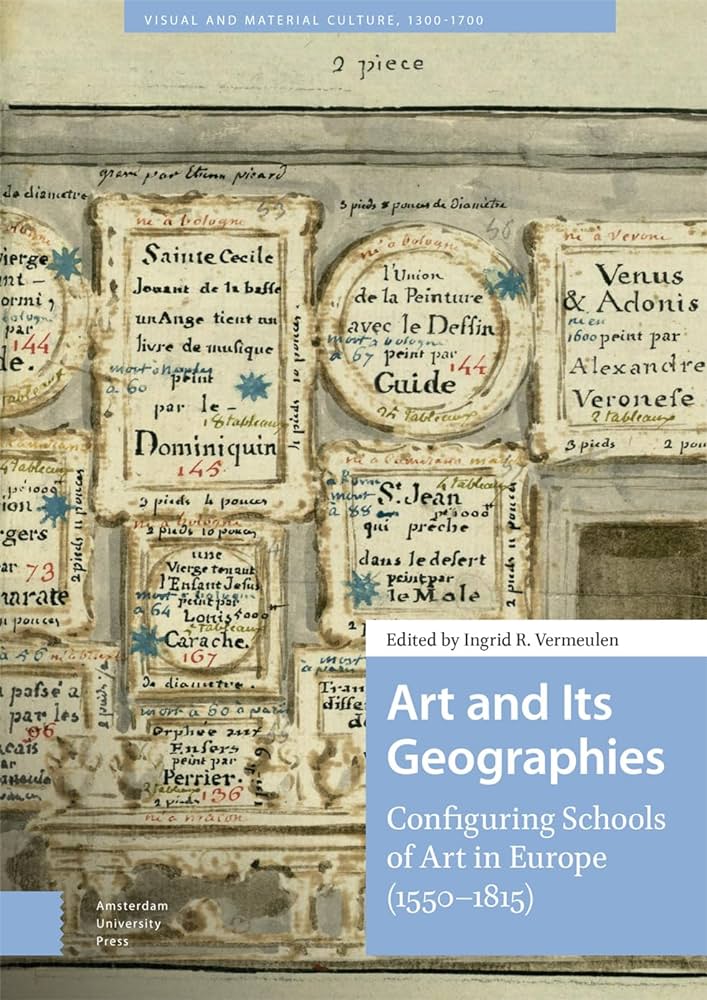 Schools of art represent one of the building blocks of art history. The notion of a school of art emerged in artistic discourse and disseminated across various countries in Europe during the early modern period. Whilst a school of art essentially denotes a group of artists or artworks, it came to be configured in multiple ways, encompassing different meanings of learning, origin, style, or nation, and mediated in various forms via academies, literature, collections, markets, and galleries. Moreover, it contributed to competitive debate around the hierarchy of art and artists in Europe. The ensuing fundamental instability of the notion of a school of art helped to create a pluriform panorama of both distinct and interconnected artistic traditions within the European art world. This edited collection brings together 20 articles devoted to selected case studies from the Italian peninsula, the Low Countries, France, Spain, England, the German Empire, and Russia.
Ingrid R. Vermeulen is Associate Professor of Early-Modern Art History at Vrije Universiteit Amsterdam. Her research focuses on the early-modern history of art history grounded in art literature, collections, and museums. It generated the book Picturing Art History (2010) and the project The Artistic Taste of Nations (2015) funded by the Dutch Research Council (NWO).
c o n t e n t s
Introduction
• Art and Its Geographies, 1550–1815: Configuring Schools of Art in Europe — Ingrid Vermeulen
Academies of Art, Churches, and Collective Artistic Identities
• Notions of Nationhood and Artistic Identity in Sixteenth- and Seventeenth-Century Rome — Susanne Kubersky-Piredda
• A Failed Attempt to Establish a Spanish Art Academy in Rome (1680): A New Reading of Archival Documents — Maria Onori
• Mantua: A School of History and Heritage (1752–1797) — Ludovica Cappelletti
Art Literature, Artists, and Transnational Identities
• Conceptualizing Schools of Art. Giovanni Battista Agucchi’s (1570–1632) Theory and Its Afterlife — Elisabeth Oy-Marra
• Claimed by All or Too Elusive to Include: The Appreciation of Mobile Artists by Netherlandish Artists’ Biographers — Marije Osnabrugge
• The Galeriewerk and the Self-Fashioning of Artists at the Dresden Court — Ewa Manikowska
Drawings, Connoisseurship, and Geography
• Padre Sebastiano Resta (1635–1714) and the Italian Schools of Design — Simonetta Prosperi Valenti Rodinò
• Connoisseurship Beyond Geography: Some Puzzling Genoese Drawings from Filippo Baldinucci’s (1624–1696) Personal Collection — Federica Mancini
• Arthur Pond’s (1705–1758) Prints in Imitations of Drawings (1734–1736): Old Masters, Copies, and the National School in Early Eighteenth-Century Britain — Sarah W. Mallory
Taste and Genius of Nations
• ‘Taste of Nations’: Roger de Piles’ (1635–1709) Diplomatic Take on the European Schools of Art — Ingrid Vermeulen
• How Do Great Geniuses Appear in a Nation? A Political Problem for the Enlightenment Period — Pascal Griener
Prints, Collecting, and Classification
• Dezallier d’Argenville’s (1680–1765) Concept of a Print Collection: by Topic or by School? – Gaëtane Maës
• Michael Huber’s (1727–1804) Notices (1787) and Manuel (1797–1808): A Comparative Analysis of the French School of the Eighteenth Century — Véronique Meyer
• Chronology and School: Questioning Two Competing Criteria for the Classification of Print Collections around 1800 — Stephan Brakensiek
Art Markets: Selling and Collecting
• The Eighteenth-Century Art Market and the Northern- and Southern-Netherlandish Schools of Painting: Together or Apart? — Everhard Korthals Altes
• The Print Collector Pieter Cornelis van Leyden (1717–1788): Literature of Art, Concepts of School, and the Genesis of a Connoisseur — Huigen Leeflang
• The Problem of European Painting Schools in the Context of the Russian Enlightenment: Alexander Stroganoff (1733–1811) and his Catalogue (1793, 1800, 1807) — Irina Emelianova
On Public Display in Picture Galleries
• Everyman’s Aesthetic Considerations on a Visible History of Art: Joseph Sebastian von Rittershausen’s (1748–1820) Betrachtungen (1785) on Christian von Mechel’s (1737–1817) Work at the Imperial Picture Gallery in Vienna — Cecilia Hurley
• An Organisation by Schools Considered Too Commercial for the Newly Founded Louvre Museum — Christine Godfroy-Gallardo
• Scuole Italiane or Scuola Italiana? Art Display, Historiography, and Cultural Nationalism in the Pinacoteca Vaticana after 1815 — Pier Paolo Racioppi
Contributors
Illustration Credits
Index










 Enfilade
leave a comment