Exhibition | Horse in Majesty
Opening soon at Versailles:
Horse in Majesty: At the Heart of a Civilisation / Cheval en majesté: Au cœur d’une civilisation
Château de Versailles, 2 July — 3 November 2024
Curated by Laurent Salomé and Hélène Delalex

René-Antoine Houasse, Equestrian Portrait of Louis XIV, ca. 1674, oil on canvas (Château de Versailles, Christophe Fouin).
To coincide with the equestrian events at the Paris 2024 Olympic Games—hosted on the Versailles estate—the Château is holding a major exhibition dedicated to horses and equestrian civilisation in Europe—the first exhibition on this theme to be presented on such a scale. Nearly 300 works will highlight the roles and uses of horses in civil and military society, from the sixteenth to the twentieth century, up to the eve of the First World War, which marked the end of horse-drawn civilisation and the relegation of horses to the realm of leisure. This first exhibition dedicated to horses on such a scale will be divided into thirteen sections, leading visitors on a tour through several emblematic areas of the palace: the Africa Rooms, the King’s State Apartment, the Hall of Mirrors, the War and Peace Rooms, Madame Maintenon’s Apartment, and the Dauphine’s Apartment.
Of Horses and Kings
The first part of the exhibition highlights the links between horses and European sovereigns and emperors. In a gallery of princes’ favourite horses, the exhibition presents Charles XI of Sweden’s collection of horse portraits and more intimate portraits such as those of Queen Victoria’s Arabian horses.
Royal Stables: Palaces for Horses
The beauty and sheer scale of the aristocratic and royal stables built in the seventeenth and eighteenth centuries bear witness to the importance attached to horses in representations of power under the Ancien Régime. The Royal Stables at Versailles are also a place for teaching and passing on knowledge and skills. It was at the Royal Arena in Versailles that the art of traditional French horsemanship reached its pinnacle of perfection.
The Horse, King of War
One of the most important aspects of the companionship between man and horse is their shared adventure in war, and often in death. The exhibition explores the motif of the cavalry clash, based on Leonardo da Vinci’s archetype, with horses and riders merging to form a furious and spectacular mass. The exhibition provides an insight into another great slaughter of modern warfare, that of horses. The many corpses littering the foreground of the paintings enable the artists to highlight the violence of the confrontation and its cost.
Festive Horses: The Equestrian Spectacular
Equestrian festivals played a key role in the life of European courts. The exhibition presents some rare examples of these ephemeral festive arts: ceremonial lances, fancy shields and quivers, studies of caparisons, large gouaches of Swedish carousels, drawings, and illuminated manuscripts.
Horses and Luxury: Treasures from the Stables
Following on from the festive arts, the exhibition reveals a set of prodigiously luxurious horse ornaments, crafted in the form of objets d’art. A complete set of equestrian parade armour takes pride of place in the Hercules Room.
Horses and Science
The exhibition also focuses on the relationship between art and science in anatomical studies of horses. The iconic early drawings by Andrea del Verrochio and Leonardo da Vinci are exhibited together here for the first time, in a collaboration between New York’s Metropolitan Museum and the English Royal Collections.
Horses as Models
Horses have always been a favourite subject and source of inspiration for artists. The exhibition features a number of masterpieces of this genre, and examines the unbridled imaginings elicited by the horse’s body in late-nineteenth-century art.
From One Civilisation to Another
The exhibition closes with an evocation of the end of equestrian civilisation, with the advent of the railway and automobile industries transforming a thousand-year-old way of life in a matter of decades.
Curators
Laurent Salomé, Director of the Musée National des Châteaux de Versailles et de Trianon
Hélène Delalex, Heritage Curator at the Musée National des Châteaux de Versailles et de Trianon
Laurent Salomé and Hélène Delalex, eds., Cheval en majesté: Au cœur d’une civilisation (Paris: Lienart éditions, 2024), 504 pages, ISBN: 978-2359064438, €49.
Exhibition | The Legacy of Vesuvius
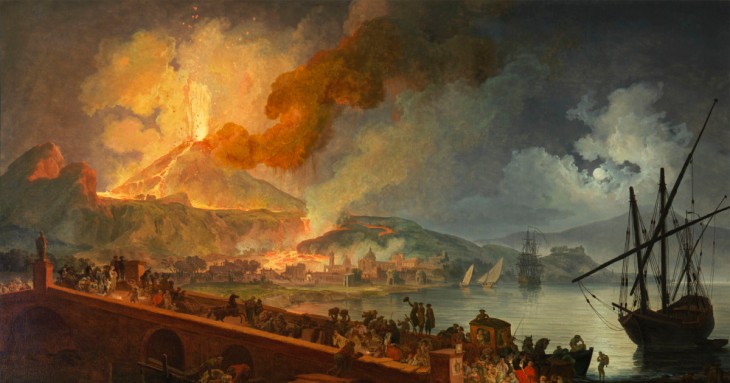
Pierre-Jacques Volaire, Eruption of Mount Vesuvius on the Ponte della Maddalena, 1782, oil on canvas, 129 × 260 cm
(Naples: Museo e Real Bosco di Capodimonte)
◊ ◊ ◊ ◊ ◊
From the press release (8 May) for the exhibition opening this fall:
The Legacy of Vesuvius: Bourbon Discoveries on the Bay of Naples
The Meadows Museum, SMU, Dallas, 15 September 2024 — 5 January 2025
Curated by Michael Thomas, with Heather Bowling and P. Gregory Warden
Set during one of the most dynamic moments in Western history, The Legacy of Vesuvius: Bourbon Discoveries on the Bay of Naples looks at the groundbreaking archaeological excavations sponsored by the Bourbon King Charles VII of Naples—the future king of Spain—and his wife, Maria Amalia, and continued by his son and successor Ferdinand IV, and demonstrates their formative influence on art and thought in the Age of Enlightenment. Comprised of nearly 50 objects, the exhibition’s unique combination of Roman archaeological material from the excavations at Pompeii, Herculaneum, and other sites, mingled with 18th-century paintings, porcelain, and prints—including major loans from Museo e Real Bosco di Capodimonte, Museo Archeologico Nazionale di Napoli, The Metropolitan Museum of Art, and the Wellcome Collection—will provide an exciting introduction to the archaeological treasures of this period and their formative influence on contemporary artistic production. The Meadows Museum, SMU, is the sole venue for the exhibition, which will open on 15 September 2024 and run through 5 January 2025.
“When Mount Vesuvius erupted in 79 CE, in a near instant it preserved the art and material culture of the thriving Roman cities around the Bay of Naples. While these archaeological sites were known in the early modern period, it was thanks to the patronage of the Bourbon monarchs in the 18th century that their systematic excavation was undertaken. The result was nothing short of ‘Roman-mania’ as recently unearthed objects inspired contemporary artistic production, from fashion to furniture, and cemented the Bourbon tastemakers as the force behind Neoclassicism” said Amanda W. Dotseth, the Linda P. and William A. Custard Director of the Meadows Museum. “Upon assuming the throne as Charles III of Spain, the Bourbon monarchs brought their taste, and crucially, their artists with them to Madrid where the archaeological discoveries of Herculaneum and Pompeii inspired new styles and forms in Spanish art, changing it forever. By bringing together ancient artifacts and the 18th-century objects they inspired, this exhibition celebrates the lasting impact of visionary patrons—a fitting subject given the Meadows Museum was itself founded by such a collector with a vision, Algur H. Meadows.”
“We are excited to introduce Dallas to Naples, its connection to Spain, and the profound impact the Bourbon excavations had on the cultural and artistic landscape of 18th- century Europe,” said Michael Thomas, professor and director of the Edith O’Donnell Institute of Art History at The University of Texas at Dallas and the exhibition’s curator. “At its core, this exhibition celebrates the discovery of what is arguably the world’s most famous archaeological site, Pompeii, as well as other ancient sites destroyed by the eruption of Vesuvius in 79 CE. The exhibition captures the innovative vision of Charles and Maria Amalia in the years just before they assumed the Spanish throne. The reigns of Charles and his successor Ferdinand define the ‘Golden Age’ of Naples when the city rose to the forefront of artistic production and cultural influence.”
The Legacy of Vesuvius will unfold across several galleries that define different topics. The exhibition begins with an overview of key historical personalities from the period, emphasizing the royal family’s significant role. Featured prominently in this room are depictions of Charles VII and Maria Amalia, by Francesco Liani, an esteemed Neapolitan artist. A depiction of a youthful Ferdinand by Bourbon court painter Anton Raphael Mengs captures the 8-year old monarch on the occasion of his accession to the throne. Antonio Joli’s landscape painting The Royal Procession of Piedigrotta, seen from the West documents a royal procession that includes Charles and Ferdinand in a gilded carriage set against a panoramic view of the city of Naples, the city at the center of this exhibition.
The next section will showcase finds discovered near the royal palace at Portici which included the ancient city of Herculaneum. These finds include Roman wall paintings, documents cataloging Bourbon finds, as well as 18th-century renditions of ancient artifacts in biscuit porcelain, and 19th-century copies of the famous bronzes from the Villa of the Papyri at Herculaneum. Additionally, a copy of Karl Jakob Weber’s detailed plan of the Villa’s walls, excavation tunnels, and ‘find-spots’, along with excerpts from the Bourbon-commissioned work Le Antichità di Ercolano Esposte (The Antiquities of Herculaneum Exhibited) will be on display.

Flora, from the Villa Arianna, Stabiae, early first century CE, pigment on plaster, 38 × 32 cm (Naples: Museo Archeologico Nazionale de Napoli; photo by Giorgio Albano).
In the next gallery, visitors will see a selection of frescoes that were recovered from both public and private contexts from Pompeii and Stabiae, including a wall painting from a lararium (household shrine) in Pompeii; a fresco and gladiator helmet from the gladiator barracks in Pompeii; and frescoes from the Villa Arianna, Stabiae. Also in this gallery are several objects from Temple of Isis in Pompeii, excavated during the reigns of both Charles and Ferdinand. This temple served as a center for the worship of the Egyptian goddess Isis and documents the influence of Egyptian culture in Roman religious practices. On display will be ancient artifacts unearthed during the Bourbon- led archaeological efforts at the temple, including frescoes depicting sacred landscapes alongside imagery of priests conducting rituals. Among the other notable items will be a bronze sistrum, an instrument used in ceremonies by the priests of Isis.
The next section will highlight the Bourbon court’s fascination with Naples’ picturesque landscapes. Antonio Joli’s pair of evocative paintings depicting King Charles’ departure to Spain provides perspectives from both the maritime and coastal vantage points. Another work by Joli captures Ferdinand’s hunting party in front of the Capodimonte palace with the city of Naples as the backdrop. Jakob Philipp Hackert’s work depicts Ferdinand in his favorite pastime, hunting, while also capturing the natural beauty of the Neapolitan coastline. Élisabeth Vigée Le Brun’s portrait of a young Francis of Bourbon features Mount Vesuvius in the background, further underscoring the connection between the landscape and the Bourbon court. A nighttime scene of the Eruption of Mount Vesuvius on the Ponte della Maddalena (1782) by French artist Pierre-Jacque Volaire emphasizes the sublime beauty and terror of the volcano.
Looming over much of this history were the many eruptions of Mount Vesuvius itself, which will be explored by the prints of Pietro Fabris in the next room. Sir William Hamilton commissioned Fabris to record the scientific properties of Vesuvian eruptions in his publication, Campi Phlegraei: Observations on the Volcanos of the Two Sicilies (1776). Hamilton, a British diplomat, archaeologist, and volcanologist served as the British Ambassador to the Kingdom of Naples from 1764 to 1800. His tenure in Naples provided him the opportunity to indulge in his passion for classical antiquities and led to significant contributions to the fields of archaeology and volcanology.
Lastly, the exhibition demonstrates the influence of these discoveries on the art of the Bourbon court and the enduring impact it had on the artistic production associated with the Grand Tour. This room includes examples of royal furniture and porcelain from the famed factories at Capodimonte. The exhibition concludes with a first look at Royal Power, Exoticism, and Technology, a digital heritage collaboration between the Meadows’s Custard Institute for Spanish Art and Culture and the Edith O’Donnell Institute of Art History that is creating digital models of the two Bourbon porcelain rooms at the royal palaces of Portici and Aranjuez.
The Legacy of Vesuvius: Bourbon Discoveries on the Bay of Naples is a collaboration between the Meadows Museum, SMU, and the Edith O’Donnell Institute of Art History at The University of Texas at Dallas. The exhibition is curated by UTD Professor Michael Thomas, PhD, Director of the O’Donnell Institute, with support from Heather Bowling, Research Coordinator at the O’Donnell Institute, and P. Gregory Warden, PhD, the Mark A. Roglán Director of the Custard Institute for Spanish Art and Culture at the Meadows Museum.
A fully illustrated, hardcover catalogue published by Scala Arts & Heritage Publishers—and sponsored by The Custard Institute for Spanish Art and Culture—will accompany the exhibition, with essays by Michael Thomas, P. Gregory Warden, Robin Thomas, Eric M. Moormann, Carmine Romano, and Agnieszka Anna Ficek. Essay topics include multiple aspects of the Bourbon Court and Vesuvian archaeology. Each object will have a catalogue entry, written by Heather Bowling, Domenico Pino, and Lynley McAlpine.
Michael L. Thomas, ed., The Legacy of Vesuvius: Bourbon Discoveries on the Bay of Naples (London: Scala Arts Publishers, 2024), 192 pages, ISBN: 978-1785515736.
Exhibition | Colonial Memory in the Thyssen-Bornemisza Collections
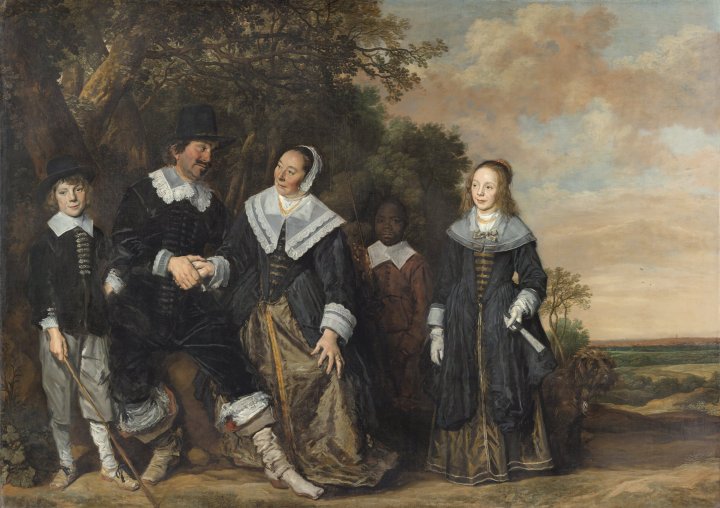
Frans Hals, Family Group in a Landscape, ca.1645–48, oil on canvas, 202 × 285 cm
(Madrid: Museo Nacional Thyssen-Bornemisza)
◊ ◊ ◊ ◊ ◊
Opening this week at the Thyssen:
Colonial Memory in the Thyssen-Bornemisza Collections
Museo Thyssen-Bornemisza, Madrid, 25 June — 20 October 2024
The colonial system lies at the origins of modern western society while its legacy continues to affect human and geopolitical relations around the world. As Europe advanced in the conquest of liberties, it simultaneously imposed a regime of extractivism and physical domination on its territories across the globe.

Circle of Sir Joshua Reynolds (?), Portrait of a Man from the Island of Dominica (?), ca. 1770s, oil on canvas, 76 × 64 cm (Madrid: Museo Nacional Thyssen-Bornemisza).
This exhibition sets out to decipher the elements of colonial power within the iconography of certain works in the Thyssen-Bornemisza collections. A selection of paintings will reveal ‘invisibilised’ stories of racial domination, marronage, and the civil rights struggle, as well as the introduction of the modern mercantile system based on European military control, the use of enslaved African workers, and the appropriation of firstly Latin American and later Asian and African land and raw materials. Visitors will be introduced to fictitious representations of new Arcadias and will witness the western projection of its unsatisfied desires in the form of the ‘Orient’ and the construction of the ‘other’ as barbarian or primitive.
With the aim of rethinking the future through the parameters of cultural diversity, the exhibition benefits from a curatorial team comprising Juan Ángel López (curator at the museum and director of this project), Alba Campo Rosillo (art historian), Andrea Pacheco González (independent curator and artistic director of the space ‘FelipaManuela’), and Yeison F. García López (director of the ‘Espacio Afro’ cultural centre).
La memoria colonial en las colecciones Thyssen-Bornemisza (Madrid: Fundación Thyssen-Bornemisza, 2024), 232 pages, ISBN: 978-8417173906, €42.
Exhibition | Miguel Cabrera (1695–1768)
Now on view at Madrid’s Museo de América:
Miguel Cabrera: Las reglas del arte de un pintor novohispano
Museo de América, Madrid, 31 May — 13 October 2024
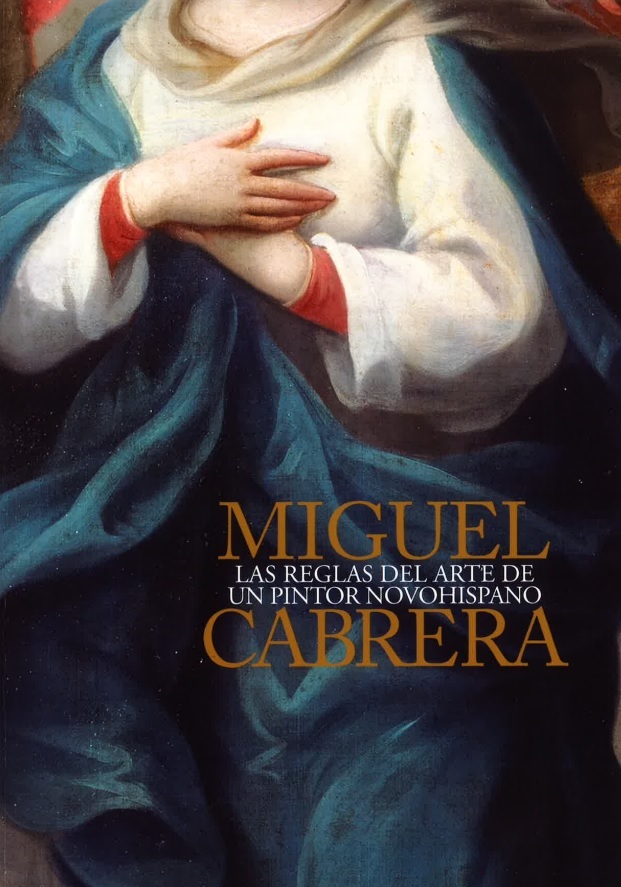 Desde 2019 el Museo de América ha liderado el proyecto Estudio y conservación de la serie La vida de la Virgen, de Miguel Cabrera. El proyecto integró numerosos profesionales de diferentes instituciones museísticas y académicas españolas y latinoamericanas. Sus trabajos han aportado importantes avances en el conocimiento de la pintura barroca novohispana y la conservación de la pintura sobre lienzo. Como resultado del extenso trabajo llevado a cabo se presenta esta magna exposición para cerrar con broche de oro este proyecto: La primera exposición en España dedicada a uno de los pintores más importantes del México Virreinal: Miguel Cabrera, a su vida, obra y el estudio técnico de su pintura. El discurso museográfico se sustenta en veintitrés obras pictóricas pertenecientes principalmente a las colecciones del Museo de América, así como préstamos bibliográficos de la Biblioteca Nacional de España.
Objetivos de la exposición
• Dar a conocer en España la obra y técnica de Miguel Cabrera, maestro de la pintura novohispana
• Presentar la magnífica serie de cuadros de La vida de la Virgen, su historia y su llegada a España en el siglo XVIII
• Mostrar al público los trabajos de conservación y de investigación técnica realizados en torno a estas obras
• Poner en valor el trabajo de conservación y restauración del patrimonio histórico-artístico llevado a cabo en los museos e instituciones museísticas
Miguel Cabrera: Las reglas del arte de un pintor novohispano (Madrid: S.G. Museos Estatales, 2024), 296 pages, ISBN: 978-8481818611, €21.
Exhibition | Growing and Knowing in the Gardens of China
From the press release for the exhibition (7 March 2024) . . .
奪天工 Growing and Knowing in the Gardens of China
The Huntington Library, Art Museum, and Botanical Gardens, San Marino, 14 September 2024 — 6 January 2025
A new exhibition at The Huntington Library, Art Museum, and Botanical Gardens will explore the potential of gardens as spaces that not only delight the senses and nourish the body but also inspire the mind—both intellectually and spiritually. The literati during China’s Ming (1368–1644) and Qing (1644–1912) dynasties believed gardens resulted in more ethical connections to all living things. On view in the Chinese Garden’s Studio for Lodging the Mind from 14 September 2024 to 6 January 2025, 奪天工 Growing and Knowing in the Gardens of China will exhibit 24 objects, including hanging scrolls, hand scrolls, albums, and books from The Huntington’s collections and those throughout the United States. The exhibition will also feature a participatory artwork by contemporary Chinese artist Zheng Bo that was commissioned by The Huntington.
Growing and Knowing and the Huntington exhibition Storm Cloud: Picturing the Origins of Our Climate Crisis will run concurrently as part of PST ART: Art & Science Collide, a regional event presented by Getty featuring more than 60 exhibitions and programs that explore the intersections of art and science, both past and present.
Growing and Knowing will present three key themes: ‘Growing’, ‘Knowing’, and ‘Being’.
Growing
The introductory section to the exhibition, ‘Growing’, will focus on historical horticultural practices in China, many of which are still practiced today. Chinese scholars and gardeners experimented with domestication, grafting, and hybridization to create unusual cultivars (new varieties of plants developed through human intervention). Throughout the Ming and Qing dynasties, these techniques were well documented in horticultural manuals. Some of these books—such as The Secretly Transmitted Mirror of Flowers, completed by Chen Hao 陳淏 (1615–1703) in 1688—remained popular instructional guides in China into the 20th century. The well-known chrysanthemum flower exists as a result of hybridization experiments conducted by scholars and gardeners. Visitors will have the opportunity to view chrysanthemums in full bloom just outside of the exhibition walls in The Huntington’s Chinese Garden. Reproductions of gardening tools from the period will also be displayed.
Knowing
The second section, ‘Knowing’, will present a diverse selection of books and paintings from the Ming and Qing dynasties, showcasing the multiple ways that scholars thought about the plants they cultivated. “The works selected for ‘Knowing’ specifically highlight scholars’ understanding of plants as food, sources of emergency sustenance and pharmaceuticals, and keys to classical literature,” said exhibition curator Phillip E. Bloom, The Huntington’s June and Simon K.C. Li Curator of the Chinese Garden and Director of the Center for East Asian Garden Studies. A subtheme of the section will touch on the era’s hierarchies of knowledge—specifically how scholars’ intellectual knowledge of plants was valued over gardeners’ direct, physical knowledge. Gardeners’ bodily insights were largely ignored in historical texts, but they were revealed in visual sources. For example, the Ming dynasty painting Garden for Solitary Pleasure (17th century) shows a scholar lying deep in thought among bamboo and other trees, as nearby laborers bend over plants and carry tools to cultivate the scholar’s garden.
Being
Chinese scholars did not grow and learn about plants just for knowledge’s sake. Growing and knowing were means for them to better understand their place in the world and learn to interact more ethically with other creatures. The last section of the exhibition, ‘Being’, will explore these practices of self-cultivation. “In order to truly understand how nature works, scholars not only contemplated plants but also engaged with and learned from them,” Bloom said. “Caring for plants, observing their habits, taking pleasure in their forms, and ultimately recognizing their commonalities with humans were, in essence, practices whereby people may perfect themselves.” Pursuits of a Scholar, an 18th-century Qing dynasty painting album, dedicates several leaves to the different ways that scholars interacted with plants. One leaf shows a scholar writing observations of a bamboo plant in his study, while another depicts a scholar caring for chrysanthemums.
Ecosensibility Exercise: Fragrant Eight-Section Brocade 生態感悟練習: 聞香八段錦 by Zheng Bo
To invite visitors to develop their own meaningful relationships with their natural surroundings, The Huntington has commissioned the participatory artwork Ecosensibility Exercise: Fragrant Eight-Section Brocade by Hong Kong–based artist Zheng Bo. Fragrant Eight-Section Brocade is inspired by the traditional Chinese mind-body practice qigong 氣功. Building on exercises that date back nearly 900 years and remain widely practiced today, Zheng’s work includes eight exercises that combine simple full-body movements and deep breathing to activate the mind and body. Each exercise is performed with a fragrant plant, encouraging the participants to develop a human-plant connection. Visitors to the exhibition can perform the exercises on their own throughout The Huntington’s gardens at marked stops chosen by the artist. A film documenting the eight exercises will be shown in the gallery. The Huntington is also planning a series of public programs in which the artist will guide visitors through his reinterpreted movements.
Exhibition Catalog
The Huntington will publish an open-access digital catalog edited by Phillip E. Bloom, Nicholas K. Menzies (research fellow in The Huntington’s Center for East Asian Garden Studies), and Michelle Bailey (assistant curator for the Center for East Asian Garden Studies). The book will include seven essays, 16 catalog entries by various scholars, and a conversation with artist Zheng Bo. A paperback version of the catalog will be available at the Huntington Store.
This exhibition is made possible with support from Getty through its PST ART: Art & Science Collide initiative.
Exhibition | Now You See Us: Women Artists in Britain, 1520–1920
From the press release for the exhibition:
Now You See Us: Women Artists in Britain, 1520–1920
Tate Britain, London, 16 May — 13 October 2024
 Tate Britain presents Now You See Us: Women Artists in Britain 1520–1920. This ambitious group show charts women’s road to being recognised as professional artists, a 400-year journey that paved the way for future generations and established what it meant to be a woman in the British art world. The exhibition covers the period in which women were visibly working as professional artists, but went against societal expectations to do so.
Featuring over 100 artists, the exhibition celebrates well-known names such as Artemisia Gentileschi, Angelica Kauffman, Julia Margaret Cameron, and Gwen John, alongside many others who are only now being rediscovered. Their careers were as varied as the works they produced. Some prevailed over genres deemed suitable for women like watercolour landscapes and domestic scenes. Others dared to take on subjects dominated by men like battle scenes and the nude, or campaigned for equal access to training and membership of professional institutions. Tate Britain will showcase over 200 works, including oil painting, watercolour, pastel, sculpture, photography, and ‘needlepainting’ to tell the story of these trailblazing artists.
Now You See Us begins at the Tudor court with Levina Teerlinc, many of whose miniatures are brought together for the first time in four decades, and Esther Inglis, whose manuscripts contain Britain’s earliest known self-portraits by a woman artist. The exhibition then looks to the 17th century. Focus is given to one of art history’s most celebrated women artists: Artemisia Gentileschi, who created major works in London at the court of Charles I, including the recently rediscovered Susanna and the Elders 1638–40, on loan from the Royal Collection for the very first time. The exhibition also looks to women such as Mary Beale, Joan Carlile, and Maria Verelst who broke new ground as professional portrait painters in oil.

Maria Cosway, Georgiana, Duchess of Devonshire as Cynthia from Spenser’s ‘Faerie Queene’, 1781–82, oil on canvas (The Devonshire Collection).
In the 18th century, women took part in Britain’s first public art exhibitions; these artists included overlooked figures such as Katherine Read and Mary Black; the sculptor Anne Seymour Damer; and Margaret Sarah Carpenter, a leading figure in her day but little heard of now. The show looks at Angelica Kauffman and Mary Moser, the only women included among the Founder Members of the Royal Academy of Arts; it took 160 years for membership to be granted to another woman. Women artists of this era are often dismissed as amateurs pursuing ‘feminine’ occupations like watercolour and flower painting, but many worked in these genres professionally: needlewoman Mary Linwood, whose gallery was a major tourist attraction; miniaturist Sarah Biffin, who painted with her mouth, having been born without arms and legs; and Augusta Withers, a botanical illustrator employed by the Horticultural Society.
The Victorian period saw a vast expansion in public exhibition venues. Now You See Us showcases major works by critically appraised artists of this period, including Elizabeth Butler (née Thompson)’s monumental The Roll Call 1874 (Butler’s work prompted critic John Ruskin to retract his statement that “no women could paint”), and nudes by Henrietta Rae and Annie Swynnerton, which sparked both debate and celebration. The exhibition will also look at women’s connection to activism, including Florence Claxton’s satirical ‘Woman’s Work’: A Medley 1861, which will be on public display for the first time since it was painted; and an exploration of the life of Barbara Leigh Smith Bodichon, an early member of the Society of Female Artists who is credited with the campaign for women to be admitted to the Royal Academy Schools. On show will be the student work of women finally admitted to art schools, as well as their petitions for equal access to life drawing classes.
The exhibition ends in the early 20th century with women’s suffrage and the First World War. Women artists like Gwen John, Vanessa Bell and Helen Saunders played an important role in the emergence of modernism, abstraction and vorticism, but others, such as Anna Airy, who also worked as a war artist, continued to excel in conventional traditions. The final artists in the show, Laura Knight and Ethel Walker, offer powerful examples of ambitious, independent, confident professionals who achieved critical acclaim and—finally—membership of the Royal Academy.
The exhibition guide is available here»
Tabitha Barber, Tim Batchelor, Carol Jacobi, eds., Now You See Us: Women Artists in Britain 1520–1920 (London: Tate Publishing, 2024), 224 pages, ISBN: 978-1849769259, £40.
Exhibition | Maria Cosway (1760–1838)
Opening this month at the Pasquale Paoli Museum in Merusaglia:
Maria Cosway (1760–1838): A strada eccezziunale di un’artista
Museu Pasquale Paoli, Merusaglia (Corsica), 18 May — 30 October 2024
Curated by Amandine Rabier
 Maria Cosway (1760–1838): A Strada eccezziunale di un’artista (L’itinéraire singulier d’une artiste), présentée au Musée Maison natale de Pasquale Paoli raconte le cheminement d’une femme brillante que tout prédestinait à une grande carrière d’artiste dans la High Society anglaise et qui, contre toute attente, trouvera sa véritable émancipation en renonçant à sa première vocation pour se consacrer à l’éducation des jeunes filles. Ami fidèle, Pasquale Paoli (1725–1807) fut présent à chaque étape de cette vie singulière. Ses lettres à l’attention de Maria Cosway, tel un fil rouge, ponctuent les différentes sections de cette exposition. Fruit de deux années de travail en collaboration avec des institutions britanniques et italiennes reconnues, l’exposition s’accompagne d’un catalogue édité en français et en anglais, richement illustré et documenté par des historiens d’art réputés, spécialistes du XVIIIe siècle, sous la direction d’Amandine Rabier, commissaire de l’exposition. Cette exposition est aussi pour le musée de Merusaglia, l’occasion de s’extraire de son enracinement local pour rayonner sur la scène internationale, conformément à son Projet Scientifique et Culturel.
Introduction
• L’apprentissage en Italie
• Maria Hadfield devient Maria Cosway
Salle 1 | Maria Cosway dans la société anglaise
• La reine de Pall Mall
• À propos des femmes artistes
• Pasquale Paoli et Maria Cosway
Salle 2 | Maria Cosway peintre
• L’influence du cercle romain
• L’amitié avec David
• Exposer à la Royal Academy
Salle 3 | Rupture
Salle 4 | Émancipation: Maria Cosway pédagogue
Amandine Rabier, ed., Maria Cosway (Ghent: Snoeck Publishers, 2024), ISBN: 978-9461619051, €30.
Exhibition | Splendour in Venice: Canaletto and Guardi

Francesco Guardi, The Feast of the Ascension in the Piazza San Marco, detail, ca. 1775, oil on canvas
(Lisbon: Calouste Gulbenkian Museum)
◊ ◊ ◊ ◊ ◊
Opening this fall at Lisbon’s Calouste Gulbenkian Museum:
Splendor in Venice: Canaletto and Guardi in 18th-Century Painting
Veneza em Festa: Canaletto e Guardi na Pintura do Século XVIII
Calouste Gulbenkian Museum, Lisbon, 24 October 2024 — 13 January 2025
Museo Thyssen-Bornemisza, Madrid, 3 February — 12 May 2025
In 2024, the Calouste Gulbenkian Museum welcomes the masters of 18th-century Venetian painting in an exhibition organised in collaboration with the Museo Thyssen-Bornemisza. After working together on a 2009 exhibition devoted to the French painter Henri Fantin-Latour, the Calouste Gulbenkian Museum and the Museo Thyssen-Bornemisza are joining forces once again to promote an encounter between the works of their respective collections, based on their characteristic affinities. This new project, which starts in Lisbon in autumn 2024 and continues in Madrid in early 2025, takes as its theme 18th-century Venetian painting, with each museum contributing works that echo and complement one another. Canaletto, Guardi, Bellotto, and Tiepolo—creators of some of the most brilliant compositions of their time—will be brought together with other artists for the exhibition. The display will focus on the feste (the celebrations held in La Serenissima), vedute (panoramic views of a specific location), and capricci (fantastical architectures dreamt up by local artists), all of which are naturally festive motifs.
◊ ◊ ◊ ◊ ◊
Note (added 16 August 2025) — The posting was updated to include the dates in Madrid. Also, note that the catalogue is distributed by ACC Art Books and Simon & Schuster.
Exhibition | Ranjit Singh: Sikh, Warrior, King
Now on view at The Wallace Collection:
Ranjit Singh: Sikh, Warrior, King
The Wallace Collection, London, 10 April — 20 October 2024
Explore the life of the great Sikh leader Ranjit Singh (1780–1839) in this major exhibition
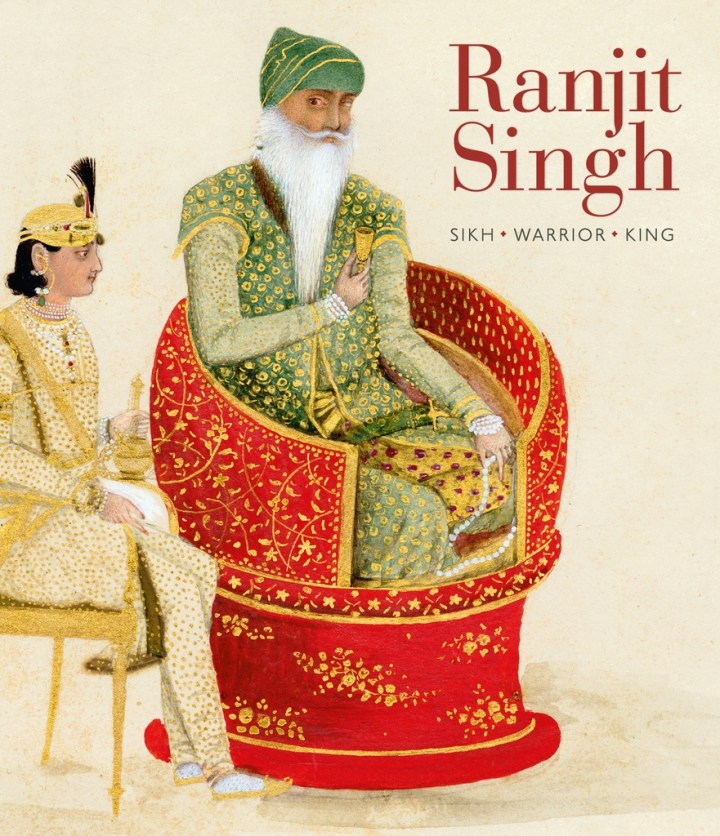 With an unwavering sense of destiny, Ranjit Singh conquered the Punjab, an area that today encompasses Pakistan, following a period of anarchy caused by decades of Afghan invasions. By the early 19th century, he emerged as the undisputed Maharaja, establishing the influential Sikh Empire. Ranjit Singh’s leadership led to a golden age marked by thriving trade, flourishing arts, and a formidable army. Discover his story through nearly 100 stunning artworks, including jewellery and weaponry from the Sikh Empire drawn from major private and public collections. The exhibition also features historic objects from his court, courtiers, and family, including items owned by the Maharaja and the most famous of his 30 wives, Maharani Jind Kaur. Ranjit Singh: Sikh, Warrior, King is a unique opportunity to see our remarkable collection of Sikh arms and armour alongside other Sikh artworks for the first time.
From Bloomsbury Press:
Davinder Toor, Ranjit Singh: Sikh, Warrior, King (London: Philip Wilson Publishers, 2024), 144 pages, ISBN: 978-1781301265, £20 / $30.
This book, published to coincide with the exhibition at the Wallace Collection, features historic artworks, jewellery, and weaponry from Ranjit Singh’s court, courtiers, and family members. Also highlighted are objects intimately connected with his son, Maharaja Duleep Singh—the deposed boy-king turned country squire who was a favourite of Queen Victoria and father of the prominent suffragette Princess Sophia Duleep Singh. Richly illustrated, this catalogue also reveals the achievements of Ranjit Singh’s European and American officials. Acknowledging Ranjit Singh’s remarkable feat of holding back the threat of a British invasion for four decades, these ‘Firangis’ would nickname their esteemed Sikh sovereign ‘The Napoleon of the East’.
Davinder Toor is a leading figure among a new generation of Sikh, Indian, and Islamic art collectors. He has acted as a consultant to major private collectors, auction houses and institutions such as the British Museum, the Victoria and Albert Museum, and the Wallace Collection. He currently lectures on the ‘Arts of the Royal Sikh Courts’ and ‘Sikh Painting and Manuscripts’ for the V&A’s prestigious Arts of Asia course. Both he and objects from the Toor Collection of Sikh Art were featured on the BBC’s Lost Treasures of the Sikh Kingdom (2014) and The Stolen Maharajah: Britain’s Indian Royal (2018) documentaries. The Toor Collection, comprising more than 1,500 works, acts as a lasting legacy to the empire of the Sikhs.
c o n t e n t s
Maps
Foreword
Preface
Prelude to Power — Davinder Toor
Masters of War — Davinder Toor
The Lahore Durbar — Davinder Toor
Firangis — William Dalrymple
Legacies — Davinder Toor
Notes
Bibliography
Image credits
Exhibition | High Strung: 500 Years of Keyboard Instruments
One of the world’s finest musical instrument collections (boasting the world’s oldest cello as well as significant archival resources) is housed on the campus of the University of South Dakota in Vermillion, in the southeast corner of the state, about 40 miles from Sioux City, Iowa. Founded in 1973 around Arne Larson’s collection of some 2500 instruments, the National Music Museum recently finished a major renovation and re-installation project. In January, Elizabeth Rembert provided a profile for NPR’s All Things Considered (2 January 2024), and later that month the museum announced the acquisition of five cellos (including 17th- and 18th-century instruments), 27 bows, archival materials, and a Hawaiian guitar previously owned by the late cellist Robert Cancelosi. In addition to the NMM’s regular exhibitions, this special exhibition is on view through the end of the year:
High Strung: Five Centuries of Stringed Keyboard Instruments
National Music Museum, Vermillion, South Dakota, March — December 2024
 For over 600 years, stringed keyboard instruments have served as repositories for human imagination, science, technology, craft, artistry, and music. They are admired for their stature—and oftentimes stunning beauty—alongside their ability to play both melody and harmony. Keyboard innovation has continuously expanded throughout the world, throughout time. The special exhibition High Strung: Five Centuries of Stringed Keyboard Instruments explores the form, function, and development of keyboard instruments from early harpsichords to the modern piano. The special exhibition brings together nearly 20 keyboard instruments from the NMM’s collections—some of which have never before been exhibited.










 Enfilade
leave a comment