Exhibition | Art and Power in the Age of the Doges of Genoa
Some 100 works—paintings, sculpture, and decorative arts—from the 17th and 18th centuries are now on view in Turin for this exhibition produced in collaboration with the National Museums of Genoa–Palazzo Spinola and the National Gallery of Liguria.
Magnificent Collections: Art and Power during the Age of the Doges of Genoa
Reggia di Venaria, Torino, 10 April — 7 September 2025
Curated by Gianluca Zanelli, Marie Luce Repetto, Andrea Merlotti, and Clara Goria, with Donatella Zanardo

Anton von Maron, Portrait of Maria Geronima Pellegrina ‘Lilla’ Cambiaso and Her Daughter Caterina, 1792, oil on canvas (Genoa: Palazzo Spinola di Pellicceria).
In mostra alla Reggia di Venaria le straordinarie raccolte d’arte di alcune delle più importanti famiglie del patriziato genovese (i Pallavicino, i Doria, gli Spinola, i Balbi) conservate a Palazzo Spinola di Pellicceria, insieme alle più recenti acquisizioni dei Musei Nazionali di Genova con prestiti da altri musei e collezioni private.
Un patrimonio unico di arte e storia che annovera celebri dipinti di Peter Paul Rubens, Antoon Van Dyck, Orazio Gentileschi, Guido Reni, Carlo Maratta, Luca Giordano, e poi ancora Hyacinthe Rigaud e Angelica Kauffman, oltre ai maestri della grande scuola figurativa genovese. Attraverso un centinaio di opere tra dipinti, sculture, argenti e arredi del Sei e Settecento, si proporrà un percorso espositivo, suddiviso in sei sezioni, riferito alle raccolte del palazzo poi divenuto museo, ma anche il racconto del secolo d’oro di Genova ‘la Superba’, teatro del Barocco, antica repubblica retta dai dogi, con la sua regalità e fasto. La mostra continua il grande filone dedicato alla storia, all’arte, alla cultura e alla magnificenza delle corti inaugurato dalla riapertura della Reggia e proseguito negli anni.
Gianluca Zanelli and Marie Luce Repetto, eds., Magnifiche collezioni: Arte e potere nella Genova dei Dogi (Genoa: Sagep Editori, 2025), 128 pages, ISBN: 979-1255902041, €18.
New Book | The Fricks Collect
After a $220million renovation that lasted nearly five years, The Frick reopens today. There’s been lots of media coverage; I especially enjoyed Patricia Leigh Brown’s piece in The New York Times (1 April 2025), highlighting various artists and craftspeople who contributed. –CH
From Rizzoli:
Ian Wardropper, with a foreword by Julian Fellowes, The Fricks Collect: An American Family and the Evolution of Taste in the Gilded Age (New York: Rizzoli Electa, 2025), 160 pages, ISBN: 978-0847845750, $50.
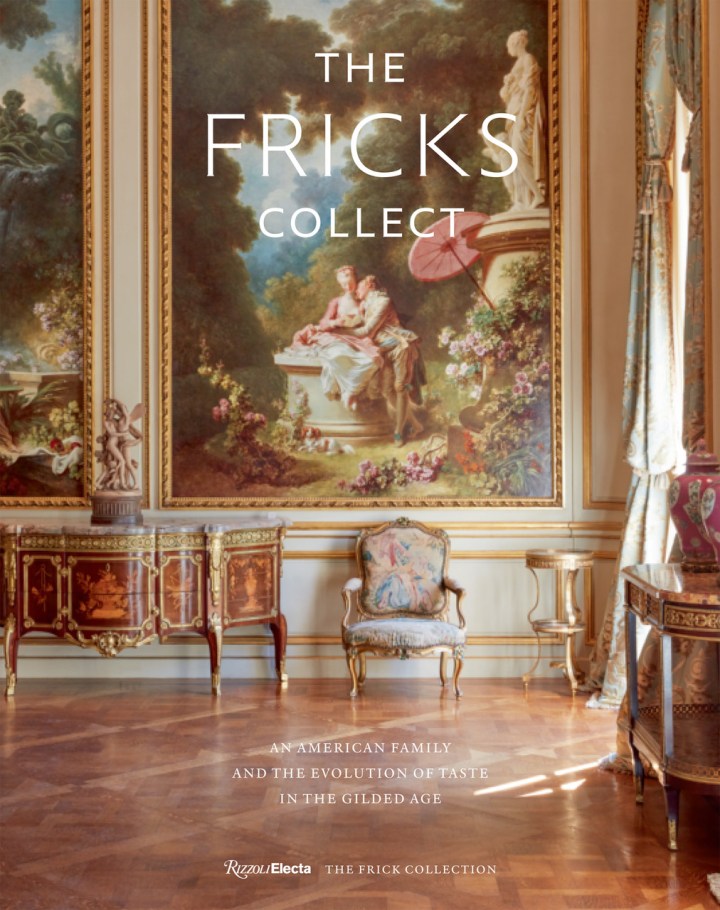 Before his New York home became a museum, Henry Clay Frick engaged some of his era’s most important art dealers to build a notable collection and the best decorators to create suitable Gilded Age interiors to accommodate the works. This story traces the journey that led to the creation of one of America’s finest art collections.
At its heart, this story centers on Frick and his daughter Helen Clay Frick, both pivotal figures in the formation of the renowned Frick Collection. The volume delves into the Fricks’ exposure to and acquisition of some of the finest art of their time. With an exquisite blend of textual narrative and ample imagery showcasing masterpieces and the sumptuous interiors of homes in Pittsburgh and New York, the book offers a captivating narrative of ambition, wealth, and cultural patronage.
White, Allom & Co. and Elsie de Wolfe worked with Frick on the decoration of his houses and influenced the choice of many furnishings the owner acquired and that formed the backdrop for his paintings. As was commonplace at the time, decorators often collaborated with dealers in creating spaces suitable for the esteemed works of art. Further influential figures who shaped the era’s cultural landscape include Frick’s business partner Andrew Carnegie and noted art dealers Joseph Duveen in London and Charles Carstairs of M. Knoedler & Co. in New York. Presenting the glittering halls of their homes and the masterpieces adorning the walls of The Frick Collection, this volume is a testament to the enduring allure of art and the power of patronage in shaping cultural institutions.
Ian Wardropper is the Anna-Maria and Stephen Kellen Director of The Frick Collection. Julian Fellowes is an English novelist, director, and screenwriter, best known as the creator and head writer of the popular TV series Downton Abbey.
Exhibition | Music and the Republic
Now on view at the Musée des Archives Nationales:
Music and the Republic: From the French Revolution to the Popular Front
Hôtel de Soubise, Paris, 26 March — 14 July 2025
Curated by Marie Ranquet, Sophie Lévy, and Christophe Barret
 L’exposition Musique et République, de la Révolution au Front populaire—organisée avec le concours du Conservatoire national supérieur de musique et de danse de Paris—souhaite mettre en lumière les liens entre la musique et la construction de la République. De la Révolution, qui organise de nouvelles institutions et utilise la musique pour fonder un sentiment patriotique, au Front populaire de 1936, qui fait le pari de l’émancipation sociale du citoyen par l’accès aux loisirs et à la culture, la formation et la pratique musicale permettent à la fois le partage d’un patrimoine sonore commun et l’expression personnelle, parfois subversive.
Les Archives nationales retracent l’histoire de cette rencontre entre le citoyen et la musique. Des partitions inédites retrouvées dans les fonds des Archives nationales, des instruments de musique étonnants ou oubliés, des correspondances politiques, des commandes passées à des compositeurs prestigieux et de nombreux autres documents, racontent une histoire mouvementée : celle d’un siècle et demi de production, d’éducation et de pratique musicales, envisagées en regard de l’idée républicaine.
Commissariat scientifique
• Marie Ranquet, conservatrice en chef du patrimoine aux Archives nationales
• Sophie Lévy, responsable des archives au Conservatoire national supérieur de musique et de danse de Paris
Commissariat technique
• Christophe Barret, chargé d’expositions au département de l’Action culturelle et éducative des Archives nationales
Musique et République: De la Révolution au Front populaire (Paris: Éditions Snoeck, 2025), 168 pages, ISBN: 978-9461619464, €30. With contributions by Adrián Almoguera, Mathias Auclair, Rémy Campos, Myriam Chimènes, Peter Hicks, Sophie Lévy, Marie Ranquet, Émeline Rotolo, and Charles-Éloi Vial.
The Burlington Magazine, March 2025
The long 18th century in the March issue of The Burlington:
The Burlington Magazine 167 (March 2025)
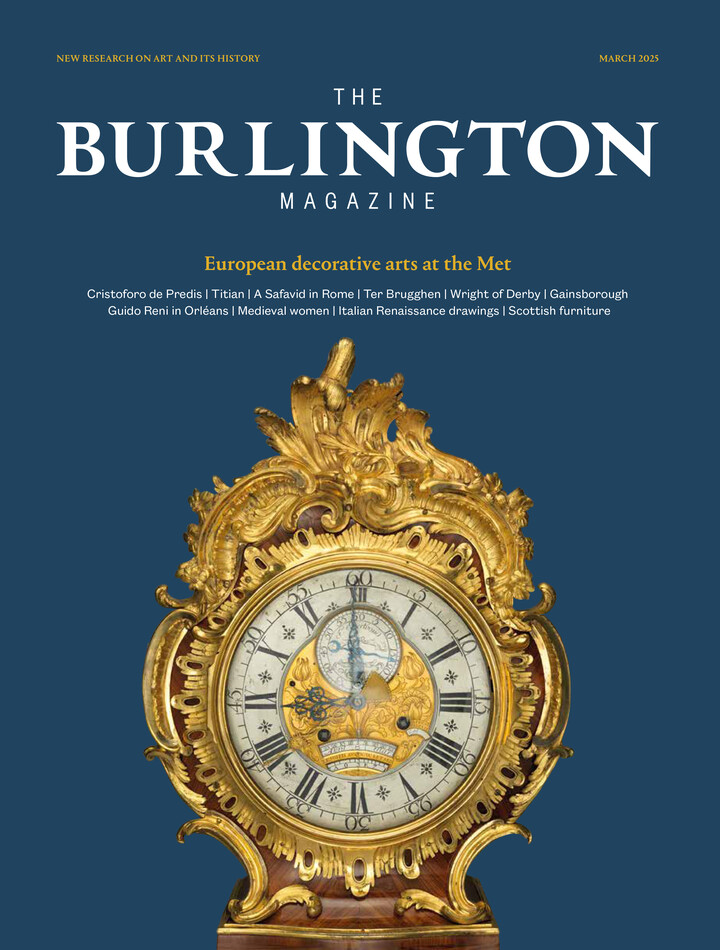
Cover of The Burlington Magazine with a recent acquisition at The Met: Longcase equation regulator, clockmaker: Ferdinand Berthoud, case maker: Balthazar Lieutaud, ca. 1752 (New York: The Metropolitan Museum of Art, 2016.28a–e).
e d i t o r i a l
• “A Frick Renaissance,” p. 203–05.
On 17th April 2025 the Frick Collection on Fifth Avenue re-opens after a long period of redevelopment. When an old friend has a face lift, the results can be disconcerting. Happily, the impact here is, however, reassuringly subtle—as the splendid Gilded-age character of one of New York’s iconic cultural institutions has been retained, while elegant new facilities have been deftly integrated.
a r t i c l e s
• Julia Seimon, “Two Boys with a Bladder in the J. Paul Getty Museum and Joseph Wright of Derby’s Early Candlelights,” pp. 242–57.
A careful re-assessment of Joseph Wright of Derby’s painting of Two Boys with a Bladder in the Getty’s collection, supported by documentary discoveries, clarifies the circumstances of the painting’s creation and first exhibition and has significant implications for dating several of the artist’s other painted and drawn works.
s h o r t e r n o t i c e s
• Oliver Fairclough, “Paul Sandby and Sir Watkin Williams-Wynn Revisited,” pp. 258–61.
• Christina Milton O’Connell, “Observations about the Abandoned Portrait beneath Gainsborough’s Blue Boy,” pp. 26–65.
r e v i e w s
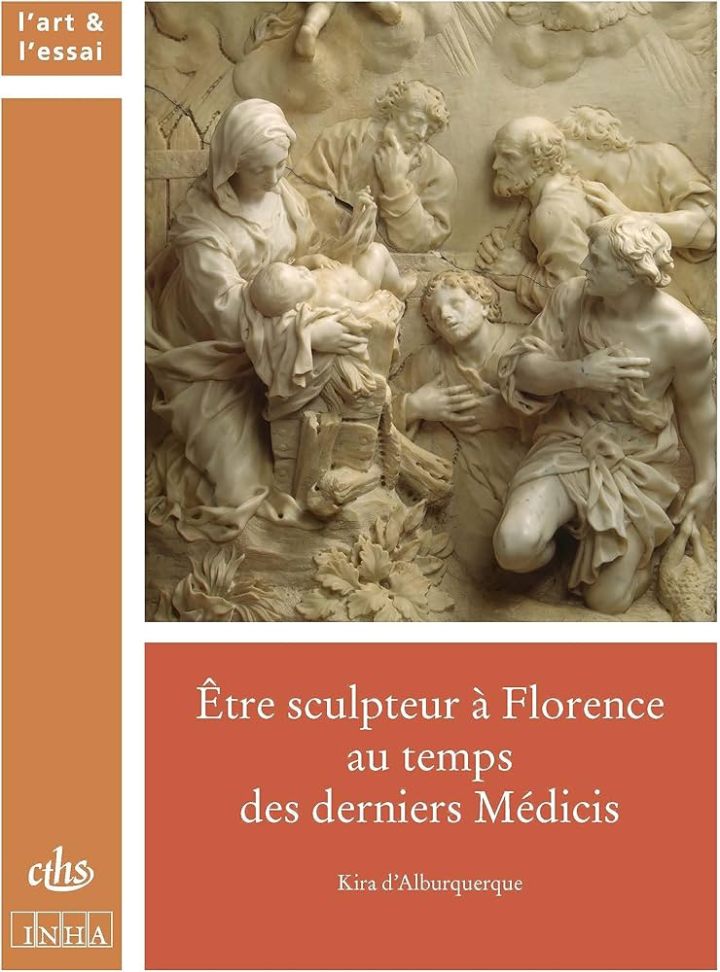
Cover of Être sculpteur à Florence au temps des derniers Médicis, featuring a photograph of Giovanni Battista Foggini’s Adoration of the Shepherds, ca. 1675, marble (Saint Petersburg: Hermitage).
• Nicola Ciarlo, Review of Kira d’Alburquerque, Être sculpteur à Florence au temps des derniers Médicis (CTHS, 2023), pp. 292–94.
• Adam Bowett, Review of Stephen Jackson, Scottish Furniture 1500–1914 (NMS Publishing, 2024), pp. 296–98.
• Penelope Curtis, Review of the exhibition catalogue Souvenirs de jeunesse: Entrer aux Beaux-Arts de Paris 1780–1980, edited by Alice Thomine-Berrada (Beaux-Arts de Paris, 2024), pp. 298–99.
• Alan Powers, Review of Edward McParland, The Language of Architectural Classicism: From Looking to Seeing (Lund Humphries Publishers, 2025), pp. 299–300.
• Max Marmor, Review of Julius von Schlosser, The Literature of Art: A Manual for Source Work in the History of Early Modern European Art Theory, translated by Karl Johns (Ariadne Press, 2023), p. 303.
s u p p l e m e n t
• Sarah Lawrence, “Recent Acquisitions (2014–24) of European Decorative Arts at The Metropolitan Museum of Art,” pp. 305–24.
Exhibition | Andrea Appiani (1754–1817)
Now on view at the Château de Bois-Préau in Rueil-Malmaison (as noted at Art History News) . . .
Andrea Appiani (1754–1817): Napoleon’s Painter in Italy
Musée national des châteaux de Malmaison et Bois-Préau, 16 March — 28 July 2025
Curated by Francesco Leone, Fernando Mazzocca, and Simone Ferraro
 Une centaine d’oeuvres—peintures, dessins, gravures, médailles appartenant à des collections européennes publiques et privées—sont réunies pour la première rétrospective organisée en France sur cet artiste, considéré comme le plus important peintre de la période néo-classique au nord de l’Italie. L’exposition révélera un portraitiste attachant et un fresquiste brillant, malgré la destruction d’une partie de ses décors peints au Palais Royal et dans certains hôtels particuliers milanais durant les bombardements de 1943.
Victorieux à la bataille du Pont de Lodi le 10 mai 1796, le général Bonaparte fait son entrée dans Milan le 15. Il y rencontre Appiani dont le talent est reconnu pour des décors de théâtre, d’hôtels particuliers et d’églises ainsi que des portraits. La manière de l’artiste a déjà perdu de la relative raideur de ses débuts et le peintre-décorateur sait combiner la précision et la fermeté du trait avec la délicatesse du modelé et la suavité de la matière. Trois ans plus tard, au retour des Français, à l’occasion de la Deuxième campagne d’Italie, Appiani se voit confier par Napoléon la charge de sélectionner les oeuvres d’art prélevées dans les églises et les couvents pour enrichir et faire rayonner les musées du Nord de la péninsule.
L’ascension d’Appiani, iconographe de la république puis du Royaume d’Italie est consacrée par le nombre important de commandes publiques et privées qu’il reçoit alors. En cinq séquences chronologiques et thématiques, l’exposition permet de montrer l’oeuvre de l’artiste à la fois fresquiste et peintre de chevalet : La carrière pré-napoléonienne, Les Fastes de Napoléon, Portraits publics et privés, Décors à fresque et, Fortune artistique d’Appiani.
Présentée dans les salons du château de Bois-Préau, l’exposition révèle au public le talent et la richesse de l’oeuvre de cet artiste au service de l’Empereur. L’exposition présente la manière sensible, monumentale ou intimiste du plus grand artiste milanais de son temps : les débuts d’un peintre formé au dix-huitième siècle, les scènes de la geste napoléonienne et de la république naissante, les effigies de Napoléon et Joséphine, les études et dessins préparatoires pour les décors des hôtels particuliers et des églises.
Exposition produite par le GrandPalaisRmn.
Rémi Cariel, ed., Andrea Appiani: Le peintre de Napoléon en Italie (Paris: Éditions Flammarion, 2025), 224 pages, ISBN: 978-2711880737, €40.
◊ ◊ ◊ ◊ ◊
At the Italian Cultural Institute in Paris:
Rémi Cariel and Alessandro Morandotti | Andrea Appiani et la tradition artistique de la Lombardie
Institut culturel italien, Paris, 31 March 2025, 6.30pm
A l’occasion de l’exposition temporaire Andrea Appiani (1754–1817): Le peintre de Napoléon en Italie, l’Institut Culturel Italien rend hommage à ce grand peintre italien avec une conférence autour de sa figure. La conférence explorera sa vie et sa carrière avec une attention particulière aux racines de sa culture. Avec Rémi Cariel, conservateur en chef du patrimoine en charge des collections de peintures, sculptures et arts graphiques du Musée Malmaison et Alessandro Morandotti, professeur d’histoire de l’art moderne et président du cursus d’Histoire de l’Art de l’Université de Turin.
Book tickets here»
Exhibition | Brenet: Painter to the King
As noted at Art History News, from the press materials for the exhibition:
Brenet: Un peintre du roi à Douai au 18e siècle
Musée de la Chartreuse, Douai, 19 March — 23 June 2025
Curated by Pierre Bonnaure and Marie Fournier
 Le musée de la Chartreuse de Douai présente la première exposition jamais consacrée au peintre Nicolas-Guy Brenet (Paris, 1728–1792), l’un des rénovateurs de la peinture d’Histoire à la veille de la Révolution.
Formé auprès des plus grands maîtres de la première moitié du 18e siècle (Charles Antoine Coypel, François Boucher et Carle Vanloo), puis à l’Académie de France à Rome, Nicolas-Guy Brenet est reçu à l’Académie royale de peinture et de sculpture en 1769, l’année même où il exécute de grands décors pour Douai. Il conçoit un cycle de six peintures allégoriques toujours en place au sein de l’actuel palais de justice, l’ancien parlement de Flandre. Il travaille également au décor de la collégiale Saint-Pierre en peignant un spectaculaire Triomphe de la Vierge, encore visible à son emplacement d’origine, dans la chapelle du Dôme. À Paris, il honore tout au long de sa carrière de prestigieuses commandes destinées principalement à l’Église, ainsi qu’aux rois Louis XV et Louis XVI.
Cette première exposition consacrée à Nicolas-Guy Brenet permet de découvrir à travers une sélection de tableaux, d’esquisses et de dessins, un artiste emblématique du renouveau de la peinture d’Histoire de la seconde moitié du siècle des Lumières et d’apprécier la richesse de la vie artistique douaisienne au temps des parlementaires de Flandre.
• 42 œuvres exposées dans la salle capitulaire du musée de la Chartreuse
• 37 prêteurs (particuliers et institutions), dont le musée du Louvre et le château de Versailles, les musées de Compiègne, Quimper, Dunkerque, Orléans, Strasbourg, Blois etc.
Information about Marie Fournier’s 2023 monograph on Brenet is available here»
The full exhibition brochure is available here»
New Book | Imagined Neighbors: Visions of China in Japanese Art
I’m sorry for not posting earlier news of the exhibition, which was on view in Washington at the National Museum of Asian Art from 16 March until 15 September 2024. Fortunately, the catalogue is still available. –CH
Frank Feltens, ed., with additional contributions by Paul Berry and Michiyo Morioka, Imagined Neighbors: Visions of China in Japanese Art, 1680–1980 (Munich: Hirmer Publishers, 2024), 304 pages, ISBN: 978-3777442662, $65.
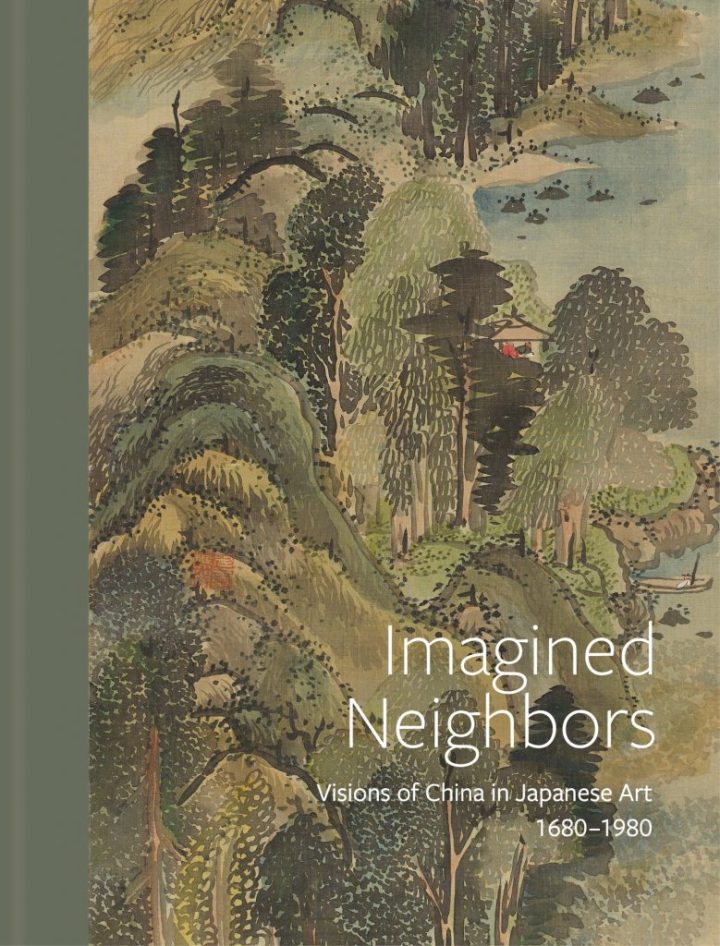 Imagined Neighbors: Visions of China in Japanese Art examines Japanese artistic understanding of China from the late 1600s, Japan’s period of seclusion, to its age of modernization after the mid-nineteenth century. It focuses on ways Japanese painters from the late 1600s to the twentieth century pictured China, both as a real place and as an imagined promised land. It features three essays by renowned Japanese art historians in addition to more than fifty catalog entries highlighting unusual artworks revealing Japanese artists’ complex responses to Chinese art, history, and culture. In recent years, a handful of scholarly studies have tried to push against the established narrative of an exclusively Western-inspired modern Japan. Imagined Neighbors challenges the established narrative of an exclusively Western-inspired modern Japan by offering a more nuanced approach to understanding the country’s struggle with reconciling the old with the new as it reinvented itself into a modern nation-state.
Frank Feltens is curator of Japanese art at the Smithsonian’s National Museum of Asian Art.
Paul Berry is an independent scholar of Japanese art and cinema who has taught at the University of Michigan, the University of Washington, and Kansai Gaidai University.
Michiyo Morioka is an independent scholar of Japanese art based in Seattle.
Exhibition | A Movable Feast: Food and Drink in China

Ding Guanpeng (active 1726–1770), A Night Banquet at the Peach and Plum Garden, Qing dynasty (1644–1911), handscroll, ink, and colour on paper
(Beijing: The Palace Museum)
◊ ◊ ◊ ◊ ◊
From the press release and the general exhibition description:
A Movable Feast: The Culture of Food and Drink in China
Hong Kong Palace Museum, 19 March — 18 June 2025
A Movable Feast: The Culture of Food and Drink in China offers a fresh perspective centred on the concept of ‘mobility’, connecting significant aspects of Chinese food culture. Over 110 exquisite artefacts have been meticulously selected to explore the evolution of food vessels, eating practices, and related traditions, comprehensively illustrating the rich culinary culture and lifestyle throughout the history of China. Food culture encompasses the sourcing and utilisation of ingredients, the preparation and processing of food, and the consumption of food as well as the customs, etiquette, and ideologies developed around eating and drinking. It touches nearly every aspect of our material and spiritual life. According to anthropological archaeologist Kwang-chih Chang, “one of the best ways of getting to a culture’s heart would be through its stomach.”
Food culture is naturally an important element of the Chinese civilisation. This exhibition invites visitors to enjoy a multicourse feast spanning five thousand years of Chinese history. The first part, “Crossing from Life to Death”, features a ceremonial meal for the deceased. Showcasing ritual and burial objects related to food and drink dated from the Neolithic period (about 10000–2000 BCE) to the Han dynasty (206 BCE–220 CE), this section demonstrates the importance of transferring food and drink to the afterlife in Chinese beliefs. The second section “Crossing Cultures” presents a multicultural banquet, focusing on eating and drinking vessels from the Tang (618–907) to Song (960–1279) periods, such as platters and ewers introduced to China through the Silk Routes. It reveals how China and Central and West Asia embraced each other’s eating practices. The next section “Crossing Mountains and Lakes” exhibits famous scenes of literati gatherings and picnic sets produced in the Ming (1368–1644) and Qing (1644–1911) dynasties, which demonstrates the important role food and drink played at elegant gatherings and excursions. Finally, at the “Crossing Time” multimedia table, visitors are encouraged to find out more about the past and present lives of modern eating and drinking vessels.
Accompanying the exhibition is the publication A Movable Feast: The Culture of Food and Drink in China, available in both Traditional Chinese and English. The book features six chapters written by a team of scholars and experts from the Hong Kong Palace Museum and around the world—addressing how people have traversed the culinary landscape with food and eating utensils for 5,000 years, examining preparations for the afterlife, adaptations to foreign culinary practices from other regions, and the enjoyment of outdoor picnics. The catalogue will be available at the Hong Kong Museum and later from major bookstores in Hong Kong.
Crossing from Life to Death: Feeding the Spirits
The first section features food and drink vessels used in rituals and burials from the Neolithic period to the Han dynasty (206 BCE–220 CE). Key objects on display include the zun (wine vessel) for Father Ding and the jue (wine vessel) of Marquis of Lu from the Palace Museum’s collection, dating back to the Western Zhou dynasty (about 1100–771 BCE). These bronze ritual vessels were used for making offerings and served as a medium between people and spirits.
A dou (food vessel) with cord pattern from the Warring States period (475–221 BCE) was a container for pickles, preserved vegetables, meat sauce, gravy, and more. In a first-century Chinese dictionary, the character feng, meaning abundance, is explained by a pictograph of a dou filled with food, while some scholars further interpret it as depicting two skewers of meat on a dou. The Chinese character li, meaning ritual, also has a component of feng, a further indicator of the significance of food and food vessels in Chinese culture.
During the mid-to late Western Han dynasty (206 BCE–8 CE), earthenware burial objects in the shape of granaries, wells, stoves, pigsties, and chicken coops were prevalent, not only mirroring the way of life and the flourishing food culture of the time but also signifying people’s desire for an abundant afterlife. A model of a brazier with cicadas, from the Hong Kong Museum of Art, was fired using low-temperature lead glaze, resulting in striking colours. The roasting rack with two rows of cicadas illustrates the custom of eating cicadas during this period.
Crossing Cultures: Nomadic Eating Practices
The second section presents the intersection and integration of culinary customs between China and Central and West Asia during the Tang (618–907), Song (960–1279), and Yuan (1271–1368) dynasties, demonstrating how the richness and evolution of ‘tradition’ develops over time. The introduction of new ingredients, utensils, and tall furniture to the Central Plains via the Silk Routes significantly transformed the region’s food culture. Foods from Central Asia were given the prefix hu (roughly indicates regions beyond the Central Plains of China), as seen in terms like hujiao (black pepper), hutao (walnuts), and huma (sesame), which remain widely used today
Among the exhibits in this section is a quatrefoil cup from the Tang Dynasty (877), which traces its origins back to the Sassanian Empire (present-day Iran). Scholars believe it is associated with the term ‘poluo’, a foreign term that frequently appeared in Tang and Song poetry, referring to a drinking vessel for alcoholic drinks. The renowned poet Li Bai (701–762) wrote about it, saying “Grape wine, gold poluo, a hu girl aged 15 years was carried by a fine horse.” To this day, the term ‘gold poluo’ is used in Cantonese to describe a greatly cherished child. Another key exhibit, a phoenix-head ewer, which features a handle and spout. This vessel exemplifies how the nomadic drinking custom of pouring wine from ewers gradually replaced the tradition of spooning wine from a jar with a ladle in the Central Plains.
With the introduction of hu foods to the Central Plains, large platters emerged during the Tang dynasty to accommodate nomadic foods such as hubing (hu flatbread) and sushan (shaved ice-like dessert). By the Yuan and Ming (1368–1644) periods, large platters produced in China had become important export commodities, enjoying popularity in the Middle East. Historical records from the Ottoman Empire indicate that porcelain was frequently used for banquet serving ware during significant ceremonies, such as the sultan’s accession, birthdays, and weddings. One of the exhibits, a dish with chrysanthemum and lotus scrolls from the Ming dynasty closely resembles a 15th-century blue-and-white platter in the collection of the Ardabil Shrine in Iran, exemplifying the multidirectional nature of cultural exchange.
Crossing Mountains and Lakes: Packing the Perfect Picnic
The third section showcases the mobility of food and drink across different landscapes by presenting artworks and picnic sets of the Ming and Qing dynasties. Historically significant excursions and picnics have become a source of inspiration for numerous calligraphies, paintings, and other works of art. For example, A Night Banquet at the Peach and Plum Garden by the renowned Qing court painter, Ding Guanpeng (active 1726–1770), portrays the famous Tang poet Li Bai (701–762) and his cousins enjoying a banquet amidst a garden filled with peach blossoms.
During the Ming and Qing dynasties, the custom of dining on pleasure boats became a particularly popular activity along the lower reaches of the Yangtze River. Late Ming literati considered that an elegant pleasure boat should accommodate “six hosts and guests and four attendants” and allow them to brew tea during the excursion. A notable exhibit, an ivory boat from the British Museum’s Qing dynasty collection, vividly captures a leisurely outing on the water: two bearded men enjoy a chat over tea under the canopy of the boat, while others carry a food container and net freshwater fish from the lake.
The design of the paraphernalia used for these excursions was intended to keep objects organised, preventing them from colliding, and ensuring that the objects remained safe and accessible during travel. The Qing imperial court later adopted these organisational boxes to manage and store cultural artefacts accumulated in the palaces. The exhibition features a box of curiosities assembled during the Qing dynasty, intricately designed to hold a variety of antiques crafted from different materials, transforming it into a curated collection of treasures.
Crossing Time: The Heritage
The final section features multimedia interactive installations that blend ancient and modern scenes and artefacts, inviting the audience to enjoy a virtual feast that transcends time and space. Visitors can simulate ordering food at a virtual dining table while observing the cooking processes of various dishes, allowing them to discover diverse cooking techniques associated with these utensils.
The exhibition is jointly organised by the Hong Kong Palace Museum and The Palace Museum. The exhibits mainly come from The Palace Museum and the Hong Kong Palace Museum. The British Museum, the Asian Art Museum of San Francisco, the Cleveland Museum of Art, the Hong Kong Museum of Art, and the Hong Kong Flagstaff House Museum of Tea Ware have also provided a number of loans. The Robert Chang Art Education Charitable Foundation is the exhibition’s Supporting Sponsor.
Print Quarterly, March 2025
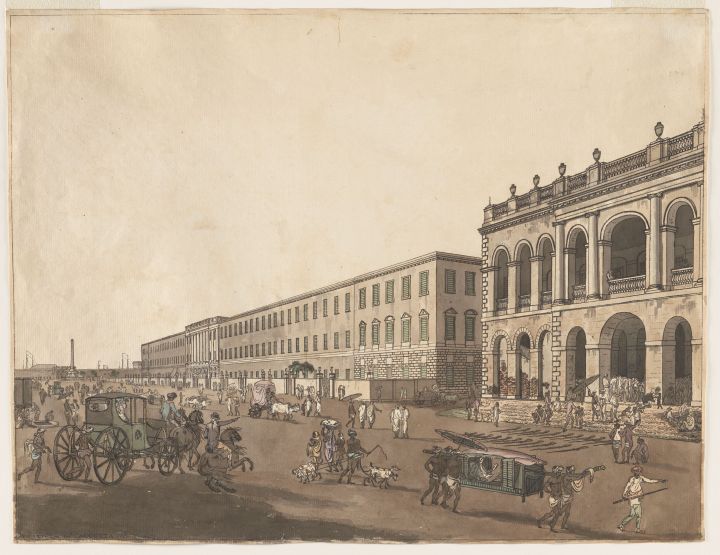
Thomas Daniell, The Old Court House and Writers’ Building, 1786, hand-coloured etching, 403 × 524 mm
(Philadelphia Museum of Art; image Thomas Primeau).
◊ ◊ ◊ ◊ ◊
The long eighteenth century in the latest issue of Print Quarterly:
Print Quarterly 42.1 (March 2025)
a r t i c l e s
• Jalen Chang, “‘Bengalee Work’ before Aquatint: Thomas Daniell’s Views of Calcutta”, pp. 20–30.
This article reevaluates eleven hand-coloured etchings by Thomas Daniell (1749–1840) held by the Philadelphia Museum of Art, previously presumed to be published states of his 1786–88 print series Views of Calcutta, often cited as the earliest aquatints made outside of Europe. Devoid of the rudimentary aquatinting and hand-coloured skies which characterize other extant examples, the relatively bare objects document a distinct stage of Daniell’s artistic process and are unprecedented in their survival. The article suggests that these prints were trial proofs never intended for publication or sale, meant instead to serve as colour tests for Daniell and his team of Indian copyists. Furthermore, the article considers early imperial printmaking and its ideological functions in British India.
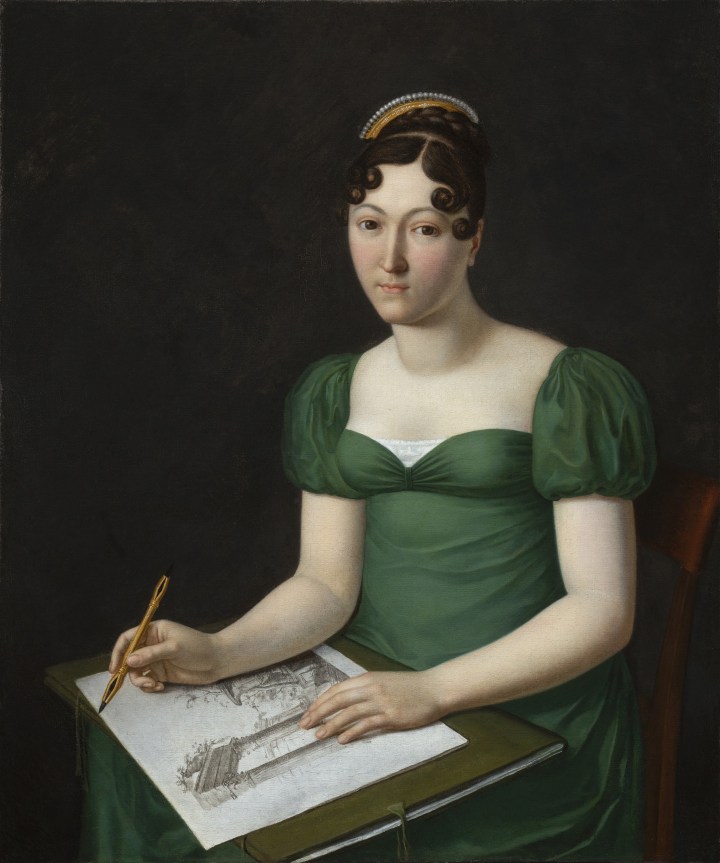
Charlotte Bonaparte, Self-Portrait, ca. 1824–26, oil on canvas, 885 × 730 mm (Princeton University Art Museum).
• Thomas Busciglio-Ritter, “From Brussels to Point Breeze: Charlotte Bonaparte’s Lithographic Landscapes, 1821–25”, pp. 31–43.
This article discusses a series of twelve lithographs by Charlotte Bonaparte (1802–1839), niece to Napoleon I, of North American views known as the Vues pittoresques de l’Amérique dessinées par la Comtesse Charlotte de Survillier (printed 1824), which she completed and disseminated on her return to Europe. The series, published in Brussels, became the first lithographic scenic views of the United States to circulate among western European audiences. The article situates Bonaparte’s landscape views within the context of transatlantic print culture of the early nineteenth century, touching on the role of women as producers of landscape images and the introduction of lithography as a new medium for American audiences.
n o t e s a n d r e v i e w s
• Bernard Aikema, Review of the exhibition catalogue Connecting Worlds: Artists and Travel, ed. by Anita Viola Sganzerla and Stephanie Buck (Paul Holberton Publishing, 2023), pp. 64–66.
• Catherine Jenkins, Review of the exhibition catalogue Trésors en noir et blanc. Estampes du Petit Palais, de Dürer à Toulouse-Lautrec, by Anne-Charlotte Cathelineau, Joëlle Raineau-Lehuédé, and Clara Roca (Paris Musées, 2023), pp. 74–76.
• Ellis Tinios, Review of Hokusai’s Fuji, ed. by Kyoko Wada (Thames and Hudson, 2023), pp. 76–77.
• Victoria Sancho Lobis, Review of Aaron Hyman, Rubens in Repeat: The Logic of the Copy in Colonial Latin America (Getty Research Institute, 2021), pp. 99–105.
Exhibition | Lines of Connection: Drawing and Printmaking

Hendrick Goltzius, Study of a Right Hand, 1588
(Haarlem: Teylers Museum, N058)
◊ ◊ ◊ ◊ ◊
Recently opened at the AIC:
Lines of Connection: Drawing and Printmaking
Art Institute of Chicago, 15 March — 1 June 2025
Getty Center, Los Angeles, 1 July — 14 September 2025
Curated by Jamie Gabbarelli and Edina Adam
The first exhibition ever to focus on the multiple connections between drawing and printmaking, this presentation brings together around 90 works on paper by some of the greatest artists in the Western tradition to uncover the inner workings of their creative process and offer new ways to think about the links between the two mediums.

Joseph Wright of Derby, Self-Portrait in a Fur Cap, 1765–68, monochrome pastel (grisaille) on blue-gray laid paper, 42.5 × 29.5 cm (Art Institute of Chicago, Clarence Buckingham Collection, 1990.141).
Featuring fascinating drawings and exceptional prints from the late 15th century though the mid-19th century by artists such as Albrecht Dürer, Parmigianino, Rembrandt, Peter Paul Rubens, Maria Sibylla Merian, Francisco Goya, and William Blake, the exhibition explores the creative exchange between the two practices by showcasing preparatory drawings for prints, printed imitations of drawings, and drawn copies of prints. A selection of hybrid works also questions traditional definitions, strict boundaries, and outdated hierarchical distinctions between media.
Among the many remarkable loans enriching the exhibition are two astonishing drawings of a right hand by Hendrick Goltzius, which will be shown alongside each other for the first time in over a generation. Additionally an impressive drawing by Rembrandt of Leonardo da Vinci’s Last Supper makes its Chicago debut. With a wealth of exceptionally beautiful works, Lines of Connection offers fresh perspectives on two intertwined mediums and lifts the curtain on the rarely foregrounded subjects of artistic training, workshop practices, and the afterlife and collecting of works on paper.
Lines of Connection: Drawing and Printmaking is co-organized by the Art Institute of Chicago and the J. Paul Getty Museum. The exhibition is curated by Jamie Gabbarelli, Prince Trust Associate Curator, Prints and Drawings, Art Institute of Chicago, and Edina Adam, assistant curator of drawings, The J. Paul Getty Museum.
Jamie Gabbarelli and Edina Adam, Lines of Connection: Drawing and Printmaking, 1400–1850 (Los Angeles: Getty Publications, 2025), 230 pages, ISBN 978-1606069653, $40.










 Enfilade
leave a comment