Exhibition | Wild Apollo’s Arrows

Josef Abel, Klopstock’s Arrival in Elysium / Klopstocks Ankunft im Elysium, 1805
(National Gallery Prague)
◊ ◊ ◊ ◊ ◊
Now on view at Vienna’s Academy of Fine Arts:
Wild Apollo’s Arrows: Klopstock Cult & Ossian Fever
Die Pfeile des wilden Apollo: Klopstockkult & Ossianfieber
Akademie der bildenden Künste Wien, 7 March — 25 May 2025
Curated by Alexander Roob
The exhibition Wild Apollo’s Arrows: Klopstock Cult & Ossian Fever presents significant artistic works that exemplify the epochal shift from the Enlightenment to the irrationalism of the Storm and Stress movement and Romanticism, exploring for the first time the immense influence of the poet Friedrich Gottlieb Klopstock (1724–1803) on the fine arts and music of his own age.
Decades before the French Revolution, the Age of Enlightenment saw a sudden outbreak of irrational sentiment, expressed in exuberant emotions, notions of spiritualistic gender switching, and a fragmented, heroic, and introspective view of art. This was the onset of an epochal shift with consequences for pictorial art: reliance on the actual appearance of things gave way to the mystical and diffuse, accompanied by a greater interest in the realm of acoustics. Nothing seems to better define this ‘acoustic turn’ than the trope of the blind prophet and lyrical poet, which functioned as a literary model for this new epoch, as seen in the figures of Homer, Ossian, and John Milton. Milton’s grand inner images were proclaimed to be the perfection of the romantic sublime, and the myth of the lost and regained paradise to which he had given literary form was associated with Mesmer’s notion of lucid dreaming. In the early 1750s, German poet Friedrich Gottlieb Klopstock positioned himself as an heir to Milton, with his pietistic epic The Messiah: A Heroic Poem, and in this he issued a challenge to the self-proclaimed English national bard William Blake.
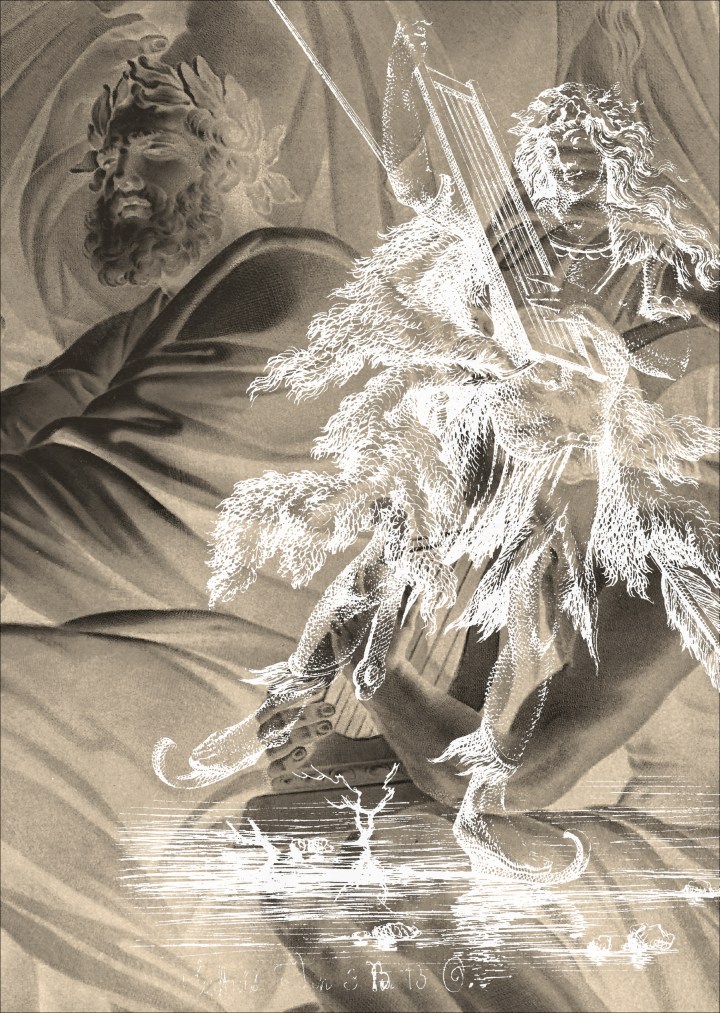
Motif combining works by Johann Peter Pichler after Heinrich Friedrich Füger, Homer Reciting, 1803 (Graphic Collection of the Academy of Fine Arts Vienna), and Carl Wilhelm Kolbe the Elder, Ice-skating Bard (‘Braga’), 1793–94 (Hamburger Kunsthalle, Kupferstichkabinett / bpk, photo by Julia Bau), design composite motif: Beton.
For cultural philosopher Johann Gottfried Herder, ‘wild Apollo’s arrows’ were the rousing sounds of an early folk movement and the Nordic dronescapes of a budding nationalist mysticism, which was all heralded in the pseudo-Celtic poem cycle Ossian. In the visions of the superstar poet Klopstock ‘wild Apollo’ appeared in a Celtic-Germanic mix, and the bard’s song and cosmic ice-dance put the world into creative turmoil. Klopstock, a keen ice-skater, who was nowhere more popular than in Austria, became a role-model for a sentimental skating trend that saw motion as a way to transcend limitations.
The exhibition presents art works that exemplify this epochal shift from the Enlightenment to the irrationalism of the Storm and Stress (Sturm und Drang) movement and Romanticism. For the first time, Klopstock‘s immense influence on the fine arts and music of his own age is explored. With interpretations of his work in art and music by Angelika Kauffmann, Heinrich Friedrich Füger, Josef Abel, and Franz Schubert, the republican poet Klopstock was surprisingly still very present in the Habsburg Empire at the time of the Napoleonic Wars. The exhibition blends works of Austrian classicism, evidence of international early romanticism, and the narcotic imagery of the Nazarenes to the accompaniment of music by Joseph Haydn, Christoph Willibald Gluck, and Franz Schubert.
Alongside works from the Paintings Gallery and numerous loans, this exhibition draws widely on works from the Academy of Fine Arts Vienna Graphic Collection. The project also integrates works by students from the Academy of Fine Arts Vienna, and it will be presented in the Exhibit Galerie and three rooms at the Paintings Gallery. A comprehensive publication with essays and illustrations will accompany the exhibition.
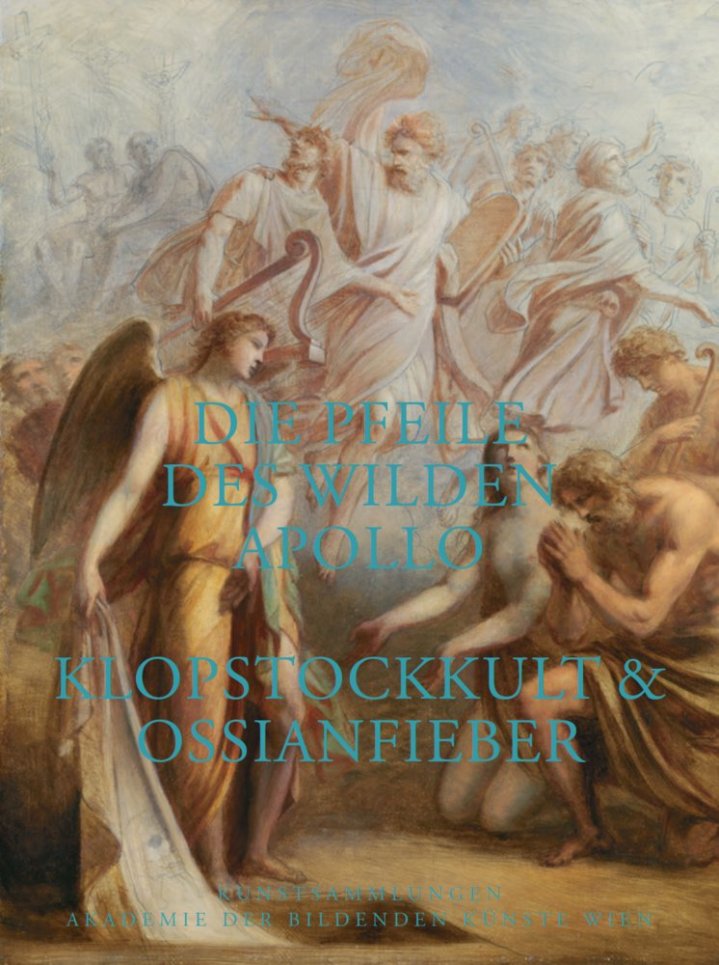 With works by Josef Abel, Edmund Aigner, Johann Wilhelm Baur, Thomas Blackwell, William Blake, Filippo Caporali, Thomas Chatterton, Daniel Chodowiecki, Edward ‘Celtic’ Davies, Josef Dorffmeister, Bonaventura Emler, Heinrich Friedrich Füger, Johann Heinrich Füssli, Hendrick Goltzius, Christoph Willibald Gluck, Johann Valentin Haidt, Joseph Haydn, Anton Herzinger, William Hogarth, Bartholomäus Hübner, Anne Hunter, Archduchess Maria Clementina of Austria, Johann Evangelist Scheffer von Leonhardshoff, Friedrich John, Owen Jones, Angelika Kauffmann, John Kay, Friedrich Gottlieb Klopstock, Joseph Anton Koch, Carl Wilhelm Kolbe the Elder, Simon Petrus Klotz, Leopold Kupelwieser, Johann Caspar Lavater, Johann Friedrich Leybold, William James Linton, Johann Heinrich Lips, Johann Hieronymus Löschenkohl, Josef Löwy, James Macpherson, Charles-François-Adrien Macret, Jacob Wilhelm Mechau, Heinrich Merz, Isaac Mills, Jean-Michel Moreau, Wilhelm Müller, Friedrich Olivier, Carl Hermann Pfeiffer, Johann Peter Pichler, Albert Christoph Reindel, Johan Christian Reinhart, Ferdinand Ruscheweyh, Luigi Schiavonetti, Julius Schnorr von Carolsfeld, Ludwig Ferdinand Schnorr von Carolsfeld, Franz Schubert, Moritz von Schwind, William Bell Scott, Franz Xaver Stöber, Joseph Sutter, Johanna Dorothea Sysang, Giambattista Vico, Marianne von Watteville, Josef Wintergerst, Franz Wolf, Nikolaus Ludwig von Zinzendorf, Felice Zuliani, and others.
Works after William Blake, Asmus Jakob Carstens, Johann Nepomuk Ender, Heinrich Friedrich Füger, Bonaventura Genelli, Gerdt Hardorff, G. W. Hoffmann, William Hogarth, Angelika Kauffmann, Nicaise de Keyser, Giuseppe Longhi, Johann Friedrich Overbeck, Raffaello Santi, genannt Raffael, Bertel Thorvaldsen, Angiolo Tramontini, Richard Westall.
Contemporary works by students of the Academy such as Christian Azzouni, Ina Ebenberger, Hicran Ergen, Eginhartz Kanter, Julia Kronberger, Prima Mathawabhan, Amar Priganica, Liese Schmidt, Pia Wilma Wurzer, and Ancient Britons Team (ABK Stuttgart).
Alexander Roob, with Sabine Folie, Die Pfeile des wilden Apollo: Klopstockkult & Ossianfieber (Hamburg: Textem Verlag), 248 pages, ISBN: 978-3864853340, €32.
Exhibition | Myth and Marble
Opening this month at AIC:
Myth and Marble: Ancient Roman Sculpture from the Torlonia Collection
Art Institute of Chicago, 15 March — 29 June 2025
Kimbell Art Museum, Fort Worth, 14 September 2025 — 25 January 2026
Montreal Museum of Fine Arts, 14 March — 19 July 2026
Curated by Lisa Ayla Çakmak and Katharine Raff
 From large-scale figures of gods and goddesses to portraits of emperors and magnificent funerary monuments, this exhibition brings to North America, for the first time, a selection of 58 rarely seen ancient Roman sculptures from Italy’s storied Torlonia Collection. Nearly half of these sculptures, which range in date from the 5th century BCE to the early 4th century CE, have not been publicly displayed in more than 70 years and have been newly cleaned, conserved, and studied specifically for this exhibition, making for a spectacular opportunity to experience their first public presentation in decades.
The Torlonia Collection is not only the largest private collection of Roman marble sculptures in Italy, but it is also arguably the most important of such private collections in the world. Comprising 622 works and a wide range of sculptural types and subjects, its holdings rival those of major institutions in Europe, including the Capitoline and Vatican Museums.
This veritable ‘collection of collections’ was formed in the 19th century by Prince Giovanni Torlonia (1754–1829) and his son Prince Alessandro (1800–1886), primarily through the purchase of several groups of ancient sculpture assembled in early modern Rome, as well as through extensive archaeological excavations on Torlonia estates in Italy. The taste at this time was for complete works of art, and restorations and other interventions carried out across the decades—in some instances by famed sculptors of the day—have impacted the sculptures’ current appearances while also enriching their histories.
By the 1870s, the collection was placed on view in a private museum in Rome, and a number of its masterworks became world-famous—among them the lovely portrait of a young woman known as the ‘Maiden of Vulci’ as well as the ‘Torlonia Girl’. In the wake of the Second World War, Alessandro Torlonia’s museum closed, and the collection went unseen for generations. During this closure, the Torlonia Foundation was created at the behest of Prince Alessandro Torlonia (1925–2017) to continue to both study and conserve the collection and the Villa Albani Torlonia.
Beginning in 2020, a series of exhibitions across Europe have brought selected highlights of the Torlonia Collection to public display once more. Myth and Marble debuts these masterpieces to a North American audience, presenting a once-in-a-lifetime opportunity to experience these exceptional ancient sculptures and explore the fascinating stories they reveal about both their ancient pasts and their modern afterlives.
Myth and Marble: Ancient Roman Sculpture from the Torlonia Collection is co-organized by the Art Institute of Chicago and The Torlonia Foundation, in collaboration with the Kimbell Art Museum, Musée des beaux-arts Montréal, and The Museum Box. The exhibition is curated by Lisa Ayla Çakmak, Mary and Michael Jaharis Chair and Curator, Arts of Greece, Rome, and Byzantium, and Katharine A. Raff, Elizabeth McIlvaine Curator, Arts of Greece, Rome, and Byzantium.
Lisa Ayla Cakmak and Katharine A Raff, eds., with contributions by Silvia Beltrametti and Salvatore Settis, Myth and Marble: Ancient Roman Sculpture from the Torlonia Collection (New Haven: Yale University Press, 2025), 160 pages, ISBN: 978-0300279658, $40.
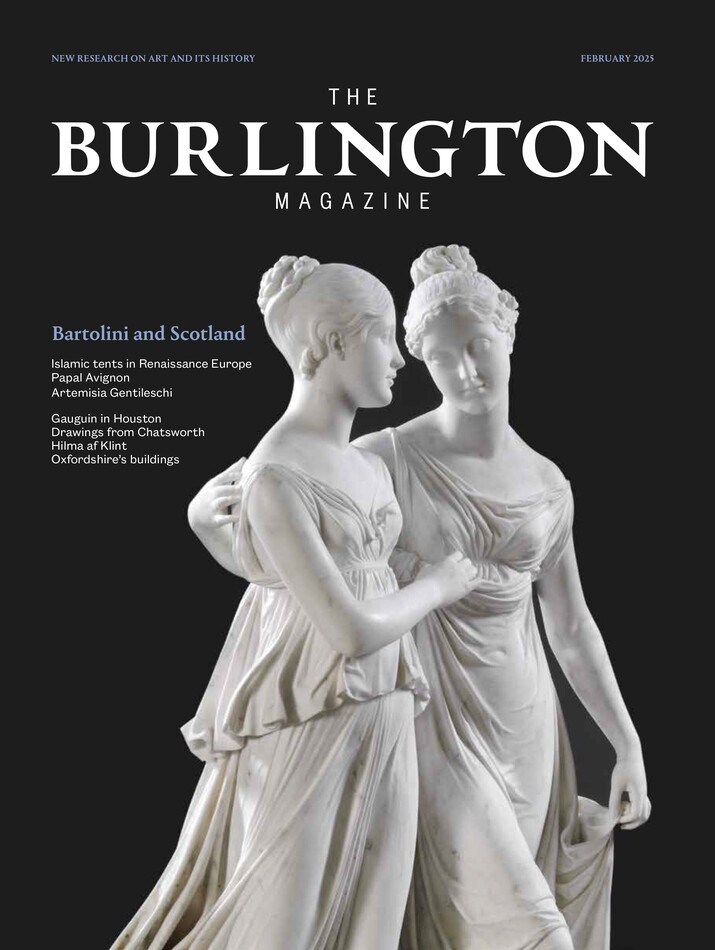
The Burlington Magazine, February 2025
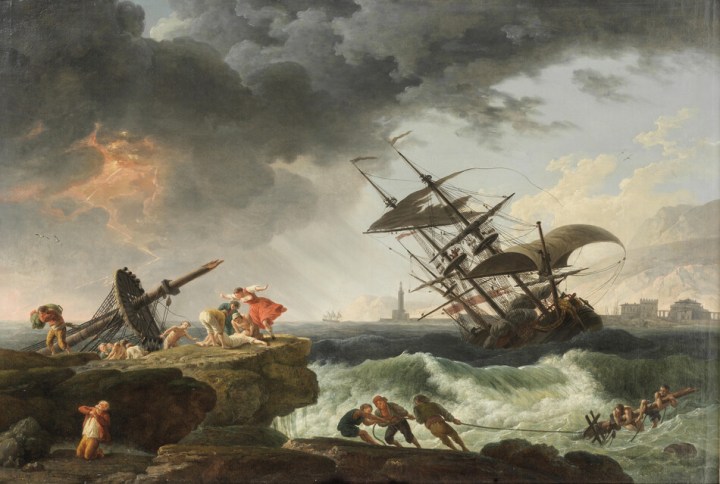
Claude-Joseph Vernet, Shipwreck on a Rocky Coast, 1775, oil on canvas, 74 × 108 cm (Private Collection). The work and its pendant, Harbour Scene at Sunset, are identified by Yuriko Jackall as paintings acquired directly from the artist by François-Marie Ménage de Pressigny, who likely commissioned The Swing by Fragonard. In contrast to the latter, which in 1794 was valued at 400 livres, the two paintings by Vernet were valued at 4,000 livres—the most valuable paintings owned by Ménage de Pressigny.
◊ ◊ ◊ ◊ ◊
The long 18th century in the February issue of The Burlington:
The Burlington Magazine 167 (February 2025)
e d i t o r i a l
• “Cataloguing,” p. 79.
It is one of the basic responsibilities of major collections to research and publish the works of art in their care. Such projects can take many years to mature and are often abandoned because of a lack of funding or shifting institutional priorities. It might be imagined, therefore, that because of these threats and the formidable cost of producing specialist and richly illustrated books, that collection catalogues would have become an extinct species. However, happily, a close reading of this Magazine in recent months would suggest otherwise, across a wide range of media and in terms of a broad chronological span . . .
 a r t i c l e s
• Lucy Wood and Timothy Stevens, “The Elder Sisters of The Campbell Sisters: William Gordon Cumming’s Patronage of Lorenzo Bartolini,” pp. 126–53.
s h o r t e r n o t i c e s
• Yuriko Jackall, “Ménage de Pressigny and His Art Collection,” pp. 157–61.
• Dyfri Williams, “Lusieri’s Mysterious Wooded Lake Identified,” pp. 161–63.
r e v i e w s
• Marjorie Trusted, Review of the exhibition Luisa Roldán: Escultora Real (Museo Nacional de Escultura, Valladolid, 2024–25), pp. 164–66.
• Karin Hellwig, Review of the exhibition Hand in Hand: Sculpture and Colour in the Spanish Golden Age (Prado, 2024–25), pp. 166–69.
• William Whyte, Review of Simon Bradley, Nikolaus Pevsner and Jennifer Sherwood, Oxfordshire: Oxford and the South-East, The Buildings of England (Yale UP, 2023), pp. 188–89.
• Elizabeth Savage, Review of Esther Chadwick, The Radical Print: Art and Politics in Late Eighteenth-Century Britain (Paul Mellon Centre for Studies in British Art, 2024), pp. 194–96.
Exhibition | Versailles: Science and Splendour

From the press release for the exhibition, a reworking of Sciences et curiosités de Versailles, which was on view at the palace in 2010–11.
Versailles: Science and Splendour
Science Museum, London, 12 December 2024 — 21 April 2025
Curated by Anna Ferrari
A significant new exhibition unveils the fascinating stories of science at Versailles, exploring how scientific knowledge became widespread, fashionable, and a tool of power to enhance France’s prestige. Versailles: Science and Splendour invites visitors to discover the unexpected, yet vitally important, role of science at the French royal court through spectacular scientific objects and artworks. Many items will be on display for the first time in the UK, including Louis XV’s rhinoceros and a splendid sculptural clock representing the creation of the world. The sumptuous exhibition also sheds light on the contribution of women to physics, medicine, and botany in 18th-century France.
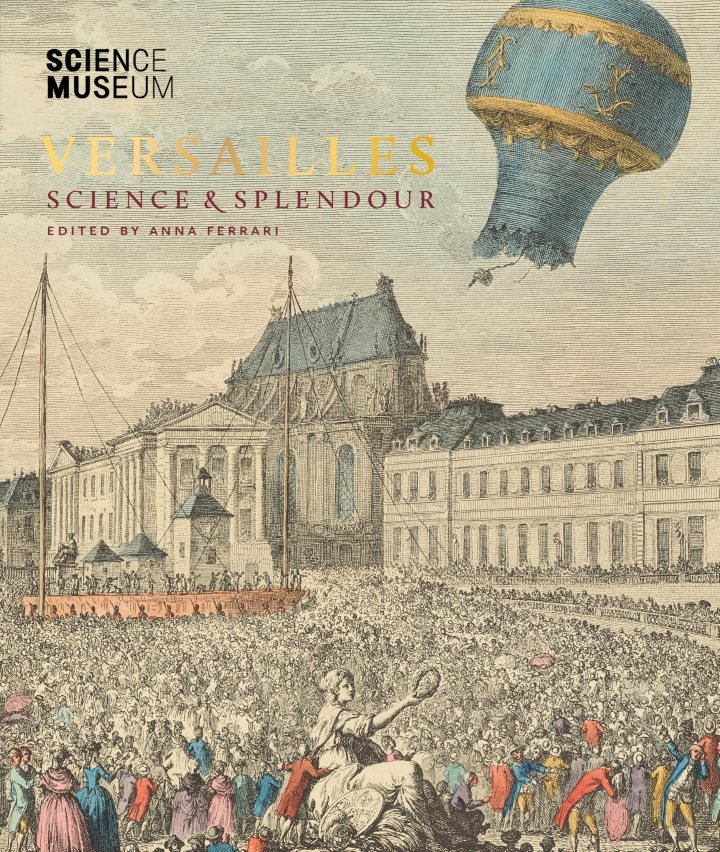
Versailles—the seat of royal power in France in the 17th and 18th centuries—was renowned for its opulent palace and gardens, but it was also a cradle of scientific spirit. Developed with support from the Palace of Versailles, the exhibition reveals the meeting of art and science in the court as it showcases more than 100 fascinating objects, from the extravagant to the everyday. The exhibition explores how Louis XIV, Louis XV, and Louis XVI encouraged scientific pursuit and readily drew on technological advances of their times, enhancing France’s prestige and extending its influence. The exhibition highlights significant figures, including stories of women in science, such as the pioneering midwife Madame du Coudray who trained thousands of midwives in rural France and Emilie du Châtelet, the eminent physicist and mathematician who translated Isaac Newton’s Principia.
Anna Ferrari, lead curator of Versailles: Science and Splendor, said: “We are delighted to bring Versailles to London in this new exhibition, which invites visitors to discover an unusual but crucial side of the palace’s history and grandeur. This exhibition will reveal fascinating stories of science at Versailles through more than a hundred treasures, bringing new attention to the relationship between science and power.”
Christophe Leribault, President of the Palace of Versailles, said: “The Sciences and Curiosities at the Court of Versailles exhibition, held in 2010 at the Palace of Versailles, made a lasting impression. It unveiled a lesser-known aspect of life at the former royal residence: the interest in sciences and the spirit of curiosity and innovation that animated the sovereigns and the entire court. Through this revisited version of the exhibition, we take pride in the fact that our collections and expertise can now cross the Channel to meet visitors at the Science Museum, inspiring them to visit or revisit the Palace of Versailles.”
Sir Ian Blatchford, Director and Chief Executive of the Science Museum Group, said: “Science was at the heart of the French royal court, from the engineering innovations needed to build the regal seat of power to the lavish scientific demonstrations staged for the kings. We are able to share these remarkable stories with Science Museum visitors for the first time thanks to a close partnership with the Palace of Versailles. In strengthening such cultural connections with European partners, we will continue to inspire people with incredible stories of science and culture around the world.”

Versailles: Science and Splendour as installed in London’s Science Museum.
◊ ◊ ◊ ◊ ◊
Harnessing Science
Versailles: Science and Splendour takes visitors on a 120-year journey through the evolution of science at Versailles, from the creation of the Academy of Sciences by Louis XIV in 1666, to Louis XV’s passion for exquisite scientific instruments, and Louis XVI’s ordering of the La Pérouse expedition to the Pacific in 1785.
Measuring time and space was one of the key tasks of the Academy of Sciences, reflecting the challenges of the time in Europe. Members of the Academy mapped the Earth and the skies as visitors can observe in a 1679 map of the Moon by Cassini, the precision of which remained unrivalled for over 200 years. The promotion of France’s power through scientific developments also served political purposes, with exquisite instruments given as diplomatic gifts across the world.
The exhibition also gives visitors the opportunity to see the magnificent gardens of Versailles in a new light. Recruited by Louis XIV, Academicians and experts used mathematics and engineering to transform the site into a statement of power and prestige. Of particular importance for Louis XIV was the creation of spectacular fountains and water features in the grounds, which required hydraulic engineering projects of unprecedented scale. A painting of the monumental Marly Machine, which supplied Versailles’ fountains with water from the river Seine, will impress upon visitors the magnitude of Louis XIV’s grand ambitions.
Understanding Nature

Louis XV’s Rhinoceros (Paris: Muséum national d’Histoire naturelle).
France’s imperial reach enabled Versailles to become a centre for the scientific study of plants and animals from around the world. The exhibition will display this growing interest in zoology and the kings’ luxurious taste, which pushed for inventive botanic engineering to allow exotic fruits, like pineapples, to grow at Versailles.
Visitors will also be able to learn the surprising story of Louis XV’s rhinoceros, on display in the UK for the very first time. Gifted by a French governor in India, this rhinoceros was perhaps the Versailles menagerie’s most pampered and famous resident. Acquired by the Muséum national d’Histoire naturelle in Paris during the revolution, it was dissected after its death in 1793, and has been held there for over two hundred years.
Versailles will also feature the medical advances supported by the kings. The royal family made precious contributions to these developments by submitting their own bodies to procedures. On display will be a scalpel designed specifically to operate on the Sun King, while the exhibition will cover the inoculation against smallpox which Louis XVI and his family underwent as soon as he ascended the throne.
Louis XV supported the training of midwives across France to reduce infant mortality and grow a populous and strong kingdom. Born outside the nobility, to a family of doctors, Madame du Coudray rose to prominence through her pioneering practical training of midwives. She employed sophisticated life-sized mannequins to demonstrate the mechanics of birth—part of the only surviving mannequin will be showcased in the exhibition. Madame du Coudray ultimately trained over 5,000 women, as well as physicians, across France.

Versailles: Science and Splendour as installed in London’s Science Museum.
◊ ◊ ◊ ◊ ◊
Embracing Knowledge
Scientific culture became widespread and fashionable at the courts of Louis XV and Louis XVI, with members of the royal family and of the aristocracy educated in physics, mathematics, and chemistry. Examples of Louis XV’s magnificent collection of instruments will be on display. Visitors will see a sophisticated and rare optical microscope made by the king’s brilliant engineer, Claude-Siméon Passemant, which is also a work of art with its gilt bronze rococo stand by the Caffieri sculptors.
Jean-Antoine Nollet, tutor of physics and natural history to the royal children during Louis XV’s reign, demonstrated principles of physics in sensational presentations at court. His air-pump, used to ‘make the invisible visible’, will be on display in the exhibition. Visitors will also learn about Emilie du Châtelet, an exceptional physicist and mathematician. Her translation of Isaac Newton’s Principia Mathematica into French, with her own additional commentary, remains in use today.
From the heart of government at Versailles, science was used strategically to assert imperial power on the world stage. The exhibition highlights technological developments in warfare and defence engineering, as well as the 1785 expedition of La Pérouse. Commissioned by Louis XVI, the expedition had a dual aim. It sought to establish trade connections around the Pacific as well as further scientific knowledge: mapping coastlines as yet uncharted by Europeans and collecting scientific data.
The exhibition also interrogates the surprising role of science in Versailles’ taste for spectacle. The palace provided an influential platform for scientific figures to present their work, as well as for the kings to display their power through extraordinary demonstrations, such as the flight of Etienne Montgolfier’s hot-air balloon at Versailles in 1783. One of the most complex pieces of engineering of its time, Pendule de la Création du Monde, presented to Louis XV in 1754, will also be on display. This exquisite astronomical clock exemplifies the intersection of scientific interest and royal opulence, boasting Versailles’ splendour through mechanical wonder.
Anna Ferrari, ed., Versailles: Science and Splendour (Milan: Scala, 2025), 128 pages, ISBN: 978-1785515828, £30.
Published to accompany the exhibition at London’s Science Museum, this richly illustrated book breaks new ground in exploring the relationship between science and power at the French court of Versailles. It features sixteen short chapters by experts from Britain, France, and America.
Anna Ferrari is Curator of Art and Visual Culture at the Science Museum and lead curator of the exhibition Versailles: Science and Splendour. Trained as an art historian, she has previously curated and co-curated exhibitions at the Victoria and Albert Museum, the Royal Academy of Arts and the Sainsbury Centre for Visual Arts.
New Book | Hercules of the Arts
The exhibition was on view last year at Vienna’s Gartenpalais Liechtenstein. The catalogue is distributed by The University of Chicago Press:
Stephan Koja, ed., Hercules of the Arts: Johann Adam Andreas I von Liechtenstein and Vienna around 1700 (Munich: Hirmer Verlag, 2024), 240 pages, ISBN: 978-3777443638, $45. With contributions by Thomas Baumgartner, Reinhold Baumstark, Alexandra Hanzl, Claudia Lehner-Jobst, Katharina Leithner, Gernot Mayer, Cecilia Mazzetti di Pietralata, Andreas Nierhaus, Peter Stephan, Arthur Stögmann, and Silvia Tammaro.
 The life of one of Vienna’s foremost patrons of art.
This book focuses on Prince Johann Adam Andreas I of Liechtenstein (1657–1712). His skillful economic policies enabled him to increase his fortune, with which he purchased important artworks, invested in building projects and their artistic design, founded a city district, and developed Italian art and architecture in Vienna in around 1700. The prince was an important individual in his dynasty and a great patron and builder. He reorganized administrative structures and invested in businesses and innovative production techniques. He thus created the financial basis for the expansion of the art collection and the construction and furnishing of imposing buildings. To this day, the Gartenpalais and Stadtpalais in Vienna bear witness to the activities of this prince known as a Hercules of the arts.
Exhibition | Illusion: Dream–Identity–Reality
Now on view at the Hamburger Kunsthalle:
Illusion: Dream – Identity – Reality
Hamburger Kunsthalle, Hamburg, 6 December 2024 — 6 April 2025
Curated by Sandra Pisot and Johanna Hornauer

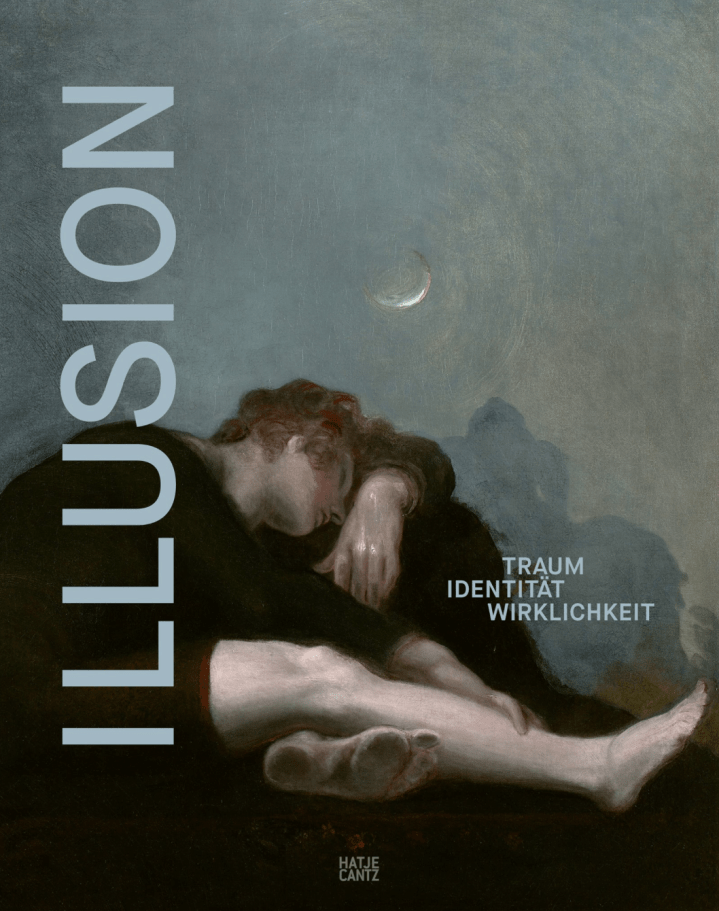
Henry Fuseli, Die Vision des Dichters (The Poet’s Vision), 1806–07, oil on canvas, 61 × 41.5 cm (Winterthur: Stiftung für Kunst, Kultur und Geschichte). The composition served as the frontispiece for William Cowper’s book, Poems (London: J. Johnson , 1808), volume 1.
With a large-scale exhibition spanning several epochs, the Hamburger Kunsthalle looks at the diverse facets of the theme of illusion in art from the Old Masters to the present day. Trompe-l’œil has been widely used in art since antiquity, flourishing in particular in the Renaissance and Baroque periods. And this technique continues to fascinate artists today, when the spread of fake news is almost normal, when people are confronted daily with manipulated images on the internet and virtual reality seems to be expanding our cosmos into infinity. We now live in the certainty that we can no longer trust our eyes, that images are deceptive and are used to depict what is desired rather than what is. But the exhibition shows how illusion means far more than merely deceiving the eye. It is manifested in the (illusionistic) self-love of Narcissus as well as in spatial illusions in architecture, in the play of concealing and revealing via the pictorial motifs of the curtain and the mask, in the meaning of the open or closed window onto the world, and in images of visions and dreams. Based on some 150 paintings, drawings, prints, photographs, sculptures, installations and video works, the show traces the many different forms taken by hyperrealism, reality, fiction, dream, transformation and deception. Among the exhibits are major works from the Hamburger Kunsthalle as well as loans from national and international collections.
Marcel Duchamp remarked succinctly in 1964: “Art is a deception.” And in 1976 Sigmar Polke wondered about the limits of human perception: “Can you always believe your eyes?” Against the backdrop of fake news and artificial intelligence, the exhibition also takes a look at illusion in twenty-first-century society, urging us to sharpen our senses and reflect on what is innately human: our viewing habits, expectations, conventions and vulnerability to visual seduction.
 Artists featured in the exhibition
Helene Appel, Hans Arp, Thomas Baldischwyler, Max Beckmann, Paris Bordone, Carl Gustav Carus, Marc Chagall, Jean-Baptiste Siméon Chardin, Adriaen Coorte, Lovis Corinth, Edgar Degas, Robert Delaunay, Johann Friedrich Dieterich, Gerrit Dou, Wilhelm Schubert von Ehrenberg, Lars Eidinger, Elmgreen & Dragset, James Ensor, Max Ernst, M. C. Escher, Juan Fernández, Charles de la Fosse, Caspar David Friedrich, Johann Heinrich Füssli, Xaver Fuhr, Jean-Léon Gérôme, Cornelis Gijsbrechts, Nan Goldin, Francisco de Goya, Andreas Greiner, Joachim Grommek, Duane Hanson, Vilhelm Hammershøi, Johann Georg Hinz, David Hockney, Samuel van Hoogstraten, Roni Horn, Gerard Houckgeest, Horst Janssen, Alexander Kanoldt, Howard Kanovitz, Anish Kapoor, Oskar Kokoschka, Jens Lausen, François Lemoyne, Lorenzo Lippi, Simon Luttichuys, Alfred Madsen, René Magritte, Tony Matelli, Stefan Marx, Adolph Menzel, Frans van Mieris d. Ä., Piet Mondrian, Ron Mueck, NEAL, Giovanni Battista Piranesi, Sigmar Polke, Gerhard Richter, Joachim Ringelnatz, Jan van Rossum, Pieter Jansz. Saenredam, Godfried Schalcken, Markus Schinwald, Oskar Schlemmer, Georg Schrimpf, Cindy Sherman, Kiki Smith, Antonie van Steenwinckel, Theodoor van Thulden, Nikos Valsamakis, Victor Vasarely, Wolf Vostell, Friedrich Wasmann, John William Waterhouse, Jacob de Wit, Francisco de Zurbarán.
From Hatje Cantz:
Sandra Pisot and Johanna Hornauer, eds., Illusion: Traum – Identität – Wirklichkeit (Berlin: Hatje Cantz Verlag, 2024), 320 pages, ISBN: 978-3775758451, €54. With contributions by Juliane Au, Markus Bertsch, Clara Blomeyer, Laura Förster, Johanna Hornauer, David Klemm, Brigitte Kölle, Kerstin Küster, Sandra Pisot, Jan Steinke, Andreas Stolzenburg, Ifee Tack.
Exhibition | J. M. W. Turner: Romance and Reality
 .
.
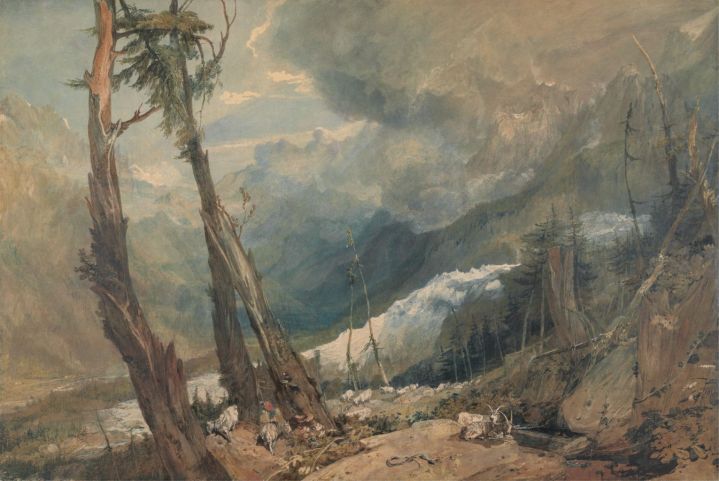
J.M.W. Turner, Mer de Glace, in the Valley of Chamonix, 1803, watercolor, graphite, gum, scraping out and stopping out on moderately thick, slightly textured, cream wove paper mounted on thick, smooth wove paper (New Haven: Yale Center for British Art, B1977.14.4650)
◊ ◊ ◊ ◊ ◊
Opening next month at the YCBA, which itself reopens after a two-year conservation project:
J. M. W. Turner: Romance and Reality
Yale Center for British Art, New Haven, 29 March — 27 July 2025
Dordrechts Museum, Spring 2026
The year 2025 marks the 250th anniversary of the birth of Joseph Mallord William Turner (1775–1851), possibly the most widely admired and influential British artist of all time.
Though Turner was trained within the English topographical tradition, his practice was deeply rooted in a wider European heritage of landscape painting. Turner pushed this inheritance to its limits in pursuit of his own expressive ends, astounding contemporaries with his bold and highly original compositions. His unique approach paved the way for a new form of landscape art, one that combined virtuoso brushwork with brilliant color, dazzling light effects, and an almost abstract sensibility. As a result, Turner came to be recognized as the most radical and innovative painter of his time and has continued to be so ever since.
This exhibition, the first show focused on Turner to be held at the Yale Center for British Art in more than thirty years, will showcase the museum’s rich holdings of the artist’s work. Unequaled in North America, this collection includes some of Turner’s most acclaimed oil paintings, notably his masterpiece Dort or Dordrecht: The Dort Packet-Boat from Rotterdam Becalmed (1818) and his celebrated later painting Staffa, Fingal’s Cave (1831–32). Alongside these major works, the exhibition will also feature outstanding watercolors and prints from the YCBA’s collection, including the artist’s only complete sketchbook outside of the British Isles.
Turner’s works are akin to painted poems, filled with incident, anecdote, and symbolism. Conveying both the beauty and cruelty of nature and human life, they shed fascinating light on the artist’s world and reveal an aesthetic—and moral—complexity that is at once discomforting and strangely modern.
The exhibition is generously supported by the Dr. Lee MacCormick Edwards Charitable Foundation.
From Yale UP:
Ian Warrell, with contributions by Gillian Forrester, Turner (New Haven: Yale University Press, 2025), 144 pages, ISBN: 978-0300279719, $40.
 This book, the inaugural installment in the Yale Center for British Art’s Collection Series, explores the museum’s astonishing Turner holdings—the largest outside the United Kingdom—in a manner that will engage the general reader and expert alike. Six sections of plates provide a comprehensive overview of the artist’s career, place the works within their historical and cultural context, and include new discoveries regarding the identification of locations, landscapes, and dates. Gillian Forrester’s supplementary essay offers a novel account of Turner’s innovative printmaking practice, illuminating his fraught collaborations with other printmakers. Complementing an exhibition at the YCBA and a satellite exhibition at the Dordrechts Museum (The Netherlands), both planned for the 250th year of Turner’s birth, this publication celebrates the artist’s unparalleled vision as exemplified in the YCBA’s world-class collection of his work.
Ian Warrell is an independent curator specializing in British art of the nineteenth century. Gillian Forrester is an independent curator specializing in British art from the eighteenth century to the present and former senior curator of prints and drawings at the Yale Center for British Art.
Master Drawings, Winter 2024
In the latest issue of Master Drawings:
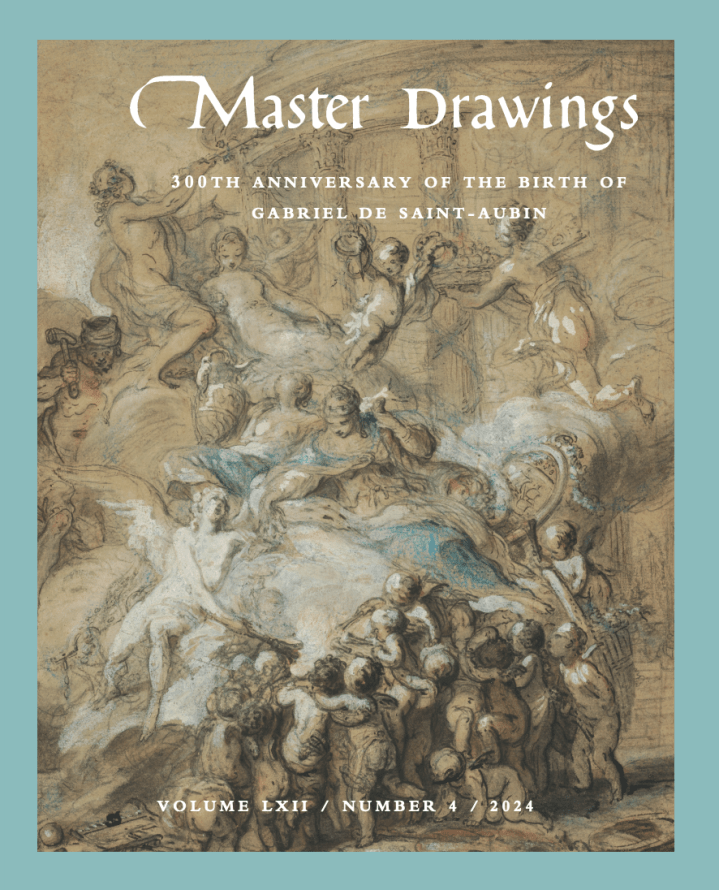
Master Drawings 62.4 (Winter 2024)
 a r t i c l e s
• Perrin Stein, “The Crown, the City, and the Public: Saint-Aubin’s Images of Paris.”
• Kim de Beaumont, “A Curious Swan Song for Gabriel de Saint-Aubin: The Comte d’Estaing’s New World Naval Exploits.”
• Margaret Morgan Grasselli, “A Drawing by Hubert Robert and Jean Robert Ango: Correcting a Technical Description.”
• Sarah Catala, “Signed ‘Roberti’: Drawings by Hubert Robert and Jean Robert Ango.”
• Kee Il Choi Jr., “Learning to Draw: The Éducation visuelle of Alois Ko and Étienne Yang.”
r e v i e w s
• Aaron Wile, Review of the exhibition catalogue Claude Gillot: Satire in the Age of Reason, by Jennifer Tonkovich.
• Eduoard Kopp, Review of the exhibition catalogue, Promenades on Paper: Eighteenth-Century French Drawings from the Bibliothèque Nationale de France, edited by Esther Bell, Sarah Grandin, Corinne Le Bitouzé, and Anne Leonard.
• Ashley E. Dunn, Review of the exhibition catalogue Impressionists on Paper: Degas to Toulouse-Lautrec, by Ann Dumas, Leïla Jarbouai, Christopher Lloyd, and Harriet Stratis.
o b i t u a r y
• Perrin Stein, Obituary for Alaster Laing.
Research Seminar | Artists and the East India Company, 1760–1830
Upcoming at the Mellon Centre:
Holly Shaffer and Laurel Peterson | Painters, Ports, and Profits: Artists and the East India Company, 1760–1830
Online and in-person, Paul Mellon Centre, London, 5 February 2025, 5pm
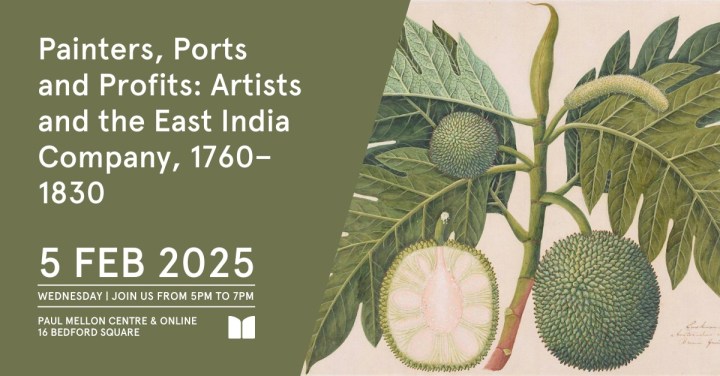
In January 2026, the Yale Center for British Art (YCBA) will open Painters, Ports, and Profits: Artists and the East India Company, 1760–1830. This exhibition explores the interactions between artists trained in India, China, and Britain amid the relentless commercial ambitions of the East India Company at key ports and centres of trade in Asia. Featuring over a hundred objects drawn from the YCBA collection in various media—including architectural drafts, opaque watercolours, hand-coloured aquatints and small- and large-scale portraits—the exhibition highlights works by artists who are no longer well known alongside those of well-established ones. Brought together for the first time, these works tell a story of artists compelled by new subjects, styles and materials in expanding markets, profoundly affecting art within and beyond Asia.
As the power of the British empire waned in the twentieth century, ‘Company painting’ became a prevalent umbrella term to describe works made for Company officials, specifically by Indian artists, and ‘Export art’ became a descriptor for works created by Chinese artists for a European market. Painters, Ports, and Profits challenges and critically rethinks these terms while also putting the arts into dialogue. It presents an expanded conception of arts made under the auspices of the Company by focusing on artists trained in different ways who worked for Company patrons as well as commercial markets in India, China, and Britain; the types of subjects in which they specialised; and the artistic materials with which they experimented. By examining the range of arts and relationships developed during the Company’s relentless pursuit of profits, the exhibition sheds light on aesthetic and colonial discourses that were formed in the eighteenth and nineteenth centuries and persist today. Co-curators Laurel Peterson and Holly Shaffer will preview the themes and objects explored in the exhibition and the related catalogue.
Book tickets here»
Holly Shaffer is Robert Gale Noyes Assistant Professor of Humanities in the department of history of art and architecture at Brown University. Her research focuses on eighteenth- and nineteenth-century arts in Britain and South Asia, and their intersections. Her first book, Grafted Arts: Art Making and Taking in the Struggle for Western India, 1760–1910 (London and New Haven: Paul Mellon Centre with Yale University Press, 2022), was awarded the Edward C. Dimock Jr. Prize in the Indian Humanities and an Historians of British Art Book Award. In 2011, she curated Adapting the Eye: An Archive of the British in India, 1770–1830 at the YCBA, and in 2013, Strange and Wondrous: Prints of India from the Robert J. Del Bontà Collection at the National Museum of Asian Art. She has published essays in Archives of Asian Art, The Art Bulletin, Art History, Journal 18, Modern Philology, and Third Text, and recently edited volume 51 of Ars Orientalis on the movement of graphic arts across Asia and Europe.
Laurel O. Peterson is the Assistant Curator of Prints and Drawings at the Yale Center for British Art. She specialises in British works on paper produced during the long eighteenth century. She served as the organising curator of John Singer Sargent: Portraits in Charcoal in 2019 and as co-curator of Architecture, Theater, and Fantasy: Bibiena Drawings from the Jules Fisher Collection in 2021, both at the Morgan Library and Museum. She received her PhD in the history of art from Yale and her research has been supported by the Sir John Soane’s Museum Foundation, the Paul Mellon Centre for Studies in British Art, and the Lewis Walpole Library. She has held positions at the British Museum and the Morgan Library.
Image: Unknown artist (Company style), Breadnut (Artocarpus camansi), ca. 1825, watercolor, gouache, and graphite (New Haven: Yale Center for British Art, Paul Mellon Fund, B2022.5).
Exhibition | Monstrous Beauty: A Feminist Revision of Chinoiserie
Opening in March at The Met:
Monstrous Beauty: A Feminist Revision of Chinoiserie
The Metropolitan Museum of Art, New York, 25 March — 17 August 2025

Monstrous Beauty: A Feminist Revision of Chinoiserie radically reimagines the story of European porcelain through a feminist lens. When porcelain arrived in early modern Europe from China, it led to the rise of chinoiserie, a decorative style that encompassed Europe’s fantasies of the East and fixations on the exotic, along with new ideas about women, sexuality, and race. This exhibition explores how this fragile material shaped both European women’s identities and racial and cultural stereotypes around Asian women. Shattering the illusion of chinoiserie as a neutral, harmless fantasy, Monstrous Beauty adopts a critical glance at the historical style and its afterlives, recasting negative terms through a lens of female empowerment.
Bringing together nearly 200 historical and contemporary works spanning from 16th-century Europe to contemporary installations by Asian and Asian American women artists, Monstrous Beauty illuminates chinoiserie through a conceptual framework that brings the past into active dialog with the present. In demand during the 1700s as the embodiment of Europe’s fantasy of the East, porcelain accumulated strong associations with female taste over its complex history. Fragile, delicate, and sharp when broken, it became a resonant metaphor for women, who became the protagonists of new narratives around cultural exchange, consumption, and desire.
The catalogue is distributed by Yale University Press:
Iris Moon, ed., Monstrous Beauty: A Feminist Revision of Chinoiserie (New York: The Metroplitan Museum of Art, 2025), 256 pages, ISBN: 978-1588397928, $35. With additional contributions by Marlise Brown, Patty Chang, Anne Anlin Cheng, Elizabeth Cleland, Patricia Ferguson, Eleanor Hyun, Cindy Kang, Ronda Kasl, Joan Kee, Pengliang Lu, Lesley Ma, David Porter, Joseph Scheier-Dolberg, Elizabeth Kowaleski Wallace, Chi-ming Yang, and Yao-Fen You.










 Enfilade
leave a comment