Conference | Engaging Objects: Looking at Art with Malcolm Baker
From ArtHist.net:
Engaging Objects: Looking at Art with Malcolm Baker
Center for Ideas and Society, University of California Riverside, 21 February 2020
Organized by Jeanette Kohl, Kristoffer Neville, and Jason Weems
Looking at art with Malcolm Baker is always an adventure. This conference celebrates Distinguished Professor Emeritus Baker’s scholarship and his time at UCR, from 2007 to 2019. Baker is an eminent authority in the history of sculpture, especially in 18th-century Britain, France, and Germany. Within that field, he developed a keen interest in portraiture and the history of collecting and display. Professor Baker had an important career as a curator in the UK, first as Assistant Keeper of the Department of Art & Archaeology at the Royal Scottish Museum in Edinburgh, then as Keeper, Deputy Head of Research, and Head of the Medieval and Renaissance Galleries Project in the Victoria & and Albert Museum in London. He taught at the Universities of York, Sussex, and at USC before joining UCR’s Department of the History of Art as a Distinguished Professor. As chair of the Art History department at UCR he was a key figure in developing and consolidating its ties with the Huntington Library and Gardens and the Getty Museum and Research Institute. Professor Baker’s joy in front of works of art colors and informs his research as much as his teaching, and students love his classes. During the conference, we will look with friends and colleagues at some engaging objects to honor his career and his unique approach to art and its display. The conference is free and open to the public.
P R O G R A M
10:00 Welcome by Jeanette Kohl (Acting Director, Center for Ideas and Society) and Jason Weems (Chair, Department of the History of Art)
10:15 Faya Causey (National Gallery of Art, Washington D.C.), Ancient Amber Miniature Masterpieces
10:45 Thomas E. Cogswell (UCR, History), Van Dyck’s Venus and Adonis: Sex, Power and the Duke of Buckingham
11:15 Steve Hindle (Huntington Library), The Tools in the Shop: The Material Culture of the Village Blacksmith in Seventeenth-Century England
11:45 Lunch break
1:00 Daniela Bleichmar (University of Southern California, Art History), The Museum, the World
1:30 Anne-Lise Desmas (J. Paul Getty Museum), Variations on the Theme of the Portrait Bust, Drawn from the French Sculpture Collection of the J. Paul Getty Museum
2:00 Coffee break
2:30 Jeanette Kohl and Kristoffer Neville (UCR, Art History), Fire Within: Four Eyes on Two Objects
3:00 John Brewer (Professor Emeritus Caltech), Sir William Hamilton’s Sublime Creation: Vesuvius as Dynamic Sculpture
3:30 Coffee break
4:00 Keynote by Malcolm Baker, Crossing Faultlines: Doing Art History in the Museum and the Academy
5:00 Reception at the Center for Ideas and Society, College Building South, UCR
2020 Mount Vernon Symposium
In May at Mount Vernon (it’s already sold out, but there is a wait list) . . .
‘Under my Vine & Fig Tree’: Gardens and Landscapes in the Age of Washington and Now
Mount Vernon, 29–31 May 2020
Join leading gardeners, historians, horticulturists, archaeologists, and preservationists as they reconsider the importance of gardening, landscapes, and design in early America. Learn how Washington and his contemporaries shaped the natural world to achieve beauty through gardening, profited through agriculture, and conveyed civic values through landscape design—and how these historic methods remain relevant in today’s world. Revisit long-lost gardens, explore contemporary creations inspired by the past, and come face-to-face with the most authentic 18th-century plantation landscape in the United States.
The Mount Vernon Symposium is endowed by the generous support of The Robert H. Smith Family Foundation, Lucy S. Rhame, and David Maxfield.
Conference | Reconsidering Chinese Reverse Glass Painting
This weekend in Switzerland at the Vitromusée Romont (via ArtHist.net), in conjunction with the exhibition Reflets de Chine: Three Centuries of Chinese Glass Painting:
China and the West: Reconsidering Chinese Reverse Glass Painting
Vitromusée Romont, 14–16 February 2020
Organized by Francine Giese, Hans Bjarne Thomsen, and Elisa Ambrosio
 F R I D A Y , 1 4 F E B R U A R Y 2 0 2 0
9.30 Welcome
9.45 Danielle Elisseeff (EHESS, Paris), Quelques remarques sur le concept d’hybridité
10.00 Transfer and Transmateriality
Chair: Francine Giese (Vitrocentre Romont)
• Jessica Lee Patterson (University of San Diego), Varieties of Replication in Chinese Reverse Glass Paintings
• Patrick Conner (London), Figures of Westerners in Early Chinese Reverse Glass Paintings
• Alina Martimyanova (University of Zurich), From Wooden Blocks to Glass: Regarding the Transfer of Vernacular Motives and Other Common Features of the Chinese New Year Prints and Chinese Reverse Glass Paintings
• Kee II Choi Jr. (University of Leiden), Originality among les arts du feu: Illusionistic Painting on Glass, Porcelain, and Copper in Early Modern Canton
12.30 Lunch break
14.00 Chinese Reverse Glass Paintings in European Collections
Chair: Hans Bjarne Thomsen (University of Zurich)
• Rosalien van der Poel (University of Leiden), 18th-Century Chinese Reverse Glass Paintings in a Dutch Collection: Art and Commodity
• Patricia Ferguson (London), Reflecting Asia: The Reception of Chinese Reverse Glass Paintings in Britain in the 18th Century
• Michaela Pejčochová (National Gallery Prague), ‘In all of Beijing, there are no more than four paintings on glass that would fall within our consideration’: European Collecting of Chinese Reverse Glass Paintings in the Inter-war Period and Its Contexts
15.30 Coffee break
16.00 Guided tour of the exhibition Reflets de Chine: Three Centuries of Chinese Glass Painting
17.30 Keynote Lecture
Chair: Danielle Elisseeff (EHESS, Paris)
• Thierry Audric (Vitrocentre Romont), Brève histoire de la peinture sous verre chinoise
18.30 Reception
S A T U R D A Y , 1 5 F E B R U A R Y 2 0 2 0
9.00 Beyond China
Chair: Elisa Ambrosio (Vitrocentre Romont)
• Hans Bjarne Thomsen (University of Zurich), Japanese Reverse Glass Painting: The Other East Asian Tradition
• William Hsingyo Ma (College of Art, Louisiana State University), Guangzhou-made Reverse Glass Paintings in Nguyen Dynasty Vietnam
• Karina Corrigan (Peabody Essex Museum, Salem, Massachusetts), From Oudh to Guangzhou: Tilly Kettle’s Portrait of Shuja-ud-Daula in Cantonese Reverse Glass Painting
• Catherine Raymond (Northern Illinois University), Reverse Glass Paintings in Mainland Southeast Asia and the Key Role of the Chinese Diaspora
• Jérôme Samuel (Inalco-Case, Paris), China and Its South: Chinese Ladies on Glass in 19th- and 20th-Century Java
12.00 Lunch break
13.30 Workshops and Techniques
Chair: Sophie Wolf (Vitrocentre Romont)
• Charlotte Pageot (ERIMIT- Université Rennes 2), Jean-Denis Attiret’s Reverse Glass Paintings at Qianlong Court Workshop
• Jan van Campen (Rijksmuseum, Amsterdam), Glass Paintings in the Collection of Andreas Everardus van Braam Houckgeest (1739–1801)
• Rupprecht Mayer (Germany), Painting Styles in 19th- and 20th-Century Chinese Glass Pictures: A First Approach
• Simon Steger (Bundesanstalt für Materialforschung und -prüfung (BAM), Berlin), Spectroscopic Analysis of Colourants and Binders of Chinese Reverse Glass Paintings: Tracing a Cultural Dialogue
15.30 Coffee break
16.00 Translucidity
Chair: Alina Martimyanova (University of Zurich)
• Lihong Liu (University of Rochester), From Virtuosity to Vernacularism: Reversals of Glass Paintings
• Christopher Maxwell (Corning Museum of Glass), People in Glass Houses: Plate Glass and Politeness in 18th-Century Britain
17.00 Hans Bjarne Thomsen (University of Zurich), Closing Remarks
S U N D A Y , 1 6 F E B R U A R Y 2 0 2 0
Optional morning with tours of the Vitromusée Romont and local historical sites of the town of Romont: Collégiale and Fille-Dieu.
CAA 2020, Chicago
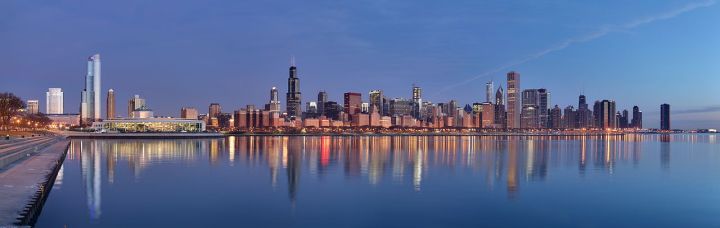
Photo by Daniel Schwen, 18 April 2009
(Wikimedia Commons)
◊ ◊ ◊ ◊ ◊
108th Annual Conference of the College Art Association
Hilton Chicago, 12–15 February 2020
The 2020 College Art Association conference takes place at the Hilton, Chicago (720 S. Michigan Ave), February 12–15. Of particular note is the ASECS session chaired by Kristin O’Rourke and the HECAA session chaired by Danielle Rebecca Ezor and Michael Feinberg. Both take place on Saturday. Other sessions that may be of interest for dixhuitièmistes are also listed. A full schedule of panels is available here»
A S E C S / H E C A A S E S S I O N S
American Society for Eighteenth-Century Studies
Rulers, Consorts, and Mothers: Queens in the Long Eighteenth Century
Saturday, 15 February, 8:30–10:00am, 3rd Floor – Joliet Room
Chair: Kristin M. O’Rourke, Dartmouth College
• The Colonial Adventures of a Queen Anne Miniature, Janine Yorimoto Boldt, American Philosophical Society
• Eighteenth-Century Saxon Consorts and Their Personal Relationships with Porcelain Manufactories in Europe, Heidi C. Nickisher, Rochester Institute of Technology
• ‘Femmes illustres’: The Defense of Queenship and the Public Woman in Revolutionary France, Sarah Elisabeth Lund, Harvard University
• Pose: Royal Bodies and Gendered Accoutrements in Eighteenth-Century Portraiture, Jodi Lynn McCoy, Missouri State University
◊ ◊ ◊ ◊ ◊
Historians of Eighteenth-Century Art and Architecture
Race Beyond the Human Body in the Long Eighteenth Century
Saturday, 15 February, 2:00–3:30, 3rd Floor – Joliet Room
Chairs: Danielle Rebecca Ezor, Southern Methodist University and Michael Feinberg, University of Wisconsin Madison
• ‘Color is only Skin Deep’: Black Pigs and the Rendering of Race in the Early American Republic, Stephen Mandravelis, University of Tennessee at Chattanooga
• The Whiteness Aesthetic and Caste Implications of Ivory Art of South India, Deepthi Murali, University of Illinois at Chicago
• White, Pink, and Pompadour, Oliver Wunsch, Boston College
◊ ◊ ◊ ◊ ◊
O T H E R S E S S I O N S R E L A T E D T O T H E 1 8 T H C E N T U R Y
Society for Paragone Studies
Session in Honor of Sarah Jordan Lippert (1975–2019), Founder of the Society for Paragone Studies
Wednesday, 12 February, 10:30–12:00, 3rd Floor – Waldorf Room
Chair: Liana De Girolami Cheney, Association for Textual Scholarship in Art History
• The Remarkable Tomb of Abbot Meli, Ellen Longsworth, Merrimack College
• Rival Ideologies in Eighteenth Century Exotic Costume, Linda Johnson
• Voice of Authority: Native American Art and Cultural Hegemony in the Art Museum, Mary Kelly
• Image/Text/Sound: The Role of Intermediality and Poeticity in Claes Oldenburg, Nadja Rottner
• Dematerializing Formalism: Lucy Lippard and John Chandler’s Conceptual Challenge to Clement Greenber, Owen Duffy
◊ ◊ ◊ ◊ ◊
Community College Professors of Art and Art History
Taking a New Look: Creating Change in the Studio and Art History Classrooms
Wednesday, 12 February, 2:00–3:30, Lobby Level – Continental B
Chairs: Susan Altman, Middlesex County College, and Monica Anke Hahn, Community College of Philadelphia
• Engaging Students through Narrative Painting, Richard J. Moninski, University of Wisconsin-Platteville
• Recruitment, Retention, and Relocation: The College Arts Fair, Tyrus Clutter, College for Central Florida
• Creative Collaboration for Art History and Studio Art Courses, Rachael Bower, Northwest Vista College
• Changing the Conversation: The Relevancy of Arts Thinking for 21st-Century Students, Ross McClain
◊ ◊ ◊ ◊ ◊
Barriers, Borders, and Boundaries in the Early Modern World
Thursday, 13 February, 8:30–10:00am, 3rd Floor – Wilford C
Chairs: Luis J. Gordo-Pelaez, California State University Fresno and Charles C. Barteet, University of Western Ontario
Discussant: Michael J. Schreffler, University of Notre Dame
• Bordering on Chaos: Order in the Inka Empire and the Virtues of Volatility, Gaby Greenlee, UCSC
• Columbus Unbound: Walls, or their Absence, in the Age/Imaginary of Exploration, Roger J. Crum, University of Dayton
• Picturing Havana: The Early Modern City in Plans and Maps, Guadalupe Garcia, Tulane University
• Ornament and Order in the Spanish Colonial Philippines, Lalaine Bangilan Little, Misericordia University
◊ ◊ ◊ ◊ ◊
Japan Art History Forum
Taking up the Mantle: Lineages and Genealogies in Japanese Art History
Thursday, 13 February, 8:30–10:00am, 4th Floor – 4K
Chairs: Sonia Coman, Smithsonian Institution and Harrison Schley, University of Pennsylvania
Discussant: Julie Davis, University of Pennsylvania
• The Cross-temporal Conversations of Matsumura Goshun (1752–1811): Lineages of Style in Poetry and Visual Representation, Sonia Coman, Smithsonian Institution
• The Power of Indirect Transmission and the Kōrin Hyakuzu (ca. 1815 and 1826), Frank Feltens, Smithsonian Institution
• A New Mold: Mori Yūsetsu and the Genealogy of the Banko Brand, Harrison Schley, University of Pennsylvania
• Futurism as Archaism: Kinoshita Shuichirō (1896–1991) Glorifies a Dancing Girl, Daria Melnikova, Columbia University
◊ ◊ ◊ ◊ ◊
Between Truth and Persuasion: Images and Historical Narration from the Sixteenth to the Nineteenth Century
Thursday, 13 February, 10:30–12:00, Lobby Level – Continental B
Chairs: Alessandra Di Croce, Columbia University and Federica Soletta, Princeton University
Discussant: Alessandro Giardino, Saint Lawrence University
• The Signal Liberties of Copley’s The Death of Major Peirson, Nika Elder, American University
• Historical Inducements and the Pictorial Crusade of Francesco Hayez, Laura Watts Sommer, Daemen College
• Stefano Bardini’s Photo Archive, ‘il Bel Paese,’ and the Golden Age of Tuscan Art, Anita Moskowitz
• The Engraved Photograph as Architectural Evidence, Peter Sealy, University of Toronto
◊ ◊ ◊ ◊ ◊
Politics, Religion, and the Body: Artistic Production, Consumption, and Social Space in China
Thursday, 13 February, 10:30–12:00, 3rd Floor – Joliet Room
• Seeing and Unseeing: Visuality and Mind Games in Ming- Dynasty Arhat Painting, Einor K Cervone, Los Angeles County Museum of Art
• Gao Fenghan’s (1683–1749) Path to Eccentricity and the Growth of Epigraphical Writing in Early Qing Yangzhou, Yun- Chen Lu
• Billiards, Bicycles, and Charity Fairs: Courtesans Staging the Fashionable in Public Gardens in Semi-colonial Shanghai (1880s–1910s), Jinyi Liu, Bard Graduate Center
• From Dalian to Changchun: Official Art Exhibitions in Japanese-Manchuria, Gina Kim, University of California, San Diego
◊ ◊ ◊ ◊ ◊
Black Artists in the Early Modern Americas
Thursday, 13 February, 2:00–3:30, 3rd Floor – Wilford C
Chair: Rachel A Zimmerman, Colorado State University – Pueblo
• ‘The Head of a Hogshead’: Neptune Thurston and Enslaved Artistic Labor in British North America, Jennifer C. Van Horn, University of Delaware
• José Campeche, the 1797 British Attack on San Juan, and Portraiture in late Eighteenth-Century Puerto Rico, Emily K. Thames, Florida State University
• Collecting Fears: Paper Amulets in Brazil’s Malê Uprising, Angie M. Epifano, Yale University
◊ ◊ ◊ ◊ ◊
Historians of British Art
Past & Present: Britain and the Social History of Art
Thursday, 13 February, 2:00–3:30, 4th Floor – 4K
Chairs: Meredith J. Gamer, Columbia University and Esther Alice Chadwick, Courtauld Institute of Art
• Pictures Exchanged for Windows: Ruskin, Dilke, and Social History of Symbols, Andrei Pop, University of Chicago
• Gerard Baldwin Brown and the Origins of the Social History of Art in Great Britain, Barbara J. Larson, University of West Florida
• ‘It was, like any other period, a time of transition’: 1970s Britain and the ‘Native Art-Historical Journal’, Samuel Bibby, Association for Art History
• Islands of Art History, Douglas R. Fordham, University of Virginia
◊ ◊ ◊ ◊ ◊
International Art Market Studies
Market Data: Beyond Prices and Provenance
Thursday, 13 February, 2:00–3:30, 8th Floor – Lake Erie
Chairs: Diana Seave Greenwald, Isabella Stewart Gardner Museum and Kim Oosterlinck, Université libre de Bruxelles
• What To Say When Trying To Sell Paintings: Text Models and Rhetoric Strategies in British and French Auction Sales Catalogues (1750–1820), Sandra Van Ginhoven, Getty Research Institute
• What To Say When Trying To Sell Paintings: Text Models and Rhetoric Strategies in British and French Auction Sales Catalogues (1750–1820), Matthew Lincoln, Carnegie Mellon University
• The (R)emigration of Jewish Art Dealers and the Shape of the German Art Market Scene: Approaching a Difficult Topic, Meike Hopp, ZI Munich
• Subversion in the Fine Print: ‘The Artist’s Reserved Rights Transfer and Sale Agreement’ at Auction, Lauren van Haaften-Schick, Cornell University
• Conflict, Looting, and the Market in Mesopotamian Antiquities, Oya Topçuoğlu, Northwestern University
◊ ◊ ◊ ◊ ◊
Committee on Intellectual Property
Defining Open Access
Thursday, 13 February, 4:00–5:30, Lobby Level – Continental A
Chair: Anne Collins Goodyear
• What Open Access Principles Do We Need for Cultural Heritage?, Evelin Heidel, Independent
• How Open is Open Enough? Rationalizing Open Access at the Project Level, Mikka Gee Conway, J. Paul Getty Trust
• Two Sides of the Same Coin? Open Access and Fair Use, Anne M. Young, Indianapolis Museum of Art at Newfields
• Case Study: The Art and Architectural ePortal, Patricia J. Fidler, Yale University Press
• Sharing Digital Content through International Museum, Library, and Archives Networks Today: An IMLS Examination of Copyright’s Implications, Nancy Elaine Weiss, Institute of Museum and Library Services
◊ ◊ ◊ ◊ ◊
Shifting Tides: Visual Semantics in the Atlantic World, 1600–1900
Thursday, 13 February, 6:00–7:30pm, 3rd Floor – Williford A
• Cicero in the Land of Coatlicue: Renaissance Humanism in Colonial Mexico, JoAnna Reyes Walton, University of California, Los Angeles
• Dyer Beware: Processing Indigo and the Limits of Diagram, Colleen M. Stockmann
• Visual Histories of the Spanish Caribbean in the Age of the Enlightenment, Jennifer A Baez, Florida State University
• Potted Pre-Raphaelites: Britain’s Colonial Plant Trade and the Victorian Avant-Garde, Lindsay Wells, University of Wisconsin-Madison
◊ ◊ ◊ ◊ ◊
Altered Terrains: Landscapes of Colonial America
Friday, 14 February, 8:30–10:00am, Lower Level – Salon C5
Chairs: Theresa Avila, CSU Channel Islands and Emmanuel Ortega, University of New Mexico
Discussant: Kirsten P. Buick, The University of New Mexico
• Social and Political Landscapes within European Colonial Maps, Theresa Avila, CSU Channel Islands
• The Invisible-Substantial-Presence of Painted Landscapes in Seventeenth-Century Cuzco, Natalia Vargas Márquez, University of Minnesota
• Decolonizing Aeriality in Colonial El Salvador: Indigenous Geospatial Knowledge in the “Descripcion Geografico-Moral de la Diocesis de Goathemala,” 1768–70, Carlos Anílber Rivas, University of Los Angeles
• The Mexican Picturesque: Nineteenth-Century Sentimentality and the Visual Construction of the Nation, Emmanuel Ortega, University of New Mexico
◊ ◊ ◊ ◊ ◊
Undergraduate Research and Mentoring Undergraduate Research – Poster Presentations, Part 2
Friday, 14 February, 2:00–3:30, Lower Level Lobby
Chair: Alexa K. Sand, Utah State University
• At the Pleasure of the Pharaoh: Decoding the Reliefs of the Medinet Habu Eastern High Gate, Chloe Jayne Landis
• The Case of Der hammer: Aesthetic Influences on Art and Culture in the Yiddish Communist Press, Goldie Gross
• Mapping Social and Spatial Encounters in Eighteenth-Century Venice, Noah Scott Michaud, Wired! Lab . . .
◊ ◊ ◊ ◊ ◊
Society for the Study of Early Modern Women and Gender
Early Modern Women in the Streets? Women’s Visibility in the Public Sphere
Friday, 14 February, 2:00–3:30, Lower Level – Salon C5
Chair: Maria F. Maurer, University of Tulsa
• Bitter Tears, Carnal Traces: Female Poets at Michelangelo’s Funeral, Laura C. Agoston, Trinity University
• Visibility and Enclosure in the Vida of the Painter and Nun, Estefanía de la Encarnación (ca. 1597–1665), Tanya J. Tiffany, University of Wisconsin-Milwaukee
• Asserting Female Agency in the Spanish Colonies: Doña Rosalía de Medina and the Confraternity of Saint Rosalía in Eighteenth-Century Cuenca, Isabel Oleas-Mogollon, Independent
◊ ◊ ◊ ◊ ◊
Objects from Elsewhere: Transcultural Constructions of Identity
Saturday, 15 February, 8:30–10:00am, 3rd Floor – Private Dining Room 2
Chairs: Robert Wellington and Alex Thomas Burchmore, Australian National University
• Between Imperial Self-Fashioning and Military Alliance: The Gift of a Turquoise Glass Bowl from Persia to the Republic of Venice, Negar Sarah Rokhgar, Rutgers University
• Art and Science in the Palace of the Empress Dowager: An Investigation of the Ningshou Gong Display Archives from the Kangxi Reign (1661–1722), Joyce Yusi Zhou, Bard Graduate Center
• Framing Self/Other Relations through Curatorial Strategies of Containment and Classification in Eighteenth-Century Porcelain Display, Alex Thomas Burchmore, Australian National University
◊ ◊ ◊ ◊ ◊
Sensual Texts, Material Histories: Language in the Long Eighteenth Century
Saturday, 15 February, 10:30–12:00, 3rd Floor – Joliet Room
Chair: Elizabeth Bacon Eager, Southern Methodist University
• Composing Type, Throwing Pigments: The Revolutionary Potential of Marbling in Early America, Jennifer Chuong
• Giambattista Bodoni’s Abstract Types: The Role of ‘Exotic’ Writing Systems, Craig D. Eliason, University of St. Thomas
• Making and Writing the Romain du Roi Typeface, Sarah Simpson Grandin, Harvard University
• Worshiping Myriad Gods for Longevity: Carved Lacquer Boxes with the Qianlong Emperor’s Religious Pantheons and Scripture Offerings, Zhenpeng Zhan, Sun Yat-sen University
◊ ◊ ◊ ◊ ◊
The Fragmented Self: Objects from Elsewhere and the Search for New Identities
Saturday, 15 February, 10:30–12:00, 3rd Floor – Private Dining Room 2
Chairs: Robert Wellington, Australian National University, and Alex Thomas Burchmore, Australian National University
• Carlos Villa: Trans-Pacific Imaginaries in Filipino American Art, Margo L. Machida, University of Connecticut
• From Modernism to Transculturalism: Reclaiming African Sculptures as Found Objects in Contemporary Art, Lisa S. Wainwright, School of the Art Institute of Chicago
• ‘Connected and Interwoven’: Transculturality and the Performance of Identity in the Mughal Court of Awadh, Monica Anke Hahn, Community College of Philadelphia
• The ‘Cosey Corner’: The American New Woman’s Exotic Imaginary, Sarah Wheat, University of Michigan
◊ ◊ ◊ ◊ ◊
Seeking Narrative Justice: Idiosyncrasies and Contradictions of Black Body Representation
Saturday, 15 February, 4:00–5:30, Lower Level – Salon C6
• Aesthetics of Abolition in Late Eighteenth-Century England, Alyssa M Fridgen, Independent
• Tethering the Flag: Visual Aesthetics of Black Citizenship in the U.S., Nnaemeka Ekwelum, Northwestern University
• Becoming (Un)Masked: Semiotics of Identification in Nick Cave’s Hye-Dyve (2017), Cristina Albu, University of Missouri-Kansas City
Symposium | The Archaeology of Free African Americans
Upcoming at BGC:
Revealing Communities: The Archaeology of Free African Americans in the Nineteenth Century
Bard Graduate Center, New York, 7 February 2020
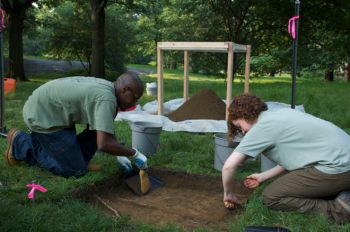
Archaeology students excavating in the area of the Wilson family house, Seneca Village, Central Park, NYC, 2011 (Institute for the Exploration of Seneca Village History; photograph by Herbert Seignoret).
This symposium will bring together scholars who have worked on nineteenth-century free African American communities. Speakers will discuss how they have approached studying these communities, many of which were bulwarks in the abolition and early civil rights movements and places where residents formed positive social connections both within and across racial lines. Yet, these important communities have been largely left out of mainstream history. Presenters will explain what their research reveals about these communities and will collectively discuss what these communities, in turn, might reveal to us about living in our own divided time. The symposium is free; registration information is available here.
S C H E D U L E
Each talk is scheduled for twenty minutes; each session will conclude with Q&A and discussion.
9.00 Peter N. Miller (Bard Graduate Center), Welcome
9.05 Meredith B. Linn (Bard Graduate Center), Introduction
9.20 First Morning Session
• Michael J. Gall (Richard Grubb and Associates, Inc.), Public and Private: Identity Construction and Free African American Life in Central Delaware, 1770s–1820s
• Christopher N. Matthews (Montclair State University), A Creole Synthesis: Archaeology of the Mixed Heritage Silas Tobias Site in Setauket, New York
• Christopher Lindner (Bard College), Germantown’s Parsonage: Centering Spirituality in a Nineteenth-Century African American Community
10.40 Coffee Break
11.00 Second Morning Session
• Joan H. Geismar (Archaeological Consultant), Skunk Hollow and Weeksville: Comparing Two Nineteenth-Century African American Communities
• Rebecca Yamin (Commonwealth Heritage Group, Inc.), The Lives and Times of Josiah and Joshua Eddy, Barbers and AME Church Ministers in Mid-Nineteenth-Century Philadelphia
• Meredith B. Linn (Bard Graduate Center), Nan A. Rothschild (Barnard College and Columbia University), Diana diZerega Wall (City College and the City University of New York), Seneca Village: New Insights about a Forgotten Nineteenth-Century African American Community
12.20 Response by Whitney Battle-Baptiste (University of Massachusetts Amherst)
12.40 Lunch Break
1.40 First Afternoon Session
• Nedra K. Lee (University of Massachusetts Boston), Hiding in Plain Sight: Critical Race Theory and the Use of Space at the Ransom and Sarah Williams Farmstead, Manchaca, Texas
• Christopher Fennell (University of Illinois, Urbana-Champaign), Resilience and Racism in a Nineteenth-Century American Heartland: New Philadelphia and the Vagaries of Prejudice
• Christopher P. Barton (Francis Marion University), ‘Stretching the Soup with a Little Water’: Race, Class, and Improvisation at the Black Community of Timbuctoo, New Jersey
3.00 Coffee Break
3.20 Second Afternoon Session
• Allison McGovern (VHB Engineering, Surveying, Landscape Architecture, and Geology, PC), ‘We Know Who We Are’: The Politics of Heritage and Preservation in East Hampton’s ‘Historically Black’ Communities
• Paul R. Mullins (Indiana University-Purdue University Indianapolis), Civility and Citizenship: Narrating Free Black Heritage and Materiality
• Matthew M. Palus (The Ottery Group and the University of Maryland), Cultural Resource Management Perspectives on African American Struggle with Heritage in Metropolitan Washington, DC
4.40 Response by Alexandra Jones (Archaeology in the Community)
5.00 Reception
This event will be livestreamed. Please check back to the BGC page on the day of the event for a link to the video. To watch videos of past events please visit our YouTube page.
ASECS 2020, Saint Louis Art Museum Workshop

John Greenwood, Sea Captains Carousing in Surinam, ca.1752–58, oil on bed ticking, 38 × 75 inches
(Saint Louis Art Museum)
◊ ◊ ◊ ◊ ◊
In conjunction with the 2020 meeting of the American Society for Eighteenth-Century Studies in St. Louis, 19–21 March, Amy Torbert and Brittany Luberda are organizing a pre-conference workshop at the Saint Louis Art Museum. A draft program for the conference is now available from ASECS, and I’ll post sessions of particular relevance for art historians here after the new year. Conference registration details are also now available. –CH
Introduction to Saint Louis Art Museum Eighteenth-Century Collections
Wednesday, 18 March 2020, 1:00–5:00pm
Applications due by 31 December 2019
The pre-conference workshop will consist of dialogues among curators, field experts, and attendees on topics including global encounter, intermateriality, politics of empire, social histories, production processes, and curating the eighteenth century. These conversations will be held in the galleries in front of highlights such as colonial silver, European porcelain, Chinese bronzes and exportware, Peruvian textiles, and paintings including John Greenwood’s Sea Captains Carousing in Surinam (ca.1752–58) and François-André Vincent’s Arria and Paetus (1784). The event will include the opportunity to study works from storage rarely on view and to visit the Print Study Room.
Scholars and curators of all disciplines are invited to register. As numbers are limited due to spatial constraints, please apply by sending a brief email describing your interest, along with any questions you may have, to eighteenthcenturyatslam@gmail.com by 31 December 2019. Confirmed participants will be contacted by the workshop organizers, Amy Torbert (Saint Louis Art Museum) and Brittany Luberda (Baltimore Museum of Art), by 20 January 2020.
The workshop will be held at the Museum on Wednesday, 18 March 2020, from 1:00–5:00pm. Participants must arrange their own transportation. The Museum is a 30-minute drive from the airport and a 20-minute drive from the hotel. Contact information will be provided to the participants to facilitate sharing of Uber, Lyft or other transportation.
Conference | Cardinal Alessandro Albani
From ArtHist.net:
Cardinal Alessandro Albani: Collecting, Dealing, and Diplomacy in Grand Tour Europe
Collezionismo, diplomazia ed il mercato nell’Europa del Grand Tour
British School at Rome / Biblioteca Nazionale Centrale, 11–13 December 2019
Organised by Clare Hornsby and Mario Bevilacqua
The British School at Rome and the Centro di Studi sulla Cultura e l’Immagine di Roma present Cardinal Alessandro Albani: Collecting, Dealing, and Diplomacy in Grand Tour Europe. Exploring the multifaceted life and career of Cardinal Alessandro Albani (1692–1779), the conference will bring together an international range of art historians alongside scholars of related humanistic disciplines to open a new chapter on the multifaceted life and career of the ‘Father of the Grand Tour’.
The two keynote lectures on Wednesday evening, 11th December at BSR, will be given by the noted senior scholars Carlo Gasparri and Salvatore Settis, curators of The Torlonia Marbles: Collecting Masterpieces, the spring 2020 exhibition of antique sculpture from the famed collections of the Torlonia family in Rome who own the Villa Albani Torlonia and the antiquities collected there by Cardinal Alessandro Albani.
The conference has groups of papers on different themes relating to Alessandro Albani’s life and career including his private life, his association with scholars and artists—particularly Johann Joachim Winckelmann and Giovanni Battista Piranesi, his diplomatic and political associations, his dealing and networking in the European art market and of course his antiquities collections—both those he sold and his third collection which remains largely intact at Villa Albani Torlonia in Rome. His particular connection with the British—both as Grand Tourists in Rome and politically as allies of the papacy —is a focus of this conference, notably the sale of his vast drawings collection including the Cassiano del Pozzo ‘Paper Museum’ to the English King George III through the dealing efforts of the architect brothers Robert and James Adam. His commission to the architect Carlo Marchionni for the new Villa outside the northern walls of Rome to house his collection and as a location to host parties for foreign dignitaries is also examined.
This conference is taking place only a few months before the long-awaited exhibition of the private Torlonia collection opens in Rome—a collection where many Albani objects have been kept—no doubt this gathering of researchers including both established and younger scholars from a variety of disciplines and international backgrounds will provide a valuable focus for discussion of the future directions for study and research on this most important figure of the Roman 18th century.
On Thursday 12th at BSR there will be a presentation by Adriano Aymonino and Colin Thom introducing the Adam letters digital publication project and a display of Albani-related rare books and early photographs of Villa Albani from the BSR library and archive collections alongside the volumes of The Paper Museum of Cassiano del Pozzo: A Catalogue Raisonné, published by the Royal Collection Trust.
The conference is open to all without charge; registration is welcome though not obligatory: albaniconvegno@gmail.com. An edited and expanded volume of essays based on the conference papers is planned. The conference is generously sponsored by The Paul Mellon Centre for Studies in British Art and we thank our partners the Biblioteca Nazionale Centrale di Roma, the Fondazione Torlonia, and the Royal Collection Trust.
Conference Coordination
Mario Bevilacqua, Direttore, Centro di Studi sulla Cultura e l’Immagine di Roma
Clare Hornsby, Research Fellow, British School at Rome
Honorary Committee
Elisa Debenedetti, Andrea De Pasquale, Marcello Fagiolo, Carlo Gasparri, Barbara Jatta,
Tim Knox, Maria Vittoria Marini Clarelli, Stephen Milner, Martin Postle.
Scientific Committee
Mario Bevilacqua, Amanda Claridge, Clare Hornsby, Ian Jenkins, Harriet O’Neill,
Susanna Pasquali, Jonny Yarker
W E D N E S D A Y , 1 1 D E C E M B E R 2 0 1 9
British School at Rome
18.00 Stephen Milner (Director BSR), Welcome
18.15 Keynote Address
• Carlo Gasparri, La collezione di sculture antiche in Villa Albani a Roma: Una storia ancora da scrivere
18.40 Keynote Address
• Salvatore Settis, Lo specchio dei principi: Fra Villa Albani e il Museo Torlonia
T H U R S D A Y , 1 2 D E C E M B E R 2 0 1 9
British School at Rome
9.30 Social and Cultural History
Chair: Adriano Aymonino
• Angela Cipriani, Il cardinale Alessandro Albani nei manoscritti del Diario di Romannella Biblioteca Casanatense, 1762–73
• Heather Hyde Minor, Winckelmann and Albani: Text and Pretext
• Ginevra Odone, Rivalità e gelosie tra antiquari: Il Conte di Caylus, il cardinale Alessandro Albani e i loro intermediari
• Brigitte Kuhn-Forte, Alessandro Albani e Winckelmann
10.45 Discussion and coffee break
11.30 Art and Diplomacy
Chair: Susanna Pasquali
• Maëlig Chauvin, Il cardinale Alessandro Albani e i regali diplomatici: l’arte al servizio della politica
• Susanne Mueller-Bechtel, Il principe ereditario di Sassonia Federico Cristiano, Alessandro Albani e le arti
• Matteo Borchia, I vantaggi della diplomazia: Alessandro Albani protettore di artisti tra Roma e l’Europa
12.15 Discussion followed by a lunch break
14.00 Art and Collecting: Museo Cartaceo
Chair: Clare Hornsby
• Adriano Aymonino and Colin Thom, Introducing the Adam Letters Project
• Lisa Beaven, Fashioning a New Classical Aesthetic: Camillo Massimo, Alessandro Albani, and the Palace at the Quattro Fontane
• Francesca Favaro, Il privilegio di copiare: Apprendere l’architettura nella biblioteca di Alessandro Albani. Le copie prodotte da B.A. Vittone (1704–1770)
• Rea Alexandratos, Albani Drawings and Prints in the British Royal Collection: George III’s Purchase of 1762
15.15 Discussion and coffee break
16.00 Painting
Chair: Maria Celeste Cola
• Robin Simon, The Significance of Alessandro Albani’s Patronage of Richard Wilson
• Steffi Roettgen, ‘Noi non siamo venuti che per vedere il Parnasso di Mengs’: Note sul complesso rapporto del pittore sassone con il cardinale Albani
17.00 Discussion and close
F R I D A Y , 1 3 D E C E M B E R 2 0 1 9
Biblioteca Nazionale Centrale
9.30 Archives, Library, and Literature
Chair: Andrea de Pasquale
• Andrea de Pasquale, Introduction to the session
• Alviera Bussotti, Alessandro Albani mecenate delle lettere
• Brunella Paolini, Alessandro Albani nell’archivio di famiglia di Villa Imperiale a Pesaro
• Antonio Becchi, Bibliotheca Albana Romana: Documenti inediti e prospettive di ricerca
10.30 Discussion and coffee break
11.15 Architecture: Villa and Architect
Chair: Marcello Fagiolo
• Susanna Pasquali, Phases of Construction at Villa Albani: What We Know So Far
• Patricia Baker and Giacomo Savani, ‘Contriv’d according to the strictest Rules of Art’: The Reception of Roman Baths and Gardens at Villa Albani
• Elisa Debenedetti, ‘Studi sul Settecento Romano’: Villa Albani nei Taccuini di Carlo Marchionni
• Alessandro Spila, Carlo Marchionni a villa Albani: Una possibile evoluzione progettuale
12.30 Discussion followed by a lunch break
14.00 Archaeology and Antiquarianism
Chair: Carlo Gasparri
• Eloisa Dodero, Da Palazzo Albani alle Quattro Fontane al Museo Capitolino: La nuova vita della collezione del cardinale Alessandro
• Caroline Barron, The Epigraphic Collection of Cardinal Alessandro Albani
• Elizabeth Bartman, Alessandro Albani as Restorer
• Christoph Frank, Drawing the Albani Collection: Giovanni Battista Piranesi and Some of His Contemporaries
16.30 Discussion and close
Symposium | Houses of Politicians
From the conference website:
Houses of Politicians
Manchester Metropolitan University, 29–30 November 2019
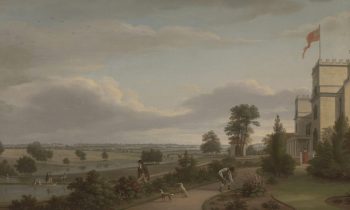 As politics and the idea of politician evolved throughout the long eighteenth century—from landed aristocracy to new money and career politicians—and the empire became increasingly more complex, the building of country houses remained a constant. This symposium brings together established and early career scholars who explore the correlation between politics and the country house within this protean political environment. Case studies and dialogue sessions will discuss design and style, as well as collecting, display, patronage, networking, dissemination, and the relationship between London and the country. The symposium also involves an (optional) tour of Wentworth Woodhouse, built by the marquises of Rockingham and now the focus of a major heritage restoration initiative. Key outcomes will be a publication of scholarly essays and a Politics and Country House Toolkit intended for the professional heritage sector.
F R I D A Y , 2 9 N O V E M B E R 2 0 1 9
Friends Meeting House, 6 Mount St, Manchester
9.00 Morning Session
Moderator: Jon Stobart (Manchester Metropolitan University)
• Joan Coutu (University of Waterloo), Introduction
• Peter Lindfield and Jon Stobart (Manchester Metropolitan University), Powerhouse or Home: Different Readings of the British Country House in Recent Symposia
• Oliver Cox (University of Oxford), Writing Political Histories
• Fiona Candlin (Birkbeck, University of London), When Is a Historic House a Museum? (and Why Might It Matter)
10.45 Break
11.00 Wentworth Woodhouse in Focus
• Dylan Spivey (PhD candidate, University of Virginia), Thomas Wentworth and Wentworth Woodhouse
• Joan Coutu (University of Waterloo), Burke’s Exemplum: The ‘Natural Family Mansion’ and Wentworth Woodhouse
• John Bonehill (University of Glasgow), Painting for Portland: George Barret and Welbeck
12.45 Coach departs for Wentworth Woodhouse; box lunch provided for eating on the coach. Tour followed by a reception at Wentworth Woodhouse.
17.30 Coach departs Wentworth Woodhouse, returning to Manchester at approximately 19.00
S A T U R D A Y , 3 0 N O V E M B E R 2 0 1 9
Manchester Metropolitan University, Business School, All Saints Building, Manchester
8.30 The House, the Style, the Contents, the Message
Moderators: Kate Retford (Birkbeck, University of London) and Anne Bordeleau (University of Waterloo)
• Amy Lim (DPhil candidate, University of Oxford and Tate Britain), Executive or Exile? The Art and Architecture of Country Houses after the Glorious Revolution
• Juliet Learmouth (PhD candidate, Birkbeck, University of London), Holding Court at Marlborough House: The London Residence of Sarah, Duchess of Marlborough
• Jon Stobart, Competing Cultures of Consumption: Politics and Taste at Shugborough
• Dale Townshend (Manchester Metropolitan University), Tory Gothic / Whig Classicism: Chiasmus, Architecture, and the Politics of Style in the Long Eighteenth Century
• Matthew Reeve (Queen’s University, Canada), Gothic Architecture and the Liberty Trope
• Peter Lindfield (Manchester Metropolitan University), A Gothic Houghton: Pelham’s Forgotten Country House
12:45 Lunch
13:30 The Empire at Home
Moderators: Dana Arnold (University of East Anglia) and Anne Bordeleau (University of Waterloo)
• Elisabeth Grass (DPhil candidate, University of Oxford and the National Trust), St. Kitts in Norfolk: The Country House Network of Crisp Molineux
• Jocelyn Anderson (University of Toronto, Mississauga), The ‘Fine House’ of a Caribbean Planter: Public Responses to the Alderman Beckford’s Fonthill
• Kieran Hazzard (University of Oxford), The Clives and India: Collecting, Display, and Colonialism
• Rowena Willard-Wright (freelance curator), William Pitt the Younger and How to Make a Political Home
16:30 Post-Graduate Students Roundtable – Sources and Reflection, Building the Toolkit
Moderator: Oliver Cox
18:00 Concluding Remarks: Reflecting on the Political House
Chaired by Jon Stobart, with Joan Coutu, Oliver Cox, and Peter Lindfield
Symposium | Hadrian’s Villa and Its Reception
From ArtHist.net:
Villa Adriana: Die kaiserliche Residenz und ihre Rezeption
Zentralinstitut für Kunstgeschichte, Munich, 4 December 2019
Organized by Cristina Ruggero
Diese Veranstaltung ist Teil einer bis 2020 ausgelegten, semesterübergreifenden Reihe im Kontext des DFG-Projekts Mikrokosmos Villa Adriana: Ein künstlerischer Interaktionsraum im Europa des 18. und 19. Jahrhunderts am Zentralinstitut für Kunstgeschichte, München.
P R O G R A M M
17.30 Cristina Ruggero (Zentralinstitut für Kunstgeschichte, München), Angebot und Nachfrage: Die aegyptiaca aus der Hadriansvilla in Rom, Paris, München
17.45 Mariette de Vos Raaijmakers (Università degli Studi di Trento), Hadrian und der Nil: Die Palestra in der Villa Hadriana und ihr Dekorationsprogramm
Innerhalb des weitläufigen architektonischen Komplexes der Hadriansvilla ist die sog. Palestra bemerkenswert für ihre Architektur und Ausstattung. Das ikonografische Programm und die Entstehungszeit (133–134) belegen einen Zusammenhang mit Antinoos‘ Tod (130) und eine ausgeprägte Ägypten-Rezeption. Im Rahmen eines vierjährigen Forschungsprojekts konnte die Universität von Trient (2003–2007) Architektur und Dekoration der Palestra dokumentieren. Der Vortrag fasst die Funde und Ergebnisse des Projekts zusammen.
18.30 Redha Attoui (Université Badj Mokhtar Annaba, Algerien), Schematic Reconstruction of the Construction Process Used in a Part of the Palestra, Villa Adriana
Although leveling is a fundamental part of the building process, our knowledge of old leveling systems is limited, mainly because of their invisible and temporary nature. However, thanks to the case study of the red signs discovered on the wall surfaces in the ‘Palestra’ at Villa Adriana, we have acquired a new understanding of this specific technique. The results allow suggesting a schematic reconstruction of the construction process used in a part of the complex.
Symposium | London Art Week: Conversations on Collecting
In conjunction with London Art Week:
London Art Week Symposium: Conversations on Collecting
Sainsbury Wing Theatre, The National Gallery, London, 2 December 2019
This December, London Art Week (1–6 December) launches the inaugural LAW Winter Symposium to foster debate and learning among the public, international collectors, members of the art trade, and museum professionals. Held in collaboration with our partner museum, The National Gallery, the 2019 Symposium will consist of three panel discussions, with our eminent speakers discussing different aspects of collecting. Attendance is free, but places must be registered and booked in advance.
P R O G R A M M E
2.30 Introduction and welcome by Gabriele Finaldi (Director, The National Gallery)
2.35 Returning Home: The Significance and Challenges of Exhibitions that Reunite Historic Collections in Their Original Settings
Moderator: Tom Stammers (Assistant Professor of Modern European Cultural History, Durham University)
• Toto Bergamo Rossi (Curator, Domus Grimani; Director, Venetian Heritage Foundation)
• Silvia Davoli (Curator, Lost Treasures of Strawberry Hill; Paul Mellon Research Curator, Strawberry Hill House; Associate Researcher, University of Oxford)
• Thierry Morel (Curator, Houghton Revisited; Director and Curator at Large, Hermitage Museum Foundation USA; and Trustee of the Sir John Soane’s Museum, London)
3.30 Collecting Today: What Motivates Private Collectors and How Do They Envisage the Future of Their Collections
Moderator: Justin Raccanello (Specialist dealer in Italian ceramics)
• Katrin Bellinger (Collector and Founder, Tavolozza Foundation)
• Claudio Gulli (Curator, Valsecchi Collection at Palazzo Butera, Palermo)
• Keir McGuinness (Collector)
4.30 Changing Questions: The Role of Museums in 2020 and How They Can Better Engage with the Public
Moderator: Martin Bailey (The Art Newspaper)
• Ketty Gottardo (Martin Halusa Curator of Drawings, The Courtauld Gallery)
• Luke Syson (Director and Marlay Curator, Fitzwilliam Museum, University of Cambridge)
• Nicholas Thomas (Director, Museum of Archaeology and Anthropology, and a Fellow of Trinity College, Cambridge)










 Enfilade
leave a comment