Exhibition | Sweet 18: Contemporary Art, Fashion, and Design
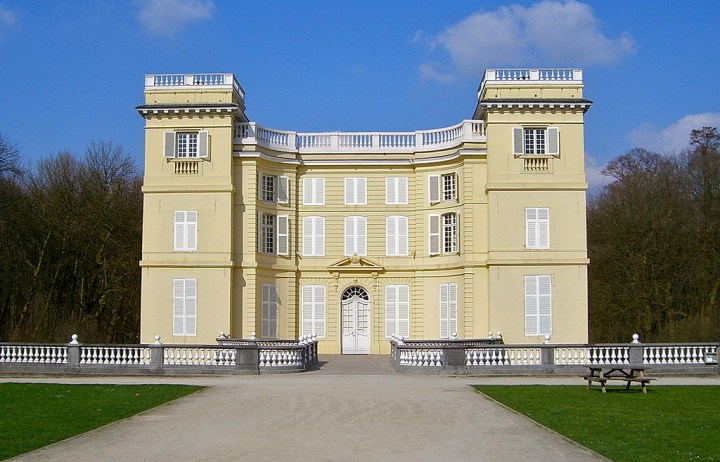
Kasteel d’Ursel at Hingene (Bornem), Belgium.
Photo from Wikimedia Commons, 4 May 2009.
◊ ◊ ◊ ◊ ◊
Press release for the exhibition:
Sweet 18: Contemporary Art, Fashion, and Design Inspired by the 18th Century
Kasteel d’Ursel, Hingene, Belgium, 1 May — 5 July 2015
Curated by Luisa Bernal, Dieter Van Den Storm, Wim Mertens, Tamara Berghmans, and Hélène Bremer
This spring the former summer residence of the aristocratic d’Ursel family will be the setting for the exhibition Sweet 18, presenting the 18th century through the eyes of fifty contemporary designers, artists, and fashion designers—from Erwin Olaf and Wim Delvoye to Walter van Beirendonck and Philippe Starck.

Jessica Harrison, Painted Lady (10), found ceramic, enamel paint, 22 x 17 x 13cm, 2014.
We all have somewhere in our minds the same images of the 18th century: wigs and hooped petticoats, towering hairstyles and elegant furniture, fine porcelain on lavishly decked tables, sensual portraits and frivolous paintings. The 18th century was the time of the Enlightenment and of the flowering of the arts and sciences. But it also created a playful, artificial world for aristocrats wanting to escape reality and immerse themselves in fantasy. A charmed world of pleasure, abundance, and voluptuousness, of pastel tints and curlicues, a world that inspires many an artist to this day. Spreading themselves over all three floors of the castle, these artists will show you the 18th century as you have never seen it before.
Sweet 18 has been brought together by the following team of curators: Luisa Bernal (art), Dieter Van Den Storm (design), Wim Mertens (fashion), Tamara Berghmans (photography) and Hélène Bremer (art).
Ode to Marie Antoinette
Whether it be for her extravagant lifestyle, influential fashion sense or her tragic death, French Queen Marie-Antoinette still speaks to our imagination. Director Sofia Coppola’s film spear- headed the revival. For pop stars like Madonna and Beyoncé, she is also a powerful icon. German illustrator Olaf Hajek gives his own take on her in the Black Antoinette series while top Dutch photographer Erwin Olaf offers up a gory portrait of the queen: beheaded.
Exuberant Fashion
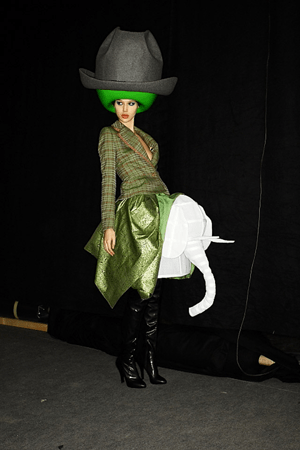
Walter Van Beirendonck. Foto: Ronald Stoops
The extravagant wardrobe of Marie-Antoinette is the springboard for many a contemporary fashion designer: from the minimalism of Japanese Yohji Yamamoto and eccentricity of German Bernhard Willhelm to French fashion houses Nina Ricci and Thierry Mugler. American artist Yasemen Hussein recreates one of her wigs in metal, and English milliner Stephen Jones is inspired by her to create his evocative hats. The outsized dresses, tight corsets, and tailored jackets of Belgian designers Walter Van Beirendonck and Olivier Theyskens also sample the 18th century.
Transparent Plastic en Burnt Wood
Dutch designer Hella Jongerius immersed herself in the archives of the German porcelain manufactory Nymphenberg to come up with plates which combine hand-painted patterns and little sculptured animals, all done in 18th-century style. Designer Maarten Baas literally set fire to a number of antique chairs before reworking them in lacquer. His Smoke Chair has become a classic. Even more famous is French star designer Philippe Starck’s Ghost Chair, which references a Louis XV chair in a pared-down, transparent design. Spanish designer Jaime Hayon’s lounge chair and an outlandish seat by British designer Nina Saunders also find a home in the exhibition. One absolute high point is L’ornement jamais by Swiss designer Philippe Cramer, an outstanding piece of pine furniture executed in 18th-century style and partially dipped in liquid gold.
Deformed Status Symbols
The fine china of Meissen, Sèvres, and Wedgwood remains to this day an inexhaustible source of inspiration. The sculptural groups of American artist Chris Antemann may look like replicas but reveal themselves on closer inspection to be rather wicked tableaux, full of forbidden fruit. British artist Jessica Harrison makes superficially sweet female figurines that are actually hideously mutilated, with their deformed heads and coloured tattoos. With War and Pieces, Dutch ceramicist Bouke de Vries offers a modern interpretation of the extravagant banquets that were thrown the night before a battle. British artist Amy Hughes’s Trésor découvert suggests treasure that has been lying buried for centuries under that same battlefield, treasure that has lost its gleam but has a story of the past and its rediscovery to tell.
Fêtes Galantes
In Stavronikita Project Austrian photographer Andreas Franke recreates 18th-century festivities. By situating them in the unusual setting of a sunken ship he emphasises the beauty that underlies decadence and decline. The tableaux of Canadian artist Ray Caesar border on the surreal, while the work of English painter Patrick Hughes plays games with the laws of perspective.
Pastoral Scenes

Richard Saja
Nothing is more typical of the 18th-century domestic interior than ‘toile de Jouy’, cotton wall- coverings depicting scenes of rural life. American artist Richard Saja pimps its little cowherds into clowns or punks, while the French Collectif Ensaders transforms them into figures of fantasy and Virginie Broquet gives them an erotic spin. Scottish design studio Timourous Beasties substitutes its idyllic villages with views of the London skyline, while French artist Joël Ducorroy reduces it to its bare essentials. American Beth Katleman brings toile de Jouy wallpaper to life in a vast 3D construction, introducing flea market finds into her installation to accentuate the strangeness of the effect.
Lavish Finery
British artist Jo Taylor translates the extravagant stucco ornament of the grand 18th-century house into three-dimensional porcelain objects. American Molly Hatch’s porcelain plates, when set together, form a landscape painting covering an entire wall. Taking as her inspiration the bizarre wigs of the French court, English artist Kathy Dalwood turns
casts of utilitarian objects into plaster portrait busts.
Made in Belgium
Belgian artists easily hold their own amongst all these international heavyweights. Isabelle Copet lays a gigantic lace collar in the pool behind the castle. In the park Michaël Aerts places an inverted statue of Louis XIV on a pedestal made of flight cases and builds a seven metre high obelisk from the same black cases. Two twisted sculptures by Wim Delvoye overlook the entrance hall. Zaza contributes a print. In the mirrored room Bart Ramakers has filmed a richly imaginative ballet on the theme of romantic love. Painter Jan Devliegher exhibits gigantic porcelain plates and Nick Ervinck has printed two stunningly designed vases in 3D. A design for a bedroom by architect Koen Deprez combines classic panelling and Fragonard paintings with Stanley Kubrick’s 2001: A Space Odyssey. Pieter Theuns (BOX) has composed music inspired by Mozart for the exhibition.
Kasteel d’Ursel
For nearly four centuries Kasteel van Hingene was the favourite summer residence of the aristocratic d’Ursel family. Every summer the Duke would travel with family and servants to his magnificent country house. Now it is the property of the Province of Antwerp, which is restoring it to its former glory. In 2014 Kasteel d’Ursel won the ‘Flemish Heritage Award’.
The exhibition begins on the first floor and leads you through the noble family’s former bedchambers. The service stairs bring you directly to the second floor where once the servants and the children of the family were accommodated. The circuit ends in the hall of mirrors and the reception rooms of the ground floor. The restored castle, with its characteristic Chinese interior decoration, is the perfect setting for this contemporary look at the 18th century.
Exhibition | Vivienne Westwood: Cut from the Past

◊ ◊ ◊ ◊ ◊
From Danson House:
Vivienne Westwood: Cut from the Past
Danson House, Bexleyheath, Kent, 1 April — 31 October 2015
The 18th century is the high point of art and culture. —Dame Vivienne Westwood
The impact of 18th-century art and design on the work of distinguished British fashion designer Vivienne Westwood is celebrated in a new exhibition at Danson House this spring. Vivienne Westwood: Cut from the Past brings together for the first time a number of her ground-breaking designs, and explores the collections that proved to be her turning point both critically and commercially.
Danson House, a splendidly restored Georgian villa, provides a tailor-made backdrop to the exhibition which highlights Westwood’s seminal work of the 1990s which was influenced by the 18th century. Designs and outfits on show make particular reference to the Rococo paintings of French artists Watteau and Boucher. Westwood’s passion for 18th-century design is also reflected in some earlier pieces from the ‘Cut, Slash and Pull’ and ‘Mini Crini’ collections, and the Malcom McLaren and Vivienne Westwood ‘Seditionaries’ Collection.
Caroline Worthington, Chief Executive, Bexley Heritage Trust said, “We are delighted to be working together with the Victoria & Albert Museum for the first time to bring cutting edge design back to Danson House for the 2015 season—just as the original owners, the Boyd family, did in the 18th century.”
◊ ◊ ◊ ◊ ◊
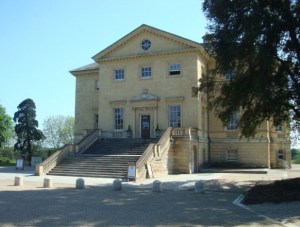 Danson House boasts a suite of rooms created for Sir John Boyd, a man besotted with his young bride. Enjoy this superb example of 18th-century architecture with its classical proportions, elegant interiors and rich symbolism celebrating love and marriage. Designed as a retreat from the hustle and bustle of central London, Danson House was completed in 1766. Sir John Boyd was a sugar merchant and vice-chairman of the British East India Company. Together with the notable architect Sir Robert Taylor, Boyd created this homage to the Golden Age of Antiquity, filling it with art and sculpture from his travels on the Continent. Today his home gives us a fascinating insight into fashionable
Georgian life.
Exhibition | Love Bites: Caricatures by James Gillray
From the Ashmolean:
Love Bites: Caricatures by James Gillray
Ashmolean Museum, Oxford, 26 March — 21 June 2015
Curated by Todd Porterfield

James Gillray, Design for a Naval Pillar, 1800
(New College, Oxford)
To mark the 200th anniversary of the death of British caricaturist James Gillray (1757– 1815), the Ashmolean presents more than 60 of Gillray’s finest caricatures from the outstanding collection of New College, Oxford.
James Gillray trained as a professional copyist at the Royal Academy and then staked his professional life on caricature, amongst the first generation of artists to do so. He produced more than a thousand prints, some the fruit of months of reflection, others banged out at lightning speed, responding to but also creating instant controversies on the very day of the event. His prints were divisive and partisan: in 1798 a Tory Lord would congratulate him for having “been of infinite service in lowering them [the Whigs] and making them look ridiculous,” while the exiled Napoleon, well aware of Gillray’s anti-French propaganda, was reported to have said that the British engraver did more than all the armies of Europe to bring him down.
Love Bites: Caricatures by James Gillray is curated by Professor Todd Porterfield of the University of Montreal. The exhibition has been generously supported by The Paul Mellon Centre for Studies in British Art and the Friends of the Ashmolean.
In connection with the exhibition, the Ashmolean Museum will host a conference, James Gillray@200: Caricaturist
without a Conscience?, on the 28th and 29th of March 2015.
Display | Elaborate Embroidery: Fabrics for Menswear before 1815
From The Met:
Elaborate Embroidery: Fabrics for Menswear before 1815
The Metropolitan Museum of Art, New York, 2 February — 19 July 2015
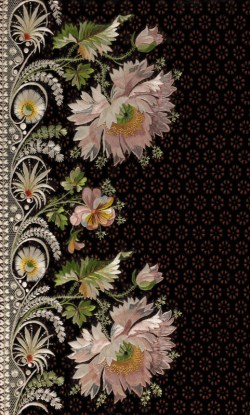 This installation features lengths of fabric for an unmade man’s suit and waistcoat, as well as a selection of embroidery samples for fashionable menswear made between about 1760 and 1815. During this period, France was the undisputed epicenter of the European fashionable world, and professional embroidery workshops there produced a dizzying array of colorful designs from which a man could choose. The installation features a copy of L’Art du Brodeur (The Art of the Embroiderer), which was published in Paris in 1770. This book contains detailed descriptions about subjects such as preparing fabric to be embroidered and the variety of threads used in a workshop, as well as illustrations of designs for men’s suits.
Seen together, the fabrics and the book provide a glimpse into the world of vividly colored and highly decorative fashion that was a key component of an upper-class European man’s life in the eighteenth and early nineteenth centuries.
Exhibition | Indigenous Australia: Enduring Civilisation
Press release (January 2015) for The British Museum exhibition:
Indigenous Australia: Enduring Civilisation
The British Museum, London, 23 April – 2 August 2015
National Museum of Australia, Canberra, Fall 2015

Kunmanara Hogan, Tjaruwa Woods, Yarangka Thomas, Estelle Hogan, Ngalpingka Simms and Myrtle Pennington, Kungkarangkalpa, acrylic on canvas, 2013. © The artists, courtesy Spinifex Arts Project.
In April 2015 the British Museum will open a major exhibition presenting a history of Indigenous Australia, the first exhibition in the UK devoted to the history and culture of Indigenous Australians: both Aboriginal peoples and Torres Strait Islanders. Drawing on objects from the British Museum’s collection, accompanied by important loans from British and Australian collections, the show will present Indigenous Australia as a living culture, with a continuous history dating back over 60,000 years. The objects in the exhibition will range from a shield believed to have been collected at Botany Bay in 1770 by Captain Cook or one of his men, a protest placard from the Aboriginal Tent Embassy established in 1972, contemporary paintings, and specially commissioned artworks from leading Indigenous artists. Many of the objects have never been on public display before.
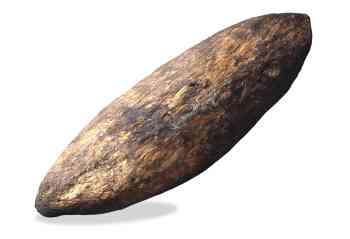
Shield collected at Botany Bay during Captain Cook’s visit, 1770 (London: The British Museum).
The objects displayed in this exhibition are immensely important. The British Museum’s collection contains some of the earliest objects collected from Aboriginal people and Torres Strait Islanders through early naval voyages, colonists, and missionaries dating as far back as 1770. Many were collected at a time before museums were established in Australia and they represent tangible evidence of some of the earliest moments of contact between Aboriginal people, Torres Strait Islanders and the British. Many of these encounters occurred in or near places that are now major cities such as Sydney, Melbourne, Adelaide, and Perth. As a result of collecting made in the early 1800s, many objects originate from coastal locations
rather than the arid inland areas often associated with
Indigenous Australia in the popular imagination.
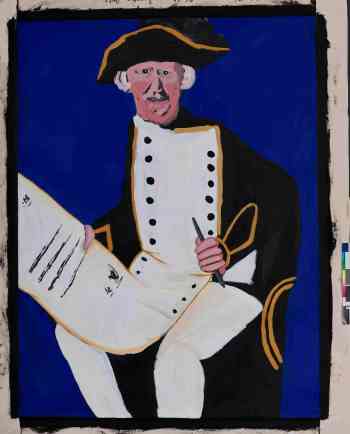
Vincent Namatjira, James Cook—with the Declaration, 2014. © Vincent Namatjira
The exhibition will present not only Indigenous ways of understanding the land and sea but also the significant challenges faced by Indigenous Australians from the colonial period until to the present day. In 1770 Captain Cook landed on the east coast of Australia, a continent larger than Europe. In this land there were hundreds of different Aboriginal groups, each inhabiting a particular area, and each having its own languages, laws and traditions. This land became a part of the British Empire and remained so until the various colonies joined together in 1901 to become the nation of Australia we know today. In this respect, the social history of 19th-century Australia and the place of Indigenous people within this is very much a British story. This history continues into the twenty first century. With changing policies towards Indigenous Australians and their struggle for recognition of civil rights, this exhibition shows why issues about Indigenous Australians are still often so highly debated in Australia today.
The exhibition brings together loans of special works from institutions in the United Kingdom, including the British Library, the Pitt Rivers Museum and the Cambridge Museum of Archaeology and Anthropology. A number of works from the collection of the National Museum of Australia will be shown, including the masterpiece ‘Yumari’ by Uta Uta Tjangala. Tjangala was one of the artists who initiated the translation of traditions of sand sculptures and body painting onto canvas in 1971 at Papunya, a government settlement 240km northwest of Alice Springs in the Northern Territory. Tjangala was also an inspirational leader who developed a plan for the Pintupi community to return to their homelands after decades of living at Papunya. A design from ‘Yumari’ forms a watermark on current Australian passports.
This exhibition has been developed in consultation with many Aboriginal and Torres Strait Islander individuals, Indigenous art and cultural centres across Australia, and has been organised with the National Museum of Australia. The broader project is a collaboration with the National Museum of Australia. It draws on a joint research project, funded by the Australian Research Council, undertaken by the British Museum, the National Museum of Australia and the Australian National University. Titled Engaging Objects: Indigenous communities, museum collections and the representation of Indigenous histories, the research project began in 2011 and involved staff from the National Museum of Australia and the British Museum visiting communities to discuss objects from the British Museum’s collections. The research undertaken revealed information about the circumstances of collecting and significance of the objects, many of which previously lacked good documentation. The project also brought contemporary Indigenous artists to London to view and respond to the Australian collections at the British Museum.
Neil MacGregor, Director of the British Museum said, “The history of Australia and its people is an incredible, continuous story that spans over 60,000 years. This story is also an important part of more recent British history and so it is of great significance that audiences in London will see these unique and powerful objects exploring this narrative. Temporary exhibitions of this nature are only possible thanks to external support so I am hugely grateful to BP for their longstanding and on-going commitment to the British Museum. I would also like to express my gratitude to our logistics partner IAG Cargo and the Australian High Commission who are supporting the exhibition’s public programme.”
Peter J. Mather, Group Regional Vice President, Europe and Head of Country, UK, BP: “BP is extremely pleased to support The BP Exhibition Indigenous Australia: Enduring Civilisation, part of our five year commitment to the museum’s special exhibitions programme. BP has had a presence in Australia for almost 100 years and our support for this exhibition is part of BP’s wider contribution to the societies where we operate, enabling audiences to connect with a variety of different cultures. We are delighted to continue our long-standing relationship with the British Museum by supporting this exhibition which we hope will inspire interest in Australia’s indigenous people and culture for many thousands of visitors.”
Dr Mathew Trinca, National Museum of Australia Director, welcomed the British Museum exhibition: “We are delighted to support this major exhibition in London with the loan of some key objects from our collection. We look forward to continuing our work together to realise our ambition for an exhibition of these artefacts in Canberra in late 2015.”
Patron: HRH The Prince of Wales
Supported by BP
Organised with the National Museum of Australia
Logistics partner IAG Cargo
Public programme supported by the Australian High Commission
Gaye Sculthorpe, John Carty, Howard Morphy, Maria Nugent, Ian Coates, Lissant Bolton, and Jonathan Jones, Indigenous Australia: Enduring Civilisation (London: The British Museum Press, 2015), 272 pages, ISBN: 978-0714126944, £30.
This ground-breaking publication explores the unique and ongoing relationship that Aboriginal people and Torres Strait Islanders have to place and country. It also explores the profound impact and legacy of colonialism, the nature of collecting and the changing meaning of objects now in the collection of The British Museum.
Exhibition | Spirits of the Passage: The Transatlantic Slave Trade
From the press release for the exhibition:
Spirits of the Passage: The Story of the Transatlantic Slave Trade
The Frazier History Museum, Louisville, Kentucky, February 2 through June 16, 2013
The DuSable Museum of African American History, Chicago, 19 September 2014 — 4 January 2015
Reading Public Museum, Reading, Pennsylvania, 24 January — 3 May 2015

Slave Shackles from The Henrietta Marie, ca. 1700 (Key West: The Mel Fisher Maritime Museum)
The Reading Public Museum invites guests to the new exhibition, Spirits of the Passage: The Story of the Transatlantic Slave Trade, exploring the transatlantic slave trade through a display of nearly 150 historical objects, many salvaged from sunken ships. This exhibition, sponsored locally by The Historic Abraham Lincoln Hotel, was developed in conjunction with the 150th anniversary of Abraham Lincoln’s 1863 Emancipation Proclamation and the turning point it represented for thousands of enslaved people at a pivotal point in the American Civil War. It’s the first exhibit of its kind to examine the entire history of the Transatlantic Slave Trade from the 16th through 19th centuries, while also presenting the most up-to-date research and discoveries to the public. These include the latest marine archaeological discoveries from the Mel Fisher Maritime Museum, new research on key African societies, and an exploration of the slave trade’s modern day legacies.
Spirits of the Passage allows guests to see authentic artifacts from the wreck of an actual slave ship, such as restraints, tools, plates and trade goods, as well as dozens of other objects from West African societies that show the uniqueness of the individual cultures they represent. These include religious objects, bronze- and beadwork, pottery, and jewelry. These compelling artifacts create a provocative picture of this tragic era, while also engendering a sense of pride in the legacy of strength these enslaved people left behind.
Spirits of the Passage was produced in partnership by The Mel Fisher Maritime Museum in Key West, Florida and The Frazier History Museum in Louisville, Kentucky.
◊ ◊ ◊ ◊ ◊
The 1972 discovery of The Henrietta Marie occasioned this 1997 book:
Madeleine Burnside and Rosemarie Robotham, with a foreword by Cornell West, Spirits of the Passage: The Transatlantic Slave Trade in the Seventeenth Century (New York: Simon & Schuster, 1997), 192 pages, ISBN: 978-0684818191.
 In a watery grave off the coast of Florida lies the earliest slave ship ever recovered. The English-owned Henrietta Marie plied the waters from Europe to Africa and the New World, sinking in the year 1700. She has waited three hundred years to reveal her story. Taking the wreck of the ship as its dramatic heart, Spirits of the Passage presents the first general-interest history of the early years of the slave trade. Told in part from the decks and the cargo hold of a single merchant slaver, this powerful and fascinating story covers a period that has heretofore been largely the territory of scholars—the late seventeenth century, when the slave trade began a period of explosive growth.
Spirits of the Passage describes the story of the largest forced migration in human history, with a powerful text that personalizes the experience of slavery in the most gripping way. Richly illustrated with artifacts found in the wreck along with etchings and paintings of the time, the book documents a tragic tale of human misery even as it reveals the strength of spirit that made survival possible for enslaved Africans. Included throughout are narratives of resistance and survival, many of them never before told. The mosaic of profiles breathes life into stories from all sides of the trade, stories that will contribute to a more complete understanding of the dilemmas of the time. As integral parts of this important volume, profiles, anecdotes, illustrations, and incisive narrative all combine to create a compelling account of one of history’s most important, and shattering, moments.
Exhibition | Bonaparte and the British: Prints and Propaganda

James Gillray, Maniac Ravings, 1803, hand-coloured etching on paper
(London: The British Museum)
◊ ◊ ◊ ◊ ◊
From The British Museum:
Bonaparte and the British: Prints and Propaganda in the Age of Napoleon
The British Museum, London, 5 February — 16 August 2015
This exhibition focuses on the printed propaganda that either reviled or glorified Napoleon Bonaparte, on both sides of the English Channel. It explores how his formidable career coincided with the peak of political satire as an art form. 2015 marks the 200th anniversary of the Battle of Waterloo—the final undoing of brilliant French general and emperor Napoleon Bonaparte (1769–1821). The exhibition will include works by British and French satirists who were inspired by political and military tensions to exploit a new visual language combining caricature and traditional satire with the vigorous narrative introduced by Hogarth earlier in the century.
The print trade had already made the work of contemporary British artists familiar across Europe. Continental collectors devoured the products of the London publishers, and artists across Europe were inspired by British satires. This exhibition includes work by James Gillray, Thomas Rowlandson, Richard Newton and George Cruikshank, some of the most thoughtful and inventive artists of their day. The range and depth of the British Museum’s collection allows the satirical printmakers’ approach to be compared with that of portraitists and others who tended to represent a more sober view of Napoleon.
The exhibition begins with portraits of the handsome young general from the mid-1790s and ends with a cast of his death mask and other memorabilia acquired by British admirers. Along the way, the prints will examine key moments in the British response to Napoleon—exultation at Nelson’s triumph in the Battle of the Nile in 1798, celebration of the Peace of Amiens in 1802, fear of invasion in 1803, the death of Nelson at the Battle of Trafalgar in 1805, and Napoleon’s triumph at Austerlitz, delight at his military defeats from 1812 onwards, culminating in his exile to Elba in 1814. 1815 sees triumphalism after Waterloo and final exile to St Helena, but some prints reflect an ambiguous view of the fallen emperor and doubts about the restoration of the French king Louis XVIII.
◊ ◊ ◊ ◊ ◊
From The British Museum Press:
Tim Clayton and Sheila O’Connell, Bonaparte and the British: Prints and Propaganda in the Age of Napoleon (London: The British Museum Press, 2015), 256 pages, ISBN: 9780714126937, £25.
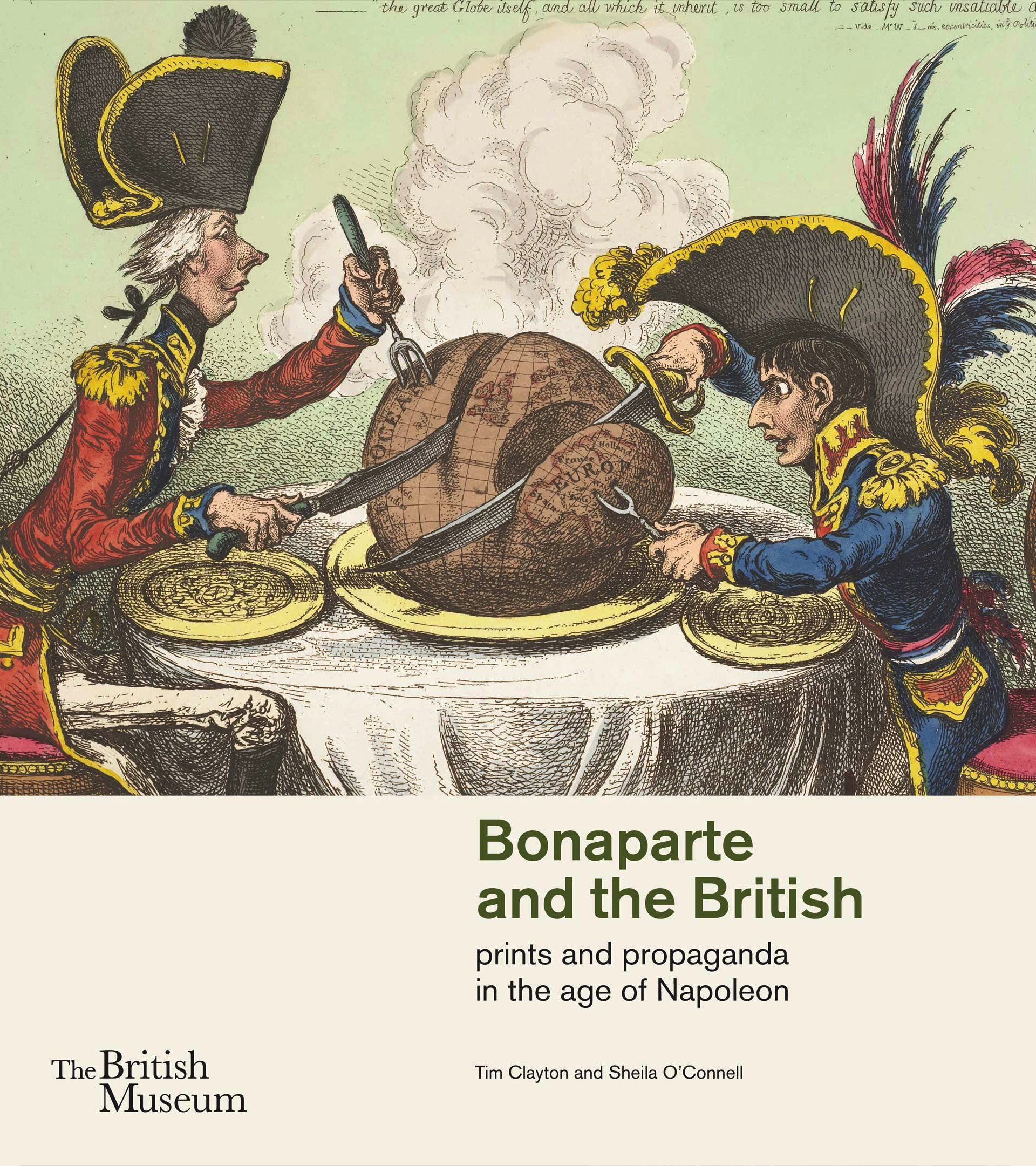 This fascinating book explores through contemporary prints how Bonaparte was seen from across the English Channel where hostile propaganda was tempered by admiration for his military and administrative talents. Featuring works from The British Museum’s world-renowned collection of political satires, including examples by the greatest masters of the genre, James Gillray, Thomas Rowlandson and George Cruikshank, the authors examine in detail these fascinating and humorous prints.
Attitudes to Bonaparte were coloured by political tensions in Britain as highlighted in satires of Charles James Fox, Richard Brinsley Sheridan, Lord Holland and other radicals. French, German, Russian and Spanish copies of British prints demonstrate the wide dissemination of prints and the admiration of continental artists for British satirists. From portraits of the handsome young general to the resplendent Emperor to the cast of his death mask, this book explores crucial events of Bonaparte’s career and the period. French satires showing the British in relation to Bonaparte are also included alongside portraits of Bonaparte and his family made for the British market. This richly illustrated title reveals the stories behind the prints, explaining how satire was used as propaganda and how the artists worked. It features intricately detailed prints in full colour, bringing to life a key period in European history.
Tim Clayton is a leading authority on British prints of the period and the author of several critically acclaimed military histories. Sheila O’Connell is curator of British prints before 1900 at The British Museum.
Exhibition | Vanishing Ice: Alpine and Polar Landscapes in Art

William Hodges, The Resolution and Adventure, 4 January 1773, Taking Ice for Water, Latitude 61 Degrees South, ink and wash on paper; 14 x 22″ (Mitchell Library, State Library of New South Wales).
Click here for more information.
◊ ◊ ◊ ◊ ◊
From the McMichael press release (9 December 2014) for the Vanishing Ice exhibition:
Vanishing Ice: Alpine and Polar Landscapes in Art, 1775–2012
Whatcom Museum, Bellingham, Washington, 3 November 2013 — 16 March 2014
El Paso Museum of Art, 1 June — 24 August 2014
Glenbow Museum, Calgary, Alberta, 27 September 2014 — January 4, 2015
McMichael Canadian Art Collection, Kleinburg, Ontario, 31 January — 26 April 2015
On January 31, 2015, the powerful and provocative exhibition Vanishing Ice: Alpine and Polar Landscapes in Art, 1775–2012 opens at the McMichael Canadian Art Collection. Since debuting in 2013 at the Whatcom Museum in Bellingham, Washington, the exhibition has garnered attention for its unique interweaving of art, history, and science. Showcasing the beauty and fragility of Earth’s frozen frontiers through the eyes of artists, writers, and naturalists over a period of more than 200 years, the exhibition offers a unique take on the timely subject of climate change.
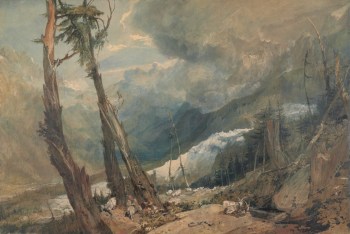
Joseph Mallord William Turner, Mer de Glace, in the Valley of Chamouni, Switzerland, 1803, watercolor, graphite, gum, 28 x 41″ (New Haven: Yale Center for British Art, Paul Mellon Collection)
Vanishing Ice features over seventy works including drawings, prints, paintings, photographs, videos, and installations by fifty artists from twelve countries. Among these historical and contemporary artists are: Ansel Adams, Lita Albuquerque, James Balog, Thomas Hart Benton, David Buckland, Gustave Doré, Lawren Harris, Isaac Julien, Kahn & Selesnick, Rockwell Kent, Paul D. Miller (aka DJ Spooky), Alexis Rockman, Camille Seaman, and Spencer Tunick. The exhibition unfolds thematically, geographically, and chronologically, moving from alpine to Arctic and Antarctic landscapes.
The idea for Vanishing Ice grew out of curator Barbara Matilsky’s doctoral dissertation, written thirty years ago about the sublime landscapes of French artist-naturalist-explorers who were among the first to depict the poles and mountain glaciers. As Matilsky became aware of the increasing number of contemporary artists who were venturing to the Arctic and Antarctic, she saw an opportunity to compare historical and contemporary depictions of these rapidly changing landscapes, as epitomized by the juxtaposition of Arthur Oliver Wheeler’s 1917 image of the Athabasca Glacier in Jasper National Park and Gary Braasch’s 2005 photograph of the same location.
“I am hoping that Vanishing Ice will stimulate a new appreciation for alpine and polar landscapes by revealing their significance for both nature and culture,” said exhibition curator Barbara Matilsky from the Whatcom Museum. “In the past, artists and naturalists expanded the public’s awareness of Earth’s icy frontiers. Today, artists continue to collaborate with scientists, motivated by the belief that art will help people to visualize the accelerating effects of climate change. They awaken the world to both the beauty and increasing vulnerability of ice, which is critical for biological and cultural diversity. Their work will hopefully inspire activism on the regional and national levels to make the requisite policy changes that will bring Earth back into balance.”
The McMichael is the exhibition’s final stop on a tour that included the Whatcom Museum; the El Paso Museum in Texas; and most recently the Glenbow Museum in Calgary.
“The McMichael nurtures a special interest in exploring the intersection of art and nature, and encouraging meaningful dialogue about the environment,” said Dr. Victoria Dickenson, Executive Director and CEO of the McMichael. “Vanishing Ice is both a beautiful glimpse of some of the most remote and fragile ecosystems, and a call to action on what many people hold to be the defining issue of this generation.”
Vanishing Ice, which will span the McMichael’s upper level of gallery spaces, will be complemented by an exhibition based on the McMichael’s permanent collection of works related to the Arctic, opening on February 14, 2015. The installation will include paintings and drawings by members of the Group of Seven, including Lawren Harris—famed for his depiction of icebergs and glaciers—and works by Inuit artists, including Tim Pitsiulak.
Vanishing Ice: Alpine and Polar Landscapes in Art, 1775–2012 is organized by the Whatcom Museum. Major funding for the exhibition has been provided by the Paul G. Allen Family Foundation and the National Endowment for the Arts with additional support from the Norcliffe Foundation, the Washington State Arts Commission, and the City of Bellingham.
From the University of Washington Press:
◊ ◊ ◊ ◊ ◊
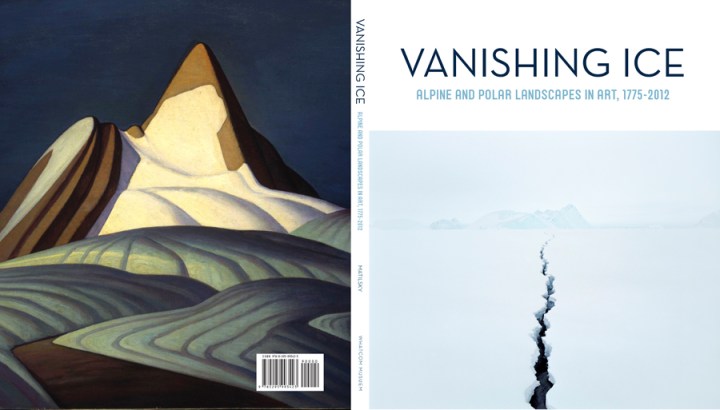
Barbara C. Matilsky, Vanishing Ice: Alpine and Polar Landscapes in Art, 1775–2012 (Seattle: University of Washington Press, 2013), 144 pages, ISBN: 978-0295993423, $40.
Vanishing Ice introduces the rich artistic legacy of the planet’s frozen frontiers now threatened by a changing climate. Tracing the impact of glaciers, icebergs, and fields of ice on artists’ imaginations, this interdisciplinary survey explores the connections between generations of artists who adopt different styles, media, and approaches to interpret alpine and polar landscapes.
Beginning in the eighteenth century, collaborations between the arts and sciences contributed to a deeper understanding of snowcapped mountains, the Arctic, and Antarctica. A resurgence of interest in these environments as dramatic indicators of climate change galvanizes contemporary expeditions to the glaciers and the poles. Today, artists, writers, and scientists awaken the world to both the beauty and increasing vulnerability of ice.
Barbara C. Matilsky is curator of art at the Whatcom Museum, Bellingham, Washington. She is the author of numerous books, including Fragile Ecologies: Contemporary Artists’ Interpretations and Solutions.
C O N T E N T S
Director’s Foreword
Prologue
From the Sublime to the Science of a Changing Climate
Voyage to Glacial Peaks
Magnetic Attraction: The Allure of the Poles
Elegy: The Open Polar Sea
Timeline
Checklist of the exhibition
Exhibition | Jean-Jacques de Boissieu
◊ ◊ ◊ ◊ ◊
From the Städel Museum:
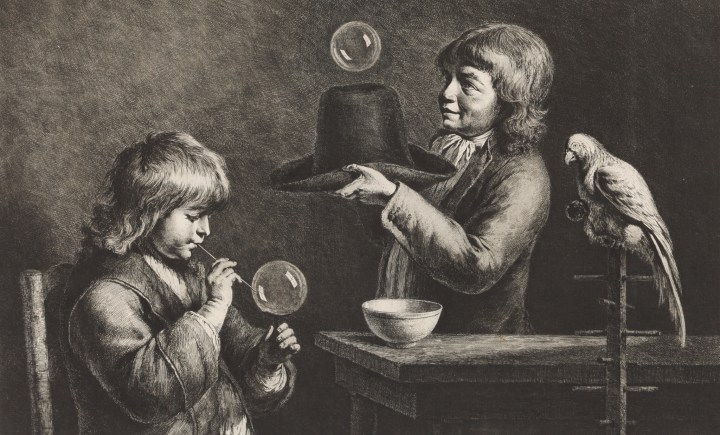
Jean-Jacques de Boissieu: A Contemporary of Städel’s / Ein Zeitgenosse Städels
Städel Museum, Frankfurt, 11 February — 10 May 2015
Curated by Jutta Schütt
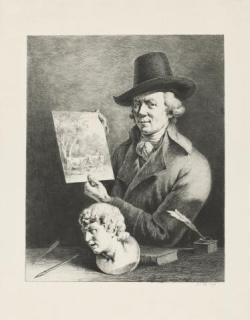
Self-Portrait of Jean-Jacques de Boissieu, 1796, etching.
Jean-Jacques de Boissieu (1736–1810) was already a highly acclaimed artist beyond France in his lifetime. Not only princes but also private collectors like Johann Friedrich Städel were fascinated with the landscapes, genre scenes, and portraits depicted in the artist’s drawings and prints. The founder of the Städelsches Kunstinstitut acquired over twenty drawings and far more than two hundred etchings by de Boissieu, which still rank among the central holdings of the Städel’s Department of Prints and Drawings. Created in a period of historically revolutionary events, de Boissieu’s oeuvre mirrors the landscape and life of the province around the artist’s native city of Lyon with an almost irritatingly unexcited and serious steadiness. His etched landscapes and portraits as well as his subtly nuanced brush and chalk drawings reveal a progressive realism that hints at a bourgeois understanding of art independent of any academic norms.
Exhibition | Close-up and Personal: Eighteenth-Century Gold Boxes
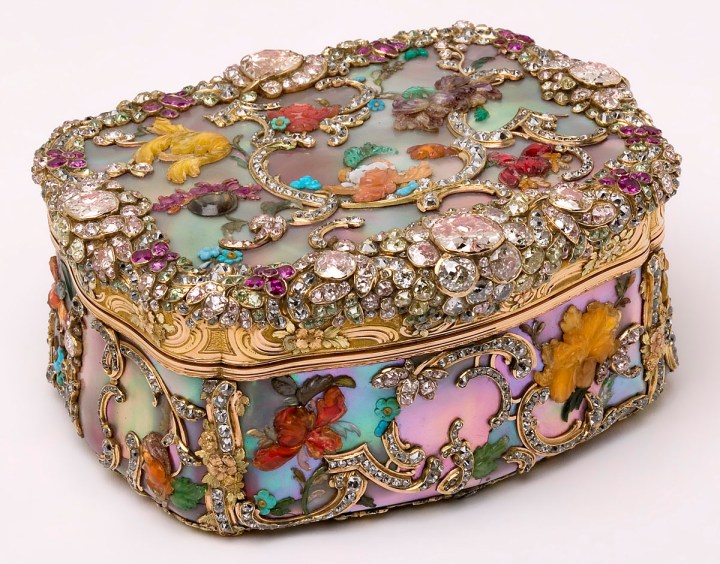
Snuffbox with Flowers, Berlin, Germany, ca. 1765, from the Rosalinde and Arthur Gilbert collection on loan to the Victoria and Albert Museum, London (formerly in the collection of Frederick II of Prussia, 1712–1786), photo Victoria and Albert Museum, London.
◊ ◊ ◊ ◊ ◊
A loan exhibition from the V&A, Close-Up and Personal includes 28 boxes in LA and nearly 60 in Cambridge. As reported by Paula Weideger for The Financial Times in 2009, the history of the fate of the collection is complicated, thanks partially to Arthur Gilbert’s conflicted relationship with LACMA, where he served as a member of the board of trustees. From LACMA:
Close-up and Personal: Eighteenth-Century Gold Boxes
from the Rosalinde and Arthur Gilbert Collection
Los Angeles County Museum of Art, 6 September 2014 — 1 March 2015
The Fitzwilliam Museum, Cambridge, 24 March — 6 September 2015
“So small a thing imposes on people,” remarked the notorious Giacomo Girolamo Casanova (1725–1798), who also carefully selected the type of tobacco to send inside such boxes when he presented them as gifts. Taking snuff and carrying it with you in an elaborate container was a universal practice in 18th-century Europe. A year before the death of the Elector of Cologne, one of the most powerful men in Europe at the time, Casanova had been given a snuffbox decorated with the Elector’s portrait. Going incognito to the Ridotto (the famous gambling halls of Venice), it was important that Casanova use an accessory he had not been seen with before. However, the very distinctive gold box with the Elector’s portrait eventually betrayed him when a former lover remembered it.
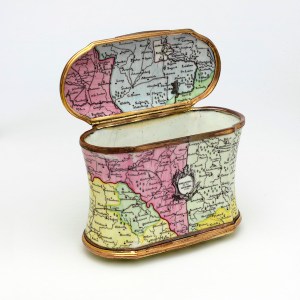
Double Snuffbox with Maps, ca. 1757, possibly Berlin, Germany, from the Rosalinde and Arthur Gilbert collection on loan to the Victoria and Albert Museum, London.
You yourself may recognize some of the gold boxes on view at LACMA through March 1, 2015. Carefully collected by Rosalinde and Arthur Gilbert in Los Angeles, they are here on loan from the Victoria and Albert Museum in London. Designed to carry just a small amount of powdered tobacco, the fine decorations of these pocket-sized containers have to be examined close up. The proximity of the viewing experience makes it very personal, intensifies the response, and can be a powerful experience when shared. Even today, a common reaction when examining them is wonderment, but these complex objects also have the potential to spark a wide range of emotions. Infinitely customizable, gold boxes became the most versatile form of gift in the 18th century.
Unlike the cups of precious metal that continue to lend themselves to specific types of acknowledgment such as loyalty of service or achievements in sport, these portable presents made it possible to communicate a spectrum of sentiments in a variety of social situations. While the double snuffbox covered with maps detailing maneuverings in the Seven Years’ War was probably made in Berlin or among the Prussian allies, other examples are less readily attributable to one side of the conflict. The same imagery would have been understood as a political statement and demonstration of allegiance by participants on either side.
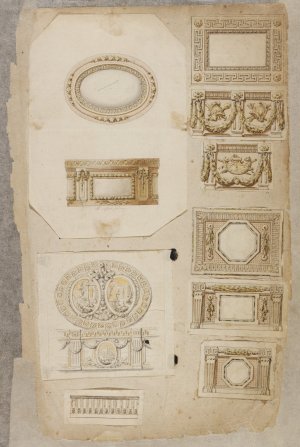
Pierre-Philippe Choffard, Design for an Oval Gold Box, 1759, Victoria and Albert Museum, London.
Elite production of the flashiest boxes was controlled by Frederick II, King of Prussia from 1740 to 1786, who banned imports from France (the unrivalled center of production at the time) “for the best [interest] of the gold workers in Berlin.” He presented some of his lavish commissions to courtiers and other sovereigns, and the local industry flourished under his patronage. Frederick’s personal enjoyment of these intensely bejeweled trinkets, and appreciation for their artistry, inspired him to engage with the manual process of designing them himself. Often the precious metal of the boxes is marked, revealing the places, names, and sometimes dates attached to their making and circulation. However, the designers, royal or otherwise, upon whose creativity all gold snuffboxes depend, cannot be as readily identified. A design on paper signed ‘Choffard fecit 1759’ for a box bearing the mark of maker Jean Ducrollay, is the great exception. However, we have very little information about Pierre-Philippe Choffard as a man or an artist.
Tantalizing details are a major characteristic of gold boxes, and eccentric examples have captivated many onlookers through their puzzling appearance. Like other curious objet d’art, such as the elephant supported musical vanity box (called a nécessaire), some snuffboxes were more than just containers. In the form of gadgets or figurines, they beg to be picked up and turned over in the hand. For example, a delicate box imitating a wicker basket reveals (when the lid is lifted) a cornucopia of fruit painted to fool the eye.
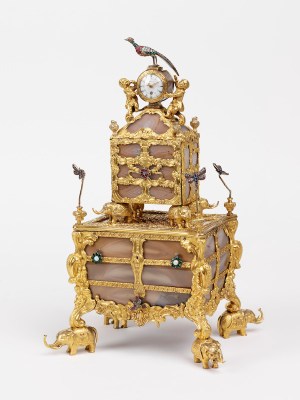
James Cox, Nécessaire, ca. 1770, from the Rosalinde and Arthur Gilbert collection on loan to the Victoria and Albert Museum, London.
You would have to travel to Strawberry Hill near London, the residence of Horace Walpole (1717–1797), to see a truly bizarre example of a snuffbox commissioned exclusively as a curiosity rather than a functional object. Exploiting the genre’s reputation for erudite encoding and connoisseurial delectation, it titillates through its command of wit. An elaborate ruse, it was conceived by the French patron of the arts Marie Anne de Vichy-Chamrond, marquise du Deffand (1697–1780) as a fake declaration of love from a social rival of hers to Walpole, the fourth Earl of Orford and a famous English collector. Her good friend was completely taken in by the exquisite portrait-clad box containing a flattering letter, and he wrote to the marquise about the excitement it gave him. Although the prank was at his expense, he seems to have been rather tickled by the incident. In the introduction to the catalog of his private collections, he recounts the practical joke as an enticement to his readers.
There can be no joking about the significance of the display of gold snuffboxes in the Koenig Gallery. Nothing prepares you for the power of these petite and precious masterpieces of extraordinary design and making. To really understand their attraction, you must encounter the real thing. And once you do, you will have an insider’s view of the preoccupations and passions of 18th-century aristocrats as well as an admiration for the genius of the best makers and designers of the period. With their curious shapes, elaborate surfaces, and the intriguing thoughts they express, gold boxes are some of the most delightful objects ever made.










 Enfilade
leave a comment