Exhibition | Rococo to Neoclassicism from the Palazzo Chigi in Ariccia
From Artbooks.com:
Dipinti tra rococò e neoclassicismo da Palazzo Chigi in Ariccia e da altre raccolte
Palazzo Ducale Castromediano di Cavallino, Lecce, 21 September — 15 December 2013
 La mostra è dedicata alla memoria di Fiammetta Luly Lemme (Ancona, 20 marzo 1937 – Roma, 29 marzo 2005), avvocato, collezionista e studiosa d’arte, moglie dell’avvocato Fabrizio Lemme, che con lei ha condiviso i medesimi interessi per l’arte e il collezionismo, che ancora coltiva. La collezione Lemme, formata con la consulenza di insigni studiosi quali Federico Zeri, Italo Faldi e Giuliano Briganti, fornisce un rilevante materiale di studio per la conoscenza della pittura barocca, rococò e proto-neoclassica, con particolare attenzione al Settecento romano. Nel 1998 i coniugi Lemme donarono al Museo del Louvre venti quadri e una scultura, collocati nella “Sala Lemme,” mentre altri ventuno furono donati contestualmente alla Galleria Nazionale d’Arte Antica di Palazzo Barberini, oggi organicamente inseriti nel nuovo allestimento.
Il 28 maggio 2007 Fabrizio, Giuliano e Ilaria Lemme hanno formalizzato la donazione al Palazzo Chigi in Ariccia del nucleo più importante della collezione, costituito da 128 dipinti, in gran parte già oggetto di notifica del Ministero dei Beni Culturali e Ambientali come insieme di elevato interesse storico artistico (Decreto del 1 dicembre 1998). La raccolta è confluita nel Museo del Barocco Romano, ubicato nella dimora chigiana, formato a partire dal nucleo di dipinti del ‘600 lasciati nel 2002 dallo storico dell’arte Maurizio Fagiolo dell’Arco. Ulteriori donazioni provenienti da altre raccolte (Ferdinando Peretti, Oreste Ferrari, Renato Laschena, etc.) hanno potenziato il museo di Palazzo Chigi, arricchendo le già rilevanti raccolte di provenienza chigiana, acquisite con la dimora nel 1989.
Il presente evento si pone in continuità ideale ed è una prosecuzione in termini didattici e storicoartistici della mostra Dipinti del Barocco Romano da Palazzo Chigi in Ariccia, tenuta a Cavallino di Lecce tra settembre e dicembre 2012, circoscritta alla pittura romana del ‘600. L’esposizione si volge al ‘700, il secolo dei lumi, l’età d’oro del Grand Tour d’Italie, che ebbe in Roma il proprio centro pulsante, propagandosi in tutta Italia. Tuttavia, oltre agli artisti attivi nella capitale pontificia, sono presenti in mostra anche pittori della scuola napoletana, provenienti o attivi nel regno borbonico. Spicca in ambito meridionale la figura di Corrado Giaquinto, il massimo artista pugliese del secolo ed uno dei più grandi del ‘700. Sono presenti anche tele di Paolo de Matteis, pittore della scuola napoletana attivo anche nel Salento. Le opere esposte provengono in gran parte da Palazzo Chigi, sia dalla collezioni storiche chigiane che dal Museo del Barocco. Sono presenti anche alcune opere in collezione privata, compresi ulteriori dipinti raccolti da Fabrizio Lemme negli ultimi anni o provenienti da una prestigiosa collezione privata inglese.
Francesco Petrucci, Dipinti tra rococò e neoclassicismo da palazzo Chigi in Ariccia e da altre raccolte (Rome: Gangemi, 2013), 128 pages, ISBN: 978-8849227086, $48.50.
Exhibition | Connecting Seas: Discoveries and Encounters
This exhibition opens the Getty Research Institute’s newly expanded galleries with an exploration of materials related to the 2013–14 scholar year theme Connecting Seas: Cultural and Artistic Exchange. From the exhibition press release (5 November 2013) . . .
Connecting Seas: A Visual History of Discoveries and Encounters
Getty Research Institute, Getty Center, Los Angeles, 7 December 2013 — 13 April 2014
Curated by Peter Bonfitto, David Brafman, Louis Marchesano, Isotta Poggi, Kim Richter, and Frances Terpak

◊ ◊ ◊ ◊ ◊
Since antiquity, people have crossed the seas to explore distant shores and discover other cultures. The introduction of the printing press made it possible for illustrated accounts of travel and exploration to find wide distribution in Europe, and, soon after, other continents. Connecting Seas: A Visual History of Discoveries and Encounters, on view December 7, 2013–April 13, 2014 at the Getty Research Institute, Getty Center, draws on the Getty Research Institute’s extensive special collections to reveal how adventures on other continents and discoveries of other cultures were perceived, represented, and transmitted during past ages of ocean travel.
“This exhibition prompts us to see and consider the long history of cultural encounters, an endeavor we are still pursuing today,” said Thomas W. Gaehtgens, director of the Getty Research Institute. “The Getty Research Institute’s special collections are rich troves of original sources that offer insight into the history of representation spanning five hundred years.”
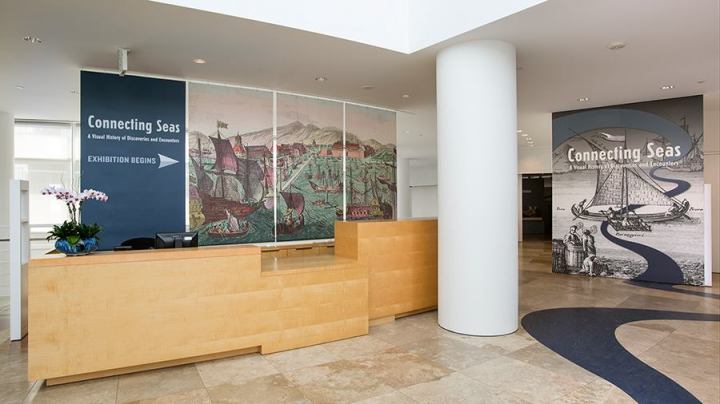
Featuring rare books, prints, maps, and navigational instruments—from Renaissance prints to Napoleon’s monumental folios on Egypt to panoramic images known as vues d’optique, photographs and children’s games—the exhibition traces the fascinating course of scholarly investigation and comprehension of cultures in Asia, South America, and Africa. These intriguing original works from the sixteenth- to the twenty-first century, mostly from European, but some of Asian and South-American origins, chart diverse narratives of discovery, exploration, commerce, and colonization, and illuminate the multiple and various levels of encounter at the roots of today’s globalization. The exhibition is organized under three themes: “Orienting the World,” “Expeditions and Exploration,” and “Commerce and Colonialism” and was collaboratively curated by six GRI curators: Peter Bonfitto, David Brafman, Louis Marchesano, Isotta Poggi, Kim Richter and Frances Terpak.
Most of the rare material featured in Connecting Seas is of European origin, which reflects the history of the GRI. In the past, the GRI was primarily dedicated to collecting and exploring the Western tradition. Some objects from other parts of the world already signal a recent programmatic change. As the GRI continues to broaden its scope of collecting and research, this more global approach will become a more visible aspect of exhibitions and public programs. Connecting Seas draws heavily from the GRI’s special collections, including prints, photographs, drawings, rare books and ephemera from the 16th to 20th centuries. It also features navigational instruments, a painting on the North Atlantic slave trade and other marine objects generously loaned by the Kelton Foundation that directly complement the GRI’s collections on display. Through deep research in the GRI’s rich holdings of primary sources and historical objects and documentation, the exhibition interprets images from the past to see how they transferred and represented the encounter of cultures. As Gaehtgens states, “by understanding how such encounters were embraced in the past, we can learn to think critically about our contemporary experiences and its challenges.”
“This exhibition invites the viewer to reflect on the complex, long history of exploration and exchange,” added Marcia Reed, Chief Curator, Getty Research Institute. “For every instance of misunderstanding, prejudice or exploitation there are examples of persistent intellectual curiosity, generosity, and empathy.”
Orienting the World
Mapping the world was the first step in discovering new lands. The first section of the exhibition displays the techniques and tools early explorers developed in order to navigate the seas. Knowledge of astronomical orientation and the invention of maritime instruments were necessary to face the challenges of ocean voyages. For example, an Islamic astrolabe from Maghreb helped mariners navigate by charting the stars. As civilization gradually came to understand the Earth as a globe, discoverers created early representations of the continents that combined experience and imagination. A woodcut map from Magdeburg in 1597 depicts the world as a clover leaf with Jerusalem at the center, and the continents of Europe, Asia and Africa emerging from the center.
Expeditions and Exploration
Early travelogues of Europeans who visited Asia and Africa were at times extraordinarily fanciful, and hearsay reports generated strange imaginings and misunderstandings about other lands and cultures. In many cases bizarre legends were passed down over centuries, understood as true. A woodcut in Giovanni Botero’s early seventeenth-century book, Man from the Wilds of Asia, depicts a headless man with a face on his chest. The notion that such people had been seen in Africa and throughout Asia was centuries old at the time and could be traced to al-Qazwini, a thirteenth-century scholar of Baghdad.
This second section of the exhibition explores how early travelers’ tales with such misinformation gradually became replaced by more scholarly studies. Exploration and collecting were followed by study and analysis. Enlightenment values motivated rigorous scholarly approaches to distant continents, but they also often coincided with imperialist ambitions of European rulers. Napoleon invited geographers, archaeologists, and scientists to accompany him on military campaigns in Egypt. After their return to France, this team of experts published precise, firsthand observations and groundbreaking research on the entire Egyptian world. Preoccupation with other cultures became the domain of professionals who valued firsthand knowledge of distant lands and employed systematic and scientific approaches. Among the most remarkable of these was the German explorer and intellectual Alexander von Humboldt, who traveled extensively to many parts of Latin America. He returned to Berlin and Paris with significant specimens and notes and published his research. A German lithograph dating to the mid-1800s on view in the exhibition depicts Humboldt in his study, surrounded by maps, papers and objects from his travels.
Commerce and Colonialism
The third section of the exhibition examines how exploration, colonization, and exploitation characterized the age of modern imperialism, in which European nations competed for control over territories in Africa, Asia, and the Americas. International exhibitions in European and North American cities displayed the products of faraway lands or reproductions. Some children’s games disseminated prejudice—advertisements for the Belgian company Chocolat de Beukelaer from the early-twentieth century featured disturbing cartoon scenes of colonial encounters in Africa—and world’s fairs even displayed human beings who were brought to the European capitals along with (often inaccurate) reconstructions of their original dwellings. Despite the rise in scholarly perspectives on exploration and travel during the nineteenth and twentieth centuries, racial prejudices were often spread by in prints, journals, and photographs as trade among the continents increased.
The Getty Research Institute’s Scholar Program
The exhibition relates closely to the GRI’s Scholar Year theme. Every year scholars from around the world come to the Getty Research Institute to join the highly competitive Scholars Program. This year, forty scholars were chosen out of nearly 600 applicants, the highest total in the program’s 28-year history. The 2013–14 scholar year theme, Connecting Seas: Cultural and Artistic Exchange, will focus on similar subjects as the exhibition, exploring the art-historical impact of maritime transport. The scholars will be in residence at the Getty Center and the Getty Villa through the spring to undertake research projects related to the vital role seas and oceans played in connecting cultures.
New Exhibition Spaces
Connecting Seas will be the first exhibition in the Getty Research Institute’s newly expanded galleries. As part of its ongoing commitment to present engaging exhibitions to the public, the Getty Research Institute has added an additional 2,000 square feet of gallery space. The additional gallery space will bring the total exhibition area to 2,800 square feet, divided between two galleries. This expansion will allow the Research Institute to mount innovative and significant exhibitions drawing principally from the GRI’s Special Collections and responding to advanced research initiatives in art history.
The exhibition object list is available here»
Exhibition | Gods and Heroes: European Drawings of Classical Mythology
From the exhibition press release (24 October 2013) . . .
Gods and Heroes: European Drawings of Classical Mythology
J. Paul Getty Museum, Getty Center, Los Angeles, 19 November 2013 — 9 February 2014
Curated by Edouard Kopp
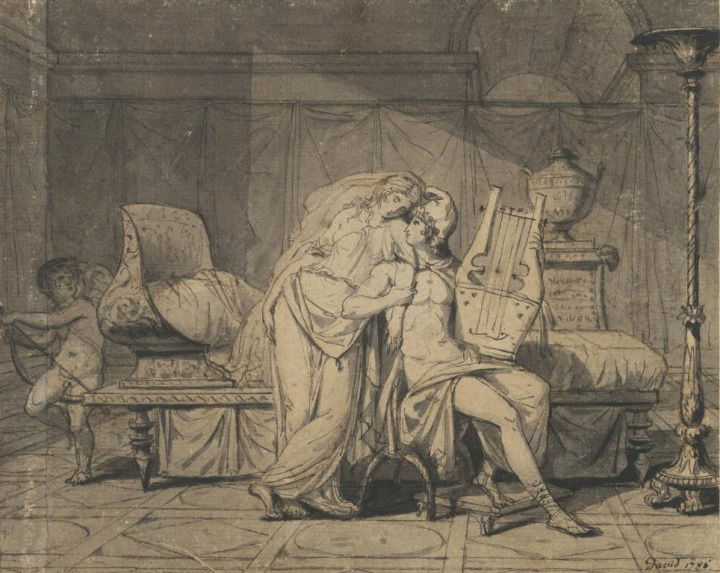
Jacques-Louis David, Paris and Helen, 7 x 9 inches, 1786
(Los Angeles: The Getty, 83.GA.192)
◊ ◊ ◊ ◊ ◊
The stories involving the mythical gods and heroes of Greco-Roman antiquity have inspired artists for centuries, testing their abilities to represent complex narratives in visual form. The likes of Venus and Apollo, Hercules and Achilles, have proved to be particularly rich artistic subjects not only because they had extraordinary qualities―such as beauty, creativity, strength and courage―but also for the imperfections that made these characters even more compelling. Involved in love and lust, rivalry and treachery, crime and punishment, they possessed all the passions and flaws of mere mortals, but on a much larger scale. Featuring a selection of close to 40 drawings dating from the Renaissance to the 19th century, Gods and Heroes: European Drawings of Classical Mythology, on view November 19, 2013–February 9, 2014 at the J. Paul Getty Museum, Getty Center, explores the pictorial representation of myths that have been instrumental in the formation of Western culture.
“The Getty’s collection of drawings provides an almost endless supply of images representing figures from classical mythology,” explains Timothy Potts, director of the J. Paul Getty Museum. “Those chosen for this exhibition bring these myths to life for today’s audience in works of outstanding artistic quality. The exhibition also nicely complements the Museum’s collection at the Getty Villa, which is dedicated to the arts and culture of the ancient Mediterranean. Many of the gods and heroes that will be on view at the Getty Center in this exhibition find their counterparts in ancient representations there.”
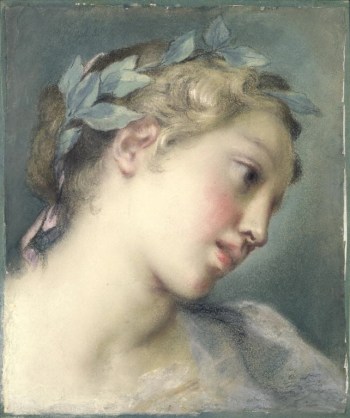
Rosalba Carriera, A Muse, 12 x 10 inches, mid-1720s
(Los Angeles: The Getty, 2003.17)
Depending on when and where they worked, artists have approached mythical figures very differently, sometimes treating them as pretexts for visual experimentation. Consistently, these subjects have provided artists with the opportunity to demonstrate their ability to render human anatomy. While Agostino Carracci’s Triton Blowing a Conch Shell (1600) was made in preparation for an elaborate frescoed scene on the vault of Palazzo Farnese in Rome, the drawing stands alone as a powerful depiction of the triton’s twisting body, which is depicted with striking illusionism. In a subtle display of skill, Rosalba Carriera’s Muse (mid-1720s) exemplifies the artist’s mastery of the pastel technique, which is most evident in the rendering of the young woman’s ivory skin, flushed cheeks, and rosy lips. By contrast, Gustave Courbet used a tonal medium to represent the Head of a Sleeping Bacchante (1847). His smudged, painterly application of charcoal suggests the heaviness of the subject’s slumber.
Themes of love and lust are common in classical myths, as shown by Agostino Carracci’s drawing of Cupid Overpowering Pan (about 1590). In accord with the Roman poet Virgil’s statement that “love conquers all,” Cupid, symbolic of virtuous love, is shown subduing Pan, the embodiment of carnal desire. Cupid’s crucial role in matters of love is, by comparison, merely hinted at in Jacques-Louis David’s Paris and Helen (1786). According to legend, the Trojan prince Paris abducted the Spartan princess Helen, but she fell in love with him after Cupid shot her with an arrow of desire―events that led to the Trojan War. As for mortals, love was no easy thing for mythological figures; indeed, it often ended in tragedy.
The world of gods and heroes could also be a violent one, and drawings such as those depicting the labors of Hercules, attest to this. Hercules had to perform twelve feats as punishment for having killed his wife and children in a fit of temporary insanity. Giulio Romano’s Hercules Resting after Killing the Hydra (about 1535) shows the hero with an unusually lanky body, exhausted after he has killed the Hydra of Lerna, a multiheaded water serpent that was wreaking havoc. Victorious yet weary, Hercules rests on a large rock, with bits of the slain monster lying around him on the ground. For his part, Gustave Moreau represents another of Hercules’s labors, namely when the hero had to capture the flesh-eating mares of Diomedes, the evil king of Thrace. Hercules, having succeeded in seizing the animals, feeds Diomedes’s body to his own horses. Moreau situated the atrocious episode in a dim setting that offsets the brilliant tones of the delicately executed watercolor―a refined technique that could hardly be in starker contrast with the gory nature of the subject it serves to represent.
“This exhibition showcases a beautiful and highly interesting part of the Getty drawings collection in a meaningful way that invites the viewer to explore the fascinating world of Greco-Roman mythology and its artistic representations,” says Edouard Kopp, associate curator of drawings at the J. Paul Getty Museum and curator of the exhibition.
The illustrated checklist is available as a PDF file here»
Exhibition | The Tapestry Collection of the Petit Palais
Now on view in Nancy, as noted at Arachné, a research group blog dedicated to tapestries:
Chefs-d’œuvre de la tapisserie: La collection du Petit Palais, Paris
Nancy, Musée des Beaux-Arts, 25 October 2013 — 27 January 2014
Curated by Charles Villeneuve de Janti and Patrick Lemasson
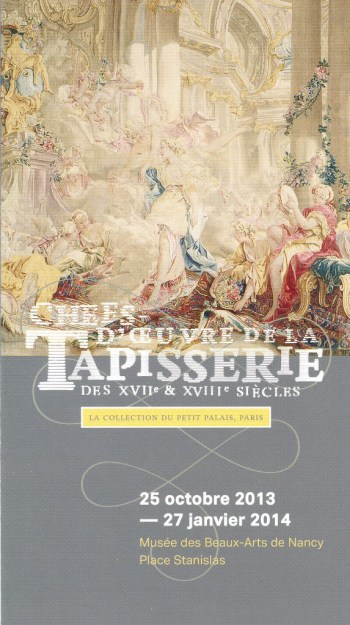 Le Petit Palais, Musée des Beaux-Arts de la Ville de Paris, possède l’une des plus belles collections de tapisseries des XVIIe et XVIIIe siècles. Issues de grandes manufactures européennes, elles furent élaborées et tissées en matériaux précieux d’après les cartons de peintres majeurs tels que Le Brun, Champaigne, Boucher, à l’instar du carton pour La Destruction du Palais d’Armide par Charles Coypel, l’un des chefs-d’œuvre du Musée des Beaux-Arts de Nancy.
Ces œuvres, pouvant mesurer jusqu’à 5 mètres de hauteur, permettront aux visiteurs de découvrir un art de cour spectaculaire faisant écho à celui dévoilé dans l’exposition L’Automne de la Renaissance : d’Arcimboldo à Caravage. Pour des raisons de conservation, ces pièces sont très rarement présentées au public. Ce prêt du Petit Palais constitue donc une faveur exceptionnelle.
Didier Rykner provides a review at La Tribune de l’Art (4 November 2013).
◊ ◊ ◊ ◊ ◊
The catalogue is available from Artbooks.com:
Patrick Lemasson, Chefs d’oeuvres de la Tapisserie: La collection du Petit Palais, Paris (Milan: Silvana, 2013), 72 pages, ISBN: 978-8836627257, $29.
Display | Gainsborough and the Landscape of Refinement
As noted at ArtDaily (2 December 2013) . . .
Master Drawings New York | Gainsborough and the Landscape of Refinement
Lowell Libson at Mitchell-Innes & Nash, New York, 24 January — 1 February 2014

Thomas Gainsborough, Figures Resting in Woodland Landscape, signed 1784, 232 x 291 (Lowell Libson)
The exhibition is centered round a group of landscape drawings made by Gainsborough in the last two decades of his life but includes twelve drawings by Gainsborough spanning the full length of his career, from Gainsborough’s earliest recorded landscape study—completed when the artist was only 18—to a preparatory drawing for one of his last ‘Fancy pictures’ A Boy with a Cat, now in the Metropolitan Museum of Art in New York, which was completed the year before his death. Three of the drawings are previously unpublished and exhibited to the public for the first time here.
Thomas Gainsborough (1727–1788) was one of the Britain’s greatest artists, famed for his engaging portraits and evocative landscape paintings, he is also universally acknowledged as one of the finest European draughtsman of the eighteenth century. Despite this reputation, there have been very few exhibitions dedicated to Gainsborough’s drawings. These are not topographical works but imagined landscapes which Gainsborough created by drawing models he created using rocks and wood found in his garden and, as one writer noted, ‘distant woods of broccoli.’
Gainsborough was fascinated by a limited number of landscape features—herds of cattle, serpentine roads, clumps of trees and hilly horizons—often obsessively playing with these features time and time again, each time creating completely new works. This creative repetition—or refinement—was given expression in Gainsborough’s fascination with different techniques.
No two drawings in the exhibition are handled in the same way as Gainsborough explored different combinations of chalks, pencil, ink washes and watercolour in each work. Many of the drawings in the exhibition have provenances stretching back to the eighteenth century, one is inscribed as a present from ‘the ingenious artist’ to the daughter of a friend, another was in the collection of the celebrated surgeon, Dr John Hunter, who treated Gainsborough in his final illness. This group is the largest concentration of Gainsborough drawings to be offered by an art gallery since the celebrated exhibition mounted by Knoedler in 1914. It is accompanied by a fully illustrated catalogue with scholarly entries written by the leading Gainsborough authority, Hugh Belsey.
The exhibition is free and open daily from Friday 24 January to Saturday 1 February, 2014 Mitchell-Innes & Nash, 1018 Madison Avenue, New York. Monday to Saturday, 11–6; Sunday, January 26, 2–6; Tuesday, 28 and Thursday, 30 January, 11–8.
◊ ◊ ◊ ◊ ◊
Press release (15 August 2013) from Master Drawings New York:
Master Drawings New York
New York, 25 January — 1 February 2014

◊ ◊ ◊ ◊ ◊
In a fifteen block stretch of the Upper East Side’s ‘Gold Coast’ in New York, close to 30 of the most acclaimed international dealers in master drawings will show the latest artworks entering the market during the eighth edition of Master Drawings New York, January 25th through February 1, 2014 with a Preview Friday January 24th from 4 to 8pm. Timed to coincide with New York’s major January art-buying events, including the Old Master auctions and The Winter Antiques Show, Master Drawings New York includes top dealers from the US as well as the UK, France, Germany, Spain, and Italy. Originally conceived as an annual walkthrough, Master Drawings New York has grown into a ‘must see’ event with a number of New York dealers making their galleries available to their overseas colleagues for the week. (more…)
Exhibition | Precious Antiquities: The Profane Museum
From the Vatican Museums:
Precious Antiquities: The Profane Museum at the Time of Pius VI
Room of the Aldobrandini Wedding, Vatican Museums, Rome, 2 October 2013 — 4 January 2014
Curated by Guido Cornini and Claudia Lega
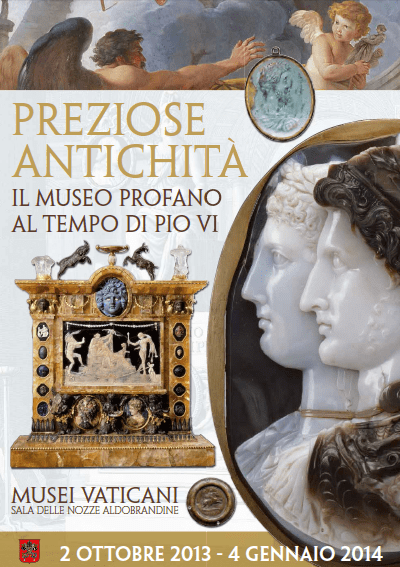 For the first time in over two hundred years, an exhibition will bring back to life in the Vatican the charm of the eighteenth-century collections of the Profane Museums at the time of Pius VI, before the Napoleonic requisitions. It offers a unique opportunity to see reunited, in their original museum context, works previously exhibited in the Museum and now conserved in prestigious international cultural institutions. The exhibition will open simultaneously with the new display of the historical collections of the Profane Museum.
The Profane Museum, the original nucleus of the collections of profane antiquities in the future complex of the Vatican Museums, was created by Clement XIII (Rezzonico, 1758–1769) and enriched with further collections and furnishings under Pius VI (Braschi, 1775–1799). The conclusion of this demanding restoration project, which involved the entire collection and its context, is an opportunity to imagine a momentary “homecoming” of a nucleus of antique gems and cameos, mounted in elaborate Neoclassical settings at the end of the eighteenth century, and a valuable numismatic collection of Greek, Etruscan and Roman exemplars. Involved in the dramatic wartime events of the Napoleonic period, these works were transported to France as a war indemnity following the assassination of General Mathurin-Léonard Duphot in Rome in 1798.
Curated by Guido Cornini and Claudia Lega, curator and assistant in the Department of Decorative Arts of the Vatican Museums, the exhibition Precious Antiquities: The Profane Museum at the Time of Pius VI – presented in the evocative surroundings of the Room of the Aldobrandini Wedding – displays for the first time in over two hundred years works such as the Augustus Group, with its splendid portrait of the emperor in chalcedony, the famous Carpegna Cameo of magnificently engraved onyx depicting the Triumph of Bacchus, the “Delle Paste” Group, with a glass cameo pinax depicting the loves of Bacchus and Ariadne, and other Groups and cameos masterfully reinterpreted and infused with new life by Luigi Valadier, celebrated silversmith in Rome at the time of Pius VI. (more…)
Exhibition | Antonio Canova: The Seven Last Works
From The Met:
Antonio Canova: The Seven Last Works
Gallerie d’Italia, Milan, 4 October 2013 — 6 January 2014
The Metropolitan Museum of Art, New York, 22 January — 27 April 2014
Curated by Fernando Mazzocca and Matteo Ceriana
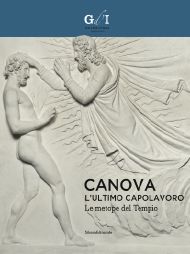 Antonio Canova (1757–1822), the greatest of all neoclassical sculptors, remains famous above all for the elegant nude mythological subjects that he carved exquisitely in marble. But he also worked in a deeply serious, deceptively simple style. This less familiar Canova is revealed in an extraordinary series of full-scale plaster models illustrating episodes from the Old and New Testaments. Such models, used to review his compositions before they were transferred into stone, were a distinctive feature of his sculptural practice. These Biblical scenes were made in connection with a project for 32 low reliefs that were to adorn the Tempio Canoviano, the church in his home town Possagno, which later became the artist’s mausoleum. He completed only seven models before his death. Six come from the Gallerie dell’Accademia in Venice, and one from the Gipsoteca in Possagno. Newly restored, they will all be lent for the first time to the United States. Drawing inspiration from ancient sculpture and early Renaissance masters, the models are striking for the marked linearity of the figures, arranged in brilliantly syncopated compositions. They constitute Canova’s last, profoundly moving masterworks.
◊ ◊ ◊ ◊ ◊
From the Gallerie d’Italia:
Canova. L’ultimo capolavoro. Le metope del Tempio
Gallerie d’Italia, Milan, 4 October 2013 — 6 January 2014
The Metropolitan Museum of Art, New York, 22 January — 27 April 2014
a cura di Fernando Mazzocca e Matteo Ceriana
L’esposizione è organizzata da Intesa Sanpaolo in partnership con la Soprintendenza Speciale PSAE e per il Polo Museale della città di Venezia e dei Comuni della Gronda lagunare e in collaborazione con la Fondazione Cariplo. Aperta al pubblico nella sede milanese fino al 6 gennaio 2014, la mostra sarà ospitata al Metropolitan Museum of Art di New York dal 20 gennaio al 27 aprile 2014.
Il recente restauro di sei bassorilievi in gesso conservati presso le Gallerie dell’Accademia di Venezia, ispirati a episodi dell’Antico e del Nuovo Testamento, e lo studio dei documenti ad essi relativi hanno portato alla luce opere di grande valore storico. Sono infatti state identificate nelle opere restaurate i modelli originali per le prime delle trentadue metope – i pannelli decorativi destinati a ritmare il fregio dorico – che Antonio Canova, moderno Fidia, intendeva realizzare per il pronao del Tempio della natia Possagno, l’edificio maestoso da lui stesso progettato ispirandosi all’architettura del Partenone e del Pantheon.
Lo scultore iniziò a lavorare ai modelli delle metope nel dicembre del 1821; ai primi di aprile del 1822 ne erano stati eseguiti sette, subito inviati dallo studio di Roma all’Accademia di Venezia, perché altrettanti scultori, scelti tra i migliori allievi dell’Accademia stessa, iniziassero a realizzarne la versione in marmo. La morte, sopraggiunta il 13 ottobre 1822, impedì allo scultore di portare a compimento il progetto. Insieme ai sei bassorilievi del Tempio, sono in mostra sette disegni preparatori, provenienti dal Museo Civico di Bassano del Grappa, in stretta relazione alle metope stesse, che testimoniano il costante interesse di Canova per i temi biblici e cristiani, così come il suo studio dei Primitivi.
Completano l’esposizione due esemplari, provenienti dalla Biblioteca Braidense, dell’Atlante illustrato della Storia della scultura (1813–1818 e 1822–1824) di Leopoldo Cicognara, storico dell’arte e amico di Canova: una fonte importante che permette di contestualizzare meglio il confronto con il Medioevo e il primo Rinascimento. Uno dei sette modelli delle metope, andato purtroppo perduto, viene rappresentato in mostra dal bassorilievo proveniente dalla Gipsoteca Antonio Canova di Possagno, appartenente ad una serie eseguita dai seguaci dell’opera del Maestro.
La mostra trova una sede ideale nelle sale della sezione Da Canova a Boccioni delle Gallerie di Piazza Scala, nelle quali sono esposti i bassorilievi Rezzonico di Collezione Fondazione Cariplo. Tale collocazione consente un confronto diretto – nell’ambito delle opere di Canova con la tecnica del bassorilievo in gesso – tra la produzione giovanile dell’ultimo decennio del Settecento, ispirata all’antichità classica, e opere realizzate prima della morte.
Reviewed | Crossing Borders: Hebrew Manuscripts
While the manuscripts included in this exhibition date from the Middle Ages, there is material pertinent to eighteenth-century collectors, as noted below. And to everyone celebrating Hanukkah (which, of course, most unusually coincides this year with the American Thanksgiving), a very happy holiday! -CH
From caa.reviews:
Piet van Boxel and Sabine Arndt, eds. Crossing Borders: Hebrew Manuscripts as a Meeting-place of Cultures, exhibition catalogue (Oxford: Bodleian Library, University of Oxford, 2010), 128 pages, ISBN: 978-1851243136, £25.
Exhibition schedule: Jewish Museum, New York, 14 September 2012 — 3 February 2013
Reviewed by Barbara Drake Boehm and Melanie Holcomb; posted 20 November 2013.
Illuminated manuscripts offer the best-surviving evidence of Jewish artistic production in the Middle Ages, bearing witness to the tastes of their Jewish patrons, the skills of Jewish scribes, and the aesthetic acuity of Jewish readers and viewers. Jews did not live in isolation, and the artists responsible for the decoration of their books—who were not necessarily Jewish but may have been—both drew from and contributed to the artistic conventions of the dominant culture. ‘Crossing Borders: Manuscripts from the Bodleian Libraries’, an exhibition held at the Jewish Museum in New York in 2012–13 and online via the Jewish museum website, provided an opportunity not only to see important, often beautiful examples of rarely shown Hebrew manuscripts, but also to explore the fascinating, complex intellectual and cultural relations between Jews and non-Jews of medieval Europe.
The full review is available here» (CAA membership required)
◊ ◊ ◊ ◊ ◊
From the exhibition website:
Jan Jiri Baltzer (1738–99), Posthumous Portrait of David Ben Abraham Oppenheimer, Chief Rabbi of Prague, 1773
Engraving after Johann Kleinhard, 7 3/4 x 4 3/8 in. (19.5 x 11.1 cm), The Jewish Museum, New York Gift of Dr. Harry G. Friedman, F 4143
 The collection of Rabbi David Oppenheimer (1664–1736) is his most significant legacy. His more than 780 manuscripts and 4,200 printed books in Hebrew, Yiddish, and Aramaic form perhaps the most important private Jewish library ever assembled. For most of his life he was unable to enjoy this treasure, keeping the works at his father-in-law’s home in Hanover to avoid the censorship imposed on Hebrew texts in Prague. After his death, the collection was inherited by a succession of relatives. It was appraised by the Jewish luminary Moses Mendelssohn and ultimately acquired by the Bodleian in 1829.
◊ ◊ ◊ ◊ ◊
A recently discovered Passover Haggadah commissioned in 1726 by one of David Oppenheimer’s relatives sold, incidentally, last week (22 November 2013) for £210,000.
Exhibition | Giacomo Ceruti: On the Eve of the Enlightenment
Press release from Robilant-Voena:
Giacomo Ceruti (1698–1767): Popolo e nobiltà alla vigilia dell’età dei lumi
Robilant-Voena, Milan, 30 October — 13 December 2013
Curated by Francesco Frangi and Alessandro Morandotti
 Robilant-Voena presenta nella sua sede milanese una mostra che indaga uno dei più grandi artisti del Settecento italiano: Giacomo Ceruti. Nell’occasione sarà possibile apprezzare un cospicuo nucleo di opere di questo protagonista della “pittura della realtà” lombarda, riscoperto a partire dagli anni venti del Novecento per merito degli studi di Roberto Longhi, Giuseppe Delogu, Giovanni Testori e Mina Gregori. Grazie ai prestiti di importanti collezioni private di formazione antica o recente, la mostra affiancherà a dipinti già noti da tempo, alcune tele finora sconosciute, che contribuiranno a mettere a fuoco i diversi aspetti del linguaggio di questo formidabile pittore.
Nato a Milano e precocemente trasferitosi a Brescia, Ceruti è infatti una personalità dal percorso articolato, che in una prima fase della sua carriera seppe imporsi come ritrattista dai vigorosi accenti realistici e soprattutto come attento indagatore della vita quotidiana delle classi sociali più disagiate. Molto spesso, infatti, le opere che l’artista realizza tra gli anni venti e i primi anni trenta del Settecento per la nobiltà bresciana hanno come protagonisti i cosiddetti pitocchi: mendicanti, vagabondi, filatrici, contadini e artigiani. Un mondo di emarginati e di umili lavoratori che, a differenza di quanto era avvenuto nella pittura dei decenni precedenti, Ceruti mette in scena senza ironia, conferendo anzi ai protagonisti una solenne dignità, cui contribuisce il formato monumentale dei dipinti. Questa propensione raggiunge i più alti risultati nel famoso ciclo di Padernello, la serie di tele pauperistiche che sancì la riscoperta dell’artista a partire dagli anni venti del Novecento.
Verso la metà degli anni trenta del Settecento Ceruti si sposta in terra veneta, lavorando tra Padova e Venezia dove ottenne importanti commissioni da uno dei più illustri collezionisti del tempo, il maresciallo Matthias von der Schulenburg. Il confronto con la cultura figurativa lagunare segna una cesura nel percorso di Ceruti, le cui conseguenze si faranno sentire per tutto il seguito della carriera dell’artista che, fatta eccezione per un soggiorno a Piacenza nel corso degli anni quaranta, si svolgerà in prevalenza a Milano, dove Ceruti morirà nel 1767.
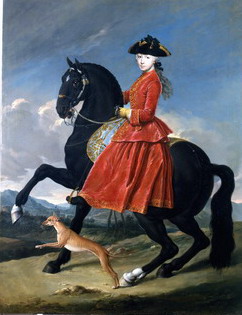
In questa sua seconda stagione il pittore dimostra di privilegiare un linguaggio più elegante e raffinato, aggiornato sulle mode della coeva cultura figurativa europea. Così i suoi ritratti perdono la ruvida dimensione naturalistica degli anni giovanili per acquisire un tono mondano e internazionale, bene esemplificato in mostra dal Ritratto del Marchese Orsini a cavallo, proveniente dalla villa Orsini di Mombello di Imbersago. Lo stesso avviene per le scene di tema popolare, che sostituiscono ai toni drammatici degli esordi un registro più rasserenato, di cui è testimonianza l’idillio sentimentale rappresentato nell’Incontro al pozzo già parte della decorazione di palazzo Busseti a Tortona. Notevole è poi la serie di teste di carattere (Ritratto di fumatore in costume orientale; Vecchio con gatto; Vecchio con colbacco e cane) che fanno di Ceruti un grande interprete di quel genere pittorico mondano (e tipicamente settecentesco) molto amato a Venezia e in Francia. Questi trapassi stilistici lasciano comunque inalterato il dato saliente della poetica cerutiana, da riconoscere nella capacità di restituire le diverse realtà del proprio mondo con uno sguardo schietto e disincantato; una lucida razionalità di osservazione che rende Ceruti perfettamente in linea con la sensibilità dell’età dei lumi che si andava allora diffondendo in tutta Europa.
◊ ◊ ◊ ◊ ◊
Published by Skira, the catalogue is available from Artbooks.com:
Francesco Frangi and Alessandro Morandotti, Giacomo Ceruti (1698–1767): Popolo e nobiltà alla vigilia dell’età dei lumi (Milan: Skira, 2013), 96 pages, ISBN: 978-8857222547, $75. Italian text with English insert.
 Artista di spicco del Settecento italiano, Giacomo Ceruti detto “il Pitocchetto” è un importante protagonista della “pittura della realtà” lombarda, riscoperto a partire dagli anni venti del Novecento per merito degli studi di Roberto Longhi, Giuseppe Delogu, Giovanni Testori e Mina Gregori. Questo catalogo, che accompagna l’esposizione milanese, ripercorre la carriera artistica di Ceruti, a partire dagli anni bresciani, spesi sul binario di una ricerca realista, fino agli anni veneti e milanesi, quando il suo linguaggio diventa internazionale, e i pitocchi lasciano spazio ai ritratti nobiliari e alle teste di fantasia. Attraverso ventiquattro opere provenienti da prestigiose collezioni private oltre che dal patrimonio della galleria (alcune delle quali completamente sconosciute al pubblico e riscoperte in occasione della mostra), si vuole indagare questa dicotomia dell’opera di Ceruti, dove la realtà declinata nei suoi aspetti più poveri, fatta di storpi e mendicanti, stracci e polvere, si contrappone a un’eleganza di gusto internazionale, nella quale trionfano velluti e marsine.
Exhibition | Cleopatra’s Needle
Press release (20 November 2013) from The Met:
Cleopatra’s Needle
The Metropolitan Museum of Art, New York, 3 December 2013 — 8 June 2014
Curated by Diana Craig Patch with Dieter Arnol and Janice Kamrin
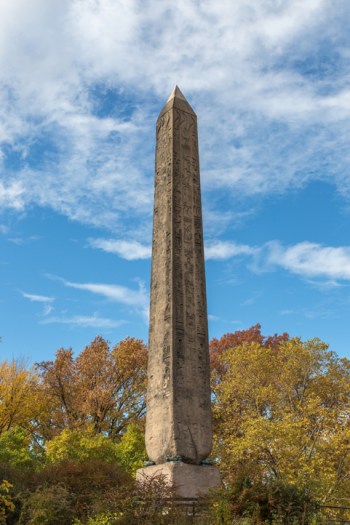 Since 1881, an ancient Egyptian monument—the obelisk of Pharaoh Thutmose III, popularly known as “Cleopatra’s Needle”—has stood in New York’s Central Park, a gift to the City of New York from the khedives of Egypt. It is the only monumental obelisk from ancient Egypt in the United States. The obelisk can be seen from several vantage points within The Metropolitan Museum of Art, which is located nearby. As the Central Park Conservancy begins to develop a plan to conserve the monument, the Metropolitan Museum will present an exhibition about the construction and evolving symbolism of obelisks from antiquity to the present day.
Cleopatra’s Needle will feature objects from the Museum’s Egyptian Art Department and a selection of prints, textiles, and other works of art from the departments of Drawings and Prints, European Paintings, European Sculpture and Decorative Arts, Photographs, and The American Wing. Nine additional works from the Brooklyn Museum, American Numismatic Society, Chancellor Robert R Livingston Masonic Library of Grand Lodge, Museum of the City of New York, Cooper-Hewitt National Design Museum, and private collections, most of which are seldom on display, will also be included. A highlight of the installation will be a dramatic time-lapse video of the obelisk in Central Park taken during the course of a day.
Obelisks originated in ancient Egypt and—like statues—were intended to house divine powers, even the spirit of a king or god. They were placed at the entrance of temples and tombs, where their presence was believed to radiate protection. The obelisk was a solar symbol and its soaring form connected the earth to the sky. Its tip, often sheathed in gold to suggest the sun, was a pyramidion, a shape sacred to Re, the sun god. The exhibition will include a five-foot-high obelisk from the entrance to an ancient Egyptian mortuary chapel devoted to sacred rams.
The obelisk in Central Park is one of a pair—each of which has come to be called “Cleopatra’s Needle”—originally installed by Thutmose III (r. ca. 1479–1425 B.C.) in front of the sun temple in Heliopolis, the ancient Egyptian city dedicated to the sun god Re. Over time, both obelisks toppled. Discoloration indicates that they may have also been burned in antiquity, and that exposure to the elements eroded some of the hieroglyphs. Augustus Caesar (63 B.C.–14 A.D.) took the two obelisks to Alexandria and installed them at the Caesareum, the temple built by Cleopatra VII to honor the deified Julius Caesar. (This episode may explain how the name of Cleopatra became attached to these two obelisks.) The Romans recognized the solar imagery of obelisks and connected them to their own sun god, Sol. For Augustus, the link may have been personal as well, since Apollo, another Roman sun god, was his patron deity. Included in the exhibition will be a late 16th-century map and a late 17th-century Dutch watercolor, both showing the obelisk standing in Alexandria.
Egypt became a province of Rome under Augustus Caesar, and many artifacts—including numerous obelisks—were taken from Egypt to Rome. Some four centuries later, when Rome was sacked and the Roman Empire fell, all but one of the obelisks toppled, victims of vandalism or earthquakes, and were buried and forgotten.

Giovanni Battista Piranesi, The Piazza della Rotonda, with the Pantheon and Obelisk (Veduta della Piazza della Rotonda), etching,
ca. 1751 (New York: The Metropolitan Museum of Art)
The rediscovery of these objects during the Renaissance renewed popular interest in antiquities. Several popes organized new building projects in Rome around the ancient Egyptian monuments. There, obelisks were often placed at the center of public squares, such as the one in front of St. Peter’s Basilica. Domenico Fontana (1543–1607), an engineer in the service of Pope Sixtus V, raised at least four obelisks in public places. Through this connection with the Vatican, the obelisk became a symbol of eternal papal power. The exhibition will include drawings by Giovanni Battista Piranesi (1720–1778) that show obelisks in the Piazza della Rotonda and Piazza del Popolo.
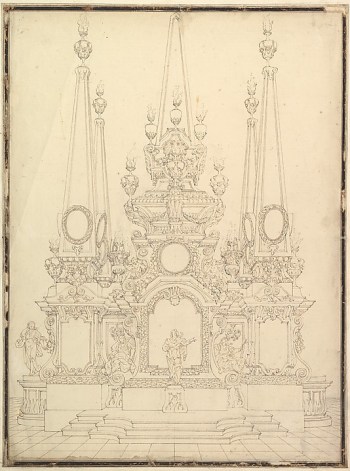
Workshop of Giuseppe Galli Bibiena, Elevation of a Catafalque: Four Large Obelisks at the Corners with Large one Surmounting the Top, drawing, ca. 1720–40 (New York: Metropolitan Museum of Art)
Obelisks continued to be regarded as powerful symbols of an ancient civilization, and scholars in Europe began to study their inscriptions in the 16th and 17th centuries to understand the secret knowledge they believed obelisks held. The monuments were used in drawings and paintings to indicate a connection to antiquity, establish a harmonious landscape, or communicate the concept of eternity. Not only were obelisks used in landscape scenes—as in the drawings of Rembrandt or Francesco Guardi on view in the exhibition—but also in actual funerary monuments where the connection to eternity was most important. An example is the catafalque designs of the Italian theatrical designer Giuseppe Galli Bibiena (1696–1757).
The association between obelisks and eternity remained widely accepted, and obelisk forms began to be used as tomb markers in the early 18th century in America. A silk painting by a Connecticut schoolgirl shows such a tomb marker. The obelisk form also became a popular for war memorials, as recorded in a photograph of the General William Jenkins Worth Monument located on Fifth Avenue in New York City.

Ferdinando Galli Bibiena, Design for a Stage Set: Semi-Circular Architectural Ruins, Fountains, and an Obelisk, drawing (New York: Metropolitan Museum of Art)
In the late 19th century, after Khedive Ismail offered the United States the obelisk of Thutmose III as a gift, U.S. Navy engineer Lieutenant-Commander Henry Honeychurch Gorringe (1841–1885) was charged with the task of transporting the monument to New York and installing it in Central Park. He studied drawings made of Fontana’s earlier work—one of which will be on display—to learn how the feat had been accomplished in earlier times. Gorringe successfully lowered the obelisk in Alexandria, Egypt and loaded it after some difficulty into the hold of his ship the S.S. Dessoug.
Unloading the monument in New York was no easy task. It took nearly six months to move the obelisk from the dock in Staten Island to the East River at 96th Street, and finally to Central Park. On October 9, 1880, a crowd of 9,000 Freemasons led a parade to Central Park for a cornerstone ceremony for the foundation platform of the obelisk, which had also been brought from Egypt. The baton carried in that parade by the Grand Secretary of the New York Grand Lodge Edward M. L. Ehlers will be on view in the exhibition. On January 22, 1881, after months of effort, the obelisk reached its destination, Greywacke Knoll in Central Park. Gorringe carried out his task perfectly and the obelisk rose into position. He received a gold medal to commemorate his amazing feat.
Exhibition Credits
The exhibition was organized by Diana Craig Patch, Lila Acheson Wallace Curator in Charge, with Dieter Arnold, Curator, and Janice Kamrin, Associate Curator, of the Museum’s Egyptian Art Department. Exhibition design is by Brian Cha, Exhibition Design Associate; graphics are by Constance Norkin, Graphic Design Manager, with James Vetterlein, Associate Graphic Designer; lighting is by Clint Ross Coller and Richard Lichte, Lighting Design Managers, all of the Museum’s Design Department. The exhibition is made possible by Dorothy and Lewis B. Cullman.










 Enfilade
leave a comment