Exhibition: Kolbe’s Fantastic Flora
From the Kunsthaus Zürich website:
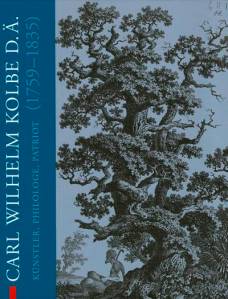
Giant Herbs and Monster Trees: Drawings and Prints by Carl Wilhelm Kolbe
Anhaltische Gemäldegalerie, Dessau, 28 November 2009 — 31 January 2010
Städtische Galerie in der Reithalle Schloß Neuhaus, Paderborn, 24 April — 13 June 2010
Kunsthaus Zürich, 10 September — 28 November 2010
ISBN: 978-3865685179, $89.50
C.W. Kolbe (1759–1835) is one of the most intriguing figures in German art at the turn of the 19th century. With his fantastical, almost surreal landscapes featuring woods and marshes, Kolbe exerted a considerable (albeit long underestimated) influence on the graphic arts between Sturm und Drang and Romanticism. Kolbe, who did research in linguistics in addition to his artistic career, was born in Berlin and spent much of his life in Dessau. From 1805 to 1808 he lived in Zurich, where he produced engravings based on aquarelle gouaches by the late Salomon Gessner, celebrated at the time as a painter and poet.
As a souvenir of his time by the banks of the Limmat, where he had learned of the collapse of the ‘Holy Roman Empire of the German Nation’, he presented the Künstlergesellschaft with the drawing of the trunk of a dead willow tree. Kolbe’s renderings of trees are a wholesale product of his
imagination, and the fear of radical change lurks in his Arcadian fantasies.
Exhibition: ‘Italy Observed’ at the Met
Press release from the Met:
Italy Observed: Views and Souvenirs, 1706-1899
Metropolitan Museum of Art, New York, 12 October 2010 — 2 January 2011
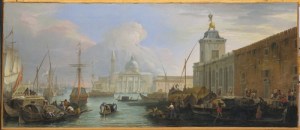
Luca Carlevaris, "The Bacino, Venice, with the Dogana and a Distant View of the Isola di San Giorgio," ca. 1709 (New York: Metropolitan Museum of Art, Robert Lehman Collection)
In the 18th century, privileged Europeans embarked on the Grand Tour, traveling principally to sites in Italy, where they visited cherished ruins of the ancient world and the splendid architecture of the Renaissance and Baroque eras. The influx of these travelers to destinations north and south – Venice, Rome, and Naples in particular – led to a flowering of topographical paintings, drawings, and prints by native Italians serving a foreign market eager to return home with pictures and souvenirs.

Italian Fan with view of the Roman Colosseum flanked by grotesques and landscapes, late 18th-century. Paint on parchment (New York: Metropolitan Museum of Art)
Italy Observed: Views and Souvenirs, 1706-1899, currently on view at the Metropolitan Museum through January 2, 2011, showcases a selection of the rich holdings of Italian vedute (views) collected by Robert Lehman. From paintings of Venetian life by Luca Carlevaris to a Neapolitan album of gouache drawings documenting the eruption of Vesuvius in 1794 to sketches and watercolors of Italian antiquities, the installation captures the artist’s romantic attraction to Italy and its irresistible Roman heritage. It also includes various marketed souvenirs—exquisite fans, spoons, teapots, and pocket watches—on loan from the Museum’s Department of European Sculpture and Decorative Arts.
The exhibition is divided into three sections: Venice, Rome, and Naples. The British elite constituted the largest percentage of Grand Tourists, and their fascination with Venice and its surrounding landscapes fueled the vedute market. Artists like Luca Carlevaris, Canaletto, Bernardo Bellotto, and Francesco Guardi produced vedute of the Venetian Grand Canal. In Rome, wealthy aristocrats commissioned artists such as Pompeo Batoni to paint their portraits surrounded by imagery of the Coliseum, Palatine Hill, Saint Peter’s Basilica and other emblematic souvenirs of the Grand Tourist culture. And in Naples, the picturesque Bay of Sorrento, Mount Vesuvius, and Pompeian frescoes inspired a prosperous trade in affordable mementos to foreign visitors in port. The spectacular eruptions of Mount Vesuvius were particularly popular, and found expression on porcelain, fans, and even pocket watches. The installation combines the rich artistic tradition of Canaletto and his contemporaries with marketed souvenirs adapting the same iconic monuments as keepsakes. (more…)
Current Issue of ‘Eighteenth-Century Studies’
Selections from Eighteenth-Century Studies 44 (Fall 2010):
- Lisa L. Moore, “Exhibition Review: Mary Delany and Her Circle, in the Museum and on the Page,” pp. 99-104.
- Yuriko Jackall, “Exhibition Review: Jean Raoux, 1677-1734,” pp. 104-111.
- Katherine Arpen, “Review of Thomas Kavanagh’s Enlightened Pleasures: Eighteenth-Century France and the New Epicureanism (Yale UP, 2010),” pp. 136-38.
Exhibition: ‘Cultural Exchange’ at Boston’s MFA
From the MFA website:
Luxuries from Japan: Cultural Exchange in the 17th and 18th Centuries
Museum of Fine Arts, Boston, 30 September 2009 — 17 January 2011

"Dutchman on a Barrel," Japanese, Edo period, ca. 1675-1699, 14 inches high
More than 400 years ago, Japan forged strong trading partnerships with China and the West, and Japan’s lacquer and porcelains were among the most sought-after luxuries in the world. Although Japan largely closed itself to the West around 1640 to preserve domestic stability, Chinese and Dutch merchants were allowed to trade goods through a network that extended down the Asian coast to Islamic ports, around Africa, and then to Europe.
The Japanese frequently created items specifically tailored to aristocratic European tastes for ornamentation in royal palaces and stately homes—exquisite blue-and-white and enameled porcelains, as well as sumptuous mother-of-pearl inlaid lacquers. However, Japan also imported luxuries. Practitioners of chanoyu (popularly known as the tea ceremony), for example, treasured ceramics and textiles from China, Korea, Vietnam, and Southeast Asia. Presenting works from several private collections and from the Museum’s own holdings, Luxuries from Japan explores these dynamic intercultural exchanges that shaped the creation of Japanese works of art
during the seventeenth and eighteenth century.
Exhibition: British Soldiers in India
Press release from the National Army Museum:
Indian Armies, Indian Art: Soldiers, Collectors, and Artists 1780-1880
National Army Museum, London, 19 May — 1 November 2010

"Bengal Army Troops," watercolor on European paper by a Company artist, ca. 1785 (London: National Army Museum).
An ivory chess set, watercolours of Indian soldiers, and miniature paintings presented by Maharaja Ranjit Singh will form part of the National Army Museum’s exhibition Indian Armies, Indian Art: Soldiers, Collectors, and Artists which explores the story of the soldiers serving the British in India. The exhibition looks at the period of East India Company rule in India and the early years of British colonial rule. British and Indian cultures merged and co-existed for many years, which can be seen in the multi- ethnic and multi-faith armies of the East India Company. The watercolours, intricate sculptures and miniature paintings that will be exhibited were created by local artists, usually for a European audience, and reveal the fascination many British officers had for aspects of Indian life.
A highlight of the exhibition will be a series of eight paintings commissioned by Colonel James Skinner, an officer of the Bengal Army whose father was Scottish and his mother Rajput. The paintings were commissioned by him to record his life and exploits, from images of a regimental durbar hosted by Skinner to St. James’s church in Delhi, which he built – in addition to a mosque and Hindu temple. Many of the paintings have never been exhibited before, and it will be the first time that the Museum’s collection of Skinner paintings will be displayed together. Other objects in the exhibition with powerful stories to tell include:
- three watercolours from 1885 of the last king of the Konbaung kingdom of Burma, King Thibaw
- two early carved wooden figures of a sepoy of the Madras Army created in 1785 by an Indian craftsman.
- a white metal tiger taken from the palace of Tipu Sultan at Seringapatam at the fall of that city during the fourth Mysore War, 1799
Exhibition curator Pip Dodd said, “The National Army Museum has one of the largest collections relating to the armies of the East India Company and the Indian Army, and this exhibition will be a great opportunity for Museum visitors to learn more about this fascinating and beautiful collection.”
The British East India Company traded in India from 1617 and established Company rule by the eighteenth century. The Company created the Bengal, Madras and Bombay presidencies each with its own army of Indian soldiers and British officers. This rule lasted until 1858, after the Mutiny in the Bengal Army when power was transferred to the British Crown, and the armies of the presidencies were merged to form the British Indian Army. After the Indian Independence act of 1947 and the subsequent partition of India, the British Indian Army was divided between India and Pakistan and British Army units returned to the United Kingdom.
Exhibition: Artists’ Travels to Italy, 1770-1880
Press release from the museum’s website (the catalogue is available through artbooks.com) . . .
Viaggio in Italia: Künstler auf Reisen 1770–1880
Staatliche Kunsthalle Karlsruhe, 11 September — 28 November 2010
 Künstlerreisen nach Italien sind in der Sammlung der Staatlichen Kunsthalle Karlsruhe durch eine immense Fülle von Werken belegt, von denen nun erstmals eine Auswahl vorgestellt wird. „Viaggio in Italia. Künstler auf Reisen 1770 – 1880“ zeigt mehr als 150 Skizzen und Zeichnungen, Aquarelle und Ölstudien, aber auch großformatige Kartons, Gemälde und Druckgraphik. Vor allem Rom als internationales Kunstzentrum zog Künstler aus ganz Europa an und bildete ein Forum für einen regen Austausch unter Malern, Architekten und Bild-hauern. So vereint die Ausstellung unter anderem Werke von Jean-Honoré Fragonard, Joseph Anton Koch, Bertel Thorvaldsen, Julius Schnorr von Carolsfeld, Carl Blechen, Camille Corot, Johann Wilhelm Schirmer, Arnold Böcklin und Anselm Feuerbach.
Den Schwerpunkt der Ausstellung bilden Landschaftsmotive. Sie beginnt mit einigen Arbeiten französischer Künstler wie Claude Lorrain, Hubert Robert und Jean-Honoré Fragonard. Die jungen Stipendiaten der französischen Akademie in Rom durchstreiften die Campagna in der Nachfolge Lorrains, um zu zeichnen. Künstler wie Fragonard suchten nicht die unberührte, sondern die kultivierte Natur in Form von Parklandschaften, die sich als Kulisse für amouröse und gesellige Szenen eignete. Den französischen Werken werden Arbeiten von deutschen Künstlern wie Jakob Philipp Hackert, Wilhelm Friedrich Gmelin und Joseph Anton Koch gegenübergestellt, für die Italien vor allem aufgrund seiner historischen Dimension und seiner geschichtsträchtigen Stätten zum einzigartigen Anziehungspunkt wurde. Ihnen fehlte das Sammelbecken einer Akademie, doch knüpften sie vereinzelt Kontakte zu ihren Kollegen aus Frankreich und gründeten eigene Zirkel, in denen sie Ideen austauschten. (more…)
Exhibition on Nicolaas Verkolje
As noted at CODART:
Nicolaas Verkolje (1673-1746): Schilderijen en Tekeningen / Paintings and Drawings
Rijksmuseum Twenthe, Enschede, The Netherlands, 5 February — 12 June 2011

Nicolaas Verkolje, "Orestes and Pylades in Tauris," 1732 (Amsterdam Historical Museum)
The Rijksmuseum Twenthe presents the first ever exhibition on Nicolaas Verkolje (1673-1746) showing around 30 of his most important works. From the museum website, 21 July 2010 . . .
Het museum presenteert het eerste overzicht ooit van het werk van Nicolaas Verkolje (1673-1746) met circa 30 van zijn belangrijkste schilderijen. Nicolaas Verkolje was de zoon van portretschilder Jan Verkolje en een van de interessantste kunstenaars van zijn tijd. In de tentoonstelling zijn historiestukken, portretten en tientallen tekeningen en prenten te zien, waarvan vele uit buitenlandse collecties. Verkolje maakte soms meerdere versies van een thema, die in de tentoonstelling met elkaar vergeleken kunnen worden. Zo hangt een van de hoogtepunten uit zijn oeuvre, Mozes door farao’s dochter gevonden uit het Rijksmuseum Twenthe, naast werken met dezelfde voorstelling uit het Landesmuseum Mainz en de collectie Thyssen-Bornemisza in Lugano.
Reviewed: ‘Compass and Rule’
Recently added to caa.reviews:
Anthony Gerbino and Stephen Johnston, Compass and Rule: Architecture as Mathematical Practice in England, 1500–1700, exhibition catalogue (Oxford and New Haven: Museum of the History of Science, Yale University Press, and Yale Center for British Art, 2009), 192 pages; ISBN: 9780300150933, $65.
Reviewed by Carolyn Y. Yerkes, Ph.D. candidate, Columbia University; posted 13 October 2010.
‘Compass and Rule: Architecture as Mathematical Practice in England, 1500–1750’ tells a story of social class played out in math class. In the exhibition and catalogue, Anthony Gerbino and Stephen Johnston chart the rise of the professional architect in the early modern era by presenting the tools of the trade. Subtitle notwithstanding, ‘Compass and Rule‘ does not focus on architecture itself but rather on architectural drawing, describing the development of drafting techniques and instruments which led to a division between the design and construction phases of building. Although Gerbino and Johnston are not the first scholars to make this argument about the relationship between drawing and professional organization—it was, for example, a focus of Henry Millon and Vittorio Lampugnani’s 1994 exhibition, ‘The Renaissance from Brunelleschi to Michelangelo’—their show added a new twist with its emphasis on the mathematical principles that British architects applied to their work. This differentiates their project from most of the scholarship on architectural drawings, where the main current rarely flows farther north than medieval France or Germany and tends to pool in the Italian Renaissance.
The scope of ‘Compass and Rule’ might strike some as narrow, since a quarter-century of architectural production cannot be viewed through a single lens without a few distortions. Yet the benefits of this approach are clear, as the authors’ willingness to test their thesis with objects brings several obscure issues into sharper focus. . . .
For the full review, click here» (CAA membership required)
Exhibition: Lisiewsky, Court Painter in Anhalt and Mecklenburg
From the Palace of Mosigkau website:
Teure Köpfe: Lisiewsky, Hofmaler in Anhalt und Mecklenburg
Schloss Mosigkau, Dessau Wörlitz, Germany, 29 August — 31 October 2010

Christoph Friedrich Reinhold Lisiewsky, "Portrait of Leopold III. Friedrich Franz von Anhalt-Dessau," 1762
Christoph Friedrich Reinhold Lisiewsky (1725-1794) zählt zu den bedeutendsten Porträtmalern des 18. Jahrhunderts in Deutschland. Als „das Resultat unermesslichen Fleißes und den Triumph der Prosa in der Malerei” bezeichnete sein berühmter Zeitgenosse, der Bildhauer J. G. Schadow, das Werk Lisiewskys. Ob Schadow mit seinem wohl ironisch gemeinten Urteil die künstlerische Leistung richtig einzuschätzen wusste, sei dahin gestellt. In der gemeinsamen Ausstellung der Kulturstiftung DessauWörlitz und dem Staatlichem Museum Schwerin werden erstmals die herausragenden Malqualitäten des Künstlers gewürdigt.
Lisiewsky überzeugt aus heutiger Sicht mit seiner neuartigen, ganz eigenständigen Darstellungsweise auch im Vergleich mit anderen großen Bildnismalern des 18. Jahrhunderts – wie Antoine Pesne zuvor und Anton Graff nach ihm. Seine Porträtauffassung löste sich allmählich von den barocken Stereotypen der Inszenierung und Idealisierung. Durch seinen realistischen, teils naturalistischen Vortrag praktizierte Lisiewsky frühzeitig den Übergang zum Klassizismus. Seine von Porträtierten beschriebene, sorgfältige und aufwendige Arbeitsweise, die brillant ausgearbeitete Stofflichkeit und die genaue Wiedergabe der charakteristischen Physiognomie, Körpervolumina und -haltung, führen zu einer nahezu greifbaren Präsenz des Dargestellten.

Palace of Mosigkau (Wikimedia Commons)
Lisiewsky entstammte einer polnischen Malerfamilie, die mehrere angesehene Mitglieder hervorgebracht hat. Von 1752 bis 1772 war der Künstler als Hofmaler in Dessau tätig. In dieser Zeit führte er auch Bildnisaufträge für einen bürgerlichen Kundenkreis wie Kaufleute, Universitätsprofessoren und Theologen in Berlin und Leipzig aus. 1778 wurde der Porträtmaler an das mecklenburgische Fürstenhaus nach Ludwigslust berufen, wo er 18 Jahre bis zu seinem Tod wirkte.
Information on exhibition programming is available here»
◊ ◊ ◊ ◊ ◊
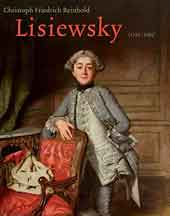 Gert Bartoschek, et al., Christoph Friedrich Reinhold Lisiewsky (1725-1794), exhibition catalogue (Munich: Deutscher Kunstverlag, 2010), 280 pages, ISBN: 9783422070363, $65.
The eighteenth-century painter Christoph Reinhold Friedrich Lisiewsky attained the realistic effect of physical presence in his portraits through a painting method that required many sessions. This richly illustrated catalogue is the first monograph on the painter.
The catalogue is available through artbooks.com.
Messerschmidt Exhibition Now in New York, Then Paris
The Messerschmidt exhibition noted in yesterday’s posting is currently in New York. From the Neue Galerie:
Franz Xaver Messerschmidt, 1736-1783: From Neoclassicism to Expressionism
Neue Galerie, New York, 16 September 2010 — 10 January 2011
Musée du Louvre, Paris, 26 January — 25 April 2011
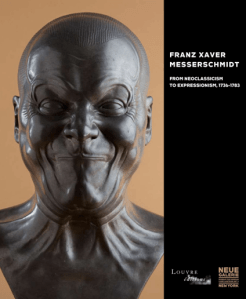
catalogue, ISBN: 9788889854549, $55
Franz Xaver Messerschmidt is the first exhibition in the United States devoted exclusively to this major late 18th-century Bavarian-born Austrian sculptor. It focuses on the artist’s so-called “character heads,” among the most important works of sculpture from their era. The exhibition is organized by Guilhem Scherf, chief curator of sculpture at the Musée du Louvre.
The show will be on view at the Neue Galerie New York from September 16, 2010, to January 10, 2011, then travel to the Louvre, where it will be on view from January 26 to April 25, 2011. This is the first collaboration between the Neue Galerie and the Louvre. It is accompanied by a full-scale catalogue, with essays by Guilhem Scherf, Maria Pötzl-Malikova, Antonia Boström, and Marie-Claude Lambotte.
Messerschmidt made his mark at first in Vienna, where he enjoyed a successful career, including several royal commissions. Working in a neoclassical vein, Messerschmidt produced some of the most important sculptures of the eighteenth century. He presented the individual features of his models in a way “true to nature,” in keeping with their age and without idealizing them. No other sculptor in Vienna at the time was similarly uncompromising when producing portraits.
Around 1770, there was a rupture in Messerschmidt’s life. The artist was thought to have psychological problems, lost his position at the university, and decided to return to Wiesensteig, his native Bavarian town. From that period on, Messerschmidt devoted himself to the creation of his “character heads,” the body of work for which he would become best known. To produce these works, the artist would look into the mirror, pinching his body and contorting his face. He then rendered, with great precision, his distorted expressions. Messerschmidt is known to have produced more than 60 of these astonishing works before he died in 1783 at the age of 47.
Messerschmidt can be seen in relation to artists such as William Blake and Francisco Goya for his explorations of the dark side of the human soul. His “character heads,” in particular, are masterly works of sculpture, whose expressive intensity anticipates several later developments in art. This exhibition will extend the mission of the Neue Galerie, showing the roots of Expressionism and provide for a more complete understanding of the works in the museum collection.
◊ ◊ ◊ ◊ ◊
Willibald Sauerländer writes about “Messerschmidt’s Mad Faces” for The New York Review Blog. His article on the artist will appear in the October 28 issue of The New York Review of Books . . .
Franz Xaver Messerschmidt (1736–1783) is one of those elusive eighteenth-century figures who confront us with the nocturnal side of the enlightenment. In the eyes of his contemporaries, he was not only a madman but also a mad artist. At the same time that he began to withdraw from society, he started to work on the project that would isolate him artistically as well, the Kopfstücke, or “character heads,” in which he concentrated his efforts to depict the passions and emotions of humanity. The trivial titles assigned to them by an anonymous writer ten years after Messerschmidt’s death—Afflicted by Constipation, A Hypocrite and Slanderer, The Incapable Bassoonist—are nothing but an attempt to resist their social illegibility.
The Neue Galerie’s exhibition of no fewer than twenty-one character heads displays the full spectrum of Messerschmidt’s studies of expression. Facial muscles contract, eyes squint, eyebrows rise, mouths contort. These distorted faces are disturbing because we cannot place them in any familiar social setting or assign them to any known psychic condition. . . .
The full essay is available here»










 Enfilade
leave a comment