Exhibition | Flora Yukhnovich and François Boucher
Melissa Hyde contributed to the booklet that accompanies the exhibition; for more information, see Jan Dalley’s review for the Financial Times (14 June 2024).
Flora Yukhnovich and François Boucher: The Language of the Rococo
The Wallace Collection, London, 5 June — 3 November 2024
 This summer discover new works by British artist Flora Yukhnovich (b. 1990) in this free display.
Yukhnovich, celebrated for her large-scale, semi-abstract oil paintings, has given the language of the Rococo new life. Two new paintings by the artist, made in response to two exceptional paintings by the celebrated 18th-century French painter François Boucher (1703–1770), occupy gilt frames at the top of our grand staircase. Boucher’s paintings will be displayed in the Housekeeper’s Room out of their frames, on white walls, like contemporary works of art. Theatrical and tongue-in-cheek, they are prime examples of the Rococo, a decorative and exuberant style favoured across the arts by royal and aristocratic patrons in France and elsewhere from the 1730s. Flora Yukhnovich and François Boucher: The Language of the Rococo prompts visitors to reconsider preconceptions, explore how we can connect with the Rococo today, and examine the impact of display on art interpretation and historical re-evaluation.
Image: Two versions of the exhibition poster are available from The Wallace’s shop; the one pictured here reproduces a detail of Yukhnovich’s 2024 painting Folies Bergère.
The Burlington Magazine, May 2024
From the May issue of The Burlington, which is dedicated to French art — and please note that Yuriko Jackall’s important article is currently available for free, even without a subscription.
Burlington Magazine 166 (May 2024)

Jean-Honoré Fragonard, The Swing, 1767, oil on canvas, 81 × 64 cm (London: Wallace Collection).
a r t i c l e s
• Ludovic Jouvet, “A Medal of the Sun King by Claude I Ballin,” pp. 440–45.
• Yuriko Jackall, “The Swing by Jean-Honoré Fragonard: New Hypotheses,” pp. 446–69.
• Thadeus Dowad, “Dāvūd Gürcü, Ottoman Refugee, and Girodet’s First Mamluk Model,” pp. 479–87.
• Humphrey Wine, “The Paintings Collection of Denis Mariette,” pp. 488–92.
r e v i e w s
• Richard Stemp, Review of Ingenious Women: Women Artists and their Companions (Hamburg: Bucerius Kunst Forum / Basel: Kunstmuseum, 2023–24), pp. 501–04.
• Christoph Martin Vogtherr, Review of Louis XV: Passion d’un roi (Château de Versailles, 2022), pp. 508–10.
• Eric Zafran, Review of The Hub of the World: Art in Eighteenth-Century Rome (Nicholas Hall, 2023), pp. 515–18.
• Saffron East, Review of Black Atlantic: Power, People, Resistance (Cambridge: Fitzwilliam, 2023), 523–25.
• Gauvin Alexander Bailey, Review of Marsely Kehoe, Trade, Globalization, and Dutch Art and Architecture:
Interrogating Dutchness and the Golden Age (Amsterdam UP, 2023), pp. 534–35.
• Helen Clifford, Review of Vanessa Brett, Knick-Knackery: The Deards’ Family and Their Luxury Shops, 1685–1785 (2023) pp. 535–37.
o b i t u a r y
• Michael Hall, Obituary for Jacob Rothschild (1936–2024), pp. 538–40.
One of the leading public figures in the arts in the United Kingdom, Lord Rothschild was a major collector of historic art and a patron of contemporary artists and architects. His principal focus was Waddesdon Manor, his family’s Victorian country house and estate in Buckinghamshire.
◊ ◊ ◊ ◊ ◊
Jean-Honoré Fragonard was one of the supreme exponents of the French Rococo style and his painting The Swing in the Wallace Collection, London, is perhaps his most famous work. Yet despite this elevated status, mystery surrounds its origins. New documentary and technical research presented here by Yuriko Jackall may, however, have finally established for whom it was painted and why the painting was hidden away for the first few years of its existence.
The May issue also includes the publication by Ludovic Jouvet of a previously unknown and spectacular medal of the Sun King, Louis XIV, as well as Humphrey Wine’s study of the intriguing collection of the publisher Denis Mariette (the uncle of the more famous Pierre-Jean Mariette). Other articles feature the work of French Romantic painters: Andrew Watson establishes the early history of Delacroix’s The Death of Sardanapalus in the Musée du Louvre, Paris, and Thadeus Dowad identifies Girodet’s first Mamluk model.
Exhibition reviews include Sarah Whitfield discussing Bonnard’s Worlds (Kimbell Art Museum, Fort Worth, and the Phillips Collection, Washington) and Lisa Stein assessing Saul Leiter (MK Gallery, Milton Keynes). Catalogue reviews feature Christoph Martin Vogtherr on Louis XV, Lunarita Sterpetti on Eleonora of Toledo, and Eric M. Zafran surveying art in eighteenth-century Rome. Meanwhile, an impressive and wide range of new books are examined: these feature Megan McNamee on diagrams in medieval manuscripts, Christine Gardner-Dseagu on photographing Pompeii and Richard Thomson on Henry Lerolle.
◊ ◊ ◊ ◊ ◊
Note (added 31 July 2024) — The posting was updated to include additional content.
Exhibition | Horse in Majesty
Opening soon at Versailles:
Horse in Majesty: At the Heart of a Civilisation / Cheval en majesté: Au cœur d’une civilisation
Château de Versailles, 2 July — 3 November 2024
Curated by Laurent Salomé and Hélène Delalex

René-Antoine Houasse, Equestrian Portrait of Louis XIV, ca. 1674, oil on canvas (Château de Versailles, Christophe Fouin).
To coincide with the equestrian events at the Paris 2024 Olympic Games—hosted on the Versailles estate—the Château is holding a major exhibition dedicated to horses and equestrian civilisation in Europe—the first exhibition on this theme to be presented on such a scale. Nearly 300 works will highlight the roles and uses of horses in civil and military society, from the sixteenth to the twentieth century, up to the eve of the First World War, which marked the end of horse-drawn civilisation and the relegation of horses to the realm of leisure. This first exhibition dedicated to horses on such a scale will be divided into thirteen sections, leading visitors on a tour through several emblematic areas of the palace: the Africa Rooms, the King’s State Apartment, the Hall of Mirrors, the War and Peace Rooms, Madame Maintenon’s Apartment, and the Dauphine’s Apartment.
Of Horses and Kings
The first part of the exhibition highlights the links between horses and European sovereigns and emperors. In a gallery of princes’ favourite horses, the exhibition presents Charles XI of Sweden’s collection of horse portraits and more intimate portraits such as those of Queen Victoria’s Arabian horses.
Royal Stables: Palaces for Horses
The beauty and sheer scale of the aristocratic and royal stables built in the seventeenth and eighteenth centuries bear witness to the importance attached to horses in representations of power under the Ancien Régime. The Royal Stables at Versailles are also a place for teaching and passing on knowledge and skills. It was at the Royal Arena in Versailles that the art of traditional French horsemanship reached its pinnacle of perfection.
The Horse, King of War
One of the most important aspects of the companionship between man and horse is their shared adventure in war, and often in death. The exhibition explores the motif of the cavalry clash, based on Leonardo da Vinci’s archetype, with horses and riders merging to form a furious and spectacular mass. The exhibition provides an insight into another great slaughter of modern warfare, that of horses. The many corpses littering the foreground of the paintings enable the artists to highlight the violence of the confrontation and its cost.
Festive Horses: The Equestrian Spectacular
Equestrian festivals played a key role in the life of European courts. The exhibition presents some rare examples of these ephemeral festive arts: ceremonial lances, fancy shields and quivers, studies of caparisons, large gouaches of Swedish carousels, drawings, and illuminated manuscripts.
Horses and Luxury: Treasures from the Stables
Following on from the festive arts, the exhibition reveals a set of prodigiously luxurious horse ornaments, crafted in the form of objets d’art. A complete set of equestrian parade armour takes pride of place in the Hercules Room.
Horses and Science
The exhibition also focuses on the relationship between art and science in anatomical studies of horses. The iconic early drawings by Andrea del Verrochio and Leonardo da Vinci are exhibited together here for the first time, in a collaboration between New York’s Metropolitan Museum and the English Royal Collections.
Horses as Models
Horses have always been a favourite subject and source of inspiration for artists. The exhibition features a number of masterpieces of this genre, and examines the unbridled imaginings elicited by the horse’s body in late-nineteenth-century art.
From One Civilisation to Another
The exhibition closes with an evocation of the end of equestrian civilisation, with the advent of the railway and automobile industries transforming a thousand-year-old way of life in a matter of decades.
Curators
Laurent Salomé, Director of the Musée National des Châteaux de Versailles et de Trianon
Hélène Delalex, Heritage Curator at the Musée National des Châteaux de Versailles et de Trianon
Laurent Salomé and Hélène Delalex, eds., Cheval en majesté: Au cœur d’une civilisation (Paris: Lienart éditions, 2024), 504 pages, ISBN: 978-2359064438, €49.
Exhibition | Ramsay and Edinburgh Fashion
Now on view at The Georgian House, from the National Trust for Scotland:
Ramsay and Edinburgh Fashion
The Georgian House, Charlotte Square, Edinburgh, 7 June — 24 November 2024
Bringing together Allan Ramsay’s portraits of women from the National Trust for Scotland’s collection, Ramsay and Edinburgh Fashion explores how vital it was for a painter in the 1700s to be familiar with dress styles, materials, and accessories because fashion was a key signifier of good taste. New research lays out the trades involved in fashion along Edinburgh’s High Street—from the milliners to the mantua-makers—and sets this against the fashion for portraiture in the mid-18th century.

Allan Ramsay, Portrait of Katherine Anne Mure, 1760s, oil on canvas (National Trust for Scotland, Hill of Tarvit Mansion House & Garden).
Katherine Anne Mure was painted by Ramsay in the 1760s wearing the height of French fashion. Katherine lived in Abbeyhill and is pictured wearing a fine laced kerchief over her shoulders, sleeves fitted at the upper arm and trimmed with tiered lace, flowers at her bust, and a stomacher decorated with buttons and ruched strips of expensive blue silk.
Ramsay understood that being well-versed in the language of fashion was one of the keys to social mobility. Being aware of the latest trends was becoming easier for customers in cities like Edinburgh, which was filled with a world of goods and a diverse cross-section of retailers. Fabrics mostly came into the city from textile manufacturing centres like London, Manchester, and Norwich. They were then sold by auction or directly purchased by consumers, merchants, drapers, and milliners.
Foreign textiles were hugely popular. So much so that legislation was introduced throughout the 1700s to protect and encourage domestic production. The encouragement to buy well and buy local fostered a trade in second-hand goods. Wealthier women sold on outdated dresses, in pursuit of the newest trends, while less affluent women searched for the ideal gown that would last and which they could adapt with small alterations.
Exhibition | The Legacy of Vesuvius
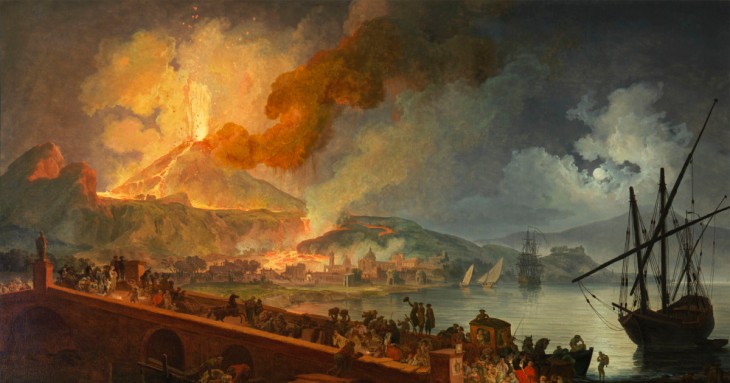
Pierre-Jacques Volaire, Eruption of Mount Vesuvius on the Ponte della Maddalena, 1782, oil on canvas, 129 × 260 cm
(Naples: Museo e Real Bosco di Capodimonte)
◊ ◊ ◊ ◊ ◊
From the press release (8 May) for the exhibition opening this fall:
The Legacy of Vesuvius: Bourbon Discoveries on the Bay of Naples
The Meadows Museum, SMU, Dallas, 15 September 2024 — 5 January 2025
Curated by Michael Thomas, with Heather Bowling and P. Gregory Warden
Set during one of the most dynamic moments in Western history, The Legacy of Vesuvius: Bourbon Discoveries on the Bay of Naples looks at the groundbreaking archaeological excavations sponsored by the Bourbon King Charles VII of Naples—the future king of Spain—and his wife, Maria Amalia, and continued by his son and successor Ferdinand IV, and demonstrates their formative influence on art and thought in the Age of Enlightenment. Comprised of nearly 50 objects, the exhibition’s unique combination of Roman archaeological material from the excavations at Pompeii, Herculaneum, and other sites, mingled with 18th-century paintings, porcelain, and prints—including major loans from Museo e Real Bosco di Capodimonte, Museo Archeologico Nazionale di Napoli, The Metropolitan Museum of Art, and the Wellcome Collection—will provide an exciting introduction to the archaeological treasures of this period and their formative influence on contemporary artistic production. The Meadows Museum, SMU, is the sole venue for the exhibition, which will open on 15 September 2024 and run through 5 January 2025.
“When Mount Vesuvius erupted in 79 CE, in a near instant it preserved the art and material culture of the thriving Roman cities around the Bay of Naples. While these archaeological sites were known in the early modern period, it was thanks to the patronage of the Bourbon monarchs in the 18th century that their systematic excavation was undertaken. The result was nothing short of ‘Roman-mania’ as recently unearthed objects inspired contemporary artistic production, from fashion to furniture, and cemented the Bourbon tastemakers as the force behind Neoclassicism” said Amanda W. Dotseth, the Linda P. and William A. Custard Director of the Meadows Museum. “Upon assuming the throne as Charles III of Spain, the Bourbon monarchs brought their taste, and crucially, their artists with them to Madrid where the archaeological discoveries of Herculaneum and Pompeii inspired new styles and forms in Spanish art, changing it forever. By bringing together ancient artifacts and the 18th-century objects they inspired, this exhibition celebrates the lasting impact of visionary patrons—a fitting subject given the Meadows Museum was itself founded by such a collector with a vision, Algur H. Meadows.”
“We are excited to introduce Dallas to Naples, its connection to Spain, and the profound impact the Bourbon excavations had on the cultural and artistic landscape of 18th- century Europe,” said Michael Thomas, professor and director of the Edith O’Donnell Institute of Art History at The University of Texas at Dallas and the exhibition’s curator. “At its core, this exhibition celebrates the discovery of what is arguably the world’s most famous archaeological site, Pompeii, as well as other ancient sites destroyed by the eruption of Vesuvius in 79 CE. The exhibition captures the innovative vision of Charles and Maria Amalia in the years just before they assumed the Spanish throne. The reigns of Charles and his successor Ferdinand define the ‘Golden Age’ of Naples when the city rose to the forefront of artistic production and cultural influence.”
The Legacy of Vesuvius will unfold across several galleries that define different topics. The exhibition begins with an overview of key historical personalities from the period, emphasizing the royal family’s significant role. Featured prominently in this room are depictions of Charles VII and Maria Amalia, by Francesco Liani, an esteemed Neapolitan artist. A depiction of a youthful Ferdinand by Bourbon court painter Anton Raphael Mengs captures the 8-year old monarch on the occasion of his accession to the throne. Antonio Joli’s landscape painting The Royal Procession of Piedigrotta, seen from the West documents a royal procession that includes Charles and Ferdinand in a gilded carriage set against a panoramic view of the city of Naples, the city at the center of this exhibition.
The next section will showcase finds discovered near the royal palace at Portici which included the ancient city of Herculaneum. These finds include Roman wall paintings, documents cataloging Bourbon finds, as well as 18th-century renditions of ancient artifacts in biscuit porcelain, and 19th-century copies of the famous bronzes from the Villa of the Papyri at Herculaneum. Additionally, a copy of Karl Jakob Weber’s detailed plan of the Villa’s walls, excavation tunnels, and ‘find-spots’, along with excerpts from the Bourbon-commissioned work Le Antichità di Ercolano Esposte (The Antiquities of Herculaneum Exhibited) will be on display.

Flora, from the Villa Arianna, Stabiae, early first century CE, pigment on plaster, 38 × 32 cm (Naples: Museo Archeologico Nazionale de Napoli; photo by Giorgio Albano).
In the next gallery, visitors will see a selection of frescoes that were recovered from both public and private contexts from Pompeii and Stabiae, including a wall painting from a lararium (household shrine) in Pompeii; a fresco and gladiator helmet from the gladiator barracks in Pompeii; and frescoes from the Villa Arianna, Stabiae. Also in this gallery are several objects from Temple of Isis in Pompeii, excavated during the reigns of both Charles and Ferdinand. This temple served as a center for the worship of the Egyptian goddess Isis and documents the influence of Egyptian culture in Roman religious practices. On display will be ancient artifacts unearthed during the Bourbon- led archaeological efforts at the temple, including frescoes depicting sacred landscapes alongside imagery of priests conducting rituals. Among the other notable items will be a bronze sistrum, an instrument used in ceremonies by the priests of Isis.
The next section will highlight the Bourbon court’s fascination with Naples’ picturesque landscapes. Antonio Joli’s pair of evocative paintings depicting King Charles’ departure to Spain provides perspectives from both the maritime and coastal vantage points. Another work by Joli captures Ferdinand’s hunting party in front of the Capodimonte palace with the city of Naples as the backdrop. Jakob Philipp Hackert’s work depicts Ferdinand in his favorite pastime, hunting, while also capturing the natural beauty of the Neapolitan coastline. Élisabeth Vigée Le Brun’s portrait of a young Francis of Bourbon features Mount Vesuvius in the background, further underscoring the connection between the landscape and the Bourbon court. A nighttime scene of the Eruption of Mount Vesuvius on the Ponte della Maddalena (1782) by French artist Pierre-Jacque Volaire emphasizes the sublime beauty and terror of the volcano.
Looming over much of this history were the many eruptions of Mount Vesuvius itself, which will be explored by the prints of Pietro Fabris in the next room. Sir William Hamilton commissioned Fabris to record the scientific properties of Vesuvian eruptions in his publication, Campi Phlegraei: Observations on the Volcanos of the Two Sicilies (1776). Hamilton, a British diplomat, archaeologist, and volcanologist served as the British Ambassador to the Kingdom of Naples from 1764 to 1800. His tenure in Naples provided him the opportunity to indulge in his passion for classical antiquities and led to significant contributions to the fields of archaeology and volcanology.
Lastly, the exhibition demonstrates the influence of these discoveries on the art of the Bourbon court and the enduring impact it had on the artistic production associated with the Grand Tour. This room includes examples of royal furniture and porcelain from the famed factories at Capodimonte. The exhibition concludes with a first look at Royal Power, Exoticism, and Technology, a digital heritage collaboration between the Meadows’s Custard Institute for Spanish Art and Culture and the Edith O’Donnell Institute of Art History that is creating digital models of the two Bourbon porcelain rooms at the royal palaces of Portici and Aranjuez.
The Legacy of Vesuvius: Bourbon Discoveries on the Bay of Naples is a collaboration between the Meadows Museum, SMU, and the Edith O’Donnell Institute of Art History at The University of Texas at Dallas. The exhibition is curated by UTD Professor Michael Thomas, PhD, Director of the O’Donnell Institute, with support from Heather Bowling, Research Coordinator at the O’Donnell Institute, and P. Gregory Warden, PhD, the Mark A. Roglán Director of the Custard Institute for Spanish Art and Culture at the Meadows Museum.
A fully illustrated, hardcover catalogue published by Scala Arts & Heritage Publishers—and sponsored by The Custard Institute for Spanish Art and Culture—will accompany the exhibition, with essays by Michael Thomas, P. Gregory Warden, Robin Thomas, Eric M. Moormann, Carmine Romano, and Agnieszka Anna Ficek. Essay topics include multiple aspects of the Bourbon Court and Vesuvian archaeology. Each object will have a catalogue entry, written by Heather Bowling, Domenico Pino, and Lynley McAlpine.
Michael L. Thomas, ed., The Legacy of Vesuvius: Bourbon Discoveries on the Bay of Naples (London: Scala Arts Publishers, 2024), 192 pages, ISBN: 978-1785515736.
Exhibition | Colonial Memory in the Thyssen-Bornemisza Collections
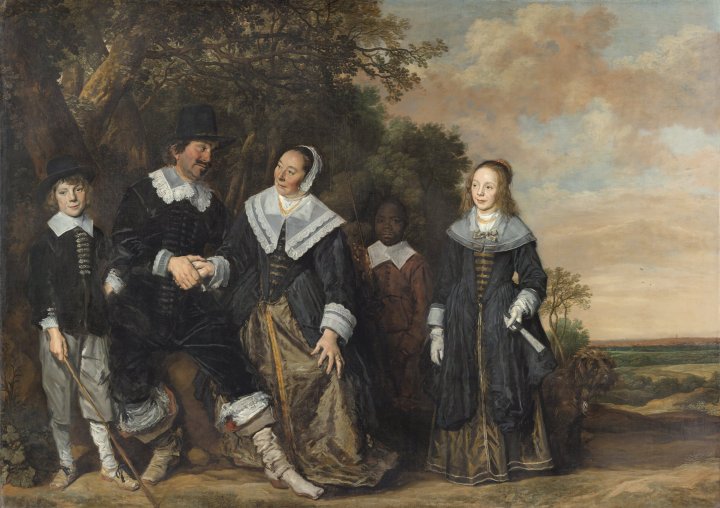
Frans Hals, Family Group in a Landscape, ca.1645–48, oil on canvas, 202 × 285 cm
(Madrid: Museo Nacional Thyssen-Bornemisza)
◊ ◊ ◊ ◊ ◊
Opening this week at the Thyssen:
Colonial Memory in the Thyssen-Bornemisza Collections
Museo Thyssen-Bornemisza, Madrid, 25 June — 20 October 2024
The colonial system lies at the origins of modern western society while its legacy continues to affect human and geopolitical relations around the world. As Europe advanced in the conquest of liberties, it simultaneously imposed a regime of extractivism and physical domination on its territories across the globe.

Circle of Sir Joshua Reynolds (?), Portrait of a Man from the Island of Dominica (?), ca. 1770s, oil on canvas, 76 × 64 cm (Madrid: Museo Nacional Thyssen-Bornemisza).
This exhibition sets out to decipher the elements of colonial power within the iconography of certain works in the Thyssen-Bornemisza collections. A selection of paintings will reveal ‘invisibilised’ stories of racial domination, marronage, and the civil rights struggle, as well as the introduction of the modern mercantile system based on European military control, the use of enslaved African workers, and the appropriation of firstly Latin American and later Asian and African land and raw materials. Visitors will be introduced to fictitious representations of new Arcadias and will witness the western projection of its unsatisfied desires in the form of the ‘Orient’ and the construction of the ‘other’ as barbarian or primitive.
With the aim of rethinking the future through the parameters of cultural diversity, the exhibition benefits from a curatorial team comprising Juan Ángel López (curator at the museum and director of this project), Alba Campo Rosillo (art historian), Andrea Pacheco González (independent curator and artistic director of the space ‘FelipaManuela’), and Yeison F. García López (director of the ‘Espacio Afro’ cultural centre).
La memoria colonial en las colecciones Thyssen-Bornemisza (Madrid: Fundación Thyssen-Bornemisza, 2024), 232 pages, ISBN: 978-8417173906, €42.
Exhibition | Miguel Cabrera (1695–1768)
Now on view at Madrid’s Museo de América:
Miguel Cabrera: Las reglas del arte de un pintor novohispano
Museo de América, Madrid, 31 May — 13 October 2024
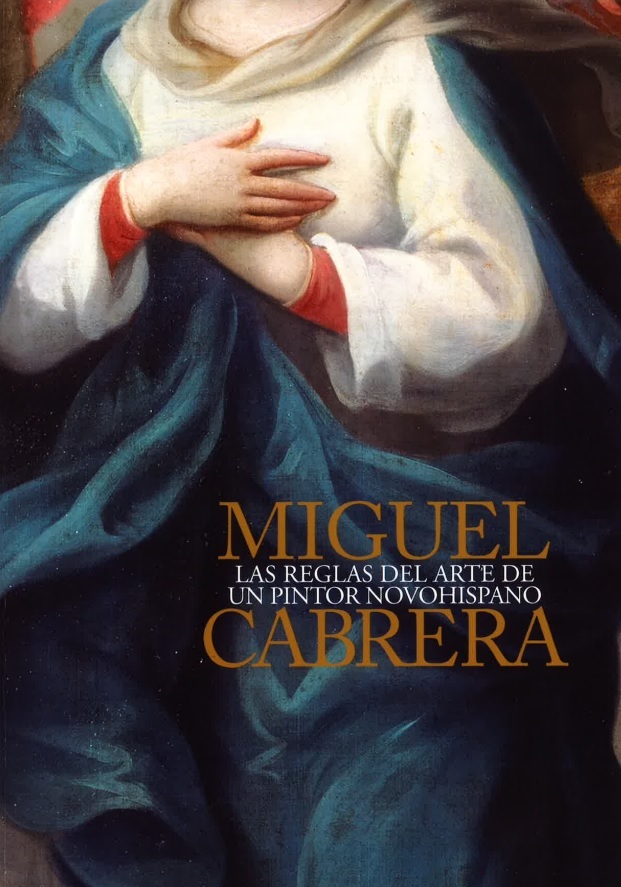 Desde 2019 el Museo de América ha liderado el proyecto Estudio y conservación de la serie La vida de la Virgen, de Miguel Cabrera. El proyecto integró numerosos profesionales de diferentes instituciones museísticas y académicas españolas y latinoamericanas. Sus trabajos han aportado importantes avances en el conocimiento de la pintura barroca novohispana y la conservación de la pintura sobre lienzo. Como resultado del extenso trabajo llevado a cabo se presenta esta magna exposición para cerrar con broche de oro este proyecto: La primera exposición en España dedicada a uno de los pintores más importantes del México Virreinal: Miguel Cabrera, a su vida, obra y el estudio técnico de su pintura. El discurso museográfico se sustenta en veintitrés obras pictóricas pertenecientes principalmente a las colecciones del Museo de América, así como préstamos bibliográficos de la Biblioteca Nacional de España.
Objetivos de la exposición
• Dar a conocer en España la obra y técnica de Miguel Cabrera, maestro de la pintura novohispana
• Presentar la magnífica serie de cuadros de La vida de la Virgen, su historia y su llegada a España en el siglo XVIII
• Mostrar al público los trabajos de conservación y de investigación técnica realizados en torno a estas obras
• Poner en valor el trabajo de conservación y restauración del patrimonio histórico-artístico llevado a cabo en los museos e instituciones museísticas
Miguel Cabrera: Las reglas del arte de un pintor novohispano (Madrid: S.G. Museos Estatales, 2024), 296 pages, ISBN: 978-8481818611, €21.
The Decorative Arts Trust Announces Recipients of Publishing Grants
From the press release (13 June 2024) . . .
The Decorative Arts Trust congratulates the inaugural recipients of their new Publishing Grants. The Hispanic Society Museum and Library; the Philadelphia Museum of Art; and The Huntington Library, Art Museum, and Botanical Gardens received Publishing Grants for Collections, Exhibitions, and Conferences, and Dr. Joseph Larnerd from Drexel University received a Publishing Grant for Dissertations and First-Time Authors.
In November 2024, the Hispanic Society Museum and Library in New York City’s Washington Heights will publish A Room of Her Own: The Estrados of Viceregal Spain to accompany their landmark exhibition of the same name. Guest Curator Alexandra Frantischek Rodriguez-Jack and Deputy Director and Head of Collections Margaret Connors McQuade will lead this examination of the estrado, defined in the early 18th-century treatise Diccionario de Autoridades as the “set of furniture used to cover and decorate the place or room where the ladies sit to receive visitors.” The estrado was a remarkable space where a diverse group of women engaged in elaborate social practices and displayed their collections of valuable objects from the Americas, Asia, and Europe. Decorative arts, paintings, rare books, and engravings from the Hispanic Society Museum and Library’s collection will be presented in an entirely new light, with many to be exhibited for the first time.
The Huntington Library, Art Museum, and Botanical Gardens in San Marino, California plans to release a comprehensive publication about an influential Los Angeles-based ceramics artist in fall 2026. Although additional details cannot be announced at this time, the book will complement an exhibition led by Lauren Cross, PhD, the Gail-Oxford Associate Curator of American Decorative Arts.
The Philadelphia Museum of Art is publishing Art, Industry, and Reform in Philadelphia, 1876–1926, accompanying the museum’s spring 2026 exhibition of the same name. David Barquist, The H. Richard Dietrich, Jr., Curator of American Decorative Arts, and Colin Fanning, Assistant Curator of European Decorative Arts, lead the exhibition and publication, which will focus on Philadelphia artisans and architects who drew on a range of inspirations—from the British Arts and Crafts movement to masterworks at the World’s Fairs—to address challenges of urban industrialization. Their investigation will be among PMA’s offerings during the nation’s 250th commemoration, which is also the museum’s 150th anniversary year.
Dr. Joseph Larnerd received the inaugural Publishing Grant for Dissertations and First-Time Authors. Larnerd, an Assistant Professor of Design History at Drexel University in Philadelphia, will publish Undercut: Cut Glass in Working-Class Life during the Long Gilded Age with the University of Delaware Press in fall 2025. This publication offers an original history of cut glass refracted through the labors required to make and maintain the glistening wares. Larnerd will show how popular representations of the medium and these widely discussed labors undercut how working-class peoples imagined and enacted social class, privilege, and mobility.
The deadline to apply for Decorative Arts Trust Publishing Grants is March 31 annually. For more information, visit decorativeartstrust.org.
Exhibition | Piermarini in Milan: The Drawings of Foligno
Now on view at Palazzo Reale:
Piermarini in Milan: The Drawings of Foligno / Piermarini a Milano: I disegni di Foligno
Palazzo Reale, Milan, 30 May — 28 July 2024
Curated by Alessia Alberti, Emanuele De Donno, Marcello Fagiolo, Simone Percacciolo, Marisa Tabarrini, Italo Tomassoni, and Paolo Verducci
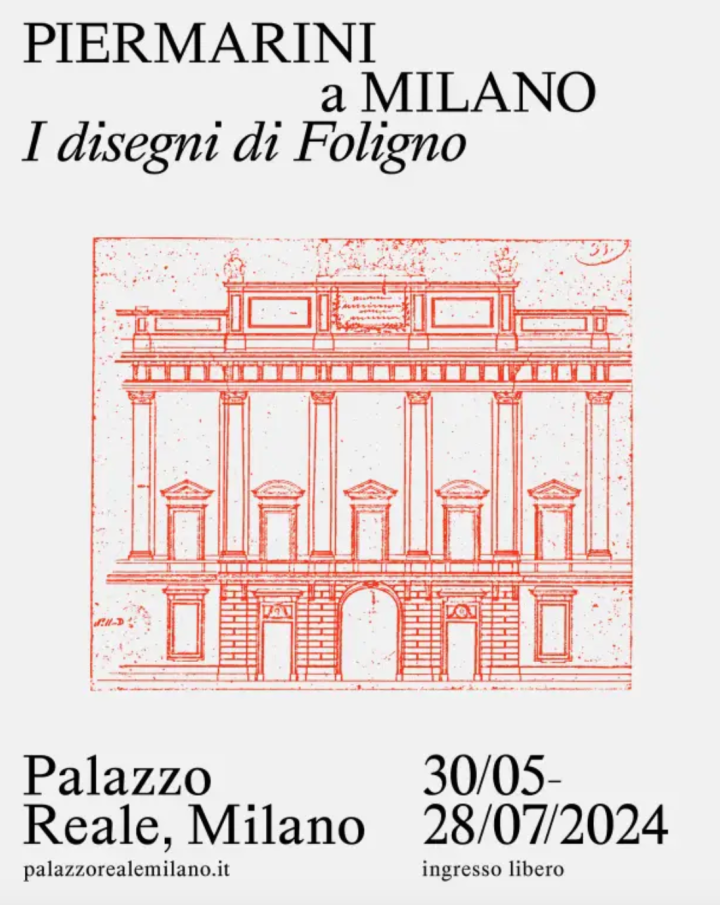 This summer Palazzo Reale presents Piermarini in Milan: The Drawings of Foligno, highlighting the evolution of the architect Giuseppe Piermarini (1734–1808), one of the leading Italian architects of the 18th century, whose neoclassical imprint can still be admired in the most significant buildings of Milan and Lombardy today. The exhibition immerses the viewer in preparatory drawings—sourced from the Piermarini Fund in his hometown of Foligno—ranging from early studies in Rome to major works in Lombardy, with particular attention to Milan and Palazzo Reale. Architectural models on loan from Palazzo Trinci in Foligno and the Museo Teatrale della Scala will also be displayed. The exhibition falls within the initiatives of enhancement aimed by Palazzo Reale as a member of the ARRE network — Association des Résidences Royales Européennes, which brings together approximately thirty royal residences in Europe.
Exhibition | Dutch and Flemish Encounters with the Islamic World

Pieter Coecke van Aelst, Customs and Fashions of the Turks, detail, 1553, woodcut printed from 10 blocks on joined sheets of antique laid paper (Harvard Art Museums/Fogg Museum, Acquisition Fund for Prints, 2011.11).
◊ ◊ ◊ ◊ ◊
Now on view at Harvard Art Museums (with more information available from the press release) . . .
Imagine Me and You: Dutch and Flemish Encounters with the Islamic World, 1450–1750
Harvard Art Museums, Cambridge, 18 May — 18 August 2024
Curated by Talitha Maria Schepers
Discover a story of cross-cultural artistic connection over 300 years between the Dutch, the Flemish, and the Islamic world.
Imagine Me and You unveils the vibrancy of multicultural exchange between the Low Countries (roughly modern-day Belgium and the Netherlands), then part of the Habsburg empire, and the Islamic world, in particular the Ottoman, Safavid, and Mughal empires that concurrently controlled much of Central and Southeast Europe, North Africa, and South, West and Central Asia. Prompted by the rich diversity of these empires, the exhibition explores a wide range of artistic, cultural, diplomatic, and mercantile interactions that took place either in person or through the peaceful exchange of objects, art, and ideas over the course of three centuries. This exhibition disrupts the persistent notion that war—in particular, religious strife between Christians and Muslims—dominated interactions between the Low Countries and the Islamic world.
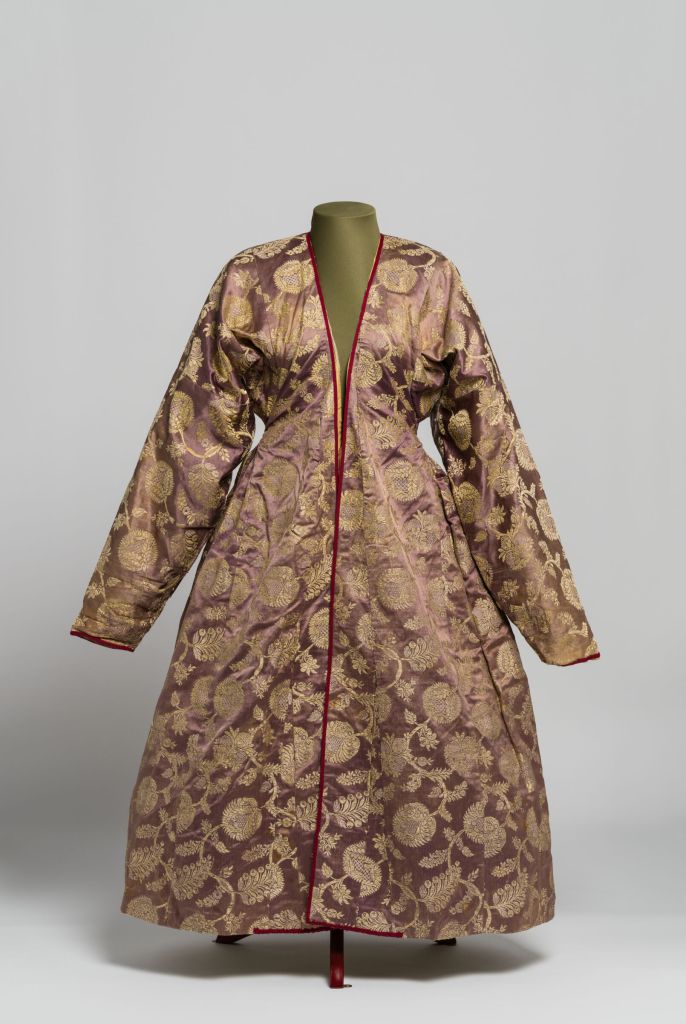
Aubergine Robe Decorated with Swaying Vine Motif, Ottoman, 18th–19th century, silver and silver gilt threads, silk satin ground, 126 × 178 cm (Harvard Art Museums/Arthur M. Sackler Museum, Gift of the Estate of Margaret Schroeder, 1999.323).
Imagine Me and You traces these multiple encounters through the world of Netherlandish artworks and their varied representations of the Islamic realm. Looking also at the ways in which contemporary Ottoman fashion played a role in biblical and historical scenes by Netherlandish artists, the exhibition invites viewers to reflect on the profound impact these interactions have had on crafting our shared history. This dynamic interplay between cultures unearths revelations about individual heritage and the broader global community. While acknowledging the complexity of establishing the origin of certain hybrid objects, the exhibition ultimately suggests that it is more important to amplify and celebrate these objects’ multicultural and multifaceted characteristics.
The approximately 120 objects in the exhibition include drawings, prints, paintings, textiles, and more; the works come from the collections of the Harvard Art Museums as well as from the Maida and George Abrams Collection, The Tobey Collection, other Harvard institutions, and the Museum of Fine Arts, Boston. In addition to sumptuous textiles and striking wool carpets from Türkiye (Turkey) and intricate album paintings from the Ottoman and Mughal periods, there is a range of drawings and prints from Dutch, Netherlandish, and other artists, including Margaretha Adriaensdr. de Heer, Haydar Reis, Pieter Coecke van Aelst, Melchior Lorck, Nicolas de Nicolay, Lucas van Leyden, Jacob Marrel, Rembrandt, and many more. A display of historical pigment samples sheds light on some of the materials these artists used.
The exhibition is curated by Talitha Maria G. Schepers, 2022–24 Stanley H. Durwood Foundation Curatorial Fellow, Division of European and American Art, Harvard Art Museums. Support for Imagine Me and You is provided by the Stanley H. Durwood Foundation Support Fund and the Melvin R. Seiden and Janine Luke Fund for Publications and Exhibitions. Related programming is supported by the M. Victor Leventritt Lecture Series Endowment Fund.
An accompanying digital resource dives deeper into the exhibition’s core themes of encounter and imagination. A variety of contributions, ranging from short texts focused on a single object to longer technical studies, reflects a multitude of voices from across the Harvard Art Museums and Harvard University.










 Enfilade
leave a comment