The Burlington Magazine, November 2022
The eighteenth century in the November issue of The Burlington . . .
The Burlington Magazine 164 (November 2022) — Sculpture

Massimiliano Soldani Benzi, Lamentation over the Dead Christ, 1690–92(?), gilded bronze, 57 × 40 cm (Córdoba Cathedral).
E D I T O R I A L
• The Parthenon Sculptures, p. 1063.
A R T I C L E S
• Fernando Loffredo, “Soldani’s Lamentation in Córdoba,” pp. 1118–22.
R E V I E W S
• Colin Bailey, Review of the exhibition catalogue, Renoir: Rococo Revival (Städel Museum, Frankfurt am Main, 2022), pp. 1150–53.
• Joseph Connors, Review of Livio Pestilli, Bernini and His World: Sculpture and Sculptors in Early Modern Rome (Lund Humphries, 2022), pp. 1160–62. [Pestilli “mines the correspondence of the directors of the Académie de France and sorts through student drawings in the Accademia de San Luca to find that well into the eighteenth century Bernini was copied more than any other artist” (1162).]
• Jamie Mulherron, Review of Alexandre Maral and Valérie Carpentier-Vanhaberbeke, Antoine Coysevox (1640–1720): Le sculpteur du Grand Siècle (Arthena, 2020), pp. 1165–66.
• Hugo Chapman, Review of Carel van Tuyll van Serooskerken, The Italian Drawings of the Seventeenth and Eighteenth Centuries in the Teyler Museum (Primavera Pers, 2021), pp. 1166–67.
• Christopher Martin Vogtherr, Review of Sarah Salomon, Die Kunst der Außenseiter: Ausstellungen und Künstlerkarrieren im absolutistischen Paris jenseits der Akademie (Wallstein Verlag, 2021), pp. 1167–68. [Salomon’s book focuses on four institutions: the Académie de Saint-Luc, the Colisée, the Salon de la Correspondence, and the Exposition de la Jeunesse.]
• Stephen Lloyd, Review of Magnus Olausson, Miniature Painting in the Nationalmuseum: A World-Class Collection (Nationalmuseum Stockholm, 2021), pp. 1168–70.
O B I T U A R I E S
• Michael Hall, Obituary for Mark Girouard (1931–2022), pp. 1171–72.
Exhibition | Beyond Boundaries
From the introduction of the catalogue, available online, for the show now on view at Robert Simon Fine Art:
Beyond Boundaries: Historical Art by and of People of Color
Robert Simon Fine Art, New York, 27 October — 16 December 2022
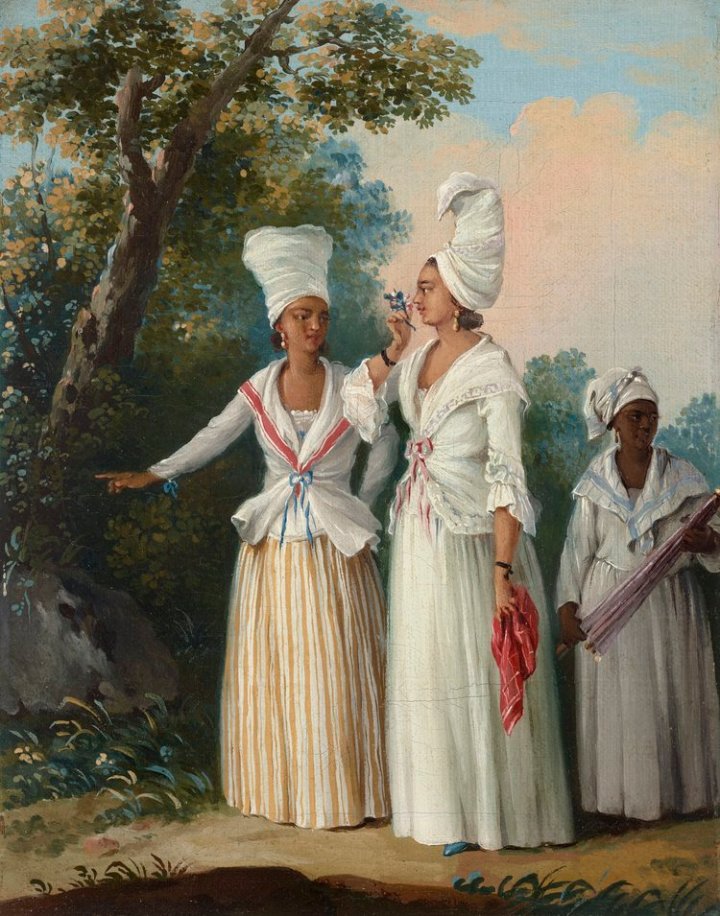 Diversity is a crucial issue in the contemporary art world today. But what of the art of the past? Beyond Boundaries brings to light an array of paintings, sculpture, and other works of art from the 17th to 19th centuries, from Europe and the Americas, that explore subjects and makers often overlooked in traditional art history. But unlike many thematic exhibitions, there is no underlying social or political philosophy. Rather we have attempted to explore diversity simply by exhibiting diverse works of art—each chosen as it in some ways illustrates an aspect of the historical past, some surprising and empowering, others uncomfortable or disturbing.
Agostino Brunias, one of six paintings in a series here identified as Free Men and Women of Dominica and an Indigienous Family of St Vincent, oil on canvas, 12 × 9 inches.
Exhibitions | Stitched in Time / The Art of the Quilter
From the press release (25 October 2022) for the new exhibitions:
Stitched in Time: American Needlework
DeWitt Wallace Decorative Arts Museum, Colonial Williamsburg, 3 December 2022 — 2 January 2025
The Art of the Quilter
Abby Aldrich Rockefeller Folk Art Museum, Colonial Williamsburg, 3 December 2022 — August 2023
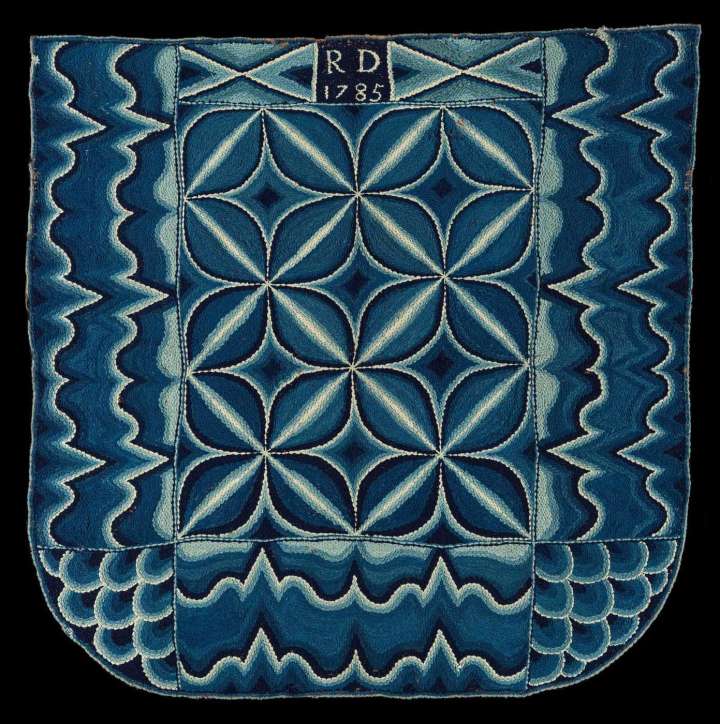
Bed Rug, Connecticut, possibly Norwich or New London, 1785 (Colonial Williamsburg, Museum Purchase, Dr. and Mrs. T. Marshall Hahn Jr. Fund, 2014.609.6).
Two new textile exhibitions opening at the Art Museums of Colonial Williamsburg on 3 December 2022 are sure to delight museum visitors. Stitched in Time: American Needlework, an exhibition of nearly 60 examples of bedrugs, whitework, embroidered hand towels, quilted petticoats, samplers, mourning and commemorative needlework, crewelwork, needlework with religious and geographical influences as well as sewing accessories, will remain on view through 2 January 2025 at the DeWitt Wallace Decorative Arts Museum. Additionally, an entirely new rotation of objects in the popular exhibition The Art of the Quilter that opened in 2021 will feature 15 pieces, 12 of which are recent acquisitions that have never before been displayed. This configuration of the exhibition, which will remain on view through August 2023 at the Abby Aldrich Rockefeller Folk Art Museum, will include eleven large quilts, one woven coverlet and three doll-size quilts that tell stories about people from America’s past and the societies in which they lived.
“For decades The Colonial Williamsburg Foundation has collected textiles from a broad and highly diverse array of ethnic, cultural, and regional communities,” said Ronald Hurst, senior vice president for education and historic resources. “These new exhibitions allow us to share these beautiful and story-laden documents of early American society with the visiting public.”
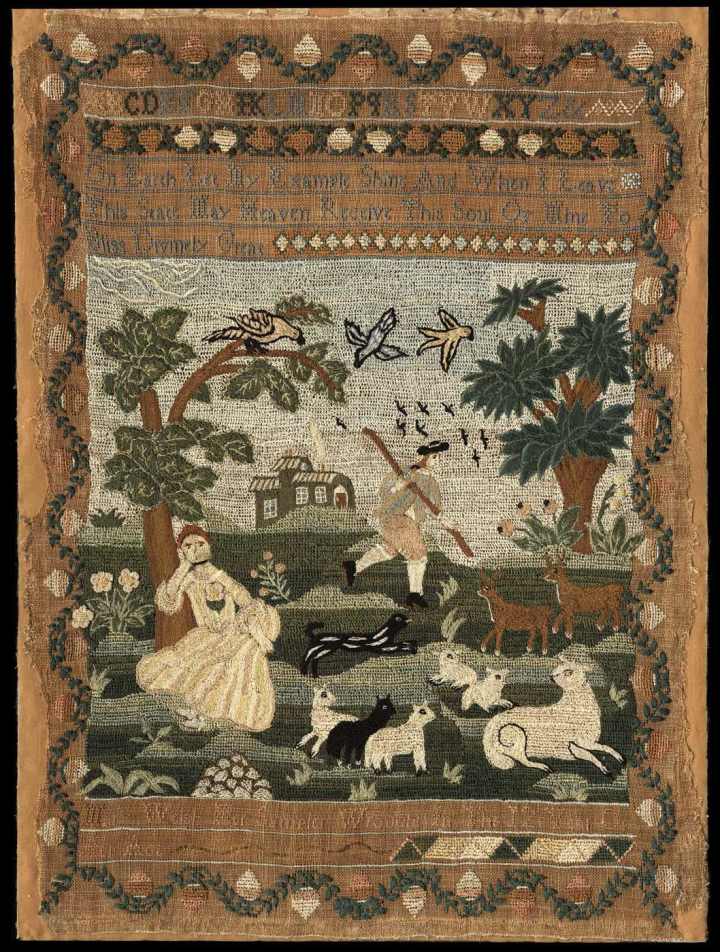
Sampler by Mary Welsh, Massachusetts, ca. 1770 (Colonial Williamsburg, Museum Purchase, 1962-309).
Needlework and sewing were common threads in the lives of most 18th- and 19th-century females across social, economic, and geographical boundaries. Early American women—whether poor, enslaved, indigenous, middle class, or wealthy—contributed to their family’s household furnishings and enriched their homes and clothing by embellishing textiles with decorative stitches. Sewing and mending everyday household textiles, such as bed and table linens and clothing, was another way for women to contribute economically to their family. Stitching needlework projects was not only a creative outlet for many housewives, but was also an educational tool for young schoolgirls. These themes are the basis for Stitched in Time: American Needlework, which will be on view in the Len and Cyndy Alaimo Gallery. The exhibition will also highlight the diversity and regional variations of American needlework that can be traced through the ethnic origins of the makers, trade and migration patterns, influential teachers and artists, current fashions, religious affiliations, geography, and even climate.
“We are excited to share The Colonial Williamsburg Foundation’s regionally and ethnically diverse needlework collection with our museum visitors,” said Kimberly Smith Ivey, senior curator of textiles. “Over 50 textiles for comparison have been selected from regions of New England, the Mid-Atlantic, the South, and the Western Frontier. Highlights of the exhibition include a schoolgirl sampler created by a young Jewish girl who inscribed her work with her hometown of Chicago. Another extraordinary embroidery was created by an Irish immigrant in Frenchtown, Michigan, at the Oblate Sisters of Providence School, which was cofounded by Mother Theresa Maxi Duchermin, a Catholic of color.”
Among the many other highlights of Stitched in Time is a rare bed rug made probably in Norwich, Connecticut, in 1785 by an unknown maker who signed the rug “RD.” The rug relates to a group of embroidered rugs created in the Connecticut River Valley. It was made by darning, or stitching, closely spaced rows of heavy wool yarn through a woolen ground, leaving most of the stitches visible on the surface. The side and bottom borders consist of abstract scalloped and peaked lines similar in appearance to Irish stitch needlework, but worked with darning stitches. This bed rug is especially attractive because of its remarkable condition.
Among the many examples of extraordinary samplers in the exhibition is one made in 1827 by Mary Rees, a student of Elizabeth Robinson (1778-1865), in Montgomery County, Pennsylvania. Robinson, an unmarried woman who lived with her five unmarried sisters in their family homestead left to them by their father, worked as a schoolmistress to help support the family. At least eight samplers or pictures have been identified from Elizabeth Robinson’s school. Mary Rees’ cross-stitched verse and her pictorial composition made of silk and wool embroidery threads on a linen ground are perfectly suited to each other. The verse implores all living things to praise their Maker, while the imagery shows some of the plants and animals requested to pay such tribute. Rees’ careful selection of thread color and the direction and type of stitching makes the scene both decorative and naturalistic. The embroidered scene bordered in black stitches to imitate a reverse painted glass mat and the title, date, and signature worked in bright threads to mimic a more expensive gold leaf inscription are characteristics found on other embroideries worked under the instruction of Elizabeth Robinson.
A highly sophisticated embroidered picture attributed by family history to Orra Sears (1798–1872) of Bloomfield, New York, is another highlight of Stitched in Time. It is believed that Orra created the picture in 1816, when she was a boarding student at the Litchfield Female Academy in Connecticut. School records indicate that Orra attended the school that year; she was one of at least 2,000 girls from nearly every state who attended the academy from 1792 through 1833 when the school operated. Students from out of town, such as Orra, boarded with Litchfield families. American educational goals of the period stressed the proficient duplication in embroidery of idealized themes that were widely recognized and approved of, rather than the development of individual creativity. Needlework compositions were taken from existing illustrations, usually English engravings or other printed images. Here, at least four different prints depicting views of Chiswick, an English country house, were used to create the scene on Orra’s embroidered and painted picture.
In its second year of a three-year exhibition, The Art of the Quilter’s latest rotation in the Foster and Muriel McCarl Gallery promises to continue delighting quilt aficionados with its new selection of quilts from The Colonial Williamsburg Foundation’s heralded collection from the early 19th century to present day. These diverse quilts allowed women to express artistic instincts while also creating a warm and practical bedcover for their loved ones. Making quilts was often a community activity, in which neighbors and relatives enjoyed the pleasures of joint work and socializing.
Ivey said of the exhibition, “We are literally covering America with this exhibition. The bed coverings display a variety of techniques, colors and materials, and demonstrate America’s multicultural society with examples from the Anglo-American, German, Amish and Mennonite communities.” . . .
The full press release is available here»
Exhibition | Promenades on Paper: 18th-C. French Drawings
From The Clark:
Promenades on Paper: 18th-Century French Drawings from the Bibliothèque Nationale de France
Promenades de papier: Les collections de dessins du 18e siècle de la BnF
The Clark Art Institute, Williamstown, MA, 17 December 2022 — 12 March 2023
Musée des Beaux-Arts de Tours, 13 May — 28 August 2023
Curated by Esther Bell, Sarah Grandin, Anne Leonard, Corinne Le Bitouzé, Pauline Chougnet, and Chloé Perrot
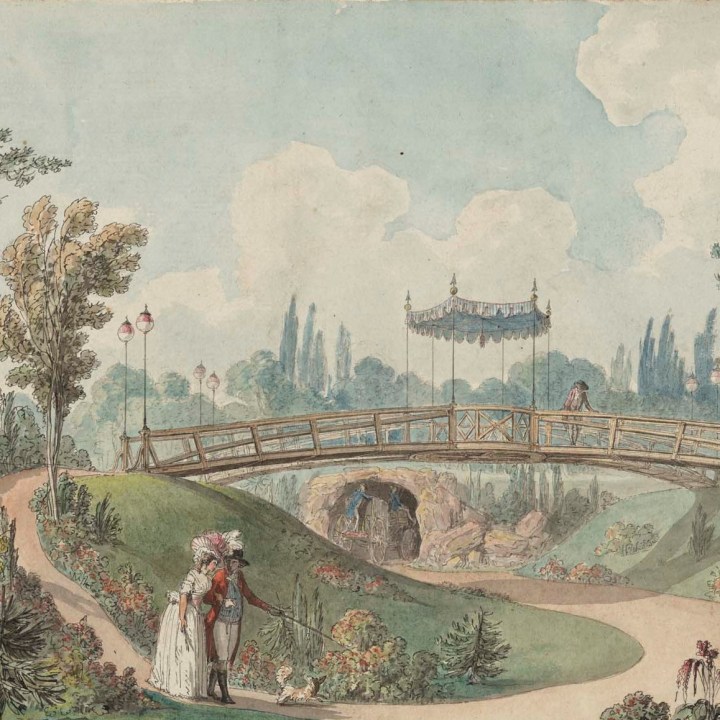
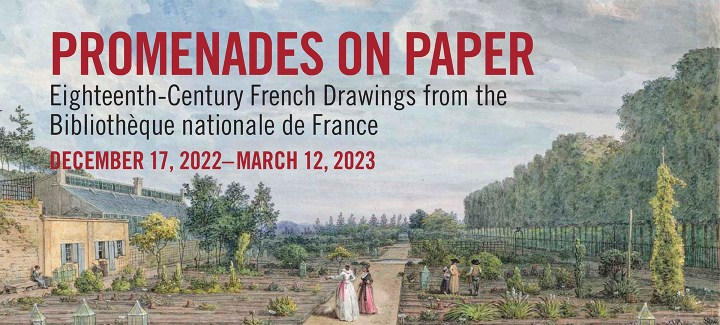
François-Joseph Bélanger, The Garden of Beaumarchais, 1788, watercolor and pen and ink (Bibliothèque nationale de France).
In partnership with the Bibliothèque nationale de France (BnF), the Clark is organizing the first exhibition of the library’s eighteenth-century French drawings. The selection of eighty-six enchanting studies, architectural plans, albums, sketchbooks, prints, and optical devices expands our understanding of drawing as a tool of documentation and creation in the age of Enlightenment, spanning the domains of natural history, current events, theater design, landscape, and portraiture. Displayed together, these objects immerse audiences in the world of eighteenth-century France—a world shaped by invention, erudition, and spectacle. Works by celebrated artists of the period such as François Boucher (1703–1770) and Gabriel de Saint-Aubin (1724–1780) are featured alongside exquisite drawings by lesser-known practitioners, including talented women, royal children, and visionary architects.
Promenades on Paper: Eighteenth-Century French Drawings from the Bibliothèque nationale de France is co-organized by the Clark Art Institute, Williamstown, Massachusetts, and the Bibliothèque nationale de France, Paris. It is curated by Esther Bell, Deputy Director and Robert and Martha Berman Lipp Chief Curator; Sarah Grandin, Clark-Getty Curatorial Fellow; and Anne Leonard, Manton Curator of Prints, Drawings, and Photographs from the Clark, and by Corinne Le Bitouze, Conservateur général; Pauline Chougnet, Conservateur en charge des dessins; and Chloé Perrot, Conservateur des bibliothèques from the Bibliothèque nationale.
This exhibition is made possible by Jessie and Charles Price. Major funding is provided by Elizabeth M. and Jean-Marie Eveillard, the Getty Foundation through its Paper Project initiative, and the Samuel H. Kress Foundation. The exhibition catalogue is made possible by Denise Littlefield Sobel.
Esther Bell, Pauline Chougnet, Sarah Grandin, Charlotte Guichard, Corinne Le Bitouzé, Anne Leonard, and Meredith Martin, Promenades on Paper: Eighteenth-Century French Drawings from the Bibliotheque nationale de France (Williamstown: Clark Art Institute, 2023), 272 pages, ISBN: 978-0300266931, $50.
◊ ◊ ◊ ◊ ◊
Note (added 12 June 2023) — The posting was updated to include the Tours venue.
Exhibition | Fashion and Music in Revolutionary France
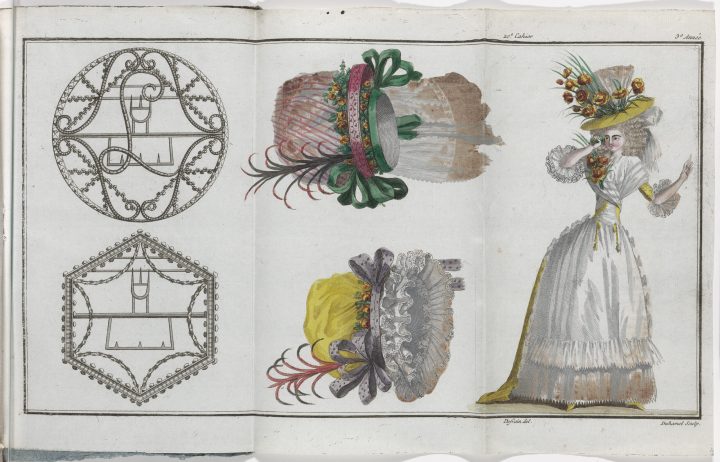
Magasin des Modes Nouvelles, Troisième Année, Vingtième Cahier, 30 Mai 1788, 30, 1788, text with engraving
(Mia, The Minnich Collection The Ethel Morrison Van Derlip Fund, 1966, P.15,303-P.15,305)
◊ ◊ ◊ ◊ ◊
From the press release (22 August 2022) for the exhibition at Mia:
Revolution à la Mode: Fashion and Music in Revolutionary France
Minneapolis Institute of Art, 10 September 2022 — 5 March 2023
Curated by Nicole LaBouff
The Minneapolis Institute of Art presents an exhibition of 18th-century French periodicals documenting the French Revolution and the tumultuous years leading up to it. Revolution à la Mode: Fashion and Music in Revolutionary France features hand-colored fashion plates, illustrating how fashion, theater, and politics influenced one another as France constructed a new democracy. The exhibition, curated by Nicole LaBouff, Mia’s Associate Curator of Textiles, will be on view in the Cargill Gallery from 10 September 2022 until 5 March 2023. This exhibition marks the first time these items have been on view.
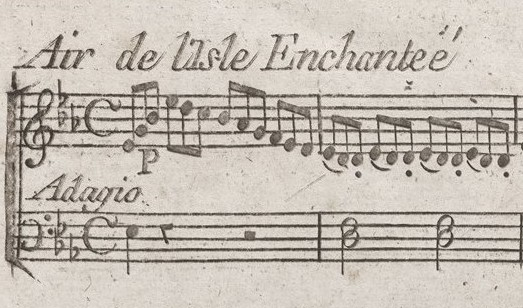 In a unique pairing, the exhibition showcases fashion plates and musical scores that were published side by side in periodicals for the entertainment and edification of the public. These publications were among the first modern fashion magazines, with the illustrations documenting the fashions that fluctuated with the changing political tides. More than 20 of these fashion plates will be on display, alongside paintings and sculpture that offer context.
In planning for this project, Mia partnered with violinist Peter Sheppard Skærved of London’s Royal Academy of Music and musicologist Rebecca Geoffroy-Schwinden of the University of North Texas to arrange new recordings of these songs long lost to history, which visitors will be able to hear in the gallery and on Mia’s website. Important but understudied contributions by women to the music of this period–uncovered through exhibition research–will be highlighted in the display. [Skærved performed the pieces live at Mia in a public program on October 18.]
“We learn more about the fashion plates and the musical scores by featuring them side-by-side in this exhibition,” said LaBouff. “Most of this music has never been recorded before and we are excited to bring it to life in this exhibition. Clothing and music shape politics from the ground up, and this show offers visitors the chance to understand the atmosphere of Revolutionary France through those lenses.”
The fashion plates and musical scores featured in this show were a gift from the collection of Dwight and Helen Minnich.
Versailles Apartment of Mme du Barry Unveiled after Restoration
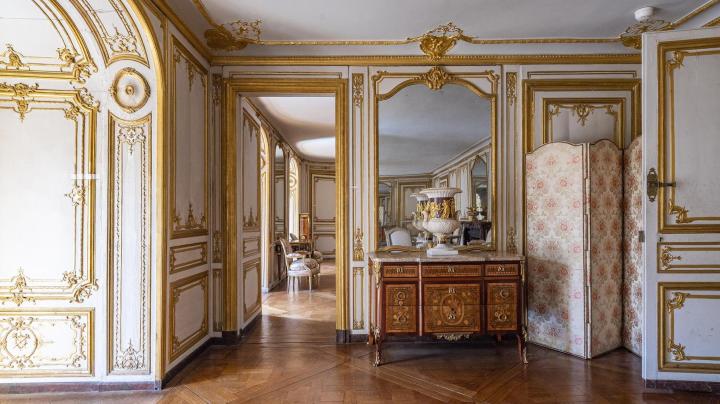
The suite of fourteen rooms was completed in 1770 under the direction of Ange-Jacques Gabriel. Madame du Barry lived there for five years (1770–1774).
◊ ◊ ◊ ◊ ◊
The newly restored private apartment of Jeanne Bécu, Comtesse du Barry (1743–1793) opened last month in connection with the exhibition Louis XV: Passions of a King. From The Art Newspaper:
Claudia Barbieri, “Louis XV’s Official Mistress Leaves the Shadows, as Restoration of her Versailles Apartment Reveals Secretive Life,” The Art Newspaper (19 October 2022). Madame du Barry, whose life is the subject of a new Netflix film, was born into poverty and sold trinkets on the streets of Paris before joining court circles in her 20s.
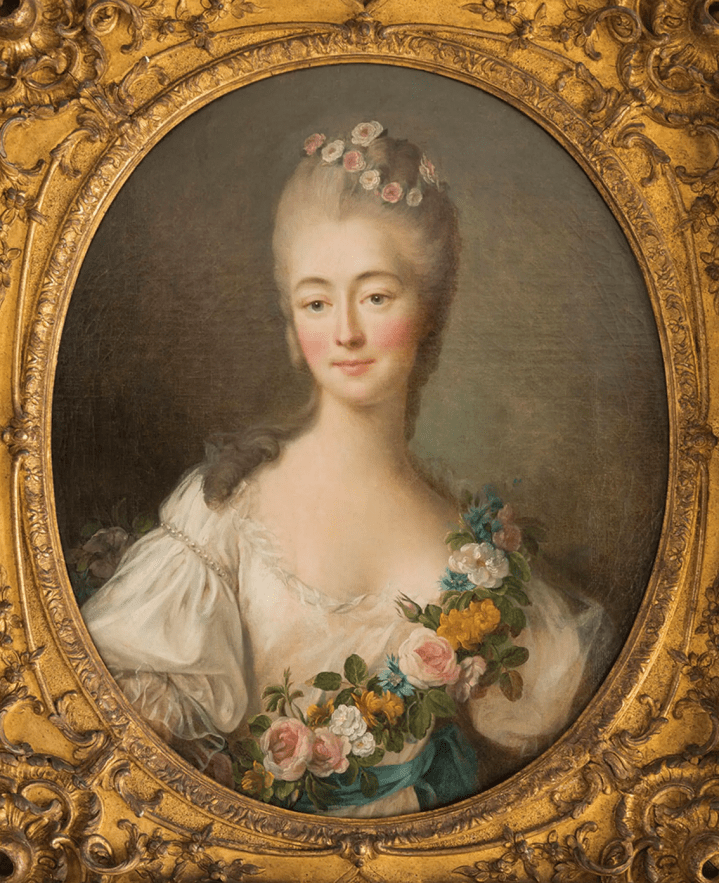
François-Hubert Drouais, Portrait of Madame Du Barry, 1769 (Château de Versailles).
In late October 1722, King Louis XV was crowned in Reims cathedral. This month, the Château de Versailles in Paris marks 300 years since the king’s coronation with an exhibition of 400 works and artefacts that reveal the private life of a monarch whose regal lifestyle paved the way for the French Revolution.
But the highlight of the exhibition is the restored chambers of the king’s last official mistress, Madame du Barry, which are fully open to the public for the first time.
Over the past 18 months, and at a cost of €5m, the Parisian restoration specialists Ateliers Gohard—known for restoring the Statue of Liberty’s torch—have painstakingly renovated the 18th-century decor of Du Barry’s home by gradually stripping away layer upon layer of paint to reveal the colours the king’s mistress chose. . . .
Du Barry was famed for her patronage of artists and craftsmen. But, after her death, her possessions were scattered through the Paris sale rooms. Most have never been recovered. An approximation of her chambers will soon be used in a Netflix-produced film adaptation of her life, with the US actor Johnny Depp playing King Louis XV and the French actor Maïwenn playing Du Barry [Maïwenn also directs the film]. Shooting is currently taking place at locations in and around Versailles.
The full article is available here»
Exhibition | Clara the Rhinoceros
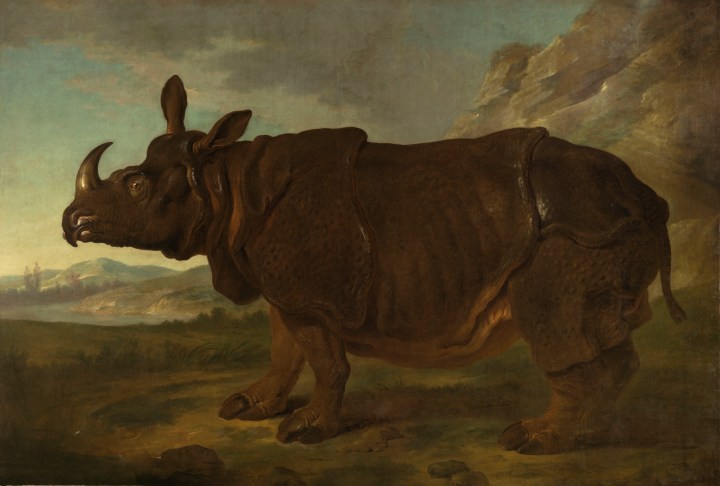
Jean-Baptiste Oudry, Clara, the Rhinoceros, 1749, oil on canvas, 306 × 453 cm
(Staatliches Museum Schwerin)
◊ ◊ ◊ ◊ ◊
From the press release (11 July 2022) for the exhibition:
Clara the Rhinoceros: Superstar of the 18th Century / Clara de Neushoorn: Superster van de 18e eeuw
Rijksmuseum, Amsterdam, 30 September 2022 — 15 January 2023
Curated by Gijs van der Ham
Clara was strange and new, huge and awe-inspiring—she was utterly unlike any other known animal. This fall, the Rijksmuseum presents Clara the Rhinoceros, an exhibition about an animal who travelled far from her native land of India and became the most famous rhinoceros in the world.
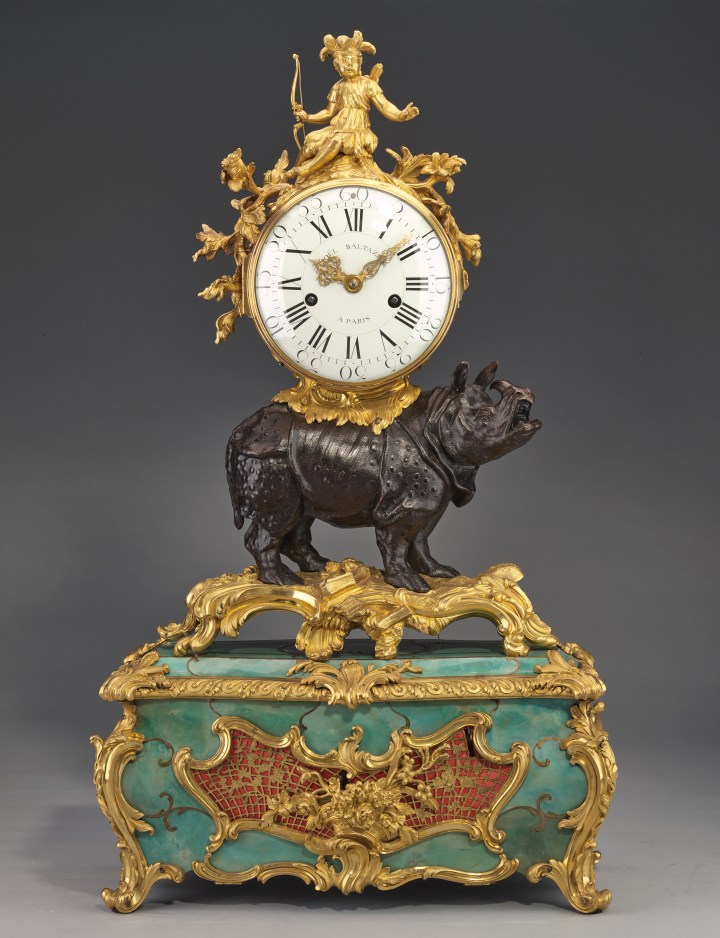
Saint-Germain, J.J., and F. Viger, Clock with Rhinoceros as Carrier, 1755 (Parnassia Collection).
The exhibition shows how new knowledge changed perceptions of the rhinoceros, and how art played its part in this process. The 60 objects on display include paintings, drawings, medals, statues, books, clocks, and a goblet. Very few of these artworks have been displayed before in the Netherlands, and never before have so many exceptional objects devoted to Clara the rhinoceros being presented together. They range from the first-ever European print depicting a rhinoceros—made in 1515 by Albrecht Dürer—to a life-size, full-length portrait of Clara by Jean-Baptiste Oudry dating from 1749. Clara the Rhinoceros runs from 30 September 2022 to 15 January 2023 in the Phillips Wing of the Rijksmuseum.
Clara may not have been the first rhinoceros to come to Europe, but she did become the most famous one. After her long voyage from India, in 1741 she arrived in Amsterdam. Her owner, Douwe Mout van der Meer, was soon showing her to anyone who would pay for the pleasure, whether at fairs, markets, carnivals, or royal courts. For the next 17 years she travelled around Europe in a custom-made cart, accompanied by her entourage. She travelled far and wide: to Vienna and Paris, and to Naples and Copenhagen. Upon her return to the Netherlands, she lived in a field in the North district of Amsterdam. Eventually, Clara died in London in 1758.
People touched, teased, admired, and studied Clara. She prompted this sensational level of interest because no one in Europe had ever been able to see a real live rhinoceros. She was a hyped up, must-see cultural phenomenon, and Mout used print advertising and medals to pump that hype to the max. Until Clara’s arrival, all that Europeans knew of her species was from a print made by Dürer in 1515. He based his drawing on a sketch of a rhinoceros that was briefly in Lisbon, though the sketch wasn’t entirely accurate: it depicted the rhinoceros with an extra horn on its back, for example, and skin that resembled a suit of armour.
 Clara’s appearance on the scene changed all this, leaing to a better understanding of the rhinoceros and to more accurate portrayals. Scholars studied her in minute detail, from head to tail, and artists became fascinated by every fold of her skin. A remarkable number of likenesses were made of Clara, in many forms and using many different materials. This exhibition presents an outstanding selection of these objects, including an impressive life-size portrait painted in Paris in 1749 by Oudry (on loan from Staatliches Museum Schwerin), a painting by Pietro Longhi showing Clara standing in front of her audience in Venice (from Ca’ Rezzonico, Venice), a large marble statue by the Flemish artist Pieter Anton Verschaffelt (from the Rothschild collection at Waddesdon Manor), and an exceptionally rare clock mounted on a Clara figure (from a private Dutch collection) made by the Parisian bronzier and clockmaker Jean-Joseph de Saint-Germain.
Clara was almost never free to walk or run. She depended on humans for her survival, and was rarely able to display natural behaviours—except for example the occasions when she needed to cross a river by swimming, and clearly enjoyed the water. In 1750 the Neurenberg biographer Christoph Gottlieb Richter published a conversation between a rhinoceros and a grasshopper, in which the rhinoceros bemoans the way people treat her and stare at her. This book presents a role-reversal, with the rhinoceros appraising and studying people rather than the other way around. And in her 2016 installation Clara, the contemporary artist Rossella Biscotti uses the rhinoceros’s story to interrogate the relationship between humans and animals. The installation, which is also part of the exhibition, shows that Clara’s story is also about colonialism, exoticism, and globalisation, as well as exploitation and power.
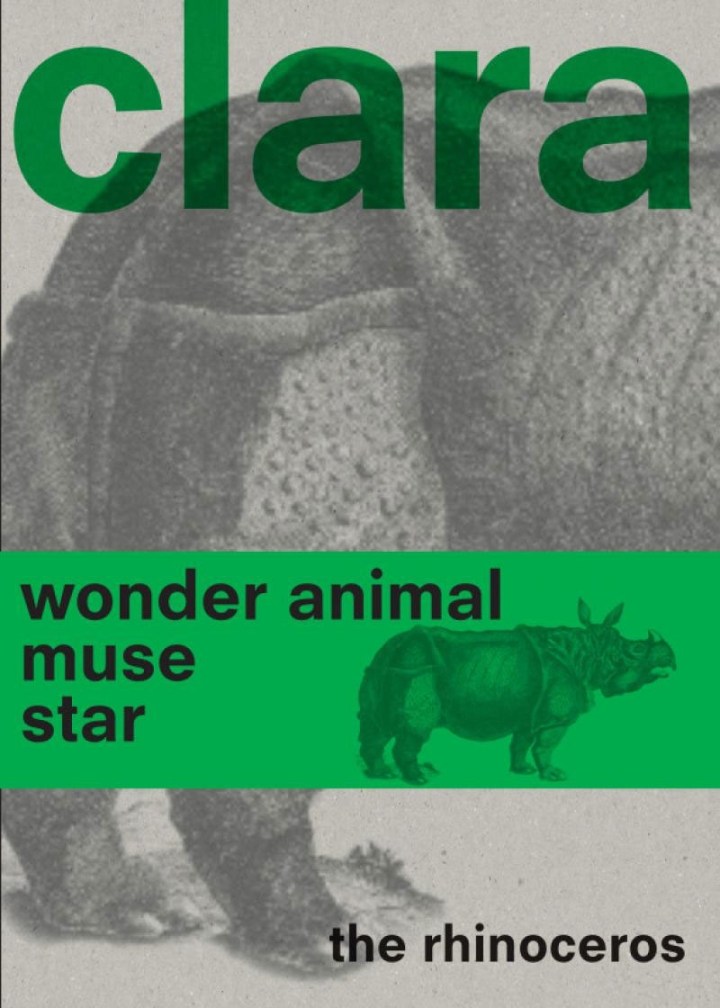
The exhibition design for Clara the Rhinoceros and Crawly Creatures is by stage designer Theun Mosk | Ruimtetijd. Graphic design for the exhibition is by Irma Boom.
Gijs van der Ham, Clara the Rhinoceros (Rotterdam: nai101, 2023), 208 pages, ISBN: 978-9462087477, $40.
Exhibition | Process: Design Drawings, 1500–1900
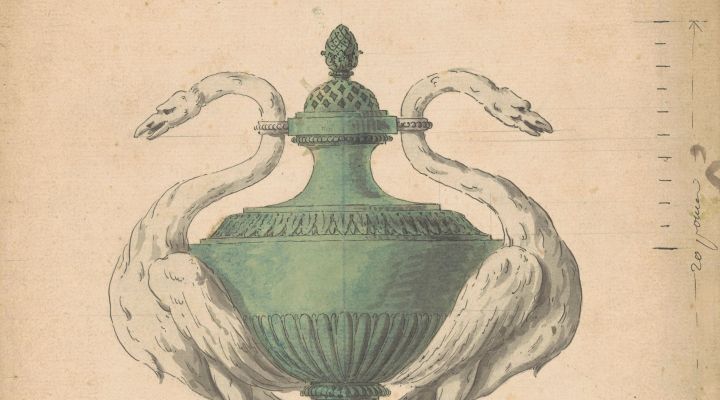
Design drawing for a patinated bronze vase, anonymous, ca. 1780
(Amsterdam: Rijksmuseum)
◊ ◊ ◊ ◊ ◊
From the museum:
Process: Design Drawings from the Rijksmuseum, 1500–1900
Créer: Dessiner pour les arts décoratifs, 1500–1900
Design Museum Den Bosch, Rijksmuseum, Amsterdam, 5 November 2022 — 12 February 2023
Fondation Custodia / Collection Frits Lugt, Paris, 25 February — 14 May 2023
Curated by Reinier Baarsen
This pioneering exhibition is an opportunity to discover a collection of extraordinary design drawings from the Rijksmuseum. The drawings, which date from the period 1500–1900, have been brought together for the first time and are arranged according to the successive stages of the design process.
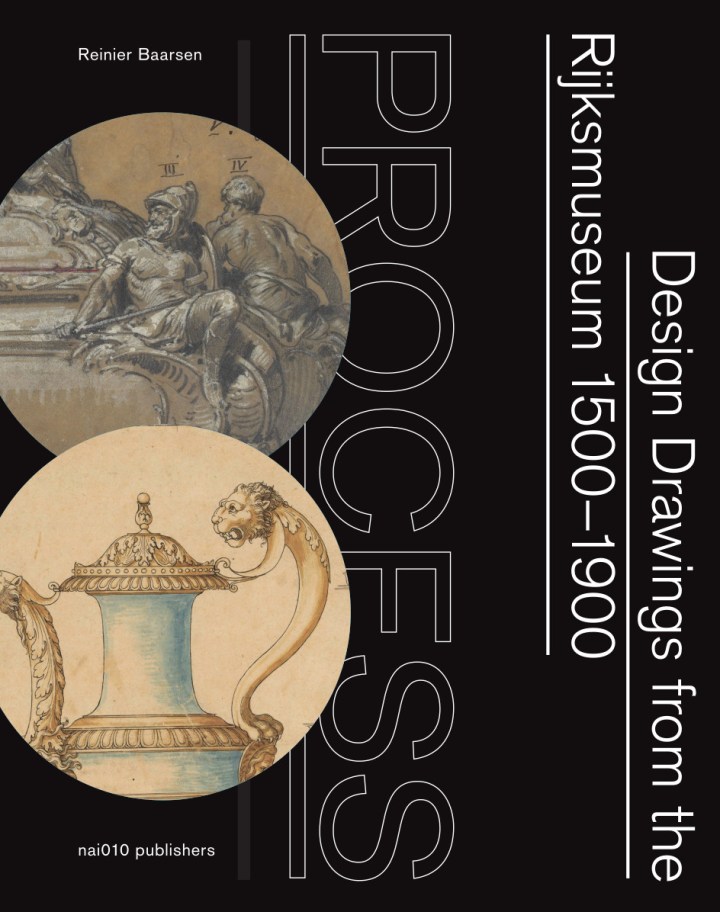 The focus here is not on big artistic names, but on the crucial role that drawings have played in design. We watch from close-by as the ideas for all sorts of items are formed and we also get to meet their inventors, makers, and patrons. Drawings of vases, chairs and clocks, stoves, sledges, and carriages are shown, from the first rough pencil sketches to beautifully worked-up and colourful presentations. The drawings in this exhibition were recently acquired by the Rijksmuseum in Amsterdam, where they belong to a special collection established by Senior Curator Reinier Baarsen. He offers us a unique insight here into the role that drawing has played in the design process, as well as the superb drawings it has produced.
Reinier Baarsen, Process: Design Drawings from the Rijksmuseum, 1500–1900 (Rotterdam: nai101, 2022), 464 pages, SBN 978-9462087354, €60 / $70.
◊ ◊ ◊ ◊ ◊
Note (added 28 February 2023) — The posting was updated to include the Fondation Custodia as a second venue.
Exhibition | Silver City: 500 Years of Portsmouth’s History
Now on view at the Portsmouth Museum and Art Gallery:
Silver City: 500 Years of Portsmouth’s History
Portsmouth Museum and Art Gallery, 28 May 2022 — 26 February 2023
Curated by James Daly and Susan Ward
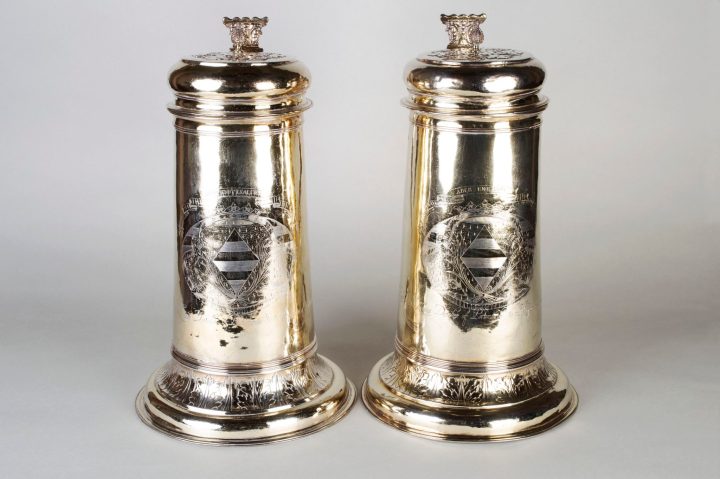
Portsmouth Flagons, made in 1683 by Wolfgang Howzer and presented to Portsmouth by Louise de Kéroualle, the Duchess of Portsmouth. She was one of Charles II’s mistresses and presented the Flagons to Portsmouth when she was made duchess, although there is no record of her having visited the town.
Silver City: 500 Years of Portsmouth’s History is a major exhibition at Portsmouth Museum and Art Gallery, telling the story of the city through amazing silver treasures. It showcases many precious objects that have never been on public display before. Most come from the city’s civic collection, but others have been loaned from the Royal Navy, the city’s Anglican cathedral, and the Goldsmiths’ Company Charity. Objects include a model of HMS Victory presented to the city when the Portsmouth Command of the Royal Navy was awarded the Freedom of the City in 1965. It is made from copper taken from the ship and plated in silver.
James Daly and Susan Ward, Silver City: 500 Years of Portsmouth’s History (Portsmouth: Tricorn Books, 2022), 161 pages, ISBN: 978-914615276, £27.
◊ ◊ ◊ ◊ ◊
Frances Parton’s review of the exhibition appeared in October issue of The Burlington Magazine, pp. 1015–17.
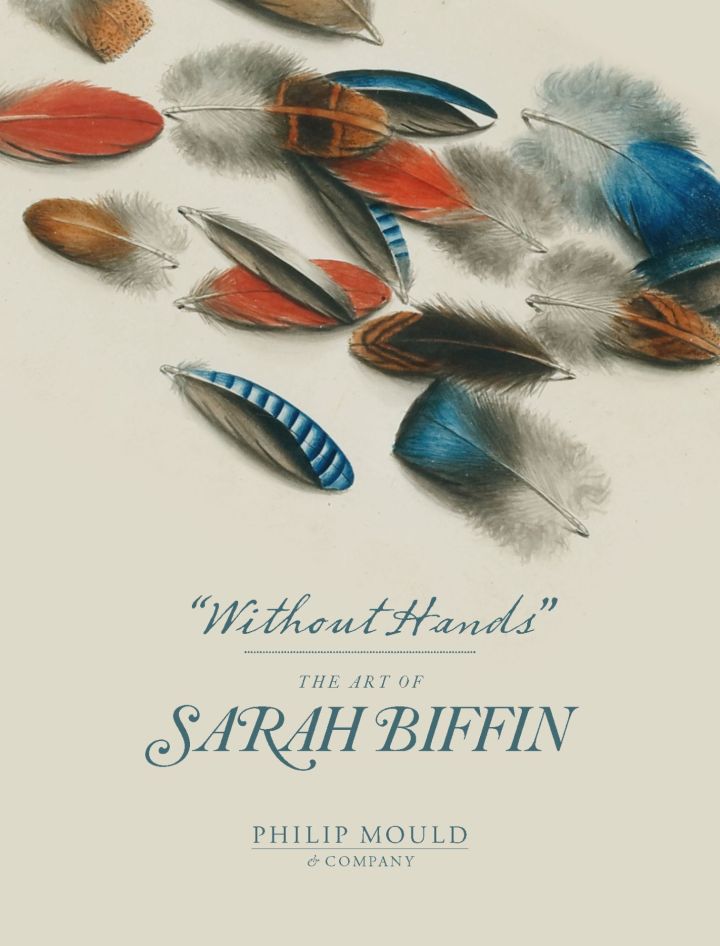
Exhibition | ‘Without Hands’: The Art of Sarah Biffin
Now on view at Philip Mould in London:
‘Without Hands’: The Art of Sarah Biffin
Philip Mould & Company, London, 1 November — 21 December 2022
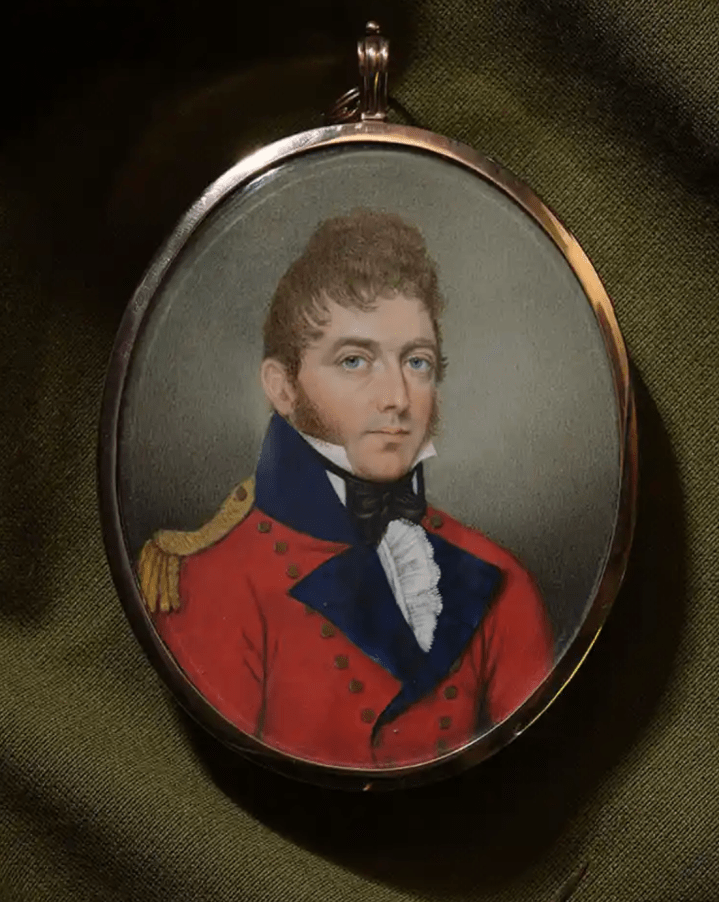
Sarah Biffin, A miniature watercolour of subaltern or captain of a British ‘royal’ regiment of line infantry by, ca. 1815–20.
The remarkable story of Sarah Biffin (1784–1850), has been largely overlooked by historians. Those who have attempted to illustrate her life have often perpetuated misconceptions, and Biffin’s artistic reputation has suffered as a result. This exhibition, established upon ground-breaking primary research, is the first of its kind to present Biffin’s artistic achievements and represent her history.
Sarah Biffin (or Beffin) was born into a farming family in Somerset in 1784, where her baptism records state that she was “born without arms and legs.” Teaching herself to write and draw from a young age, Biffin rose to fame as an artist and established a professional career as a portrait painter. Throughout her long and successful career, she travelled extensively, took commissions from royalty, and recorded her own likeness through exquisitely detailed self-portraits. Her artworks—many proudly signed “Without Hands”—are a testament to her talent and accomplishment.
Around the age of twenty, Biffin left home. She contracted herself to a ‘Mr Dukes’ who toured the country with Biffin, visiting county fairs where she was described as the “Eighth Wonder.” Using her mouth and shoulder, Biffin would sew, write, and paint watercolours and portrait miniatures in front of crowds who turned up and left with a sample of her writing included in the cost of their ticket. One such spectator was the wealthy and well-connected Earl of Morton, who supported her in her quest to finesse her artistic skills. In her mid-twenties she began formal tuition with a miniature painter, William Marshall Craig. From 1816 she set herself up as an independent artist and later took commissions from nobility and royalty.
 Biffin travelled extensively, exhibiting her artwork and taking commissions all over the country and abroad. She took studios in cities including London, Brighton, Birmingham, Cheltenham, and Liverpool. In each of these cities, she taught the art of miniature painting and was a champion of women students in particular. Continuously recording her own image throughout her lifetime, Biffin’s self-portraits evidence the artistic aptitude, self-respect, and skill of this tenacious artist.
Following the story of her life, the exhibition includes original handbills and broadsides from Biffin’s time in travelling fairs, along with the samples of her writing included in the cost of the entry tickets. Visitors to the exhibition will also be able to see examples of the art from her professional career, including portraits, landscapes, and highly-skilled still lifes. More personal exhibits include private letters (including one to her mother) and almost every self-portrait she ever painted. With advisor, artist Alison Lapper MBE (born 180 years later with the same condition); consultant and contributor, Professor Essaka Joshua (specialist in Disability Studies at the University of Notre Dame, Indiana); and loans from national institutions, the exhibition will celebrate Biffin as a disabled artist who challenged attitudes to disability.
The catalogue is published by PHP and distributed by The University of Chicago Press:
Emma Rutherford and Ellie Smith, eds., with contributions by Essaka Joshua, Alison Lapper, and Elle Sushan, ‘Without Hands’: The Art of Sarah Biffin (London: Paul Holberton, 2022), 80 pages, ISBN: 978-1913645366, £18 / $25.
Emma Rutherford is a portrait miniatures consultant at Philip Mould & Company in London. Ellie Smith is a researcher at Philip Mould & Company. Professor Essaka Joshua is a specialist in disability studies at the University of Notre Dame, Indiana. Based in Brighton, Alison Lapper is an artist, television presenter, speaker, and Gig-Arts Charity patron. Elle Shushan is a specialist, author, lecturer, and museum consultant in Philadelphia.










 Enfilade
leave a comment