Enfilade

Exhibition | Piranesi 300

Posted in exhibitions by Editor on February 24, 2020

From the Staatliche Museen zu Berlin:

Piranesi 300
Kunstbibliothek, Berlin, 5 October 2020 — 7 February 2021

The Kunstbibliothek is celebrating the 300th anniversary of the birth of the Italian architectural visionary Giovanni Battista Piranesi (1720–1778) with a special exhibition at the Kulturforum. The exhibition revolves around the Kunstbibliothek’s unique collection of drawings by Piranesi and the ornate books he published, as well as the rich collection of prints held by the Kupferstichkabinett. In collaboration with early career researchers from Humboldt-Universität zu Berlin, the Kunstbibliothek has conceived of the exhibition as a stage on which Piranesi appears in all his roles—as archaeologist, designer, scholar, set designer, and visionary.

Exhibition | Sublime Ideas: Drawings by Giovanni Battista Piranesi

Posted in exhibitions by Editor on February 24, 2020

From The Morgan:

Sublime Ideas: Drawings by Giovanni Battista Piranesi
The Morgan Library & Museum, New York, 29 May — 13 September 2020

Giovanni Battista Piranesi, Architectural Fantasy, 18th century (New York: The Morgan Library & Museum, Gift of Mr. Janos Scholz, 1974.27).

In a letter written near the end of his life, Giovanni Battista Piranesi (1720–1778) explained to his sister that he had lived away from his native Venice because he could find no patrons there willing to support “the sublimity of my ideas.” He resided instead in Rome, where he became internationally famous working as a printmaker, designer, architect, archaeologist, theorist, dealer, and polemicist. While Piranesi’s lasting fame is based above all on his etchings, he was also an intense, accomplished, and versatile draftsman, and much of his work was first developed in vigorous drawings. The Morgan holds what is arguably the largest and most important collection of these works, including early architectural caprices, studies for prints, measured design drawings, sketches for a range of decorative objects, a variety of figural drawings, and views of Rome and Pompeii. These works form the core of the exhibition. Supplemented with seldom-exhibited loans from a number of private collections, Sublime Ideas will offer a broad survey of Piranesi’s work as a draftsman, celebrating the 300th anniversary of the artist’s birth.

Exhibition | Turner: Quest for the Sublime

Posted in exhibitions by Editor on February 23, 2020

J.M.W. Turner, Small Boats beside a Man-o’-War, 1796–97, gouache and watercolor on paper, 14 × 24 inches
(Tate: Turner Bequest 1856)

◊  ◊  ◊  ◊  ◊

Press release for the exhibition now on view at the Frist Art Museum:

J.M.W. Turner: Quest for the Sublime
Frist Art Museum, Nashville, 20 February — 31 May 2020

The Frist Art Museum presents J.M.W. Turner: Quest for the Sublime, an exhibition of extraordinary oil paintings, luminous watercolors, and evocative sketches by Joseph Mallord William Turner (1775–1851), a central figure in the Romantic movement widely recognized as Britain’s greatest painter and among the most highly regarded landscape painters in Western art. Selected from Tate’s Turner Bequest and organized in cooperation with Tate, the exhibition made its sole U.S. appearance in the Frist’s Ingram Gallery from February 20 through May 31, 2020.

Long admired for his ingenuity, originality, and passion, Turner strove to convey human moods and the feeling of awe aroused by nature’s immensity and power—its palpable atmospheres, pulsating energy, the drama of storms and disasters, and the transcendent effect of pure light. With approximately 75 works, the exhibition conveys highlights in the British painter’s career from the 1790s to the late 1840s, from dizzying mountain scenes and stormy seascapes to epic history paintings and mysterious views of Venice.

The Romantic movement of the late 18th- through mid-19th centuries arose in response to the Enlightenment emphasis on reason over emotion. “For Turner, psychological expression and the liberation of the imagination were of paramount importance,” says David Blayney Brown, senior curator, 19th-century British art, Tate Britain. “He achieved these goals in images of the landscape that evoked human moods by portraying extreme contrasts of intense light and gloomy clouds, dramatic topographies, and energetic brushstrokes.”

Turner portrays climatic events not only as compelling forces by themselves, but also as settings and metaphor for historical and modern dramas. “Mountains and sea show the world in motion: the glacial creep of geological change in the Alps, the sudden fall of a rock propelled by an avalanche, the changing appearance of Mont Rigi according to time and weather, the swell and heave of the sea,” says Brown. Societal and technological changes are captured as well, with images of steamships and other suggestions of industry signaling the forthcoming machine age. The exhibition also includes elemental images of sea and sky, painted late in Turner’s life, which appear nearly abstract.

The concept of the Sublime was central to Romanticism. “As industrialization progressed, people gradually began to develop a longing for the awe-inspiring power and beauty of untouched nature and natural forces. Turner was able to cater to this interest in his landscape paintings,” says Brown.

Organized thematically, the exhibition begins by examining Turner’s early aptitude at landscape painting while attending the Royal Academy Schools. Works in the section show his masterly adaptation of early influences and the first instances of what would become a lifelong habit of summer touring across Europe to make sketches and studies, which he would later make into studio paintings.

The next sections include Turner’s first impressions of the mountains, glaciers, and lakes of the Swiss Alps. “Turner’s early scenes of Switzerland and Italy are often somber or stormy in mood and coloring, reflecting a region that was as unstable politically as it was in its geology and climate,” says Brown. “In later works, he communicates a sense of rapture and harmony that may be related to the return of peace to Europe after the Napoleonic Wars.”

Other sections provide insight into Turner’s process and working methods by exploring sketchbook studies, works in progress, and watercolors at various stages of completion. The exhibition concludes with a section devoted to Turner’s fascination with the sea. “As time passes, there is a progression from a more substantial, three-dimensional style to one that is more impressionistic and less solid,” says Brown. “In these often-unfinished paintings, Turner stripped away subject and narrative to capture the pure energy of air, light, and water.”

Exhibition | Painting Edo

Posted in books, catalogues, exhibitions by Editor on February 20, 2020

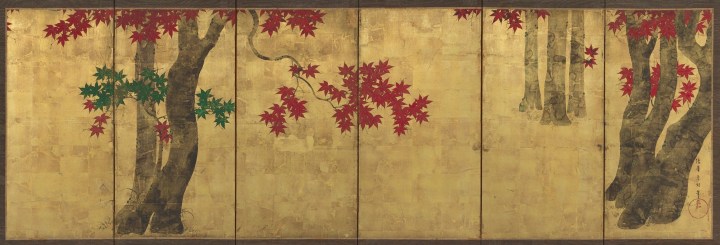
Tawaraya Sōri, Autumn Maple Trees, painted screen, second half of the eighteenth century
(Feinberg Collection, TL42147.39)

◊  ◊  ◊  ◊  ◊

Press release (3 February 2020) for the exhibition:

Painting Edo: Japanese Art from the Feinberg Collection
Harvard Art Museums, 14 February — 18 July 2021

Curated by Rachel Saunders and Yukio Lippit

Beginning February 14, 2020, the Harvard Art Museums present Painting Edo: Japanese Art from the Feinberg Collection, a special exhibition of more than 120 of the finest works from the preeminent collection of Robert S. (Harvard class of 1961) and Betsy G. Feinberg; the exhibition runs through July 26, 2020. Painting Edo offers a window onto the supremely rich visual culture of Japan’s early modern era and explores how the Edo period (1615–1868), and the city of Edo (present-day Tokyo), expressed itself during a time of artistic renaissance. A striking array of paintings in all the major formats will be on display—hanging scrolls, folding screens, sliding doors, fan paintings, and woodblock-printed books, among others—from virtually every stylistic lineage of the era, telling a comprehensive story of Edo painting on its own terms.
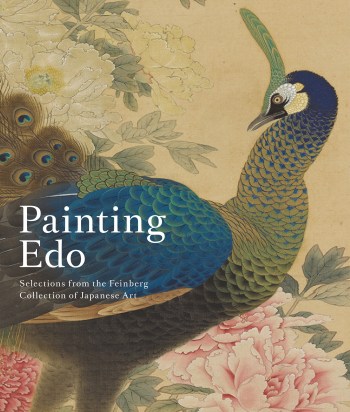
Painting Edo, organized by the Harvard Art Museums, is co-curated by Rachel Saunders, the Abby Aldrich Rockefeller Curator of Asian Art at the Harvard Art Museums, and Yukio Lippit, the Jeffrey T. Chambers and Andrea Okamura Professor of History of Art and Architecture at Harvard University. The exhibition will be on view exclusively at the Harvard Art Museums; an illustrated publication by Saunders and Lippit accompanies the show.

Painting Edo is one of the largest exhibitions ever presented at the Harvard Art Museums—and fittingly so, since the Feinberg Collection is one of the largest gifts of art ever promised to this institution,” said Martha Tedeschi, the Elizabeth and John Moors Cabot Director of the Harvard Art Museums. “We are immensely grateful to the Feinbergs, whose great care and vision will ensure that the beauty and material ingenuity of these works reach viewers today and for generations to come.”

Robert S. and Betsy G. Feinberg generously promised their collection of more than 300 works of Japanese art to the Harvard Art Museums in 2013. Judiciously assembled over nearly fifty years, the collection—the finest private collection of Edo period Japanese painting in the United States—offers an exceptional opportunity to explore continuities and disruptions in artistic practice in early modern Japan. The museums’ stewardship of the collection ensures access by students, faculty, scholars, and the public, and allows for teaching, research, and further documentation of these important works.

The Feinberg Collection is notable not only for its size and remarkable quality, but also for its comprehensiveness. It comprises representative paintings from virtually every stylistic lineage of the era: from the gorgeous decorative works of the Rinpa School to the luminous clarity of the Maruyama-Shijō School, from the monochromatic indexes of interiority of so-called Nanga, or Southern School, painting to the actors and courtesans of the pleasure quarters depicted in ukiyo-e, to the inky innovations of the so-called eccentrics. A complete catalogue of the Feinberg Collection will be published by the museums in late summer 2020.

Over the last five years, since the museums reopened in 2014, select objects from the Feinberg Collection have been on display in extended thematic installations in the East Asian gallery on Level 2. The rotating presentation of these works was designed not only to introduce strengths of the collection to visitors, but also to broaden access for teaching and research. These initial installations provided a preview of the amazing range of works now united in the powerhouse Painting Edo exhibition.

“I had the pleasure of meeting the Feinbergs and viewing their collection for the first time in the late 1990s while I was a student,” said Professor Lippit. “That experience gave me an appreciation for the study of new objects and cultural histories, and since becoming a faculty member at Harvard I have been actively teaching with the Feinberg Collection, inviting students to view and discuss the paintings.”

Painting Edo begins in the Special Exhibitions Gallery on Level 3 and expands into three adjacent galleries typically reserved for installations that support university coursework. This is the first time the museums mount a single exhibition across all four spaces. Visitors are greeted by Tani Bunchō’s Grasses and Moon (1817), a large painting that encapsulates the Japanese tradition of moon-viewing, before being immediately enveloped by Sakai Hōitsu’s Birds and Flowers of the Twelve Months (c. 1820–28), a stunning group of 12 hanging scrolls that together create a paradisal garden in which all the seasons flower simultaneously. From this introductory gallery, visitors are encouraged to wander at will to discover the major schools and styles of painting. Galleries are organized to reflect Edo period conceptions of lineage, offering a view of how “Edo” was articulated by and for its own creators and consumers.

“The Feinbergs have collected so carefully and with such dedication over the years that they have formed a truly comprehensive collection,” said Saunders. “That is particularly significant for us as a teaching museum because it allows us to look at the whole gamut of Edo painting within the exhibition, including virtually every major lineage and painting format.”

Additional Highlights

• Maruyama Ōkyo’s Peacock and Peonies (1768), a hanging scroll with a resplendent peacock rendered with Western-style anatomical precision against a luxuriant background of peonies [Intro section]

A Portuguese Trading Ship Arrives in Japan (17th century), a pair of six-panel folding screens that depicts the arrival of a ship into port and the procession of its captain into town, an annual voyage made by the Portuguese to trade silver, silks, and spices [Floating Worlds section]

• Tawaraya Sōri’s Autumn Maple Trees (second half 18th century), one of only a handful of works that survive by the artist and widely regarded as his masterpiece [School of Kōrin section]

• Ikeno Taiga’s The Poet Su Shi and Meng Jia Loses His Hat (18th century), a pair of six-panel folding screens depicting two renowned figures in acts of elegant disregard for societal norms [Eccentricity section]

Lotus in Autumn (1872), a wildly brushed hanging scroll by the female artist Okuhara Seiko, whose Chinese-style ink paintings became hugely popular in the years immediately following the Meiji Restoration of 1868, a time that ushered in Japan’s modern era [Remembering Edo section]

• Twenty fans by Suzuki Kiitsu, displayed against a deep blue backdrop, evoking the moment at the end of summer when Japanese men and women would cast their used fans into the river in celebration of the arrival of autumn [Remembering Edo section]

A rotation of select exhibition objects will take place between May 4 and 7 to preserve light-sensitive works as well as to add other fine examples of painting. Galleries will remain open to the public on these dates.

Publications

Two catalogues will be released in conjunction with the exhibition, both published by the Harvard Art Museums and distributed by Yale University Press. The first, Painting Edo: Selections from the Feinberg Collection of Japanese Art, is a companion to the exhibition; it offers a sweeping and lavishly illustrated overview of a transformative era in Japanese art-making as told through superb examples from the finest private collection of Edo period painting in the United States. It includes essays by Rachel Saunders and Yukio Lippitt. The second book, a comprehensive Catalogue of the Feinberg Collection of Japanese Art, will be published in late Summer 2020. Edited by Rachel Saunders, the volume includes new photography and commentary from a range of authors on each of the more than 300 works in the Feinberg Collection.

Rachel Saunders and Yukio Lippit, Painting Edo: Selections from the Feinberg Collection of Japanese Art (Cambridge: Harvard Art Museums, 2020), 180 pages, ISBN: 978-030025089, $35.

Rachel Saunders, ed., Catalogue of the Feinberg Collection of Japanese Art (Cambridge: Harvard Art Museums, 2020), 264 pages, ISBN: 978-0300250909, $65.

Exhibition | Colonists, Citizens, Constitutions

Posted in books, catalogues, exhibitions by Editor on February 18, 2020

From the New-York Historical Society:

Colonists, Citizens, Constitutions: Creating the American Republic
New-York Historical Society, 28 February — 31 May 2020

Curated by James Hrdlicka with Michael Ryan and Sue Ann Weinberg

First printing of the U. S. Constitution (Philadelphia: Dunlap & Claypoole, 1787)

America has been singular among nations in fostering a vibrant culture of engagement with constitutional matters and the fundamental principles of government. Featuring 40 books and documents from collector and philanthropist Dorothy Tapper Goldman’s collection—including constitutions from the federal and state levels—Colonists, Citizens, Constitutions: Creating the American Republic depicts the story of America’s unique constitutionalism from the founding era through the turn of the 20th century. The exhibition, which sketches the often troubled history of the country as it expanded across the continent, serves as a timely reminder of our country’s democratic foundations and its relentless quest for improvement. Curated by James F. Hrdlicka of Arizona State University with Michael Ryan, vice president and Sue Ann Weinberg director of the Patricia D. Klingenstein Library.

Exhibition | In Sparkling Company: Glass and Social Life

Posted in books, catalogues, exhibitions by Editor on February 17, 2020

Pair of covered green vases, ca. 1765 and a pair of vases, 1750–75, probably from the workshop of James Giles, London, gilded copper-green lead glass (Corning, New York: Corning Museum of Glass, 2003.2.4 A-B, 54.2.4 A-B).

◊  ◊  ◊  ◊  ◊

Press release (30 October 2019) for the exhibition:

In Sparkling Company: Glass and the Costs of Social Life in Britain during the 1700s
Corning Museum of Glass, Corning, New York, 9 May 2020 — 3 January 2021; new dates: 22 May 2021 — 2 January 2022

Curated by Christopher Maxwell

The Museum’s spring exhibition, In Sparkling Company: Glass and Social Life in Britain during the 1700s, will open May 9, 2020. With exhibition design by Selldorf Architects, In Sparkling Company will present the glittering costume and jewelry, elaborate tableware, polished mirrors, and dazzling lighting devices that delighted the British elite, and helped define social rituals and cultural values of the period. Through a lens of glass, this exhibition will show visitors what it meant to be ‘modern’ in the 1700s, and what it cost.

The exhibition will also include a specially created virtual reality reconstruction of the remarkable and innovative spangled-glass drawing room completed in 1775 for Hugh Percy, 1st Duke of Northumberland (1714–1786), and designed by Robert Adam (1728–1792), one of the leading architects and designers in Britain at the time. An original section of the room (which was dismantled in the 1870s), on loan from the Victoria and Albert Museum in London, will be on view in North America for the first time as part of the exhibition. It will be accompanied by Adam’s original colored design drawings for the interior, on loan from the Sir John Soane’s Museum, London.

“One medium that is often overlooked in scholarly discussions of 18th-century art, design, and material culture is glass,” said Christopher L. Maxwell, Curator of European Glass at CMoG, who has organized the exhibition. “In Britain, developments in glass formulas and manufacturing techniques resulted in new and better types of glass, from windowpanes and mirrors to heavy, clear ‘crystal’ tableware, perfectly suited to the tastes and needs of Britain’s growing urban elite whose wealth derived from new enterprises in finance, manufacture, international trade and colonial expansion. In Sparkling Company will demonstrate the many functions and meanings of glass in the exuberant social life of the 1700s.”

The smooth, ‘polished’ and reflective properties of glass perfectly embodied 18th-century ideals of sociability, in what is considered by many as the ‘age of politeness.’ As urban centers grew in size and prosperity, sociability became ever more sophisticated. The terms ‘polite’ and ‘polished’ were often used interchangeably in the numerous etiquette manuals eagerly read by those wishing to take their place in the polite world. Examples of such literature will be displayed alongside fashionable glass of the period, including embroidered costume, mirrors, a chandelier, cut glass lighting and tableware, and paste jewelry that accessorized and defined the lives of the ‘polished’ elite.

In the 1700s Britain was a prosperous and commercial nation. Its growing cities were hubs of industry, scientific advancement, trade and finance, and its colonies were expanding. British merchants navigated the globe carrying a multitude of cargoes: consumable, material, and human. Underpinning Britain’s prosperity was a far-reaching economy of enslavement, the profits of which funded the pleasures and innovations of the fashionable world, among them luxury glass. Alongside the beauty and innovation of glass during this period, the exhibition will consider the role of the material as a witness to colonization and slavery. Using artifacts and documents relating to the slave trade, it will reveal a connection that permeated all levels of British society.

From glittering costume and elaborately presented confectionery, to polished mirrors and dazzling chandeliers, glass helped define the social rituals and cultural values of the period. While it delighted the eyes of the wealthy, glass also bore witness to the horrors of slavery. Glass beads were traded for human lives while elegant glass dishes, baskets and bowls held sweet delicacies made with sugar produced by enslaved labor.

In Sparkling Company: Glass and Social Life in Britain during the 1700s will include important examples of 18th-century British glass, including:

• Glass embroidered costume: a spectacular men’s coat intricately decorated with glass ‘jewels’ made around 1780; a pair of women’s shoes covered in glass beads; shoe buckles set with glass paste jewels; jewelry and other accessories.
• Cut glass lighting and tableware, all made possible through the perfection of British lead ‘crystal’ in the late 1600s and exported throughout Europe and the British colonies in America and beyond.
• A number of large mirrors, which became the tell-tale sign of a fashionable interior, and reverse-painted glass meticulously decorated in China for the British luxury market.
• Opulent glass dressing room accessories, including a magnificent gilded silver dressing table set, with a looking glass as its centerpiece, made in about 1700 for the 1st Countess of Portland; perfume bottles, patch boxes, a dazzling cut glass washing basin and pitcher and an exquisite blue glass casket richly mounted in gilded metal, used in the ‘toilette’ a semi-public ritual of dressing which was adopted from France for men and women alike and became a feature of British aristocratic life in the 18th century.

Robert Adam, Design for the end wall of the drawing room at Northumberland House, 1770–73, pen, pencil, and colored washes, including pink, verdigris, and Indian yellow on laid paper, 52 × 102 cm (London: Sir John Soane’s Museum, SM Adam, volume 39/7; photo by Ardon Bar Hama).

◊  ◊  ◊  ◊  ◊

Glass Drawing Room for the Duke of Northumberland

Over the course of the 18th century, domestic interiors were transformed by the increasing presence of clear and smooth plate glass. A remarkable example is the lavish drawing room designed by the celebrated British architect Robert Adam for Hugh Percy, 1st Duke of Northumberland (1714–1786) and his wife, the Duchess Elizabeth Percy (1716–1776), and completed in 1775. This unique room, measuring 36 by 22 feet, was paneled between dado rail and architrave with red glass panels sprinkled on the reverse with flakes of metal foil, like large-scale glitter. Similarly spangled green glass pilasters, large French looking glasses, and intricate neo-classical ornament in gilded lead completed the dazzling scheme. The room was altered in the 1820s and finally dismantled in the 1870s, when Northumberland House was demolished. Many of the panels were acquired by the V&A Museum in the 1950s, but their poor condition meant that they could only be partially displayed. The panels on display at The Corning Museum of Glass incorporate newly-conserved elements from the V&A’s stores.

In Sparkling Company will feature a virtual reality reconstruction of the drawing room, created by Irish production house Noho. Visitors to the exhibition will be transported into the interior, experiencing the original design scheme—last seen almost 200 years ago. This will be the first virtual-reality experience ever offered at CMoG. Visitors will also be able to see Robert Adam’s design drawings, on loan from the Sir John Soane’s Museum, London, and a section of the original Northumberland House Glass Drawing Room on loan from the V&A Museum, which has never been on view in North America.

In Sparkling Company: Glass and Social Life in Britain during the 1700s will include loans from the Victoria and Albert Museum; Sir John Soane’s Museum; the Museum of London; the Fashion Museum, Bath; Royal Museums Greenwich; Los Angeles County Museum of Art (LACMA); Penn State University Library; Cleveland Museum of Art; and The Museum of Fine Arts in Boston.

The exhibition is accompanied by a catalogue, In Sparkling Company: Reflections on Glass in the 18th-Century British World (The Corning Museum of Glass, 2020). Publication contributors include Marvin Bolt, Kimberly Chrisman Campbell, Jennifer Chuong, Melanie Doderer Winkler, Christopher Maxwell, Anna Moran, Marcia Pointon, and Kerry Sinanan.

◊  ◊  ◊  ◊  ◊

Note (added 2 May 2021) — The posting was updated with revised dates for the exhibition.

Note (added 16 September 2021) — The posting has been updated to include the revised title; the original title was In Sparkling Company: Glass and Social Life in Britain during the 1700s.

Exhibition | British Baroque: Power and Illusion

Posted in books, catalogues, exhibitions by Editor on February 11, 2020

John James Baker, The Whig Junto, 1710, oil on canvas, 319 × 365 (London: Tate, from the collection of Richard and Patricia, Baron and Baroness Sandys, accepted by HM Government in Lieu of inheritance tax and allocated to Tate in 2018, T15046).

◊  ◊  ◊  ◊  ◊

From the press release (3 February 2020) for the exhibition:

British Baroque: Power and Illusion
Tate Britain, London, 4 February — 19 April 2020

Curated by Tabitha Barber, with David Taylor and Tim Batchelor

British Baroque: Power and Illusion is the first ever exhibition to focus on baroque culture in Britain. From the Restoration of Charles II in 1660 to the death of Queen Anne in 1714, the exhibition explores the rich connections between art and power in this often-overlooked era. The show includes many new discoveries and works displayed in public for the first time, many on loan from the stately homes for which they were originally made.

The baroque is usually associated with the pomp and glory of European courts, epitomised by that of Louis XIV, but baroque visual culture also thrived in Britain under very different circumstances. From the royal court’s heyday as the brilliant epicentre of the nation’s cultural life, to the dramatic shift in power that saw the dominance of party politics, this exhibition shows how magnificence was used to express status and influence. As well as outstanding paintings by the leading artists of the day, including Sir Peter Lely, Sir Godfrey Kneller and Sir James Thornhill, the show also uncovers pivotal works by lesser known names.

British Baroque begins by exploring art’s role in the construction of a renewed vision of monarchy, including portraits of Charles II and idealised representations of his power. It looks at the splendour, colour and vivacity of the Restoration court, as well as the critiques of its tone and morals. Portraits by Lely, including Barbara Villiers, Duchess of Cleveland with her son, as the Virgin and Child 1664, were used to illustrate the important position held by royal mistresses while works by Jacob Huysmans, such as Catherine of Braganza c.1662–64, shaped the independent visual identity of the Queen consort.

The visual and devotional differences between Protestant and Catholic worship are examined in the religious art of the period. Emotionally charged altarpieces from the contentious Catholic chapels of Mary of Modena and James II are on show, as well as beautiful carvings by Grinling Gibbons and Thornhill’s designs for the painted dome of St Paul’s Cathedral. Another theme explored is the wonder and artifice of still life and perspective trompe l’oeil, including works by Samuel van Hoogstraten collected by members of the Royal Society, Chatsworth’s famous violin painted as if hanging on the back of a door, and the hyper-real flower paintings of Simon Verelst which looked so real that they fooled the diarist Samuel Pepys.

Godfrey Kneller, Portrait of Matthew Prior, 1700 (Cambridge, Trinity College).

The profound visual impact and drama of baroque architecture is represented with works by the great architects of the age: Wren, Hawksmoor, and Vanbrugh. Architectural designs, lavish prints, and wooden models relating to the significant buildings of the age, such as St Paul’s Cathedral, Hampton Court Palace, and Blenheim Palace, are shown alongside vast painted birds-eye views of estates. As well as architecture, the exhibition looks at the awe-inspiring illusion of painted baroque interiors. Mythological mural paintings, which frequently carried contemporary political messages, were designed to overwhelm spectators and impress upon them the power, taste, and leadership of their owners.

War and politics dominated the reigns of William III and Anne. The exhibition includes heroic equestrian portraiture, panoramic battle scenes, and accompanying propaganda. Victories such as Blenheim celebrated individuals such as the Duke of Marlborough, but they also embodied the might of the nation on a European stage. The show concludes with the dignified grandeur of portraiture made in the last two decades of the Stuart period, when party politics offered an alternative avenue to power. As well as imposing portraits of courtiers and aristocrats, the new political elite is seen in Kneller’s depiction of the Whig Kit-Cat Club and John James Baker’s enormous group portrait The Whig Junto from 1710.

British Baroque: Power and Illusion is curated by Tabitha Barber, Curator, British Art 1550–1750, Tate Britain, with David Taylor, Curator of Pictures and Sculpture, National Trust, and Tim Batchelor, Assistant Curator, British Art 1550–1750, Tate Britain. It is accompanied by a fully illustrated catalogue and a programme of talks and events in the gallery.

Tabitha Barber and Tim Bachelor, British Baroque: Power and Illusion (London: Tate Publishing, 2020), 176 pages, ISBN 978-1849766814, £25 / $35.

Exhibition | In Pursuit of the Picturesque

Posted in exhibitions by Editor on February 4, 2020

Samuel Daniell, Scene in Sitsikamma, Elephants with Herons at a Pool, color lithograph from African Scenery and Animals, 1804
(Princeton University Library, Promised Gift from the Collection of Leonard L. Milberg)

◊   ◊   ◊   ◊   ◊

Press release for the exhibition now on view at Princeton’s Firestone Library:

In Pursuit of the Picturesque
Firestone Library, Princeton University, 22 January — 1 March 2020

Curated by Stephen Ferguson, Jennifer Meyer, and Emma Sarconi

In Pursuit of the Picturesque, an exhibition featuring British color plate books published between 1776 and 1868, is on view at the Ellen and Leonard Milberg Gallery, located in the Firestone Library lobby, from January 22 until 1 March 2020. Showcasing selected items from the collection of Leonard L. Milberg (Princeton University Class of 1953), the exhibition includes nearly 40 large books with colorful, detailed imagery from the British Empire at the turn of the 19th century. This selection from Milberg’s collection of 115 color plate books portrays an expanding global empire at the advent of lithographic printing, which captured color and imagery with more beauty and ease than ever before.

Milberg has collected color plate books since the 1980s, though his love of art began in the 1950s. During his Army days in Alaska, he devoted his time to reading American art books. Milberg started collecting American prints, then discovered American printmakers who were English emigres, which led to his interest in British color plates. “They tell a wonderful story through pictures,” said Milberg. “If you take a book in your hands, you can hold Edward Lear’s parrots and hear the crackling of the old paper. It’s much different from a painting, which is only a visual experience.”

Princeton University Library’s Emma Sarconi, reference professional for Special Collections, who co-curated the exhibition with Stephen Ferguson, associate university librarian for external engagement, and Jennifer Meyer, curatorial assistant for Special Collections, said topics range from history to horticulture, from martial achievements to topographical scenery. “These color plates were not just beautiful objects,” explained Sarconi. “They also created a vision of empire that could be exotic, romantic, and picturesque.” To Milberg, “it satisfies traveling because the color plates cover all over the world, from the Mexican Yucatán, to the South Seas, from Sicily to South Africa.”

Beyond their beauty, the color plate illustrations were scientific, political, and historical knowledge during a period of British expansion. “Very often, the books reflect expeditions like Captain Cook’s voyages,” said Milberg, “with the naturalist historian, Sir Joseph Banks, reporting back to England’s Royal Society.” From the comfort of their homes, the British public could be transported to faraway lands through these lavish, vibrant prints, kindling national pride and patriotism. Meyer commented, “Love of the monarchy and British homeland, as well as pride of a powerful military and expanding global empire, are on full display in these volumes.” Moreover, the illustrations began to normalize far off places and the people who lived there, envoking a sense of enchantment and exocitism.

According to Sarconi, “At the same time that these images inspired the viewer, they did so by silencing the horrific aspects of colonial expansion, composed without signs of the struggle, strife, and subjugation that made the empire possible.”

In a gesture of great generosity, Milberg has promised to give his collection of color plate books to Princeton University Library. The promised gift will add greatly to the Library’s holdings of British art of this period and will be a new resource for students and scholars in art, cultural, and other fields of history.

Milberg declared in his 30th reunion book entry, “I have belatedly, but passionately discovered books, prints, and the Princeton University Rare Book Library.”

During the past 37 years, he has shared the fruits of this passion with our community, said Ferguson. Milberg’s gifts (13,000 items plus) range from 19th-century American prints and drawings to several book collections: American poetry, Irish poetry, prose, and theatre as well as two Judaica collections.

Exhibition | Jacques-Louis David Meets Kehinde Wiley

Posted in exhibitions, today in light of the 18th century by Editor on January 31, 2020

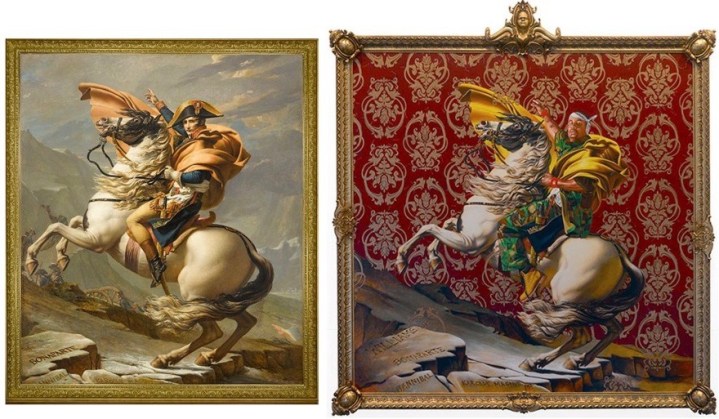
Jacques-Louis David, Napoleon Crossing the Alps, 1800–01, oil on canvas, 102 × 87 inches (Château de Malmaison); and Kehinde Wiley, Napoleon Leading the Army over the Alps, 2005, oil on canvas, 108 × 108 inches (Brooklyn Museum, Partial gift of Suzi and Andrew Booke Cohen in memory of Ilene R. Booke and in honor of Arnold L. Lehman, Mary Smith Dorward Fund, and William K. Jacobs, Jr. Fund, 2015.53), © Kehinde Wiley.

◊   ◊   ◊   ◊   ◊

Press release (via Art Daily) for the exhibition:

Jacques-Louis David Meets Kehinde Wiley
Château de Malmaison, 9 October 2019 — 6 January 2020
Brooklyn Museum, New York, January 24–May 10, 2020

Curated by Lisa Small and Eugenie Tsai

The Brooklyn Museum presents Jacques-Louis David Meets Kehinde Wiley, an exhibition pairing an iconic painting from the Museum’s collection—Kehinde Wiley’s Napoleon Leading the Army over the Alps (2005)—with its early nineteenth-century source image, Jacques-Louis David’s Bonaparte Crossing the Alps (1800–01). By displaying the two paintings together, in dialogue with each other for the first time, the exhibition explores how ideas of race, masculinity, representation, power, and agency have played out across the history of Western portraiture. The presentation is organized by the Brooklyn Museum in collaboration with the Château de Malmaison, where the original version of David’s portrait is permanently displayed. Before traveling to the Brooklyn Museum, the two paintings were on view at the Chateau de Malmaison (Kehinde Wiley Rencontre Jacques-Louis David).

David’s famous portrait was commissioned in 1800 by King Charles IV of Spain in an effort to win the favor of Napoleon Bonaparte, who was then First Consul of France. In the two centuries since its commission, Bonaparte Crossing the Alps has inspired numerous interpretations, but none seem to resonate in contemporary culture as much as Wiley’s large-scale version. In his Napoleon Leading the Army over the Alps, Napoleon is replaced with a Black man wearing camouflage fatigues and Timberland boots. By combining the role, stature, and implied historical legacy depicted in Bonaparte Crossing the Alps with visual markers of status from contemporary African American culture, Wiley challenges the art historical canon, critiquing how it has routinely overlooked the collective Black cultural experience.

David posed Napoleon in the tradition of equestrian portraits of historical commanders like Hannibal and Charlemagne, amplifying the grandeur of the portrait, which commemorated the First Consul and Reserve Army’s expedition through the Great Saint Bernard Pass, in the Alps. In the painting, Napoleon leads his soldiers from atop a rearing steed; in actuality he made this journey on the back of a mule. This is just one example of how Bonaparte Crossing the Alps constructed a strategic image of the General as a triumphant military leader while departing from historical accuracy.

In Wiley’s interpretation, the artist replaced the Italian mountainside and ready infantry with a detailed background flooded with sperm cells. To this ensemble, he added an ornate gilded frame with testicular-shaped cartouches in each corner and crowned by a carved self-portrait emerging from yonic volutes. The result transforms and challenges the grand tradition of historical portraiture established by artists like David, calling attention to the long-standing blind spots of canonical Western painting and the need to redress historical biases. The work belongs to an ongoing series of Wiley’s titled Rumors of War, begun in 2005, which includes the artist’s latest work of the same name: a monumental equestrian bronze statue in New York’s Times Square, which was unveiled in September 2019 and is now in the collection of the Virginia Museum of Fine Arts.
Jacques-Louis David Meets Kehinde Wiley at the Brooklyn Museum marks the first display of David’s portrait in New York, and the first time the two works have been on view together in the United States. To highlight this important occasion, Wiley collaborated with the Brooklyn Museum on the exhibition design for the U.S. presentation. A video showing Wiley on the grounds of Malmaison also accompanies the project, incorporating the artist’s perspectives on how the Western canon, French portrait tradition, and legacies of colonialism influence his own practice. When displayed together, these two works highlight the importance of re-examining representations of power across two centuries and two cultural contexts.

The exhibition also features a selection of complimentary works by Wiley, including a small-scale version of the artist’s recent monumental equestrian statue, Rumors of War. Also on display is Houdon Paul-Louis, a 2011 bust by Wiley that is part of the Museum’s collection. Several works from the Museum’s collection are also on display to provide historical context for Napoleon, including a small bronze equestrian portrait by Antoine-Louis Barye, medals struck by the Emperor to commemorate his achievements, and British prints brutally satirizing him.

Jacques-Louis David Meets Kehinde Wiley is organized by the Brooklyn Museum and Musée national des châteaux de Malmaison et Bois-Préau. The Brooklyn presentation is curated by Lisa Small, Senior Curator, European Art, and Eugenie Tsai, John and Barbara Vogelstein Senior Curator, Contemporary Art, Brooklyn Museum.

◊   ◊   ◊   ◊   ◊

A booklet for the exhibition at the Châteaux de Malmaison, with brief essays by Emmanuel Delbouis and Élodie Vaysse, is available as a PDF file here (in French and English).

Exhibition | The Cloth that Changed the World

Posted in books, catalogues, exhibitions by Editor on January 29, 2020

Opening in April at the ROM:

The Cloth that Changed the World: India’s Painted and Printed Cottons
Royal Ontario Museum, Toronto, 4 April — 27 September 2020

Made with novel cotton, vivid colours and exuberant design, the painted and printed cottons of India changed human history; they revolutionized art, fashion, and science wherever they went around the globe. Featuring pieces from the Museum’s world-renowned collection and several important international loans, this ROM original exhibition explores how over thousands of years India’s artisans have created, perfected, and innovated these printed and painted multicoloured cotton fabrics to fashion the body, honour divinities, and beautify palaces and homes.

Exploring the fascinating stories behind the making and trade of these glorious pieces past and present, The Cloth that Changed the World considers India’s textile innovations and their influences on fashion, trade, and industry around the world in places as far as Cairo, Japan, Sumatra, London, and Ottawa. They were the luxury fabric of their day, coveted by all, and one of the great inventions that drew foreigners to India’s shores hungry for more. Discover how through trade-routes, encounters, and exchange, these cloths connected cultures, inspired imitation and, quite literally, changed the world. Experience how India’s designers and makers today are innovating for new times and audiences.

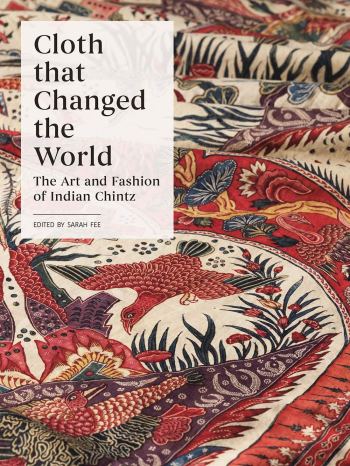
Sarah Fee, ed., with a preface by Sven Beckert, Cloth that Changed the World: The Art and Fashion of Indian Chintz (New Haven: Yale University Press, 2020), 312 pages, ISBN: 978-0300246797, $50.

◊   ◊   ◊   ◊   ◊

This ROM blog posting from 6 July 2018 looks back to the museum’s 1970 exhibition:

The Origins of Chintz
Royal Ontario Museum, Toronto, 8 April — 28 May 1970

“Chintz… the exotic fabric from India that caught Europe’s fancy… So popular it was banned in England and France… Revolutionized Europe’s textile printing industry.”

Thus exclaimed the brochure that accompanied the ROM’s landmark exhibition, The Origins of Chintz, which opened in April, 1970, now nearly fifty years ago. Occupying the whole of the central ground gallery, known today as Currelly’s Court, the exhibition displayed nearly 100 towering examples of Indian ‘chintz’. . . .

Half of the one hundred objects displayed in the ROM exhibition Origins of Chintz came from the ROM’s own great holdings, particularly the 1934 donation from the estate of Harry Wearne (1852–1929), a British-born textile and wall paper designer. London’s Victoria & Albert (V&A) museum loaned almost forty treasures, including its unique ‘Garrick bed’: these Indian chintz bed coverings are famous both for their grandeur and for the impassioned letters that Mr. Garrick sent to customs officials in London begging for their return; the fabrics had been impounded during the aforementioned import ban on Indian chintz, meant to protect local British silk and linen weavers. A few additional masterpieces—including a seventeenth-century hanging from a Deccan Indian court palace—came on loan from the Metropolitan Museum of Art, the Cooper Hewitt Design Museum, and Austrian Decorative Art Museum of Vienna. . . .

The full posting is available here»