Stubbs and the Politics of Nature
Recently published in The Oxford Art Journal:
Douglas Fordham, “George Stubbs’s Zoon Politikon,” Oxford Art Journal 33 (March 2010): 1-23.
 Abstract: Returning to Alex Potts’s assertion that Georgian animal paintings were conceived ‘as extensions of the social world’, this essay examines two unprecedented canvases that George Stubbs painted for the Second Marquess of Rockingham in the 1760s. I argue that the massive Lion Attacking a Stag and Lion Attacking a Horse are richly coded allegories, in the sense articulated by Walter Benjamin in The Origin of German Tragic Drama, which combine iconographic codes from heraldry, the aristocratic menagerie, thoroughbred breeding, oppositional satire, and Enlightenment science to produce a unique form of ‘heraldic naturalism’. Through a reconstruction of Rockingham’s politics as well as the room in his London townhouse where the paintings were displayed, this article attempts to recover the political implications of George Stubbs’s ‘natural order’ as well as its relation to Edmund Burke’s sublime aesthetic ideology. Ultimately, this article argues that the Rockingham lions
naturalize the claims of landed authority through an innovative response
to immediate domestic and imperial pressures.
Assessing the Digital Burney Newspaper Collection
Last October, Gale made its Burney Collection of newspapers available for a free trial through Early Modern Online Bibliography. In a recent posting at EMOB, Eleanor Shevlin summarizes an article from The Papers of the Bibliographical Society of America on this digital resource:
◊ ◊ ◊ ◊ ◊
Ashley Marshall and Rob Hume, “The Joys, Possibilities, and Perils of the British Library’s Digital Burney Newspapers Collection,” PBSA 104:1 (2010): 5-52.
At forty-seven pages Ashley Marshall and Rob Hume’s article offers a substantive assessment of this relatively recent electronic resource for early modern studies. Early on the authors argue that “[d]igital Burney is amazing, but exploiting it fully is going to demand some serious rethinking and reorientation in both our research and our teaching (6-7). Their claim that this tool “will change the way we conduct our business” (7) possesses much merit; fulfilling digital Burney’s promise, however, will depend on far broader scholarly access than currently exists. Equally important, scholars need to acquire a firm understanding of its possible uses, search capabilities, and limitations. While Marshall and Hume’s piece cannot assist in matters of accessibility (though it could serve as support for the tool’s purchase), their essay does advance our knowledge of how this tool might be employed and how its features and limitations can best be navigated.
The article is usefully divided into five sections. . . .
The full review of the article is available here»
The Eighteenth Century in April’s ‘Burlington Magazine’
From last month’s issue of The Burlington Magazine 152 (April 2010):
- Ann V. Gunn, “Paul Sandby, William Pars and the Society of Dilettanti,” pp. 219-226.
- Owen Hopkins, review of Compass and Rule: Architecture as Mathematical Practice in England by A. Gerbino and S. Johnston, pp. 250-51.
- Robert J. Gemmett, review of William Beckford: A Bibliography by J. Millington, pp. 251-52.
- Vanessa Brett, review of British and Continental Gold and Silver in the Ashmolean Museum by T. Schroder, p. 252.
- Christoph Martin Vogtherr, review of the exhibition Jean Raoux, pp. 267-68.
New Online Art History Publication — ‘RIHA Journal’
RIHA, the International Association of Research Institutes in the History of Art, is pleased to announce the launch of RIHA Journal, the new international online-journal for the history of art, on April 14, 2010. A joint project of 27 institutes in 18 countries, the journal provides an excellent medium for fostering international discourse among scholars. Funding is provided by the German Federal Government Commissioner for Culture and the Media (Beauftragter der Bundesregierung für Kultur und Medien, BKM). RIHA Journal (ISSN 2190-3328) features research articles in either English, French, German, Italian, or Spanish, and invites submissions on the whole range of art historical topics and approaches. Manuscripts undergo a double blind peer review process and are published within few months from submission. A not-for-profit e-journal committed to the principles of Open Access, RIHA Journal makes all articles available free of charge. RIHA Journal welcomes submissions at any time; for details, please contact the RIHA institute in your country and/or field of expertise.
The Eighteenth Century in the Current Issue of ‘Art History’
Kate Retford, “A Death in the Family: Posthumous Portraiture in Eighteenth-Century England,” Art History 33 (February 2010): 74-97.
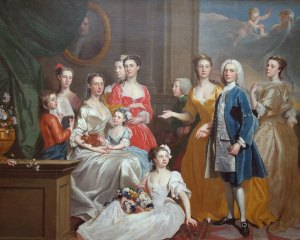
Joseph Highmore, "The Lee Family," 1736. Oil on canvas, 243.8 × 289.6 cm. (Wolverhampton Art Gallery)
Abstract: This article explores a number of unusual portraits produced in eighteenth-century England in which the realms of the posthumous and the living were mingled. In some cases, the dead were brought ‘back to life’ and restored to their rightful place in the family unit. In others, such as Joseph Highmore’s portrait of The Lee Family (1736), Thomas Gainsborough’s The Sloper Family (1787–88) or The Knatchbull Family by John Singleton Copley (1800–03), they were included in spiritualized form, hovering in a supernatural realm above the relatives they had left behind on terra firma. The article unpicks the particular circumstances that prompted these extraordinary commissions, exploring the personal and emotional histories of the sitters and artists. It also draws conclusions about the broader social, cultural, religious and artistic contexts that made these relatively rare, and frequently problematic images.
Kate Retford is Lecturer in History of Art at Birkbeck College, University of London. Her book, The Art of Domestic Life: Family Portraiture in Eighteenth-Century England, was published by Yale University Press in 2006. In addition, she has written a number of articles on topics relating to eighteenth-century portraiture, gender, and the country house art collection.
◊ ◊ ◊ ◊ ◊
Review of Ephemeral Bodies: Wax Sculpture and the Human Figure, with a translation of Julius von Schlosser’s “History of Portraiture in Wax,” edited by Roberta Panzanelli (Los Angeles: Getty Research Institute for the History of Art and the Humanities, 2008), pp. 170-72.
Reviewed by Matthew Bowman (lecturer at the University of Essex and co-founding editor of Rebus: Journal of Art History and Theory)
Most of the eight contributions in “Ephemeral Bodies” were originally presented in a workshop held at the Getty Research Institute in 2004. The texts examine the utilization of wax to depict the human body (in whole and in part, internally and externally) from a variety of methodological perspectives in accordance with the very different uses to which wax has been put. This includes considerations of wax sculpture from medical, anatomical, art-historical, philosophical, anthropological and political standpoints. From an art historian’s viewpoint, wax has not really figured in the discipline of art history. Indeed, it is curious that Julius von Schlosser’s stimulating “Geschichte der Porträtbildnerei in Wachs” (“History of Portraiture in Wax”), which originally came out in 1911 and which is published here for the first time in English, remains the central art-historical text on the production of wax sculptural objects. Ephemeral Bodies is, therefore, not only a useful scholarly collection on a neglected topic but also an opportunity to gauge and expand the theoretical presuppositions of art history as a discipline. . .
For additional contents, click here»
A New Model for Publishing Art History Articles
Kunstgeschichte: Open Peer Reviewed Journal — http://www.kunstgeschichte-ejournal.net/
Transparent Reviewing and Prompt Interaction
Following the motto “Democratization of scientific communication,” this international and cross-epochal scholarly journal for art history was launched in January 2009. Papers submitted to the e-journal are first put up as ‘Discussion Papers’ for public peer assessment over a period of six months. After this stage, the authors have the option of revising their work according to the public comments. Only then will the definitive papers be published as ‘Journal Articles’. By proceeding thus we capitalize on the specific possibilities of the internet: It allows scholars to interact immediately, and to contribute comments, criticism, and additional information online to the papers published in Kunstgeschichte: Open Peer Reviewed Journal.
Contributions for the period from October-December 2009
A) New Research
- Frank Zöllner, ‘Kanon und Hysterie: Primavera, Mona Lisa und die Sixtina im Chaos der Deutungen’
- Sylvia Diebner, ‘Kunst am Bau: Die Scuole centrali antincendi in Rom-Capannelle (1941)’
- Steffen Krämer, ‘Charles Jencks und das Prinzip der Doppel-, Mehr- und Überkodierung: Kommunikation und Interpretation der postmodernen Architektur’
- Jürgen Tabor, ‘Zur sozialen Logik der Kunstindustrie’
B) Reconsidered
- Hans Sedlmayr, ‘Die macchia Bruegels [1934]’
C) Comments
- Tanja Michalsky, Hans Sedlmayr, ‘Die macchia Bruegels [1934]’ (Kunstgeschichte. Texte zur Diskussion 2009-54)
- Lambert Wiesing, Kommentar zu Martina Sauer: Wahrnehmen von Sinn vor jeder sprachlichen oder gedanklichen Fassung? Frage an Ernst Cassirer (Kunstgeschichte. Texte zur Diskussion 2008-6)
- Renate Prochno, Bemerkungen zu Anastasia Dittmann: ‘Imitation is the means, not the end, of art: Peter Paul Rubens und Sir Joshua Reynolds über die Grammatik antiker Skulptur’ (Kunstgeschichte. Texte zur Diskussion 2009-35) (more…)
In the Latest ‘Art Bulletin’
The December issue of The Art Bulletin 91 (2009) includes the following items addressing the eighteenth century:
Emma Barker, “Imaging Childhood in Eighteenth-Century France: Greuze’s Little Girl with a Dog,” pp. 426-45.
Author’s Abstract: “During the artist’s lifetime, A Child Playing with a Dog was one of Jean-Baptiste Greuze’s most admired and best-known works. The painting represent the physical, instinctual nature of the child in a manner unprecedented in French art. The image of childhood that it offers has close parallels in the scientific and medical discourse of the later eighteenth century. Like many contemporary commentators, Greuze evokes not simply the innocence of children but also their vulnerability, above all, that of little girls. He thereby implicates the viewer in the child’s fate, both for good and ill.”
Meredith Martin, review of Diplomatic Tours in the Gardens of Versailles under Louis XVI by Robert Berger and Thomas Hedin (University of Pennsylvania Press, 2008)) and Carmontelle’s Landscape Transparencies: Cinema of the Enlightenment by Laurence Chatel de Brancion (J. Paul Getty Museum, 2008), pp. 511-15.

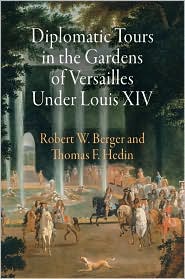 “Both Diplomatic Tours and Carmontelle’s Landscape Transparencies attempt to shed light on an underexplored aspect of French gardens and how they were portrayed in the ancien régime. As in a growing number of garden history books, the authors foreground questions of reception and use and treat these landscapes as a dynamic field of social relations — in other words, as a contested terrain. Both books also share an inclination to animate the garden as a kinetic experience by way of descriptive texts and visual images. . .” (512).
Finding the Perfect Gift
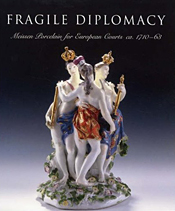
Edited by Maureen Cassidy-Geiger
Just Published
The Court Historian 14.2 (December 2009), published by The Society for Court Studies
Special Issue: Gift-Giving in Eighteenth-Century Courts — Papers from the conference Fragile Diplomacy: Meissen Porcelain for European Courts, c. 1710-1763, held at the Bard Graduate Center, New York, 17 November 2007, in conjunction with the eponymous exhibition (reviewed at artnet by N. F. Karlins).
◊ ◊ ◊ ◊ ◊
Table of Contents
 Andrew Morrall (Bard Graduate Center), Introduction
- Cordula Bischoff (State Art Collections, Dresden), Complicated Exchanges: The Handling of Authorised and Unathorised Gifts
- Christopher M. S. Johns (Vanderbilt University) The ‘Good Bishop’ of Catholic Enlightenment: Benedict XIV’s Gifts to the Metropolitan Cathedral of Bologna
- John Whitehead, Royal Riches and Parisian Trinkets: The Embassy of Saïd Mehmet Pacha to France in 1741-42 and Its Exchange of Gifts
- Michael Yonan (University of Missouri-Columbia), Portable Dynasties: Imperial Gift-Giving at the Court of Vienna in the Eighteenth Century
- Guy Walton, Emeritus (New York University), Ambassadorial Gifts: An Overview of Published Material
- Maureen Cassidy-Geiger (Cooper-Hewitt Museum/Parsons School of Design), Afterthoughts on Fragile Diplomacy: Meissen Porcelain for European Courts, c. 1710-1763
- Book Reviews / Exhibition Reviews

‘For Pembroke: Statues, dirty Gods, and Coins’

Thomas Herbert, 8th Earl of Pembroke
 Not for himself he sees, or hears, or eats;
Artists must choose his Pictures, Music, Meats:
He buys for Topham, Drawings and Designs,
For Pembroke, Statues, dirty Gods, and Coins;
Rare monkish Manuscripts for Hearne alone,
And Books for Mead, and Butterflies for Sloane
– Alexander Pope, “Epistle IV, to Lord Burlington” (“On Taste”), 1730s
For Pope – taking aim at those he saw as pretenders to taste – collectors such as Thomas Herbert, the 8th Earl of Pembroke (ca. 1656-1733), stood out as important models, easily aped but rarely emulated in a meaningful manner.

Lenos Sarcophagus (Wilton House Collection)

King's Closet at Wilton House
The current issue (July/August) of Apollo Magazine is dedicated to the Earls of Pembroke and their seat at Wilton House. Francis Russell surveys the paintings of the 8th Earl, Elizabeth Angelicoussis focuses on four Roman sarcophagi from his collection, and John Martin Robinson addresses a set of early eighteenth-century furniture acquired for Wilton House by Catherine Woronzow, the Russian wife of the 11th Earl, in the early nineteenth century from Wanstead House, Essex.










 Enfilade
1 comment