The Magazine of the Decorative Arts Trust, Winter 2024–25
The Decorative Arts Trust has shared select articles from the winter issue of their member magazine as webpages for all to enjoy. The following articles are related to the 18th century.
The Magazine of the Decorative Arts Trust, Winter 2024–25
 • “Written in Stone” by Catherine Carlisle Link»
• “The Rivers Collection of Charleston Furniture at the Gibbes Museum of Art” by Matthew A. Thurlow Link»
• “Carved from the Sea: The Art and History of Nantucket’s Pictorial Scrimshaw” by Keely Edgington Link»
• “Diplomatic Reception Rooms Anchor D.C. Gathering” by Matthew A. Thurlow Link»
• “Figuring the Black Body in European Decorative Arts” by Adrienne L. Childs Link»
• “Colonial Architecture, Decorative Arts, and Enslavement at the Colonel John Ashley House” by Livy Scott Link»
• “Convergence at the Market: Vernacular Artisans and Literati in Late Imperial China” by Danielle Zhang Link»
The printed Magazine of the Decorative Arts Trust is mailed to Trust members twice per year. Memberships start at $50, with $25 memberships for students.
Magazine cover: Detail of an early-17th-century table top from Villa La Pietraia, on display at the Opificio delle Pietre Dure in Florence, Italy.
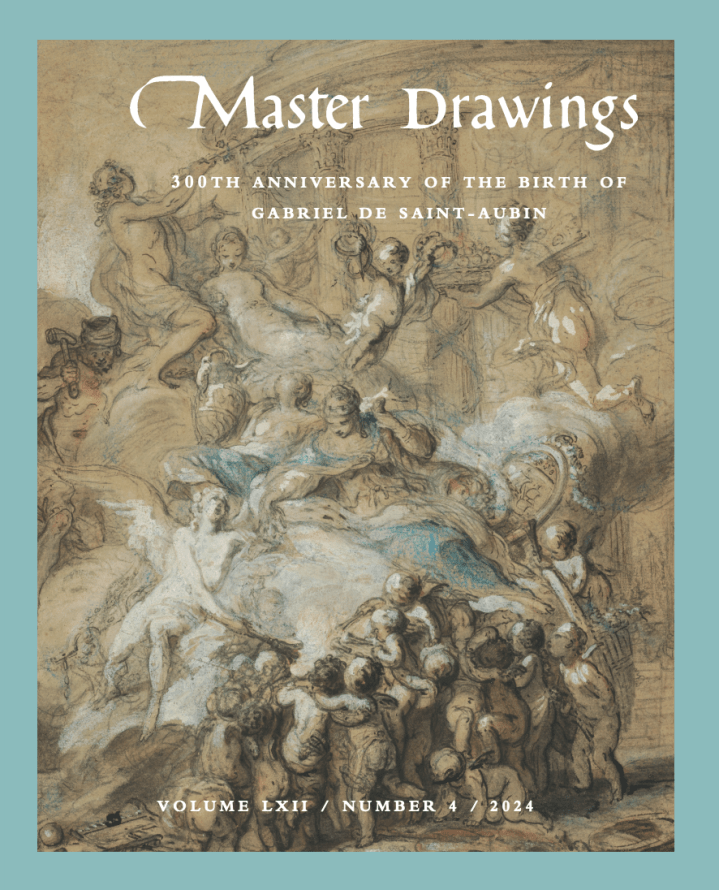
Master Drawings, Winter 2024
In the latest issue of Master Drawings:
Master Drawings 62.4 (Winter 2024)
 a r t i c l e s
• Perrin Stein, “The Crown, the City, and the Public: Saint-Aubin’s Images of Paris.”
• Kim de Beaumont, “A Curious Swan Song for Gabriel de Saint-Aubin: The Comte d’Estaing’s New World Naval Exploits.”
• Margaret Morgan Grasselli, “A Drawing by Hubert Robert and Jean Robert Ango: Correcting a Technical Description.”
• Sarah Catala, “Signed ‘Roberti’: Drawings by Hubert Robert and Jean Robert Ango.”
• Kee Il Choi Jr., “Learning to Draw: The Éducation visuelle of Alois Ko and Étienne Yang.”
r e v i e w s
• Aaron Wile, Review of the exhibition catalogue Claude Gillot: Satire in the Age of Reason, by Jennifer Tonkovich.
• Eduoard Kopp, Review of the exhibition catalogue, Promenades on Paper: Eighteenth-Century French Drawings from the Bibliothèque Nationale de France, edited by Esther Bell, Sarah Grandin, Corinne Le Bitouzé, and Anne Leonard.
• Ashley E. Dunn, Review of the exhibition catalogue Impressionists on Paper: Degas to Toulouse-Lautrec, by Ann Dumas, Leïla Jarbouai, Christopher Lloyd, and Harriet Stratis.
o b i t u a r y
• Perrin Stein, Obituary for Alaster Laing.
The Burlington Magazine, January 2025
.
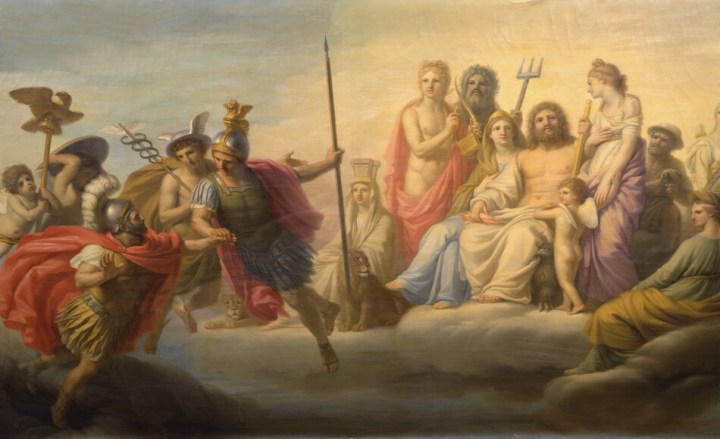
Stefano Tofanelli, Apotheosis of Romulus before the Gods of Olympus, 1790, oil on canvas, 208 × 318 cm
(Rome: Palazzo Altieri)
◊ ◊ ◊ ◊ ◊
The long 18th century in the January issue of The Burlington:
The Burlington Magazine 167 (January 2025)
e d i t o r i a l
• “A One Billion Pound Gift,” p. 3.
“Now you can gasp,” said the Chairman of the Trustees of the British Museum to guests at a recent fundraising dinner. He had just revealed the valuation of £1billion for the magnificent collection of Chinese ceramics that has been given to the museum by the Sir Percival David Foundation. Munificence on this scale is normally only associated with the richest of American museums, so a new record seems to have been set in the European context by this extraordinary gesture.
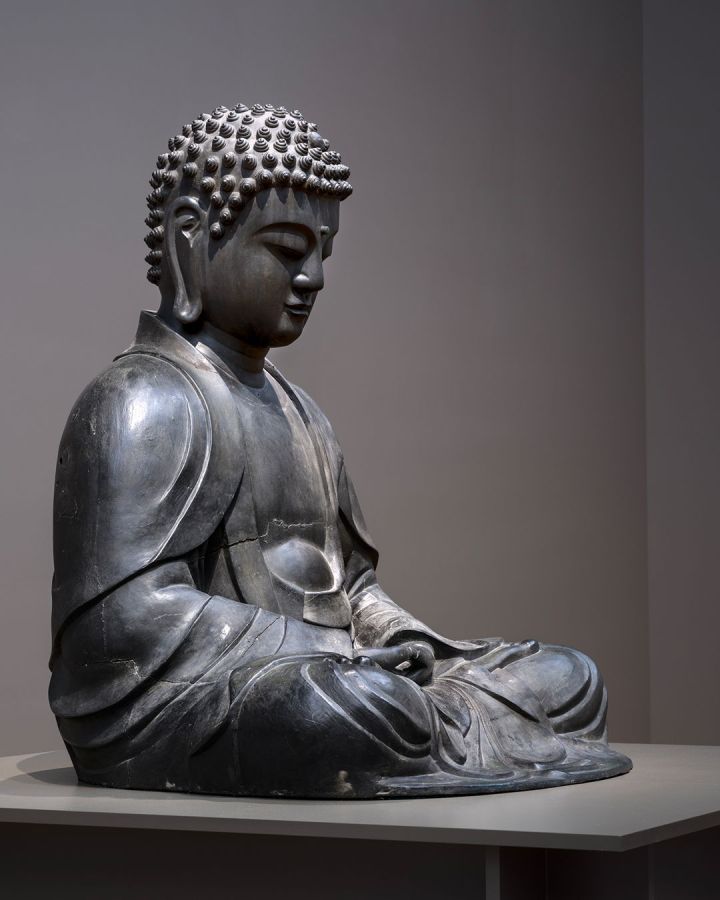
Buddha Amida (Amitabha), Japan, 1716 (Collection Wereldmuseum). Included in the exhibition Asian Bronze: 4,000 Years of Beauty.
s h o r t e r n o t i c e s
• Pilar Diez del Corral Corredoira, “A Project for the Church of Menino Deus, Lisbon, by Vieira Lusitano,” pp. 26–29.
• Alessio Cerchi, “Stefano Tofanelli’s Deification of Aeneas by Venus Rediscovered,” pp. 29–31.
r e v i e w s
• Lori Wong and Sujatha Arundathi Meegama, Review of the exhibition Asian Bronze: 4,000 Years of Beauty (Rijksmuseum, 2024–25), pp. 35–37.
• Delphine Bastet, Review of Grands décors restaurés de Notre-Dame de Paris, edited by Caroline Piel and Emmanuel Pénicaut (Silvana Editoriale, 2024), pp. 62–63.
• Peter Humfrey, Review of Anne Nellis Richter, The Gallery at Cleveland House: Displaying Art and Society in Late Georgian London (Bloomsbury, 2024), pp. 71–72.
The Burlington Magazine, December 2024
The long 18th century in the December issue of The Burlington:
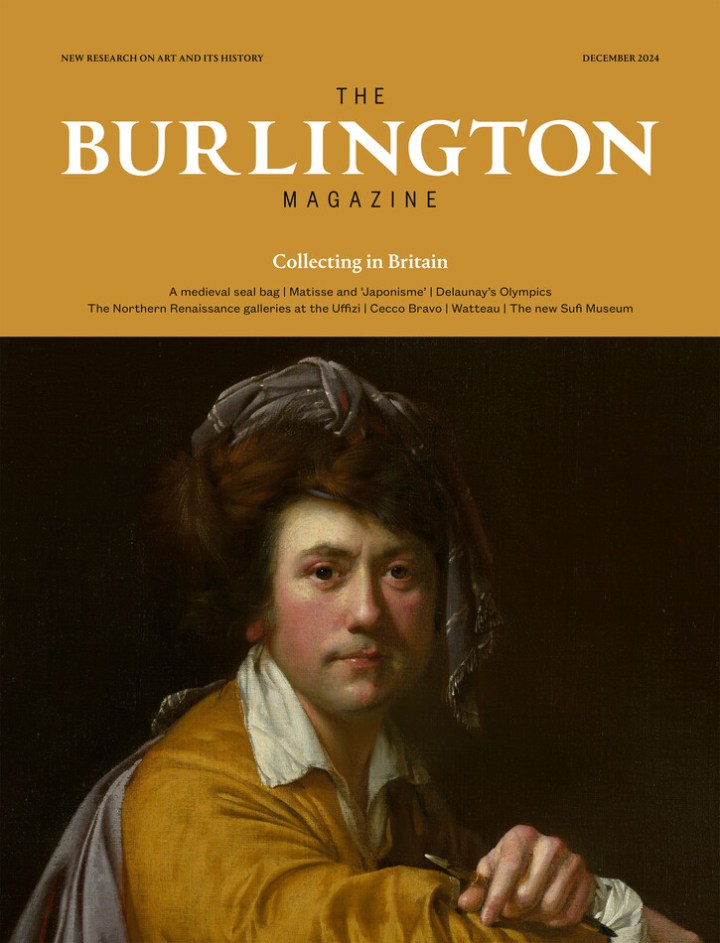
The Burlington Magazine 166 (December 2024)
 e d i t o r i a l
• “A ‘Grand Life’: Belle da Costa Greene,” pp. 1203–04.
New York’s Morgan Library & Museum was founded as a public institution in 1924 and its centenary this year has been celebrated in style. The most substantial project to form part of the anniversary is the exhibition (25th October–4th May 2025) on Belle da Costa Greene (1879–1950), the museum’s inaugural Director. This is an exercise in fascinating institutional storytelling, but at the same time also considerably more, as Greene was an extraordinary and accomplished figure.
l e t t e r
• Elizabeth Cropper, “Further Notes on boîtes à portrait’,” p. 1205.
A response to Samantha Happé’s article in the October issue of The Burlington: “Portable Diplomacy: Louis XIV’s ‘boîtes à portrait’,” pp. 1036–43.
r e v i e w s
• Richard Rand, Review of the exhibition Revoir Watteau: Un comédien sans réplique. Pierrot, dit le ‘Gilles’ (Louvre, 2024–25), pp. 1238–40.
• Gauvin Alexander Bailey, Review of the exhibition Paris through the Eyes of Saint-Aubin (The Metropolitan Museum of Art, 2024-25), pp. 1249–50.
• Denise Amy Baxter, Review of the exhibition The Legacy of Vesuvius: Bourbon Discoveries on the Bay of Naples (Meadows Musem, 2024), pp. 1251–53.
• Camilla Pietrabissa, Review of the exhibition catalogue L’arte di tradurre l’arte: John Baptist Jackson incisore nella Venezia del Settecento, ed. by Orsola Braides, Giovanni Maria Fara, and Alessia Giachery (Biblioteca Marciana, 2024), pp. 1270–72.
The British printmaker John Baptist Jackson was active in Venice from 1731 to 1745.
• Tom Stammers, Review of Oliver Wunsch, A Delicate Matter: Art, Fragility, and Consumption in Eighteenth-Century France (Pennsylvania State University Press, 2024), pp. 1285–86.
o b i t u a r y
• Simon Jervis, Obituary for Georg Himmelheber (1929–2024), pp. 1287–88.
A pioneering historian of furniture and a curator at Karlsruhe and Munich, Georg Himmelheber was also a founder member of the Furniture History Society; although his expertise encompassed many periods and styles, he was perhaps best known for his work on ‘Biedermeier’ furniture.
s u p p l e m e n t
• “Acquisitions by Public Collections across the UK (2013–23) Made Possible by the Acceptance in Lieu of Tax and Cultural Gifts Schemes,” pp. 1289ff.
Print Quarterly, December 2024
The long eighteenth century in the latest issue of Print Quarterly:
Print Quarterly 41.4 (December 2024)
a r t i c l e s
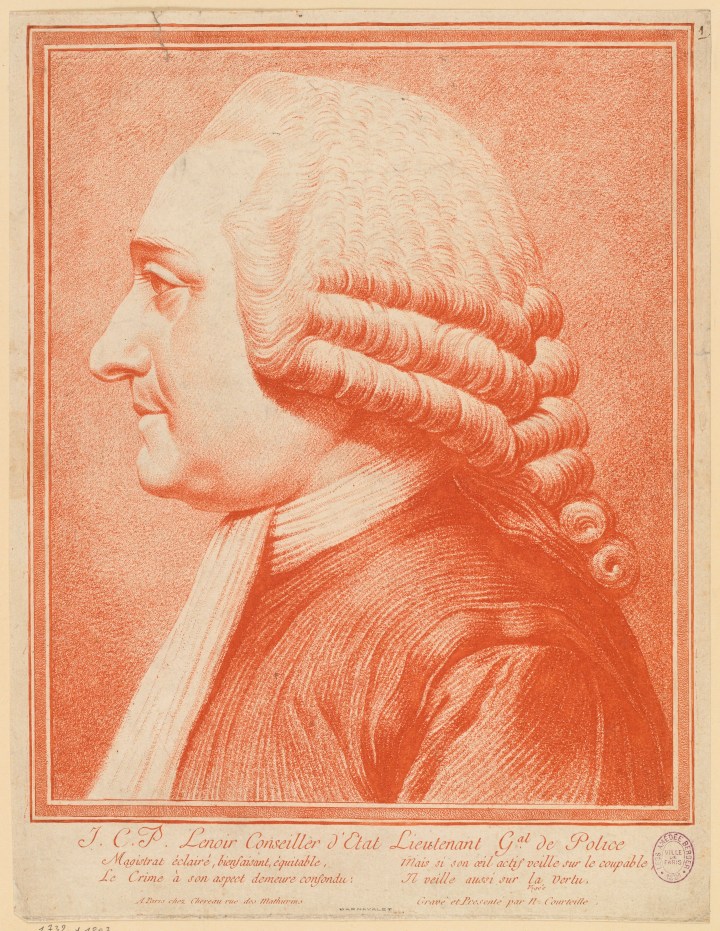
Nicholas de Courteille, presumably after Jean Pierre Bouch, Jean Charles Pierre Lenoir, 1779, soft-ground etching, 308 × 235 mm (Paris, Musée Carnavalet, Histoire de Paris).
• Dorinda Evans, “Jean Pierre Bouch, A Rediscovered Polymath”, pp. 394–407. This article attempts to compile the real identity and life story of the French artist Jean Pierre Bouch (1765–1820), whose diverse career included being a balloonist and pyrotechnician as well as portrait artist.
n o t e s a n d r e v i e w s
• Christian Rümelin, Review of Jean-Gérald Castex, ed., Graver pour le Roi: Collections Historiques de la Chalcographie du Louvre (Louvre éditions and Lienart éditions, 2019), pp. 434–37.
• Evonne Levy, Review of Bettina Wassenhoven, Gravuren nach Skulpturen – Skulpturen nach Gravuren (Konigshausen & Neumann, 2021), pp. 437–38.
• Simon McKeown, Review of Rosa de Marco and Agnès Guiderdoni, eds., Eliciting Wonder: The Emblem on the Stage (Librairie Droz, 2022), pp. 438–41.
• Clarissa von Spee, Review of Anne Farrer and Kevin McLoughlin, eds., The Handbook of the Colour Print in China, 1600–1800 (Brill, 2022), pp. 441–45.
• Nicholas JS Knowles, “The First British Caricature in Aquatint?,” pp. 445–47.
• Bénédicte Maronnie, Reviews of Chiara Casarin and Pierluigi Panza, eds., Giambattista Piranesi: Architetto senza tempo / An Architect out of Time (Silvana Editoriale, 2020); Moritz Wullen and Georg Schelbert, eds., Das Piranesi-Prinzip (E.A. Seeman Verlag, 2020); and Carolyn Yerkes and Heather Hyde Minor, Piranesi Unbound (Princeton University Press, 2020), pp. 469–73.
b o o k s r e c e i v e d
• Jennifer Milam and Nicola Parsons, eds., Making Ideas Visible in the Eighteenth Century (University of Delaware Press, 2021), p. 460.
• Ian Haywood, Queen Caroline and the Power of Caricature in Georgian England (Palgrave Macmillan, 2023), p. 460.
The Burlington Magazine, November 2024
The long 18th century in the November issue of The Burlington:
The Burlington Magazine 166 (November 2024)
e d i t o r i a l
 “The Life Cycle of Art History,” p. 1099.
Art history is withering. Art history is flourishing. Which of these statements is true? Very mixed impressions can be gathered from across the United Kingdom, where the future health and reach of the academic discipline is far from clear. Amid all this uncertainty, however, there are some inspiring developments that should be applauded.
a r t i c l e s
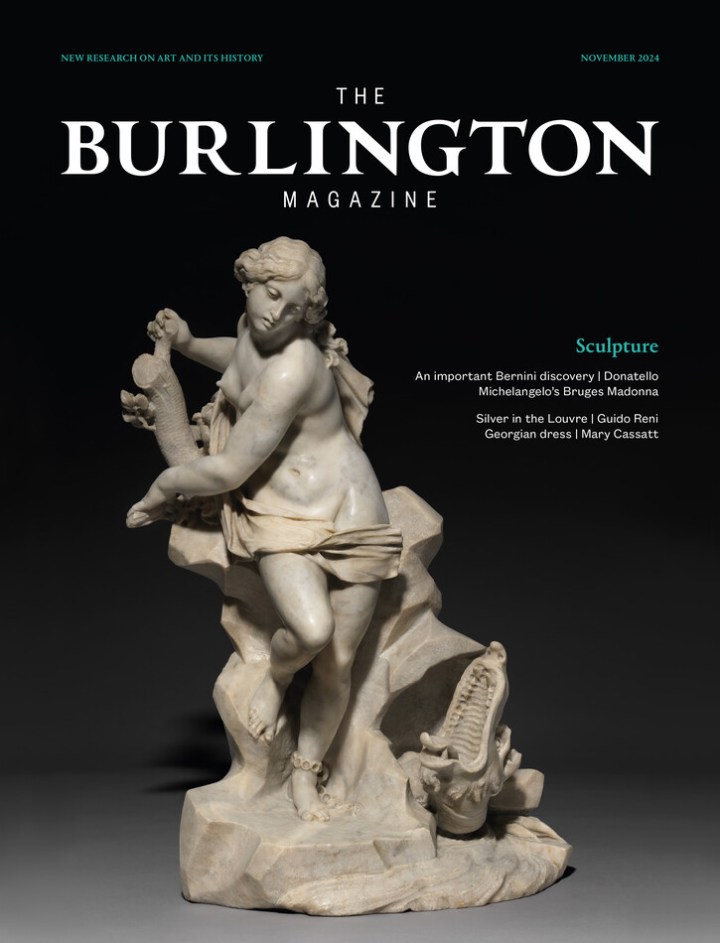
• Maichol Clemente, “‘Une pièce fort singulière’: The Rediscovery of Gian Lorenzo Bernini’s Andromeda and the Sea Monster,” pp. 1100–22.
An important early sculpture by Gian Lorenzo Bernini, Andromeda and the Sea Monster, is here attributed to him and published for the first time. It displays all the finesse and invention that characterises the work of his youth and is also notable for having been offered to Jean-Baptiste Colbert, First Minister of Louis XIV, before forming part of the collection of the Prince of Soubise [in the eighteenth century.]
r e v i e w s
• William Barcham, Review of the exhibition catalogue, Les Tiepolo: Invention et Virtuosité à Venise, edited by Hélène Gasnault with Giulia Longo and a contribution by Catherine Loisel (Beaux-Arts de Paris, 2024), pp. 1176–78.
• Erin Griffey, Review of the exhibition catalogue, Style & Society: Dressing the Georgians, by Anna Reynolds (Royal Collection Trust, 2023), pp. 1178–80.
• Philippa Glanville, Review of the catalogue of the Louvre’s silverware, Orfèvrerie de la Renaissance et des temps modernes: XVIe, XVIIe et XVIIIe siècles: La Collection du Musée du Louvre, by Michèle Bimbenet-Privat, Florian Doux, and Catherine Gougeon, with Philippe Palasi, 3 volumes (Éditions Faton, 2022), pp. 1186–87.
• Giulio Dalvit, Review of the catalogue, Galleria Borghese: Catalogo Generale I: Scultura Moderna, edited by Anna Coliva with Vittoria Brunetti (Officina Libraria, 2022), pp. 1192–93.
• Gauvin Alexander Bailey, Collective Creativity and Artistic Agency in Colonial Latin America, edited by Maya Stanfield-Mazzi and Margarita Vargas-Betancourt (University of Florida Press, 2023), pp. 1193–94.
• Charles Avery, Review of Die Bronzen des Massimiliano Soldani Benzi (1656–1740): Representationsstrategien des europäischen Adels um 1700, by Carina Weißmann (De Gruyter, 2022), p. 1195.
• Pierre Rosenberg, Review of the catalogue, French Paintings 1500–1900: National Galleries of Scotland, by Michael Clarke and Frances Fowle, 2 volumes (National Galleries of Scotland, 2023), pp. 1196–97.
Netherlands Yearbook for History of Art | Women, 1500–1950
The latest issue of NKJ:
Elizabeth Alice Honig, Judith Noorman, and Thijs Weststeijn, eds., Women: Female Roles in Art and Society of the Netherlands, 1500–1950, Netherlands Yearbook for History of Art / Nederlands Kunsthistorisch Jaarboek 74 (2024), ISBN: 978-9004710740, $162.
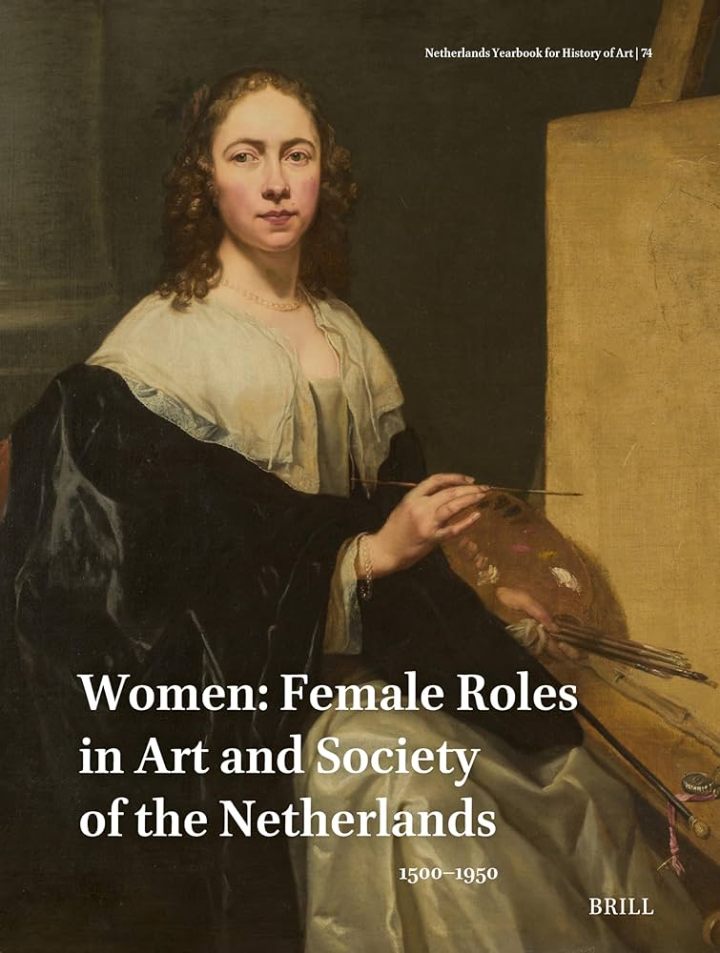 Long overdue in the history of the Netherlands Yearbook for History of Art, this volume foregrounds women as creators, patrons, buyers, and agents of change in the arts of the Low Countries. Venturing beyond the participation of ‘exceptional’ individuals, chapters investigate how women produced paintings, sculptures, scientific illustrations, and tapestries as well as their role in architectural patronage and personalized art collections. Teasing out a variety of socio-economic, legal, institutional, and art-theoretical dimensions of female agency, the volume highlights the role of visual culture in women’s lived experience and self-representation, asking to what extent women challenged, subverted, or confirmed societal norms in the Netherlands.
Elizabeth Alice Honig is Professor of Northern European Art at the University of Maryland, and Professor Emerita at the University of California, Berkeley. She works on Dutch, Flemish, and British art.
Judith Noorman is Associate Professor in Early Modern Art History at the University of Amsterdam. From 2021 to 2026, she is Principal Investigator of The Female Impact, a research project funded by the Dutch Research Council (NWO).
Thijs Weststeijn is Professor of Art History before 1800 at Utrecht University, where he chairs the research project The Dutch Global Age (2023–2028).
c o n t e n t s
• Introduction
• Dynamic Partnership: The Work of Married Women in Dutch Seventeenth-Century Artists’ Households — Marleen Puyenbroek
• The Sculptor and the Sculptress: Gendering Sculpture Production in the Early Modern Low Countries —Elizabeth Rice Mattison
• The Images and the Interventions of Adriana Perez in the Rockox Collection — Kendra Grimmett
• Household Heroines: Maria van Nesse’s Memory-Book and the Interplay between the Art Market and Household Consumption — Judith Noorman
• Weaving a Business: Clara de Hont’s (1664–1751) Tapestry Workshop in Amsterdam — Rudy Jos Beerens
• Situational Awareness and Practices of Exchange in the Art of Johanna Helena Herolt and Alida Withoos — Catherine Powell-Warren
• Cultivating a Female Presence in the Early Eighteenth-Century Learned Community: The Printed Portraits of Maria de Wilde (1682–1729) — Lieke van Deinsen
• Unmarried, Married, Widowed, and Dead: Female Patrons of Architecture in Amsterdam (1680–1800) —Pieter Vlaardingerbroek
• Caretaker of a Collection: The Case of Jo van Bilderbeek-Lamaison — Bert-Jaap Koops
• We Could Hardly Refuse Them: Alida Pott and the Women of De Ploeg, 1918–1931 — Anneke de Vries
The Burlington Magazine, October 2024
The long 18th century in the October issue of The Burlington:
The Burlington Magazine 166 (October 2024)
 e d i t o r i a l
• “Restoring the ‘belle époque’,” pp. 995–96.
The Musee Jacquemart-André is a treasure house that graces the Haussmann boulevards in Paris and is perhaps not nearly as well-known as it should be. The recent re-opening of the museum on 6th September, following a period of closure for conservation, therefore provides a welcome opportunity to draw fresh attention to this most romantic and beguiling of collections and the elegant building that houses it.
a r t i c l e s
• Jacob Willer, “Annibale Carracci and the Forgotten Magdalene,” pp. 1028–35.
A painting the collection of the National Trust at Kedleston Hall, Derbyshire, is published here as a work of Annibale Carracci’s maturity. Related to comparable compositions which derive from it, in collections in Rome and Cambridge, it was acquired in Florence in 1758 for the 1st Baron Scarsdale.
• Samantha Happé, “Portable Diplomacy: Louis XIV’s ‘boîtes à portrait’,” pp. 1036–43.
Louix XIV’s ambitious and carefully orchestrated diplomatic programme included gifts of jewelled miniature portraits known as ‘boîtes à portrait’. Using the ‘Présents du Roi’, the circumstances around the commissioning and creation of these precious objects can be explored and a possible recipient suggested for a well-preserved example now in the Musée du Louvre, Paris.
r e v i e w s
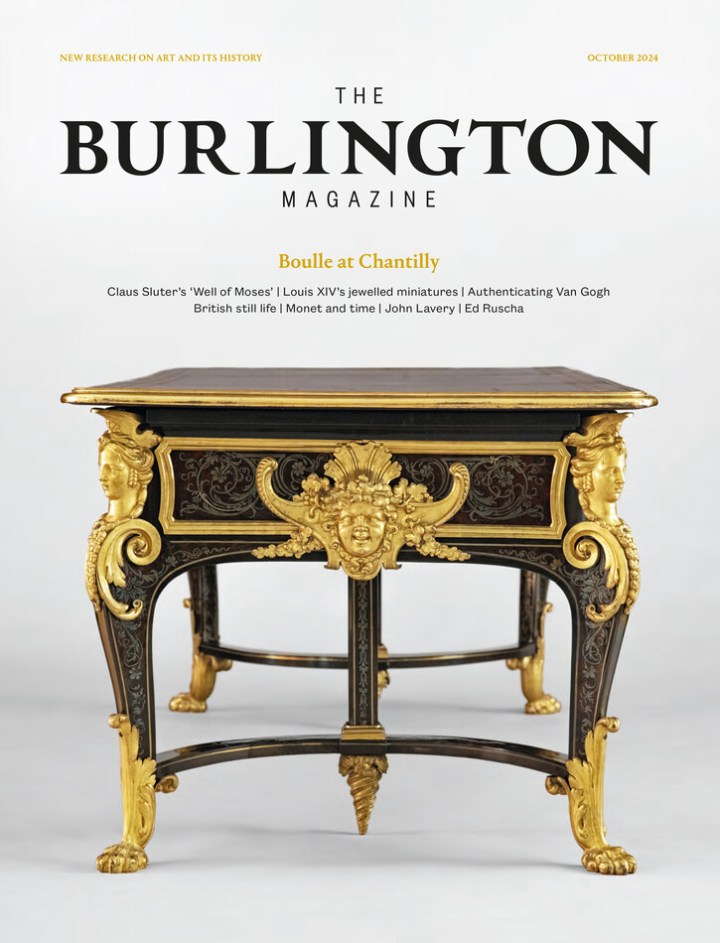
• Alexander Collins, Review of the exhibition André Charles Boulle (Musée Condé, Château de Chantilly, 2024), pp. 1056–59.
• Claudia Tobin, Review of the exhibition The Shape of Things: Still Life in Britain (Pallant House Gallery, 2024), pp. 1067–69.
Helen Hillyard, Review of of the recently renovated galleries of the Barber Institute of Fine Arts, Birmingham, pp. 1077–79.
• Colin Thom, Review of Steven Brindle, Architecture in Britain and Ireland, 1530–1830 (Paul Mellon Centre, 2024), pp. 1080–81.
• Christopher Baker, Review of Bruce Boucher, John Soane’s Cabinet of Curiosities: Reflections on an Architect and His Collection (Yale University Press, 2024), pp. 1087–88.
o b i t u a r y
• Christopher Rowell, Obituary for Alastair David Laing (1944–2024), pp. 1094–96.
Although renowned in particular for his expertise on the art of François Boucher, Alastair Laing had very wide-ranging art historical taste and knowledge, which he shared with great generosity of spirit. He curated some important exhibitions and brought scholarly rigour to his inspired custodianship of the art collections of the National Trust.
J18 | Provocations from HECAA@30
A selection of J18 Notes & Queries essays responding to the 2023 conference:
Elizabeth Saari Browne and Dana Leibsohn, eds., “Provocations from HECAA@30,” Journal18 (October 2024).
Responses
• Jennifer Van Horn — Absence and Abundance: Thinking Ahead from HECAA@30
• Karen Lipsedge — The Power of Storytelling and Story-Listening: Reflections on HECAA@30
• Emily C. Casey and Matthew Gin — Everything in Between: Reflections on HECAA@30
• Deepthi Murali —The Ethics of Study and Display of Ivory Objects
• Dawn Odell — Who (or What) Speaks in a Global History of Art?
• Kathryn Desplanque —Material Art History and Black Feminist Pedagogies
From the introduction by Elizabeth Saari Browne and Dana Leibsohn:
 In October 1725, a Jiwere (Otoe) leader named Aguiguida found himself at Versailles watching the fountains play. Invited by French men eager to secure allies amongst those who lived on the Central Plains of North America, this visit had been designed to impress. Along with a tour of Parisian sites and a meeting with the king, Aguiguida and his fellow travelers received gifts aplenty: dress coats with silver ornaments, plumed hats, royal medallions; also rifles and swords, and a painting depicting their audience with the monarch. The visitors had meant to offer their own gifts, but most of these were lost in a shipwreck off the coast of America.[1] Today, no material creations from their trip exist, neither those meant for Louis XV nor those offered the delegates.
By the 1720s, people had been traveling from the Americas to European courts for centuries. Itineraries varied, but when Aguiguida met Louis, it was as much trope as history. So why does this story still surprise? Indeed, who does it still surprise? These kinds of questions surfaced at the recent 30th-anniversary convening of HECAA (Historians of Eighteenth-Century Art and Architecture) in October 2023, Environments, Materials, and Futures. This particular eighteenth-century narrative circles around colonial and imperial histories and how creations of earthen and animal materials, of voyages across (and art lost to) land and sea, and of material cultures of global exchange and of war are implicated in such enterprises. But Aguiguida’s trans-Atlantic voyage and visit also pose other questions for historians of art and architecture: about archival absences, affective relationships, and presumed and real (im)balances of power embedded in materials, in pedagogical relationships, and in the Academy. It is these themes the following essays address. . .
Elizabeth Saari Browne is Assistant Professor of Art History and Women’s Studies at the University of Georgia in Athens.
Dana Leibsohn is the Alice Pratt Brown Professor of Art at Smith College in Northampton, Massachusetts.
The full introduction and all essays are available here»
Print Quarterly, September 2024
The long eighteenth century in the latest issue of Print Quarterly:
Print Quarterly 41.3 (September 2024)
a r t i c l e s
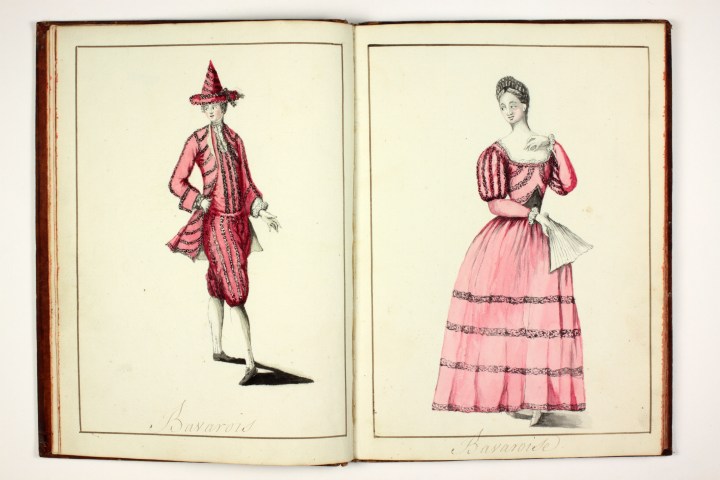
Anonymous artist, A Bavarian Man and A Bavarian Woman, ca. 1759, watercolour, 269 × 190 mm (Welbeck, Nottinghamshire: Welbeck Abbey).
• Derek Adlam and Maureen Cassidy-Geiger, “The Duke of Portland’s Album of Masquerade Costumes Worn in Warsaw in 1759”, pp. 268–84.
This article examines an album of watercolours in the library of the Dukes of Portland at Welbeck Abbey near Worksop, Nottinghamshire, depicting costumed figures and the print sources that inspired them. Seemingly related to the Polish masked balls and banquets mounted in Warsaw on 26 and 27 February 1759 by Jerzy August Mniszech (1715–78), King August III, the album is closely related to imagery seen in Abraham a Sancta Clara’s Neu-eröffnete Welt-Galleria (Nuremberg, 1703), among others, listed in an Appendix at the end of the article. Its commission and creator remain unknown.
n o t e s a n d r e v i e w s
• Daniel Godfrey, Review of Anna Marie Roos, Martin Lister and his Remarkable Daughters: The Art of Science in the Seventeenth Century (Bodleian Library, 2019), pp. 313–16.
• Antoinette Friedenthal, Review of Erminia Gentile Ortona, Le Lettere di Pierre-Jean Mariette ‘Eccellente nella Intelligenza delle Tre Arti’ a Giovanni Gaetano Bottari. Il Codice 1606 (32-E-27) della Biblioteca dell’Accademia Nazionale dei Lincei e Corsiniana (Bardi Edizioni and Accademia Nazionale dei Lincei, 2022), pp. 316–19.

Letitia Byrne, Title-Page to the series ‘Animals’, 1795, etching, 145 × 181 mm (London: British Museum).
• Andaleeb Badiee Banta, Review of Artemis Alexiou and Rose Roberto, eds., Women in Print 1: Design and Identities (Peter Lang, 2022) and Caroline Archer-Parré, Christine Moog and John Hinks, eds., Women in Print 2: Production, Distribution and Consumption (Peter Lang, 2022), pp. 319–20.
• Antony Griffiths, Review of Nigel Tattersfield, Dealing in Deceit: Edwin Pearson of the ‘Bewick Repository Bookshop’, 1838–1901 (The Bewick Society, 2020), pp. 320–21.
• Suzanne Boorsch, Review of Arianna Quaglio, Linda Schädler and Patrizia Keller, eds., From Albrecht Dürer to Andy Warhol: Masterpieces from the Graphische Sammlung ETH Zürich (MASI Lugano and Graphische Sammlung ETH Zürich, 2023) and Elizabeth Nogrady and Alyx Raz, eds., Making & Meaning: The Frances Lehman Loeb Art Center / Vassar College (Hirmer, 2023), pp. 327–30.
• Rena Hoisington, Review of Edouard Kopp, Elizabeth Rudy and Kristel Smentek, eds., Dare to Know: Prints and Drawings in the Age of the Enlightenment (Harvard Art Museums, 2022), pp. 346–50.
• Tim Clayton, Review of Allison Stagg, Prints of a New Kind: Political Caricature in the United States, 1789–1828 (Pennsylvania State University Press, 2023), pp. 351–54; recipient of Ewell L. Newman Book Award from the American Historical Print Collectors Society.
b o o k s r e c e i v e d
• Clarissa von Spee and Yiwen Liu, eds., China’s Southern Paradise: Treasures from the Lower Yangzi Delta (Cleveland Museum of Art, 2024), pp, 340–41.
• Iris Brahms, ed., Marginale Zeichentechniken: Pause, Abklatsch, Cut&Paste als ästhetische Strategien in der Vormoderne (De Gruyter, 2022), p. 341. The book explores ‘marginal drawing practices’ through a collection of essays focusing on works on paper from the sixteenth to eighteenth centuries.










 Enfilade
leave a comment