Reading and Conference | Walpole’s ‘The Mysterious Mother’
Presented by the Lewis Walpole Library and the YCBA:
Horace Walpole’s The Mysterious Mother: A Staged Reading
Yale Center for British Art, New Haven, 2 May 2018
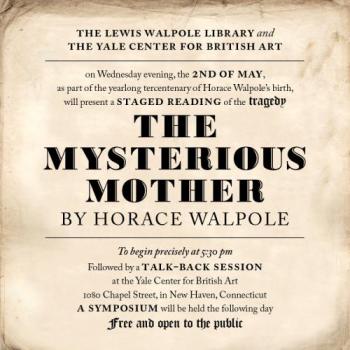 As part of the year-long celebrations of the tercentenary of Horace Walpole’s birth, the Lewis Walpole Library and the Yale Center for British Art are collaborating to present a staged reading of The Mysterious Mother—abridged by David Worrall (Emeritus Professor of English at Nottingham Trent University) and directed by Misty G. Anderson (ReLindsay Young Professor of English, University of Tennessee). Completed just a few years after Walpole’s celebrated gothic novel The Castle of Otranto (1764), this under-appreciated tale of incest and intrigue was initially circulated only among the author’s friends. Walpole never permitted it to be performed during his lifetime except as a private theatrical. Following the reading there will be a talk-back session moderated by Catherine Sheehy (Professor of the Practice of Dramaturgy and Dramatic Criticism, Yale University). This event is free and open to the public. Wednesday, 2 May 2018, 5:30pm, Yale Center for British Art.
◊ ◊ ◊ ◊ ◊
Horace Walpole’s The Mysterious Mother: A Mini-Conference
Yale Center for British Art, New Haven, 3 May 2018
Organized by Jill Campbell and Cynthia Roman

Diana Beauclerk (1724–1808), The Mysterious Mother, Act 3d, Scene 3, 1776 (The Lewis Walpole Library, Yale University).
10:00 Reading The Mysterious Mother
Chair: Jill Campbell, Professor of English, Yale University
• Nicole Garret, Lecturer, Department of English, SUNY Stony Brook
• Cheryl Nixon, Associate Provost, Associate Professor, Department of English, University of Massachusetts, Boston
•Matthew Reeve, Associate Professor Art History, Queen’s University
• Dale Townshend, Professor of Gothic Literature, Manchester Metropolitan University
• Nicole Wright, Assistant Professor, University of Colorado, Boulder
12:00 Lunch
1:15 Breakout session with Cynthia Roman, Curator of Prints, Drawings, and Paintings, The Lewis Walpole Library, to view Diana Beauclerk’s drawings of The Mysterious Mother. Attendance is limited, and advance registration is required.
2:00 Staging The Mysterious Mother
Chair: Misty Anderson, Lindsay Young Professor of English, University of Tennessee
• Al Coppola, Associate Professor of English, John Jay College, CUNY
• Marcie Frank, Professor of English, Concordia University
• Judith Hawley, Professor of English, Royal Holloway, University of London
• Jean Marsden, Professor of English, University of Connecticut
• David Worrall, Professor Emeritus, Nottingham Trent University
Portrait by Nicolas de Largillierre Returns to Hillwood
Press release via Art Daily:
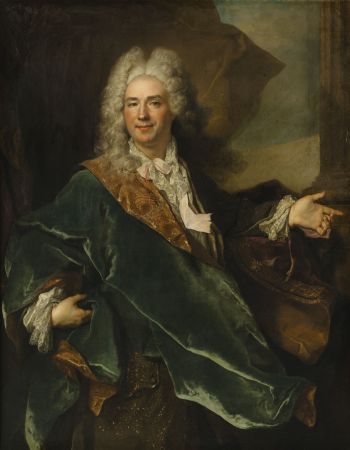
Nicolas de Largillierre, Portrait of Monsieur de Puysegur, likely Jacques-François de Chastenet, Marquis de Puysegur, oil on canvas, 136 × 105.5 cm (Washington, D.C.: Hillwood Estate, Museum & Gardens). The painting was purchased at Sotheby’s in Paris in December 2017 for 345,000€, surpassing its high estimate of 80,000€ (Lot 609 of sale PF1730).
Hillwood Estate, Museum & Gardens in Washington, D.C. announces the acquisition of the painting Portrait of Monsieur de Puysegur, likely Jacques-François de Chastenet, Marquis de Puysegur, by Nicolas de Largillierre (1656–1746) from Sotheby’s sale of the collection of Eleanor Post Close (1909–2006), Marjorie Merriweather Post’s daughter, and her son Antal Post de Bekessy (1943–2015) in December 2017. The 54 × 42 inch oil on canvas painting, lot 609 of the auction, is a three-quarter length portrait of Monsieur de Puysegur, likely Jacques-François de Chastenet, Marquis de Puysegur.
“Like her mother, Eleanor Post Close was a discerning collector of remarkable objects,” said Hillwood executive director Kate Markert. “The sale of her collection, and this work in particular, presented a rare opportunity for Hillwood to acquire an excellent example of French portraiture, particularly because of its alignment with Hillwood’s collection and particularly because it was once in Marjorie Post’s collection.” Marjorie Merriweather Post was the founder of Hillwood, who left her Washington, D.C. home as a museum to benefit future generations.
Born in France, Largillierre was trained in Peter Lely’s atelier in England and became a renowned portraitist. Upon his return to Paris in 1679, he served as First Painter to King Louis XIV and depicted many royals and members of the European and French aristocracy, among them the Marquis de Puysegur. The sitter, framed by a classical column, is depicted wearing abundant drapery of shimmering fabrics while elegantly gesturing to his left, a testament to Largillierre’s technique and virtuosity.
First documented in France in 1902, the portrait was acquired at auction by Marjorie Post-Hutton in New York in 1922. In 1937, the portrait was recorded in the draft catalogue of Post’s art collection. It was first displayed in Post’s library in New York, then in the entrance hall at Tregaron, her first home in Washington, D.C., and finally in the second floor hall at Hillwood.
In 1964, Post sent the portrait to her daughter, Eleanor Close Barzin, in Paris, in exchange for the return of Nattier’s Portrait of the Duchess of Parma (acc. no. 51.4), which Marjorie had presented to Eleanor as a wedding present. In June 1984, Hillwood’s curator, Katrina V. H. Taylor, stated about the portrait of Monsieur de Puysegur that “the return of this painting would add to the interest of the collection at Hillwood.”
Thanks to the persistence and generosity of Ellen Charles, Post’s grand-daughter and president emerita at Hillwood, who attended the sale in person and memorably surpassed Hillwood’s maximum bid, the painting will return to Hillwood for good. “It was no surprise that this important portrait exceeded the estimated auction price,” said Charles. “I am thrilled and honored that I could be there in person and contribute to Hillwood’s important acquisition. I just felt that I had to bring it home.”
The painting will go through moderate conservation work, after which it will be displayed in the entry hall at Hillwood.
Hillwood Announces Two New Curatorial Appointments

The paneling in the French Drawing Room of Hillwood dates to the reign of Louis XVI (1774–92) and now serves as a backdrop for a portion of Marjorie Merriweather Post’s collection of eighteenth-century French decorative arts.
◊ ◊ ◊ ◊ ◊
From the press release (20 February 2018) . . .
Hillwood Estate, Museum & Gardens in Washington, D.C. has appointed two new curators to manage, research, and publish on areas of Hillwood’s collection and further develop the dynamic special exhibitions program. Associate curator of 18th-century French and Western European fine and decorative arts, Rebecca Tilles will spearhead exhibitions, publications, and acquisitions related to Hillwood’s collection of 18th-century French and Western European art. Megan Martinelli Campbell, as the new assistant curator of apparel, jewelry, and accessories, will manage and research Hillwood’s collection of more than 175 dresses and over 300 accessories, all acquired and left to Hillwood by Marjorie Merriweather Post. Both curators began their work at HIllwood in February.
“Marjorie Post had a discerning eye for the finest and most important works of 18th-century France and imperial Russia and left them for the benefit of the public at Hillwood,” explained Dr. Wilfried Zeisler, Hillwood’s chief curator. “With great insight, she also left to Hillwood the most important examples of apparel and accessories she acquired over the years and today they offer added perspective into her life as a collector and connoisseur. We’re always learning more about these important areas of Hillwood’s collection, so we are thrilled that Rebecca and Megan will apply their exceptional backgrounds and talents to ensure the public continues to be educated and inspired as Post intended.”
Tilles is currently a doctoral candidate in art history at the University of Sussex, with a dissertation on the collection and collecting partnership of German-born banker and collector George Blumenthal (1858–1941) and his wife Florence Meyer (1873–1930) who together amassed an important collection of medieval, Renaissance, and 18th-century French works of art in both New York and France. Tilles completed substantial original research at the Metropolitan Museum of Art, the Library of Congress, and the Archives de Paris and Bibliothèque Nationale de France. Prior to her Ph.D. studies, Tilles was a curatorial research fellow in the art of Europe department at the Museum of Fine Arts, Boston, where she assisted with the exhibitions Splendor and Elegance: European Decorative Arts and Drawings from the Horace Wood Brock Collection (2009) and Symbols of Power: Art of the Empire Style, 1800–1815 (2007). In 2007, she received a Master of Arts degree in European decorative arts from the Bard Graduate Center, where she completed her thesis on the reconstruction of Marie-Antoinette’s corbeille de marriage. She has a bachelor’s degree in French and French cultural studies from Wellesley College and has completed the third year of the Premier Cycle at the Ecole du Louvre, which included coursework in 17th-to 20th-century painting, decorative art, sculpture, and architecture.
Coming to Hillwood from the Costume Institute at The Metropolitan Museum of Art, Campbell was previously a research assistant there, where she assisted with a complete assessment of the institute’s 19th- and 20th-century collections, researching and presenting hundreds of garments and accessories for curatorial consideration. She assisted with the installation of the special exhibitions Manus X Machina: Fashion in the Age of Technology (2016) and China: Through the Looking Glass (2015). Prior to the Costume Institute, Campbell worked with the historic textiles and costumes collection at The University of Rhode Island, where she selected and interpreted a rotation of objects for display. Her work in highlighting the influence of menswear on women’s clothing was incorporated into the exhibition, Subject to Change: Art and Design in the Twentieth Century. At the University of Rhode Island, she was also the co-curator and designer for the special exhibitions The Other White Dress: Non-Wedding Gowns of the Nineteenth and Twentieth Centuries (2014) and Five Rhode Island Families (2011). Campbell holds a Master of Arts and Sciences degree in textiles, fashion merchandising, and design from the University of Rhode Island and received her bachelor’s degree in English literature from Providence College.
In addition to conducting new research on their areas of Hillwood’s collection, the new curators are organizing upcoming exhibitions. Tilles’s first project at Hillwood is the exhibition Perfume and Seduction (working title). Opening February 2019, the special exhibition will showcase the finest examples of 18th-century perfume bottles, gold boxes, porcelain, figurines, and other luxury items from Hillwood’s collection, in conjunction with fine objects from the private European collection of Givaudan, the Swiss manufacturer of flavors, fragrances, and active cosmetic ingredients, founded in 1898 by the French brothers, Xavier (1867–1966) and Léon Givaudan (1875–1936). Campbell has taken over the organization of an exhibition of works by photographer Alfred Eisenstaedt, who famously photographed Marjorie Merriweather Post, in addition to a host of other important 20th-century figures, to open in June 2019.
New Expansion Plan for The Frick Unveiled
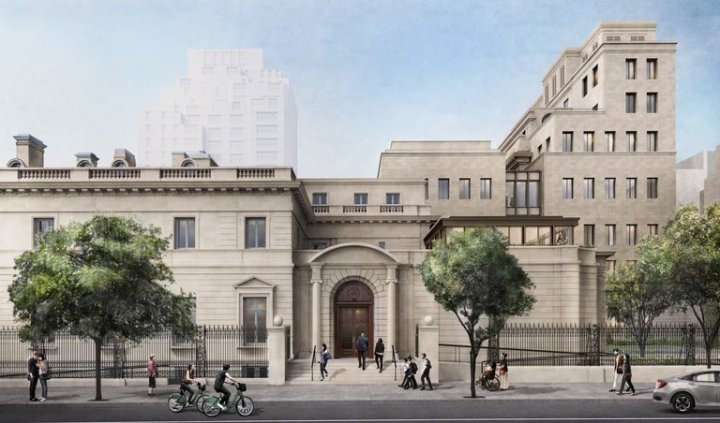
A rendering of The Frick Collection from East 70th Street in New York (Credit: Selldorf Architects). According to the press release from The Frick, the $160million project, scheduled to begin in 2020, “encompasses approximately 60,000 square feet of repurposed space and 27,000 square feet of new construction.”
◊ ◊ ◊ ◊ ◊
From The New York Times:
Robin Pogrebin, “Frick Collection, With Fourth Expansion Plan, Crosses Its Fingers Again,” The New York Times (4 April 2018).
The irony is not lost on Ian Wardropper, the director of the Frick Collection: The very gated garden that upended the museum’s previous attempt to renovate its 1914 Gilded Age mansion is now the centerpiece of its revised design.
In 2015, preservationists, designers, critics and architects successfully opposed the Frick’s plans to remove the garden on East 70th Street, designed by the British landscape architect Russell Page, to make way for a six-story addition, by Davis Brody Bond.
The new plan, by the architect Annabelle Selldorf—which the Frick board approved Wednesday—has situated several new elements precisely so that each provides a tranquil view of the garden: a renovated lobby; a newly created second level above the reception hall; and a new education center, cafe and expanded museum shop.
In addition, the garden will be restored by Lynden B. Miller, a garden designer and preservationist, in keeping with Page’s original vision.
And rather than build over the garden, as previously planned, the Frick will now build beneath it, creating a 220-seat underground auditorium to better accommodate educational and public programs. . .
The full article is available here»
New Skylights for The Met
As Keith Christiansen, John Pope-Hennessy Chairman of the Department of European Paintings at The Met, explains in a blog posting for The Met from 7 December 2017, the museum has embarked on a four-year-long project to replace the building’s skylights, which were originally constructed in 1939. Coverage by James Barron for The New York Times is available here. From Christiansen’s blog posting:
One of my favorite documents (yes, it is possible to have favorite historical documents!) was only discovered in Rome’s dusty state archives five years ago. It notes how the brilliant young Spanish painter Jusepe de Ribera, having found lodgings in which he could paint, received permission from his landlord to create a window in the ceiling of his apartment. The purpose was, he said, “to facilitate painting.” Caravaggio had done the same in his lodgings in 1605.

Giovanni Battista Tiepolo, Allegory of the Planets and Continents, 1752, oil on canvas, 185 × 139 cm (New York: The Metropolitan Museum of Art, gift of Mr. and Mrs. Charles Wrightsman, 1977.1.3).
You see, artists can’t paint without good light—and not just any light, but sunlight (ideally with a northern orientation). Just try to imagine Jan van Eyck trying to paint the minute details of the distant cityscape and mountains in his phenomenal Crucifixion without adequate lighting—which, believe me, could not be obtained with candles.
In an age dominated by the drama of artificial light, it’s all too easy to forget how important daylight has always been to artists: natural light possessing the full color spectrum; light that falls evenly across the surface of the panel or canvas. A beautiful illustration of this is Vermeer’s famous Allegory of Painting in the collection of the Kunsthistorisches Museum in Vienna, where we see the well-dressed artist sitting on his stool in front of his easel while a woman poses, dressed as Clio, the muse of history. The natural light from an unseen but clearly present window falls across her figure and gives an evenly balanced light to the artist’s canvas.
It follows that you cannot judge a painting without good light either. Not surprisingly, the optimal light in which to view a painting is dispersed and even daylight—which is why The Met is embarking on a four-year-long project to replace the skylights in the European Paintings galleries—originally constructed in 1939—and replace them with an up-to-date system; one that will significantly improve the way visitors experience the collection.
On our new web feature, Met Masterpieces in a New Light, you’ll be able to follow the project’s progress over the next four years and discover new ways to engage with our European paintings collection online while the galleries are closed. Be sure to bookmark the page and check in with us every month.
Stephanie Wiles Named Director of the Yale Art Gallery
Press release (28 March 2018) from Yale:

Stephanie Wiles (Photo by Jon Reis Photography).
Stephanie Wiles, currently the Richard J. Schwartz Director of the Herbert F. Johnson Museum of Art at Cornell University, will serve as the next Henry J. Heinz II Director of the Yale University Art Gallery, announced President Peter Salovey. Her appointment will begin July 1.
“I am thrilled to announce the appointment of Stephanie Wiles,” Salovey said. “She is an inspiring leader who is excited by the power of art to help us make connections and spark new ideas. I know she will steward the gallery—one of Yale’s finest treasures—while, together with other arts leaders on campus, envisioning new possibilities for the arts at our university.”
Wiles comes to Yale with over 20 years of experience leading college and university art museums. In her prior roles, Wiles has led efforts to connect the visual arts to other areas of university life by developing interdisciplinary courses, reimagining gallery spaces to be more inviting to visitors from campus and beyond, and spearheading exhibitions and publications to showcase research. She served on several committees at Cornell Tech, a science and technology graduate school in New York City, tasked with bringing art to the campus and into the curriculum. Wiles has successfully created educational and research opportunities across disciplines that take advantage of museum collections. She secured funding from the Andrew W. Mellon Foundation to develop eight semester-long courses that bridged the arts, humanities, science, and engineering.
At Cornell, Ms. Wiles oversaw the negotiation and completion of Cosmos, a site-specific light sculpture by Leo Villareal ’90 comprising 12,000 LED lights. The work, named in honor of scientist Carl Sagan and visible across campus and from many parts of Ithaca, is a beacon attracting visitors to the museum.
“Stephanie shares my commitment to connecting the arts to everything we do at Yale,” Salovey said. “The arts can bring us together, inspiring us to see ourselves and the world with new eyes. As we continue to foster an even more unified Yale, we are imagining new ways to connect the gallery’s magnificent resources to education, research, preservation, and practice. I am confident Stephanie will guide these efforts with enormous wisdom, creativity, and vision.”
Wiles began her career in the department of drawings and prints at the Morgan Library & Museum in New York City; she later assumed leadership positions at Wesleyan University, Oberlin College, and, most recently, Cornell. Wiles received her bachelor’s degree from Hobart and William Smith Colleges, a master’s degree in art history from Hunter College of the City University of New York, and a Ph.D. in art history from the Graduate Center of the City University of New York. Her dissertation surveys the careers of British-born artists Thomas Charles Farrer, a Ruskin admirer and leader of the American Pre-Raphaelites, and his brother Henry Farrer.
In making the announcement, Salovey expressed his deep appreciation to members of the search committee: Mary Miller (committee chair), Sterling Professor of History of Art and senior director of the Institute for the Preservation of Cultural Heritage; Emily Bakemeier, deputy provost and dean of faculty affairs of the Faculty of Arts and Sciences; Tim Barringer, the Paul Mellon Professor in the History of Art and chair of the Department of the History of Art; Deborah Berke, dean of the Yale School of Architecture; Susan Gibbons, the Stephen F. Gates ’68 University Librarian and deputy provost for collections and scholarly communication; Daniel Harrison, the Allen Forte Professor of Music Theory; Roger Horchow ’50, a member of the Yale University Art Gallery Advisory Board; Ian McClure, the Susan Morse Hilles Chief Conservator of the Yale University Art Gallery; and John Walsh ’61, a member of the Yale University Art Gallery Advisory Board and director emeritus of the J. Paul Getty Museum.
Salovey praised the tenure of Jock Reynolds, who will step down as director on June 30, noting that he had led the Yale University Art Gallery “with distinction, energy, and originality for 20 years.”
V&A Cabinet of Curiosity Project, with Artist Victoria Adukwei Bulley
As Eileen Budd writes on the V&A’s blog (28 February 2018) . . .

Cupboard, unknown, 1678–80, possibly Rotterdam, Netherlands (London: Victoria and Albert Museum, W.7-1914).
The Project
The Cabinets of Curiosity project examines the History of Collecting over the centuries, from Early Modern, to 19th Century to Contemporary. Dr Hannah Young is currently undertaking research that seeks to uncover some of the unexplored histories of the V&A, which in many respects became a large-scale nineteenth-century ‘cabinet of curiosity’. In particular, she is investigating some of the links between British slave-ownership and the development of the museum. Her research focuses on absentee slave-owners who used their wealth, rooted in the exploitation of enslaved people, to invest in collections in the metropole. Objects that were once collected by absentees and their descendants can now be found throughout the museum.
Why Involve an Artist in Residence?
There are multiple histories (our histories) that are hidden in plain sight within our collections. Such a wealth of stories, voices and lives that surfacing these and even knowing where to begin, can be challenging. We want to open up a new dialogue around our collections and so it’s vital that we have these conversations beyond academia. Artists are often better able to ask questions beyond historical ones. Inviting an artist to interrogate how this history has (and has not) been remembered and how the legacies of this history continue to shape the world we live in today can help change the way we think about the museum collections. We had an amazing response to our open call, from so many talented artists that selecting the right person for the project was incredibly hard. However, I am now delighted to announce that we have selected Victoria Adukwei Bully.
The Artist
 Victoria Adukwei Bulley is a British-born Ghanaian poet, writer and filmmaker based in London. Her work explores memory and cultural heritage—their loss and (re)creation—from a diasporic vantage point. Engaging with archival texts in addition to oral and indigenous histories, her practice posits memory as a form of creative activism which seeks to revivify bodies of knowledge that face erasure.
An alumna of the Barbican Young Poets programme, Victoria’s work has been commissioned by the Royal Academy of Arts, in addition to featuring on BBC Radio 4 Woman’s Hour. She was shortlisted for the Brunel University African Poetry Prize 2016, and is a Complete Works Poetry fellow. Her debut pamphlet, Girl B, edited by Kwame Dawes, forms part of the 2017 New-Generation African Poets series. Victoria is the director of MOTHER TONGUES, a poetry translation and film initiative supported by Arts Council England and visual arts charity Autograph ABP.
We are excited to be working with her and can’t wait to share the work with you as it progresses.
Cabinets of Curiosity project duration: 2016–18
Project co-leads: Dr Marta Ajmar, Deputy Director VARI, Dr Hannah Young (Maternity cover); Dr Lisa Skogh, external fellow
V&A co-investigator: Dr Martha Fleming, Previous Deputy Director VARI
Artist in Residence: Victoria Adukwei Bulley
Visiting researcher: Earle Havens, William Kurrelmeyer Curator of Rare Books and Manuscripts, Sheridan Libraries and Adjunct Associate Professor, Department of German and Romance Languages and Literatures, Johns Hopkins University
NMWA’s Wikipedia Edit-a-thon, 2018

Today at the NMWA:
Wikipedia Edit-A-Thon 2018
National Museum of Women in the Arts, Washington, D.C., 17 March 2018
Celebrate Women’s History Month and help us improve Wikipedia articles about women artists.
In honor of Women’s History Month, NMWA will host its 5th annual Art+Feminism Edit-A-Thon focused on improving Wikipedia entries related to notable women artists and art world figures. This event is part of a global initiative to help improve Wikipedia’s gender imbalance. A 2010 Wikimedia survey found that less than 13% of its contributors are women. The lack of female participation has contributed to the absence of notable women on Wikipedia. In more than 480 events, over 7,100 people have created and improved more than 11,000 Wikipedia articles.
No experience necessary—just bring a laptop, motivation to combat gender bias, and a belief in equal access to quality information resources. People of all gender identities and expressions are invited to participate.
Schedule
10:00–11:00 Welcome and editing tutorial
11:00–3:00 Research and editing
Lunch at noon
Use the hashtags #ArtAndFeminism and #NowEditingAF to share about the event on social media!
Reservations required—use the passcode ‘AF’. Please bring a laptop with power cord. Extension cords and power strips are highly recommended.
Cleveland Acquires Maratti Portrait
Press release (14 March 2018) from The Cleveland Museum of Art:

Carlo Maratti, Portrait of Francesca Gommi Maratti, ca. 1701, oil on canvas, 98.5 × 74.5 cm (Cleveland Museum of Art).
Recent acquisitions by the Cleveland Museum of Art include a magnificent portrait in oil on canvas by Carlo Maratti, the leading painter in Rome at the end of the 17th century; two key works by American photographer Edward Weston that indicate his transition from pictorialism to modernism; and two large-scale contemporary African sculptures by South African artist Kendell Geers and Cameroonian artist Hervé Youmbi.
Carlo Maratti (1625–1715) is often regarded as the last major exponent of a classical tradition that began with Raphael nearly two centuries earlier. Maratti was the leading painter in Rome in the mid to late seventeenth century. Favored by wealthy patrons, Maratti’s primary achievement lay in his ability to synthesize the light and movement characteristic of the Roman Baroque with classical ideals of beauty.
This portrait was painted shortly after Maratti’s marriage to Francesca Gommi in late 1700 as an homage from the artist to his new wife. Gommi had been Maratti’s mistress and artist’s model since at least the 1670s. She is depicted enveloped in lavender-blue drapery, and her hair is elaborately dressed with ribbons and jewels. In her left hand she holds up a drawing to which she gestures with her right. Introducing an allegorical element into a portrait by means of a painting-within-a-painting was a device that Maratti had employed in portraits as early as the 1650s and was probably inspired by portraits of the High Renaissance. The drawing represents Venus in the workshop of Vulcan, forging the love-darts of her adolescent son Cupid.
Although drawings by Maratti are found in major collections throughout Europe and North America, there are relatively few paintings by the artist in public collections outside Italy. Portrait of Francesca Gommi Maratti, a late work by the artist, is particularly appealing for the identity of its sitter and the charming iconography inspired by the artist’s deep love for his subject. The Cleveland Museum of Art has strong holdings in Italian paintings of the 17th century with religious and historical themes. This work is the first Italian Baroque painted portrait to join the collection. Portrait of Francesca Gommi Maratti will go on view in the museum’s Julia and Larry Pollock Focus Gallery beginning March 17, 2018, as part of the museum’s exhibition Recent Acquisitions 2014–2017. . .
The full press release is available here.
◊ ◊ ◊ ◊ ◊
Maratti’s Portrait of Francesca Gommi Maratti, was part of Nicholas Hall’s exhibition Paintings by Carlo Maratti organized to coincide with TEFAF New York in October of 2017. Previously, in July 2016, it was included in Robilant Voena’s installation for Masterpiece London, and before that, in January 2014, it was shown in New York as part of Sotheby’s selling exhibition Painting Passion: The Baroque in Italy, curated by Scott Schaefer.
Melinda Watt Appointed Curator of Textiles at AIC
Press release (12 March 2018) from the AIC:
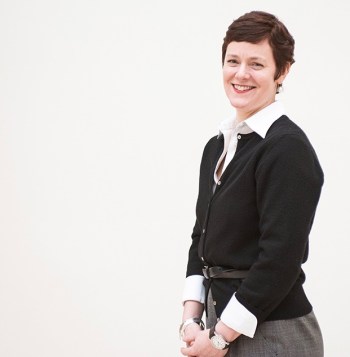
Melinda Watt, Chair and Christa C. Mayer Thurman Curator of Textiles at the Art Institute of Chicago (Photo courtesy of The Metropolitan Museum of Art).
James Rondeau, President and Eloise W. Martin Director of the Art Institute of Chicago, announced today the appointment of Melinda Watt as the new Chair and Christa C. Mayer Thurman Curator of Textiles. Watt most recently served as Curator in the Department of European Decorative Arts and Sculpture (2016–18) and supervising curator for the Antonio Ratti Textile Center (2009–18) at The Metropolitan Museum of Art, where she oversaw exhibitions, research, and collections management for over 16,000 Western European textiles and 500 fans and led one of the largest, most technically advanced facilities for the study and storage of textiles in any major art museum in the world. She helped define a comprehensive, inclusive strategy for the care and research of works from all of the world’s civilizations—archaeological fragments, tapestries, carpets, quilts, ecclesiastical vestments, silks, embroideries, laces, velvets, and more—from 3000 BC to the present.
Watt will now lead the Art Institute of Chicago’s internationally renowned Department of Textiles and oversee its extensive collection of more than 13,000 textiles and 66,000 sample swatches ranging from 300 BC to the present, with particular strengths in Pre-Columbian textiles, European vestments, tapestries, woven silks and velvets, printed fabrics, needlework, and lace. The department has also strong holdings in 16th- and 17th-century English needlework, printed and woven materials of the 18th and 19th centuries, American quilts and woven coverlets, Eastern textiles, and 20th-century fiber art.
In announcing this appointment, Rondeau said: “Melinda has an outstanding reputation as a talented curator, an expert researcher and respected scholar, and brilliant administrator and leader. I am thrilled for our museum and our visitors that she is joining us in this crucial position and will re-energize our ambitious efforts to grow and elevate the reputation of our renowned Textiles department and present innovative and dynamic exhibitions.”
Watt shared: “From the earliest days of my career, I have admired the supreme quality and breadth of the textile collection at the Art Institute, so it comes as a great honor to be asked to lead the Department of Textiles. This is truly a unique opportunity to augment the museum’s already stellar collection and to have an impact on the scholarly field at large.”
Watt began her tenure at The Met in 1994, in The Costume Institute as a Study Storage Assistant, and soon took on increasingly complex and leadership roles, culminating in her leadership of the Antonio Ratti Textile Center beginning in 2009 and a curatorial rise within the Department of European Sculpture and Decorative Arts to become a full Curator in 2016. Her exhibitions at The Met include: The Secret Life of Textiles: The Milton Sonday Archive (2017–18), American and European Embroidered Samplers, 1600–1900 (with Amelia Peck, 2015–16), Elaborate Embroidery: Fabrics for Menswear before 1815 (2015), William Morris: Textiles and Wallpapers (with Connie McPhee and Alison Hokanson, 2014), Interwoven Globe: The International Textile Trade, 1500–1800, (co-curator with Amelia Peck et al., 2013–14), An ‘Industrial Museum’: John Forbes Watson’s Indian Textile Collection (2013–14), Renaissance Velvet: Textiles for the Nobility of Florence and Milan (2011–12), and European Textiles from the Collection of Friedrich Fischbach (2010).
Earlier in her career, Watt lectured and instructed at the Bard Graduate Center for Studies in the Decorative Arts, at The Graduate Center at the City University of New York, at New York University, and at the Fashion Institute of Technology in New York, NY. She has also lectured and published widely, from New York to Chicago and Copenhagen to Beijing, on subjects as diverse as Renaissance and Baroque luxury textiles, Anglo-Indian hangings, flora and fauna in English embroidery, Isabella Stewart Gardner’s pearls, mid-century American fashion, nature in western art, and dressing for 17th-century portraiture.
Watt earned her BFA, with a concentration in Art History, at Wittenberg University in Springfield, Ohio. She holds an MA in Costume Studies from New York University.










 Enfilade
leave a comment