Online Talk | Hannah Carlson on Pockets and Gender
As noted at Events in the Field, maintained by The Decorative Arts Trust:
Hannah Carlson | Objects Up Close: Gendering Pockets and Purses
Online, Winterthur Museum, Garden & Library, 10 July 2024, 10.30am EDT
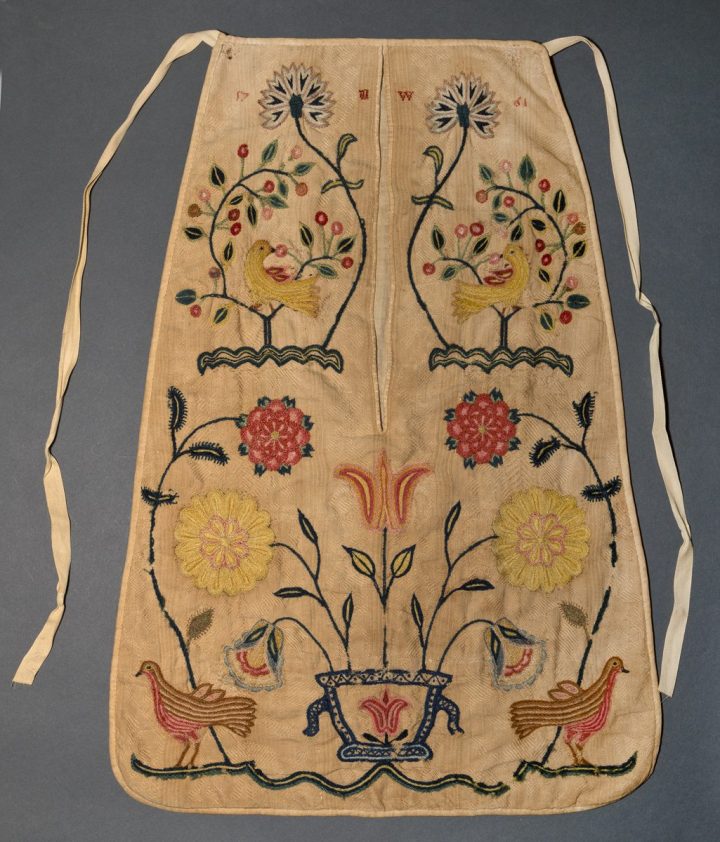
Pocket (Lady’s pocket), United States, 1780–1840, linen, wool, and silk (woven, embroidered, crewelwork), 56 × 39 cm (Winterthur, 1966.1126).
Explore the fascinating history of women’s and men’s pockets in this virtual lecture featuring a tie-on pocket in Winterthur’s collection. Through the 18th century, women used the tie-on pocket, an accessory worn under the skirt and wrapped around the waist. Men had pockets integrally stitched into the three-piece suit. Hannah Carlson, Winterthur summer research fellow and senior lecturer in the apparel design department at the Rhode Island School of Design, will explore the ‘pocket question’ and politics of individual preparedness and privacy.
Register for this free event here»
Hannah Carlson teaches dress history and material culture at the Rhode Island School of Design. After training as a conservator of costume and textiles at the Fashion Institute of Technology, she received a PhD in material culture from Boston University. She is the author of Pockets: An Intimate History of How We Keep Things Close (Algonquin Books, 2023).
Lecture | Louis Nelson on Global Houses of the Efik
Upcoming at the Mellon Centre:
Louis Nelson | Global Houses of the Efik, with Shaheen Alikhan as respondent
Online and in-person, Paul Mellon Centre, London, 5 June 2024, 5pm

Carl Wadström, Design for a House in a Tropical Climate, from An Essay on Colonization (London, 1794).
Much of the scholarship on the globalised house of the early modern period privileges colonisers creating a false impression that globalisation was unidirectional. A more responsible examination explores the ways colonised communities also engaged in acts of collection, reinscription, and identity construction. Unlike many African communities, the Efik in Old Calabar (now modern Nigeria) never gave Europeans land rights to build the trading forts that slowly became the huge slave castles now dotting the West African coast. Forbidding European development allowed Africans far greater control over the landscapes of exchange along the waterline, where British ships’ captains would purchase enslaved Africans from Efik traders. Visitors’ descriptions include lavish accounts of the ways wealthy Efik traders donned British costume, swords, cocked hats, and umbrellas. But even more surprising for many were the traders’ houses. These took the common form of a raised two-storey house with a gallery on all sides. Over generations, some of these trading families stockpiled extraordinary collections of English material goods including gilt pier glasses, sofas, marble sideboards, engravings, clocks, and handsome dining tables. Years of negotiations while dining onboard with ships’ captains also meant that these traders could easily navigate both African and British dining practices. It was common practice for Efik traders to order not just objects but whole houses. This paper explores this practice and offers preliminary frames for interpretation.
Louis P. Nelson, Professor of Architectural History at the University of Virginia, is a specialist in the built environments of the early modern Atlantic world, with published work on the American South, the Caribbean, and West Africa, and is a leading advocate for the reconstruction of place-based public history. Louis is an accomplished scholar, with two book-length monographs published by University of North Carolina Press and Yale University Press, three edited collections of essays, two terms as senior co-editor of Buildings and Landscapes—the leading English language venue for scholarship on vernacular architecture—and numerous other articles. His work focuses on the early American South, the Greater Caribbean, and the Atlantic rim. Architecture and Empire in Jamaica (Yale, 2016) won three major book awards and was very positively reviewed in twelve different venues ranging from the popular Times Literary Supplement to the scholarly William and Mary Quarterly, The Art Bulletin, and Architectural History, many calling it a tour de force.
Shaheen Alikhan’s dissertation work, continuing from her MA thesis in architectural history on the construction of eighteenth-century slaving vessels, focuses on the reshaping and creation of waterfront spaces to facilitate the transatlantic trade in enslaved Africans. These liminal spaces, essential but unique within the larger landscape of chattel slavery, represented concentrated areas in which enslaved and legally free Africans and members of the African diaspora took opportunities to learn, communicate, earn wages, and build relationships and they have been largely overlooked. As an architectural historian, Shaheen has contributed to anthologies pertaining to the Caribbean world and reparative justice, and worked as a digital documentation specialist. She is currently in discussion with a publisher about her book Building a Floating Prison: Slave Ships throughout the Long Eighteenth Century.
Conference | Enslavement and Art: Forced Labor
From ArtHist.net:
Enslavement and Art: Forced Labor in the History of Art
Online and in-person, Humboldt Labor at the Humboldt Forum, Berlin, 17–18 June 2024
Organized by Eva Ehninger and Ittai Weinryb
Registration due by 15 June 2024
Forced labor is a broad category all too often taken to comprise a human condition whose only shared feature is broadly defined as the control over another human, especially in regards to their labor and reproductive capacities (categories of ‘slavery’, ‘forced labor’ as well as ‘unfree’, ‘enslaved’, and ‘indentured human condition’ are still poorly defined in this context). Forced labor was and continues to play a central role in the intimate entanglement of aesthetics and commerce. Art production and patronage were part of networks that unfree humans aided in financing. These networks continue to echo in the collections, libraries, and museums, many built through the profit of unfree humans, that hold premodern and modern art today. This conference seeks to expand our current understanding of the role forced labor played in the world of art making and consumption. It challenges concepts of heritage and their corresponding attributions of identity, representation, and ownership, and looks at transformations of value, from the perspective of forced labor. Hopefully, this conference will therefore prompt comparative thinking to uncover the foundations, the structures, the practices, as well as the sustained consequences and current realities of forced labor in relations to art.
Admission is by registration only. To participate on-site or via Zoom, please register here»
m o n d a y , 1 7 j u n e
9.00 Coffee
9.30 Introduction by Eva Ehninger (Berlin) and Ittai Weinryb (New York)
10.00 Space
Moderation and Response: Elisaveta Dvorakk (Berlin)
• Valika Smeulders (Amsterdam) — ‘… Placing a Moor Next to Young Girls’: The Colonial World Order in Dutch Art
• Meredith Martin (New York) — Neoclassicism and Pro-Slavery Ideology in Paris and Saint-Domingue
• Burcu Dogramaci (Munich) — Remembering Forced Labor: DP Artist Exhibitions in Munich in 1947 and 1948
12.15 Lunch Break
14.15 Capital
Moderation and Response: Johanna Függer-Vagts (Berlin)
• Anna Arabindan-Kesson (Princeton) — Mobile Enclosures: Cultivating Plantation Life across the British Empire
• Carrie Pilto (Amsterdam) — Someone Is Getting Rich
18.00 Other Women Stopped Work and Joined Us: Filmic Re-imagination of Work in Yugantar‘s Molkarin
Film Screening and Conversation with Pallavi Paul (New Delhi) and Nicole Wolf (London)
Organization and Moderation: Aisha Allakhverdieva, Franziska Blume, Justine Ney, and Hanna Steinert (Berlin)
Kino Central (Rosenthaler Str. 39, 10178 Berlin)
t u e s d a y , 1 8 j u n e
10.00 Materiality
Moderation and Response: Juliette Calvarin (Berlin)
• Jennifer Chuong (Cambridge, MA) — An Unforced Production: Dox Thrash and the Invention of Carborundum Engraving
• Elizabeth Dospel Williams (Washington, DC) — Concealing / Revealing: Depictions of the Enslaved in Late Antique Furnishing Textiles
• Matthew Rampley (Brno) — Modern Architecture and Global Material Extraction
12.15 Lunch Break
13.45 Body
Moderation and Response: Katja Müller-Helle (Berlin)
• Ana Lucia Araujo (Washington, DC) — Iron: The World Enslaved Blacksmiths Made in the Americas
• Mahalakshmi Rakesh (New Delhi) and Sneha Ganguly (New Delhi) — Artisanal Production and Agency: Regulations and Control in Early India
• David Joselit (Cambridge, MA) — Disfiguration and Survivance
16.00 Closing Remarks
Online Talk | Peter Kenny on Cabinetmaker Charles-Honoré Lannuier

◊ ◊ ◊ ◊ ◊
An ADAF online presentation (as noted at Events in the Field, the ever-useful calendar maintained by The Decorative Arts Trust) . . .
Peter Kenny | Forging a New Vernacular: French Ébéniste in Federal New York
Online, American Decorative Arts Forum, 21 May 2024, 9pm (ET)
Charles-Honoré Lannuier (1779–1819) arrived in New York in the spring of 1803 a thoroughly-trained Parisian ébéniste who, according to his inaugural newspaper advertisement, had “worked at his trade with the most celebrated Cabinet Makers of Europe.”

Charles-Honoré Lannuier, Pier Table, 1815–19, mahogany, mahogany veneer, pine, tulip poplar, maple, marble, gilded brass, die-stamped brass, plate glass, 35 inches wide (New York: The Metropolitan Museum of Art, 2018.30a, b).
Well-versed in the elegant forms of the late Louis XVI period, which still held sway during the earliest period of his training in Paris, Lannuier’s design vocabulary at the time of his arrival also included the harder edged yet brilliant neoclassical style of post-Revolutionary France known as Directoire (1795–99), and the Consulat (1799–1804), a heavier more monumental style featuring the more archaeologically correct forms of le goût antique. This was Lannuier’s Parisian stylistic legacy. How he transformed this legacy, ultimately becoming one of the two principal leaders of the New York school of cabinetmaking alongside his greatest rival, Duncan Phyfe, is an inspiring and a uniquely American story.
After a thirty-year career at the Metropolitan Museum of Art, Peter M. Kenny retired in 2014 as the Ruth Bigelow Wriston Curator of American Decorative Arts and Administrator of the American Wing. From 2015 to 2020 he served as co-president of Classical American Homes Preservation Trust, where he was responsible for the overall management and curatorial vision of its seven historic houses in New York City, the Hudson River Valley, North and South Carolina, and the U. S. Virgin Islands. A nationally recognized expert on early American furniture, he has lectured extensively on the subject at American museums and universities. The catalogs to his major exhibitions on the renowned cabinetmakers Charles-Honoré Lannuier (1779–1819) and Duncan Phyfe (1770–1854) garnered the Robert C. Smith Award of the Decorative Arts Society, and the Henry Allan Moe Prize from the New York State Historical Association. He was the 2015 recipient of the Eric M. Wunsch Award for Excellence in the American Arts and the 2018 Antiques Dealers’ Association of America Award of Merit. Mr. Kenny serves on the boards of The Chipstone Foundation in Milwaukee, which publishes the journals, American Furniture and Ceramics in America, Boscobel Restoration, Inc. in Garrison, New York, and Hyde Hall in Cooperstown, NY. He also serves as a Scholarly Advisor for Historic Huguenot Street in New Paltz, NY. Mr. Kenny is a graduate of Montclair State University and received his MA from the Cooperstown Graduate Program (State University of New York College at Oneonta) in History Museum Studies.
The American Decorative Arts Forum (ADAF) encourages the study, understanding, enjoyment and preservation of American art and design from their earliest beginnings to the present. Founded in 1983 to promote the study and appreciation of decorative arts, the ADAF has broadened its scope to include many areas of American fine arts and design, including fashion and architecture. The Forum sponsors up to twelve lectures annually by nationally recognized experts which are held in-person at the Gunn Theater, Legion of Honor, San Francisco and/or via Zoom. Members also have access to special events, including curator-led tours of exhibitions, visits to private collections, and travel opportunities. Members also receive a newsletter and emails containing updates and schedules of lectures and events.
Mount Vernon Symposium 2024
From Mount Vernon:
On the Eve of Independence: Art and Architecture in the British Empire
Online and in-person, The Washington Presidential Library at Mount Vernon, 31 May — 2 June 2024
In 1774, on the eve of the American Revolution, George Washington began a major expansion of his home, a building whose foundations dated to the 1730s. It was a project that he maintained throughout the war and that he continued after his triumphant return to Mount Vernon. Inspired by the work that began 250 years ago, the 2024 Mount Vernon Symposium will explore the art and architecture of the British Atlantic in the long-eighteenth century, surveying the connections between and comparisons of British and American practices in the years preceding and surrounding the American Revolution.
Speaker biographies and abstracts are available here»
f r i d a y , 3 1 m a y
1.00 Welcome and Introductions
1.15 Afternoon Talks
• Cosmopolitan and Local in Colonial Boston: Copley’s House — Jeffrey Klee
• Britain Over the Blue Ridge: Architectural Impressions on Virginia’s Shenandoah Valley — A. Nicholas Powers
• Between a Handsome Finish and Sorrowful Discouragement: Black Craftsmen and the Making of American Architecture — Tiffany Momon
• Reimagining Hemsley’s Cloverfields — Willie Graham
• George Washington’s Mount Vernon: From Revolution to Revitalization — Susan Schoelwer and Thomas Reinhart
6.30 Reception, Mansion East Lawn / Mansion Open House
7.15 Dinner, Ford Orientation Center
s a t u r d a y , 1 j u n e
9.00 Welcome and Introductions
9.15 Morning Talks
• Free versus Will: Craftspeople in Early Maryland — Brittany Luberda
• Sleuthing Out a Portrait: From Mount Vernon to the British Island of Dominica — Dorinda Evans
• Drawing the Lines of Revolution: Pastel Portraits, Boycotts, and American Independence — Megan Baker
• Disasters in the Eighteenth-Century North Atlantic: Art, Gardens, and Novel — Joseph Litts
12.15 Lunch, Founders’ Terrace
1.45 Afternoon Talks
• The Endless Round: The London Town House, Politics and Society in the 1770s — Jeremy Musson
• Enlightened Eclecticism: The Grand Design of the 1st Duke and Duchess of Northumberland — Adriano Aymonino
• The Transatlantic Design Network: Thomas Jefferson, John Soane, and Agents of Architectural Exchange — Danielle Willkens
5.45 Reception, Mount Vernon Wharf
7.00 Dinner, Mount Vernon Wharf
s u n d a y , 2 j u n e
9.30 Morning Talks
• The Irish War of Independence and Burning the Big House, 1920–21 — Terence Dooley
• Tory, Whig, Empire: The Implications of Classical Style in the Early Modern British Empire — Sarah Hutcheson
• Public Architecture and Imperial Reform on the Eve of the Revolution: Governing the British Atlantic after the Treaty of Paris — Christian Koot
• Educating the Next Generation in Historic Trades and Preservation — Markus Damwerth, Christina Butler, Joseph Zemp, and Steve Fancsali
Lecture | Basile Baudez on Fabrics in 18th-C Venice

Canaletto, Piazza San Marco, ca. 1723, oil on canvas, 68 × 112 cm
(New York, The Metropolitan Museum of Art, Purchase, Mrs. Charles Wrightsman Gift, 1988.162)
◊ ◊ ◊ ◊ ◊
From the Bibliotheca Hertziana:
Basile Baudez | Fabricating the City: Canaletto and 18th Century-Venice
Online and in-person, Bibliotheca Hertziana – Max Planck Institute for Art History, Rome, 4 June 2024, 11am
Textiles are everywhere in the modern city. Flags flutter atop buildings. Awnings stretch over sidewalks. Laundry dangles between houses. Yet the crucial role these fabrics play in urban life has not been properly understood. This research seminar looks to eighteenth-century Venice to uncover the ways in which textiles shaped politics, society, and law in the early-modern metropolis.
One of the most famous cities in Europe and a gateway to the East, visited by merchants and tourists from around the world, Venice was adorned with textiles of all types: Turkish carpets, military standards, baldachins, and clothing, among them. Focusing on the celebrated vedute of Canaletto, this seminar will discuss how textiles mediated tensions between public authorities and private citizens in the control of common spaces such as streets and squares just as distinct public and private spheres were emerging in Europe and the question of who controlled them became increasingly contentious. Eighteenth-century Venice emerges here as a vivid case study for the progressive transformation of streets and squares from sites of living to sites of regulated circulation and temporary occupation, a marker of modern cities as we know them. By exploring the rich and varied textiles that adorned one of the most beautiful cities in Europe, this research seminar will not only shed light on a key moment in Venice’s political and artistic history, it will provide valuable historical grounding for future discussions about the role of physical fabrics in the social and political fabric of our cities.
This research looks at eighteenth-century Venice to establish a model applicable to any urban context. Under the pressure of the contemporary explosion of the tourist market in the eighteenth century, Venice became the most reproduced and recognizable cityscape in the world, far more so than urban centers like Paris and London. Images of the city and its inhabitants are found in painting, print, drawing, porcelain, and furniture while being endlessly described in travel books, guides, letters, novels, and plays. An entire school of city view painters celebrated its contemporary life in contrast to the ruins of Rome, its main rival. Having lost its economic and political standing on the world stage, the Venetian Republic positioned itself as a unique space of political stability, freedom, and pleasure while celebrating its cosmopolitanism. Indeed, Venice kept its unique status as the main trade partner of the Ottoman Empire, and its tourists sought to get a glance at its exotic visitors and their luxurious fabrics. Recent historiography on Venice has challenged the traditional view of the eighteenth century as a time of decadence and backwardness; in fact, it enjoyed an era of financial prosperity (derived largely from the textile industry), intellectual, musical, and artistic renaissance that posits the city, with its unique republican government, as a perfect case study to tell a story about modernity.
St Mark’s Square, the center of Venetian political, religious, and social life, was the most tightly controlled space in the Republic and probably in the whole of Europe. It is the heart of this study and is often compared to the stage of a theater, to which seeing and being seen are integral. On the Venetian stage, the Republic’s Senate took painstaking care to regulate the usage of and access to its every part, from the porticoes under the Procuratie to the interstitial space between the two Piazzetta granite columns: beggars and prostitutes were forbidden, itinerant vendors had to be authorized, garments were carefully controlled. But the Square was also the main locus of distraction, encounters, gossip, the location of the most popular cafés like Florian and luxury shops. On St Mark’s Square the Senate organized the main religious and civic festivities from the annual, tented Corpus Domini procession to the vast ephemeral luxury market erected the week of the Ascension—and, of course, the most famous Carnival of the continent, where clothes and masks helped to disguise each participant. By focusing on images, testimonies, and laws governing St Mark’s Square, this research covers the entirety of urban life in its spatial and temporal complexity through the textile medium.
This event with be available through the Bibliotheca Hertziana’s Vimeo Channel. The link will be soon published here.
Basile Baudez is Associate Professor of Architectural History in the Art & Archaeology department at Princeton University after having taught at the Sorbonne in Paris. His first book, Architecture et Tradition Académique au Siècle des Lumières (Presses Universitaires de Rennes, 2013) questions the role of architects in early modern European academies. He co-edited several volumes on the history of architecture such as A Civic Utopia: Architecture and the City in France, 1765–1837 (Drawing Matters, 2016), Chalgrin et son Temps: Architectes et architecture entre l’Ancien Régime et l’Empire (Blake and Co, 2016), and most recently Textile in Architecture from the Middle Ages to Modernism (Routledge, 2023). He curated several shows devoted to architectural drawings, at the Ecole des Beaux-Arts and at the Musée des Arts Décoratifs in Paris, and at the Courtauld Institute in London. His latest monograph, Inessential Colors: Architecture on Paper in Early Modern Europe (Princeton University Press, 2021) was the 2022 winner of the Alice Davis Hitchcock Medallion awarded by the Society of Architectural Historians of Great Britain. He is currently completing a book project entitled Textiles in the City: Fabricating Eighteenth-Century-Venice on the role of textiles in urban settings.
Study Day | Collecting through the Ages
From The Wallace Collection and the conference programme:
The Wallace Collection is thrilled to announce the relaunch of the History of Collecting as Collecting Past and Present. This new series will take the format of biannual, themed study days, which will include fascinating talks from leading specialists, exploring collecting through the ages. Exclusive interviews with modern-day collectors will also feature, revealing tantalising glimpses into how exceptional objects are brought together. These will be followed by drinks receptions that will act as unique forums for discussion. For those further afield or unable to make it to the museum, the talks can be watched online. And if you are interested in taking part as a speaker at future events, calls for papers will be shared throughout the year.

Bishan Singh, The Court of Maharaja Ranjit Singh (1780–1839), Amritsar or Lahore, 1863–64
(Toor Collection)
◊ ◊ ◊ ◊ ◊
Collecting through the Ages
Online and in-person, The Wallace Collection, London, 5 July 2024
The Wallace Collection and the outstanding artworks it contains were brought together through the 18th and 19th centuries by an extraordinary family of collectors—the marquesses of Hertford and Sir Richard and Lady Wallace. Delve into the history of collecting across the ages at our first Collecting Past and Present event. You’ll hear from leading academics and specialists on a variety of subjects, from the collecting of Shakespearean relics to the houses of Calouste Gulbenkian. Also join us for a conversation with a leading modern-day collector of Sikh, Indian and Islamic art, Davinder Toor, who will offer exclusive insights into his passions and inspirations.
Registration is available here»
p r o g r a m m e
10.15 Welcome
10.30 Verena Suchy — Women as Collectors of 18th-Century Cabinets
In the theory and history of collecting, women collectors have often been absent. Examples of noble women from different German principalities, however, indicate that in the 18th century it was common—if not necessary—for aristocratic women to assemble collections of jewellery, decorative art, and precious objects. Examining these collections with Dr Suchy will shine a light on the collecting practices of women and their political and representative functions.
11.15 Refreshments
11.45 Kirsten Tambling — Shakespearean Relics in the Royal Collection
1816 was the tercentenary of Shakespeare’s death, and, in this year, George, Prince Regent, ordered seven toothpick cases fashioned from ‘Shakespere’s Tree’. He was thus inserting the monarchy into a buoyant contemporary trade in Shakespearean ‘relics’. Focusing on the 18th and 19th centuries, Dr Tambling will investigate Shakespearean relics in the Royal Collection and the significance of royals collecting
Shakespeare.
12.45 Peter Humfrey — Amabel, Countess de Grey, as Collector and Curator in Post-Orléans London
Diarist, practising artist, and commentator on the political events of her time, Amabel was also a well-informed collector, both of Old Masters arriving on the London art market in the wake of the French Revolution, and of the work of her younger contemporaries. Further, she was heir to a distinguished collection of paintings from her family and was active in documenting and rehanging it. Professor Humfrey will take a closer look at this fascinating character.
13.30 Q&A
13.45 Lunch break
14.45 Barbara Bryant — Stephen T. Gooden and the Marketing of Edward Burne-Jones’s Legend of St George and the Dragon Series
In 1894, a series of seven paintings by Burne-Jones came to auction at Christie’s. Dr Bryant will consider the protracted attempts by various dealers to sell the series in the 1890s until the successful sale by the relatively new gallery owner Stephen T. Gooden. Gooden’s achievement will give an insight into how art
dealers of this period marketed the modern masters.
15.45 Vera Mariz — The Making of a House for Calouste Gulbenkian’s Art Collection
Dr Mariz will explore the various residences that housed Calouste Gulbenkian’s art collection, with a primary emphasis on 51 Avenue d’Iéna. While the acquisition process of the latter mirrors that of acquiring artworks, Gulbenkian’s satisfaction remains uncertain. Newly discovered materials and innovative approaches offer fresh interpretations of the hôtel Gulbenkian, which will be presented as an intimate testament to Gulbenkian’s essence as an art collector.
16.30 In Conversation with Davinder Toor
Two centuries ago, Punjab’s Sikh ruling elite lavishly patronised artists and craftsmen to enhance the splendour of their empire. By the mid-19th century, the Sikh empire had met its demise at the hands of the East India Company. Over the following century and a half, Sikh artefacts were dispersed across the globe. Some ended up in British institutional collections, while others were bought and sold by collectors. With Curatorial Assistant Alexander Collins, Davinder will discuss how he has pursued his passion as a collector to create a lasting legacy to the empire of the Sikhs.
17.15 Q&A
17.30 Drinks reception
Online Course | Sâqib Bâburî on Ranjit Singh
An example of the programming offered in conjunction with exhibition Ranjit Singh: Sikh, Warrior, King, now on view at The Wallace Collection:
Sâqib Bâburî | Life Stories: Ranjit Singh (1780–1839)
Online, Wednesdays 8, 15, and 22 May 2024, 18.00–20.00 BST (and recorded)
In the 18th century, the once powerful Timurid (Mughal) Empire retreated from the wealthy region of the Punjab, now divided between India and Pakistan. Unstable and continually plundered by invasions from Afghanistan, peace and prosperity was eventually restored to the region through local resistance and the enigmatic leadership of Ranjit Singh. Over three sessions, we’ll examine Ranjit Singh’s rise to power and the multifaceted reasons for the stability and duration of his almost four-decade reign—regarded as a highpoint in an otherwise violently unstable century. The course will be taught through Zoom Webinar. Each course session duration is 120 minutes, including a five-minute break and time for Q&A with the tutor. Tickets are for all dates (£60 / £57). Ticket holders will be emailed the Zoom link, Webinar ID, and Passcode 24 hours in advance of the first course session, which should be retained for accessing all three sessions of the course. The course will also be recorded. Within 48 hours of each course session, ticket holders will be emailed a link to view the recording, which will be available for two weeks only.
Sâqib Bâburî is a Content Specialist Archivist with the Qatar Foundation Partnership, based at the British Library, where he was formerly the Curator for Urdu Collections and Curator for Persian Manuscripts. His research interests include the history and art history of Persianate South Asia, palaeography and manuscript cultures, ornament and design, arms and armour, regalia, and culinary cultures. Dr Bâburî has worked among other institutions with the Royal Collection Trust, Victoria and Albert Museum, the Universities of Oxford, Cambridge, Oldenburg, Göttingen, Singapore, King’s College London, Warburg Institute, SOAS University of London, and the Austrian Academy of Sciences.
Session One | Ranjit Singh, an Origin Story
We’ll begin our course by tracing the rise of Ranjit Singh’s ancestors through the Persian account, Tazkirat al-umarāʾ (Remembrance of the Nobles) written by his contemporary Colonel James Skinner (1778–1841). We’ll also examine the significance of militant resistance to the Timurid Empire and Afghan invaders in Ranjit Singh’s journey to rule over a cosmopolitan kingdom, termed the Khalsa State, centred on Lahore.
Session Two | Between War and Peace
In our second session we’ll explore the tensions between Ranjit Singh’s private life and public duties, focusing on his early years as a free-spirited prince taking pleasure in military exercises and avoiding bookish learning. Looking at his household, consorts, and offspring, we’ll also chart the significant developments that shaped the course of his career as an administrator, patron, and military leader. We’ll look closely at architecture, paintings, manuscripts, documents, and arms and armour to understand the aesthetic and thematic range of Ranjit Singh’s patronage.
Session Three | European Encounters
In our final session we’ll consider Ranjit Singh’s role in promoting transregional and international commercial and diplomatic relations. Once holding an antagonistic attitude towards the Timurid Empire, we’ll understand his efforts to renew connections across India, as well as West and Central Asia. Finally, we’ll look at how Ranjit Singh’s later relations with Britain, Russia, and France anticipated future disputes over the Afghanistan-Punjab corridor, leading to the collapse of the Khalsa State within a few years of his demise.
Conference | Captivity: Assembling Nature’s Histories
From the Center for 17th- and 18th-Century Studies at UCLA:
Captivity: Assembling Nature’s Histories
William Andrews Clark Memorial Library, Los Angeles, 17 May 2024
Conference organized by Anna Chen, Rebecca Fenning Marschall, and Bronwen Wilson
The early modern period was a hothouse for the study of physical things in the natural world, and for the collection and assembly of them in human-made physical spaces. In other periods, botanical samples were preserved by diarists in their journals, such as Poems and Riddles written by Mary Woodyeare Tibbits (ca. 1764–1840), and Pressed specimens of butterflies and moths (1905), compiled by Yasushi Nawa (1857–1926), which are both in the Clark Library’s collections. Nawa’s lepidochromic book showcases the technique of ‘printing butterflies’, or fixing the scales of their wings onto paper. Specimens of all sorts were admired for their variegated colors, curated in collections, and assembled into books. Birds were captured in aviaries for their sounds, or killed and prepared as specimens for display, study, and scientific descriptions. Plants were transported across oceans in terraria, and contained in plots and glasshouses.
Libraries were deeply implicated in these historical pursuits of the collection and classification of the contents of the natural world, as are modern libraries that now grapple with whether and how to preserve the nature that enters their collections. The interior-exterior division of libraries is a highly regulated boundary. Libraries strive tirelessly to seal the building envelope against the environmental conditions of the outdoors, as fluctuating temperature and humidity levels, mold spores, insects, rodents and natural disasters all threaten damage to their holdings. Libraries also capture books about nature on their shelves, as flora and fauna cohabitate on their grounds. At the Clark Library, Cooper hawks nest, feral cats roam, and roots of trees probe the ground in search of water. What might we learn from these efforts to capture and to conserve nature, coupled with its potential to decompose or to invade environments?
The conference is free to attend with advance registration and will be held in-person at the Clark Library and livestreamed on the Center’s YouTube Channel. No registration is required to watch the livestream. In-person registration will close on Monday, May 13 at 5.00pm. Seating is limited at the Clark Library; walk-in registrants are welcome as space permits.
p r o g r a m
9.15 Introduction — Anna Chen, Rebecca Fenning Marschall, and Bronwen Wilson (UCLA)
9.30 Panel 1 | Flight and Containment
Moderator: Rebecca Fenning Marschall (UCLA)
• Cynthia Fang (UCLA) — Containing Sound, Exhibiting Images: An Aviary at the European Palace Complex in Qing China
• V. E. Mandrij (University of Konstanz / University of Amsterdam) — The Lepidochromy Technique: Capturing Colors of Butterflies and Moths in Books and Paintings
• Jennifer Martinez Wormser (Ella Strong Denison Library, Scripps College) — One Hundred Years Later: Ellen Browning Scripps and William Leon Dawson’s Birds of California (1923)
11.00 Coffee break
11:30 Panel 2 | Accretions
Moderator: Anna Chen (UCLA)
• Tori Champion (University of St. Andrews) — Material Afterlives: The Shell Craze in 18th-Century France and the Forgotten Mollusc
• Joy Zhu (UCLA) — Misinterpreting Fossil Evidence: On the Discovery of ’Dragon Fossils‘ in China, 1915–30
• Andrew Weymouth (University of Idaho) — Humanizing Nature Research History with Static Web Design
1.00 Lunch, with a display of Clark Library materials in the North Book Room
2.30 Panel 3 | Unruly Collections
Moderator: Rebecca Fenning Marschall (UCLA)
• David Jones (Northwestern University) — In However Low Degree: Reframing the Role of Silverfish in Louis Fleckenstein’s Photography
• Ashley Cataldo (American Antiquarian Society) — From Weeding to Reseeding: Removing (and Restoring) Botanicals in Library Collections
• Deirdre Madeleine Smith (University of Pittsburgh and Carnegie Museum of Natural History) — Whither ‘Papered Leps’: On Accidental Human Archives at the Carnegie Museum of Natural History
4.00 Coffee break
4.30 Panel 4 | Assembling
Moderator: Bronwen Wilson (UCLA)
• Lindsay Wells (Independent Scholar) — Portrait of a Colonial Botanist: Joseph Dalton Hooker and the Visual Politics of Plant Science
• Frederico Câmara (Independent Scholar) — Views of Paradise: A Photographic Atlas of the Artificial Environments of Zoological Gardens and Aquariums in Oceania
Upcoming Events from The Georgian Group
Upcoming events from the The Georgian Group:
Hampshire Visit: Stratfield Saye House
Tuesday, 7 May 2024
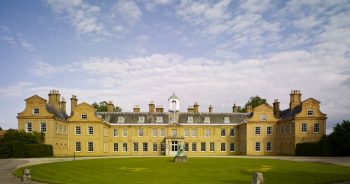
Stratfield Saye House
In the heart of the English countryside on the Hampshire/Berkshire border, you’ll find the elegant, but intimate, Stratfield Saye House, home to the Dukes of Wellington since 1818. After the Battle of Waterloo the First Duke of Wellington, or the Great Duke as he was universally known, was regarded as the saviour of his country and of Europe. A grateful nation voted a substantial sum of money to enable him to buy a house and an estate worthy of a great national hero. After considering many far grander properties, he chose Stratfield Saye. Stratfield Saye House does not compare in either size or grandeur with the other great ducal houses, and it was the Great Duke’s intention to build a huge palace in the northeast corner of the park, but fortunately the money was not available. He therefore set about making his home convenient and comfortable and, as a very practical man, he was well satisfied with the results. The House today is lived in by the 9th Duke of Wellington and his family. Whilst the Great Duke’s wonderful collection of pictures are at Apsley House, which was given to the nation by the 7th Duke in 1947, Stratfield Saye House contains a fascinating collection of paintings and furniture purchased by the Great Duke with many mementos of his occupation of his modest country home. This visit is for Georgian Group members only, and participants must make their own arrangements for transport. Refreshments and lunch are included (£50).
Sue Berry | Builders as Architects and Their Significant Influence in Town and Country: The Morris and Wild Families of Sussex, 1720–1840
Online, 7 May 2024, 6.30pm
Arthur and John Morris played an important role in the development of Coombe, Firle, and Glynde Places in Sussex and worked on houses in Lewes. They dealt directly with clients even when there was an architect. Amon and Amon Henry Wilds worked mainly in two towns, Amon Henry shifting from builder to architect. He made a big impact on Brighton, designing houses, projects, churches, and chapels. There must have been many more local entrepreneurs like these, and we need to know more about them. The Wilds moved to Brighton and undertook speculative development as well as worked for clients. The Morris family did not, as Lewes did not offer the same opportunities. £5 members / £7 non-members.
Steven Brindle | The Greek Revival in England
In-person, The Georgian Group, Fitzroy Square, London, 6.30pm
In the 1750s a debate unfolded in Rome as to which was superior: Greek or Roman art? Despite the publication of volume 1 of Stuart and Revett’s Antiquities of Athens (1762), British architects and clients instinctively took their inspiration from Roman art for another generation or more. Steven Brindle considers the development of the Greek style in England, from its tentative and experimental mid-Georgian beginnings, to its sudden triumph in the Regency age, its establishment as the ‘public style’ in the 1810s and 20s, its relationship to the mainstream neoclassicism of the late-Georgian age, its decline—and its somewhat different course in Scotland. £15 members / £18 non-members.










 Enfilade
leave a comment